Climate economist, Columbia
https://gwagner.com
It’s pronounced juggernaut without the jug.
Gernot Wagner is an Austro-American climate economist at Columbia Business School. He holds an AB and a PhD in political economy and government from Harvard University, as well as an MA in economics from Stanford University. A founding co-director of Harvard's Solar Geoengineering Research Program (2017–2019) he joined the faculty of New York University in 2019, moving to Columbia University in 2022. Wagner writes a monthly column for Project Syndicate, and is the co-author, with Martin L. Weitzman, of Climate Shock, a Top 15 Financial Times-McKinsey Business Book of the Year 2015. He won the "Austrian of the Year" award in 2022, awarded by Austrian daily Die Presse. .. more
Reposted by Gernot Wagner, Erin O’Donnell


(Yes, rather happy our building is off gas completely.)

Reposted by Gernot Wagner
Doctors and epidemiologists are worried, though:
www.thebulwark.com/p/measles-co...


Even for scientists producing peer-reviewed papers, it's basically all about, "How long can I use AI to BS my way to more publications, until someone finds out I'm not actually contributing anything novel?"
Sigh.




Reposted by Gernot Wagner

This graph from John Burn-Murdoch sums it up. 🧵
donmoynihan.substack.com/p/autocracy-...

Reposted by Anne Applebaum, Ben H. Ansell, Colin F. Camerer , and 17 more Anne Applebaum, Ben H. Ansell, Colin F. Camerer, Elena Litchman, Samuel L. Perry, Calvin K. Lai, Peter Holmes, Gernot Wagner, Laurent Pech, Julia Lynch, Beatriz Gallardo Paúls, James Goodwin, W Grant, Mark Rice, Greg Linden, Matthew P. McAllister, Blair Fix, John H. Knox, Stuart Shapiro, Peter Jacobs
This graph from John Burn-Murdoch sums it up. 🧵
donmoynihan.substack.com/p/autocracy-...

Reposted by Gernot Wagner


insideclimatenews.org/news/2901202...
#energysky
We've obtained a copy of the new rules and here's what we found.
www.npr.org/2026/01/28/n...


"Trump administration secretly loosens nuclear safety rules" www.npr.org/2026/01/28/n...
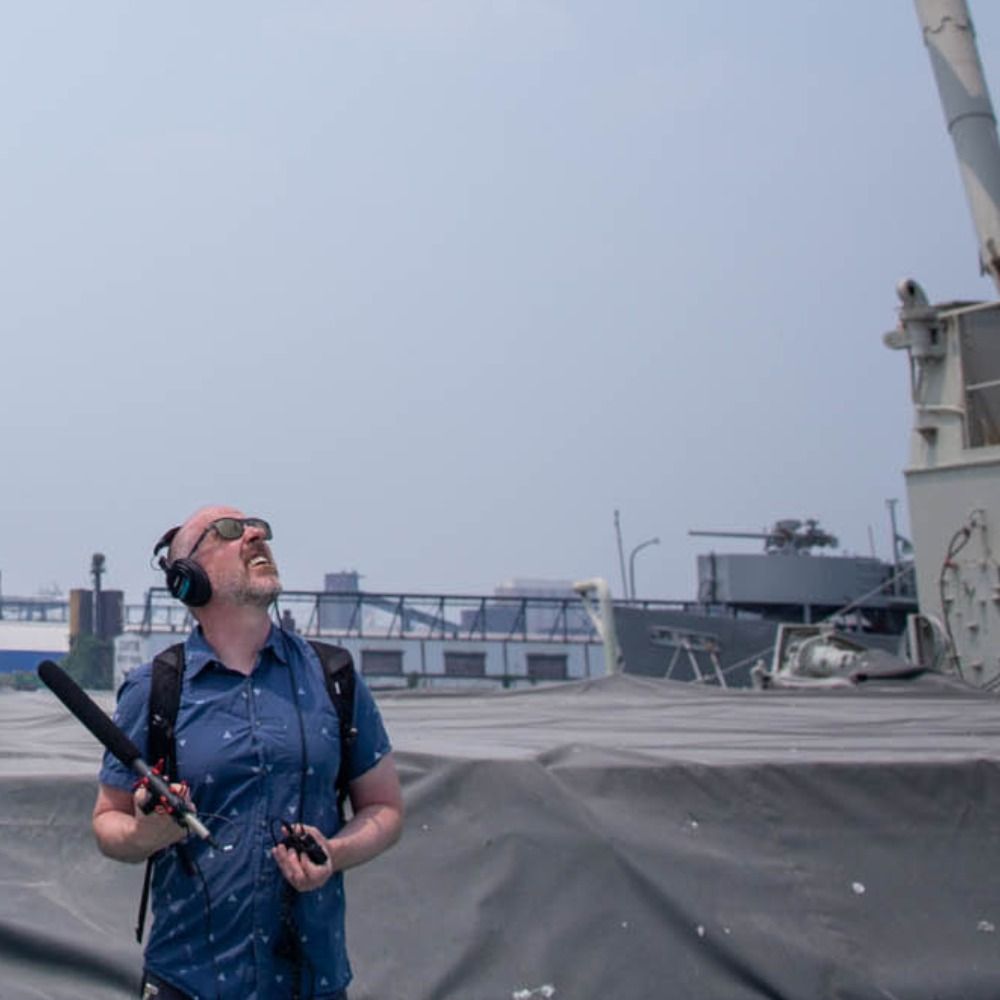
We've obtained a copy of the new rules and here's what we found.
www.npr.org/2026/01/28/n...


A call for everyone to chip in for the public good, ✅
Fun along the way, ✅ 💚


Reposted by Peter Thorne

@nytimes.com just dropped the "appear to" in front of the "contradict[s]." Anyone who knows anything about NYT headline writing knows how big a deal that is.
Reposted by Anna O. Law, Jan W. Mueller, Elizabeth Saunders , and 32 more Anna O. Law, Jan W. Mueller, Elizabeth Saunders, Rebecca Solnit, Stephan Lewandowsky, Axel Bruns, Kevin J. Anchukaitis, Joshua S. Weitz, Scott L. Greer, Steve Peers, Caroline Krafft, Lesley A. Hall, Richard Waite, Gernot Wagner, Trevon D. Logan, Smith, Robert C. Richards, David R. Miller, Aaron Sojourner, Martha Albertson Fineman, Adrian Daub, James Goodwin, Erol Akçay, Timothy Graham, Nancy Langston, Mark Rice, Andrew Thacker, Susan Strasser, Klaus Oschema, Nicole Guenther Discenza, Farah Mendlesohn, Nathan P. Kalmoe, Aidan O’Sullivan, David Darmofal, Shan Kothari


Are you debating whether warmer oceans mean more moist air?
Reposted by Timothy Snyder, Kim L. Scheppele, Jason Mittell , and 23 more Timothy Snyder, Kim L. Scheppele, Jason Mittell, Nandita Sharma, David Brady, Brendan Nyhan, Scott L. Greer, Steve Peers, Robert W. Wallace, Rosemary A. Joyce, Gernot Wagner, Smith, Michelle L. Mazurek, Gerald Friedman, Stacy D. VanDeveer, Robert B. Reich, Anne Norton, Sahar F. Aziz, Sarah Roberts, Ann Bartow, Pádua Fernandes, Timothy D. McBride, Roos Vonk, David Darmofal, Elise Thomas, Jesse R. Lasky