
Erica Chenoweth
banner
chenoweth.bsky.social
Erica Chenoweth
@chenoweth.bsky.social

Political scientist & part-time farmer. Books: 'On Revolutions' (2022), 'Civil Resistance' (2021), & 'The Politics of Terror' (2019). Coming soon: 'Bread & Roses' & 'The End of People Power.' https://www.ericachenoweth.com. What a time to be alive. .. more

Erica Chenoweth is an American political scientist and professor of public policy at the Harvard Kennedy School and the Radcliffe Institute for Advanced Study. They are known for their research work on nonviolent civil resistance movements. .. more
Political science 53%
Sociology 35%
Pinned
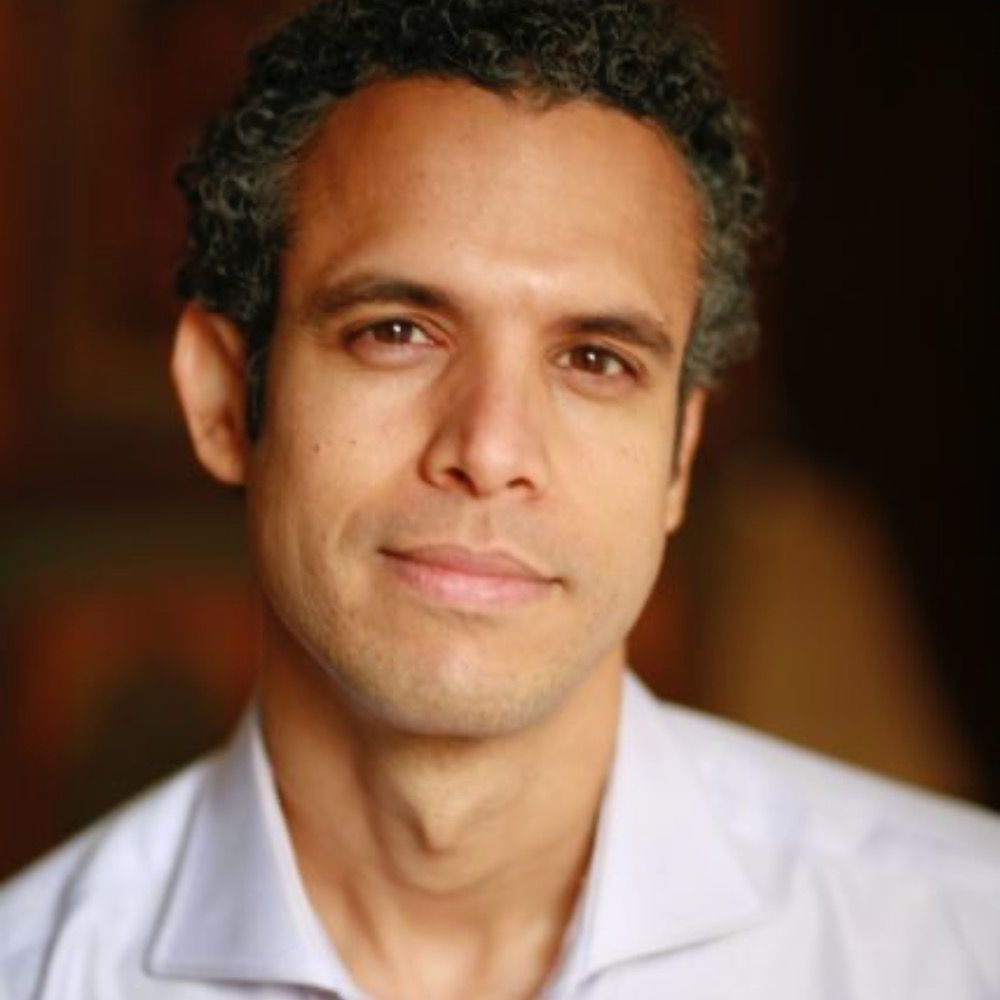
Lately I've seen many references to the 3.5% rule. A few years ago I pulled together this Q&A on potential uses and misuses of this statistic. www.hks.harvard.edu/sites/defaul...

Reposted by Victor Asal

I just want to add that the CCC is now in its ninth year, and it takes an extraordinary team effort to keep up with all of this. Very proud of and amazed by the exceptional work of this great team and our dedicated research assistants.
My team at the Crowd Counting Consortium (@djpressman.bsky.social, Soha Hammam, & Chris Shay) has shared a big data update, covering all recorded US protests through Jan 2026. Some key takeaways 🧵:

Reposted by Nancy Kanwisher

And as always, if you think we’re missing a record, you can scroll down on this page and submit it here: ash.harvard.edu/programs/cro...
Crowd Counting Consortium – Ash Center
Publicly available data on political crowds in the United States, including marches, protests, demonstrations, riots, and other actions.
ash.harvard.edu
More from our team soon. Meanwhile, the data are available here: dataverse.harvard.edu/dataverse/cr...
dataverse.harvard.edu

Two caveats: (a) our data collection has improved over time, but we don’t think that’s explaining most of the growth across years; (b) the political conditions under which we are collecting data are not identical across years; more on the latter point here: wagingnonviolence.org/2025/03/resi...).
Resistance is alive and well in the United States
Protests of Trump may not look like the mass marches in 2017, but they're far more numerous and frequent — and also becoming more strategic.
wagingnonviolence.org

Taken together, an overall look at protest patterns in 2026 reinforces the sense of a growing, durable, and disciplined pro-democracy movement increasingly mobilized at the grassroots.

The next common claims concern US foreign policy (primarily as it relates to Gaza, Venezuela, Iran, Ukraine, & Greenland), the economy, & health care.

Reposted by Victor Asal

What are the protests about? The top three claims expressed during the protests are concerns about the presidency, democracy, and immigration. These themes dominate the protest landscape.

Reposted by Victor Asal

These are tiny fractions for a movement of this historic size and geographic dispersion. This discipline is part of why clear instances of lawless brutality by govt authorities tend to backfire—a dynamic that @owasow.bsky.social recently described in the NYT: www.nytimes.com/2026/01/28/o...
Opinion | We’re Seeing the Weakness of a Strong State
www.nytimes.com
The movement is extraordinarily disciplined, despite escalatory rhetoric, threats, & violence against the movement, immigrants, and observers. Over 99% of reported protests featured no arrests, 99.8% had no participant injuries or property damage, and 99.9% reported no injuries to law enforcement.
Participation is likewise robust. For counts for just 41% of our events, we tallied well over 10.3M participants across explicitly anti-Trump protests, < 111k across pro-Trump protests, and over 387k across other protests.
Overall, we have tallied 4x more protests through Jan 31, 2026 than we had through Jan 31, 2018
Protest volume is escalating. Jan 2026 recorded the highest monthly total of protests during Trump’s second term so far (nearly 5900)—and the 3rd highest total of protests per month since 2017, behind only June 2020 (BLM) & March 2018 (Enough Walkouts + March for Our Lives).

Reposted by Victor Asal

The two No Kings protests (6/14 & 10/18) were among the largest single day protests in history, but we are tallying protests all over the country every day in locally coordinated protests, too, particularly in opposition to ICE - an increasingly large share of the total #.
The volume & geographic distribution of protest nationwide during year 1 of Trump's second term was extraordinary.
My team at the Crowd Counting Consortium (@djpressman.bsky.social, Soha Hammam, & Chris Shay) has shared a big data update, covering all recorded US protests through Jan 2026. Some key takeaways 🧵:

Reposted by Erica Chenoweth

TOMORROW: Minnesota organizers and leaders will share what they’ve learned so we can all be better prepared to organize and protect our neighbors from ICE and CBP deployments: www.crowdcast.io/c/reimagine/...
Detention Reports has been updated to include a national map of all active ICE detention facilities that link to individual facility reports. Learn about this new feature and other new features at my latest post: austinkocher.substack.com/p/the-best-s...
If you are an advanced PhD student or PostDoc working on AI and global politics/tech/authoritarianism come spend 1-6 months in Berlin this year with @scripts-berlin.eu! We have some funding for you and will help w/ visa and other moving issues.
Info here: www.scripts-berlin.eu/about-us/job...

Reposted by Erica Chenoweth
“Visible state violence against sympathetic civilians was the beginning of the end for Jim Crow. It may be a turning point now, too.” Gift link: www.nytimes.com/2026/01/28/o...
Opinion | We’re Seeing the Weakness of a Strong State
www.nytimes.com
one thing the trump era has made clear, i think, is that the american people themselves are far more committed to the values of our founding documents than our elites

Reposted by Erica Chenoweth

BREAKING:

A federal judge just ordered the release of 5-year-old Liam Conejo Ramos and his father from immigration custody — condemning their removal from Minneapolis as unconstitutional.

Judge Fred Biery condemned "the perfidious lust for unbridled power" and "the imposition of cruelty."
1/ Ian Austin has since been re-arrested along with Don Lemon, which he believes is bc the video we made of him (below) criticizing the Trump regime and encouraging fellow vets to wake up had gotten millions of views.

It's not just journalists. It's ANYONE. www.motherjones.com/politics/202...

Reposted by Erica Chenoweth

Studies have shown the impact of days of widespread peaceful protests. Social movements expert @chenoweth.bsky.social explains why not to underestimate No Kings Day: nokings.org/#signup
👀 Looks like the husband of the woman ICE abducted called his lawyer, lawyer called the cops, then the police chief went and got her & took her home

Article says it may be the first time local Minnesota PD "intervened in a federal law enforcement action" since Trump started terrorizing the state

JANE FONDA: “I know Don Lemon. My husband created CNN. And I will fight for their right to speak… they arrested the wrong Don. This is how autocrats act. We can’t fall for it.”
Union workers solved the trolley problem, you're welcome
Minnesota based Independent Journalist GEORGIA FORT has been arrested for filming a protest of the church pastor that works as an ICE manager. SPREAD THE WORD! Georgia has been doing outstanding reporting from ground zero!

Reposted by Erica Chenoweth

TOMORROW: Social movements expert @chenoweth.bsky.social returns to our weekly chat to discuss No Kings Day. Plus, Leah and Ezra will cover the regime’s death squads, the first Senate vote on the DHS funding bill, and your top-ranked questions: www.mobilize.us/indivisible/...
“What we are seeing is the weakness of strong states. Regimes that rely on repression face a challenge: The more force they deploy, the more they risk exposing their own brutality to politically persuadable observers. Overreach doesn’t just project strength; it also undermines legitimacy.” Gift link
Opinion | We’re Seeing the Weakness of a Strong State
www.nytimes.com