Neil Lee
neillee.bsky.social
Neil Lee
@neillee.bsky.social

Professor of Economic Geography, LSE

Economics 45%
Political science 21%

Very sorry to hear that Owen

One important difference: very little of my pension is invested in Turkey
What can history teach us about what happens when a populist strongman with an idiosyncratic taste for low interest rates undermines central bank independence?

ban people

Some sympathy, but evidence suggests firms in low-income areas do manage to access finance

The UK has well-developed credit markets - pushing excessive lending risks distortions

The priority should be demand: poorly managed firms submit weak applications

www.theguardian.com/business/202...
Lending to small businesses and low-income areas must expand, say Labour backbenchers
Senior politicians have tabled bill that would force UK banks to make affordable finance more accessible
www.theguardian.com
What can history teach us about what happens when a populist strongman with an idiosyncratic taste for low interest rates undermines central bank independence?

Reposted by Jürgen Janger

As I said, it was a great dog. Everyone loves a great dog

Family dog, sorry, they were already famous and I was probably mid-teens

It was a great dog. They were lucky I let them.

And no that isn’t a euphemism

Well that might be partly my fault…

It is my second best claim to fame after the fact that when I was young Radiohead used to walk my dog

Without revealing your actual age,what's something you remember that if you told a younger person they wouldn't understand?

That's very kind, thank you.

I didn't deal with that well - plenty of failure in e.g. Austria which I ignored

You could probably feel the screech marks of a u-turn on Taiwan as well, as the data just didn't fit my priors

I was also focused on incremental innovation (influenced by Dan B.) and should have been clearer on that

Agree with this. Would add there is a sort of Mancur Olsen within-the-state collective action problem
Great @economist.com piece by @matthewholehouse.bsky.social on state capacity. Am convinced next election winner will be who convinces people Government can actually just *do things* & politicians aren’t powerless to make good on promises. My reframe of Reagan maxim www.economist.com/britain/2026...

We had phones and making drunk prank calls in the middle of the night was our equivalent of tiktok

Awesome thanks. I’m haunted by bits which could have been better / clearer but quite pleased with that section as well
Great @economist.com piece by @matthewholehouse.bsky.social on state capacity. Am convinced next election winner will be who convinces people Government can actually just *do things* & politicians aren’t powerless to make good on promises. My reframe of Reagan maxim www.economist.com/britain/2026...

Reposted by Neil Lee

The Ottawa Science Policy Nerds book club discussed @neillee.bsky.social’s Innovation for the Masses this week.

Very positive reviews. And with arguably the clearest introduction to innovation most of us have read in ages, it’s going on some syllabi.
Without revealing your actual age,what's something you remember that if you told a younger person they wouldn't understand?

Reposted by Neil Lee

London's problem is the opposite. The quality of life and opportunities here are so abundant that there's no room for everyone that wants to be here, the opposite of what is the case in places where Reform polls well.
Their chosen candidate, Laila Cunningham, is telling a Reform press conference about how London is a crime-ridden hellhole and no one feels safe, a perspective that does not survive even the briefest contact with actual statistics.

city with the shortest name which has been world's largest city (apart from Ur)

The world's largest city in 1170 was Fez, Morocco

(source: Chandler)
Young people's moves contribute to inequality by sorting people with high earning potential to areas with high pay premiums. onlinelibrary.wiley.com/doi/10.1111/...

Great new work by @xiaoweixu.bsky.social based on English admin data. @theifs.bsky.social @sriucl.bsky.social @cepeo-ucl.bsky.social

Dan's book is great, totally agree! and thank you
Much of the research in economics and economic geography treats cities as “black boxes.”

We show that where #innovation happens within cities matters a great deal. Neighborhood #tech #clusters shape citywide innovation paths!
New paper:

Star scientists heavily clustered in a few cities

Please read and cite our paper and reinforce this concentration 👍

Reposted by Neil Lee
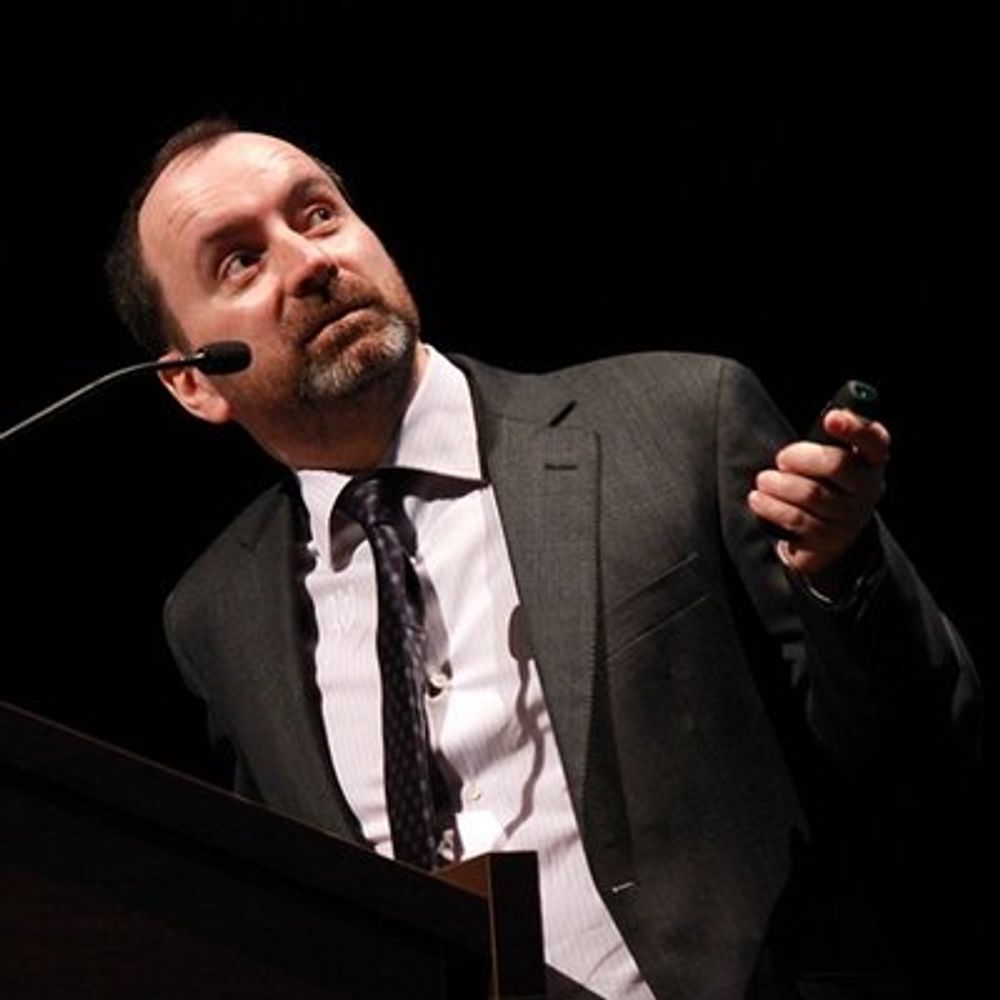
Did you know 12% of the world’s top #researchers cluster in just four #cities? In our brand new paper (with Xiang & @neillee.bsky.social) in Transactions of the Institute of British Geographers, the “flat world” is a gated archipelago. The #GlobalSouth remains excluded.
doi.org/10.1111/tran...
Transactions of the Institute of British Geographers | RGS Journal | Wiley Online Library
Scientific excellence is clustering ever more tightly in a few ‘superstar’ cities. Four—New York, Boston, London and the San Francisco Bay Area—now host 12% of the world's top scientists. In contrast....
doi.org

I don't (quite) agree but this is a great, well made argument
My unpopular opinion: Erasmus+ is an elitist waste of money that only benefits young adults that have already “won” by (a) making it to university, and (b) having the plummy, ski-seasoned social capital to have heard of the scheme in the first place.

It didn’t seem a good record at the time, but I’d take it now

Also NLW and relative economic growth. More nuanced figure than often portrayed