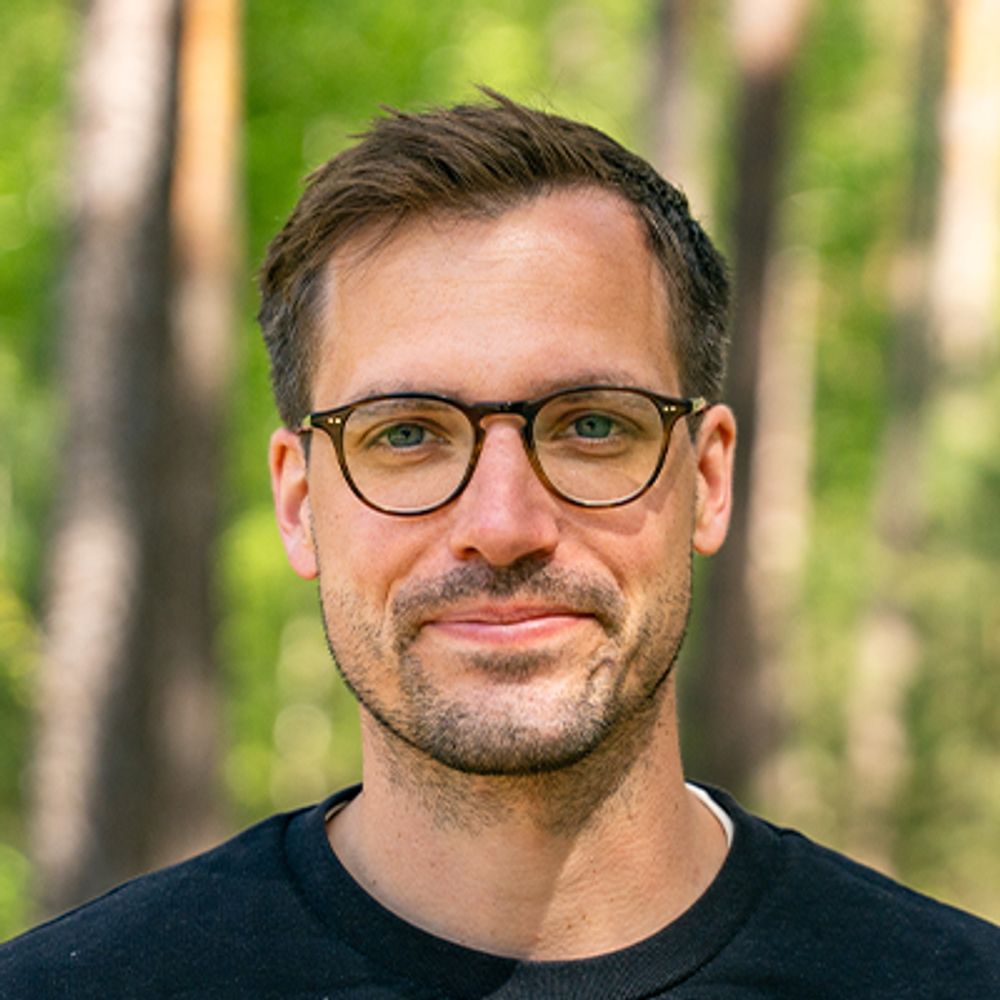
Tobias Kuemmerle
banner
tkuemmerle.bsky.social
Tobias Kuemmerle
@tkuemmerle.bsky.social

Geographer @ Humboldt-University Berlin. | working on land use and its impact on biodiversity

Environmental science 68%
Geography 17%

What does this mean? Actual habitat use of E. bison does not support views that they are forest specialists or that they are restricted to forests 👉 Restoration opportunities across diverse landscapes. However: potential for crop damages --> reintroductions should focus on low-conflict areas.

- Wild E. bison inhabit a wide range of landscapes
- Human influence strongly mediated habitat use
- Higher human influence --> bison used forests more and grasslands less during the day and more during the night

Some key findings:
- E. bison select for forests and avoid open areas at the landscape scale
- Within home-ranges, selection for forests during summer, for croplands during winter
- Grasslands were never strongly selected
- Within forests, younger and disturbed forests were selected

Analyzing these data in a functional response framework revealed variation in E. bison habitat use
- across spatial scales (home range vs. landscape)
- in different seasons (winter vs. summer)
- during day vs. night
This helped to reveal a more complex picture of E bison habitat use.

Past habitat assessments have often focused on individual herds, with many herds never analyses. Thanks to a broad collaboration among E. bison researchers and practitioners, we could analyze data from >240 GPS-tracked 🦬! Massive thanks to all collaborators!

Wild European bison can thrive in a wide variety of landscapes - including human-dominated ones.

New paper out @jappliedecology.bsky.social by Gabriele Retez analyzing habitat selection across 22 populations -->
doi.org/10.1111/1365...

@biogeoberlin.bsky.social
🌍 African #savanna science is heavily skewed: 46% of studies come from just 2% of #ProtectedAreas. Using the new ADSPA geodatabase, this work identifies five #bioclimatic groups and reveals major research gaps across underrepresented savannas. 🐘

🔗 doi.org/10.1111/ddi....

Reposted by Tobias Kuemmerle
A place-based assessment of biodiversity intactness in sub-Saharan Africa
Clements+
doi.org/10.1038/s415...

based on "place-based knowledge of 200 African biodiversity experts"

approach can be used "to integrate contextual, place-based knowledge into multiscale" biodiversity assessments

A place-based assessment of biodiversity intactness in sub-Saharan Africa - Nature
Regional, place-based biodiversity information is used to comprehensively map and quantify biodiversity intactness of sub-Saharan Africa to inform national and global sustainability policies and plann...
doi.org
📢 We are hiring! Tenure-track position in environmental history with a focus on long-term socio-ecological research. Exciting opportunity for post-docs working at the interface of environmental history & sustainability sciences. Deadline Jan 6, please spread far and wide! boku.ac.at/fileadmin/da...
boku.ac.at

Reposted by Tobias Kuemmerle

Proud to share that the paper "Recent sociocultural changes reverse the long-term trend of declining habitat availability for large wild mammals in Europe" by M. Davoli, @tkuemmerle.bsky.social and colleagues was awarded the Diversity and Distribution Early Career Researcher Best Paper Award!
Recent Sociocultural Changes Reverse the Long‐Term Trend of Declining Habitat Availability for Large Wild Mammals in Europe
Aim People have strongly influenced the biosphere for millennia, but how their increasing activities have shaped wildlife distribution is incompletely understood. We examined how the distribution of...
doi.org

"Ultra Processed Food, and the system that produces it, has overtaken tobacco in terms of health and economic harms, and is also the leading cause of plastic pollution, loss of biodiversity and deforestation, and the second leading cause of emissions. "

www.thelancet.com/series-do/ul...
I know I'm spamming you all with the world's largest flower this week but look at THIS! A rare glimpse inside Rafflesia arnoldi!

Reposted by Daniel Müller

Very nice storymap on our paper on fire and grazing in Kazakhstan --> storymaps.arcgis.com/stories/fc91...
Grazing Fire
Changes in grazing patterns explain post-Soviet fire trends on the Eurasian steppe better than climate
storymaps.arcgis.com
Zuwanderer bringen ein Plus von 100 Milliarden Euro im Jahr. Immer wieder zeigen Studien, dass eine aufnehmende Gesellschaft von Zuwanderung massiv profitiert. Nicht nur finanziell übrigens.
Migration: Neue Studie zeigt Nutzen von Zuwanderung in Deutschland
Der Wirtschaftsweise Martin Werding hat den Nutzen von Migration berechnet - und liefert damit neue Munition für eine hitzige Debatte.
www.sueddeutsche.de

Reposted by Tobias Kuemmerle

Fliegen wird billiger, Zugfahrten teurer.

Das entscheidet die Regierung zum Start der 30. Klimakonferenz.

Und dann wundert man sich, dass die Leute wenig Vertrauen in die Politik haben.

Die Antwort ist: ja! Elch (und wahrscheinlich auch Wisent) kommen wieder und würden bei uns genug Lebensraum finden, wenn wir sie willkommen heissen. Mehr dazu hier: www.hu-berlin.de/de/pr/nachri... ... und der wissenschaftliche Artikel hier: doi.org/10.1111/ddi....
Elche und Wisente würden ausreichend Platz in Deutschland vorfinden – wenn sie es zu uns schaffen
Neue Studie zeigt Chancen und Herausforderungen für eine Rückkehr von Wisent und Elch
www.hu-berlin.de

"...what happens in Sweden matters far beyond Sweden. If a country with some of the world’s largest intact boreal forests chooses to double down on short-term extraction, it will not only undermine the EU’s climate goals — it will send a dangerous signal to other forest nations..."

Reposted by Tobias Kuemmerle

🐍 Over 35 years of #deforestation have reshaped #snake communities in the South American #Chaco 🌎.
Generalist species are expanding, while many specialists lose #habitat, leading to a sharp drop in diversity and growing biotic homogenization.
@alfredoromero.bsky.social

🔗 doi.org/10.1111/ddi....

🐺 Wolves have not yet reached a favourable conservation status in most European countries
🐺 Many populations do not meet the effective size required for long-term genetic and demographic sustainability
🐺 Wolf populations across Europe are primarily threatened by overhunting (incl. illegal killing)

All of this very true - there is no scientific basis for the change in legislation that was enacted this year:
🐺 Current monitoring does not allow for a reliable estimation of wolf numbers in Europe
🐺Available demographic data are heterogeneous, approximate, largely qualitative, and unverifiable.

Restore strict protection for wolves in Europe

www.science.org/doi/10.1126/...

Reposted by Tobias Kuemmerle

Brazil, Australia and Italy have the highest satisfaction scores in Nature’s global 2025 PhD survey. A Nature Careers article examines what makes earning a doctorate in these countries different. #Academicsky 🧪
Are these the happiest PhD students in the world?
Brazil, Australia and Italy have the highest satisfaction scores in Nature’s global 2025 PhD survey — but are these nations really the best places to do a doctorate?
go.nature.com

What makes positive outcomes more likely during and after times of shocks? We suggest:
- proactively create resilient institutions,
- that are focused on local capacity building,
- that enhance social stability, &
- that are built on internal motivations for conservation

Socio-economic shocks are fairly common, especially at broader scales (key for large carnivores) and longer time frames (key for conservation planning). Consider shocks, and the risks and potential opportunities they bring is thus critically important (but rarely done).