



Economist | Associate Professor @University of Oxford and @UAntwerp.
https://oliviersterck.wordpress.com/

Our research on aid cuts and targeting just published in The New Humanitarian.
www.thenewhumanitarian.org/analysis/202... (@newhumanitarian.bsky.social)
Reposted by Olivier Sterck, Kristof Titeca

@egmontinstitute.bsky.social
"Will Uganda’s ‘Open-Door’ Refugee Policy Hold? Aid Cuts and Rising Anti-Immigration Sentiments"
#Uganda #Refugees #ForcedDisplacement #MigrationPolicy #HumanitarianCrisis
𝗥𝗲𝗮𝗱 𝗺𝗼𝗿𝗲👉 tinyurl.com/evrkmay6
Reposted by Olivier Sterck, Kristof Titeca

Join our Online Info Session on 15 December.
🔗 Register: https://www.uantwerpen.be/development-studies
#globaldevelopment #sustainabledevelopment #studyabroad #internationadevelopmentstudies
Of course you are welcome to read the paper: it is publicly available here papers.ssrn.com/sol3/papers.cfm?abstract_id=4785458

There is no line. Having less is always worse.
Start measuring poverty as a continuous reality — not a binary status.
Ask a simple question: How long does it take people to earn $1?
More here:

Changes in the poverty measure come from two forces: (1) average income and (2) inequality.
In the US, inequality has grown much faster than GDP (except during COVID), pushing poverty up even as income rose.

Much more than in the UK, France or Germany... Poverty is much higher in the US despite higher average incomes!
[see the exception during Covid, when the US implemented strong anti-poverty measures]

I developed a measure that reflects this: the time it takes to get $1.
It comes from an idea in physics: poverty = reciprocal of income.

Same people, same data, opposite conclusion. So what is the “true” number?
There isn't one.

Take Green’s line, $140k/year for a family of 4 ($100 pp per day).
With that line, 73% of Americans are “poor”. It tells us more about the line than poverty.
However, investor Michael W. Green argues it should be more than four times higher, a threshold that would classify most American households as living “in poverty” by his measure.

Poverty is continuous and I developed a much better indicator to measure it. A🧵
@washingtonpost.com @ourworldindata.org @adamrose.bsky.social @whstancil.bsky.social
Reposted by Olivier Sterck

However, investor Michael W. Green argues it should be more than four times higher, a threshold that would classify most American households as living “in poverty” by his measure.
Reposted by Olivier Sterck


Reposted by Olivier Sterck
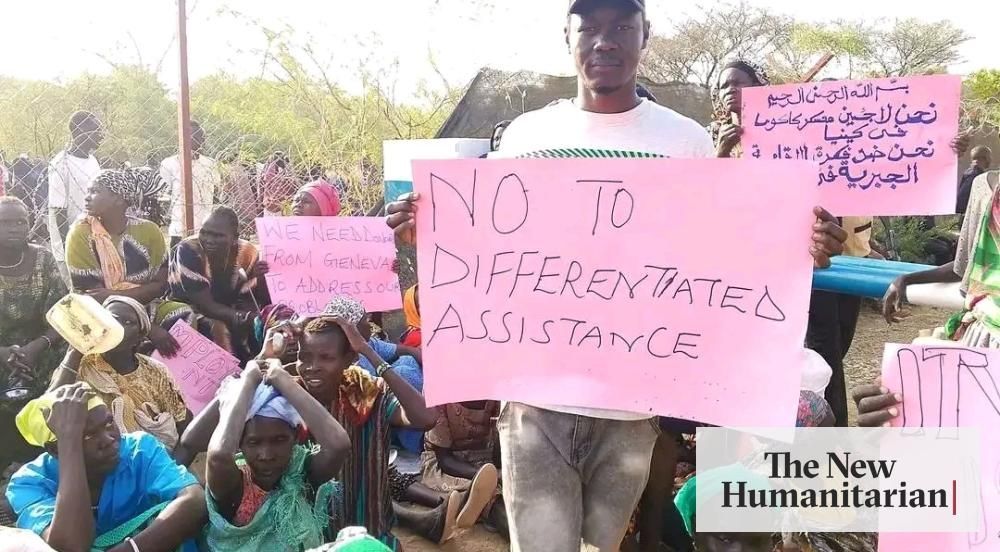
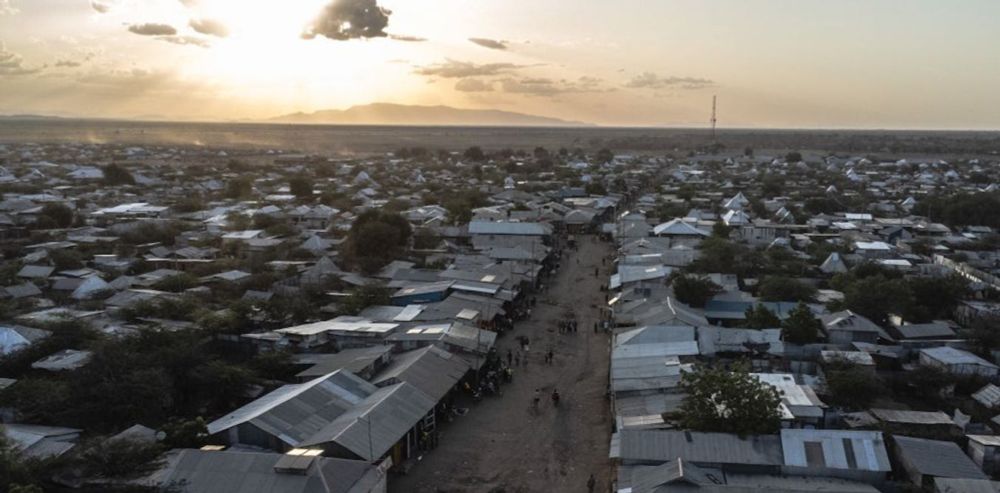
@oliviersterck.bsky.social writes in @newhumanitarian.bsky.social about effects of cuts to food assistance in Kakuma Refugee Camp.
@odid-qeh.bsky.social @refugeestudies.bsky.social
Reposted by Olivier Sterck


Join these exciting panels at EADI/IOB 2026: “Shaping Sustainable Futures.”
🗓️ Abstract deadline: 21 Dec 2025
📍 Antwerp, Belgium
👉 Details: https://loom.ly/rrhGi2k
#EADI2026 #GlocalSolutions #Inequality #JustTransitions #SustainableFutures
Reposted by Olivier Sterck


Hosting Refugees: Glocal Solutions?
📍 @iobua.bsky.social
Conv. by @oliviersterck.bsky.social
www.eadi.org/eadi-events/...

London is meeting legal limits for toxic NO2 pollution for the first time – almost 200 years earlier than predicted – following the Mayor’s "world leading air pollution policies," City Hall announces.
The Ultra Low Emissions Zone - and similar policies - really do work.

#saveIOB #developmentpolicy #developmentpolicy #iobcommunity

Reposted by Diane Ravitch, Olivier Sterck
Reposted by Olivier Sterck
✒️ @oliviersterck.bsky.social @uantwerpen.be, @odid-qeh.bsky.social & CSAE, & Vittorio Bruni
@refugeestudies.bsky.social
📚Read it there (click ORA Record): www.csae.ox.ac.uk/publication/...
Reposted by Olivier Sterck

Listen to @oliviersterck.bsky.social & @antoniadelius.bsky.social discussing the project in Kakuma Refugee Camp in Kenya on the CSAE Research Podcasts series www.csae.ox.ac.uk/cash-transfe...
@oxfordecondept.bsky.social
Reposted by Olivier Sterck


theconversation.com/what-happens...
#BusinessAndEconomy
theconversation.com/what-happens...
Reposted by Olivier Sterck


voxdev.org/topic/instit...
Reposted by Olivier Sterck


Read today's article to learn more:
Reposted by Olivier Sterck
![Displaced Person camp in Northern Nigeria. © 2018 European Union (photo by Samuel Ochai)
[CC BY-NC-ND 2.0]](https://cdn.bsky.app/img/feed_thumbnail/plain/did:plc:m6gpkv65pvqt273rjcoxwg4z/bafkreidusts3fmtydtqn75w6mdgesmvzuna6nu5g3d3nufdtfkifvmb3li@jpeg)
New research from a major refugee camp in #Kenya shows sharp impacts on food security, overall welfare, and local markets.
Read more on VoxDev, with Vittorio Bruni & Olivier Sterck (@oliviersterck.bsky.social)
🔗 voxdev.org/topic/instit...
Reposted by Olivier Sterck
The CSAE's @oliviersterck.bsky.social discusses the impact of aid cuts and delays on people in Kakuma Refugee Camp in Kenya.
voxdev.org/topic/instit...
Reposted by Olivier Sterck

Read the full article to learn more:
Reposted by Olivier Sterck
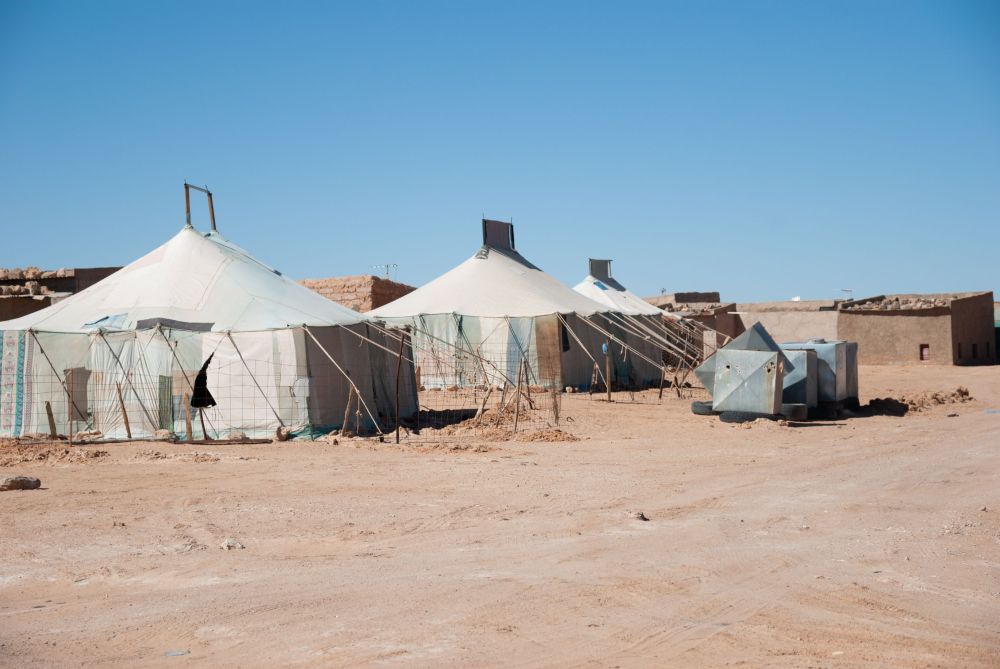
Today on VoxDev, Vittorio Bruni (University of Oxford) & Olivier Sterck (University of Antwerp) demonstrate how aid cuts are having dramatic impacts on food security in one of the world's largest refugee camps: voxdev.org/topic/instit...