




Tim Jones
@tim-jones6.bsky.social
Policy Director at Debt Justice UK, views are my own or someone else's
Reposted by Tim Jones

"In this round, it isn’t Credit Suisse’s lending in question, but how it handled payments coming into a Credit Suisse client account from Mozambique’s Finance Ministry." www.wsj.com/finance/ubs-...

UBS Charged in Switzerland Over Credit Suisse ‘Tuna Bonds’ Scandal
The charges are the latest in a saga that started around 2013, when Credit Suisse arranged debt deals for state-owned companies in Mozambique.
www.wsj.com
December 1, 2025 at 1:48 PM
"In this round, it isn’t Credit Suisse’s lending in question, but how it handled payments coming into a Credit Suisse client account from Mozambique’s Finance Ministry." www.wsj.com/finance/ubs-...
Reposted by Tim Jones
Senegal: "Finance Minister Cheikh Diba told parliament that Senegal needed a "very large amount" of financing totalling 6,000 billion CFA francs ($10.60 billion) annually on average ..."
November 28, 2025 at 2:18 PM
Senegal: "Finance Minister Cheikh Diba told parliament that Senegal needed a "very large amount" of financing totalling 6,000 billion CFA francs ($10.60 billion) annually on average ..."
Reposted by Tim Jones

Welfare spending is currently 1.2% of GDP *lower* than in 2012-13.
Abolition of two-child cap is best viewed as a correction than an increase.
Abolition of two-child cap is best viewed as a correction than an increase.

Is welfare spending ''out of control''?
Total welfare spending in Britain in 2025-26 is estimated to be 10.8 per cent of GDP.
That's just 0.8 per cent of GDP higher than in 2007-08, and total welfare spending has actually fallen fallen by 1.2 per cent of GDP since 2012-13⤵️
buff.ly/s5mz97u
Total welfare spending in Britain in 2025-26 is estimated to be 10.8 per cent of GDP.
That's just 0.8 per cent of GDP higher than in 2007-08, and total welfare spending has actually fallen fallen by 1.2 per cent of GDP since 2012-13⤵️
buff.ly/s5mz97u

November 28, 2025 at 8:35 AM
Welfare spending is currently 1.2% of GDP *lower* than in 2012-13.
Abolition of two-child cap is best viewed as a correction than an increase.
Abolition of two-child cap is best viewed as a correction than an increase.
African Union chair calls for fairer debt restructuring tools at summit with EU
www.reuters.com/world/africa...
www.reuters.com/world/africa...
www.reuters.com
November 25, 2025 at 1:25 PM
African Union chair calls for fairer debt restructuring tools at summit with EU
www.reuters.com/world/africa...
www.reuters.com/world/africa...
Reposted by Tim Jones

Sound analysis and rational economics from Tim Jones.
Ahead of the UK budget, government debt has dominated headlines. Threat of a UK “debt crisis” is used to justify cuts in welfare and public services.
But the story is far more nuanced and the REAL global debt crisis isn’t getting nearly enough attention. @tim-jones6.bsky.social explains
🧵
But the story is far more nuanced and the REAL global debt crisis isn’t getting nearly enough attention. @tim-jones6.bsky.social explains
🧵

November 24, 2025 at 12:53 PM
Sound analysis and rational economics from Tim Jones.
Reposted by Tim Jones

Senegal: well that escalated quickly. Another big sell-off today means the 2031 bond has gone from over 80 cents to 67 cents on the dollar in the past month.
France is perhaps once again about to contemplate how you restructure a country's debt inside a euro currency union...
France is perhaps once again about to contemplate how you restructure a country's debt inside a euro currency union...
How does the IMF deal with the fallout of debt that was hidden on its watch? When it comes to Senegal, not so well so far: www.ft.com/content/84f9...

Senegal’s foreign bonds plunge as government rules out restructuring
West African nation has become a test of IMF’s ability to deal with hidden debt and secure relief from creditors to support bailouts
www.ft.com
November 12, 2025 at 12:15 PM
Senegal: well that escalated quickly. Another big sell-off today means the 2031 bond has gone from over 80 cents to 67 cents on the dollar in the past month.
France is perhaps once again about to contemplate how you restructure a country's debt inside a euro currency union...
France is perhaps once again about to contemplate how you restructure a country's debt inside a euro currency union...
This week has seen some horrendous interest rates being charged by private lenders of global south governments:
Republic of Congo: 13.7%
Laos: 11.25%
Nigeria: 8.6% and 9.1%
Republic of Congo: 13.7%
Laos: 11.25%
Nigeria: 8.6% and 9.1%
November 7, 2025 at 1:59 PM
This week has seen some horrendous interest rates being charged by private lenders of global south governments:
Republic of Congo: 13.7%
Laos: 11.25%
Nigeria: 8.6% and 9.1%
Republic of Congo: 13.7%
Laos: 11.25%
Nigeria: 8.6% and 9.1%
Reposted by Tim Jones
In other frontier sovereign debt news... Republic of Congo issued its first eurobond since 2007. Actually an off-market placement to investors with a yield of 13.7% - which I think may be an African eurobond record at the point of issuance. Coupon of 9.875%. www.finances.gouv.cg/sites/defaul...
www.finances.gouv.cg
November 5, 2025 at 3:45 PM
In other frontier sovereign debt news... Republic of Congo issued its first eurobond since 2007. Actually an off-market placement to investors with a yield of 13.7% - which I think may be an African eurobond record at the point of issuance. Coupon of 9.875%. www.finances.gouv.cg/sites/defaul...
Private lenders continue to demand crazy interest rates from lower-income countries
Lao PDR bond update - they issued $300mn (a minimum for bond index inclusion) in the end, at the initially offered yield of 11.25% (ie the market didn't bid yields lower).
Which suggests it didn't go quite so well as a bond sale. links.sgx.com/FileOpen/Lao...
Which suggests it didn't go quite so well as a bond sale. links.sgx.com/FileOpen/Lao...
links.sgx.com
November 5, 2025 at 3:01 PM
Private lenders continue to demand crazy interest rates from lower-income countries
Reposted by Tim Jones

Hurricane Melissa will cost Jamaica at least $6bn. Much of the damage will be paid for through loans. Jamaica already spends over 20% of government revenue on external debt payments
www.reuters.com/world/americ...
www.reuters.com/world/americ...
www.reuters.com
November 5, 2025 at 10:11 AM
Hurricane Melissa will cost Jamaica at least $6bn. Much of the damage will be paid for through loans. Jamaica already spends over 20% of government revenue on external debt payments
www.reuters.com/world/americ...
www.reuters.com/world/americ...
Standard Chartered says Zambia needs to restructure all its debt. Any guesses which bank has not announced it has restructured Zambia's debt yet?
Yes, Standard Chartered...
diggers.news/business/202...
Yes, Standard Chartered...
diggers.news/business/202...

Zambia needs to restructure its entire debt to improve credit rating – StanChart - Zambia: News Diggers!
diggers.news
November 5, 2025 at 9:48 AM
Standard Chartered says Zambia needs to restructure all its debt. Any guesses which bank has not announced it has restructured Zambia's debt yet?
Yes, Standard Chartered...
diggers.news/business/202...
Yes, Standard Chartered...
diggers.news/business/202...
Reposted by Tim Jones
“Debt relief is taking far too long and leaving countries at high risk of debt crisis. The UK must use its likely presidency of the G20 in 2027 to champion major changes, including deeper and quicker debt relief” - @tim-jones6.bsky.social in the Guardian
www.theguardian.com/world/2025/o...
www.theguardian.com/world/2025/o...

How the west can stop the global south being strangled by debt | Heather Stewart
Labour would do well to remember its manifesto promise to revive Britain’s global leadership on development
www.theguardian.com
October 20, 2025 at 11:31 AM
“Debt relief is taking far too long and leaving countries at high risk of debt crisis. The UK must use its likely presidency of the G20 in 2027 to champion major changes, including deeper and quicker debt relief” - @tim-jones6.bsky.social in the Guardian
www.theguardian.com/world/2025/o...
www.theguardian.com/world/2025/o...
But they must be considered as a piggy bank to repay private creditors that made a bad bet but refuse to take the loss.
“IMF resources must not be considered as a piggy bank to repay creditor countries that made a bad bet but refuse to take the loss,” said Scott Bessent this week, in between bouts of buying Argentina's peso. home.treasury.gov/news/press-r...

Statement from U.S. Secretary of the Treasury Scott Bessent for the World Bank Development Committee and IMF International Monetary and Financial Committee
As we convene for this year’s Annual Meetings, the United States looks forward to working closely with partners around the world to confront today’s global economic challenges and secure a future underpinned by growth and stability. Achieving success will require collaboration with international financial institutions that are highly effective, efficient, and accountable in implementing their core mandates. The International Monetary Fund (IMF) and the World Bank can support America’s efforts to secure a more balanced, prosperous, and stable global economy through a return to their core missions and disciplined deployment of their resources. We have seen some progress towards these goals since the Spring Meetings. The IMF is folding its climate and gender units into one that is focused on macro-financial and structural policies, and management has eliminated extraneous, non-core issues from its Board Work Program. The World Bank has moved in the direction of an all-of-the-above approach to energy by removing its prohibition on the financing of nuclear power generation. And, the Bank has increased the weight given to quality in procurement decision making and boosted outreach to industry, both of which stand to improve the efficiency and effectiveness of its financing. Nonetheless, the IMF and World Bank must take more concerted steps to focus on their respective core missions and deliver greater impact to the countries they support and greater value to taxpayers from the United States and other shareholders. Here in the United States, we have been implementing President Trump’s America First economic agenda of tax cuts, energy abundance, and regulatory modernization. They are interlocking parts of an engine designed to drive economic growth and domestic manufacturing: tax cuts raise real incomes for families and businesses; an affordable, reliable, and secure energy supply drives down the cost of doing business; and regulatory modernization complements both by making it easier to invest in and grow new businesses. This includes passing landmark tax legislation in July to unleash the full potential of the U.S. economy, to protect American workers and families, and to save taxpayer dollars by cutting waste, fraud, and abuse. Thanks to actions taken by the Trump Administration, businesses are investing in America again. A revitalized private sector will propel economic growth and maintain America’s position as the most dynamic economy in world. At a global level, we have been encouraging others to follow our lead and to take steps to increase economic growth. However, the growth outlook remains weak and unbalanced. Many countries continue to face ongoing regional conflicts, governance challenges, and other barriers to economic prosperity such as overregulation. Strengthening resilience and pursuing policies and projects that boost productivity will help countries withstand shocks and grow while improving economic prospects worldwide. This is where the work of the IMF and the World Bank is critical.The IMF is uniquely positioned to provide bilateral and multilateral economic surveillance that identifies imbalances and risks, facilitates the balanced growth of international trade, and discourages harmful policies. We see surveillance as the first layer of an effective global financial safety net. Unfortunately, the IMF’s adherence to this part of its mandate has weakened over the past decades. We expect the IMF to strengthen its surveillance activities and to do so with objectivity and evenhandedness. This work should be focused on macroeconomic and financial stability, rather than other areas beyond the IMF’s expertise like climate and gender. The IMF should not shy away from asking difficult questions, more clearly highlighting internal and external imbalances, deepening its understanding of how industrial policies in large economies such as China contribute to those imbalances, explaining their potential harmful spillovers, and recommending appropriate corrective actions. We expect the IMF’s upcoming Comprehensive Surveillance Review to embrace these objectives going forward.IMF programs should help borrower countries resolve their balance of payments challenges and regain market access after advancing meaningful reforms that will leave their economies stronger and more resilient. However, IMF members have increasingly turned to IMF financing for purposes beyond those objectives. Some have come to rely on it as a routine source of external financing while they continue to maintain misaligned policy frameworks. The number of repeat borrowers suggests that programs often fail to work as intended and that stronger adjustments are necessary to strengthen program effectiveness. Further, IMF conditionality must stay squarely centered on the institution’s expertise, and not wander into non-core areas, as has happened under the Resilience and Sustainability Trust. As shareholders, we must safeguard IMF resources so that they continue to remain sufficient to fulfill the IMF’s mandate. This means strengthening program conditionality to quickly restore macroeconomic stability and avoiding prolonged dependence on IMF financing. Loan amounts and phasing should be commensurate with the scope and scale of reforms needed to tackle the main drivers of the borrower’s balance of payment challenges, often with frontloaded reforms and backloaded financing to help ensure reform commitment remains resolute. We look forward to centering these principles in the forthcoming IMF policy reviews of program design and conditionality to help strengthen the IMF’s lending framework.While IMF financing and conditionality are critical, they are not always sufficient for countries to restore and preserve stability after a crisis, particularly for those in or at risk of debt distress. In these cases, there must be a greater emphasis on burden sharing. While the IMF has increasingly assumed responsibility for facilitating bilateral debt negotiations for borrowers that require IMF loan programs, it continues to let recalcitrant creditors off the hook too easily, increasing the burden of adjustment on the populations of borrower countries. This is particularly worrisome in countries experiencing liquidity challenges. In these situations, IMF programs cannot be effective if there are creditor countries within the membership that are exacerbating the very liquidity stress that IMF programs seek to address. Furthermore, IMF resources must not be considered as a piggy bank to repay creditor countries that made a bad bet but refuse to take the loss. Corruption and criminal activity continue to stymie some IMF reform efforts. Strong commitments to governance, anti-corruption, and effective safeguards must underpin lending programs to help ensure lasting reforms catalyze more durable private sector-led growth. At the World Bank, it is time to refocus on investments that increase access to affordable and reliable energy, reduce poverty, and boost growth. We must drive policy reforms that enable the private sector to flourish and countries to grow their way out of reliance on multilateral development assistance. Country self-reliance—and graduation from continual need for MDB support—should be the objective of World Bank support, and achieving self-reliance is the most definitive sign of the Bank’s success. For this reason, the Bank must place a stronger priority on implementing its graduation policy, supporting countries along the way to self-reliance and enabling the Bank to concentrate its resources on poorer, less creditworthy countries where its support is most needed and most impactful. This must include ending support for China and shifting staff and administrative resources to countries where development needs are most acute. The International Development Association (IDA), too, must continue to support foundational investments that help countries grow and graduate to IBRD. Supporting IDA recipients in their economic development has seen multiple former IDA borrowers become IDA donors—the ultimate indicator of impact. Greater focus on the poorest and most vulnerable countries also includes more attention during IDA-21 to fundamentals that improve macroeconomic stability, support economic growth, and foster private sector development and job creation, working collaboratively with a refocused IMF as each institution applies its comparative expertise. For the Bank, this should include more work to improve debt management capacity and transparency, and enable access to affordable and reliable energy. We urge the World Bank to finance all affordable and reliable sources of energy, which is fundamental to economic growth and poverty reduction, and key to achieving the World Bank’s core mission. Energy abundance sparks economic abundance, and the Bank must take an all-of-the-above approach to energy that includes financing for gas, oil, and coal, and work with shareholders to build a pipeline of projects. To accomplish this, the Bank must remove its 45% climate co-benefits financing target, which skews projects away from country priorities and distorts projects away from the goal of increasing access to the affordable and reliable energy needed to increase growth and productivity. The Bank’s removal of the prohibition on financing nuclear power generation is welcome, and it must now continue to build staff capacity, foster engagement with industry and relevant international organizations, and provide interested clients with technical assistance and financial support. Critical minerals are essential for economic growth, secure livelihoods, and the technologies of the future, but supply chains have become highly concentrated and vulnerable to disruption or manipulation. This is why building out resilient supply chains for critical minerals is a U.S. priority. We welcome the steps the Bank is taking to devise a critical minerals strategy, and expect it to emphasize investments and technical assistance to promote diversified and resilient supply chains. When done well, procurement is a process that can enable borrowers to build capacity, their workers to build skills, Bank resources to be used efficiently, and the strongest development outcomes to be achieved. While we welcome the Bank’s recent procurement reforms, much remains to be done. Not only should the Bank extend the mandatory use of quality approaches beyond just international procurement, but it should also adopt measures to diversify suppliers to Bank-financed projects to appropriately manage risk; design projects, improve outreach to industry, and fully implement pre-bidding strategies to foster greater competition; and collect and disseminate better procurement data to secure better outcomes. However, these improvements will be less impactful if the World Bank does not take decisive action to curb anti-competitive procurement practices by state-owned enterprises (SOEs) and prohibit SOEs that do not operate on a commercial basis from participating in Bank-financed procurement. The United States was central to the creation of the Bretton Woods institutions 80 years ago and we remain committed to sound and responsible governance at each. Shareholding at the IMF and World Bank must reflect that each member has appropriate roles and responsibilities both within the institution and in the global economy. At the IMF, the United States believes the IMF has the resources it needs and remains committed to securing Congressional approval for the 16th General Review of Quotas (GRQ), which will reinforce the IMF’s status as a quota-based institution. However, any future governance discussions must be underpinned by a new quota formula. At the World Bank, it is clear from the discussions over the past year that there is no consensus for shareholding realignments at either the IBRD or IFC. Further work in this area under the 2025 Shareholding Review should now conclude.Finally, the United States and other shareholders have invested in the IMF and World Bank so that they can deliver policy advice and financing to the countries in need, not to build out their own administrative structures. Yet nearly every year, we see increasing budgets and ballooning salaries, especially at the highest levels. We congratulate the World Bank for managing a zero real budget increase this year. The Executive Boards of both institutions need more visibility into the components of the budget headline figures to uphold their primary purpose of holding the IMF and World Bank accountable to member countries and their taxpayers. Those same Boards must also impose more discipline on themselves, as their combined budgets are now well in excess of $200 million per year, siphoning resources from the core missions. At a time when countries around the world are tightening their belts, we should expect the same from public institutions that have been built with and supported by taxpayer money from around the world. To this end, we expect flat growth of administrative budgets next year and beyond, and freezes on the salaries of Board members, the President and Managing Director, and Senior Management.As I said in the spring, America First does not mean America alone. The United States “is in it to win it” at the World Bank and IMF, and we stand ready to work with fellow shareholders and Management to put these important institutions back on track to fulfill their founding missions. ####
home.treasury.gov
October 17, 2025 at 4:28 PM
But they must be considered as a piggy bank to repay private creditors that made a bad bet but refuse to take the loss.
Reposted by Tim Jones

We are extremely disappointed to see nothing new in the #G20's Declaration on #debt today, which reiterates limited & ineffective tools like the #CommonFramework over support of real reforms at a more inclusive forum, like the #UN.
Read our full reaction ➡️ www.eurodad.org/g20_statemen...
Read our full reaction ➡️ www.eurodad.org/g20_statemen...

October 16, 2025 at 4:53 PM
We are extremely disappointed to see nothing new in the #G20's Declaration on #debt today, which reiterates limited & ineffective tools like the #CommonFramework over support of real reforms at a more inclusive forum, like the #UN.
Read our full reaction ➡️ www.eurodad.org/g20_statemen...
Read our full reaction ➡️ www.eurodad.org/g20_statemen...
Reposted by Tim Jones
#Ethiopia's lenders could be about to sue the country in the British courts - after refusing a restructuring deal which would have made them significant profits.
We need a debt justice law to protect countries in debt crisis from being sued in London
www.bloomberg.com/news/article...
We need a debt justice law to protect countries in debt crisis from being sued in London
www.bloomberg.com/news/article...
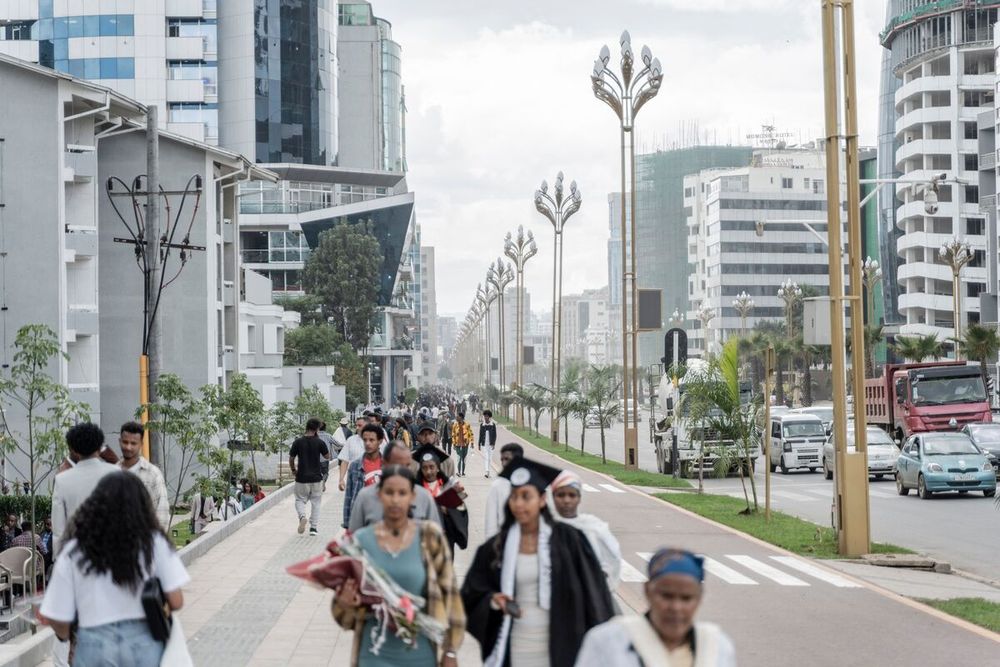
Ethiopia and Bondholders Fail to Reach Deal on Defaulted Debt
Talks between Ethiopia’s government and holders of a $1 billion defaulted bond collapsed after both sides agreed to terminate the discussions without an agreement.
www.bloomberg.com
October 14, 2025 at 3:52 PM
#Ethiopia's lenders could be about to sue the country in the British courts - after refusing a restructuring deal which would have made them significant profits.
We need a debt justice law to protect countries in debt crisis from being sued in London
www.bloomberg.com/news/article...
We need a debt justice law to protect countries in debt crisis from being sued in London
www.bloomberg.com/news/article...
Reposted by Tim Jones
BREAKING: We're in the news
“By denying debt relief for countries that need it, the #IMF is acting as a debt collector for rich and powerful creditors" - Heidi Chow
It's time to hold @IMFNews accountable.
#StopTheHarm #CancelTheDebt
www.theguardian.com/business/202...
“By denying debt relief for countries that need it, the #IMF is acting as a debt collector for rich and powerful creditors" - Heidi Chow
It's time to hold @IMFNews accountable.
#StopTheHarm #CancelTheDebt
www.theguardian.com/business/202...
October 13, 2025 at 10:31 AM
BREAKING: We're in the news
“By denying debt relief for countries that need it, the #IMF is acting as a debt collector for rich and powerful creditors" - Heidi Chow
It's time to hold @IMFNews accountable.
#StopTheHarm #CancelTheDebt
www.theguardian.com/business/202...
“By denying debt relief for countries that need it, the #IMF is acting as a debt collector for rich and powerful creditors" - Heidi Chow
It's time to hold @IMFNews accountable.
#StopTheHarm #CancelTheDebt
www.theguardian.com/business/202...
Reposted by Tim Jones

20 billion dollar US Treasury + Fed bailout for Argentina's Javier Milei. Cui Bono? "Funds at investment firms including BlackRock, Fidelity and Pimco are heavily invested in Argentina, as are investors such as Stanley Druckenmiller and Robert Citrone, both of whom worked with Mr. Bessent."

October 10, 2025 at 2:17 PM
20 billion dollar US Treasury + Fed bailout for Argentina's Javier Milei. Cui Bono? "Funds at investment firms including BlackRock, Fidelity and Pimco are heavily invested in Argentina, as are investors such as Stanley Druckenmiller and Robert Citrone, both of whom worked with Mr. Bessent."
Kenya's recent Eurobonds were sold at an issue price less than 100 (so Kenya received less they now owe).
This means the actual interest rates Kenya is paying are 8.2% and 9.4% on the 8- and 13-year bonds. (Rather than the headline 7.875% and 8.8%).
This means the actual interest rates Kenya is paying are 8.2% and 9.4% on the 8- and 13-year bonds. (Rather than the headline 7.875% and 8.8%).
Kenya / prospectus for the new Eurobond issuance. www.londonstockexchange.com/news-article...
London Stock Exchange | London Stock Exchange
null
www.londonstockexchange.com
October 7, 2025 at 3:46 PM
Kenya's recent Eurobonds were sold at an issue price less than 100 (so Kenya received less they now owe).
This means the actual interest rates Kenya is paying are 8.2% and 9.4% on the 8- and 13-year bonds. (Rather than the headline 7.875% and 8.8%).
This means the actual interest rates Kenya is paying are 8.2% and 9.4% on the 8- and 13-year bonds. (Rather than the headline 7.875% and 8.8%).
Reposted by Tim Jones

🚨 BREAKING: The former leader of Reform UK in Wales, Nathan Gill, has pleaded guilty to #bribery, admitting he received corrupt payments as a Brexit Party MEP in exchange for making statements in the European Parliament to promote Russia’s interests in #Ukraine.

Reform UK’s ex-leader in Wales Nathan Gill pleads guilty to bribery charges
Gill admits to eight charges while an elected member of the European parliament
www.theguardian.com
September 26, 2025 at 12:29 PM
This is so depressing - Suriname restructured its debt in December 2023. The deal involved minimal debt relief from bondholders. Suriname is already struggling with the high external debt payments (averaging 23% of government revenue 2025-2030) www.bloomberg.com/news/article...

Suriname Wants to Refinance Its Debt Before Oil Revenue Flows
Suriname’s new government is in talks with bondholders and multilateral lenders, seeking to refinance its dollar bonds to ease its debt servicing burden over the next two years.
www.bloomberg.com
September 26, 2025 at 8:31 AM
This is so depressing - Suriname restructured its debt in December 2023. The deal involved minimal debt relief from bondholders. Suriname is already struggling with the high external debt payments (averaging 23% of government revenue 2025-2030) www.bloomberg.com/news/article...
Reposted by Tim Jones

Trump's Argentine bail out could set up biggest sovereign story of the decade. If Argentina defaults despite the bail out, Trump will want seniority, but IMF cant give it. You can imagine how this descends into a colossal row between IMF and its biggest shareholder www.ft.com/content/4127...

Bessent says US in talks with Argentina over $20bn swap line
Proposed measure comes as Trump administration seeks to support Javier Milei’s libertarian government
www.ft.com
September 24, 2025 at 12:30 PM
Trump's Argentine bail out could set up biggest sovereign story of the decade. If Argentina defaults despite the bail out, Trump will want seniority, but IMF cant give it. You can imagine how this descends into a colossal row between IMF and its biggest shareholder www.ft.com/content/4127...
Reposted by Tim Jones
Elizabeth Warren has some questions for Scott Bessent on the US bailout in the works for Argentina. www.banking.senate.gov/imo/media/do...

September 23, 2025 at 12:25 PM
Elizabeth Warren has some questions for Scott Bessent on the US bailout in the works for Argentina. www.banking.senate.gov/imo/media/do...
Reposted by Tim Jones

That gap.
32% see immigration as one of the most important issues facing Britain — more than any other issue.
Just 4% see it as something that's important in their own life — one of the lowest shares, and a fraction of the numbers for inflation or the NHS.
32% see immigration as one of the most important issues facing Britain — more than any other issue.
Just 4% see it as something that's important in their own life — one of the lowest shares, and a fraction of the numbers for inflation or the NHS.

New post just out:
"Burn it down vs build it up"
With the right radicalising by the day - how can the argument be won on the key dividing line in politics?
(£/free trial)
open.substack.com/pub/samf/p/b...
"Burn it down vs build it up"
With the right radicalising by the day - how can the argument be won on the key dividing line in politics?
(£/free trial)
open.substack.com/pub/samf/p/b...

Burn it down vs build it up
Winning the argument on the key dividing line in politics
open.substack.com
September 18, 2025 at 5:34 PM
That gap.
32% see immigration as one of the most important issues facing Britain — more than any other issue.
Just 4% see it as something that's important in their own life — one of the lowest shares, and a fraction of the numbers for inflation or the NHS.
32% see immigration as one of the most important issues facing Britain — more than any other issue.
Just 4% see it as something that's important in their own life — one of the lowest shares, and a fraction of the numbers for inflation or the NHS.