


Kartikeyan Premrajka
@premrajka.bsky.social
Archaeal Microbiologist in training @Bramkamp Lab
|Science and Satire Enthusiast|
|Science and Satire Enthusiast|
Reposted by Kartikeyan Premrajka

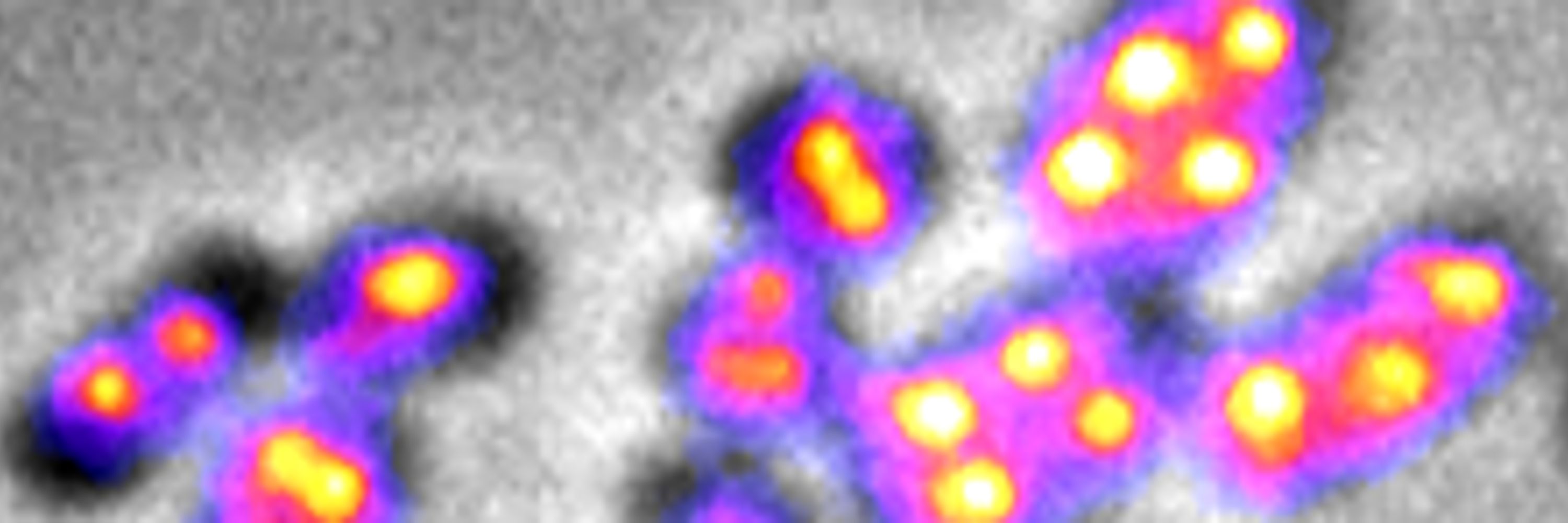
Stable inheritance of the Streptomyces linear plasmid SCP1 by dual ParABS partition systems https://www.biorxiv.org/content/10.64898/2025.12.10.693275v1
December 11, 2025 at 5:16 AM
Stable inheritance of the Streptomyces linear plasmid SCP1 by dual ParABS partition systems https://www.biorxiv.org/content/10.64898/2025.12.10.693275v1
Reposted by Kartikeyan Premrajka

Our preprint is now published in PNAS! This came together thanks to a great collaboration with Antoine Hocher and a strong team effort from the Le Lab. Thank you to the reviewers and to everyone who helped improve it. I hope ParB aficionados will enjoy it.
www.pnas.org/doi/10.1073/...
www.pnas.org/doi/10.1073/...

Versatile NTP recognition and domain fusions expand the functional repertoire of the ParB-CTPase fold beyond chromosome segregation | PNAS
Nucleotide triphosphate (NTP)-dependent molecular switches regulate essential cellular
processes by cycling between active and inactive states thro...
www.pnas.org
December 4, 2025 at 8:10 PM
Our preprint is now published in PNAS! This came together thanks to a great collaboration with Antoine Hocher and a strong team effort from the Le Lab. Thank you to the reviewers and to everyone who helped improve it. I hope ParB aficionados will enjoy it.
www.pnas.org/doi/10.1073/...
www.pnas.org/doi/10.1073/...
Reposted by Kartikeyan Premrajka
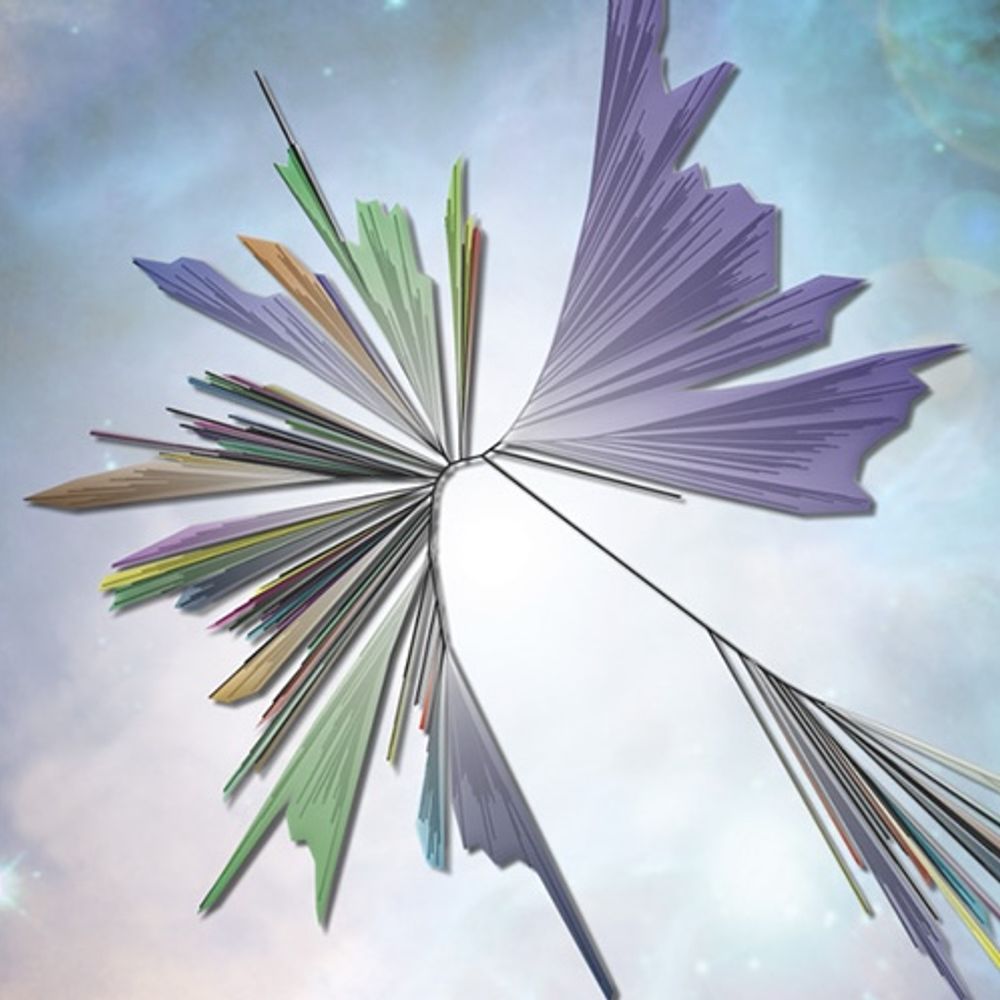
Out now in Nature Communications: Convergent evolution of viral-like Borg archaeal extrachromosomal elements and giant eukaryotic viruses
www.nature.com/articles/s41...
@luisvalentin.bsky.social @lingdong-shi.bsky.social @martianmicrobe.bsky.social @mschoelmerich.bsky.social
www.nature.com/articles/s41...
@luisvalentin.bsky.social @lingdong-shi.bsky.social @martianmicrobe.bsky.social @mschoelmerich.bsky.social

Convergent evolution of viral-like Borg archaeal extrachromosomal elements and giant eukaryotic viruses - Nature Communications
Borgs are large extrachromosomal elements of anaerobic methane-oxidizing archaea. Here, via in silico protein structure prediction of ~10,000 Borg proteins, the authors reveal that Borgs share numerou...
www.nature.com
November 28, 2025 at 9:01 PM
Out now in Nature Communications: Convergent evolution of viral-like Borg archaeal extrachromosomal elements and giant eukaryotic viruses
www.nature.com/articles/s41...
@luisvalentin.bsky.social @lingdong-shi.bsky.social @martianmicrobe.bsky.social @mschoelmerich.bsky.social
www.nature.com/articles/s41...
@luisvalentin.bsky.social @lingdong-shi.bsky.social @martianmicrobe.bsky.social @mschoelmerich.bsky.social
Reposted by Kartikeyan Premrajka
Equipositioning of Chromosomes in the Polyploid Archaeon Haloferax volcanii by HpaAB https://www.biorxiv.org/content/10.1101/2025.11.19.689047v1
November 19, 2025 at 4:18 PM
Equipositioning of Chromosomes in the Polyploid Archaeon Haloferax volcanii by HpaAB https://www.biorxiv.org/content/10.1101/2025.11.19.689047v1
Reposted by Kartikeyan Premrajka

We’re excited to announce the incredible speaker line-up for the Prokaryotic Cell Biology Conference! Join the leading researchers as they explore the latest advances in Nanoimaging, Cell Growth and Cellular Structures.
Join our speakers & register today! ➡️https://bit.ly/47rtkbw
#ProkaryoticCellBio
Join our speakers & register today! ➡️https://bit.ly/47rtkbw
#ProkaryoticCellBio

October 16, 2025 at 2:27 PM
We’re excited to announce the incredible speaker line-up for the Prokaryotic Cell Biology Conference! Join the leading researchers as they explore the latest advances in Nanoimaging, Cell Growth and Cellular Structures.
Join our speakers & register today! ➡️https://bit.ly/47rtkbw
#ProkaryoticCellBio
Join our speakers & register today! ➡️https://bit.ly/47rtkbw
#ProkaryoticCellBio
Reposted by Kartikeyan Premrajka
Our work on viruses and virus satellites of haloarchaea and their DPANN symbionts is out today in Nature Microbiology!
@mkrupovic.bsky.social @deemteam.bsky.social @anagtz.bsky.social
www.nature.com/articles/s41...
@mkrupovic.bsky.social @deemteam.bsky.social @anagtz.bsky.social
www.nature.com/articles/s41...

Viruses and virus satellites of haloarchaea and their nanosized DPANN symbionts reveal intricate nested interactions - Nature Microbiology
An exploration of the viromes of haloarchaea and their ultra-small DPANN symbionts reveals plasmid-derived satellites of viruses from both archaeal groups, highlighting the complexity of nested symbio...
www.nature.com
October 17, 2025 at 9:54 AM
Our work on viruses and virus satellites of haloarchaea and their DPANN symbionts is out today in Nature Microbiology!
@mkrupovic.bsky.social @deemteam.bsky.social @anagtz.bsky.social
www.nature.com/articles/s41...
@mkrupovic.bsky.social @deemteam.bsky.social @anagtz.bsky.social
www.nature.com/articles/s41...
Reposted by Kartikeyan Premrajka

BindCraft: an AlphaFold2-powered de novo protein binder design tool 🧬✨
Tested in some bacterial systems too! Designs so far are short peptides or mini-domains. Looking forward to long/full protein design ahead! 🧪 #microsky
www.nature.com/articles/s41...
Tested in some bacterial systems too! Designs so far are short peptides or mini-domains. Looking forward to long/full protein design ahead! 🧪 #microsky
www.nature.com/articles/s41...

One-shot design of functional protein binders with BindCraft - Nature
BindCraft, an open-source, automated pipeline for de novo protein binder design with experimental success rates of 10–100%, leverages AlphaFold2 weights to generate binders with nanomolar affinity without the need for high-throughput screening.
www.nature.com
October 5, 2025 at 12:07 PM
BindCraft: an AlphaFold2-powered de novo protein binder design tool 🧬✨
Tested in some bacterial systems too! Designs so far are short peptides or mini-domains. Looking forward to long/full protein design ahead! 🧪 #microsky
www.nature.com/articles/s41...
Tested in some bacterial systems too! Designs so far are short peptides or mini-domains. Looking forward to long/full protein design ahead! 🧪 #microsky
www.nature.com/articles/s41...
Reposted by Kartikeyan Premrajka

Reposted by Kartikeyan Premrajka
Happy to share that our story on the bacterial archaellum was published today in @natmicrobiol.nature.com
www.nature.com/articles/s41...
Congrats to the authors: @sshamphavi.bsky.social @loumollat.bsky.social @mariejoest.bsky.social Najwa Taib and @sgribaldo.bsky.social
www.nature.com/articles/s41...
Congrats to the authors: @sshamphavi.bsky.social @loumollat.bsky.social @mariejoest.bsky.social Najwa Taib and @sgribaldo.bsky.social
September 17, 2025 at 5:41 PM
Happy to share that our story on the bacterial archaellum was published today in @natmicrobiol.nature.com
www.nature.com/articles/s41...
Congrats to the authors: @sshamphavi.bsky.social @loumollat.bsky.social @mariejoest.bsky.social Najwa Taib and @sgribaldo.bsky.social
www.nature.com/articles/s41...
Congrats to the authors: @sshamphavi.bsky.social @loumollat.bsky.social @mariejoest.bsky.social Najwa Taib and @sgribaldo.bsky.social
Reposted by Kartikeyan Premrajka
🚨 Imagine a bacterium that refuses to follow the textbook:
It grows as tangled filaments, divides unevenly, reshapes its own membranes… and even builds grappling hooks.
Meet Litorilinea aerophila — and here’s why it blew our minds.
It grows as tangled filaments, divides unevenly, reshapes its own membranes… and even builds grappling hooks.
Meet Litorilinea aerophila — and here’s why it blew our minds.

August 20, 2025 at 10:34 AM
🚨 Imagine a bacterium that refuses to follow the textbook:
It grows as tangled filaments, divides unevenly, reshapes its own membranes… and even builds grappling hooks.
Meet Litorilinea aerophila — and here’s why it blew our minds.
It grows as tangled filaments, divides unevenly, reshapes its own membranes… and even builds grappling hooks.
Meet Litorilinea aerophila — and here’s why it blew our minds.
Reposted by Kartikeyan Premrajka

Thrilled to see our work published in @embojournal.org
#asgard #archaea #cytoskeleton #tubulin #FtsZ
We sincerely appreciate the constructive peer review and the reviewers’ thoughtful, supportive feedback, which greatly strengthened our work.
#asgard #archaea #cytoskeleton #tubulin #FtsZ
We sincerely appreciate the constructive peer review and the reviewers’ thoughtful, supportive feedback, which greatly strengthened our work.

Insights into the origins of the #tubulin / #FtsZ superfamily: @syncellbiolab.bsky.social, Pananghat Gayathri et al show that two #Asgard archaeal paralogs OdinFtsZ1 and OdinFtsZ2 form distinct filamental structures, and employ different modes of membrane tethering
www.embopress.org/doi/full/10....
www.embopress.org/doi/full/10....

August 8, 2025 at 11:49 AM
Thrilled to see our work published in @embojournal.org
#asgard #archaea #cytoskeleton #tubulin #FtsZ
We sincerely appreciate the constructive peer review and the reviewers’ thoughtful, supportive feedback, which greatly strengthened our work.
#asgard #archaea #cytoskeleton #tubulin #FtsZ
We sincerely appreciate the constructive peer review and the reviewers’ thoughtful, supportive feedback, which greatly strengthened our work.
Reposted by Kartikeyan Premrajka
📢 For all HaloTag lovers💙💚💛❤️💜🩶 we are excited to share that our work, in which we developed a new biotin-HaloTag ligand, is now published in @jcb.org! Full link here: rupress.org/jcb/article-...
July 23, 2025 at 10:10 AM
📢 For all HaloTag lovers💙💚💛❤️💜🩶 we are excited to share that our work, in which we developed a new biotin-HaloTag ligand, is now published in @jcb.org! Full link here: rupress.org/jcb/article-...
Reposted by Kartikeyan Premrajka
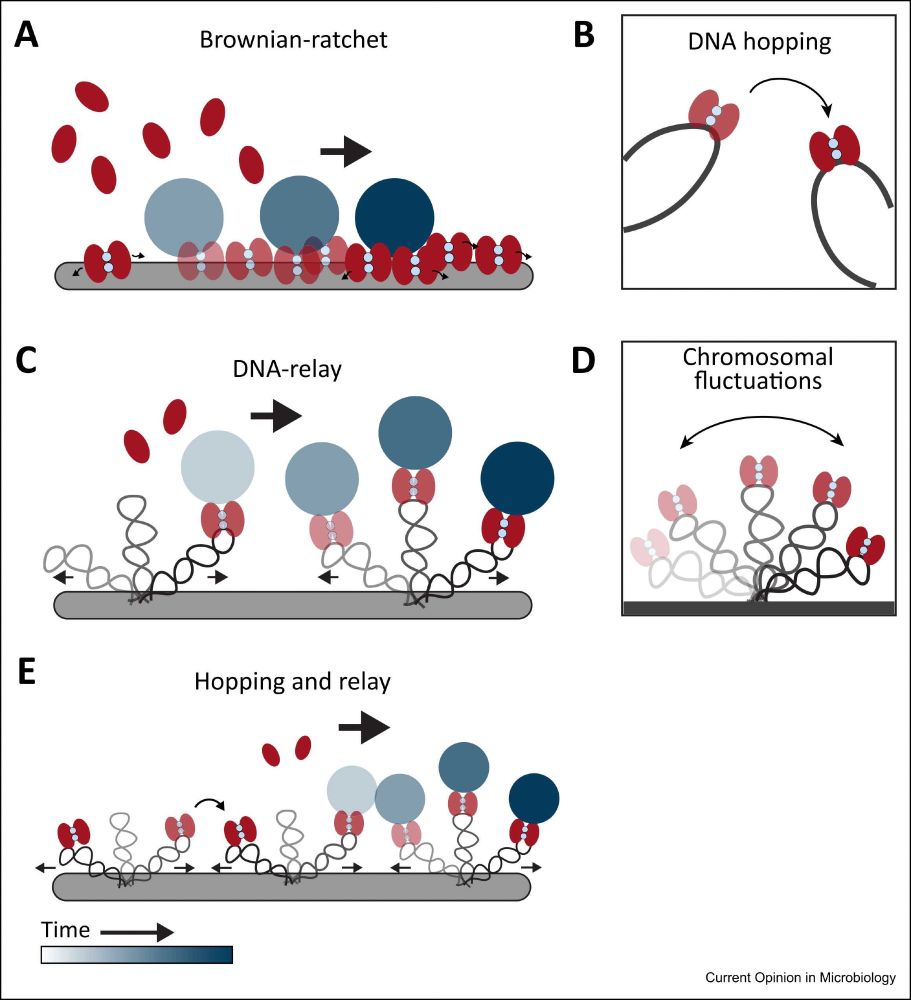
A thoughtful Current Opinion from Chris @azaldegui.bsky.social laying out how ParA-type ATPases partition DNA cargos—especially carboxysomes—in bacteria. Fun summer reading for those interested in how bacteria position their contents. @cellforganized.bsky.social
authors.elsevier.com/a/1lWGb4tPFp...
authors.elsevier.com/a/1lWGb4tPFp...
July 30, 2025 at 7:27 PM
A thoughtful Current Opinion from Chris @azaldegui.bsky.social laying out how ParA-type ATPases partition DNA cargos—especially carboxysomes—in bacteria. Fun summer reading for those interested in how bacteria position their contents. @cellforganized.bsky.social
authors.elsevier.com/a/1lWGb4tPFp...
authors.elsevier.com/a/1lWGb4tPFp...
Reposted by Kartikeyan Premrajka

And the story is published now!🍾
www.nature.com/articles/s41...
Open access link: rdcu.be/exnOc
Many years in the making, great collaboration with @archaellum.bsky.social & @tunglejic.bsky.social
Thanks @ukri.org BBSRC & @leverhulme.ac.uk for funding, reviewers & editor!! 🙏
#microsky #archaeasky
www.nature.com/articles/s41...
Open access link: rdcu.be/exnOc
Many years in the making, great collaboration with @archaellum.bsky.social & @tunglejic.bsky.social
Thanks @ukri.org BBSRC & @leverhulme.ac.uk for funding, reviewers & editor!! 🙏
#microsky #archaeasky
July 22, 2025 at 9:06 PM
And the story is published now!🍾
www.nature.com/articles/s41...
Open access link: rdcu.be/exnOc
Many years in the making, great collaboration with @archaellum.bsky.social & @tunglejic.bsky.social
Thanks @ukri.org BBSRC & @leverhulme.ac.uk for funding, reviewers & editor!! 🙏
#microsky #archaeasky
www.nature.com/articles/s41...
Open access link: rdcu.be/exnOc
Many years in the making, great collaboration with @archaellum.bsky.social & @tunglejic.bsky.social
Thanks @ukri.org BBSRC & @leverhulme.ac.uk for funding, reviewers & editor!! 🙏
#microsky #archaeasky
Reposted by Kartikeyan Premrajka

Also check out the associated News & Views by Masayasu Taki and Masayoshi Nakamura highlighting the work from @kjohnsson.bsky.social lab on SNAP-tag2
www.nature.com/articles/s41...
www.nature.com/articles/s41...
July 8, 2025 at 4:02 PM
Also check out the associated News & Views by Masayasu Taki and Masayoshi Nakamura highlighting the work from @kjohnsson.bsky.social lab on SNAP-tag2
www.nature.com/articles/s41...
www.nature.com/articles/s41...
Reposted by Kartikeyan Premrajka
The ParA-like ATPase PldP influences the TatA dynamics in Corynebacterium glutamicum https://www.biorxiv.org/content/10.1101/2025.07.02.662783v1
July 6, 2025 at 12:17 AM
The ParA-like ATPase PldP influences the TatA dynamics in Corynebacterium glutamicum https://www.biorxiv.org/content/10.1101/2025.07.02.662783v1
Reposted by Kartikeyan Premrajka

One of the most exciting discoveries from our lab so far is now online as a preprint!
Read a story on how the ParMR and Min systems started to collaborate to create the CorMR cytoskeleton, which now controls cell shape in multicellular cyanobacteria:
www.biorxiv.org/content/10.1...
Read a story on how the ParMR and Min systems started to collaborate to create the CorMR cytoskeleton, which now controls cell shape in multicellular cyanobacteria:
www.biorxiv.org/content/10.1...

Evolutionary repurposing of a DNA segregation machinery into a cytoskeletal system controlling cyanobacterial cell shape
Bacteria, despite their diversity, use conserved cytoskeletal systems for their intracellular organization. In unicellular bacteria, the ParMRC DNA partitioning apparatus is well known for forming act...
www.biorxiv.org
July 2, 2025 at 11:35 AM
One of the most exciting discoveries from our lab so far is now online as a preprint!
Read a story on how the ParMR and Min systems started to collaborate to create the CorMR cytoskeleton, which now controls cell shape in multicellular cyanobacteria:
www.biorxiv.org/content/10.1...
Read a story on how the ParMR and Min systems started to collaborate to create the CorMR cytoskeleton, which now controls cell shape in multicellular cyanobacteria:
www.biorxiv.org/content/10.1...
Reposted by Kartikeyan Premrajka

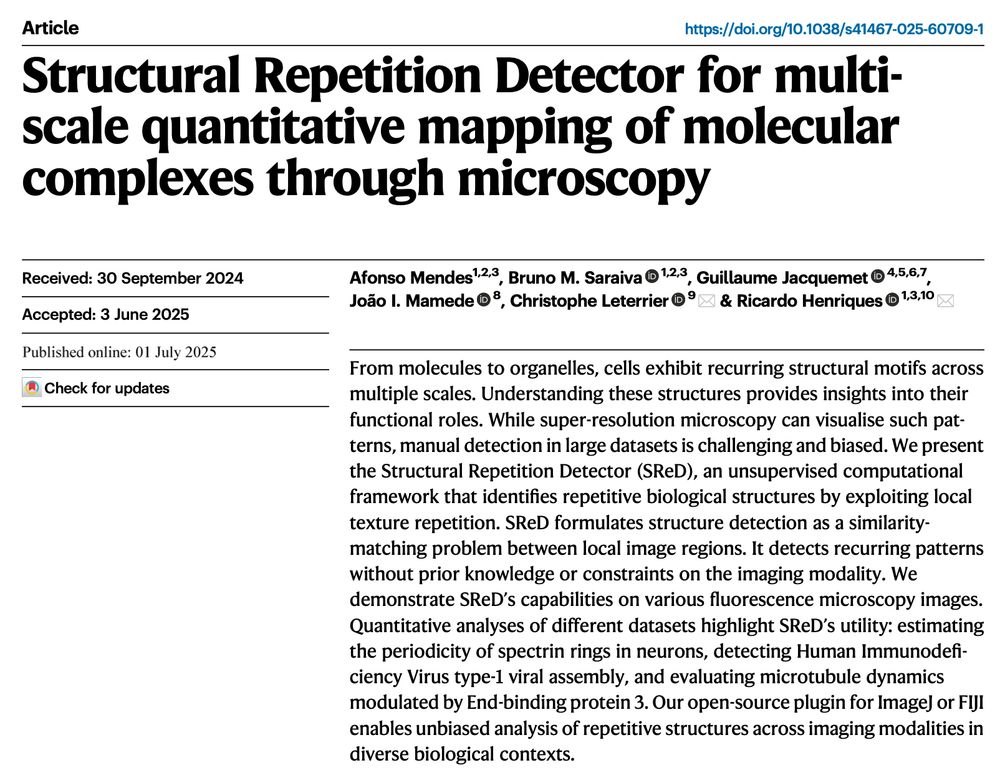
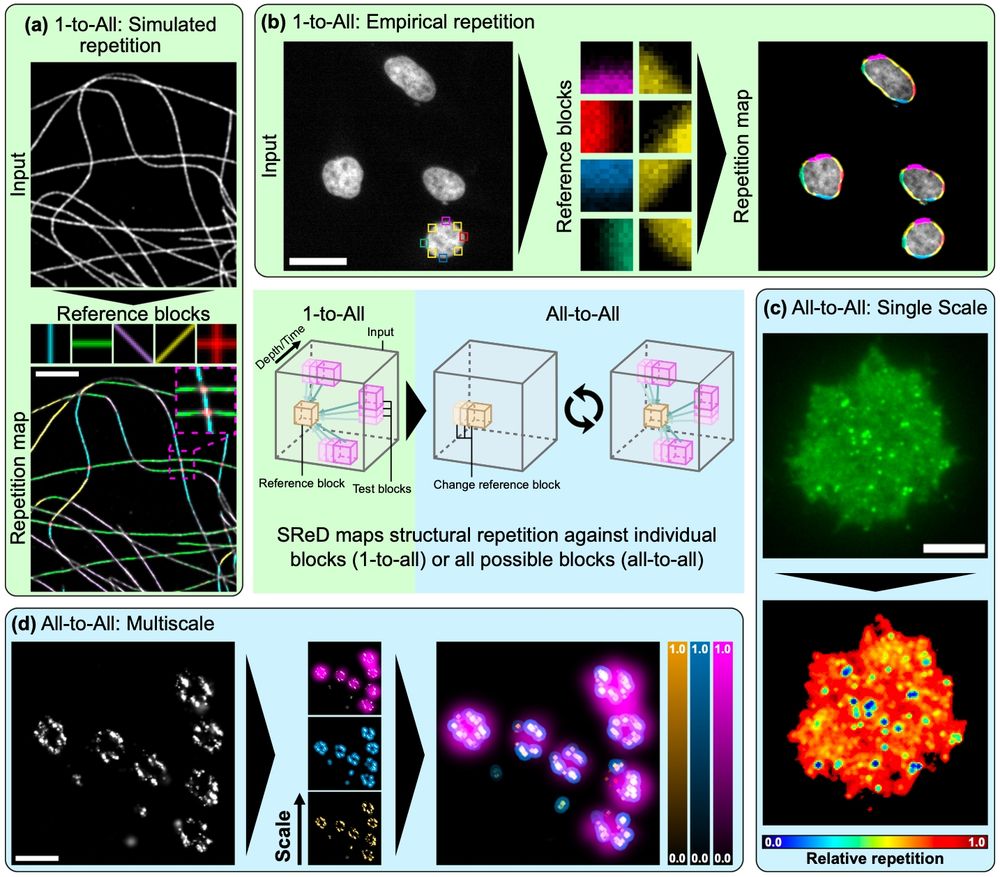
🔬👨💻📰 #SReD is out!
Automated structural detection for #ImageJ & #FIJI, from nano to macro ✨🐘. No training data, no bias - texture analysis with GPU acceleration!⚡️
Brainchild of @afonsomendes92.bsky.social and adventure w @christlet.bsky.social lab + friends.
Check: www.nature.com/articles/s41...
Automated structural detection for #ImageJ & #FIJI, from nano to macro ✨🐘. No training data, no bias - texture analysis with GPU acceleration!⚡️
Brainchild of @afonsomendes92.bsky.social and adventure w @christlet.bsky.social lab + friends.
Check: www.nature.com/articles/s41...
July 2, 2025 at 7:09 AM
🔬👨💻📰 #SReD is out!
Automated structural detection for #ImageJ & #FIJI, from nano to macro ✨🐘. No training data, no bias - texture analysis with GPU acceleration!⚡️
Brainchild of @afonsomendes92.bsky.social and adventure w @christlet.bsky.social lab + friends.
Check: www.nature.com/articles/s41...
Automated structural detection for #ImageJ & #FIJI, from nano to macro ✨🐘. No training data, no bias - texture analysis with GPU acceleration!⚡️
Brainchild of @afonsomendes92.bsky.social and adventure w @christlet.bsky.social lab + friends.
Check: www.nature.com/articles/s41...
Reposted by Kartikeyan Premrajka

Membraneless protocell confined by a heat flow
doi.org/10.1038/s415...
doi.org/10.1038/s415...

Membraneless protocell confined by a heat flow - Nature Physics
It is unclear how cell compartmentalization emerged in prebiotic conditions. Now it is shown that a temperature gradient in a confined space can bring the core components of a cell together.
doi.org
June 29, 2025 at 8:36 AM
Membraneless protocell confined by a heat flow
doi.org/10.1038/s415...
doi.org/10.1038/s415...
Reposted by Kartikeyan Premrajka
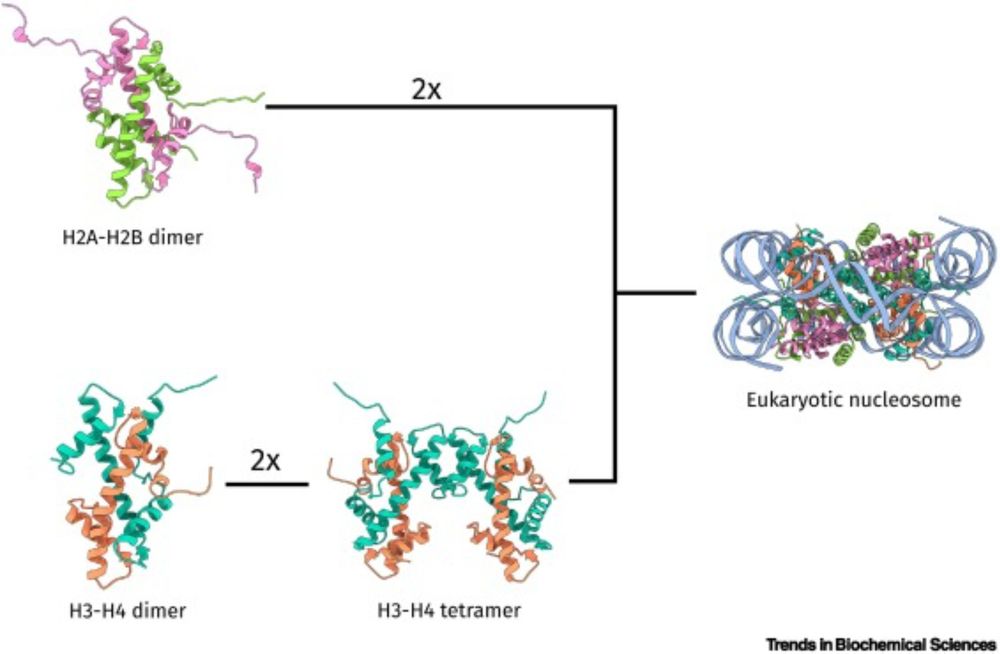
A must-read for histone afficionados: our new review on 'Histone-mediated chromatin organization in prokaryotes and viruses' www.cell.com/trends/bioch... @samuelschwab.bsky.social @vikramalva.bsky.social
Histone-mediated chromatin organization in prokaryotes and viruses
Histones are fundamental chromatin-organizing proteins in eukaryotes and archaea,
where they assemble into (hyper)nucleosomes that wrap DNA. Recent studies have expanded
the known repertoire of histon...
www.cell.com
June 30, 2025 at 7:35 AM
A must-read for histone afficionados: our new review on 'Histone-mediated chromatin organization in prokaryotes and viruses' www.cell.com/trends/bioch... @samuelschwab.bsky.social @vikramalva.bsky.social
Reposted by Kartikeyan Premrajka

#News&Views
🚨Out Now!
Behind the scenes, Retracing a tangled tree of Archaeal evolution
#Archaea #MicroSky 🦠
www.nature.com/articles/s41...
🚨Out Now!
Behind the scenes, Retracing a tangled tree of Archaeal evolution
#Archaea #MicroSky 🦠
www.nature.com/articles/s41...

Retracing a tangled tree of archaeal evolution - Nature Microbiology
Updated phylogenetic analyses yield a more nuanced view of the evolution of the DPANN archaea, a diverse superphylum of enigmatic and symbiotic microorganisms with a debated placement on the tree of l...
www.nature.com
June 25, 2025 at 2:39 PM
#News&Views
🚨Out Now!
Behind the scenes, Retracing a tangled tree of Archaeal evolution
#Archaea #MicroSky 🦠
www.nature.com/articles/s41...
🚨Out Now!
Behind the scenes, Retracing a tangled tree of Archaeal evolution
#Archaea #MicroSky 🦠
www.nature.com/articles/s41...
Reposted by Kartikeyan Premrajka

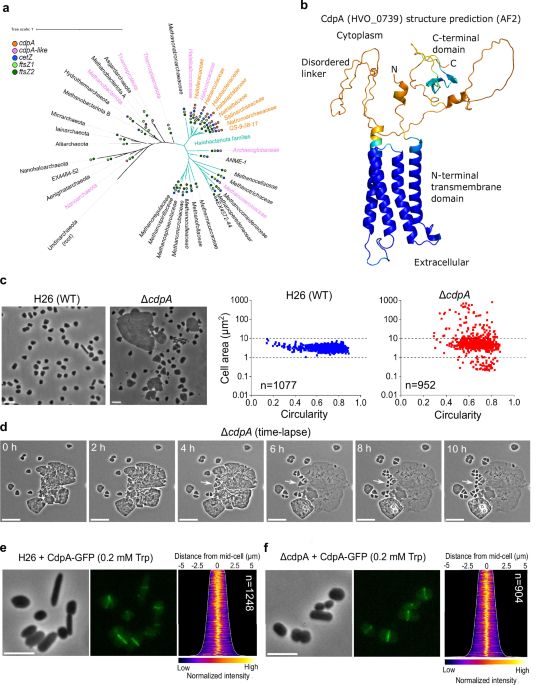
CdpA-an archaeal anchor for FtsZ! Excited to be part of this. (FtsZ is easily my favourite protein and the whole larger family in Archaea are intriguing).
www.nature.com/articles/s41...
www.nature.com/articles/s41...
Cell division protein CdpA organises and anchors the midcell ring in haloarchaea - Nature Communications
Cell division in many archaea requires the coordinated activities of two distinct FtsZ proteins, which are part of the midcell division ring. Here, Liao et al. show that an additional protein, CdpA, o...
www.nature.com
June 3, 2025 at 10:44 PM
CdpA-an archaeal anchor for FtsZ! Excited to be part of this. (FtsZ is easily my favourite protein and the whole larger family in Archaea are intriguing).
www.nature.com/articles/s41...
www.nature.com/articles/s41...
Reposted by Kartikeyan Premrajka

👉🏻 so glad to see this work out now ... a masterpiece conceived, led and driven by 👉🏻 Christoph Spahn 👏@michriscopy.bsky.social (🚨 #NewPI) and with great collaborations 🙏 @henriqueslab.bsky.social @seamusholden.bsky.social @gomez-mariscal.bsky.social

Into the Nucleoid:
Single-molecule localisation 🔬 and live-cell imaging reveal fine details of chromosomal organisation in the bacterium E. coli 🦠
@michriscopy.bsky.social @uni-wuerzburg.de @heilemannlab.bsky.social @goetheuni.bsky.social
#microbiology
Single-molecule localisation 🔬 and live-cell imaging reveal fine details of chromosomal organisation in the bacterium E. coli 🦠
@michriscopy.bsky.social @uni-wuerzburg.de @heilemannlab.bsky.social @goetheuni.bsky.social
#microbiology

BPoD | Into the Nucleoid
Into the Nucleoid - Biomedical pictures for April 2025.
bit.ly
May 31, 2025 at 6:12 AM
👉🏻 so glad to see this work out now ... a masterpiece conceived, led and driven by 👉🏻 Christoph Spahn 👏@michriscopy.bsky.social (🚨 #NewPI) and with great collaborations 🙏 @henriqueslab.bsky.social @seamusholden.bsky.social @gomez-mariscal.bsky.social
Reposted by Kartikeyan Premrajka

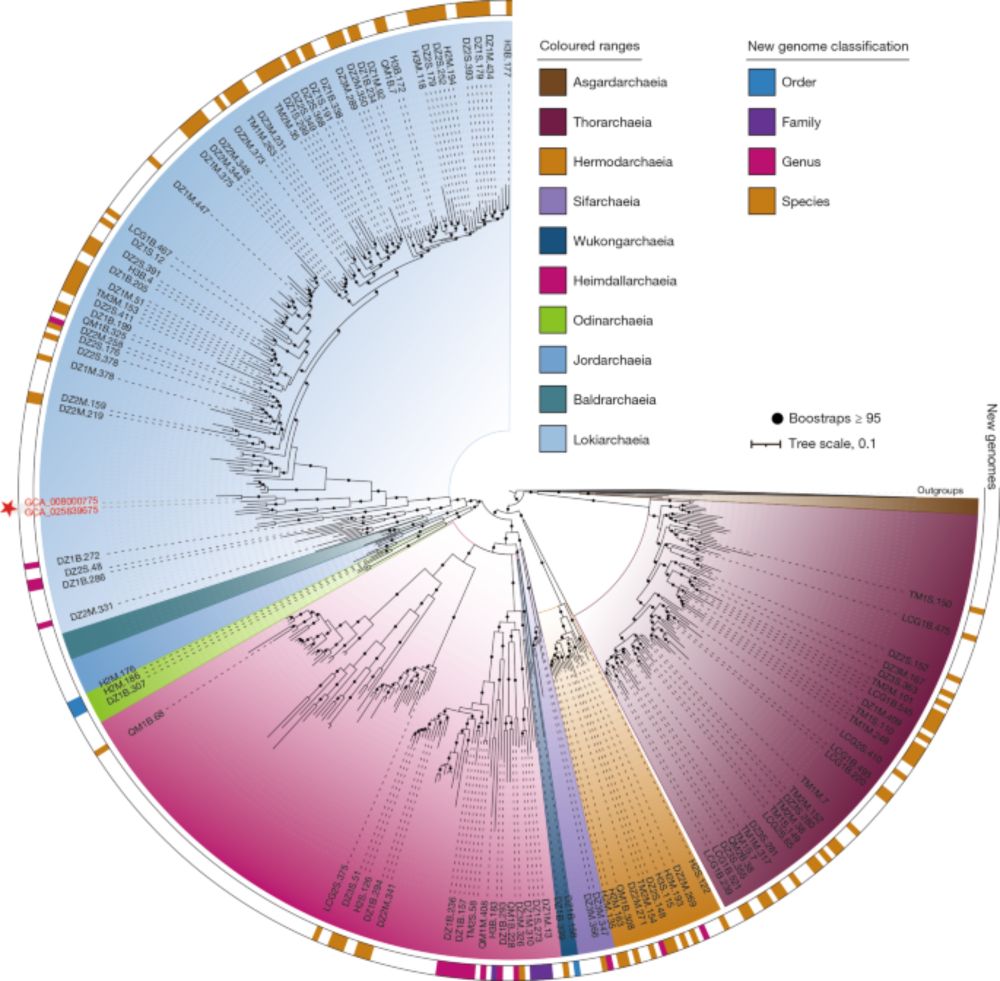
Deep origin of eukaryotes outside Heimdallarchaeia within Asgardarchaeota www.nature.com/articles/s41...
Deep origin of eukaryotes outside Heimdallarchaeia within Asgardarchaeota - Nature
Ancestral reconstruction together with molecular dating of the last Asgard archaea and eukaryote common ancestor suggest that eukaryotes arose from the fusion of a H2-consuming archaeal host and a H2-...
www.nature.com
May 7, 2025 at 7:11 PM
Deep origin of eukaryotes outside Heimdallarchaeia within Asgardarchaeota www.nature.com/articles/s41...
Reposted by Kartikeyan Premrajka

Fellow bacterial cell biologists, message me if you use @thermofishersci.bsky.social Gene Frames for microscopy!
Thermo are planning to discontinue these in September but have indicated they will look into this further.
If I make list of labs using them Thermo might not kill the product
Please RT🔬🦠
Thermo are planning to discontinue these in September but have indicated they will look into this further.
If I make list of labs using them Thermo might not kill the product
Please RT🔬🦠
Live Cell Imaging of Bacillus subtilis and Streptococcus pneumoniae using Automated Time-lapse Microscopy
42.1K Views. University of Groningen. This protocol provides a step-by-step procedure to monitor single cell behavior of different bacteria in time using automated fluorescence time-lapse microscopy....
www.jove.com
April 8, 2025 at 1:26 PM
Fellow bacterial cell biologists, message me if you use @thermofishersci.bsky.social Gene Frames for microscopy!
Thermo are planning to discontinue these in September but have indicated they will look into this further.
If I make list of labs using them Thermo might not kill the product
Please RT🔬🦠
Thermo are planning to discontinue these in September but have indicated they will look into this further.
If I make list of labs using them Thermo might not kill the product
Please RT🔬🦠