


Gilberto Alvarez
@gilb-alvarez.bsky.social
Computational biologist at the Gompel Lab, Universität Bonn 🇩🇪
Mexicano 🇲🇽
My interests: Evo Devo, Gene regulation and Quantitative biology
Mexicano 🇲🇽
My interests: Evo Devo, Gene regulation and Quantitative biology
Reposted by Gilberto Alvarez

The call for Health + Life Science Alliance post doctoral fellowships has just opened: lnkd.in/dw9zxKSN.
Joint with my group @embl.org , Victoria Ingham Uni. Heidelberg, and Felix Hol at Radboud Univ., we are exploring how climate and chemistry shape mosquito behaviour for next-gen. vector control
Joint with my group @embl.org , Victoria Ingham Uni. Heidelberg, and Felix Hol at Radboud Univ., we are exploring how climate and chemistry shape mosquito behaviour for next-gen. vector control
January 19, 2026 at 8:00 AM
The call for Health + Life Science Alliance post doctoral fellowships has just opened: lnkd.in/dw9zxKSN.
Joint with my group @embl.org , Victoria Ingham Uni. Heidelberg, and Felix Hol at Radboud Univ., we are exploring how climate and chemistry shape mosquito behaviour for next-gen. vector control
Joint with my group @embl.org , Victoria Ingham Uni. Heidelberg, and Felix Hol at Radboud Univ., we are exploring how climate and chemistry shape mosquito behaviour for next-gen. vector control
Reposted by Gilberto Alvarez

We mourn the passing of Peer Bork, EMBO Member since 2000: https://www.embl.org/news/embl-announcements/in-remembrance-of-peer-bork/

In remembrance of Peer Bork | EMBL
EMBL and its community are deeply saddened by the death of Peer Bork, the organisation’s Interim Director General.
www.embl.org
January 17, 2026 at 2:52 AM
We mourn the passing of Peer Bork, EMBO Member since 2000: https://www.embl.org/news/embl-announcements/in-remembrance-of-peer-bork/
Reposted by Gilberto Alvarez

interesting case of human creativity

🧬🔬@science.org A genetically encoded device for #transcriptome storage in mammalian cells | Science www.science.org/doi/10.1126/... @broadinstitute.org

A genetically encoded device for transcriptome storage in mammalian cells
Understanding how cells make decisions over time requires the ability to link past molecular states to future phenotypic outcomes. We present TimeVault, a genetically encoded system that records and s...
www.science.org
January 16, 2026 at 9:31 AM
interesting case of human creativity
Reposted by Gilberto Alvarez

Great photo. Her omission from the 1944 Nobel Prize for the discovery of nuclear fission is said to represent "one of the worst examples of blatant racism and sexism by the Nobel committee."
theconversation.com/lise-meitner...
theconversation.com/lise-meitner...

Lise Meitner – the forgotten woman of nuclear physics who deserved a Nobel Prize
Left off publications due to Nazi prejudice, this Jewish woman lost her rightful place in the scientific pantheon as the discoverer of nuclear fission.
theconversation.com
January 16, 2026 at 2:55 PM
Great photo. Her omission from the 1944 Nobel Prize for the discovery of nuclear fission is said to represent "one of the worst examples of blatant racism and sexism by the Nobel committee."
theconversation.com/lise-meitner...
theconversation.com/lise-meitner...
Reposted by Gilberto Alvarez
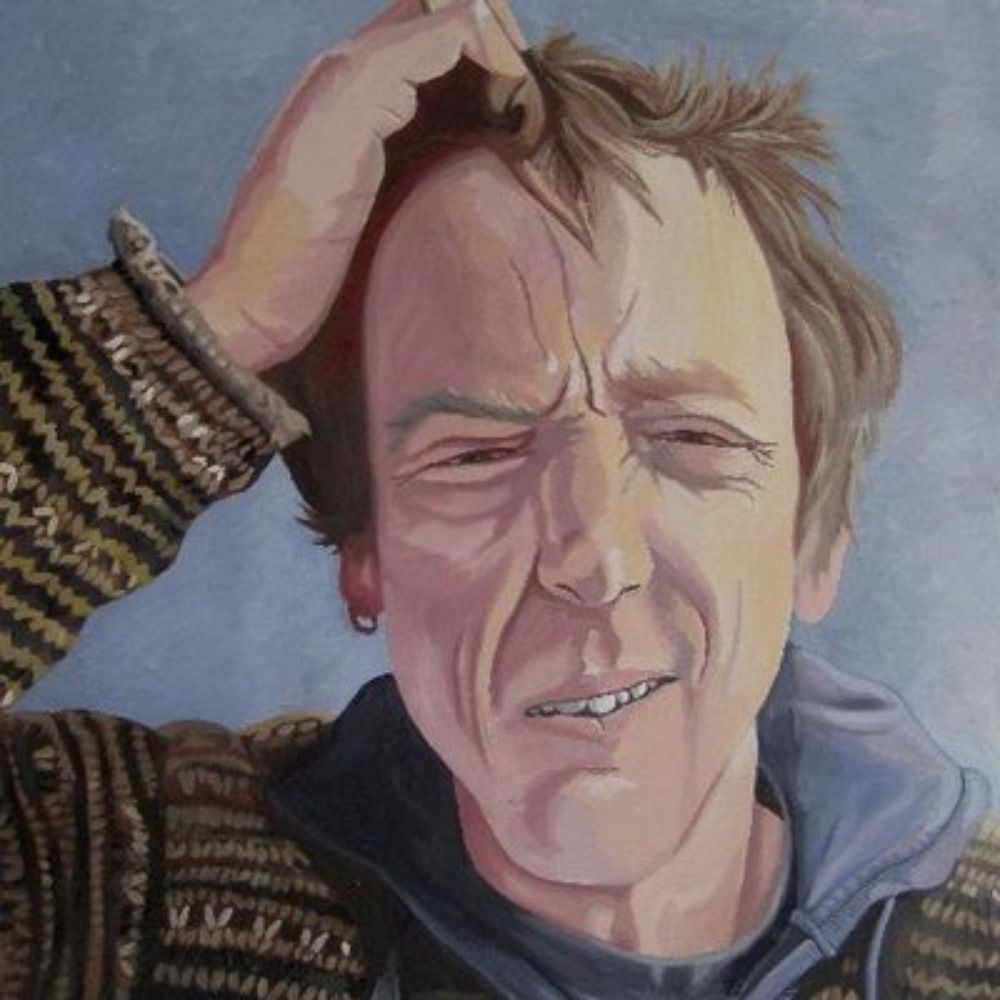
Always loved this picture of Lise Meitner looking like she doesn't take any shit from anyone.

January 16, 2026 at 2:45 PM
Always loved this picture of Lise Meitner looking like she doesn't take any shit from anyone.
Reposted by Gilberto Alvarez
Biologist Elias Barriga studies how frog embryos generate electrical fields to guide cell migration. The study of bioelectricity, formerly stranded in biology’s backwaters, is “coming back like crazy,” he said. www.quantamagazine.org/cells-use-bi...

January 15, 2026 at 9:04 PM
Biologist Elias Barriga studies how frog embryos generate electrical fields to guide cell migration. The study of bioelectricity, formerly stranded in biology’s backwaters, is “coming back like crazy,” he said. www.quantamagazine.org/cells-use-bi...
Reposted by Gilberto Alvarez

"Quantum Mechanics: A Physical Approach" by Ana Maria Cetto and Luis de la Peña.
This quantum mechanics textbook, suitable for undergraduate and graduate courses, emphasizes conceptual understanding of the subject.
Available #openaccess on Cambridge Core https://cup.org/4alHPzC
This quantum mechanics textbook, suitable for undergraduate and graduate courses, emphasizes conceptual understanding of the subject.
Available #openaccess on Cambridge Core https://cup.org/4alHPzC

January 16, 2026 at 9:53 AM
"Quantum Mechanics: A Physical Approach" by Ana Maria Cetto and Luis de la Peña.
This quantum mechanics textbook, suitable for undergraduate and graduate courses, emphasizes conceptual understanding of the subject.
Available #openaccess on Cambridge Core https://cup.org/4alHPzC
This quantum mechanics textbook, suitable for undergraduate and graduate courses, emphasizes conceptual understanding of the subject.
Available #openaccess on Cambridge Core https://cup.org/4alHPzC
Reposted by Gilberto Alvarez

For decades, it was thought animals arose via a rapid burst of genetic innovation. But by sequencing their closest unicellular relatives (our beloved protists), we now know most of those genes originated before animals evolved. We have tons of data on that! 😀
January 15, 2026 at 11:00 AM
For decades, it was thought animals arose via a rapid burst of genetic innovation. But by sequencing their closest unicellular relatives (our beloved protists), we now know most of those genes originated before animals evolved. We have tons of data on that! 😀
Reposted by Gilberto Alvarez

The Greenland shark, the longest-living vertebrate, inhabits the dim, frigid depths of the Arctic Ocean. A study in Nature Communications finds that its vision remains intact and well-adapted for life in dim light, revealing remarkable preservation of sensory function across centuries. 🧪

The visual system of the longest-living vertebrate, the Greenland shark - Nature Communications
The Greenland shark, the longest-living vertebrate, inhabits the dim, frigid depths of the Arctic Ocean. Despite its extreme lifespan, this study finds that its vision remains intact and well-adapted for life in dim light, revealing remarkable preservation of sensory function across centuries.
go.nature.com
January 13, 2026 at 2:09 PM
The Greenland shark, the longest-living vertebrate, inhabits the dim, frigid depths of the Arctic Ocean. A study in Nature Communications finds that its vision remains intact and well-adapted for life in dim light, revealing remarkable preservation of sensory function across centuries. 🧪
Reposted by Gilberto Alvarez

New preprint! Here, we highlight the role of motifs during the Toxoplasma host cell invasion, predict thousands of motifs in its effector proteins, and validate the binding of TRAF6 motifs. Our results are intended to catalyse further research on motifs and parasites.
www.biorxiv.org/content/10.6...
www.biorxiv.org/content/10.6...

Short linear motifs - Unexplored players driving Toxoplasma gondii infection
Pathogens infect hosts by interacting with host proteins and exploiting their functions to their advantage. Short linear motifs, small functional regions within intrinsically disordered protein regions, are common mediators of host-pathogen protein interactions. While motifs have been more extensively studied in viruses and bacteria, the extent to which eukaryotic unicellular parasites use motifs during infection remains unexplored. Toxoplasma gondii is a widespread intracellular Apicomplexan parasite capable of infecting all warm-blooded animals and invading any of their nucleated cells. Toxoplasma's secreted proteins are key in interacting with host proteins during infection, making them potential sources for motifs. To highlight the role of motifs in Toxoplasma gondii infection, we curated 20 known motif instances in Toxoplasma proteins from the scientific literature. To identify more motifs in Toxoplasma secreted proteins, we developed a computational pipeline that annotates putative motif matches with structural and functional features. Through this approach, we identified a set of 27,832 motif matches in 296 secreted proteins. We highlight strategies for further prioritisation of likely functional motif matches by focusing on integrin motifs, degrons and TRAF6-binding motifs. We subjected four predicted TRAF6-binding motifs to experimental validation, supporting the predicted motifs in the Toxoplasma proteins RON10 and GRA15. Our motif predictions provide a valuable resource for generating hypotheses and designing experiments to study infection mechanisms. The characterisation of motifs in Toxoplasma will be key to understanding the molecular principles underlying its broad host range and more comprehensive Apicomplexan infection strategies. ### Competing Interest Statement The authors have declared no competing interest. Deutsche Forschungsgemeinschaft, 449991970
www.biorxiv.org
January 14, 2026 at 1:38 PM
New preprint! Here, we highlight the role of motifs during the Toxoplasma host cell invasion, predict thousands of motifs in its effector proteins, and validate the binding of TRAF6 motifs. Our results are intended to catalyse further research on motifs and parasites.
www.biorxiv.org/content/10.6...
www.biorxiv.org/content/10.6...
Reposted by Gilberto Alvarez

First hours of embryonic zebrafish development. Credit to Mona Wellhäusser, Timo Schreiber, & @lennarthilbert.bsky.social. #ZebrafishZunday 🧪
January 4, 2026 at 2:02 PM
First hours of embryonic zebrafish development. Credit to Mona Wellhäusser, Timo Schreiber, & @lennarthilbert.bsky.social. #ZebrafishZunday 🧪
Reposted by Gilberto Alvarez

In October, the International Society for Artificial Life recognized several SFI researchers and co-authors with the ISAL Award for Outstanding Publication of 2024.
The award celebrates the paper “Fundamental constraints to the logic of living systems," which was published last fall.
The award celebrates the paper “Fundamental constraints to the logic of living systems," which was published last fall.

Fundamental logic of life paper receives Outstanding Publication award
In October, the International Society for Artificial Life recognized several SFI researchers and co-authors with the ISAL Award for Outstanding Publication of 2024. The award celebrates the paper “Fun...
www.santafe.edu
December 18, 2025 at 10:03 PM
In October, the International Society for Artificial Life recognized several SFI researchers and co-authors with the ISAL Award for Outstanding Publication of 2024.
The award celebrates the paper “Fundamental constraints to the logic of living systems," which was published last fall.
The award celebrates the paper “Fundamental constraints to the logic of living systems," which was published last fall.
Reposted by Gilberto Alvarez
Well well. The standard model for how frequencies of recessive disease genes are established doesn't work. And that seems to be because recessive variants are visible to selection due to pleiotropy. (But still we teach Mendelian genetics...)
www.biorxiv.org/content/10.6...
www.biorxiv.org/content/10.6...

Allele Frequencies at Recessive Disease Genes are Mainly Determined by Pleiotropic Effects in Heterozygotes
The classic theory of mutation-selection balance predicts the equilibrium frequency of genetic variation under negative selection. The model predicts a simple relationship between the total frequency ...
www.biorxiv.org
December 16, 2025 at 2:20 PM
Well well. The standard model for how frequencies of recessive disease genes are established doesn't work. And that seems to be because recessive variants are visible to selection due to pleiotropy. (But still we teach Mendelian genetics...)
www.biorxiv.org/content/10.6...
www.biorxiv.org/content/10.6...
Reposted by Gilberto Alvarez

Read more here www.dpag.ox.ac.uk/named-lectur...

December 13, 2025 at 7:03 AM
Read more here www.dpag.ox.ac.uk/named-lectur...
Reposted by Gilberto Alvarez

Very happy to share our 'Evoscape' paper, now published in PNAS ! www.pnas.org/doi/10.1073/...

Generative epigenetic landscapes map the topology and topography of cell fates | PNAS
Epigenetic landscapes were proposed by Waddington as the central concept to describe
cell fate dynamics in a locally low-dimensional space. In mode...
www.pnas.org
December 10, 2025 at 1:27 PM
Very happy to share our 'Evoscape' paper, now published in PNAS ! www.pnas.org/doi/10.1073/...
Reposted by Gilberto Alvarez

Confused by all the histones that are cropping up in organisms that are decidedly NOT eukaryotes? check out our review - fantastic work by team NucEvo in the #Lugerlab
The Expanding Histone Universe: Histone-Based DNA Organization in Noneukaryotic Organisms - www.annualreviews.org/content/jour...
The Expanding Histone Universe: Histone-Based DNA Organization in Noneukaryotic Organisms - www.annualreviews.org/content/jour...

December 9, 2025 at 3:14 PM
Confused by all the histones that are cropping up in organisms that are decidedly NOT eukaryotes? check out our review - fantastic work by team NucEvo in the #Lugerlab
The Expanding Histone Universe: Histone-Based DNA Organization in Noneukaryotic Organisms - www.annualreviews.org/content/jour...
The Expanding Histone Universe: Histone-Based DNA Organization in Noneukaryotic Organisms - www.annualreviews.org/content/jour...
Reposted by Gilberto Alvarez
During host cell invasion, Toxoplasma mimics the FFAT motif and repurposes it to associate its parasitophorous vacuole to the endoplasmic reticulum!
I'm happy to have been part of this work! Congratulations to Chahat Mehra and Lena Pernas for all the hard work!
www.nature.com/articles/s41...
I'm happy to have been part of this work! Congratulations to Chahat Mehra and Lena Pernas for all the hard work!
www.nature.com/articles/s41...

Toxoplasma effector TgROP1 establishes membrane contact sites with the endoplasmic reticulum during infection - Nature Microbiology
The Toxoplasma gondii effector TgROP1 mimics host factors to bind VAPA/B, thereby establishing parasite–host ER contact sites.
www.nature.com
December 8, 2025 at 2:38 PM
During host cell invasion, Toxoplasma mimics the FFAT motif and repurposes it to associate its parasitophorous vacuole to the endoplasmic reticulum!
I'm happy to have been part of this work! Congratulations to Chahat Mehra and Lena Pernas for all the hard work!
www.nature.com/articles/s41...
I'm happy to have been part of this work! Congratulations to Chahat Mehra and Lena Pernas for all the hard work!
www.nature.com/articles/s41...
Reposted by Gilberto Alvarez

Verrückter Fakt des Tages: #vfdt
Das größte Tier, das jemals auf der Erde flog, war vermutlich Quetzacoatlus, der in der Endphase der Dinosaurier-Ära im heutigen Nordamerika lebte. Das Tier war ungefähr so groß wie eine Giraffe, mit einer Flügelspannweite von ca. 10m. Und so etwas konnte fliegen!
Das größte Tier, das jemals auf der Erde flog, war vermutlich Quetzacoatlus, der in der Endphase der Dinosaurier-Ära im heutigen Nordamerika lebte. Das Tier war ungefähr so groß wie eine Giraffe, mit einer Flügelspannweite von ca. 10m. Und so etwas konnte fliegen!

November 18, 2025 at 7:05 PM
Verrückter Fakt des Tages: #vfdt
Das größte Tier, das jemals auf der Erde flog, war vermutlich Quetzacoatlus, der in der Endphase der Dinosaurier-Ära im heutigen Nordamerika lebte. Das Tier war ungefähr so groß wie eine Giraffe, mit einer Flügelspannweite von ca. 10m. Und so etwas konnte fliegen!
Das größte Tier, das jemals auf der Erde flog, war vermutlich Quetzacoatlus, der in der Endphase der Dinosaurier-Ära im heutigen Nordamerika lebte. Das Tier war ungefähr so groß wie eine Giraffe, mit einer Flügelspannweite von ca. 10m. Und so etwas konnte fliegen!
Reposted by Gilberto Alvarez
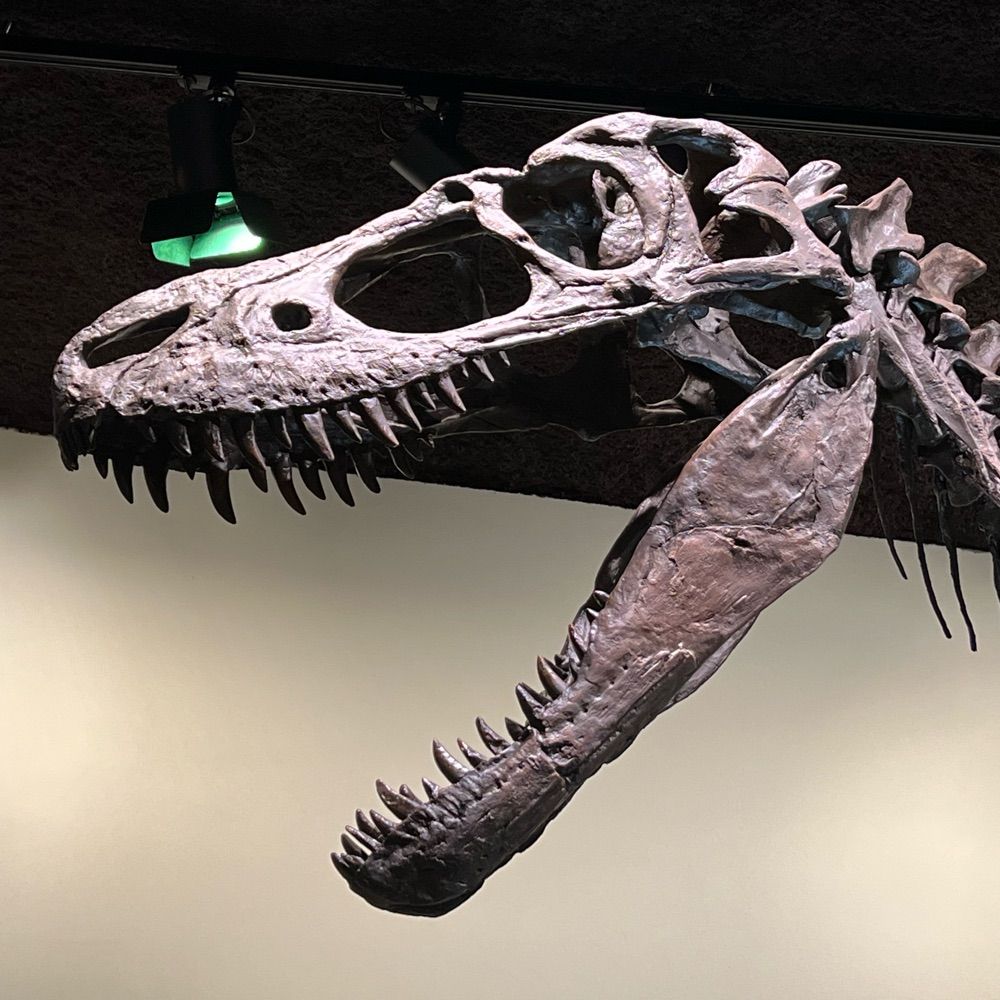
Really old illustrations, but Megatherium looks nice in black with a white stripe.

November 15, 2025 at 10:43 AM
Really old illustrations, but Megatherium looks nice in black with a white stripe.
Reposted by Gilberto Alvarez

This week's #FluorescenceFriday, we'll be treated with one of the classical models of #devbio, the neural crest cells. Here is a beautiful video of neural crest cells with GFP-tagged focal adhesion kinase (🔵) and LifeAct-RFP (🟣) migrating on a Fibronectin matrix.
📹: Adam Shellard
📹: Adam Shellard
November 14, 2025 at 5:45 PM
This week's #FluorescenceFriday, we'll be treated with one of the classical models of #devbio, the neural crest cells. Here is a beautiful video of neural crest cells with GFP-tagged focal adhesion kinase (🔵) and LifeAct-RFP (🟣) migrating on a Fibronectin matrix.
📹: Adam Shellard
📹: Adam Shellard
Reposted by Gilberto Alvarez
Mechanical constraints disrupt gastruloid polarisation without changing gene expression - uncouples morphogenesis & patterning
Gregor & co use tunable hydrogels to show cell motility, not gene expression, drives axis formation in gastruloids
journals.biologists.com/dev/article/...
Gregor & co use tunable hydrogels to show cell motility, not gene expression, drives axis formation in gastruloids
journals.biologists.com/dev/article/...
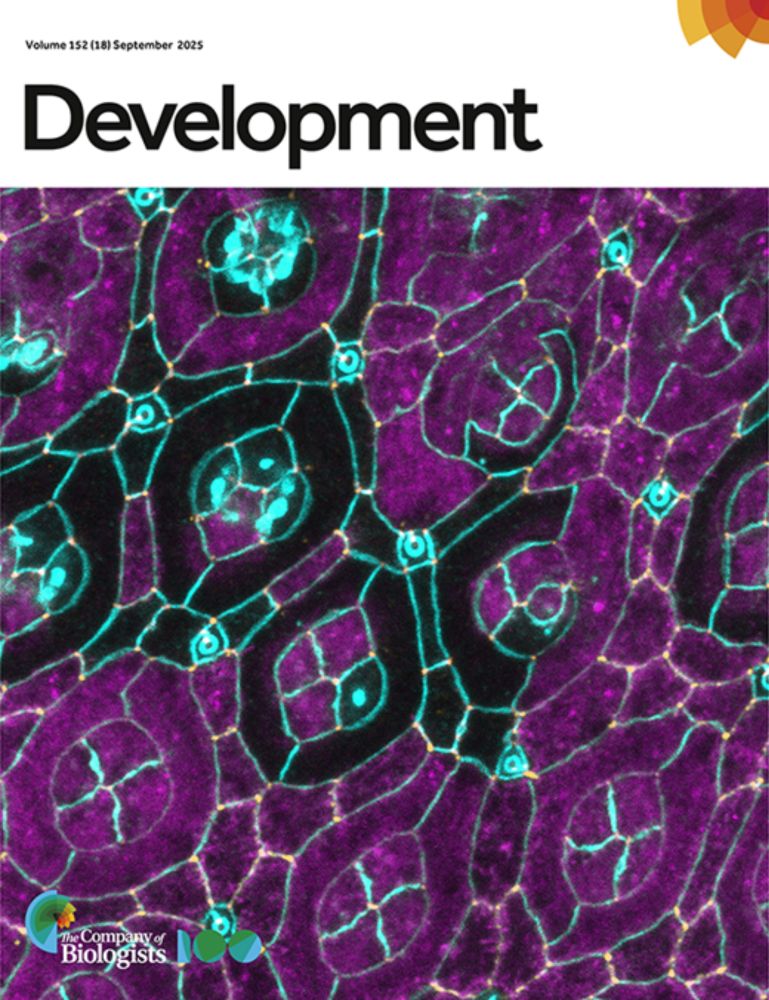
Fine-tuning mechanical constraints reveals uncoupled patterning and gene expression programs in murine gastruloids
Highlighted Article: A bioinert confinement system enables dissection of how stiffness and timing shape gastruloid development, revealing uncoupling between polarization and transcriptional programs.
journals.biologists.com
October 3, 2025 at 9:54 AM
Mechanical constraints disrupt gastruloid polarisation without changing gene expression - uncouples morphogenesis & patterning
Gregor & co use tunable hydrogels to show cell motility, not gene expression, drives axis formation in gastruloids
journals.biologists.com/dev/article/...
Gregor & co use tunable hydrogels to show cell motility, not gene expression, drives axis formation in gastruloids
journals.biologists.com/dev/article/...
Reposted by Gilberto Alvarez

Love #protists? Then you'd love this! Beautiful collection of hand-drawn critters represented here at the Oxford-Japan symposium on ethological dynamics in diorama environments sites.google.com/view/oxford-... #ciliates #testateamoeba #diatoms


September 24, 2025 at 3:14 PM
Love #protists? Then you'd love this! Beautiful collection of hand-drawn critters represented here at the Oxford-Japan symposium on ethological dynamics in diorama environments sites.google.com/view/oxford-... #ciliates #testateamoeba #diatoms
Reposted by Gilberto Alvarez
@niklaskemp.bsky.social will present our new CREsted framework at the next scverse community meeting!
CREsted allows you to train sequence-to-function models tailored to cell type-specific enhancers (including synthetic enhancer design) www.biorxiv.org/content/10.1... github.com/aertslab/cre...
CREsted allows you to train sequence-to-function models tailored to cell type-specific enhancers (including synthetic enhancer design) www.biorxiv.org/content/10.1... github.com/aertslab/cre...

We will have our next community meeting on Tuesday, 2025-09-16 at 18:00 CEST! Niklas Kempynck will be presenting on CREsted, a package for training enhancer models on scATAC-seq data.
(Zoom registration link and more information in thread!)
🧵
(Zoom registration link and more information in thread!)
🧵
September 11, 2025 at 2:34 PM
@niklaskemp.bsky.social will present our new CREsted framework at the next scverse community meeting!
CREsted allows you to train sequence-to-function models tailored to cell type-specific enhancers (including synthetic enhancer design) www.biorxiv.org/content/10.1... github.com/aertslab/cre...
CREsted allows you to train sequence-to-function models tailored to cell type-specific enhancers (including synthetic enhancer design) www.biorxiv.org/content/10.1... github.com/aertslab/cre...
Reposted by Gilberto Alvarez
For anyone wanting to follow up on my brief mention at the Helgoland meeting of how spacetime might be an emergent property of quantum entanglement, here's a nice but pretty high-level essay on it.
journals.aps.org/prl/abstract...
journals.aps.org/prl/abstract...

Essay: Emergent Holographic Spacetime from Quantum Information
In a new forward-looking PRL Essay, Tadashi Takayanagi explores the intersection of quantum information theory with quantum gravity within the framework of holographic duality, and its potential to he...
journals.aps.org
June 23, 2025 at 9:54 AM
For anyone wanting to follow up on my brief mention at the Helgoland meeting of how spacetime might be an emergent property of quantum entanglement, here's a nice but pretty high-level essay on it.
journals.aps.org/prl/abstract...
journals.aps.org/prl/abstract...
Reposted by Gilberto Alvarez

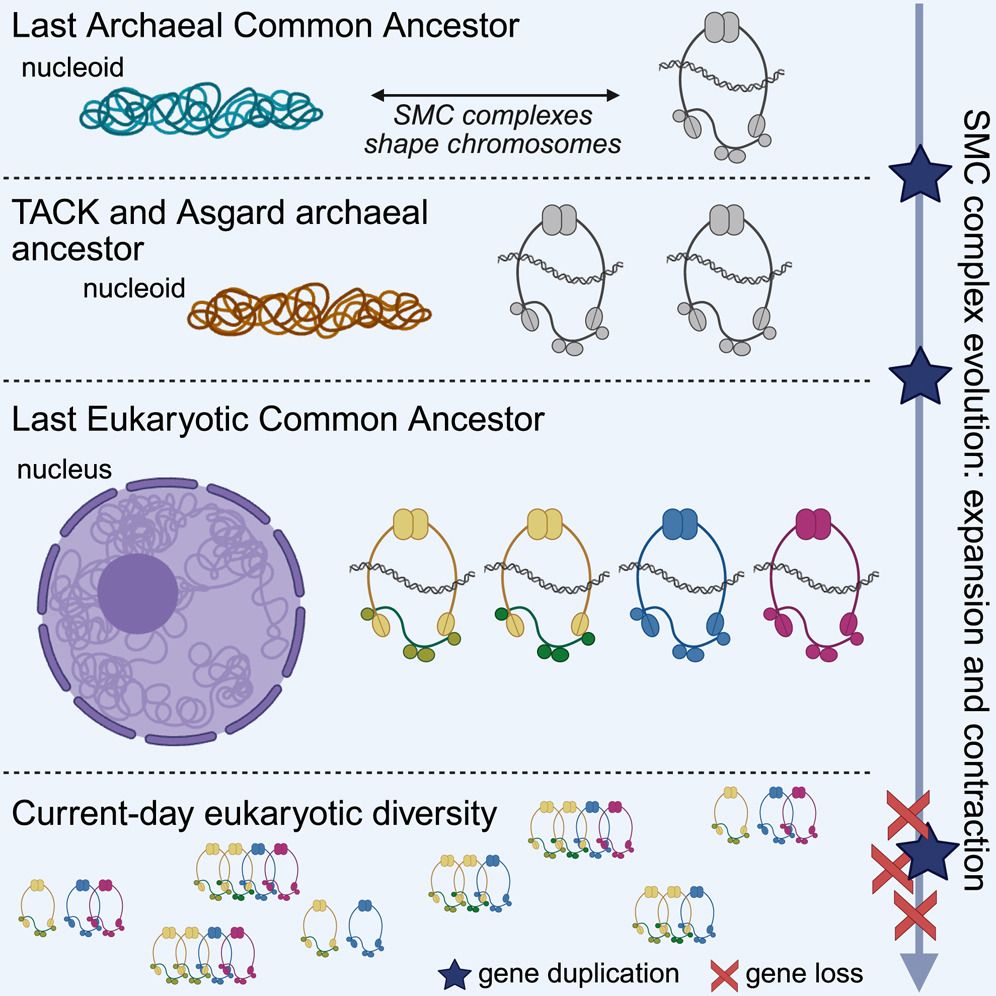
Excited to share our new paper in @cellreports.bsky.social that reshapes our understanding of chromosome organization's deep evolutionary roots! Our work dives into the origins of the machinery that structures our very genomes.
🔗: doi.org/10.1016/j.ce...
#Genomics #Evolution #CellBiology #LECA
🔗: doi.org/10.1016/j.ce...
#Genomics #Evolution #CellBiology #LECA
June 22, 2025 at 12:15 AM
Excited to share our new paper in @cellreports.bsky.social that reshapes our understanding of chromosome organization's deep evolutionary roots! Our work dives into the origins of the machinery that structures our very genomes.
🔗: doi.org/10.1016/j.ce...
#Genomics #Evolution #CellBiology #LECA
🔗: doi.org/10.1016/j.ce...
#Genomics #Evolution #CellBiology #LECA