




Indra Roux
@indraroux.bsky.social
Postdoc at U of Cambridge MRC Tox🇬🇧 PhD UWA🇦🇺Biotech UNQ🇦🇷🧬🛠️ Functional genomics + engineering biology to explore microbiome interactions and unlock their potential. She/her Latinx https://scholar.google.com/citations?user=RNoSH60AAAAJ&hl=en
Pinned
Indra Roux
@indraroux.bsky.social
· Jun 26
"What does Engineering Biology mean to you?"
We invited members of the #EngBio community to share their definition of this evolving field. This is what Dr Indra Roux (@indraroux.bsky.social), Postdoctoral Researcher at the MRC Toxicology Unit (@mrc-tu.bsky.social), had to say.
#FacesOfEngBio
We invited members of the #EngBio community to share their definition of this evolving field. This is what Dr Indra Roux (@indraroux.bsky.social), Postdoctoral Researcher at the MRC Toxicology Unit (@mrc-tu.bsky.social), had to say.
#FacesOfEngBio
My definition of #EngineeringBiology has expanded: from synthetic biology in model chassis to designing diverse synthetic microbial communities. Many complex and resilient functions emerge at the microbiome level, so synthetic ecology is a promising approach for robust biotech. #FacesOfEngBio 🧬⚒️🧫
Reposted by Indra Roux

Our final issue of 2025 has gone live!
🫁pertussis prevention
🏭pollutants and gut bacteria
🕳️porins and resistance in E. coli
🧬many flavours of CRISPR
🦟fatal fungal attraction
...and more 👇
www.nature.com/nmicrobiol/v...
🫁pertussis prevention
🏭pollutants and gut bacteria
🕳️porins and resistance in E. coli
🧬many flavours of CRISPR
🦟fatal fungal attraction
...and more 👇
www.nature.com/nmicrobiol/v...

December 1, 2025 at 6:34 PM
Our final issue of 2025 has gone live!
🫁pertussis prevention
🏭pollutants and gut bacteria
🕳️porins and resistance in E. coli
🧬many flavours of CRISPR
🦟fatal fungal attraction
...and more 👇
www.nature.com/nmicrobiol/v...
🫁pertussis prevention
🏭pollutants and gut bacteria
🕳️porins and resistance in E. coli
🧬many flavours of CRISPR
🦟fatal fungal attraction
...and more 👇
www.nature.com/nmicrobiol/v...
Reposted by Indra Roux

Bacteria can control what enters their cells, balancing energy and blocking antibiotics.
New study in @natmicrobiol.nature.com uncovers this hidden mechanism of drug resistance: buff.ly/s3YIwyK
@andresfloto.bsky.social @vpd-hlri.bsky.social @unibas.ch
New study in @natmicrobiol.nature.com uncovers this hidden mechanism of drug resistance: buff.ly/s3YIwyK
@andresfloto.bsky.social @vpd-hlri.bsky.social @unibas.ch

December 1, 2025 at 3:46 PM
Bacteria can control what enters their cells, balancing energy and blocking antibiotics.
New study in @natmicrobiol.nature.com uncovers this hidden mechanism of drug resistance: buff.ly/s3YIwyK
@andresfloto.bsky.social @vpd-hlri.bsky.social @unibas.ch
New study in @natmicrobiol.nature.com uncovers this hidden mechanism of drug resistance: buff.ly/s3YIwyK
@andresfloto.bsky.social @vpd-hlri.bsky.social @unibas.ch
Reposted by Indra Roux

PanBGC: A pangenome-inspired framework for comparative analysis of biosynthetic gene clusters
#ISMEComms from @nadineziemert.bsky.social
academic.oup.com/ismecommun/a...
#ISMEComms from @nadineziemert.bsky.social
academic.oup.com/ismecommun/a...

PanBGC: A pangenome-inspired framework for comparative analysis of biosynthetic gene clusters
Abstract. Bacterial secondary metabolites are a major source of therapeutics and play key roles in microbial ecology. These compounds are encoded by biosyn
academic.oup.com
November 30, 2025 at 1:24 PM
PanBGC: A pangenome-inspired framework for comparative analysis of biosynthetic gene clusters
#ISMEComms from @nadineziemert.bsky.social
academic.oup.com/ismecommun/a...
#ISMEComms from @nadineziemert.bsky.social
academic.oup.com/ismecommun/a...
Reposted by Indra Roux

'Study uncovered 588 inhibitory interactions between 168 chemicals of concern and common human gut bacteria'
Credit: Roux, & Lindell, et al. Industrial & agricultural chemicals exhibit antimicrobial activity against human gut bacteria in vitro. @natmicrobiol.nature.com
www.nature.com/articles/s41...
Credit: Roux, & Lindell, et al. Industrial & agricultural chemicals exhibit antimicrobial activity against human gut bacteria in vitro. @natmicrobiol.nature.com
www.nature.com/articles/s41...

Industrial and agricultural chemicals exhibit antimicrobial activity against human gut bacteria in vitro - Nature Microbiology
Screening of 1,076 compounds reveals 168 chemical pollutants with inhibitory effects on gut bacteria and genetic screens indicate commonality between pollutant and antibiotic resistance.
www.nature.com
November 28, 2025 at 12:47 PM
'Study uncovered 588 inhibitory interactions between 168 chemicals of concern and common human gut bacteria'
Credit: Roux, & Lindell, et al. Industrial & agricultural chemicals exhibit antimicrobial activity against human gut bacteria in vitro. @natmicrobiol.nature.com
www.nature.com/articles/s41...
Credit: Roux, & Lindell, et al. Industrial & agricultural chemicals exhibit antimicrobial activity against human gut bacteria in vitro. @natmicrobiol.nature.com
www.nature.com/articles/s41...
Reposted by Indra Roux

How healthy is the human gut? 🦠
Trinity Hall Postdoctoral Research Associate Dr @indraroux.bsky.social is the co-first author of a study that tests the effect of common chemicals on our gut microbiome.
Read more about the study below 👇
www.trinhall.cam.ac.uk/news/pestici...
📸 Jonathan Settle
Trinity Hall Postdoctoral Research Associate Dr @indraroux.bsky.social is the co-first author of a study that tests the effect of common chemicals on our gut microbiome.
Read more about the study below 👇
www.trinhall.cam.ac.uk/news/pestici...
📸 Jonathan Settle

Pesticides and other common chemical pollutants are toxic to our ‘good’ gut bacteria - Trinity Hall Cambridge
A lab-based screening, led by University of Cambridge scientists, has discovered over 150 common industrial chemicals, from pesticides to flame retardants, that have a toxic effect on bacteria found i...
www.trinhall.cam.ac.uk
November 27, 2025 at 1:04 PM
How healthy is the human gut? 🦠
Trinity Hall Postdoctoral Research Associate Dr @indraroux.bsky.social is the co-first author of a study that tests the effect of common chemicals on our gut microbiome.
Read more about the study below 👇
www.trinhall.cam.ac.uk/news/pestici...
📸 Jonathan Settle
Trinity Hall Postdoctoral Research Associate Dr @indraroux.bsky.social is the co-first author of a study that tests the effect of common chemicals on our gut microbiome.
Read more about the study below 👇
www.trinhall.cam.ac.uk/news/pestici...
📸 Jonathan Settle
Reposted by Indra Roux

the kind of work I absolutely love !
Excited to share our latest research in @natmicrobiol.nature.com . We uncover hundreds of inhibitory interactions between common chemical pollutants and human gut bacteria. A thread🧵 (1/10) #microbiomesky #microsky @kiranrpatil.bsky.social lab @mrc-tu.bsky.social www.nature.com/articles/s41...

Industrial and agricultural chemicals exhibit antimicrobial activity against human gut bacteria in vitro - Nature Microbiology
Screening of 1,076 compounds reveals 168 chemical pollutants with inhibitory effects on gut bacteria and genetic screens indicate commonality between pollutant and antibiotic resistance.
www.nature.com
November 26, 2025 at 11:13 AM
the kind of work I absolutely love !
Reposted by Indra Roux
The Patil Lab (@kiranrpatil.bsky.social) strikes again with an amazing story! Huge congrats to @indraroux.bsky.social and everyone involved. Thank you for raising awareness (again) about such an important topic 🧪
Excited to share our latest research in @natmicrobiol.nature.com . We uncover hundreds of inhibitory interactions between common chemical pollutants and human gut bacteria. A thread🧵 (1/10) #microbiomesky #microsky @kiranrpatil.bsky.social lab @mrc-tu.bsky.social www.nature.com/articles/s41...
Industrial and agricultural chemicals exhibit antimicrobial activity against human gut bacteria in vitro - Nature Microbiology
Screening of 1,076 compounds reveals 168 chemical pollutants with inhibitory effects on gut bacteria and genetic screens indicate commonality between pollutant and antibiotic resistance.
www.nature.com
November 26, 2025 at 5:09 PM
The Patil Lab (@kiranrpatil.bsky.social) strikes again with an amazing story! Huge congrats to @indraroux.bsky.social and everyone involved. Thank you for raising awareness (again) about such an important topic 🧪
Reposted by Indra Roux
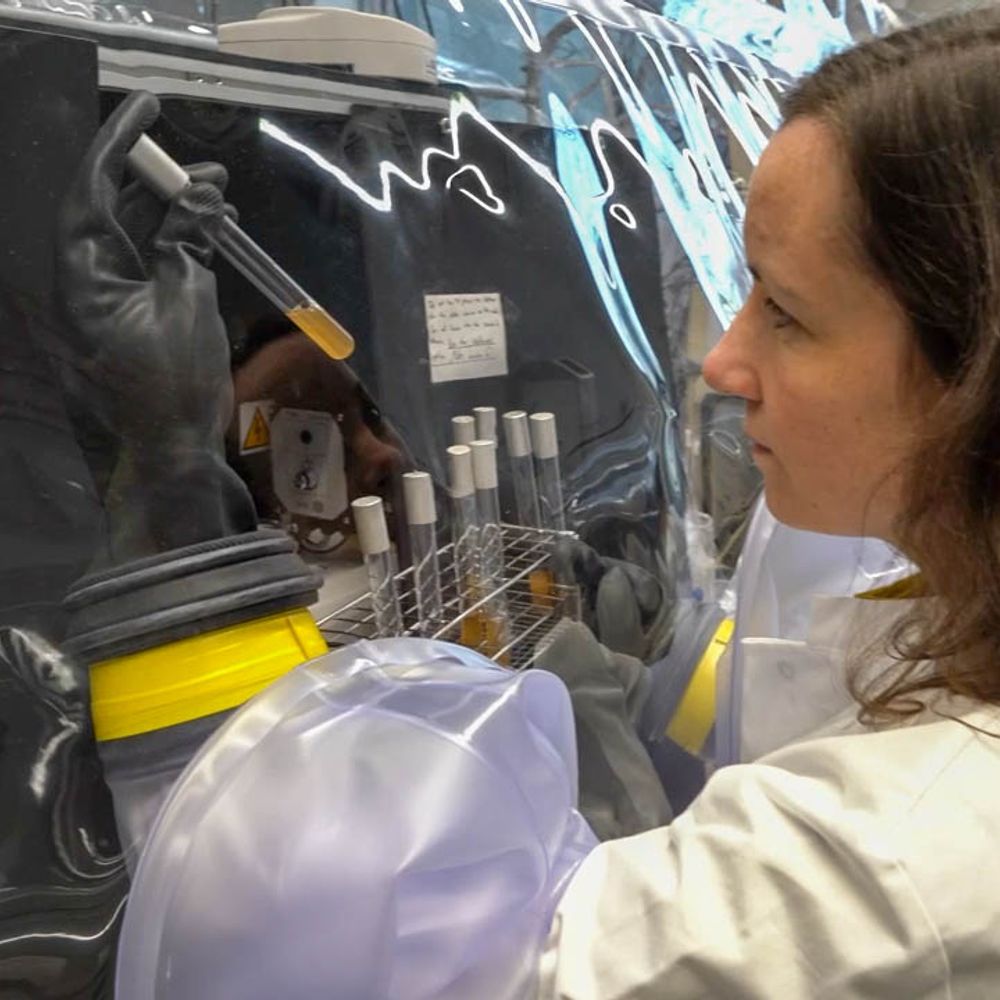
It’s not only medications—environmental chemicals can also inadvertently harm our gut microbes. Excited to have contributed a bit to this important study!
Our paper mapping the effects of hundreds of pesticides and industrial chemicals on gut bacteria is out in @natmicrobiol.nature.com today!
Turns out many such chemicals, although labelled as 'fungicides' or similar, can inadvertently inhibit friendly gut bacteria.
www.nature.com/articles/s41...
Turns out many such chemicals, although labelled as 'fungicides' or similar, can inadvertently inhibit friendly gut bacteria.
www.nature.com/articles/s41...

November 26, 2025 at 1:02 PM
It’s not only medications—environmental chemicals can also inadvertently harm our gut microbes. Excited to have contributed a bit to this important study!
Reposted by Indra Roux
#NewResearch
Industrial and agri-chemicals can inhibit human gut bacteria!
#MicroSky #MicrobiomeSky
@kiranrpatil.bsky.social @indraroux.bsky.social @skamrad.bsky.social @uniofcam.bsky.social
www.nature.com/articles/s41...
Industrial and agri-chemicals can inhibit human gut bacteria!
#MicroSky #MicrobiomeSky
@kiranrpatil.bsky.social @indraroux.bsky.social @skamrad.bsky.social @uniofcam.bsky.social
www.nature.com/articles/s41...

Industrial and agricultural chemicals exhibit antimicrobial activity against human gut bacteria in vitro - Nature Microbiology
Screening of 1,076 compounds reveals 168 chemical pollutants with inhibitory effects on gut bacteria and genetic screens indicate commonality between pollutant and antibiotic resistance.
www.nature.com
November 26, 2025 at 3:50 PM
#NewResearch
Industrial and agri-chemicals can inhibit human gut bacteria!
#MicroSky #MicrobiomeSky
@kiranrpatil.bsky.social @indraroux.bsky.social @skamrad.bsky.social @uniofcam.bsky.social
www.nature.com/articles/s41...
Industrial and agri-chemicals can inhibit human gut bacteria!
#MicroSky #MicrobiomeSky
@kiranrpatil.bsky.social @indraroux.bsky.social @skamrad.bsky.social @uniofcam.bsky.social
www.nature.com/articles/s41...
Reposted by Indra Roux

Could everyday chemicals be having a toxic effect on our gut #health? 🧫🧪
150+ common substances may stifle 'good' gut bacteria in our bodies, affecting digestion and mental health.
New #research by @kiranrpatil.bsky.social @indraroux.bsky.social @mrc-tu.bsky.social 👇
https://bit.ly/3Ma9325
150+ common substances may stifle 'good' gut bacteria in our bodies, affecting digestion and mental health.
New #research by @kiranrpatil.bsky.social @indraroux.bsky.social @mrc-tu.bsky.social 👇
https://bit.ly/3Ma9325
University of Cambridge
bit.ly
November 26, 2025 at 12:00 PM
Could everyday chemicals be having a toxic effect on our gut #health? 🧫🧪
150+ common substances may stifle 'good' gut bacteria in our bodies, affecting digestion and mental health.
New #research by @kiranrpatil.bsky.social @indraroux.bsky.social @mrc-tu.bsky.social 👇
https://bit.ly/3Ma9325
150+ common substances may stifle 'good' gut bacteria in our bodies, affecting digestion and mental health.
New #research by @kiranrpatil.bsky.social @indraroux.bsky.social @mrc-tu.bsky.social 👇
https://bit.ly/3Ma9325
Reposted by Indra Roux

Our paper mapping the effects of hundreds of pesticides and industrial chemicals on gut bacteria is out in @natmicrobiol.nature.com today!
Turns out many such chemicals, although labelled as 'fungicides' or similar, can inadvertently inhibit friendly gut bacteria.
www.nature.com/articles/s41...
Turns out many such chemicals, although labelled as 'fungicides' or similar, can inadvertently inhibit friendly gut bacteria.
www.nature.com/articles/s41...
November 26, 2025 at 11:07 AM
Our paper mapping the effects of hundreds of pesticides and industrial chemicals on gut bacteria is out in @natmicrobiol.nature.com today!
Turns out many such chemicals, although labelled as 'fungicides' or similar, can inadvertently inhibit friendly gut bacteria.
www.nature.com/articles/s41...
Turns out many such chemicals, although labelled as 'fungicides' or similar, can inadvertently inhibit friendly gut bacteria.
www.nature.com/articles/s41...
Excited to share our latest research in @natmicrobiol.nature.com . We uncover hundreds of inhibitory interactions between common chemical pollutants and human gut bacteria. A thread🧵 (1/10) #microbiomesky #microsky @kiranrpatil.bsky.social lab @mrc-tu.bsky.social www.nature.com/articles/s41...
Industrial and agricultural chemicals exhibit antimicrobial activity against human gut bacteria in vitro - Nature Microbiology
Screening of 1,076 compounds reveals 168 chemical pollutants with inhibitory effects on gut bacteria and genetic screens indicate commonality between pollutant and antibiotic resistance.
www.nature.com
November 26, 2025 at 10:30 AM
Excited to share our latest research in @natmicrobiol.nature.com . We uncover hundreds of inhibitory interactions between common chemical pollutants and human gut bacteria. A thread🧵 (1/10) #microbiomesky #microsky @kiranrpatil.bsky.social lab @mrc-tu.bsky.social www.nature.com/articles/s41...
Reposted by Indra Roux
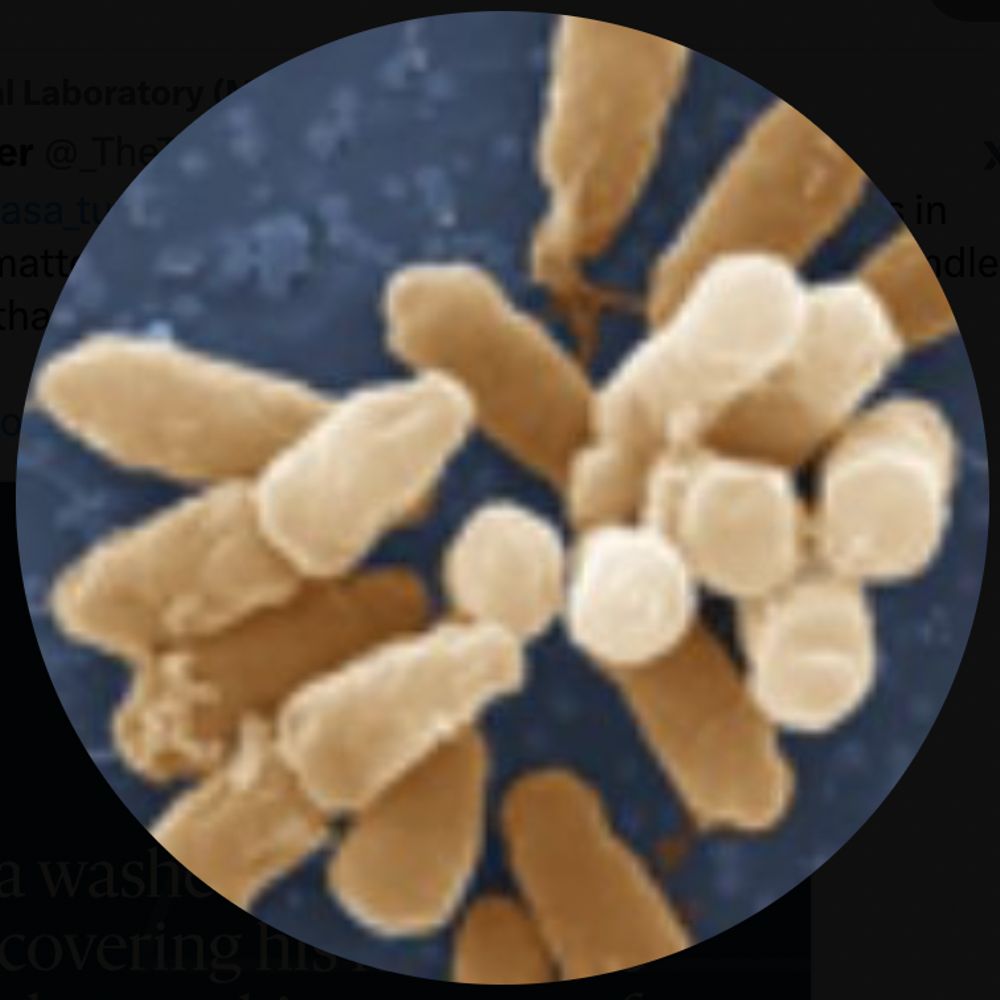
JB Editor's Choice: Laurie Comstock discusses the history of model gut Bacteroidales (B. frag and B. theta) - bugs of increasing importance in our study of the gut microbiota and system-wide impacts of gut microbes.
journals.asm.org/doi/10.1128/...
@asm.org #JBacteriology
journals.asm.org/doi/10.1128/...
@asm.org #JBacteriology

November 25, 2025 at 3:31 PM
JB Editor's Choice: Laurie Comstock discusses the history of model gut Bacteroidales (B. frag and B. theta) - bugs of increasing importance in our study of the gut microbiota and system-wide impacts of gut microbes.
journals.asm.org/doi/10.1128/...
@asm.org #JBacteriology
journals.asm.org/doi/10.1128/...
@asm.org #JBacteriology
Reposted by Indra Roux

Reposted by Indra Roux

We hope to see you at our EngBio ECRs Meetup 8 Dec featuring talks:
🧬CLEAR-time dPCR for gene-editing assessment-Alex Chalk @mrc-tu.bsky.social
🧫Paired prime editing for genome-function interrogation- Gareth Girling @sangerinstitute.bsky.social
Register here 👉 www.tickettailor.com/events/engin...
🧬CLEAR-time dPCR for gene-editing assessment-Alex Chalk @mrc-tu.bsky.social
🧫Paired prime editing for genome-function interrogation- Gareth Girling @sangerinstitute.bsky.social
Register here 👉 www.tickettailor.com/events/engin...

November 18, 2025 at 3:44 PM
We hope to see you at our EngBio ECRs Meetup 8 Dec featuring talks:
🧬CLEAR-time dPCR for gene-editing assessment-Alex Chalk @mrc-tu.bsky.social
🧫Paired prime editing for genome-function interrogation- Gareth Girling @sangerinstitute.bsky.social
Register here 👉 www.tickettailor.com/events/engin...
🧬CLEAR-time dPCR for gene-editing assessment-Alex Chalk @mrc-tu.bsky.social
🧫Paired prime editing for genome-function interrogation- Gareth Girling @sangerinstitute.bsky.social
Register here 👉 www.tickettailor.com/events/engin...
Reposted by Indra Roux

Thrilled to share our new work uncovering how membrane transporters determine resource-size preferences in gut bacteria, and showing that deleting a single protein domain can shift a transporter’s preference from long to short fructans. www.biorxiv.org/content/10.1...

Niche partitioning by resource size in the gut microbiome
Niche partitioning promotes diversity of the human gut microbiota. However, the molecular basis of resource specialization and niche separation in the gut remains poorly understood. Here we show that ...
www.biorxiv.org
November 17, 2025 at 10:43 PM
Thrilled to share our new work uncovering how membrane transporters determine resource-size preferences in gut bacteria, and showing that deleting a single protein domain can shift a transporter’s preference from long to short fructans. www.biorxiv.org/content/10.1...
Reposted by Indra Roux
#NatMicroPicks
Drug-delivering bacteria for Parkinson's! 🦠🧠
A genetically engineered E. coli delivers L-DOPA improving motor and mood outcomes in Parkinson’s models
#MicroSky #SynBio
www.sciencedirect.com/science/arti...
Drug-delivering bacteria for Parkinson's! 🦠🧠
A genetically engineered E. coli delivers L-DOPA improving motor and mood outcomes in Parkinson’s models
#MicroSky #SynBio
www.sciencedirect.com/science/arti...

Bioengineered gut bacterium synthesizing levodopa alleviates motor deficits in models of Parkinson’s disease
L-3,4-Dihydroxyphenylalanine (L-DOPA), synthesized from L-tyrosine, is a direct precursor to dopamine. L-DOPA is the gold-standard treatment for Parki…
www.sciencedirect.com
November 20, 2025 at 5:13 PM
#NatMicroPicks
Drug-delivering bacteria for Parkinson's! 🦠🧠
A genetically engineered E. coli delivers L-DOPA improving motor and mood outcomes in Parkinson’s models
#MicroSky #SynBio
www.sciencedirect.com/science/arti...
Drug-delivering bacteria for Parkinson's! 🦠🧠
A genetically engineered E. coli delivers L-DOPA improving motor and mood outcomes in Parkinson’s models
#MicroSky #SynBio
www.sciencedirect.com/science/arti...
Reposted by Indra Roux

Have a look if you are interested in how the team at @cultivarium.bsky.social is finding electroporation protocols for new microbes: both screening lots of conditions on a custom built electroporator concurrently, and cyclical iteration using bayesian optimization
www.biorxiv.org/content/10.1...
www.biorxiv.org/content/10.1...

Active learning guides automated discovery of DNA delivery via electroporation for non-model microbes
Delivery of recombinant DNA is foundational for understanding and engineering a target organism. Electroporation can be applied to any cell type, yet identification of a working protocol for new organ...
www.biorxiv.org
November 22, 2025 at 12:23 AM
Have a look if you are interested in how the team at @cultivarium.bsky.social is finding electroporation protocols for new microbes: both screening lots of conditions on a custom built electroporator concurrently, and cyclical iteration using bayesian optimization
www.biorxiv.org/content/10.1...
www.biorxiv.org/content/10.1...
Reposted by Indra Roux

🧵 1/ New preprint alert! From the FUTURE OAK project, led by the super talented @alejandra1909.bsky.social
Large-scale culturing of the tree microbiome enables targeted disease suppression
Here's what we found... 👇
www.biorxiv.org/content/10.1...
Large-scale culturing of the tree microbiome enables targeted disease suppression
Here's what we found... 👇
www.biorxiv.org/content/10.1...

Large-scale culturing of the tree microbiome enables targeted disease suppression
The tree microbiome is essential for host health and pathogen suppression. Synthetic microbial communities (SynComs) are emerging as important tools to understand microbiome dynamics and engineer micr...
www.biorxiv.org
November 19, 2025 at 3:05 PM
🧵 1/ New preprint alert! From the FUTURE OAK project, led by the super talented @alejandra1909.bsky.social
Large-scale culturing of the tree microbiome enables targeted disease suppression
Here's what we found... 👇
www.biorxiv.org/content/10.1...
Large-scale culturing of the tree microbiome enables targeted disease suppression
Here's what we found... 👇
www.biorxiv.org/content/10.1...
Reposted by Indra Roux
PhD student in the Willis Lab, Alex Chalk will be sharing his work on a new laboratory method called CLEAR-Time ddPCR that measures exactly what happens to DNA after gene editing.
We hope to see you at our EngBio ECRs Meetup 8 Dec featuring talks:
🧬CLEAR-time dPCR for gene-editing assessment-Alex Chalk @mrc-tu.bsky.social
🧫Paired prime editing for genome-function interrogation- Gareth Girling @sangerinstitute.bsky.social
Register here 👉 www.tickettailor.com/events/engin...
🧬CLEAR-time dPCR for gene-editing assessment-Alex Chalk @mrc-tu.bsky.social
🧫Paired prime editing for genome-function interrogation- Gareth Girling @sangerinstitute.bsky.social
Register here 👉 www.tickettailor.com/events/engin...
November 19, 2025 at 2:26 PM
PhD student in the Willis Lab, Alex Chalk will be sharing his work on a new laboratory method called CLEAR-Time ddPCR that measures exactly what happens to DNA after gene editing.
Reposted by Indra Roux
Join the Cambridge RNA club this Thursday 20th November to hear Xiaoteng Jiang, a postdoctoral researcher in the Patil Lab, share mechanistic insights into duloxetine–microbiome interactions

Ever wondered how antidepressants might influence your gut microbes? 🧬💊Join Dr. Xiaoteng Jiang ( @mrc-tu.bsky.social ) talk on Nov 20, 16:30h at @cambiochem.bsky.social to explore how RNA–protein interactions reveal unexpected drug–microbiome connections 🤯

a blue background with purple and green swirls
ALT: a blue background with purple and green swirls
media.tenor.com
November 18, 2025 at 2:10 PM
Join the Cambridge RNA club this Thursday 20th November to hear Xiaoteng Jiang, a postdoctoral researcher in the Patil Lab, share mechanistic insights into duloxetine–microbiome interactions
Reposted by Indra Roux

Congratulations to our faculty members Paul Dupree (@dupreelab.bsky.social) and Kiran Patil (@kiranrpatil.bsky.social) who have both received the
@clarivate.com Web of Science #HighlyCitedResearcher Award for 2025; a testament to the quality of their research: www.bioc.cam.ac.uk/news/paul-du...
@clarivate.com Web of Science #HighlyCitedResearcher Award for 2025; a testament to the quality of their research: www.bioc.cam.ac.uk/news/paul-du...

November 18, 2025 at 12:00 PM
Congratulations to our faculty members Paul Dupree (@dupreelab.bsky.social) and Kiran Patil (@kiranrpatil.bsky.social) who have both received the
@clarivate.com Web of Science #HighlyCitedResearcher Award for 2025; a testament to the quality of their research: www.bioc.cam.ac.uk/news/paul-du...
@clarivate.com Web of Science #HighlyCitedResearcher Award for 2025; a testament to the quality of their research: www.bioc.cam.ac.uk/news/paul-du...
Reposted by Indra Roux

Now online! Nutrient competition predicts gut microbiome restructuring under drug perturbations

Nutrient competition predicts gut microbiome restructuring under drug perturbations
Systematic profiling of 707 drugs on their impact on stool-derived microbial communities shows that nutrient competition explains and predicts species shifts under drug treatment and that post-drug recovery is driven by ecological interactions like extinction and strain swapping.
dlvr.it
November 17, 2025 at 7:51 PM
Now online! Nutrient competition predicts gut microbiome restructuring under drug perturbations
Reposted by Indra Roux

🚨 A probiotic that secretes a GLP-1–triggering peptide.
By engineering E. coli Nissle to secrete a microbial peptide that stimulates host GLP-1 release, we uncovered a new connection between the microbiome, metabolism, and gut inflammation.
👉 science.org/doi/10.1126/...
By engineering E. coli Nissle to secrete a microbial peptide that stimulates host GLP-1 release, we uncovered a new connection between the microbiome, metabolism, and gut inflammation.
👉 science.org/doi/10.1126/...

Engineered probiotic restores GLP-1 signaling to ameliorate fiber-deficiency exacerbated colitis
Engineered probiotic delivers bacterial peptide that enhances GLP-1 and restores barrier integrity in diet-modulated colitis.
science.org
November 18, 2025 at 1:44 AM
🚨 A probiotic that secretes a GLP-1–triggering peptide.
By engineering E. coli Nissle to secrete a microbial peptide that stimulates host GLP-1 release, we uncovered a new connection between the microbiome, metabolism, and gut inflammation.
👉 science.org/doi/10.1126/...
By engineering E. coli Nissle to secrete a microbial peptide that stimulates host GLP-1 release, we uncovered a new connection between the microbiome, metabolism, and gut inflammation.
👉 science.org/doi/10.1126/...
Reposted by Indra Roux
Thrilled to finally share the latest chapter of our in situ microbiome editing work: “Metagenomic editing of commensal bacteria in vivo using CRISPR-associated transposases”, now out in @science.org 👉 www.science.org/doi/10.1126/...

Metagenomic editing of commensal bacteria in vivo using CRISPR-associated transposases
Although metagenomic sequencing has revealed a rich microbial biodiversity in the mammalian gut, methods to genetically alter specific species in the microbiome are highly limited. Here, we introduce ...
www.science.org
November 18, 2025 at 1:37 AM
Thrilled to finally share the latest chapter of our in situ microbiome editing work: “Metagenomic editing of commensal bacteria in vivo using CRISPR-associated transposases”, now out in @science.org 👉 www.science.org/doi/10.1126/...