Mart Krupovic
banner
mkrupovic.bsky.social
Mart Krupovic
@mkrupovic.bsky.social

Virus origins/diversity/evolution; mobilome; Archaea.
Head of the Cell Biology and Virology of Archaea Unit at Institut Pasteur:
https://research.pasteur.fr/en/team/archaeal-virology/

Biology 41%
Environmental science 29%

Reposted by Mart Krupovìč

Reposted by Mart Krupovìč
The (Yoav) Voichek lab has opened its gates at the Weizmann Institute, and is actively recruiting students and researchers at all levels - come explore gene regulation and computational genomics in a fun, friendly sprouting lab 🤗🥼⚗️🧪
www.weizmann.ac.il/plants/voichek
Save the date for phylogenetics!

RNA virus Journal Club returns ( @rdrpsummit.bsky.social ) with @evogytis.bsky.social intro to his "Baltic" - python module to visualise phylogenetic trees.

January 15th (Thu) - EEST Vilnius Time 3:00 PM

Join slack for updates: join.slack.com/t/rdrp-io/sh...

Reposted by Mart Krupovìč

I am pleased to share our new paper in Molecular Cell:

“Capsid restructuring activates semi-conservative dsRNA transcription in cystovirus ɸ6.”

We visualized, in structural detail, how a double-stranded RNA virus switches from a quiescent to a transcriptionally active state.

Link in the comments

Reposted by Mart Krupovìč

Reposted by Mart Krupovìč

New manuscript alert. Turns out that calcium ion coordination may be a more common mechanism than we initially expected to trigger polymerization of extracellular filaments. @mikesleutel.bsky.social @vikramalva.bsky.social

www.biorxiv.org/content/10.6...
From fibril to framework: P. abyssi AbpX illuminates a calcium-responsive family of microbial biomatrix proteins that form thermostable hydrogels
Evolutionary pressure on microbial communities propagating under extreme environmental conditions often results in unique structural adaptations to promote cell survival. Here, we report an investigat...
www.biorxiv.org

Reposted by Mart Krupovìč

NLR-like immunity in bacteria

A new study from the Alex Gao lab. The scope of this work is incredible!!!

www.biorxiv.org/content/10.6...
Diverse bacterial pattern recognition receptors sense the conserved phage proteome
Recognition of foreign molecules inside cells is critical for immunity in all domains of life. Proteins of the STAND NTPase superfamily, including eukaryotic nucleotide-binding oligomerization domain ...
www.biorxiv.org

Reposted by Mart Krupovìč

Are you a long-time fan of Archaea, an extremophile-phile, or are you simply curious?

Either way, we have good news.
We’re delighted to announce the 2026 EMBO Workshop on Archaea, 6–10 July.

Sign up: meetings.embo.org/event/26-arc...

We look forward to seeing you in Cambridge, UK.

Please repost!
Molecular Biology of Archaea: Life Through the Prism of Archaea
In 1977, Woese and colleagues revealed Archaea as a distinct domain of life. Building on this insight, the discovery of Asgard archaea has strengthened the view that many hallmarks of eukaryotic cell…
meetings.embo.org
Review: Viromics approaches for the study of viral diversity and ecology in microbiomes by @simrouxvirus.bsky.social & Clement Coclet @jgi.doe.gov
rdcu.be/excHt
Viromics approaches for the study of viral diversity and ecology in microbiomes
Nature Reviews Genetics - In this Review, Roux and Coclet outline current viromics approaches and discuss how they have contributed to our growing understanding of viral genomic diversity, focusing...
rdcu.be

Reposted by Mart Krupovìč

With our old friends Sergey, Luis and Guifré, we have published a minireview in @currentbiology.bsky.social about aphelids, the sister group to fungi, including why we think they are not fungi but, nevertheless, key to understand early fungal evolution.

authors.elsevier.com/a/1mH793QW8S...

Reposted by Mart Krupovìč

Happy to share that our work on HLp, a bacterial histone from Leptospira perolatii, is now published in Nature Communications 🎉

In this study, we show that HLp forms stable tetramers that wrap ~60 bp of DNA, revealing a distinct histone–DNA organization in bacteria.

www.nature.com/articles/s41...

Reposted by Mart Krupovìč

Reposted by Mart Krupovìč

I am happy to share our new preprint about the #cryoEM #structure of the AAV2 Rep-Capsid complex. Congratulations to the team. A great collaboration with the Kaelber Lab at Rutgers.
www.biorxiv.org/content/10.6...
Insights into the AAV packaging mechanism: Cryo-EM Structure of the AAV2 Rep-Capsid Packaging Complex
The Adeno-associated virus (AAV) has become the most used viral vector for gene therapy applications to treat monogenic diseases, with over 250 clinical trials and six FDA-approved biologics. AAV has ...
www.biorxiv.org

Reposted by Mart Krupovìč

Delighted to share our new preprint: www.biorxiv.org/content/10.6...
We address a longstanding question about the role of the topoisomerase reverse gyrase in hyperthermophiles. Great collaboration with Baranello and @tobiaswarnecke.bsky.social groups. #Archaeasky #Microsky
Localised activity of reverse gyrase at gene regulatory elements
DNA topoisomerases are essential enzymes found in all cells, where they regulate DNA supercoiling. Reverse gyrase (RG) is a unique type of topoisomerase that introduces positive supercoils into DNA an...
www.biorxiv.org

Reposted by Mart Krupovìč

Two previously unknown circoviruses have been identified in short-finned pilot whales and orcas from the North Atlantic, expanding the known diversity of circoviruses in marine vertebrates. doi.org/hbd8rg
New circoviruses discovered in pilot whales and orcas from the North Atlantic 
A collaborative team of researchers has identified two previously unknown circoviruses in short-finned pilot whales and orcas from the Caribbean region of the North Atlantic Ocean.
phys.org

Reposted by Mart Krupovìč

Heterotrophic nanoflagellates in lakes ingest 10–20 bacteria/hour, removing roughly 1/3 of all prokaryotes daily but most remain uncultured and unsequenced. We devised a new cultivation strategy to describe one such predator here 🦖🔬
t.co/TU1fq4eVg2 #MicrobialEcology
https://academic.oup.com/ismej/advance-article/doi/10.1093/ismejo/wraf271/8373286
t.co

Reposted by Mart Krupovìč

Confused by all the histones that are cropping up in organisms that are decidedly NOT eukaryotes? check out our review - fantastic work by team NucEvo in the #Lugerlab
The Expanding Histone Universe: Histone-Based DNA Organization in Noneukaryotic Organisms - www.annualreviews.org/content/jour...
🔬 Call to create junior research groups at the Institut Pasteur

Focus: Infectious diseases, host-microbe interactions, vaccines
Special interest: AI methodologies

📅 Deadline: Feb 9, 2026
👥 2-12 years post-PhD

Apply now 📝 research.pasteur.fr/en/call/crea...

#JobOpportunity #Research
Creation of new junior research groups at the Institut Pasteur - Call for applications 2026 - Research
The Institut Pasteur is launching an international call to recruit new junior research group leaders leveraging cutting-edge transdisciplinary approaches to exploring infectious diseases, host-microbe...
research.pasteur.fr

Reposted by Mart Krupovìč

#microsky #phagesky #phage defence

The different roles of the two glucosyltransferases of phage T4 in overcoming antiphage functions

www.biorxiv.org/content/10.6...
A Pair of DNA Glucosyltransferases Elevate Counter-defense in Bacteriophage T4
Bacteriophages encode diverse pathways to modify their nucleobases. These modifications help phages to evade the host defense systems such as restriction-modification (RM), and type II and type V CRIS...
www.biorxiv.org

Reposted by Mart Krupovìč

The latest and most detailed review on a fundamental biochemical pathway: #glycolysis
#microbiology #biochemistry
onlinelibrary.wiley.com/doi/full/10....

Reposted by Mart Krupovìč

Fresh from our group, a new role for oxygen production in ammonia-oxidizing archaea:

Oxygen production as an electron overflow pathway in ammonia-oxidizing archaea

Congrats to Thomas Pribasnig for this great work!

Check it out here:
www.biorxiv.org/content/10.6...

Reposted by Mart Krupovìč
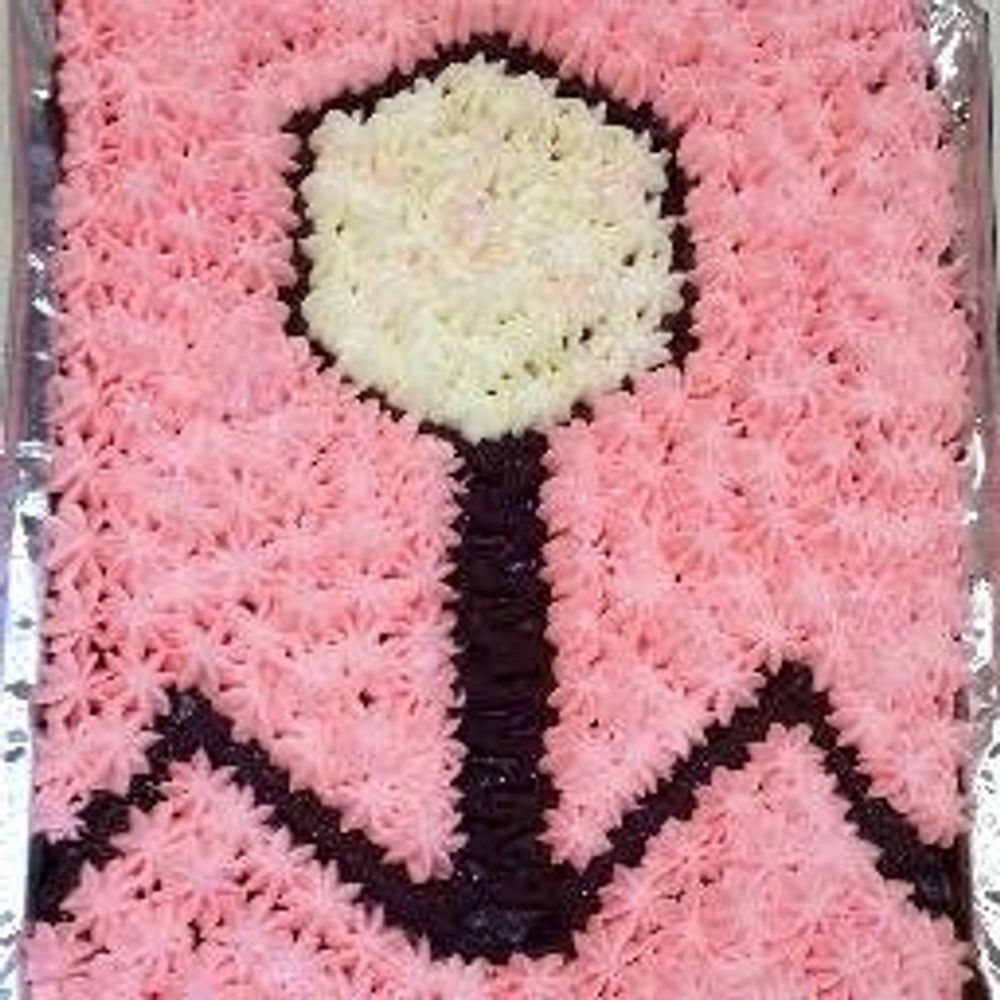
Preprint: Systematic discovery of TIR-based immune signaling systems in bacteria

Conservation of TIR-derived signals accross the tree of life! We found bacterial TIR immune systems that signal via canonical cADPR (like in humans) and 2'cADPR (a plant immune signal).

Documented 11 Thoeris types

Reposted by Mart Krupovìč
🦠🧪🧬🚨 New paper and database alert: the new IMG/VR release is now MetaVR ! We have a new website - meta-virome.org - with quick search capabilities for the >24M viruses, >12M vOTUs, and >42M protein clusters (including >790k with predicted structures !). academic.oup.com/nar/advance-...
Meta-virus resource (MetaVR): expanding the frontiers of viral diversity with 24 million uncultivated virus genomes
Abstract. Viruses are ubiquitous in all environments and impact host metabolism, evolution, and ecology, although our knowledge of their biodiversity is st
academic.oup.com

Reposted by Mart Krupovìč

New preprint from the lab!!🎉
We show that Asgard archaea ESCRT-III proteins can trigger membrane fission and reveal its molecular mechanism, offering clues to how these cells may have built internal compartments. But do these organisms even have these compartments?
www.biorxiv.org/content/10.1...
Molecular basis for cellular compartmentalization by an ancient membrane fission mechanism
The emergence of cell compartmentalization depends on membrane fission to create the endomembrane compartments. In eukaryotes, membrane fission is commonly executed by ESCRT-III, a protein complex con...
www.biorxiv.org

Explicit description of viral capsid subunit shapes by unfolding dihedrons by Ryuya Toyooka et al. www.nature.com/articles/s42...
Explicit description of viral capsid subunit shapes by unfolding dihedrons - Communications Biology
A proposed geometric framework describes and classifies all possible protein subunit shapes in viral capsids through spherical tiling theory, revealing different interaction patterns based on subunit ...
www.nature.com

Reposted by Mart Krupovìč

Congrats to all coauthors, @sonaida.bsky.social, Ulysse Guyet, @tomdelmont.bsky.social, Eugene Koonin, et al. @pasteur.fr @cnrs.fr

Reposted by Simon Roux

Check out our latest paper on mirusviruses, one of the most remarkable new groups of protist viruses - extremely diverse, carry lots of spliceosomal introns (including new homing introns) and are at the evolutionary crossroads between tailed phages and herpesviruses! www.nature.com/articles/s41...
Widespread and intron-rich mirusviruses are predicted to reproduce in nuclei of unicellular eukaryotes - Nature Microbiology
Environmental metagenomic explorations show that Mirusviricota lineages lack essential replication and transcription genes and contain spliceosomal introns, suggesting nuclear reproduction.
www.nature.com

Reposted by Mart Krupovìč

www.nature.com/articles/s41...

Thrilled to share our new study! We show that mirusviruses include lineages packed with spliceosomal introns and likely replicating in the nucleus of unicellular eukaryotes—a sharp contrast to most large and giant eukaryotic viruses that replicate in the cytoplasm.
Widespread and intron-rich mirusviruses are predicted to reproduce in nuclei of unicellular eukaryotes - Nature Microbiology
Environmental metagenomic explorations show that Mirusviricota lineages lack essential replication and transcription genes and contain spliceosomal introns, suggesting nuclear reproduction.
www.nature.com