



@filipgermeys.bsky.social
Reposted
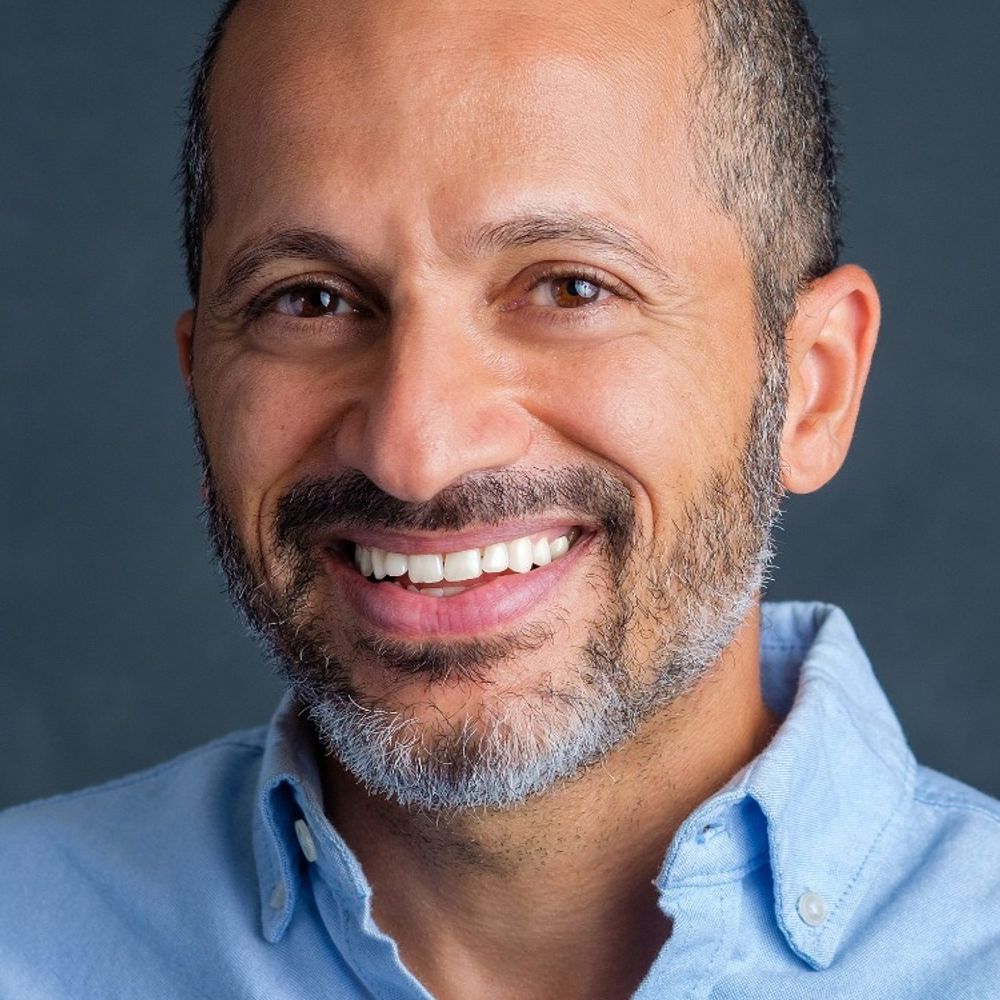
Conference season is here. Many of you are doing it wrong. You flew across the country to check your email in a different city. New post on what conferences are actually for.
open.substack.com/pub/michaeli...
open.substack.com/pub/michaeli...

You're Doing Conferences Wrong
I love conferences.
open.substack.com
February 18, 2026 at 3:36 PM
Conference season is here. Many of you are doing it wrong. You flew across the country to check your email in a different city. New post on what conferences are actually for.
open.substack.com/pub/michaeli...
open.substack.com/pub/michaeli...
Reposted

This new paper offers practical solutions for pluralistic ignorance (when people assume their opinon is unpopular when many others share it):
-in loose cultures, share accurate information
-in tight ones, lowering the costs of speaking up can spark social change.
www.pnas.org/doi/10.1073/...
-in loose cultures, share accurate information
-in tight ones, lowering the costs of speaking up can spark social change.
www.pnas.org/doi/10.1073/...

February 17, 2026 at 10:11 PM
This new paper offers practical solutions for pluralistic ignorance (when people assume their opinon is unpopular when many others share it):
-in loose cultures, share accurate information
-in tight ones, lowering the costs of speaking up can spark social change.
www.pnas.org/doi/10.1073/...
-in loose cultures, share accurate information
-in tight ones, lowering the costs of speaking up can spark social change.
www.pnas.org/doi/10.1073/...
Reposted

I don't post everything I write on BlueSky, but I think this piece may resonate with a few of you. It is for those interested in the backstory of the debate, why it matters, and whether it is even a scientific question to ask whether people are rational.

Are people rational? And is that even a meaningful question?
Or why I think expertise is the better way to understand normative decision-making
jtpeterson.substack.com
February 17, 2026 at 3:41 PM
I don't post everything I write on BlueSky, but I think this piece may resonate with a few of you. It is for those interested in the backstory of the debate, why it matters, and whether it is even a scientific question to ask whether people are rational.
Reposted

Contrary to common wisdom and a sizeable literature, longitudinal research (with a natural experiment) in Australia by @maximananyev.bsky.social et al suggests there is no causal effect of getting a pet on life satisfaction, loneliness, mental health, and general health:
buff.ly/iYkVfCQ
buff.ly/iYkVfCQ

February 17, 2026 at 9:18 AM
Contrary to common wisdom and a sizeable literature, longitudinal research (with a natural experiment) in Australia by @maximananyev.bsky.social et al suggests there is no causal effect of getting a pet on life satisfaction, loneliness, mental health, and general health:
buff.ly/iYkVfCQ
buff.ly/iYkVfCQ
Reposted

Problem about the loneliness epidemic is, it's everywhere except in representative survey data. Let's look at where the claim comes from. 1/

Case in point, @pengzell.bsky.social just sent me 5 papers proving that there’s not actually any evidence for a loneliness epidemic. My mind is highly changed
February 17, 2026 at 7:13 AM
Problem about the loneliness epidemic is, it's everywhere except in representative survey data. Let's look at where the claim comes from. 1/
Reposted
If your priors are such that you’re less than 100% confident you understand Bayesian reasoning, crank up your posterior by checking out this little video with none other than @d_spiegel as contributor and narrator:
buff.ly/HVzVovp
buff.ly/HVzVovp

February 16, 2026 at 9:17 PM
If your priors are such that you’re less than 100% confident you understand Bayesian reasoning, crank up your posterior by checking out this little video with none other than @d_spiegel as contributor and narrator:
buff.ly/HVzVovp
buff.ly/HVzVovp
Reposted

The drunk uncle theory.
You don’t argue with the casually homophobic uncle at Thanksgiving dinner to change his mind; you argue so that the closeted cousin at the kids table knows there’s safe people and better possibilities out there
You don’t argue with the casually homophobic uncle at Thanksgiving dinner to change his mind; you argue so that the closeted cousin at the kids table knows there’s safe people and better possibilities out there

agree with this (hah) but also think a particular mistake the left made for a long time online, and still makes to an extent, is failing to understand that the person whose mind you may actually change is the one reading the argument you're having, not the one you're arguing with

The secret to engaging in social media debate is knowing you will never win anyone over. The best you can hope for is to have people who already agree with tell you you're awesome. You might great a dopamine thrill from the righteousness of your anger! Fine benefits, all. But you will never win.
February 16, 2026 at 11:35 PM
The drunk uncle theory.
You don’t argue with the casually homophobic uncle at Thanksgiving dinner to change his mind; you argue so that the closeted cousin at the kids table knows there’s safe people and better possibilities out there
You don’t argue with the casually homophobic uncle at Thanksgiving dinner to change his mind; you argue so that the closeted cousin at the kids table knows there’s safe people and better possibilities out there
Reposted
A new article in Nature Medicine found that social connections were a surprisingly powerful predictor of a long life.
Living with a partner was roughly as beneficial as exercise.
www.powerofusnewsletter.com/p/debunking-...
Living with a partner was roughly as beneficial as exercise.
www.powerofusnewsletter.com/p/debunking-...

February 14, 2026 at 6:01 PM
A new article in Nature Medicine found that social connections were a surprisingly powerful predictor of a long life.
Living with a partner was roughly as beneficial as exercise.
www.powerofusnewsletter.com/p/debunking-...
Living with a partner was roughly as beneficial as exercise.
www.powerofusnewsletter.com/p/debunking-...
Reposted

As a climate-focused psychologist, my paper introduces the "Capital-Climate Nexus" to examine how capitalism and climate change converge to shape the human experience.
My new article came out before this one👇, but Albert (2025) offers a similar analysis. 7/n
www.tandfonline.com/doi/full/10....
My new article came out before this one👇, but Albert (2025) offers a similar analysis. 7/n
www.tandfonline.com/doi/full/10....

It’s not just climate: rethinking ‘climate emotions’ in the age of burnout capitalism
Just as political ecologists have critiqued narratives of ‘climate migration’ and ‘climate conflict’ for their implicit climate determinism, this article argues that scholars should move beyond cli...
www.tandfonline.com
August 8, 2025 at 7:37 PM
As a climate-focused psychologist, my paper introduces the "Capital-Climate Nexus" to examine how capitalism and climate change converge to shape the human experience.
My new article came out before this one👇, but Albert (2025) offers a similar analysis. 7/n
www.tandfonline.com/doi/full/10....
My new article came out before this one👇, but Albert (2025) offers a similar analysis. 7/n
www.tandfonline.com/doi/full/10....
Reposted
"Capitalism, despite being one of the most dominant and pervasive forces in contemporary society, remains remarkably invisible within mainstream psychological discourse," Bettache notes in the below video.
A "Big Idea" to be overlooked in psychology, indeed. 🧵 5/n
vimeo.com/1069464662
A "Big Idea" to be overlooked in psychology, indeed. 🧵 5/n
vimeo.com/1069464662

Where Is Capitalism? Unmasking Its Hidden Role in Psychology
90252 I critically examine the pervasive yet often-neglected influence of capitalism on psychological processes and human behavior. While capitalist ideologies…
vimeo.com
August 8, 2025 at 7:35 PM
"Capitalism, despite being one of the most dominant and pervasive forces in contemporary society, remains remarkably invisible within mainstream psychological discourse," Bettache notes in the below video.
A "Big Idea" to be overlooked in psychology, indeed. 🧵 5/n
vimeo.com/1069464662
A "Big Idea" to be overlooked in psychology, indeed. 🧵 5/n
vimeo.com/1069464662
Reposted
Simultaneously, Bettache (2025) was making the same argument beautifully in the journal Personality & Social Psychology Review.
Importantly, he distinguishes between neoliberalism and capitalism. Whereas the former has made it into mainstream psych, the latter has not. 🧵4/n
doi.org/10.1177/1088...
Importantly, he distinguishes between neoliberalism and capitalism. Whereas the former has made it into mainstream psych, the latter has not. 🧵4/n
doi.org/10.1177/1088...

Where Is Capitalism? Unmasking Its Hidden Role in Psychology - Karim Bettache, 2025
This article critically examines the pervasive yet often-neglected influence of capitalism on psychological processes and human behavior. While capitalist ideol...
doi.org
August 8, 2025 at 7:35 PM
Simultaneously, Bettache (2025) was making the same argument beautifully in the journal Personality & Social Psychology Review.
Importantly, he distinguishes between neoliberalism and capitalism. Whereas the former has made it into mainstream psych, the latter has not. 🧵4/n
doi.org/10.1177/1088...
Importantly, he distinguishes between neoliberalism and capitalism. Whereas the former has made it into mainstream psych, the latter has not. 🧵4/n
doi.org/10.1177/1088...
Reposted
🚨New Publication Alert! 🚨
Ecopolitical Psychology at the Capital-Climate Nexus: A Research Agenda for the Capitalocene - by yours truly*
Article in Special Issue on "The Next Big Ideas in Psychology" in Review of General Psychology
*Link to free download, end of 🧵 1/n
doi.org/10.1177/1089...
Ecopolitical Psychology at the Capital-Climate Nexus: A Research Agenda for the Capitalocene - by yours truly*
Article in Special Issue on "The Next Big Ideas in Psychology" in Review of General Psychology
*Link to free download, end of 🧵 1/n
doi.org/10.1177/1089...

Ecopolitical Psychology at the Capital-Climate Nexus: A Research Agenda for the Capitalocene - Carlie D. Trott, 2025
Psychology as a discipline has been slow to engage with capitalism as a lens through which to understand and explain the human experience, yet neoliberal capita...
doi.org
August 8, 2025 at 7:31 PM
🚨New Publication Alert! 🚨
Ecopolitical Psychology at the Capital-Climate Nexus: A Research Agenda for the Capitalocene - by yours truly*
Article in Special Issue on "The Next Big Ideas in Psychology" in Review of General Psychology
*Link to free download, end of 🧵 1/n
doi.org/10.1177/1089...
Ecopolitical Psychology at the Capital-Climate Nexus: A Research Agenda for the Capitalocene - by yours truly*
Article in Special Issue on "The Next Big Ideas in Psychology" in Review of General Psychology
*Link to free download, end of 🧵 1/n
doi.org/10.1177/1089...
Reposted

Are you part of a grassroots football club, sustainable clothing initiative or sports apparel company?
Join our upcoming workshop for a collaborative discussion on how to make grassroots football kit more sustainable.
If you'd like to attend, please e-mail our researchers on [email protected].
Join our upcoming workshop for a collaborative discussion on how to make grassroots football kit more sustainable.
If you'd like to attend, please e-mail our researchers on [email protected].

February 13, 2026 at 2:58 PM
Are you part of a grassroots football club, sustainable clothing initiative or sports apparel company?
Join our upcoming workshop for a collaborative discussion on how to make grassroots football kit more sustainable.
If you'd like to attend, please e-mail our researchers on [email protected].
Join our upcoming workshop for a collaborative discussion on how to make grassroots football kit more sustainable.
If you'd like to attend, please e-mail our researchers on [email protected].
Reposted
Research by Nisbet & Wilson suggest when people report on why they made a particular choice, they do not rely on true introspection, but refer to a priori, implicit causal theories or judgments about the plausibility that a particular stimulus caused it:
buff.ly/1wUmUyV
buff.ly/1wUmUyV

February 12, 2026 at 4:09 PM
Research by Nisbet & Wilson suggest when people report on why they made a particular choice, they do not rely on true introspection, but refer to a priori, implicit causal theories or judgments about the plausibility that a particular stimulus caused it:
buff.ly/1wUmUyV
buff.ly/1wUmUyV
Reposted

New Essay by @shonali-p.bsky.social & colleagues:
"Advancing representations of equity and justice in climate mitigation futures"
journals.plos.org/climate/arti...
@kikstra.bsky.social @joerirogelj.bsky.social @karlscheifinger.bsky.social @vruijven.bsky.social @adrivinca.bsky.social @iiasa.ac.at
"Advancing representations of equity and justice in climate mitigation futures"
journals.plos.org/climate/arti...
@kikstra.bsky.social @joerirogelj.bsky.social @karlscheifinger.bsky.social @vruijven.bsky.social @adrivinca.bsky.social @iiasa.ac.at

Advancing representations of equity and justice in climate mitigation futures
In this work, we conduct a narrative review of pressing equity and justice issues within global modelled scenarios and propose a new research agenda to strengthen their consideration in future model d...
journals.plos.org
February 12, 2026 at 10:50 AM
New Essay by @shonali-p.bsky.social & colleagues:
"Advancing representations of equity and justice in climate mitigation futures"
journals.plos.org/climate/arti...
@kikstra.bsky.social @joerirogelj.bsky.social @karlscheifinger.bsky.social @vruijven.bsky.social @adrivinca.bsky.social @iiasa.ac.at
"Advancing representations of equity and justice in climate mitigation futures"
journals.plos.org/climate/arti...
@kikstra.bsky.social @joerirogelj.bsky.social @karlscheifinger.bsky.social @vruijven.bsky.social @adrivinca.bsky.social @iiasa.ac.at
Reposted

Items in Sheng et al.'s (2026) new Fundamental Follower Needs Inventory
www.researchgate.net/publication/...
#SocialPsyc
www.researchgate.net/publication/...
#SocialPsyc

February 12, 2026 at 7:55 AM
Items in Sheng et al.'s (2026) new Fundamental Follower Needs Inventory
www.researchgate.net/publication/...
#SocialPsyc
www.researchgate.net/publication/...
#SocialPsyc
Reposted

PhD Isabel Pacheco and co-authors Ellen van der Werff and Linda Steg found that people rarely engage in #circular citizenship behaviours. How can we access all that untapped potential for #systemicchange through more citizen action in the future?
Here's a thread on one of our recent papers🧵
Here's a thread on one of our recent papers🧵

Circular citizenship behaviours to promote systemic change: Influences of values, beliefs, norms, and personal agency
Environmental problems arise from our current societal and economic systems and could be alleviated by transforming such systems towards more sustaina…
www.sciencedirect.com
February 10, 2026 at 12:43 PM
PhD Isabel Pacheco and co-authors Ellen van der Werff and Linda Steg found that people rarely engage in #circular citizenship behaviours. How can we access all that untapped potential for #systemicchange through more citizen action in the future?
Here's a thread on one of our recent papers🧵
Here's a thread on one of our recent papers🧵
Reposted
Proud advisor moment. Check out my student, Emily Zohar's, new paper (her first first-authored paper) on how norms shape how effort. Yes, when we see hard workers around us, we work harder. But...when we see lazy people around us, we also work harder. Check it out!
psycnet.apa.org/record/2027-...
psycnet.apa.org/record/2027-...
APA PsycNet
psycnet.apa.org
February 10, 2026 at 1:39 PM
Proud advisor moment. Check out my student, Emily Zohar's, new paper (her first first-authored paper) on how norms shape how effort. Yes, when we see hard workers around us, we work harder. But...when we see lazy people around us, we also work harder. Check it out!
psycnet.apa.org/record/2027-...
psycnet.apa.org/record/2027-...
Reposted

You need one of GPT-5.2 Extended Thinking, Opus 4.6 Thinking, Gemini 3 Pro - yes you need to pay $20
Also, I hate to say it because it is very expensive, but GPT-5.2 Pro is the best for very hard high stakes problems.
Also, I hate to say it because it is very expensive, but GPT-5.2 Pro is the best for very hard high stakes problems.
February 10, 2026 at 2:57 AM
You need one of GPT-5.2 Extended Thinking, Opus 4.6 Thinking, Gemini 3 Pro - yes you need to pay $20
Also, I hate to say it because it is very expensive, but GPT-5.2 Pro is the best for very hard high stakes problems.
Also, I hate to say it because it is very expensive, but GPT-5.2 Pro is the best for very hard high stakes problems.
Reposted

What we talk about when we talk about bias
Part of a series in homage to Signal Detection Theory
https://tomstafford.substack.com/p/good-bias
Part of a series in homage to Signal Detection Theory
https://tomstafford.substack.com/p/good-bias

Good bias
Let's untangle what people mean when they say the B word
tomstafford.substack.com
February 9, 2026 at 12:29 PM
What we talk about when we talk about bias
Part of a series in homage to Signal Detection Theory
https://tomstafford.substack.com/p/good-bias
Part of a series in homage to Signal Detection Theory
https://tomstafford.substack.com/p/good-bias
Reposted
What makes life most satisfying—prosperity, excitement, a coziness, or a sustainability?
Research by Delhey et al using German panel data finds excitement and coziness are most important, with sustainability a distant 4th (negative for some groups):
buff.ly/usYWmPL
Research by Delhey et al using German panel data finds excitement and coziness are most important, with sustainability a distant 4th (negative for some groups):
buff.ly/usYWmPL


February 9, 2026 at 9:18 AM
What makes life most satisfying—prosperity, excitement, a coziness, or a sustainability?
Research by Delhey et al using German panel data finds excitement and coziness are most important, with sustainability a distant 4th (negative for some groups):
buff.ly/usYWmPL
Research by Delhey et al using German panel data finds excitement and coziness are most important, with sustainability a distant 4th (negative for some groups):
buff.ly/usYWmPL
Reposted
A Heterogeneity Revolution in Psychology
"When studies that may appear similar are repeated, findings often vary more than we would expect due to sampling error. This is not necessarily a problem if we understand why this happens."
"When studies that may appear similar are repeated, findings often vary more than we would expect due to sampling error. This is not necessarily a problem if we understand why this happens."

Psychology needs a… heterogeneity revolution | BPS
Audrey Linden argues we should drop the assumption that interventions will have a single, underlying effect size.
www.bps.org.uk
February 8, 2026 at 6:42 PM
A Heterogeneity Revolution in Psychology
"When studies that may appear similar are repeated, findings often vary more than we would expect due to sampling error. This is not necessarily a problem if we understand why this happens."
"When studies that may appear similar are repeated, findings often vary more than we would expect due to sampling error. This is not necessarily a problem if we understand why this happens."
Reposted

New blog post, inspired by the excellent recent qualitative paper by Makel and colleagues: On the reliability and reproducibility of qualitative research.
I reflect on how I will incorporate realist ontologies in my own qualitative research.
daniellakens.blogspot.com/2026/02/on-r...
I reflect on how I will incorporate realist ontologies in my own qualitative research.
daniellakens.blogspot.com/2026/02/on-r...

On the reliability and reproducibility of qualitative research
With my collaborators, I am increasingly performing qualitative research. I find qualitative research projects a useful way to improve my un...
daniellakens.blogspot.com
February 8, 2026 at 7:46 AM
New blog post, inspired by the excellent recent qualitative paper by Makel and colleagues: On the reliability and reproducibility of qualitative research.
I reflect on how I will incorporate realist ontologies in my own qualitative research.
daniellakens.blogspot.com/2026/02/on-r...
I reflect on how I will incorporate realist ontologies in my own qualitative research.
daniellakens.blogspot.com/2026/02/on-r...
Reposted
Is overconfidence a personality trait that applies across domains?
The question divides the field of psychology, and an adversarial collaboration, while not settling the matter completely, let to agreement on a clear conclusion:
buff.ly/Y4SvKC8
The question divides the field of psychology, and an adversarial collaboration, while not settling the matter completely, let to agreement on a clear conclusion:
buff.ly/Y4SvKC8

February 7, 2026 at 7:51 PM
Is overconfidence a personality trait that applies across domains?
The question divides the field of psychology, and an adversarial collaboration, while not settling the matter completely, let to agreement on a clear conclusion:
buff.ly/Y4SvKC8
The question divides the field of psychology, and an adversarial collaboration, while not settling the matter completely, let to agreement on a clear conclusion:
buff.ly/Y4SvKC8