



Stephan Hacker
@stephanhacker2.bsky.social
Assistant Professor at Leiden University. Covalent inhibitors and chemoproteomics for antibiotics. Views my own. he/him/his. https://orcid.org/0000-0001-5420-4824
Interesting paper by the group of Marcos Suero in @angewandtechemie.bsky.social. They developed a #bioconjugation reaction to thiols using cyclopropenium cations. The resulting product on cysteine can be further modified using a thiol-ene reaction.
onlinelibrary.wiley....
#ChemSky #ChemBio
onlinelibrary.wiley....
#ChemSky #ChemBio

Site‐Selective Peptide and Protein Functionalization with Cyclopropenium Cations
A cysteine-selective bioconjugation using aromatic cyclopropenium cations is reported. The reaction proceeds rapidly under aqueous conditions, enabling site-selective installation of tetrasubstituted...
onlinelibrary.wiley.com
November 28, 2025 at 2:00 PM
Interesting paper by the group of Marcos Suero in @angewandtechemie.bsky.social. They developed a #bioconjugation reaction to thiols using cyclopropenium cations. The resulting product on cysteine can be further modified using a thiol-ene reaction.
onlinelibrary.wiley....
#ChemSky #ChemBio
onlinelibrary.wiley....
#ChemSky #ChemBio
A truly inspiring @led3hub.bsky.social Lecture by Lotte Bjerre Knudsen. Amazing insights into the discovery of GLP-1 agonists like #semiglutide (Ozempic, Wegovy) at @novo-nordisk.bsky.social and their applications to treat #Diabetes, #Obesity and #CardiovascularDisease www.nature.com/articles/s41...


November 27, 2025 at 3:38 PM
A truly inspiring @led3hub.bsky.social Lecture by Lotte Bjerre Knudsen. Amazing insights into the discovery of GLP-1 agonists like #semiglutide (Ozempic, Wegovy) at @novo-nordisk.bsky.social and their applications to treat #Diabetes, #Obesity and #CardiovascularDisease www.nature.com/articles/s41...
Reposted by Stephan Hacker

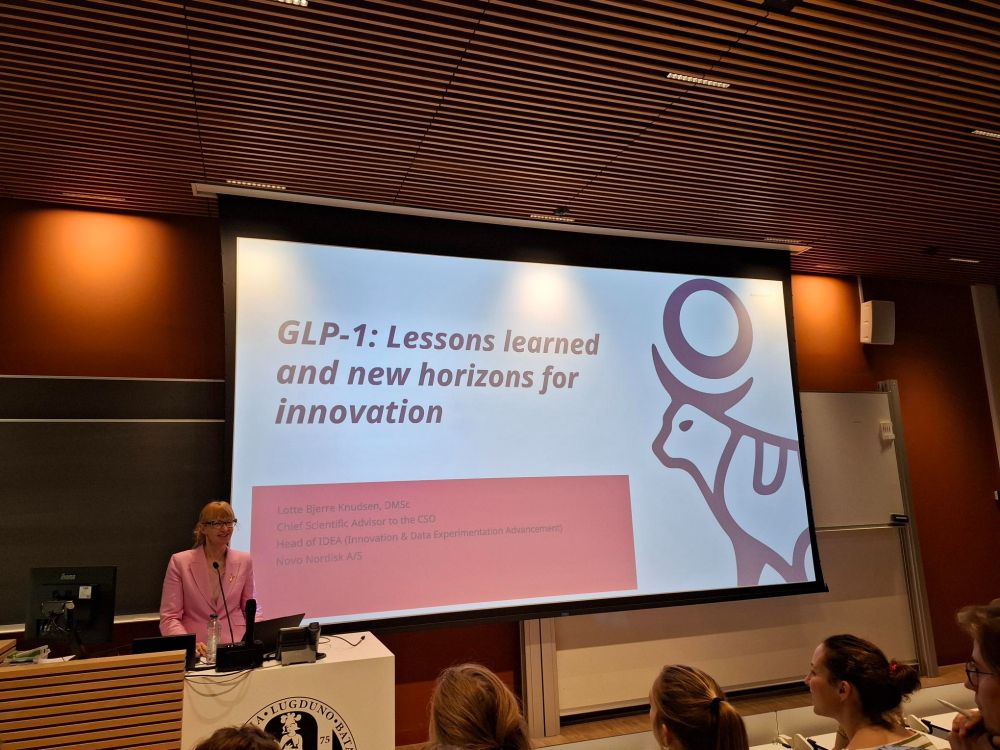
We are very happy that Lotte Bjerre Knudsen from @novo-nordisk.bsky.social visited us today for a very well-attended LED3 Lecture. She talked about the development of GLP-1 agonists into blockbuster medications for the treatment of #diabetes and #obesity.
#DrugDiscovery #Peptides #ChemBio #ChemSky
#DrugDiscovery #Peptides #ChemBio #ChemSky
November 27, 2025 at 3:17 PM
We are very happy that Lotte Bjerre Knudsen from @novo-nordisk.bsky.social visited us today for a very well-attended LED3 Lecture. She talked about the development of GLP-1 agonists into blockbuster medications for the treatment of #diabetes and #obesity.
#DrugDiscovery #Peptides #ChemBio #ChemSky
#DrugDiscovery #Peptides #ChemBio #ChemSky
Interesting paper by the group of Sylvestre Bonnet of our @led3hub.bsky.social in JACS. They synthesized alkyne derivatives of Ruthenium complexes that are used for photoactivated chemotherapy and used them to identify their location in the cell after photoactivation.

Visualizing the Invisible: Dual Click Imaging of Ruthenium-Based Photoactivated Chemotherapy Agents and Their DNA Synthesis Inhibition in Fixed Cancer Cells
Like many drugs, ruthenium-based photoactivated chemotherapy (PACT) complexes are hard to follow in cells due to their absence of emissive properties. Here, two alkyne-functionalized Ru-based PACT compounds with the formula [Ru(HCC-tpy)(N̂N)(Hmte)](PF6)2 were synthesized, where HCC-tpy = 4′-ethynyl-2,2′:6′,2″-terpyridine, N̂N = 3,3′-biisoquinoline (i-biq, [2](PF6)2) or di(isoquinolin-3-yl)amine (i-Hdiqa, [4](PF6)2), and Hmte = 2-(methylthio)ethanol. Their challenging synthesis involved a protection–deprotection strategy to avoid the reaction of the free alkyne group with the coordinatively unsaturated ruthenium center. The thermal stability and photosubstitution quantum yield (Φ[2] = 0.022 and Φ[4] = 0.080) of the PACT complexes were essentially preserved upon alkyne functionalization. Interestingly, however, cellular uptake was doubled after alkyne functionalization, resulting in increased cytotoxicity against A549 cancer cells for both complexes in the dark and after green light activation (EC50,light = 5 and 7 μM, respectively). To follow the complexes and see the effect of light activation, post-treatment fluorophore labeling via copper-catalyzed azide–alkyne cycloaddition was realized in fixed cells at 2 different time points, which allowed for imaging the otherwise invisible molecules. The images showed that the Ru complexes accumulated in the cytoplasm only after light irradiation and that they colocalized with the lysosomes and the Golgi apparatus. Moreover, we combined this approach with metabolic labeling of DNA, and showed by dual click imaging that DNA replication was inhibited by complex 4. The strategy described herein, pioneered for nonemissive, photosubstitutionally active ruthenium complexes, opens a new avenue for investigating the selective attack of lung cancer cells by PACT.
pubs.acs.org
November 27, 2025 at 2:00 PM
Interesting paper by the group of Sylvestre Bonnet of our @led3hub.bsky.social in JACS. They synthesized alkyne derivatives of Ruthenium complexes that are used for photoactivated chemotherapy and used them to identify their location in the cell after photoactivation.
Important “News in Focus” article by Katie Kavanagh in Nature. Antibiotic-resistant bacterial infections are a major threat to human health, which we can only address by reducing over- and misuse of antibiotics and investing more in #antibiotic research.
www.nature.com/articles/d41...
www.nature.com/articles/d41...

The rise of ‘nightmare bacteria’: antimicrobial resistance in five charts
Data reveal how the global challenge to reduce deaths and infections from drug-resistant bacteria is not going according to plan.
www.nature.com
November 26, 2025 at 3:45 PM
Important “News in Focus” article by Katie Kavanagh in Nature. Antibiotic-resistant bacterial infections are a major threat to human health, which we can only address by reducing over- and misuse of antibiotics and investing more in #antibiotic research.
www.nature.com/articles/d41...
www.nature.com/articles/d41...
Join us at @apnet.bsky.social!

Are you an #AssistantProfessor in the #Netherlands? Join APNet today to become part of our amazing network.
If you become a member between now and the end of the year, you can make use of our end-of-year promotion and become member for 20 € until the end of 2026.
ap-net.nl/register/
If you become a member between now and the end of the year, you can make use of our end-of-year promotion and become member for 20 € until the end of 2026.
ap-net.nl/register/

November 26, 2025 at 3:21 PM
Join us at @apnet.bsky.social!
I hope I could convey some of the great science that was presented in >50 talks at the 3rd International Symposium on Chemical Proteomics and Drug Discovery in Guangzhou.
If you want to read my summaries, check out #ISCPDD.
Thank you so much again to Zhengqiu Li for organizing and inviting me.
If you want to read my summaries, check out #ISCPDD.
Thank you so much again to Zhengqiu Li for organizing and inviting me.


November 26, 2025 at 12:00 PM
I hope I could convey some of the great science that was presented in >50 talks at the 3rd International Symposium on Chemical Proteomics and Drug Discovery in Guangzhou.
If you want to read my summaries, check out #ISCPDD.
Thank you so much again to Zhengqiu Li for organizing and inviting me.
If you want to read my summaries, check out #ISCPDD.
Thank you so much again to Zhengqiu Li for organizing and inviting me.
Interesting talk by Weining Zhao at #ISCPDD. He talked about the use of #ChemicalProteomics to study the target proteins of Fraxetin. They identified PTGR2 as a relevant target in human cells.
pubs.rsc.org/en/cont...
#ABPP #AfBPP #ChemSky #ChemBio #ProteoProbes #ChemPro
pubs.rsc.org/en/cont...
#ABPP #AfBPP #ChemSky #ChemBio #ProteoProbes #ChemPro

Chemical proteomic profiling reveals prostaglandin termination enzyme PTGR2 as a key molecular target of natural coumarin fraxetin
Natural coumarins represent a diverse group of secondary metabolites with a wide range of biological activities. However, their specific molecular targets have remained largely unexplored. Employing chemical proteomics, a comprehensive analysis of the protein targets of the natural coumarin fraxetin has been
pubs.rsc.org
November 26, 2025 at 8:00 AM
Interesting talk by Weining Zhao at #ISCPDD. He talked about the use of #ChemicalProteomics to study the target proteins of Fraxetin. They identified PTGR2 as a relevant target in human cells.
pubs.rsc.org/en/cont...
#ABPP #AfBPP #ChemSky #ChemBio #ProteoProbes #ChemPro
pubs.rsc.org/en/cont...
#ABPP #AfBPP #ChemSky #ChemBio #ProteoProbes #ChemPro
Great presentation by Billy Ng at #ISCPDD. He talked about the use of induced proximity to study protein O-GlcNAcylation. Exciting work on recruiters that bring together OGT and a target protein.
pubs.acs.org/doi/ful...
#ChemSky #ChemBio #Glycotime
pubs.acs.org/doi/ful...
#ChemSky #ChemBio #Glycotime
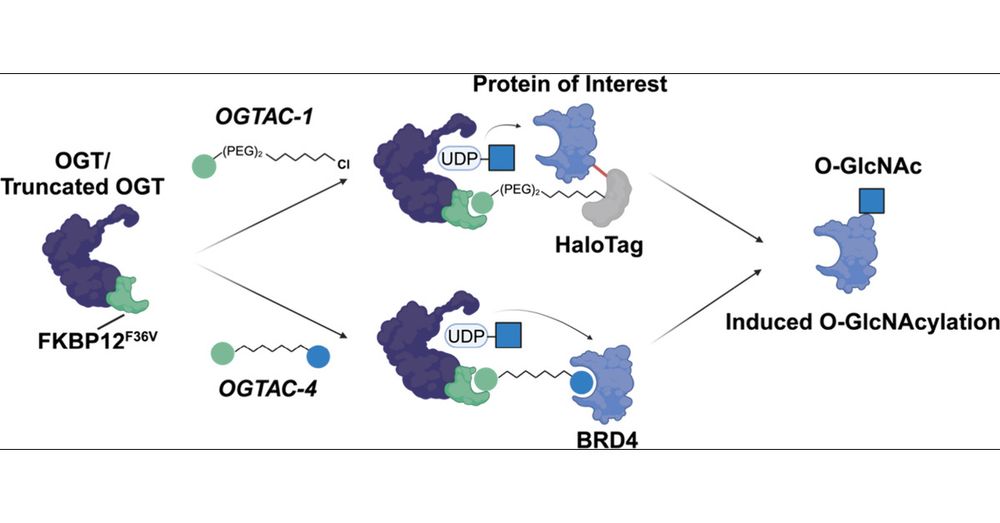
Targeted Protein O-GlcNAcylation Using Bifunctional Small Molecules
Protein O-linked β-N-acetylglucosamine modification (O-GlcNAcylation) plays a crucial role in regulating essential cellular processes. The disruption of the homeostasis of O-GlcNAcylation has been linked to various human diseases, including cancer, diabetes, and neurodegeneration. However, there are limited chemical tools for protein- and site-specific O-GlcNAc modification, rendering the precise study of the O-GlcNAcylation challenging. To address this, we have developed heterobifunctional small molecules, named O-GlcNAcylation TArgeting Chimeras (OGTACs), which enable protein-specific O-GlcNAcylation in living cells. OGTACs promote O-GlcNAcylation of proteins such as BRD4, CK2α, and EZH2 in cellulo by recruiting FKBP12F36V-fused O-GlcNAc transferase (OGT), with temporal, magnitude, and reversible control. Overall, the OGTACs represent a promising approach for inducing protein-specific O-GlcNAcylation, thus enabling functional dissection and offering new directions for O-GlcNAc-targeting therapeutic development.
pubs.acs.org
November 25, 2025 at 4:00 PM
Great presentation by Billy Ng at #ISCPDD. He talked about the use of induced proximity to study protein O-GlcNAcylation. Exciting work on recruiters that bring together OGT and a target protein.
pubs.acs.org/doi/ful...
#ChemSky #ChemBio #Glycotime
pubs.acs.org/doi/ful...
#ChemSky #ChemBio #Glycotime
Great talk by Nathanael Gray at #ISCPDD. He presented his group’s work on induced proximity to regulate transcription. Exciting data on recruiting a transcriptional activator (e.g. BRD4 or CDK9) to replace co-repressors on the death regulator BCL6 to induce cell death.

Rewiring cancer drivers to activate apoptosis
Nature - A new class of molecules can recruit downstream transcription factors or endogenous cancer drivers to cell death promoters and activate the expression of these genes.
www.nature.com
November 25, 2025 at 12:00 PM
Great talk by Nathanael Gray at #ISCPDD. He presented his group’s work on induced proximity to regulate transcription. Exciting data on recruiting a transcriptional activator (e.g. BRD4 or CDK9) to replace co-repressors on the death regulator BCL6 to induce cell death.
How did primitive membranes form at the #OriginOfLife and how did they evolve into the complex cellular envelopes of modern cells?
Exciting talk by Claudia Bonfio about the non-enzymatic formation of phospholipids under conditions that are plausible for early Earth.(1/2)
pubs.rsc.org/en/content/a...
Exciting talk by Claudia Bonfio about the non-enzymatic formation of phospholipids under conditions that are plausible for early Earth.(1/2)
pubs.rsc.org/en/content/a...

November 25, 2025 at 10:09 AM
How did primitive membranes form at the #OriginOfLife and how did they evolve into the complex cellular envelopes of modern cells?
Exciting talk by Claudia Bonfio about the non-enzymatic formation of phospholipids under conditions that are plausible for early Earth.(1/2)
pubs.rsc.org/en/content/a...
Exciting talk by Claudia Bonfio about the non-enzymatic formation of phospholipids under conditions that are plausible for early Earth.(1/2)
pubs.rsc.org/en/content/a...
Great talk by Xinyuan Fan at #ISCPDD. He talked about his group’s exciting work on using #photocatalysis to profile the proteins and the RNA in specific compartments in the cell on the example of mitochondria, Golgi, ER and lysosome.
doi.org/10.1038/s415...
#ChemBio #ChemSky #ProximityLabeling
doi.org/10.1038/s415...
#ChemBio #ChemSky #ProximityLabeling

Photocatalytic labelling-enabled subcellular-resolved RNA profiling and synchronous multi-omics investigation
Nature Chemistry - Profiling subcellular multi-omics with spatiotemporal resolution remains a key challenge in cell biology. Now an orthogonal photocatalytic labelling strategy has been developed...
doi.org
November 25, 2025 at 8:00 AM
Great talk by Xinyuan Fan at #ISCPDD. He talked about his group’s exciting work on using #photocatalysis to profile the proteins and the RNA in specific compartments in the cell on the example of mitochondria, Golgi, ER and lysosome.
doi.org/10.1038/s415...
#ChemBio #ChemSky #ProximityLabeling
doi.org/10.1038/s415...
#ChemBio #ChemSky #ProximityLabeling
Very excited to visit Radboud University Nijmegen today and to speak at the Institute for Molecules and Materials (IMM) colloquium. Looking forward to a full day of scientific exchange.
Thank you so much for inviting me, Kevin Neumann. (1/2)
#ChemSky #ChemBio #ChemPro #ProteoProbes
Thank you so much for inviting me, Kevin Neumann. (1/2)
#ChemSky #ChemBio #ChemPro #ProteoProbes

November 25, 2025 at 7:39 AM
Very excited to visit Radboud University Nijmegen today and to speak at the Institute for Molecules and Materials (IMM) colloquium. Looking forward to a full day of scientific exchange.
Thank you so much for inviting me, Kevin Neumann. (1/2)
#ChemSky #ChemBio #ChemPro #ProteoProbes
Thank you so much for inviting me, Kevin Neumann. (1/2)
#ChemSky #ChemBio #ChemPro #ProteoProbes
Amazing lecture by Hui Ye at #ISCPDD. She talked about her group’s exciting research into target responsive accessibility profiling (TRAP) to characterize the binding sites of covalent and non-covalent protein binders in complex environments using #ChemicalProteomics.

Chemoproteomic mapping of the glycolytic targetome in cancer cells
Nature Chemical Biology - A chemoproteomic approach is developed that examines changes in ligand binding-induced accessibility by globally labeling reactive proteinaceous lysines, revealing the...
www.nature.com
November 24, 2025 at 4:00 PM
Amazing lecture by Hui Ye at #ISCPDD. She talked about her group’s exciting research into target responsive accessibility profiling (TRAP) to characterize the binding sites of covalent and non-covalent protein binders in complex environments using #ChemicalProteomics.
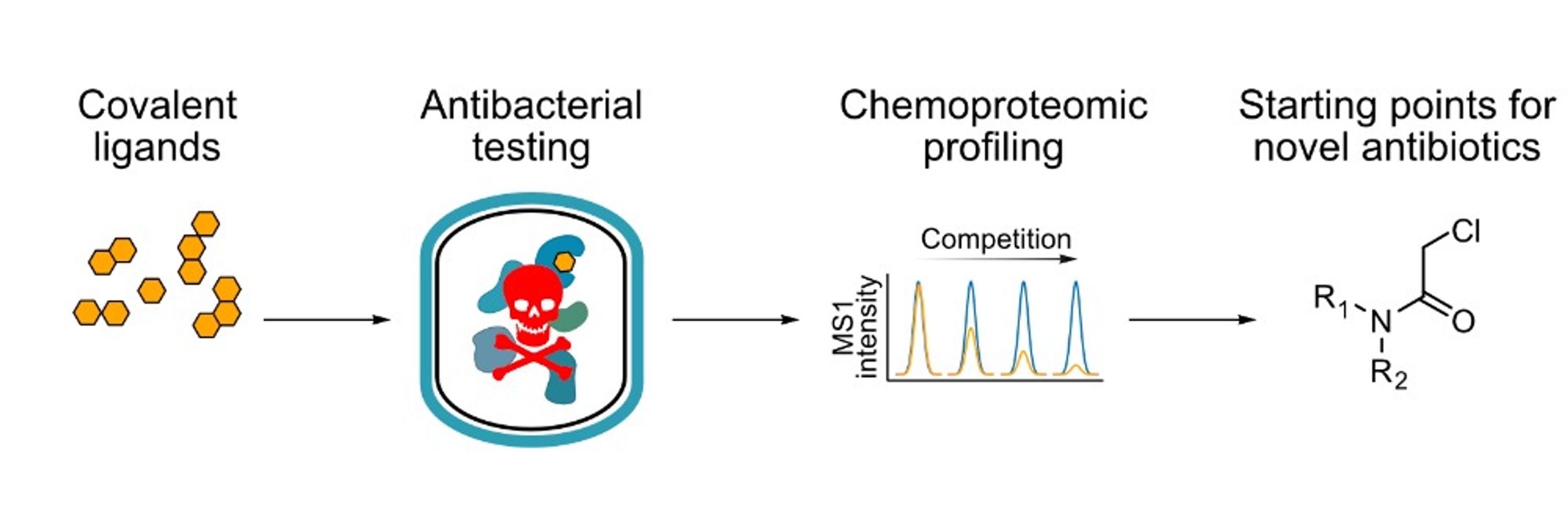
Amazing lecture by Chu Wang at #ISCPDD. He talked about the use of a group competition strategy to identify #covalent ligands using #ChemicalProteomics. A great approach that allows the screening of multiple ligands against many proteins at once.
#ChemSky #ChemBio #DrugDiscovery
#ChemSky #ChemBio #DrugDiscovery


November 24, 2025 at 12:00 PM
Amazing lecture by Chu Wang at #ISCPDD. He talked about the use of a group competition strategy to identify #covalent ligands using #ChemicalProteomics. A great approach that allows the screening of multiple ligands against many proteins at once.
#ChemSky #ChemBio #DrugDiscovery
#ChemSky #ChemBio #DrugDiscovery
It was great that I could present our work at #ISCPDD. I focused on the isoDTB tags (onlinelibrary.wiley....) and our recent Nature Chemistry publication on the selectivity of diverse electrophiles (www.nature.com/artic...).
#ChemBio #ChemSky #ChemPro #ProteoProbes
#ChemBio #ChemSky #ChemPro #ProteoProbes

November 24, 2025 at 8:00 AM
It was great that I could present our work at #ISCPDD. I focused on the isoDTB tags (onlinelibrary.wiley....) and our recent Nature Chemistry publication on the selectivity of diverse electrophiles (www.nature.com/artic...).
#ChemBio #ChemSky #ChemPro #ProteoProbes
#ChemBio #ChemSky #ChemPro #ProteoProbes
Interesting @biorxivpreprint.bsky.social by the group of Matt Disney. They used fully functionalized fragments to enrich their targets and identify their binding sites on #RNA. Interesting insights into preferential binding to UTRs and the construction of RiboTACs.
www.biorxiv.org/content/10.1...
www.biorxiv.org/content/10.1...
www.biorxiv.org
November 24, 2025 at 5:48 AM
Interesting @biorxivpreprint.bsky.social by the group of Matt Disney. They used fully functionalized fragments to enrich their targets and identify their binding sites on #RNA. Interesting insights into preferential binding to UTRs and the construction of RiboTACs.
www.biorxiv.org/content/10.1...
www.biorxiv.org/content/10.1...
Interesting paper by a team around Takahiro Takayama in Analytical Chemistry. A systematic study of the effect of deuteration on retention time and an optimization of stationary and liquid phases to reduce the effect for better quantitative analysis. doi.org/10.1021/acs....
#Chromatography #LCMS
#Chromatography #LCMS

Mechanistic Study of the Deuterium Effect in Chromatographic Separation for Chemical-Tagging Metabolomics and Its Application to Biomarker Discovery in Metabolic Dysfunction-Associated Steatohepatitis
Over the past decade, numerous metabolomics techniques have been developed using liquid chromatography–mass spectrometry (LC-MS). These methodologies have yielded significant findings and facilitated ...
doi.org
November 23, 2025 at 4:06 PM
Interesting paper by a team around Takahiro Takayama in Analytical Chemistry. A systematic study of the effect of deuteration on retention time and an optimization of stationary and liquid phases to reduce the effect for better quantitative analysis. doi.org/10.1021/acs....
#Chromatography #LCMS
#Chromatography #LCMS
Interesting talk by Lei Wang at #ISCPDD. He talked about the application and synthetic optimization of natural products as #antibiotics against the most relevant #bacteria.
www.nature.com/articles/s41...
#ChemSky #ChemBio #DrugDiscovery
www.nature.com/articles/s41...
#ChemSky #ChemBio #DrugDiscovery
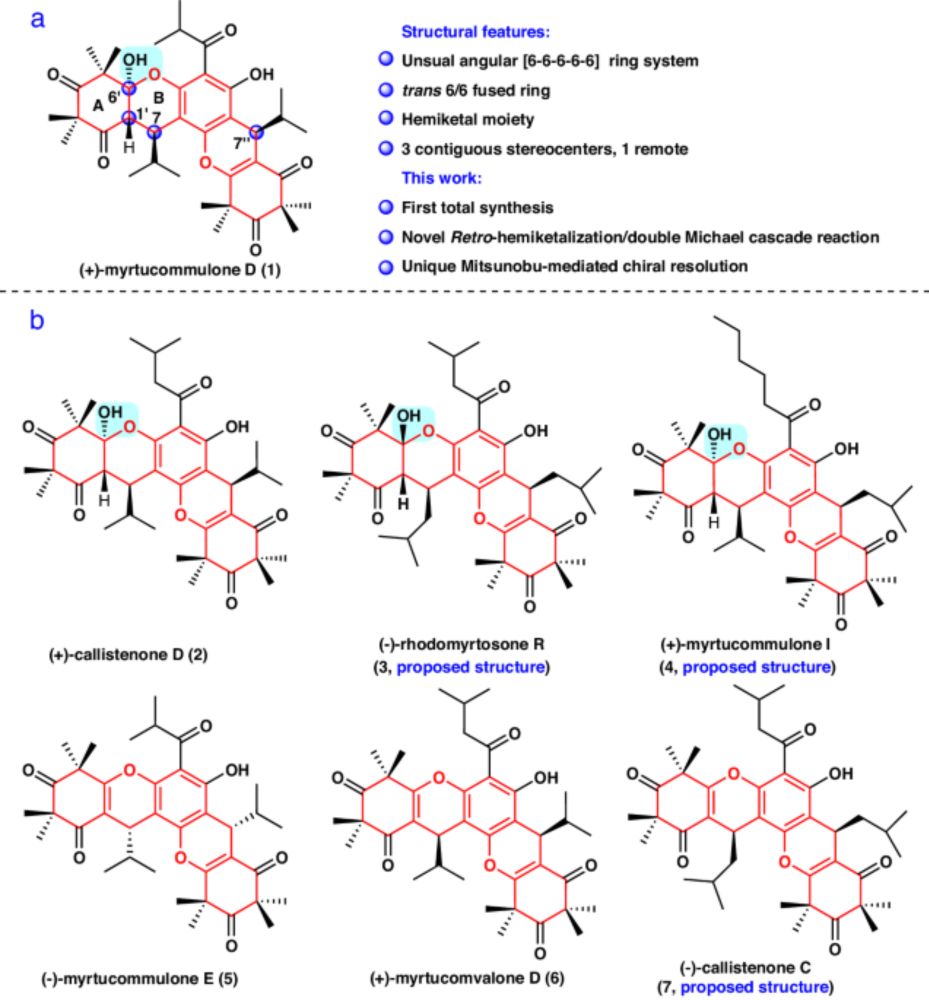
Asymmetric total synthesis of polycyclic xanthenes and discovery of a WalK activator active against MRSA - Nature Communications
Structurally diverse natural products are a promising source of antibiotics. Here, the authors report the collective asymmetric total synthesis of polycyclic xanthene myrtucommulone D and five related...
www.nature.com
November 23, 2025 at 4:04 PM
Interesting talk by Lei Wang at #ISCPDD. He talked about the application and synthetic optimization of natural products as #antibiotics against the most relevant #bacteria.
www.nature.com/articles/s41...
#ChemSky #ChemBio #DrugDiscovery
www.nature.com/articles/s41...
#ChemSky #ChemBio #DrugDiscovery
Great talk by Xiaoguang Lei at #ISCPDD. He talked about the use photoaffinity probes based on biosynthetic intermediates to fish for the relevant enzymes to identify e.g. an intermolecular Diels-Alderase.
www.nature.com/articles/s41...
#ChemSky #ChemBio #ChemicalProteomics #ChemPro #ProteoProbes
www.nature.com/articles/s41...
#ChemSky #ChemBio #ChemicalProteomics #ChemPro #ProteoProbes
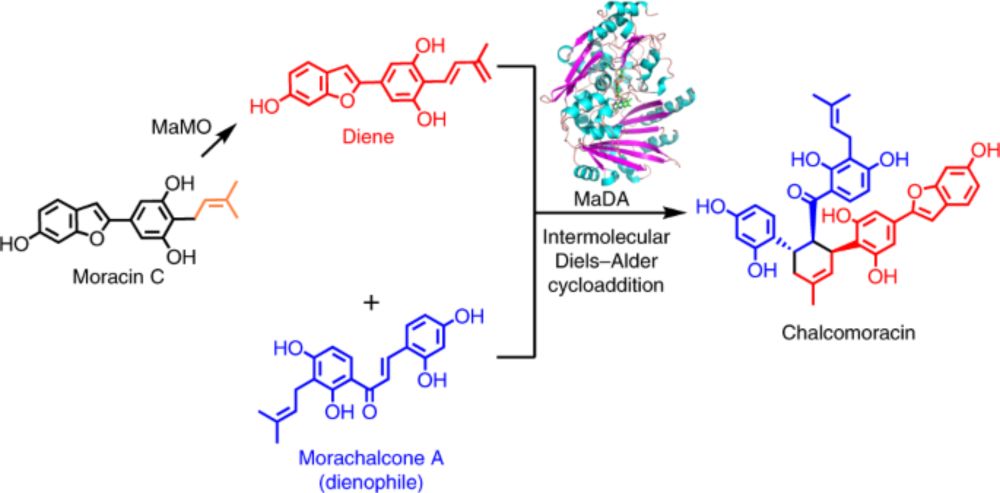
FAD-dependent enzyme-catalysed intermolecular [4+2] cycloaddition in natural product biosynthesis - Nature Chemistry
A naturally occurring stand-alone and intermolecular Diels–Alderase, MaDA, has been identified from Morus alba cell cultures. MaDA is a FAD-dependent enzyme, which catalyses the intermolecular [4+2] c...
www.nature.com
November 23, 2025 at 1:36 PM
Great talk by Xiaoguang Lei at #ISCPDD. He talked about the use photoaffinity probes based on biosynthetic intermediates to fish for the relevant enzymes to identify e.g. an intermolecular Diels-Alderase.
www.nature.com/articles/s41...
#ChemSky #ChemBio #ChemicalProteomics #ChemPro #ProteoProbes
www.nature.com/articles/s41...
#ChemSky #ChemBio #ChemicalProteomics #ChemPro #ProteoProbes
Great talk by Cheng Chang at #ISCPDD. He talked about his group’s work on πPrimeNovo for de novo sequencing in mass spectrometry-based #proteomics. He also presented the πHub database of human proteomics data.
www.nature.com/articles/s41...
#MS #MassSpectrometry #DeNovoSequencing
www.nature.com/articles/s41...
#MS #MassSpectrometry #DeNovoSequencing

π-PrimeNovo: an accurate and efficient non-autoregressive deep learning model for de novo peptide sequencing - Nature Communications
Peptide sequencing is critical to the advancement of proteomics research. Here, the authors present π-PrimeNovo, a non-autoregressive deep learning model that achieves high accuracy and up to 89x fast...
www.nature.com
November 22, 2025 at 3:03 PM
Great talk by Cheng Chang at #ISCPDD. He talked about his group’s work on πPrimeNovo for de novo sequencing in mass spectrometry-based #proteomics. He also presented the πHub database of human proteomics data.
www.nature.com/articles/s41...
#MS #MassSpectrometry #DeNovoSequencing
www.nature.com/articles/s41...
#MS #MassSpectrometry #DeNovoSequencing
Interesting talk by Xiangbing Qi at #ISCPDD. He talked about the design of compound libraries for high-throughput screening and their biological applications. Interesting applications of Herbert Waldmann’s Spacial Score metric. doi.org/10.1021/acs....
#HTS #Screening #ChemSky #DrugDiscovery
#HTS #Screening #ChemSky #DrugDiscovery

Spacial Score─A Comprehensive Topological Indicator for Small-Molecule Complexity
The fraction of sp3-hybridized carbons (Fsp3) and the fraction of stereogenic carbons (FCstereo) are two widely employed scores of molecular complexity with strong links to biologically relevant features. However, they do not comprehensively express molecular topology, and they often do not match the chemical intuition of complexity. We propose the spacial score (SPS) as an empirical scoring system that builds upon the principle underlying Fsp3 and FCstereo and expresses the spacial complexity of a compound in a uniform manner on a highly granular scale. The size-normalized SPS (nSPS) can differentiate distributions of natural products and synthetic compounds and is applicable in the analysis of biological activity data. Analysis of the ChEMBL database revealed general trends of increasing selectivity and potency with increasing nSPS. SPS can also be used advantageously in planning and analysis of synthesis programs for direct comparison of chemical transformations and intermediates in reaction sequences.
doi.org
November 22, 2025 at 6:03 AM
Interesting talk by Xiangbing Qi at #ISCPDD. He talked about the design of compound libraries for high-throughput screening and their biological applications. Interesting applications of Herbert Waldmann’s Spacial Score metric. doi.org/10.1021/acs....
#HTS #Screening #ChemSky #DrugDiscovery
#HTS #Screening #ChemSky #DrugDiscovery
Reposted by Stephan Hacker

a must read
Great to see our Nature Chemistry paper out in its final published and printed form.
If you want to check it out, you can find it here: www.nature.com/articles/s41...
#ChemSky #ChemBio #ChemicalProteomics #Chemoproteomics #ProteoProbes #ChemPro
If you want to check it out, you can find it here: www.nature.com/articles/s41...
#ChemSky #ChemBio #ChemicalProteomics #Chemoproteomics #ProteoProbes #ChemPro

November 21, 2025 at 8:31 PM
a must read
Reposted by Stephan Hacker

Did you ever come across a phosphosite in your proteomics data for which nothing was known? - I bet so!
We have developed a new strategy termed "potency coherence analysis" that leverages the drug potency dimension in decryptM to decode the kinases that shape the human phosphoproteome.
Read more:
We have developed a new strategy termed "potency coherence analysis" that leverages the drug potency dimension in decryptM to decode the kinases that shape the human phosphoproteome.
Read more:

Chemical proteomics decrypts the kinases that shape the dynamic human phosphoproteome
Mass-spectrometry-based phosphoproteomics enables the analysis of thousands of protein phosphorylation events across the human proteome. However, there is a lack of scalable, hypothesis-free, and stat...
doi.org
November 19, 2025 at 10:43 AM
Did you ever come across a phosphosite in your proteomics data for which nothing was known? - I bet so!
We have developed a new strategy termed "potency coherence analysis" that leverages the drug potency dimension in decryptM to decode the kinases that shape the human phosphoproteome.
Read more:
We have developed a new strategy termed "potency coherence analysis" that leverages the drug potency dimension in decryptM to decode the kinases that shape the human phosphoproteome.
Read more:
A tour-de-force study by the group of Bernhard Küster (@kusterlab.bsky.social). They profiled 133 kinase inhibitors in 5 cell lines at 11 doses using #phosphoproteomics to identify 5,318 confident kinase::substrate relationships for 96 human #kinases www.biorxiv.org/content/10.1...
#ChemSky #ChemBio
#ChemSky #ChemBio
www.biorxiv.org
November 21, 2025 at 3:31 PM
A tour-de-force study by the group of Bernhard Küster (@kusterlab.bsky.social). They profiled 133 kinase inhibitors in 5 cell lines at 11 doses using #phosphoproteomics to identify 5,318 confident kinase::substrate relationships for 96 human #kinases www.biorxiv.org/content/10.1...
#ChemSky #ChemBio
#ChemSky #ChemBio