



Otago Biochemistry
@otagobiochemist.bsky.social
Department of Biochemistry at the University of Otago
Te Tari Matū Koiora, Ōtākou Whakaihu Waka
Te Tari Matū Koiora, Ōtākou Whakaihu Waka
Latest publication with a contribution from Otago Biochemistry.
Multimodal single cell analyses reveal gene networks of planarian stem cell differentiation
www.nature.com/articles/s41...
Multimodal single cell analyses reveal gene networks of planarian stem cell differentiation
www.nature.com/articles/s41...

Multimodal single cell analyses reveal gene networks of planarian stem cell differentiation - Nature Communications
Single cell transcriptomics and chromatin accessibility uncover the gene networks underlying planarian cell type differentiation, revealing insights into the combinatorial logic of planarian cell fate...
www.nature.com
December 3, 2025 at 9:42 PM
Latest publication with a contribution from Otago Biochemistry.
Multimodal single cell analyses reveal gene networks of planarian stem cell differentiation
www.nature.com/articles/s41...
Multimodal single cell analyses reveal gene networks of planarian stem cell differentiation
www.nature.com/articles/s41...
Reposted by Otago Biochemistry

Also:
If you're like, "Wow, I wish more people would stop at my poster at conferences" then you might consider working with a graphic designer or artist to make a poster that know how to use visuals well and take it to the conference because collaboration is fun and scientists should do it more.
If you're like, "Wow, I wish more people would stop at my poster at conferences" then you might consider working with a graphic designer or artist to make a poster that know how to use visuals well and take it to the conference because collaboration is fun and scientists should do it more.
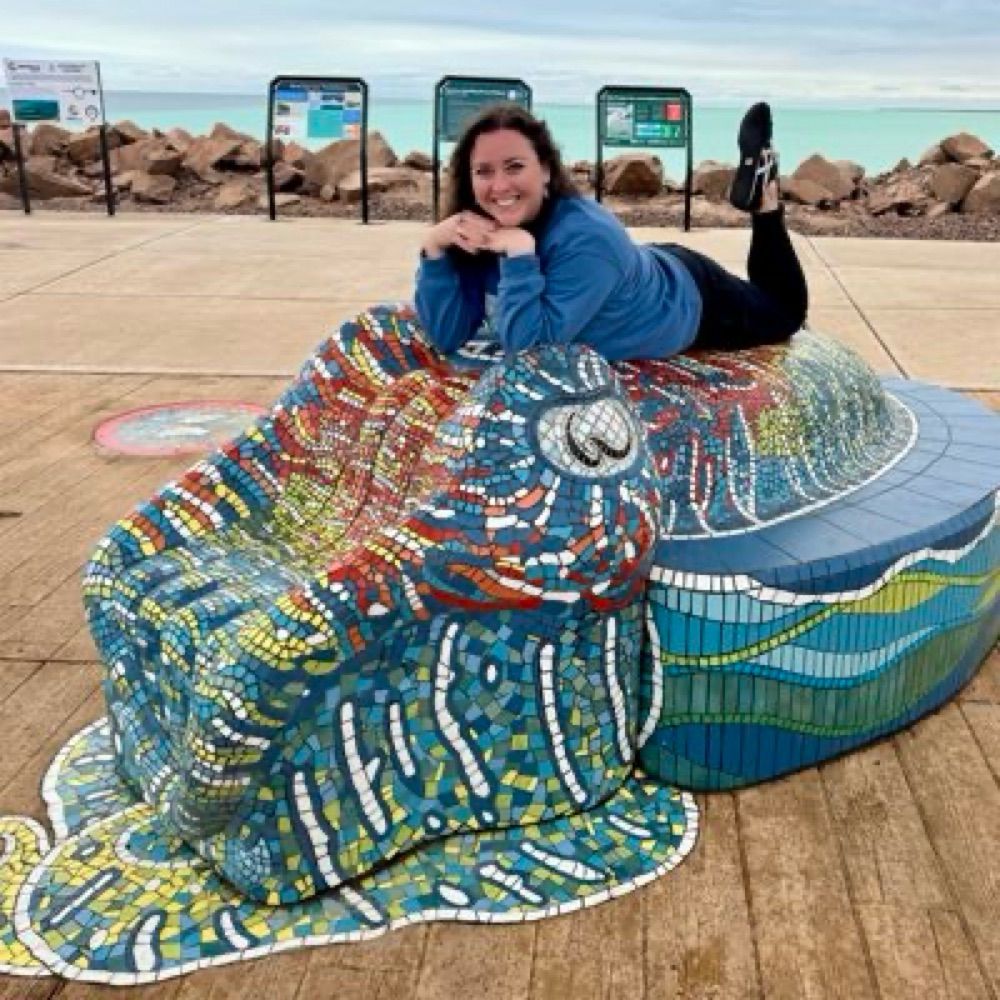
Scientists if you’re like “man I wish more people knew about X” then I humbly suggest hiring an artist to make a thing that communicates X and then put it into the world because it’s so fun, extremely “hell yeah” inducing, you gotta try it.
December 3, 2025 at 2:59 PM
Also:
If you're like, "Wow, I wish more people would stop at my poster at conferences" then you might consider working with a graphic designer or artist to make a poster that know how to use visuals well and take it to the conference because collaboration is fun and scientists should do it more.
If you're like, "Wow, I wish more people would stop at my poster at conferences" then you might consider working with a graphic designer or artist to make a poster that know how to use visuals well and take it to the conference because collaboration is fun and scientists should do it more.
Reposted by Otago Biochemistry

🧪
Writing an Introduction is hard. There are a few ways Introductions often go astray - avoid these. "What your Introduction section isn't" -

What your Introduction section isn’t
Today, the fourth and final instalment in a short series inspired by bad papers I’ve read (some of them, I’ll admit once again, my own). I’ve let myself rant about what a Methods sections shouldn’t…
scientistseessquirrel.wordpress.com
December 2, 2025 at 3:05 PM
🧪
Reposted by Otago Biochemistry

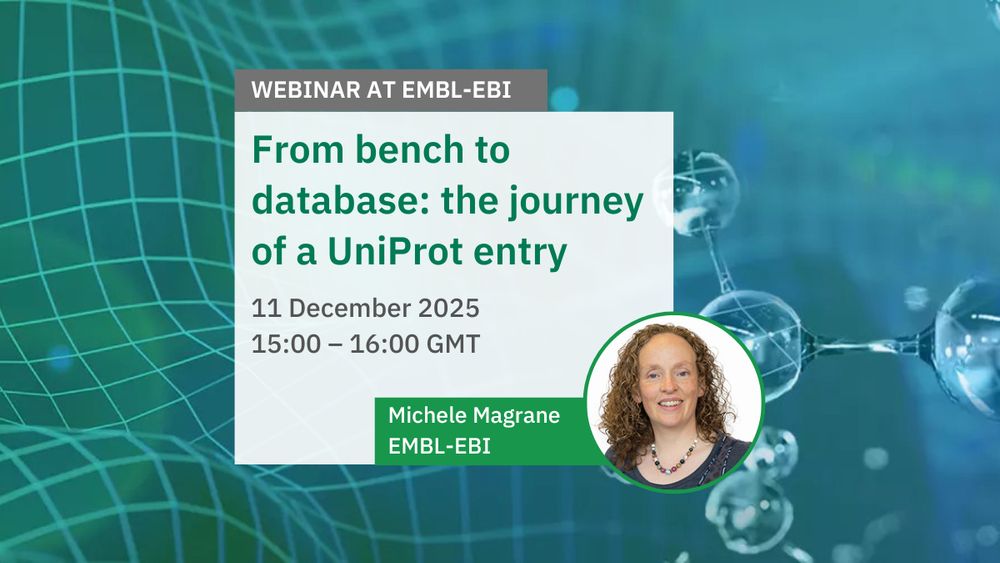
Join us for our upcoming webinar next week, where we will trace the journey of protein data from the lab bench and scientific literature into the UniProt Knowledgebase.
Registration is free but essential:
www.ebi.ac.uk/training/eve...
🖥️🧬
Registration is free but essential:
www.ebi.ac.uk/training/eve...
🖥️🧬
December 2, 2025 at 10:51 AM
Join us for our upcoming webinar next week, where we will trace the journey of protein data from the lab bench and scientific literature into the UniProt Knowledgebase.
Registration is free but essential:
www.ebi.ac.uk/training/eve...
🖥️🧬
Registration is free but essential:
www.ebi.ac.uk/training/eve...
🖥️🧬
Reposted by Otago Biochemistry
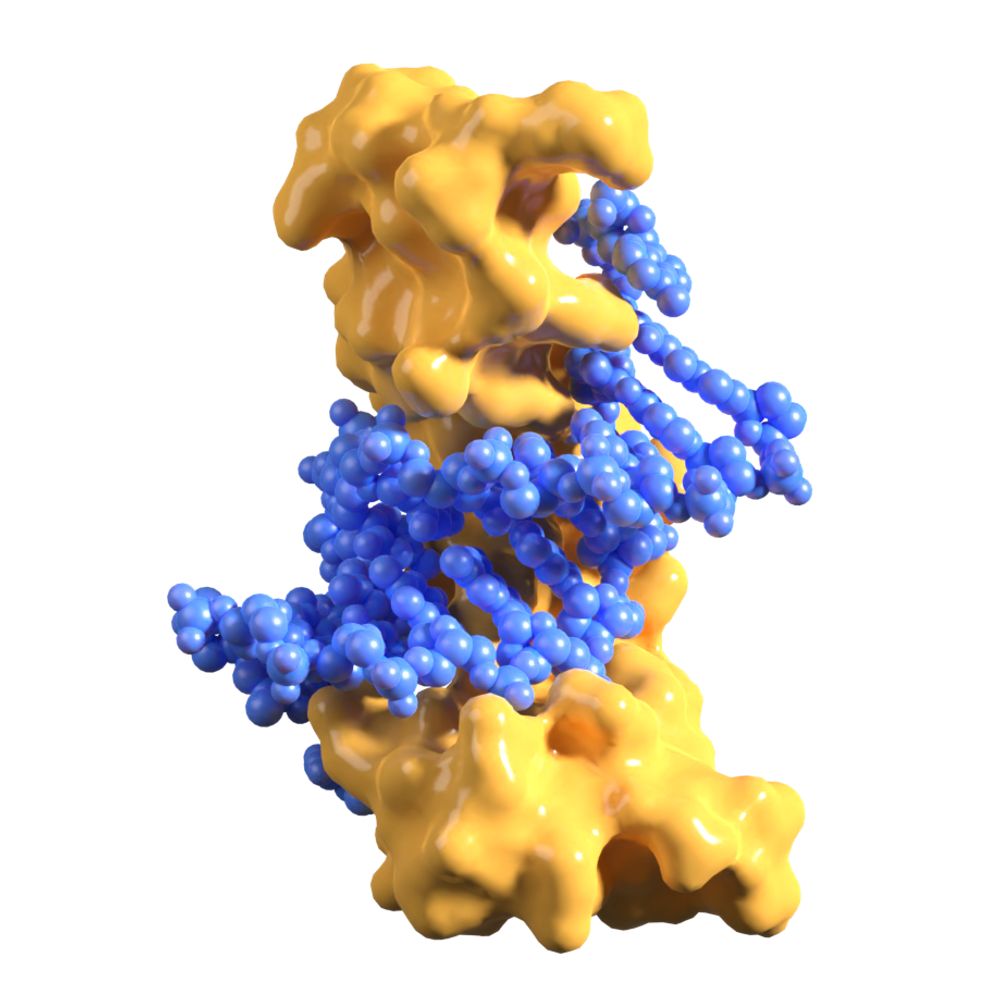
December's Molecule of the Month features a master transcriptional regulator of immune tolerance with a Nobel Prize connection

PDB101: Molecule of the Month: FOXP3
A master transcriptional regulator of immune tolerance
pdb101.rcsb.org
December 2, 2025 at 5:44 PM
December's Molecule of the Month features a master transcriptional regulator of immune tolerance with a Nobel Prize connection
Otago Biochemist Dr Nathan Kenny and some of his students feature in this article - they're using the latest genomics tools to improve the resilience of green-lipped mussels to climate change.
www.otago.ac.nz/news/newsroo...
www.otago.ac.nz/news/newsroo...

Mussel power: Decoding DNA to help sustain a threatened taonga
Facing climate change pressures from warming seas to toxic blooms, Aotearoa New Zealand’s half-billion-dollar mussel industry and cherished taonga are under threat. Dr Nathan Kenny's team is now using...
www.otago.ac.nz
December 1, 2025 at 10:02 PM
Otago Biochemist Dr Nathan Kenny and some of his students feature in this article - they're using the latest genomics tools to improve the resilience of green-lipped mussels to climate change.
www.otago.ac.nz/news/newsroo...
www.otago.ac.nz/news/newsroo...
Reposted by Otago Biochemistry
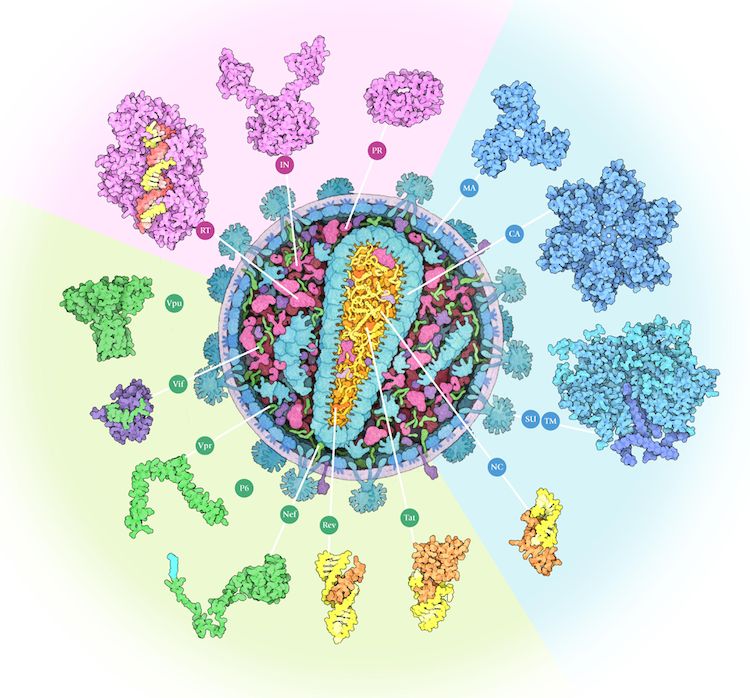
Using PDB structures, researchers designed treatments for HIV infection, which are now part of effective drug regimens that halt the growth of the virus. Learn more at PDB-101
pdb101.rcsb.org/brow...
#WorldAIDSDay
pdb101.rcsb.org/brow...
#WorldAIDSDay
PDB101: Browse: HIV and AIDS
PDB-101: Training, Outreach, and Education portal of RCSB PDB
pdb101.rcsb.org
December 1, 2025 at 5:44 PM
Using PDB structures, researchers designed treatments for HIV infection, which are now part of effective drug regimens that halt the growth of the virus. Learn more at PDB-101
pdb101.rcsb.org/brow...
#WorldAIDSDay
pdb101.rcsb.org/brow...
#WorldAIDSDay
"All governments need to make choices about how best to spend public money. ... But before those decisions are made, two myths should be dispelled: that fundamental science is less important than other types of research, and that it has no long-term impact."
www.nature.com/articles/d41...
www.nature.com/articles/d41...

From MRI to Ozempic: breakthroughs that show why fundamental research must be protected
In these financially straitened times, funders must recognize that great discoveries often arise from work that was looking for something completely different.
www.nature.com
December 1, 2025 at 8:50 PM
"All governments need to make choices about how best to spend public money. ... But before those decisions are made, two myths should be dispelled: that fundamental science is less important than other types of research, and that it has no long-term impact."
www.nature.com/articles/d41...
www.nature.com/articles/d41...
Reposted by Otago Biochemistry
If you run across a gen A.I. slop 🤖💩 diagram in an academic journal, I’d love to know about it! Please fill out this form:
docs.google.com/forms/d/e/1F...
Slop in journals is illuminating about journals’ quality control. And journals would like you to forget their mistakes.
#AcademicChatter
docs.google.com/forms/d/e/1F...
Slop in journals is illuminating about journals’ quality control. And journals would like you to forget their mistakes.
#AcademicChatter

Slop graphics in academic journals
Use this form to share graphics (e.g., figures, covers, graphical abstracts) made using generative A.I. that have appeared in academic journals.
The plan is to compile these slop graphics in an ope...
docs.google.com
December 1, 2025 at 6:36 PM
If you run across a gen A.I. slop 🤖💩 diagram in an academic journal, I’d love to know about it! Please fill out this form:
docs.google.com/forms/d/e/1F...
Slop in journals is illuminating about journals’ quality control. And journals would like you to forget their mistakes.
#AcademicChatter
docs.google.com/forms/d/e/1F...
Slop in journals is illuminating about journals’ quality control. And journals would like you to forget their mistakes.
#AcademicChatter
Otago biochemists secure HRC project grants to research treatments for stomach cancer and heart disease
blogs.otago.ac.nz/thesheet/ota...
blogs.otago.ac.nz/thesheet/ota...

November 30, 2025 at 11:48 PM
Otago biochemists secure HRC project grants to research treatments for stomach cancer and heart disease
blogs.otago.ac.nz/thesheet/ota...
blogs.otago.ac.nz/thesheet/ota...
Latest publication from Otago Biochemistry.
A set cover algorithm identifies minimal circulating tumour DNA sequencing targets for colorectal cancer detection
www.nature.com/articles/s41...
A set cover algorithm identifies minimal circulating tumour DNA sequencing targets for colorectal cancer detection
www.nature.com/articles/s41...

A set cover algorithm identifies minimal circulating tumour DNA sequencing targets for colorectal cancer detection - Scientific Reports
Scientific Reports - A set cover algorithm identifies minimal circulating tumour DNA sequencing targets for colorectal cancer detection
www.nature.com
November 26, 2025 at 10:44 PM
Latest publication from Otago Biochemistry.
A set cover algorithm identifies minimal circulating tumour DNA sequencing targets for colorectal cancer detection
www.nature.com/articles/s41...
A set cover algorithm identifies minimal circulating tumour DNA sequencing targets for colorectal cancer detection
www.nature.com/articles/s41...
Latest publication with a contribution from Otago Biochemistry:
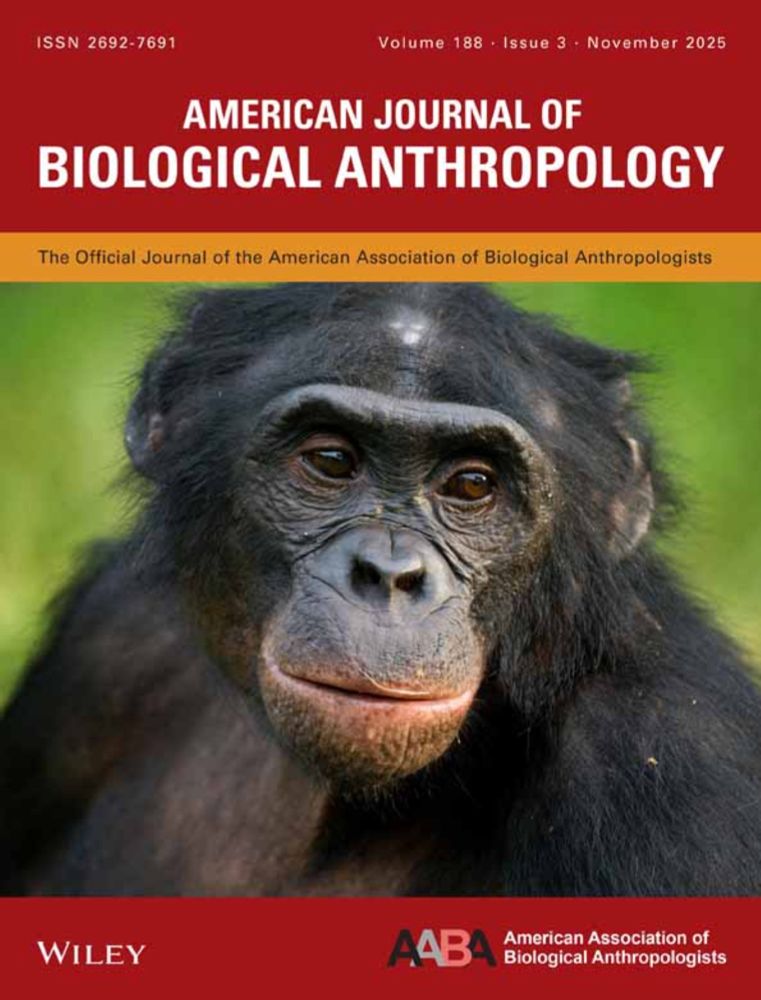
Osteological Sex Estimation Versus Proteomic Sex "Determination": What Effect Do Our Techniques Have on the Way We View the People of the Past?
onlinelibrary.wiley.com/doi/10.1002/...
Osteological Sex Estimation Versus Proteomic Sex "Determination": What Effect Do Our Techniques Have on the Way We View the People of the Past?
onlinelibrary.wiley.com/doi/10.1002/...
Osteological Sex Estimation Versus Proteomic Sex “Determination”: What Effect Do Our Techniques Have on the Way We View the People of the Past?
Objectives Osteological methods for sex estimation are fundamental in biological anthropology, offering critical insights into the biological identity of skeletal remains. However, these methods are...
onlinelibrary.wiley.com
November 26, 2025 at 10:41 PM
Latest publication with a contribution from Otago Biochemistry:
Osteological Sex Estimation Versus Proteomic Sex "Determination": What Effect Do Our Techniques Have on the Way We View the People of the Past?
onlinelibrary.wiley.com/doi/10.1002/...
Osteological Sex Estimation Versus Proteomic Sex "Determination": What Effect Do Our Techniques Have on the Way We View the People of the Past?
onlinelibrary.wiley.com/doi/10.1002/...
Reposted by Otago Biochemistry
How should you pick a PhD research topic? One thing is for sure: don't do it the way I did it! scientistseessquirre... 🧪🌎

How should you pick a PhD research topic?
38 years ago this fall (ouch!), I decided that I should pursue a PhD and I started thinking about where I’d do that, and what kind of research interested me. If you’re at that stage right now – or …
scientistseessquirrel.wordpress.com
November 25, 2025 at 1:15 PM
How should you pick a PhD research topic? One thing is for sure: don't do it the way I did it! scientistseessquirre... 🧪🌎
Say hi to this year's Otago Biochemistry summer students. Just started their research projects, and here enjoying a welcome morning tea today. They'll keep us on our toes this summer!

November 26, 2025 at 2:00 AM
Say hi to this year's Otago Biochemistry summer students. Just started their research projects, and here enjoying a welcome morning tea today. They'll keep us on our toes this summer!
Six members of the Otago Biochemistry whānau (Indranil (and his wife Benazir), Jia Yee, Sakshi, Matthias, Sankalita and Judy) visited the Papakura marae in Auckland last weekend to share their mahi with Māori and Pasifika community members.


November 25, 2025 at 1:06 AM
Six members of the Otago Biochemistry whānau (Indranil (and his wife Benazir), Jia Yee, Sakshi, Matthias, Sankalita and Judy) visited the Papakura marae in Auckland last weekend to share their mahi with Māori and Pasifika community members.
Reposted by Otago Biochemistry

Handwritten notes are more useful for studying and committing to memory than typed notes, ultimately contributing to higher achievement for college students.
link.springer.com/article/10.1...
link.springer.com/article/10.1...


November 20, 2025 at 5:11 PM
Handwritten notes are more useful for studying and committing to memory than typed notes, ultimately contributing to higher achievement for college students.
link.springer.com/article/10.1...
link.springer.com/article/10.1...
Reposted by Otago Biochemistry
Apropos ... Let's not make public-facing scicomm sound more complicated and scarier than it is!
It typically requires a perspective larger than your last study. You unpack why your topic is interesting/important and community progress. It's not so hard to do well if you are thoughtful /1.
It typically requires a perspective larger than your last study. You unpack why your topic is interesting/important and community progress. It's not so hard to do well if you are thoughtful /1.
November 19, 2025 at 2:06 PM
Apropos ... Let's not make public-facing scicomm sound more complicated and scarier than it is!
It typically requires a perspective larger than your last study. You unpack why your topic is interesting/important and community progress. It's not so hard to do well if you are thoughtful /1.
It typically requires a perspective larger than your last study. You unpack why your topic is interesting/important and community progress. It's not so hard to do well if you are thoughtful /1.
Reposted by Otago Biochemistry
Watch the Tutorial: Introduction to Molecular Animation at PDB-101
Learn how to use ChimeraX to create simple animations that can enrich your presentations, websites, and social media
Learn how to use ChimeraX to create simple animations that can enrich your presentations, websites, and social media

PDB101: Tutorial: Introduction to Molecular Animation
PDB-101: Training, Outreach, and Education portal of RCSB PDB
pdb101.rcsb.org
November 19, 2025 at 5:12 PM
Watch the Tutorial: Introduction to Molecular Animation at PDB-101
Learn how to use ChimeraX to create simple animations that can enrich your presentations, websites, and social media
Learn how to use ChimeraX to create simple animations that can enrich your presentations, websites, and social media
Reposted by Otago Biochemistry
GLP-1 receptor agonists got their start in an unlikely place: the mouth of a lizard. A peptide discovered in Gila monster saliva, called exendin-4, was found to mimic the action of GLP-1 and was developed into the drug exenatide (Byetta) for type 2 diabetes treatment.

November 12, 2025 at 5:43 PM
GLP-1 receptor agonists got their start in an unlikely place: the mouth of a lizard. A peptide discovered in Gila monster saliva, called exendin-4, was found to mimic the action of GLP-1 and was developed into the drug exenatide (Byetta) for type 2 diabetes treatment.
Reposted by Otago Biochemistry
Is anyone I know going to the Australasian Wildlife Management Society conference in Queenstown in early December awms.org.au/conference/a... 1/3 🧵

AWMS2025 | AUSTRALASIAN WILDLIFE MANAGEMENT SOCIETY
awms.org.au
November 18, 2025 at 10:04 PM
Is anyone I know going to the Australasian Wildlife Management Society conference in Queenstown in early December awms.org.au/conference/a... 1/3 🧵
"I think sometimes people believe the choice is between “oversimplified” science communication and fully accurate science communication. It’s not: it’s between “oversimplified” science communication and no science communication at all."
When I posted about hyberbole in science communication, there was an interesting split in responses: scientists hate the idea, non-scientists are fine with it. So I dig into that a bit: scientistseessquirrel.wordpress.com/2025/11/18/t...
“This changes everything” redux: opinions about “pathological pedantry”
A few weeks ago, I wrote about “This changes everything” – a common rhetorical device that’s used to signal excitement and importance, but that is never fully and literally true. (I’d deployed “thi…
scientistseessquirrel.wordpress.com
November 18, 2025 at 10:19 PM
"I think sometimes people believe the choice is between “oversimplified” science communication and fully accurate science communication. It’s not: it’s between “oversimplified” science communication and no science communication at all."
Congratulations to Ria Knoef on being awarded the Neurological Foundation PhD Scholarship!
Otago Biochemistry's Rare Disorder Genetics Lab is delighted to welcome her back next year as she begins her PhD journey.
Exciting discoveries ahead — well done, Ria! 👏🧬
Otago Biochemistry's Rare Disorder Genetics Lab is delighted to welcome her back next year as she begins her PhD journey.
Exciting discoveries ahead — well done, Ria! 👏🧬

November 18, 2025 at 9:45 PM
Congratulations to Ria Knoef on being awarded the Neurological Foundation PhD Scholarship!
Otago Biochemistry's Rare Disorder Genetics Lab is delighted to welcome her back next year as she begins her PhD journey.
Exciting discoveries ahead — well done, Ria! 👏🧬
Otago Biochemistry's Rare Disorder Genetics Lab is delighted to welcome her back next year as she begins her PhD journey.
Exciting discoveries ahead — well done, Ria! 👏🧬
Reposted by Otago Biochemistry

I don't think this science communication resource gets enough love.
OpenMoji offers 4,000+ free, #opensource emojis (CC BY-SA 4.0), with categories for healthcare, climate, UI...
Challenge: find Greta Thunberg and a Viennese coffee house. ☕
🔗 openmoji.org #SciComm #Design
OpenMoji offers 4,000+ free, #opensource emojis (CC BY-SA 4.0), with categories for healthcare, climate, UI...
Challenge: find Greta Thunberg and a Viennese coffee house. ☕
🔗 openmoji.org #SciComm #Design

November 18, 2025 at 10:41 AM
I don't think this science communication resource gets enough love.
OpenMoji offers 4,000+ free, #opensource emojis (CC BY-SA 4.0), with categories for healthcare, climate, UI...
Challenge: find Greta Thunberg and a Viennese coffee house. ☕
🔗 openmoji.org #SciComm #Design
OpenMoji offers 4,000+ free, #opensource emojis (CC BY-SA 4.0), with categories for healthcare, climate, UI...
Challenge: find Greta Thunberg and a Viennese coffee house. ☕
🔗 openmoji.org #SciComm #Design
Looks like some useful stuff here for biochemists wanting to extend themselves in all sorts of directions...

November 18, 2025 at 9:30 PM
Looks like some useful stuff here for biochemists wanting to extend themselves in all sorts of directions...
Reposted by Otago Biochemistry

OK, #bioinformatics folk. We have some (many many) reads from a metagenome. They have been binned into a bacterial genome. They have no matches to any known genome in any database. They code for "bacterial" genes. What are good triple-checks to do to argue that they are not, in fact, euk sequence?
November 18, 2025 at 5:29 PM
OK, #bioinformatics folk. We have some (many many) reads from a metagenome. They have been binned into a bacterial genome. They have no matches to any known genome in any database. They code for "bacterial" genes. What are good triple-checks to do to argue that they are not, in fact, euk sequence?