




Associate Professor of Public Policy, Politics, and Education @UVA.
I share social science.
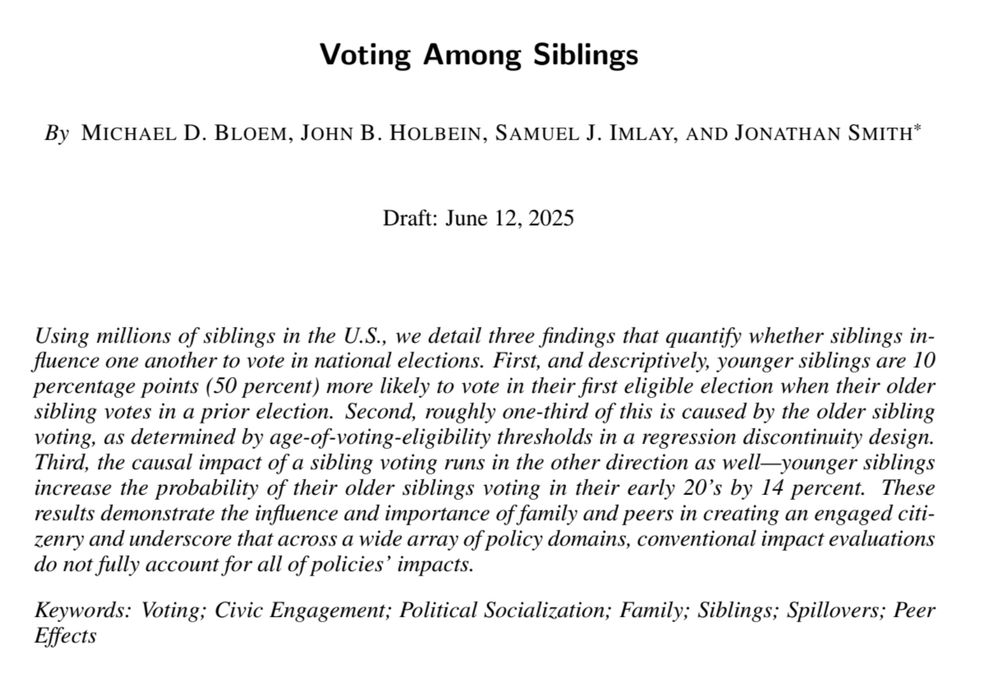
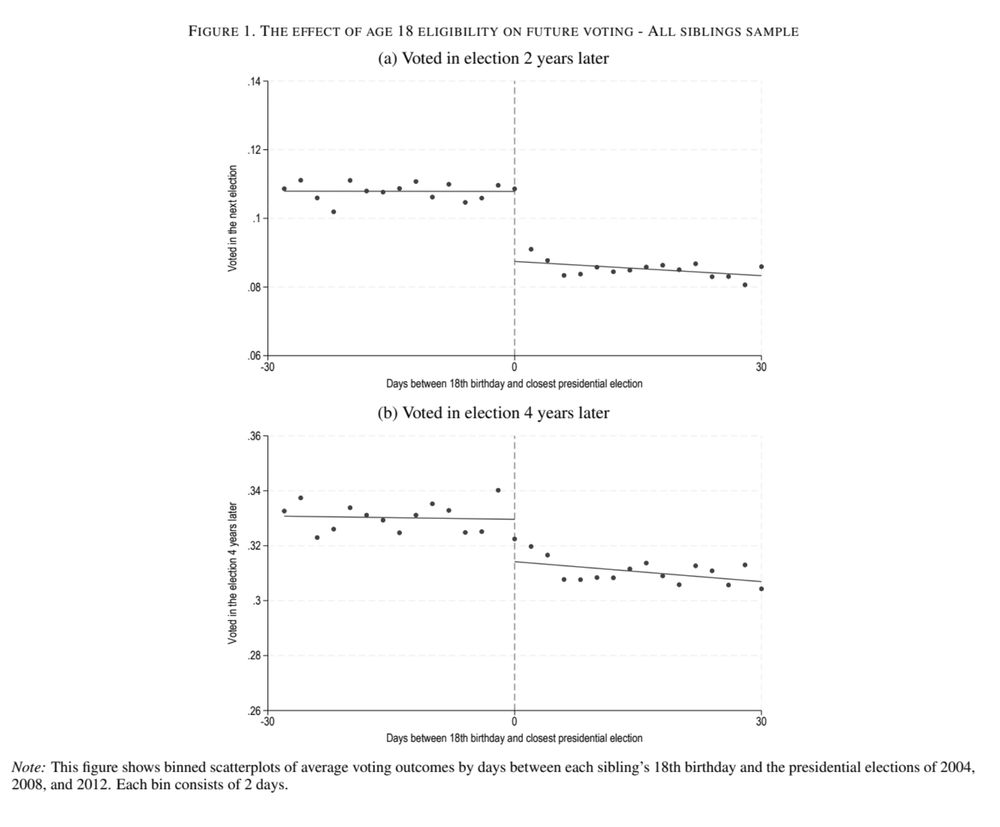
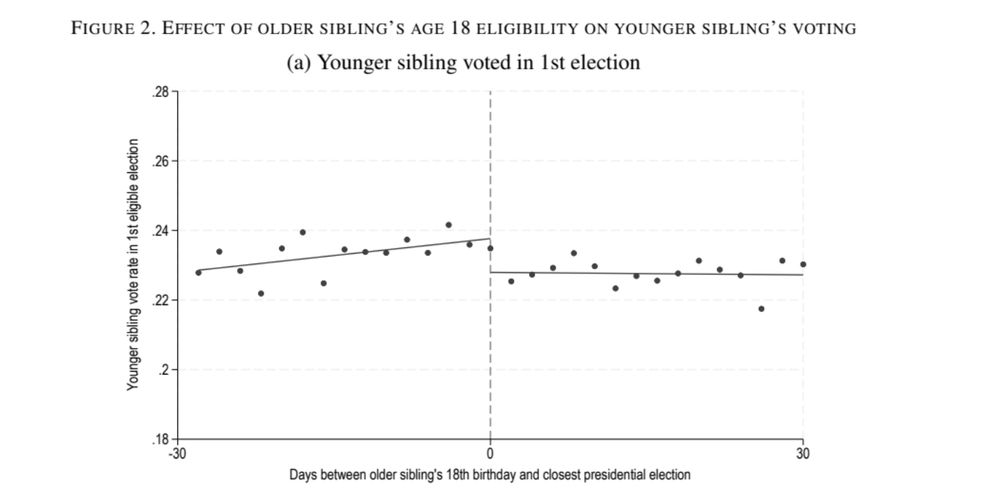
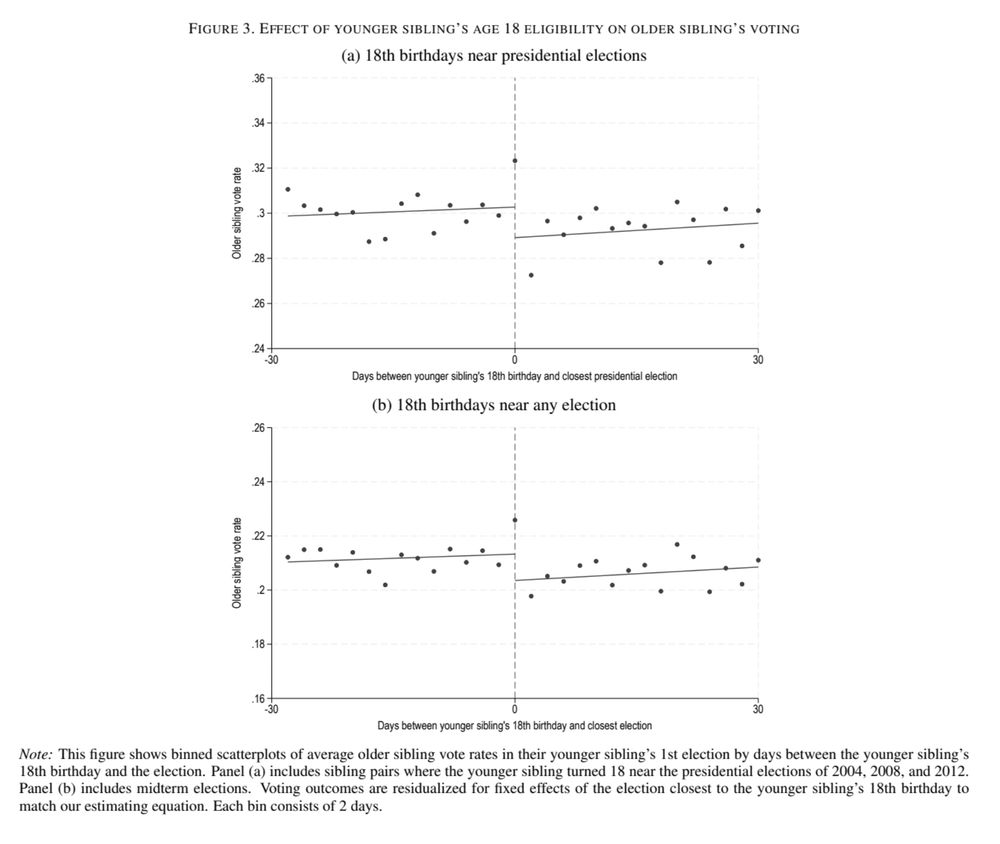
Well, because of our new working paper you do!
@mike-bloem.bsky.social, @jonisaacsmith.bsky.social, sam imlay
Reposted by Alexander Wuttke, John Holbein, Kai Gehring , and 1 more Alexander Wuttke, John Holbein, Kai Gehring, Dietmar Fehr


The results are quite sensitive in aggregate to needing the controls. Here's the replication of Figure 3, including the case w/o controls:
Because I was marking, I immediately downloaded the replication materials.
bsky.app/profile/john...
This paper forthcoming at the JOP provides evidence that rent control in Germany actually made tenants MASSIVELY *less* NIMBY.
This result was in the opposite direction of the authors' pre-registered expectations.
And the effect sizes are, truly, massive.

This brand new paper argues that part of the reason is because childcare is so expensive.
"A 10% increase in the price of childcare leads to a 5.7% decrease in the birth rate"
abigaildow.com/assets/docs/...
As I suspected, the key result looks pretty flimsy.
Because I was marking, I immediately downloaded the replication materials.
bsky.app/profile/john...
Because I was marking, I immediately downloaded the replication materials.
bsky.app/profile/john...
This paper forthcoming at the JOP provides evidence that rent control in Germany actually made tenants MASSIVELY *less* NIMBY.
This result was in the opposite direction of the authors' pre-registered expectations.
And the effect sizes are, truly, massive.
As I suspected, the key result looks pretty flimsy.

This paper forthcoming at the JOP provides evidence that rent control in Germany actually made tenants MASSIVELY *less* NIMBY.
This result was in the opposite direction of the authors' pre-registered expectations.
And the effect sizes are, truly, massive.


Because I was marking, I immediately downloaded the replication materials.
bsky.app/profile/john...
I'm a bit skeptical of this result.
bsky.app/profile/john...


onlinelibrary.wiley.com/doi/10.1002/...
Reposted by Efrén O. Pérez, Peter Fallesen

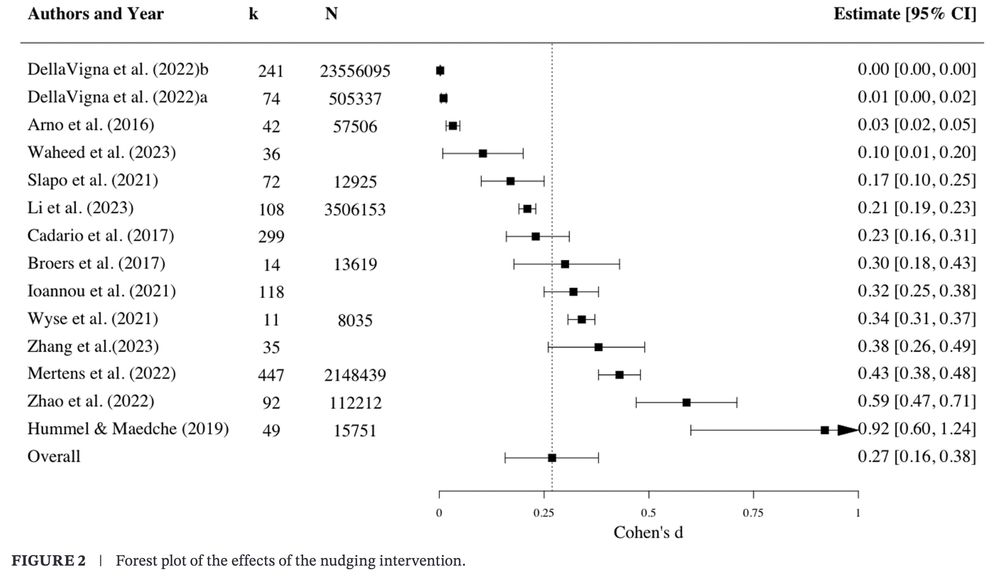

"[We] provide the most comprehensive synthesis of the effectiveness of nudging."
"We find a small aggregated effect size."
"[Our results show] the urgent need for higher quality, preregistered meta-analyses to clarify the true impact [of nudging]."
Put differently, rent-control made people 37 percentage points more likely to support local-level construction. (Not a typo)
I'm very human!
Mistakes are human validation checks! :)
I'm very human!
80% of a standard deviation. Sheesh.


The authors leverage two discontinuities to estimate the effect of rent control.
The first is in price cap cutoffs per sq. ft.
Put differently, rent-control made people 37 percentage points more likely to support local-level construction. (Not a typo)