



Alejandro Brenes
@ajbrenes.com
Wellcome Early Career Fellow @edinuni-irr.bsky.social @edinburgh-uni.bsky.social
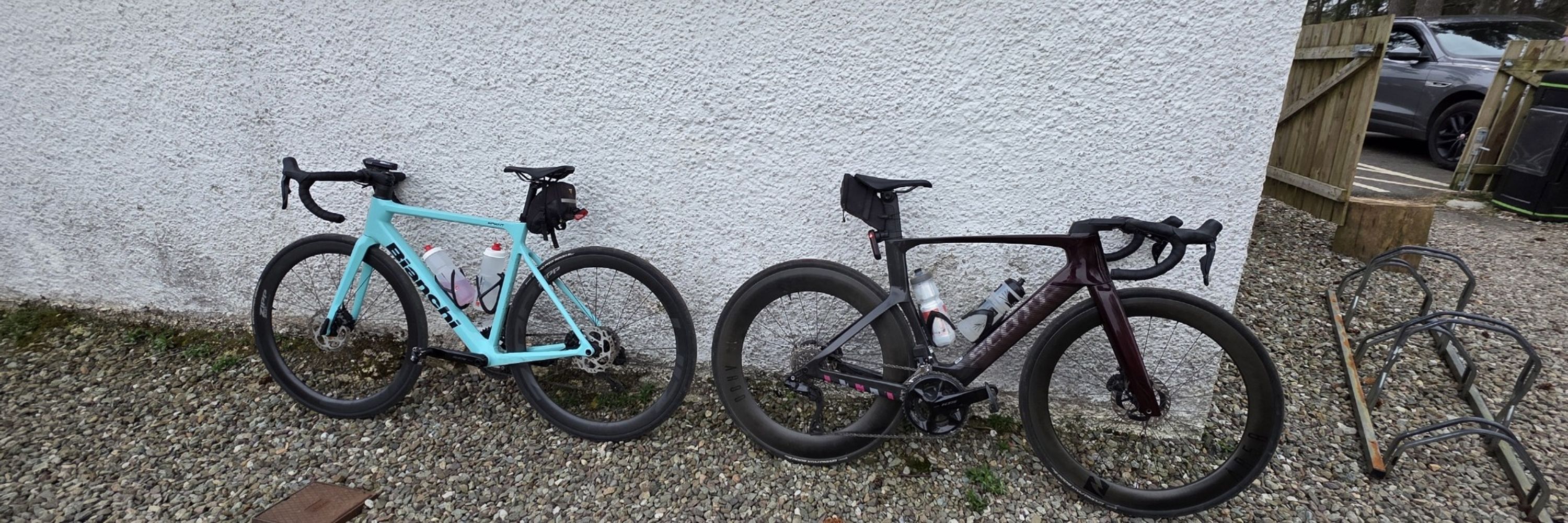
| neutrophils single cell proteomics | road cyclist and aero bike enthusiast 🇨🇷🏴
Creator of the Immunological Proteome Resource @immpres.bsky.social
| neutrophils single cell proteomics | road cyclist and aero bike enthusiast 🇨🇷🏴
Creator of the Immunological Proteome Resource @immpres.bsky.social
Pinned
Alejandro Brenes
@ajbrenes.com
· Dec 15
Excited to share our work at @natcomms.nature.com
We used single cell proteomics to define the functional heterogeneity of human neutrophils in glioblastoma, finding pro and anti-tumorigenic effector states invisible to scRNAseq.
SCP will revolutionise immunology, this is just the start
We used single cell proteomics to define the functional heterogeneity of human neutrophils in glioblastoma, finding pro and anti-tumorigenic effector states invisible to scRNAseq.
SCP will revolutionise immunology, this is just the start
Reposted by Alejandro Brenes
UKRI ”We expect to have fully transitioned to the new model by the start of the 2027 & 28 financial year.” Worrying - so how long is the pause? More logical to continue current funding model while developing new one! Researchers with key skills will be forced out of science while funding is paused
February 1, 2026 at 7:07 PM
UKRI ”We expect to have fully transitioned to the new model by the start of the 2027 & 28 financial year.” Worrying - so how long is the pause? More logical to continue current funding model while developing new one! Researchers with key skills will be forced out of science while funding is paused
Reposted by Alejandro Brenes

I am sorry. We all knew the three buckets were coming. We are all prepared for a shift in priority. But this message does nothing for all the UK scientists dependent on project grant funding. It doesn’t actually give any information
www.ukri.org/news/open-le...
www.ukri.org/news/open-le...

Open letter from Ian Chapman to research and innovation community
UKRI Chief Executive outlines changes to UKRI investment approach, addressing concerns about research funding and the financial position of STFC.
www.ukri.org
February 1, 2026 at 6:45 PM
I am sorry. We all knew the three buckets were coming. We are all prepared for a shift in priority. But this message does nothing for all the UK scientists dependent on project grant funding. It doesn’t actually give any information
www.ukri.org/news/open-le...
www.ukri.org/news/open-le...
Reposted by Alejandro Brenes

At a time when the UK should be capitalising on its global reputation as a great place to do science, this is an enormous own goal. I am so sorry for all those who jobs are going to be impacted.
Both MRC and BBSRC responsive modes now withdrawn until further notice. Existing applications unlikely to succeed (late 2025 round expecting 1-5% success rate).
Listen, I get that UKRI wants to pivot. But killing both at once is devastating.
Let's hope at least one opens by summer... #AcademicSky
Listen, I get that UKRI wants to pivot. But killing both at once is devastating.
Let's hope at least one opens by summer... #AcademicSky

MRC instructs grant review boards to slash funding rates - Research Professional News
Boards asked to recommend just three applications for funding, as BBSRC also suspends calls
www.researchprofessionalnews.com
February 1, 2026 at 2:07 PM
At a time when the UK should be capitalising on its global reputation as a great place to do science, this is an enormous own goal. I am so sorry for all those who jobs are going to be impacted.
Reposted by Alejandro Brenes

Rumours of 'more news in spring', which likely means no rounds until summer and no money being released until 2027 at the earliest. Given the virtual cancellation of the current round, where applicants and reviewers have already poured thousands of hours of work and effort, that's a 12 month gap.
We need to be shouting about the effects of this on junior researchers from the roofs, writing to our MPs. We are risking a "missing generation" of researchers.
February 1, 2026 at 10:57 AM
Rumours of 'more news in spring', which likely means no rounds until summer and no money being released until 2027 at the earliest. Given the virtual cancellation of the current round, where applicants and reviewers have already poured thousands of hours of work and effort, that's a 12 month gap.
Reposted by Alejandro Brenes

A new study from Anthropic finds that gains in coding efficiency when relying on AI assistance did did not meet statistical significance; AI use noticeably degraded programmers’ understanding of what they were doing. Incredible.
The latest from Anthropic: using Anthropic's products makes you worse at your job

How AI assistance impacts the formation of coding skills
Anthropic is an AI safety and research company that's working to build reliable, interpretable, and steerable AI systems.
www.anthropic.com
January 30, 2026 at 11:47 PM
A new study from Anthropic finds that gains in coding efficiency when relying on AI assistance did did not meet statistical significance; AI use noticeably degraded programmers’ understanding of what they were doing. Incredible.
Reposted by Alejandro Brenes

📣 I'm excited to share our latest preprint!
We adapt and characterise a neurosphere-based CNCC differentiation protocol, and demonstrate utility for quantitative phenotyping and craniofacial disease modelling! 🧫
Read about Array-CNCC here:
www.biorxiv.org/content/10.6...
@uoe-igc.bsky.social
We adapt and characterise a neurosphere-based CNCC differentiation protocol, and demonstrate utility for quantitative phenotyping and craniofacial disease modelling! 🧫
Read about Array-CNCC here:
www.biorxiv.org/content/10.6...
@uoe-igc.bsky.social

January 28, 2026 at 2:37 PM
📣 I'm excited to share our latest preprint!
We adapt and characterise a neurosphere-based CNCC differentiation protocol, and demonstrate utility for quantitative phenotyping and craniofacial disease modelling! 🧫
Read about Array-CNCC here:
www.biorxiv.org/content/10.6...
@uoe-igc.bsky.social
We adapt and characterise a neurosphere-based CNCC differentiation protocol, and demonstrate utility for quantitative phenotyping and craniofacial disease modelling! 🧫
Read about Array-CNCC here:
www.biorxiv.org/content/10.6...
@uoe-igc.bsky.social
Reposted by Alejandro Brenes

It is my great honor to announce that registration for the 7th ESCP Single Cell Proteomics Conference is now open: lnkd.in/e4iyiQjf
With around 250 participants, it is one of the largest SCP conferences worldwide. We are also proud to announce that there is no participation fee for our conference.
With around 250 participants, it is one of the largest SCP conferences worldwide. We are also proud to announce that there is no participation fee for our conference.
January 28, 2026 at 4:23 PM
It is my great honor to announce that registration for the 7th ESCP Single Cell Proteomics Conference is now open: lnkd.in/e4iyiQjf
With around 250 participants, it is one of the largest SCP conferences worldwide. We are also proud to announce that there is no participation fee for our conference.
With around 250 participants, it is one of the largest SCP conferences worldwide. We are also proud to announce that there is no participation fee for our conference.
Reposted by Alejandro Brenes

Applications are now open for @olgavitek.bsky.social 's May Intitute on computation and statistics for mass spectrometry and proteomics at @northeasternu.bsky.social !
--> computationalproteomics.khoury.northeastern.edu
--> computationalproteomics.khoury.northeastern.edu
May Institute – Computation and statistics for mass spectrometry and proteomics
computationalproteomics.khoury.northeastern.edu
January 20, 2026 at 11:26 PM
Applications are now open for @olgavitek.bsky.social 's May Intitute on computation and statistics for mass spectrometry and proteomics at @northeasternu.bsky.social !
--> computationalproteomics.khoury.northeastern.edu
--> computationalproteomics.khoury.northeastern.edu
Reposted by Alejandro Brenes
Single-cell proteomics is moving past descriptive snapshots to quantitative models of cellular regulation and biological mechanisms.
Come to #Boston this July to shape the next chapter and have your voice heard.
Abstract deadline: Apr 1, 2026.
single-cell.net/proteomics/s...
Come to #Boston this July to shape the next chapter and have your voice heard.
Abstract deadline: Apr 1, 2026.
single-cell.net/proteomics/s...

January 20, 2026 at 1:48 PM
Single-cell proteomics is moving past descriptive snapshots to quantitative models of cellular regulation and biological mechanisms.
Come to #Boston this July to shape the next chapter and have your voice heard.
Abstract deadline: Apr 1, 2026.
single-cell.net/proteomics/s...
Come to #Boston this July to shape the next chapter and have your voice heard.
Abstract deadline: Apr 1, 2026.
single-cell.net/proteomics/s...
Reposted by Alejandro Brenes

Proteoform medicine: characterizing and targeting protein forms in human disease go.nature.com/45P6t8z #Review by Jennifer A. Korchak, S. Stephen Yi, Neil L. Kelleher (@nlkproteomics.bsky.social), Nidhi Sahni & Gloria M. Sheynkman #proteomics

Proteoform medicine: characterizing and targeting protein forms in human disease - Nature Reviews Genetics
Proteoforms are the diverse protein molecules produced from a single gene whose primary sequence and composition can be diversified by genetic, transcriptomic, translational and post-translational var...
go.nature.com
January 15, 2026 at 2:35 PM
Proteoform medicine: characterizing and targeting protein forms in human disease go.nature.com/45P6t8z #Review by Jennifer A. Korchak, S. Stephen Yi, Neil L. Kelleher (@nlkproteomics.bsky.social), Nidhi Sahni & Gloria M. Sheynkman #proteomics
Small blog post about our recent @natcomms.nature.com paper about using single cell proteomics to define the functional states of human neutrophils in glioblastoma. The 'behind the paper' write up is more informal but hopefully informative and fun.
#immunosky #proteomics
#immunosky #proteomics
Single cell proteomics of human neutrophils in glioblastoma
Neutrophils infiltrate glioblastomas with the capacity to engage pro/anti tumoural responses. Here we developed single cell proteomic workflows to stratify neutrophil heterogeneity by function. This w...
go.nature.com
January 16, 2026 at 3:33 PM
Small blog post about our recent @natcomms.nature.com paper about using single cell proteomics to define the functional states of human neutrophils in glioblastoma. The 'behind the paper' write up is more informal but hopefully informative and fun.
#immunosky #proteomics
#immunosky #proteomics
Reposted by Alejandro Brenes
I’m excited to start 2026 with our new collaborative research paper examining circulating B cell populations in acute ischemic stroke patients, which is particularly exciting as we see translation of our previous data from animal models into patients. www.sciencedirect.com/science/arti...

Acute ischaemic stroke alters the composition and function of circulating B cells
Distinct B cell populations are found in circulation, including those with innate-like properties, that have varied functions in pathogen protection, …
www.sciencedirect.com
January 12, 2026 at 3:34 PM
I’m excited to start 2026 with our new collaborative research paper examining circulating B cell populations in acute ischemic stroke patients, which is particularly exciting as we see translation of our previous data from animal models into patients. www.sciencedirect.com/science/arti...
Reposted by Alejandro Brenes
Many articles reported using an antibody ... that didn’t even bind the key protein in Laflamme’s testing. Those articles had been cited over 3,000 times.
A key question is:
◼️ 𝐂𝐚𝐧 𝐩𝐫𝐨𝐭𝐞𝐢𝐧 𝐛𝐢𝐧𝐝𝐞𝐫𝐬 𝐚𝐜𝐡𝐢𝐞𝐯𝐞 𝐡𝐢𝐠𝐡 𝐬𝐩𝐞𝐜𝐢𝐟𝐢𝐜𝐢𝐭𝐲 𝐟𝐨𝐫 𝐞𝐯𝐞𝐫𝐲 𝐞𝐩𝐢𝐭𝐨𝐩𝐞 & 𝐩𝐫𝐨𝐭𝐞𝐨𝐟𝐨𝐫𝐦?
A key question is:
◼️ 𝐂𝐚𝐧 𝐩𝐫𝐨𝐭𝐞𝐢𝐧 𝐛𝐢𝐧𝐝𝐞𝐫𝐬 𝐚𝐜𝐡𝐢𝐞𝐯𝐞 𝐡𝐢𝐠𝐡 𝐬𝐩𝐞𝐜𝐢𝐟𝐢𝐜𝐢𝐭𝐲 𝐟𝐨𝐫 𝐞𝐯𝐞𝐫𝐲 𝐞𝐩𝐢𝐭𝐨𝐩𝐞 & 𝐩𝐫𝐨𝐭𝐞𝐨𝐟𝐨𝐫𝐦?

December 30, 2025 at 1:36 PM
Many articles reported using an antibody ... that didn’t even bind the key protein in Laflamme’s testing. Those articles had been cited over 3,000 times.
A key question is:
◼️ 𝐂𝐚𝐧 𝐩𝐫𝐨𝐭𝐞𝐢𝐧 𝐛𝐢𝐧𝐝𝐞𝐫𝐬 𝐚𝐜𝐡𝐢𝐞𝐯𝐞 𝐡𝐢𝐠𝐡 𝐬𝐩𝐞𝐜𝐢𝐟𝐢𝐜𝐢𝐭𝐲 𝐟𝐨𝐫 𝐞𝐯𝐞𝐫𝐲 𝐞𝐩𝐢𝐭𝐨𝐩𝐞 & 𝐩𝐫𝐨𝐭𝐞𝐨𝐟𝐨𝐫𝐦?
A key question is:
◼️ 𝐂𝐚𝐧 𝐩𝐫𝐨𝐭𝐞𝐢𝐧 𝐛𝐢𝐧𝐝𝐞𝐫𝐬 𝐚𝐜𝐡𝐢𝐞𝐯𝐞 𝐡𝐢𝐠𝐡 𝐬𝐩𝐞𝐜𝐢𝐟𝐢𝐜𝐢𝐭𝐲 𝐟𝐨𝐫 𝐞𝐯𝐞𝐫𝐲 𝐞𝐩𝐢𝐭𝐨𝐩𝐞 & 𝐩𝐫𝐨𝐭𝐞𝐨𝐟𝐨𝐫𝐦?
Reposted by Alejandro Brenes
Excited to share our newest paper in @emboreports.org! We used proximity-labeling proteomics to examine how different disease mutations in SHP2 alter its interactions and localization. This was a huge undertaking led by former graduate student Anne an Vlimmeren.
link.springer.com/article/10.1...
link.springer.com/article/10.1...

Proximity-labeling proteomics reveals remodeled interactomes and altered localization of pathogenic SHP2 variants - EMBO Reports
Missense mutations in PTPN11, which encodes the protein tyrosine phosphatase SHP2, are common in several developmental disorders and cancers. While many mutations disrupt auto-inhibition and hyperacti...
link.springer.com
December 22, 2025 at 7:25 PM
Excited to share our newest paper in @emboreports.org! We used proximity-labeling proteomics to examine how different disease mutations in SHP2 alter its interactions and localization. This was a huge undertaking led by former graduate student Anne an Vlimmeren.
link.springer.com/article/10.1...
link.springer.com/article/10.1...
Reposted by Alejandro Brenes
Our first mass spectrometry based single cell proteomics dataset is opnely available. Explore protein abundance profiles across all tumour associated neutrophil populations.
And thanks to @wellcometrust.bsky.social we have funding to develop new visualisations and modules for SCP. #immunosky
And thanks to @wellcometrust.bsky.social we have funding to develop new visualisations and modules for SCP. #immunosky

December 19, 2025 at 7:29 PM
Our first mass spectrometry based single cell proteomics dataset is opnely available. Explore protein abundance profiles across all tumour associated neutrophil populations.
And thanks to @wellcometrust.bsky.social we have funding to develop new visualisations and modules for SCP. #immunosky
And thanks to @wellcometrust.bsky.social we have funding to develop new visualisations and modules for SCP. #immunosky
Reposted by Alejandro Brenes
Some very good news for science and education in the UK and EU! 🎉
🧪 #AcademicSky
www.theguardian.com/education/20...
🧪 #AcademicSky
www.theguardian.com/education/20...

EU’s Erasmus scheme to reopen to UK students for first time since Brexit at cost of £570m
Deal agreed to rejoin exchange programme in 2027, fulfilling Labour election manifesto pledge
www.theguardian.com
December 17, 2025 at 4:12 PM
Some very good news for science and education in the UK and EU! 🎉
🧪 #AcademicSky
www.theguardian.com/education/20...
🧪 #AcademicSky
www.theguardian.com/education/20...
Reposted by Alejandro Brenes

Great to see Professor Akram on STV last night joining our call for the rollout of a targeted lung cancer screening programme in Scotland to diagnose the disease earlier and improve survival. Currently, 68% of cases in Scotland are diagnosed at a late stage.
IRR Group Leader Prof Ahsan Akram, appeared on STV last night to call for the rollout of lung cancer screening in Scotland. Early diagnosis saves lives - Scotland has no national lung cancer screening programme, in contrast to England, which has already screened 1M+ people.
edin.ac/4qebkIr
edin.ac/4qebkIr

December 17, 2025 at 5:01 PM
Great to see Professor Akram on STV last night joining our call for the rollout of a targeted lung cancer screening programme in Scotland to diagnose the disease earlier and improve survival. Currently, 68% of cases in Scotland are diagnosed at a late stage.
Reposted by Alejandro Brenes
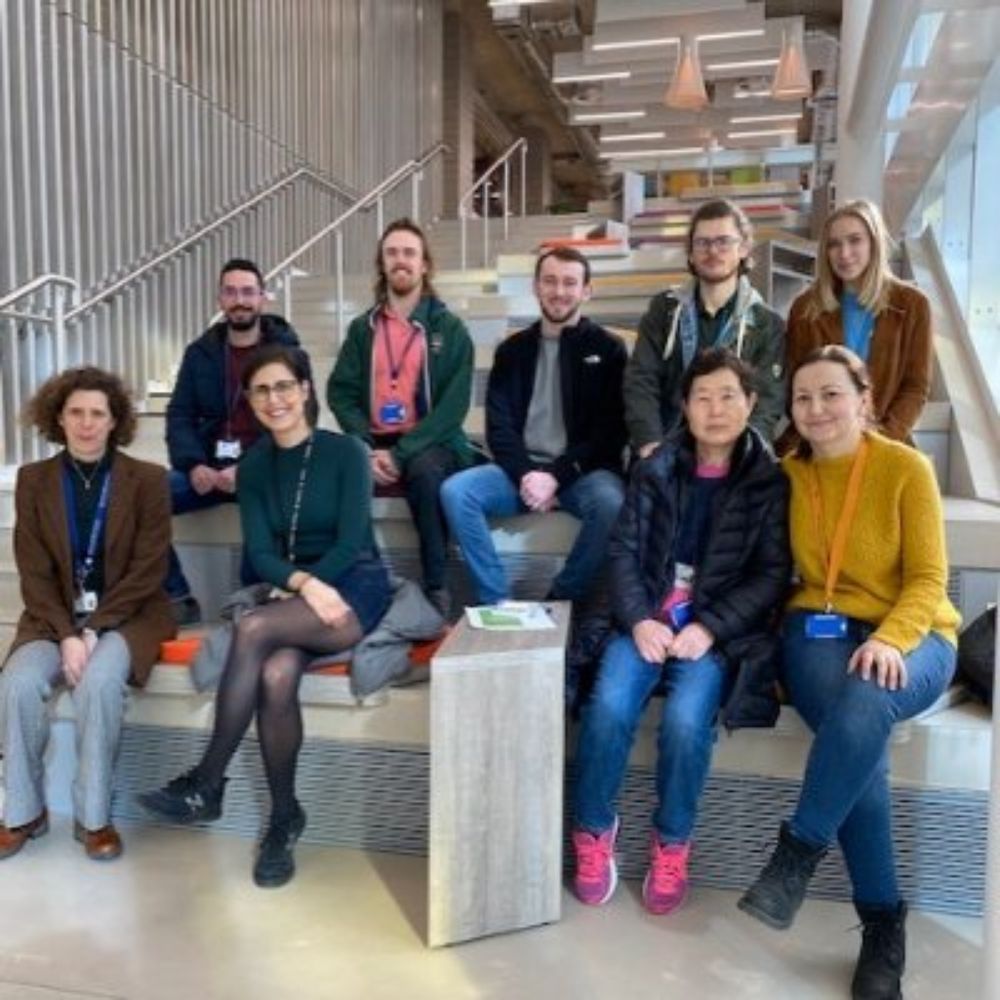
Our work using single cell proteomic to define neutrophil functional states in human glioblastoma is out in @natcomms.nature.com
Thanks to all authors, collaborators, editors and reviewers. It id exciting to see the potential SCP has to map neutrophil biology.
Thanks to all authors, collaborators, editors and reviewers. It id exciting to see the potential SCP has to map neutrophil biology.
Single cell proteomic analysis defines discrete neutrophil functional states in human glioblastoma - Nature Communications
Neutrophils infiltrate glioblastomas with the capacity to engage pro/anti tumoural responses. Here the authors developed proteomic workflows to stratify neutrophil heterogeneity by function. This work...
www.nature.com
December 16, 2025 at 5:56 PM
Our work using single cell proteomic to define neutrophil functional states in human glioblastoma is out in @natcomms.nature.com
Thanks to all authors, collaborators, editors and reviewers. It id exciting to see the potential SCP has to map neutrophil biology.
Thanks to all authors, collaborators, editors and reviewers. It id exciting to see the potential SCP has to map neutrophil biology.
Reposted by Alejandro Brenes

New study (Walmsley lab) has for the first time, found the set of proteins neutrophils express within a tumour at high detail. This tech has opened the door to understanding neutrophil roles in brain tumours such as glioblastoma but also more generally in health and disease states.
edin.ac/48JhnPq
edin.ac/48JhnPq

December 16, 2025 at 3:29 PM
New study (Walmsley lab) has for the first time, found the set of proteins neutrophils express within a tumour at high detail. This tech has opened the door to understanding neutrophil roles in brain tumours such as glioblastoma but also more generally in health and disease states.
edin.ac/48JhnPq
edin.ac/48JhnPq
Excited to share our work at @natcomms.nature.com
We used single cell proteomics to define the functional heterogeneity of human neutrophils in glioblastoma, finding pro and anti-tumorigenic effector states invisible to scRNAseq.
SCP will revolutionise immunology, this is just the start
We used single cell proteomics to define the functional heterogeneity of human neutrophils in glioblastoma, finding pro and anti-tumorigenic effector states invisible to scRNAseq.
SCP will revolutionise immunology, this is just the start
December 15, 2025 at 8:09 PM
Excited to share our work at @natcomms.nature.com
We used single cell proteomics to define the functional heterogeneity of human neutrophils in glioblastoma, finding pro and anti-tumorigenic effector states invisible to scRNAseq.
SCP will revolutionise immunology, this is just the start
We used single cell proteomics to define the functional heterogeneity of human neutrophils in glioblastoma, finding pro and anti-tumorigenic effector states invisible to scRNAseq.
SCP will revolutionise immunology, this is just the start
$1.8 million aus, for a cellenOne, Tecan Fluent, evosep One and an Astral Zoom? 😮

Australia’s 1st Single Cell Cancer Proteomics Lab is coming! Backed by a $1.8m Australian Cancer Research Foundation grant & based at #USYD's Sydney Mass Spectrometry, the national platform will let researchers examine proteins in individual cancer cells, opening new paths to personalised treatment.

December 4, 2025 at 8:13 AM
$1.8 million aus, for a cellenOne, Tecan Fluent, evosep One and an Astral Zoom? 😮
Reposted by Alejandro Brenes

For context the 'Middle England' referred to here is the 0.5% of households living in homes worth more than £2 million

November 30, 2025 at 10:27 PM
For context the 'Middle England' referred to here is the 0.5% of households living in homes worth more than £2 million
Reposted by Alejandro Brenes
Save the date! 🗓️
The YPIC Annual Proteomics Gathering is returning for the 3rd time and is coming to Madrid in April 2026! 🎉
Seats will be limited to around 100 participants, so stay tuned and be ready to secure your spot! ✨
#APG2026 #YPIC #Proteomics #EuPA
The YPIC Annual Proteomics Gathering is returning for the 3rd time and is coming to Madrid in April 2026! 🎉
Seats will be limited to around 100 participants, so stay tuned and be ready to secure your spot! ✨
#APG2026 #YPIC #Proteomics #EuPA

December 1, 2025 at 8:00 AM
Save the date! 🗓️
The YPIC Annual Proteomics Gathering is returning for the 3rd time and is coming to Madrid in April 2026! 🎉
Seats will be limited to around 100 participants, so stay tuned and be ready to secure your spot! ✨
#APG2026 #YPIC #Proteomics #EuPA
The YPIC Annual Proteomics Gathering is returning for the 3rd time and is coming to Madrid in April 2026! 🎉
Seats will be limited to around 100 participants, so stay tuned and be ready to secure your spot! ✨
#APG2026 #YPIC #Proteomics #EuPA
Reposted by Alejandro Brenes
Discover iPEX: a breakthrough in spatial proteomics revealing untargeted protein locations at micrometer resolution using tissue expansion and MALDI imaging. PMID:41224995, Nature 2025, @Nature https://doi.org/10.1038/s41586-025-09734-0 #Medsky #Pharmsky #RNA #ASHG #ESHG 🧪

iPEX enables micrometre-resolution deep spatial proteomics via tissue expansion | Nature
The number of spatial omics technologies being developed is increasing1. However, a missing tool is one that can locate proteins in tissues in an untargeted manner at high spatial resolution and coverage. Here we present in situ imaging proteomics via expansion (iPEX), which integrates isotropic tissue magnification2 with matrix-assisted laser desorption/ionization (MALDI) mass spectrometry imaging. iPEX provides scalable spatial resolution down to the micrometre scale and substantially increases the sensitivity of protein identification by 10–100-fold. Using the retina as a model, iPEX enabled the construction of spatial proteomic maps with high precision, the visualization of single-cell layers and extrasomatic structures and the identification of colocalized proteins. iPEX was readily applied to diverse tissues, including brain, intestine, liver and organoids, detecting 600–1,500 proteins at 1–5-µm effective pixel size. The application of iPEX to depict spatial proteomic maps in bra
doi.org
November 30, 2025 at 10:10 AM
Reposted by Alejandro Brenes
Instead of simply empowering disadvantaged scientists, advanced AI models are creating an environment of mistrust where we will rely even more on poor proxies of reputation, favoring established scientists, privileged institutions and entrenching us into the system of tiered scientific journals.
November 27, 2025 at 3:50 PM
Instead of simply empowering disadvantaged scientists, advanced AI models are creating an environment of mistrust where we will rely even more on poor proxies of reputation, favoring established scientists, privileged institutions and entrenching us into the system of tiered scientific journals.