



Randi Guest
@randna.bsky.social
Assistant Professor at MacEwan University | Bacterial Envelope Enthusiast | She/Her
A surface-exposed cardiolipin synthase provides an unexpected paradigm for maintaining the Gram-negative outer membrane | PNAS www.pnas.org/doi/full/10....
PNAS
Proceedings of the National Academy of Sciences (PNAS), a peer reviewed journal of the National Academy of Sciences (NAS) - an authoritative source of high-impact, original research that broadly spans...
www.pnas.org
January 27, 2026 at 1:39 PM
A surface-exposed cardiolipin synthase provides an unexpected paradigm for maintaining the Gram-negative outer membrane | PNAS www.pnas.org/doi/full/10....
Reposted by Randi Guest

A quorum-sensing molecule from Pseudomonas aeruginosa induces defensive multicellularity in a coinfecting pathogen
-in PNAS from @anukharelab.bsky.social
www.pnas.org/doi/10.1073/...
-in PNAS from @anukharelab.bsky.social
www.pnas.org/doi/10.1073/...

A quorum-sensing molecule from Pseudomonas aeruginosa induces defensive multicellularity in a coinfecting pathogen | PNAS
Microorganisms commonly exist in polymicrobial communities, where they can respond
to interspecies secreted molecules by altering behaviors and phy...
www.pnas.org
January 24, 2026 at 11:38 AM
A quorum-sensing molecule from Pseudomonas aeruginosa induces defensive multicellularity in a coinfecting pathogen
-in PNAS from @anukharelab.bsky.social
www.pnas.org/doi/10.1073/...
-in PNAS from @anukharelab.bsky.social
www.pnas.org/doi/10.1073/...
Reposted by Randi Guest

Enterococcus fans: Check out our latest on E. faecalis EET, advancing our understanding of both the fundamental physiology of this bug and new mechanisms of its virulence. This is the product of a thrilling collaboration with friends in Singapore @gthibault.bsky.social led by @aarontan.bsky.social.

We’ve discovered how the superbug E. faecalis prevents chronic wounds from healing.
It’s not a toxin. It’s metabolism.
The bacteria use extracellular electron transport (EET) to electrochemically generate ROS, effectively "freezing" skin cells in place.
doi.org/10.1126/sciadv.aeb5297
It’s not a toxin. It’s metabolism.
The bacteria use extracellular electron transport (EET) to electrochemically generate ROS, effectively "freezing" skin cells in place.
doi.org/10.1126/sciadv.aeb5297

Enterococcus faecalis redox metabolism activates the unfolded protein response to impair wound healing
E. faecalis EET generates ROS, which induces the UPR in keratinocytes, inhibiting in vitro migration.
doi.org
January 17, 2026 at 5:57 AM
Enterococcus fans: Check out our latest on E. faecalis EET, advancing our understanding of both the fundamental physiology of this bug and new mechanisms of its virulence. This is the product of a thrilling collaboration with friends in Singapore @gthibault.bsky.social led by @aarontan.bsky.social.
Reposted by Randi Guest

Reposted by Randi Guest

Metabolic control of porin permeability
www.nature.com/articles/s41...
www.nature.com/articles/s41...

Metabolic control of porin permeability influences antibiotic resistance in Escherichia coli - Nature Microbiology
The permeability of bacterial porins is dynamically regulated by periplasmic proton and potassium concentrations, altering antibiotic resistance.
www.nature.com
December 13, 2025 at 9:49 AM
Metabolic control of porin permeability
www.nature.com/articles/s41...
www.nature.com/articles/s41...
Reposted by Randi Guest

YfgH is a transmembrane glycine-zipper containing lipoprotein that stabilizes excess cardiolipin and outer membrane proteins during envelope stress https://www.biorxiv.org/content/10.64898/2025.12.22.696046v1
December 25, 2025 at 4:17 AM
YfgH is a transmembrane glycine-zipper containing lipoprotein that stabilizes excess cardiolipin and outer membrane proteins during envelope stress https://www.biorxiv.org/content/10.64898/2025.12.22.696046v1
Peer-review practices of psychological journals: The fate of published articles, submitted again.
www.cambridge.org/core/journal...
www.cambridge.org/core/journal...
Peer-review practices of psychological journals: The fate of published articles, submitted again | Behavioral and Brain Sciences | Cambridge Core
Peer-review practices of psychological journals: The fate of published articles, submitted again - Volume 5 Issue 2
www.cambridge.org
January 11, 2026 at 7:32 PM
Peer-review practices of psychological journals: The fate of published articles, submitted again.
www.cambridge.org/core/journal...
www.cambridge.org/core/journal...
Reposted by Randi Guest

📣 New MicroBites!
Security hacked: How phages slip past bacterial defenses 🦠
Phages rely on diverse anti-defense proteins to neutralize bacterial defense systems and successfully infect their host. 👇
Security hacked: How phages slip past bacterial defenses 🦠
Phages rely on diverse anti-defense proteins to neutralize bacterial defense systems and successfully infect their host. 👇

Security hacked: How phages slip past bacterial defenses
Phages rely on diverse anti-defense proteins to neutralize bacterial defense systems and successfully infect their host.
buff.ly
January 2, 2026 at 11:01 AM
📣 New MicroBites!
Security hacked: How phages slip past bacterial defenses 🦠
Phages rely on diverse anti-defense proteins to neutralize bacterial defense systems and successfully infect their host. 👇
Security hacked: How phages slip past bacterial defenses 🦠
Phages rely on diverse anti-defense proteins to neutralize bacterial defense systems and successfully infect their host. 👇
A chimeric Mla-Pqi lipid transport system is required for Brucella abortus survival in macrophages
www.embopress.org/doi/full/10....
www.embopress.org/doi/full/10....

A chimeric Mla-Pqi lipid transport system is required for Brucella abortus survival in macrophages | The EMBO Journal
imageimageSeveral systems, such as the Mla and Pqi pathways, mediate lipid transport between
the two membranes of gram-negative bacteria. This study identifies a novel Mla-Pqi
chimeric complex in Bruc...
www.embopress.org
August 9, 2025 at 8:28 PM
A chimeric Mla-Pqi lipid transport system is required for Brucella abortus survival in macrophages
www.embopress.org/doi/full/10....
www.embopress.org/doi/full/10....
Reposted by Randi Guest

#NewResearch
Outer membrane attachment to peptidoglycan enables periplasmic pressure to build up and oppose cytoplasmic turgor pressure, preventing lysis during osmotic challenge in Gram-negative bacteria
@michaeldeghelt.bsky.social #MicroSky 🦠
www.nature.com/articles/s41...
Outer membrane attachment to peptidoglycan enables periplasmic pressure to build up and oppose cytoplasmic turgor pressure, preventing lysis during osmotic challenge in Gram-negative bacteria
@michaeldeghelt.bsky.social #MicroSky 🦠
www.nature.com/articles/s41...

Peptidoglycan–outer membrane attachment generates periplasmic pressure to prevent lysis in Gram-negative bacteria - Nature Microbiology
Outer membrane attachment to peptidoglycan enables periplasmic pressure to build up and counter cytoplasmic turgor pressure, preventing lysis during osmotic challenges in Escherichia coli.
www.nature.com
July 30, 2025 at 3:24 PM
#NewResearch
Outer membrane attachment to peptidoglycan enables periplasmic pressure to build up and oppose cytoplasmic turgor pressure, preventing lysis during osmotic challenge in Gram-negative bacteria
@michaeldeghelt.bsky.social #MicroSky 🦠
www.nature.com/articles/s41...
Outer membrane attachment to peptidoglycan enables periplasmic pressure to build up and oppose cytoplasmic turgor pressure, preventing lysis during osmotic challenge in Gram-negative bacteria
@michaeldeghelt.bsky.social #MicroSky 🦠
www.nature.com/articles/s41...
Reposted by Randi Guest

A recent paper reveals that while LPS deficiency shields bacteria from phage infection (they lack receptor), it heightens vulnerability to T6SS contact-dependent antagonism, highlighting a critical evolutionary constraint.
by @seeyeunting.bsky.social
www.embopress.org/doi/full/10....
by @seeyeunting.bsky.social
www.embopress.org/doi/full/10....
www.embopress.org
July 24, 2025 at 8:49 AM
A recent paper reveals that while LPS deficiency shields bacteria from phage infection (they lack receptor), it heightens vulnerability to T6SS contact-dependent antagonism, highlighting a critical evolutionary constraint.
by @seeyeunting.bsky.social
www.embopress.org/doi/full/10....
by @seeyeunting.bsky.social
www.embopress.org/doi/full/10....
Reposted by Randi Guest

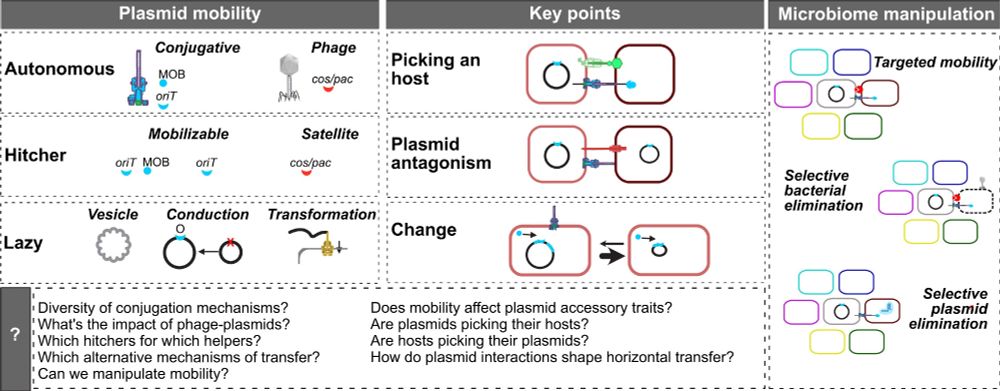
just like among humans, 𝗺𝗼𝗯bing is rampant in the microbial world.
here 👇 Maria Pilar Garcillán-Barcia , Fernando de la Cruz, and Eduardo Rocha review the extended 𝗺𝗼𝗯ility of plasmids...
#MicroSky
here 👇 Maria Pilar Garcillán-Barcia , Fernando de la Cruz, and Eduardo Rocha review the extended 𝗺𝗼𝗯ility of plasmids...
#MicroSky

Here's our new broad review on the extended mobility of plasmids, about all mechanisms driving and limiting their transfer. From conjugation to conduction, phage-plasmids to hitchers, molecular to evolutionary dynamics, ecology to biotech. The state of affairs. 1/9 academic.oup.com/nar/article/...
July 23, 2025 at 8:54 AM
just like among humans, 𝗺𝗼𝗯bing is rampant in the microbial world.
here 👇 Maria Pilar Garcillán-Barcia , Fernando de la Cruz, and Eduardo Rocha review the extended 𝗺𝗼𝗯ility of plasmids...
#MicroSky
here 👇 Maria Pilar Garcillán-Barcia , Fernando de la Cruz, and Eduardo Rocha review the extended 𝗺𝗼𝗯ility of plasmids...
#MicroSky
Reposted by Randi Guest

Cool result: Transposon insertion sequencing reveals novel hypermutator genes in Acinetobacter baumannii
"Exposure of a transposon insertion mutant library to extended weak antibiotic selection ... revealed genes that indirectly increased fitness due to elevated general mutation rates"
"Exposure of a transposon insertion mutant library to extended weak antibiotic selection ... revealed genes that indirectly increased fitness due to elevated general mutation rates"
Transposon insertion sequencing reveals novel hypermutator genes in Acinetobacter baumannii | mBio
All organisms have the capacity for evolution through mutation. Bacteria with high
mutation rates have a survival advantage in some stressful environments because they
generate beneficial mutations mo...
journals.asm.org
June 29, 2025 at 8:44 AM
Reposted by Randi Guest

Just as our bodies have evolved to defend us against bacterial and viral pathogens, bacteria face the same challenges. They must deter their own viruses, chemically compete with other microbes, and deal with challenges from eukaryotic hosts 1/n 🧪

June 29, 2025 at 12:53 PM
Just as our bodies have evolved to defend us against bacterial and viral pathogens, bacteria face the same challenges. They must deter their own viruses, chemically compete with other microbes, and deal with challenges from eukaryotic hosts 1/n 🧪
Reposted by Randi Guest
weekend is here! comes with a most welcome recording on youtube 👇
and if you need a less crick-heavy read, from the same author: DOI: 10.1016/j.cub.2015.05.032
#MicroSky
and if you need a less crick-heavy read, from the same author: DOI: 10.1016/j.cub.2015.05.032
#MicroSky

June 20, 2025 at 12:44 PM
weekend is here! comes with a most welcome recording on youtube 👇
and if you need a less crick-heavy read, from the same author: DOI: 10.1016/j.cub.2015.05.032
#MicroSky
and if you need a less crick-heavy read, from the same author: DOI: 10.1016/j.cub.2015.05.032
#MicroSky
Reposted by Randi Guest

Molecular interplay between peptidoglycan integrity and outer membrane asymmetry in maintaining cell envelope homeostasis https://www.biorxiv.org/content/10.1101/2025.06.19.660527v1
June 20, 2025 at 3:16 AM
Molecular interplay between peptidoglycan integrity and outer membrane asymmetry in maintaining cell envelope homeostasis https://www.biorxiv.org/content/10.1101/2025.06.19.660527v1
Reposted by Randi Guest

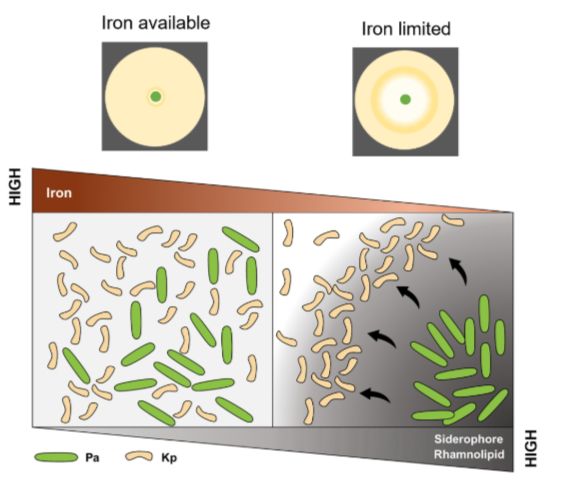
#MicrobiologyMonday: Pseudomonas aeruginosa releases a surfactant that displaces Klebsiella pneumoniae from solid surfaces. By pushing K. pneumoniae away, the detergent allows P. aeruginosa to better compete for limited iron. Learn more in #mBio: asm.social/2sH
June 16, 2025 at 5:57 PM
#MicrobiologyMonday: Pseudomonas aeruginosa releases a surfactant that displaces Klebsiella pneumoniae from solid surfaces. By pushing K. pneumoniae away, the detergent allows P. aeruginosa to better compete for limited iron. Learn more in #mBio: asm.social/2sH
Reposted by Randi Guest

Just in case you missed it, watch our video ‘What is AMR?’, which explains the fundamentals of Antimicrobial Resistance and the strategies and solutions to mitigate its threat. Watch the full video now -https://youtu.be/hXr2Rn9OTOg #KnockingOutAMR

What is Antimicrobial Resistance and how can we tackle it?
Captions are available in many other languages: Please press the settings button (gear icon) for more options. Antimicrobial resistance (AMR) is one of most ...
youtu.be
June 17, 2025 at 9:02 AM
Just in case you missed it, watch our video ‘What is AMR?’, which explains the fundamentals of Antimicrobial Resistance and the strategies and solutions to mitigate its threat. Watch the full video now -https://youtu.be/hXr2Rn9OTOg #KnockingOutAMR
Reposted by Randi Guest

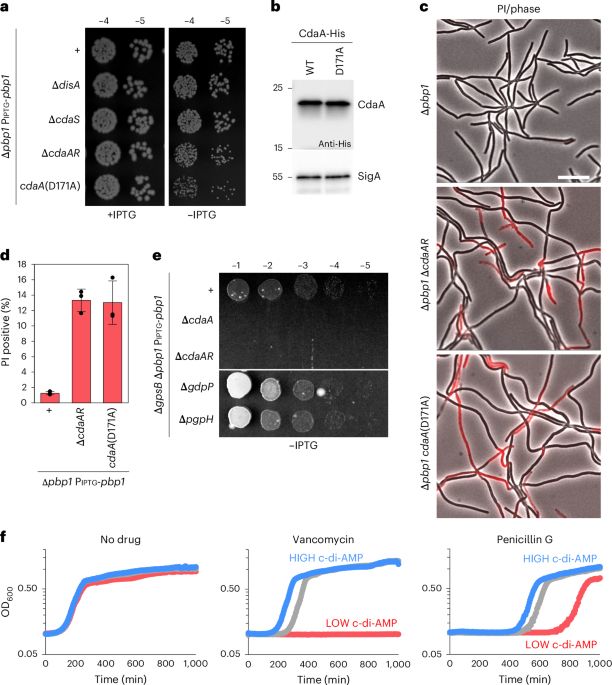
Very happy to share that a large part of my thesis work is out today: B. subtilis uses the second messenger c-di-AMP to modulate its turgor pressure in response to the state of its cell envelope. www.nature.com/articles/s41...
Cyclic-di-AMP modulates cellular turgor in response to defects in bacterial cell wall synthesis - Nature Microbiology
Brogan et al. uncover a signalling pathway in which levels of the nucleotide second messenger c-di-AMP increase in response to defects in cell wall synthesis. This regulatory pathway decreases turgor ...
www.nature.com
June 17, 2025 at 12:20 PM
Very happy to share that a large part of my thesis work is out today: B. subtilis uses the second messenger c-di-AMP to modulate its turgor pressure in response to the state of its cell envelope. www.nature.com/articles/s41...
Reposted by Randi Guest
A connection between two ancient and essential cellular processes, iron-sulfur protein biogenesis and fatty acid synthesis, in Escherichia coli https://www.biorxiv.org/content/10.1101/2025.06.16.659903v1
June 17, 2025 at 3:18 AM
A connection between two ancient and essential cellular processes, iron-sulfur protein biogenesis and fatty acid synthesis, in Escherichia coli https://www.biorxiv.org/content/10.1101/2025.06.16.659903v1
Reposted by Randi Guest
Impaired envelope integrity in the absence of SanA is linked to increased Lipid II availability and an imbalance of FtsI and FtsW activities https://www.biorxiv.org/content/10.1101/2025.06.10.658892v1
June 11, 2025 at 3:17 AM
Impaired envelope integrity in the absence of SanA is linked to increased Lipid II availability and an imbalance of FtsI and FtsW activities https://www.biorxiv.org/content/10.1101/2025.06.10.658892v1
Reposted by Randi Guest


February 18, 2025 at 8:03 AM
Reposted by Randi Guest

Latest paper drop from Yale Phage Center @paulturnerlab.bsky.social

Yale researchers have made a breakthrough in fighting drug-resistant infections in cystic fibrosis with inhaled bacteriophage therapy - offering new hope against antimicrobial resistance.
🔗 www.nature.com/articles/s41...
🔗 www.nature.com/articles/s41...

Personalized inhaled bacteriophage therapy for treatment of multidrug-resistant Pseudomonas aeruginosa in cystic fibrosis - Nature Medicine
A novel personalized phage therapy strategy that selects phages for a predicted evolutionary trade-off may represent a viable alternative approach for the treatment of antimicrobial-resistant bacteria...
www.nature.com
May 8, 2025 at 2:04 AM
Latest paper drop from Yale Phage Center @paulturnerlab.bsky.social
Reposted by Randi Guest

It's Thursday: Episode 89 of #MattersMicrobial is up, with Dr. Amir Mitchell of University of Masschusetts Medical School! Today, the #QualityQuorum discussed using AI to identify new antibiotics. Please spread the #GoodMicrobialWord? @profvrr
youtu.be/Wa0zd-TRCO8?...
youtu.be/Wa0zd-TRCO8?...

May 1, 2025 at 10:55 PM
It's Thursday: Episode 89 of #MattersMicrobial is up, with Dr. Amir Mitchell of University of Masschusetts Medical School! Today, the #QualityQuorum discussed using AI to identify new antibiotics. Please spread the #GoodMicrobialWord? @profvrr
youtu.be/Wa0zd-TRCO8?...
youtu.be/Wa0zd-TRCO8?...
Reposted by Randi Guest
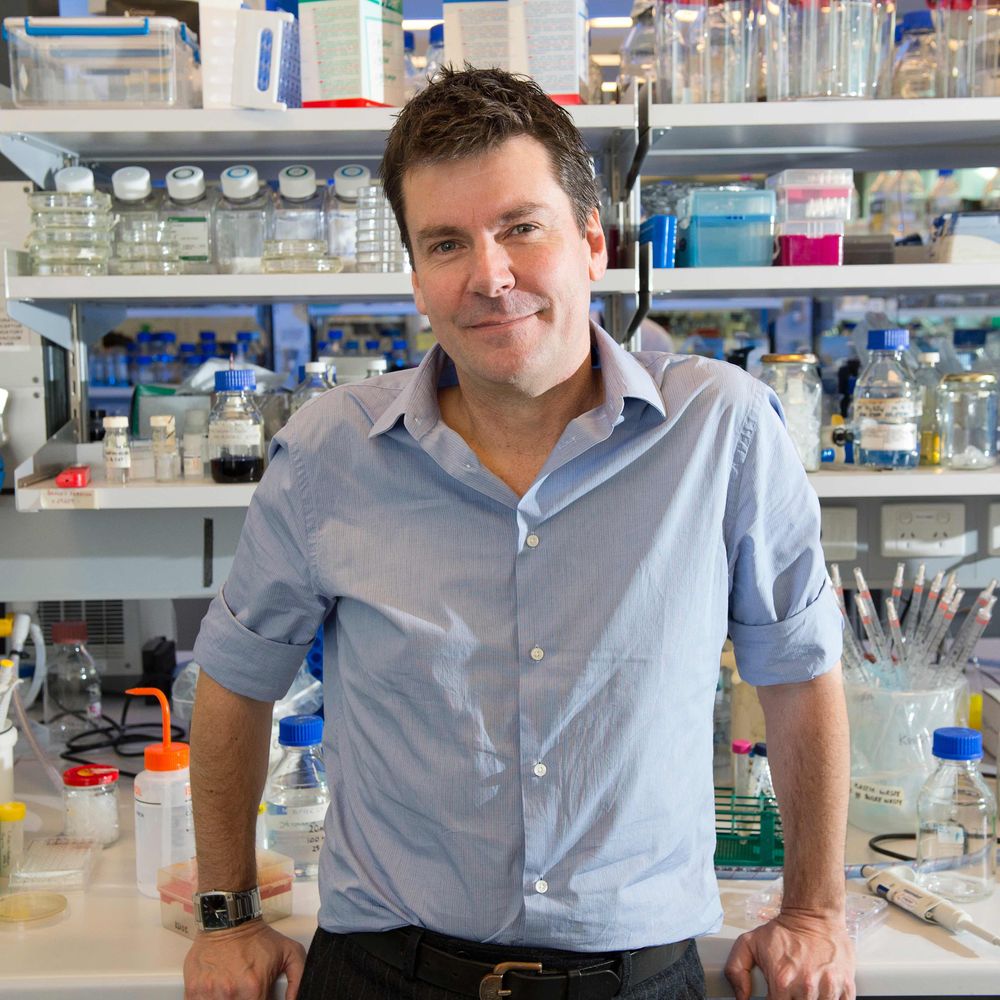
"That telomere phages are so prevalent means that they are a selective force, one that we know little about. We now want to understand how the telomere-toxin is secreted and also understand how this ‘telocin’ wheedles its way into unsuspecting bacterial neighbors”
www.science.org/doi/10.1126/...
www.science.org/doi/10.1126/...
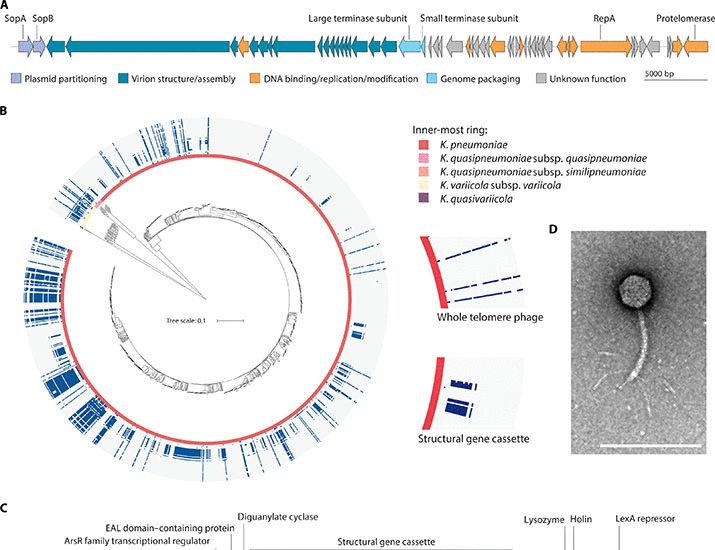
Telomere bacteriophages are widespread and equip their bacterial hosts with potent interbacterial weapons
Klebsiella host strains infected with telomere phages can grow to be the dominant lineage in mixed populations.
www.science.org
May 1, 2025 at 10:04 PM
"That telomere phages are so prevalent means that they are a selective force, one that we know little about. We now want to understand how the telomere-toxin is secreted and also understand how this ‘telocin’ wheedles its way into unsuspecting bacterial neighbors”
www.science.org/doi/10.1126/...
www.science.org/doi/10.1126/...