




Marijn Raeven
@mraeven.bsky.social
Environmental animator / science enthusiast.
Mostly posts on agriculture/nutrition.
My work: www.raeven.be
Mostly posts on agriculture/nutrition.
My work: www.raeven.be
Bye bye veggie burgers?
Ridiculous government overreach and policing of language, all thanks to the meat lobby.
www.europarl.europa.eu/news/en/pres...
Ridiculous government overreach and policing of language, all thanks to the meat lobby.
www.europarl.europa.eu/news/en/pres...

October 8, 2025 at 11:56 AM
Bye bye veggie burgers?
Ridiculous government overreach and policing of language, all thanks to the meat lobby.
www.europarl.europa.eu/news/en/pres...
Ridiculous government overreach and policing of language, all thanks to the meat lobby.
www.europarl.europa.eu/news/en/pres...
Meat vs EAT-Lancet - 🥩🌱 - interesting report.
Expecting another massive anti EAT-Lancet campaign when the 2025 update drops next week.
changingmarkets.org/report/meat-...
Expecting another massive anti EAT-Lancet campaign when the 2025 update drops next week.
changingmarkets.org/report/meat-...

September 26, 2025 at 8:35 AM
Meat vs EAT-Lancet - 🥩🌱 - interesting report.
Expecting another massive anti EAT-Lancet campaign when the 2025 update drops next week.
changingmarkets.org/report/meat-...
Expecting another massive anti EAT-Lancet campaign when the 2025 update drops next week.
changingmarkets.org/report/meat-...
Minder dan 5 ingrediënten is gezond?
Wie verzint deze onzin?
Wie verzint deze onzin?

May 15, 2025 at 6:33 AM
Minder dan 5 ingrediënten is gezond?
Wie verzint deze onzin?
Wie verzint deze onzin?
I'm seeing a lot of "Ultra-processed food increases risk of early death" headlines again.
Did you know that UPF consumption also has a positive association with accidental deaths?
Source: link.springer.com/article/10.1...
Did you know that UPF consumption also has a positive association with accidental deaths?
Source: link.springer.com/article/10.1...

May 1, 2025 at 8:47 AM
I'm seeing a lot of "Ultra-processed food increases risk of early death" headlines again.
Did you know that UPF consumption also has a positive association with accidental deaths?
Source: link.springer.com/article/10.1...
Did you know that UPF consumption also has a positive association with accidental deaths?
Source: link.springer.com/article/10.1...
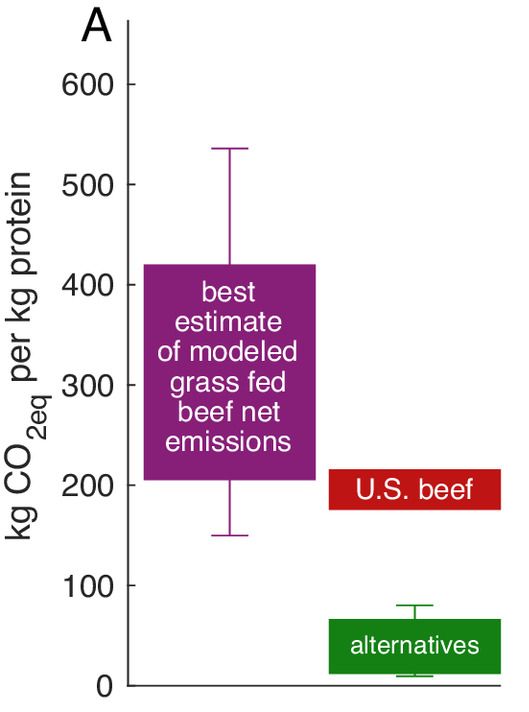
New study that looks at the carbon intensity of grass-fed beef versus industrial beef (and alternatives).
www.pnas.org/doi/10.1073/...
www.pnas.org/doi/10.1073/...
March 25, 2025 at 8:49 PM
New study that looks at the carbon intensity of grass-fed beef versus industrial beef (and alternatives).
www.pnas.org/doi/10.1073/...
www.pnas.org/doi/10.1073/...
Good to see another study address land use for various diets.
Funnily enough, the biggest contribution to land use in the "vegan" and "vegetarian" group was still red meat. Meaning actual veg*ns would score a lot better.
www.sciencedirect.com/science/arti...
Funnily enough, the biggest contribution to land use in the "vegan" and "vegetarian" group was still red meat. Meaning actual veg*ns would score a lot better.
www.sciencedirect.com/science/arti...

March 21, 2025 at 8:27 AM
Good to see another study address land use for various diets.
Funnily enough, the biggest contribution to land use in the "vegan" and "vegetarian" group was still red meat. Meaning actual veg*ns would score a lot better.
www.sciencedirect.com/science/arti...
Funnily enough, the biggest contribution to land use in the "vegan" and "vegetarian" group was still red meat. Meaning actual veg*ns would score a lot better.
www.sciencedirect.com/science/arti...
People working on sustainable agriculture/diets often get accused of having a hidden plant-based agenda. 🌱
Apparently the livestock industry was already using this argument in 1989. 🥩
Apparently the livestock industry was already using this argument in 1989. 🥩

March 15, 2025 at 9:07 PM
People working on sustainable agriculture/diets often get accused of having a hidden plant-based agenda. 🌱
Apparently the livestock industry was already using this argument in 1989. 🥩
Apparently the livestock industry was already using this argument in 1989. 🥩
Doet me eraan denken: weet niet wie deze copy heeft bedacht, maar... 😬

January 21, 2025 at 11:50 AM
Doet me eraan denken: weet niet wie deze copy heeft bedacht, maar... 😬
Here's one I made on livestock lobby research. 😅

November 17, 2024 at 8:05 PM
Here's one I made on livestock lobby research. 😅
There's even a hat!
The MAHA platform is a scam.
The MAHA platform is a scam.

November 17, 2024 at 1:19 PM
There's even a hat!
The MAHA platform is a scam.
The MAHA platform is a scam.
For anyone surprised by this picture, this is a direct RFK Jr quote:
"I don't have anything against fast food. I'm against food that has seed oils."
"I don't have anything against fast food. I'm against food that has seed oils."

November 17, 2024 at 1:18 PM
For anyone surprised by this picture, this is a direct RFK Jr quote:
"I don't have anything against fast food. I'm against food that has seed oils."
"I don't have anything against fast food. I'm against food that has seed oils."
The high impact for minimally processed foods, and average impact for UPFs has a common cause: red meat.
This graph from the supplementary materials makes it obvious: red meat is the main offender in the NOVA1 and NOVA4 subgroups.
This graph from the supplementary materials makes it obvious: red meat is the main offender in the NOVA1 and NOVA4 subgroups.

November 8, 2024 at 9:36 PM
The high impact for minimally processed foods, and average impact for UPFs has a common cause: red meat.
This graph from the supplementary materials makes it obvious: red meat is the main offender in the NOVA1 and NOVA4 subgroups.
This graph from the supplementary materials makes it obvious: red meat is the main offender in the NOVA1 and NOVA4 subgroups.
As you can see from this graph, unprocessed foods only contributed about 20% of energy intake, but were responsible for 34% of climate change impacts.
UPFs were responsible for 50% of energy intake, and 50% of the climate impact - a much smaller relative impact.
UPFs were responsible for 50% of energy intake, and 50% of the climate impact - a much smaller relative impact.

November 8, 2024 at 9:36 PM
As you can see from this graph, unprocessed foods only contributed about 20% of energy intake, but were responsible for 34% of climate change impacts.
UPFs were responsible for 50% of energy intake, and 50% of the climate impact - a much smaller relative impact.
UPFs were responsible for 50% of energy intake, and 50% of the climate impact - a much smaller relative impact.
Some of the research on ultra-processed foods is becoming indistinguishable from internet memes.

October 14, 2024 at 3:12 PM
Some of the research on ultra-processed foods is becoming indistinguishable from internet memes.
And an even better approach would be to go one step further: stop growing crops to feed animals. Feed humans instead. Limit animal feed to things like grass and inedible leftovers.
If the FAO is serious about hunger in the world, this would be a fantastic policy goal to set.
(13/13)
If the FAO is serious about hunger in the world, this would be a fantastic policy goal to set.
(13/13)

December 13, 2023 at 9:00 AM
And an even better approach would be to go one step further: stop growing crops to feed animals. Feed humans instead. Limit animal feed to things like grass and inedible leftovers.
If the FAO is serious about hunger in the world, this would be a fantastic policy goal to set.
(13/13)
If the FAO is serious about hunger in the world, this would be a fantastic policy goal to set.
(13/13)
An estimated 160% of additional land is used in other countries to produce the rest of the feed crops.
(5/13)
(5/13)

December 13, 2023 at 8:55 AM
An estimated 160% of additional land is used in other countries to produce the rest of the feed crops.
(5/13)
(5/13)
Keeping this many animals poses some practical problems. For example, where do you get all the feed?
Most of the agricultural land in the Netherlands is used to produce feed crops for animals. But this is nowhere near enough to feed them.
(4/13)
Most of the agricultural land in the Netherlands is used to produce feed crops for animals. But this is nowhere near enough to feed them.
(4/13)

December 13, 2023 at 8:55 AM
Keeping this many animals poses some practical problems. For example, where do you get all the feed?
Most of the agricultural land in the Netherlands is used to produce feed crops for animals. But this is nowhere near enough to feed them.
(4/13)
Most of the agricultural land in the Netherlands is used to produce feed crops for animals. But this is nowhere near enough to feed them.
(4/13)
And if you think this is just a misleading stat because the Netherlands doesn't have much farmland to begin with: 54% of the Netherlands is used for farming.
And the other 46% includes a lot of water. So in terms of land use, the share is even higher.
(3/13)
And the other 46% includes a lot of water. So in terms of land use, the share is even higher.
(3/13)

December 13, 2023 at 8:54 AM
And if you think this is just a misleading stat because the Netherlands doesn't have much farmland to begin with: 54% of the Netherlands is used for farming.
And the other 46% includes a lot of water. So in terms of land use, the share is even higher.
(3/13)
And the other 46% includes a lot of water. So in terms of land use, the share is even higher.
(3/13)
First, it's true that there is a lot of expertise around livestock production in the Netherlands.
The Netherlands have more livestock per hectare of agricultural land than any other country in Europe, by a wide margin.
(2/13)
The Netherlands have more livestock per hectare of agricultural land than any other country in Europe, by a wide margin.
(2/13)

December 13, 2023 at 8:53 AM
First, it's true that there is a lot of expertise around livestock production in the Netherlands.
The Netherlands have more livestock per hectare of agricultural land than any other country in Europe, by a wide margin.
(2/13)
The Netherlands have more livestock per hectare of agricultural land than any other country in Europe, by a wide margin.
(2/13)
Should the world follow the example of the Netherlands when it comes to livestock production? 🐮 🐷 🐔
Maximo Torero from the FAO thinks so.
🧵 A thread about livestock production in the Netherlands.
Is it really the great example the FAO thinks it is?
(1/13)
www.ft.com/content/2eb9...
Maximo Torero from the FAO thinks so.
🧵 A thread about livestock production in the Netherlands.
Is it really the great example the FAO thinks it is?
(1/13)
www.ft.com/content/2eb9...

December 13, 2023 at 8:52 AM
Should the world follow the example of the Netherlands when it comes to livestock production? 🐮 🐷 🐔
Maximo Torero from the FAO thinks so.
🧵 A thread about livestock production in the Netherlands.
Is it really the great example the FAO thinks it is?
(1/13)
www.ft.com/content/2eb9...
Maximo Torero from the FAO thinks so.
🧵 A thread about livestock production in the Netherlands.
Is it really the great example the FAO thinks it is?
(1/13)
www.ft.com/content/2eb9...
From www.ft.com/content/2eb9... :
"The report said livestock production should be intensified “in relevant locations”, with Torero citing the Netherlands and New Zealand as examples."
This has to be either a complete lack of understanding of production systems, industry influence, or both.
"The report said livestock production should be intensified “in relevant locations”, with Torero citing the Netherlands and New Zealand as examples."
This has to be either a complete lack of understanding of production systems, industry influence, or both.
December 12, 2023 at 10:57 AM
From www.ft.com/content/2eb9... :
"The report said livestock production should be intensified “in relevant locations”, with Torero citing the Netherlands and New Zealand as examples."
This has to be either a complete lack of understanding of production systems, industry influence, or both.
"The report said livestock production should be intensified “in relevant locations”, with Torero citing the Netherlands and New Zealand as examples."
This has to be either a complete lack of understanding of production systems, industry influence, or both.
New animation:
🌍 What will we eat in 2050?
A brief overview of the challenges our global food system faces, and what we can do to address these issues.
Watch on youtube: youtu.be/o2atI8PSLYQ
🌍 What will we eat in 2050?
A brief overview of the challenges our global food system faces, and what we can do to address these issues.
Watch on youtube: youtu.be/o2atI8PSLYQ

November 30, 2023 at 1:28 PM
New animation:
🌍 What will we eat in 2050?
A brief overview of the challenges our global food system faces, and what we can do to address these issues.
Watch on youtube: youtu.be/o2atI8PSLYQ
🌍 What will we eat in 2050?
A brief overview of the challenges our global food system faces, and what we can do to address these issues.
Watch on youtube: youtu.be/o2atI8PSLYQ