




Guido Puccetti
@guidopuccetti.bsky.social
Keen on fungal genetics, fungicide resistance, phenomics, genomics, image analysis, epigenetics, epistasis, pleiotropy, host-pathogen interaction, TEs.
Pinned

A large European diversity panel reveals complex azole fungicide resistance gains of a major wheat pathogen | mBio
Sustainable food production requires the management of disease agents attacking crops.
Application of antifungal compounds is among the key elements of pathogen containment;
however, resistance can ri...
journals.asm.org
Finally out!
A large European diversity panel reveals complex azole fungicide resistance gains of a major wheat pathogen
journals.asm.org/doi/10.1128/...
A big thanks to @danielcroll.bsky.social & @GabrielScalliet
#azole #DMI #GWAS #fungicide #resistance #zymoseptoria #Europe
A large European diversity panel reveals complex azole fungicide resistance gains of a major wheat pathogen
journals.asm.org/doi/10.1128/...
A big thanks to @danielcroll.bsky.social & @GabrielScalliet
#azole #DMI #GWAS #fungicide #resistance #zymoseptoria #Europe
Reposted by Guido Puccetti

🍄Transposon traffic in the mycocosmos🍄
Fascinating work reveals extensive horizontal TE transfer across fungi (@jromeijn.bsky.social, Iñigo Bañales & @mfseidl.bsky.social; doi.org/10.1016/j.cu...). I wrote a Dispatch to prime non-specialists,check it out here: doi.org/10.1016/j.cu....
#TEworldwide
Fascinating work reveals extensive horizontal TE transfer across fungi (@jromeijn.bsky.social, Iñigo Bañales & @mfseidl.bsky.social; doi.org/10.1016/j.cu...). I wrote a Dispatch to prime non-specialists,check it out here: doi.org/10.1016/j.cu....
#TEworldwide

January 19, 2026 at 4:38 PM
🍄Transposon traffic in the mycocosmos🍄
Fascinating work reveals extensive horizontal TE transfer across fungi (@jromeijn.bsky.social, Iñigo Bañales & @mfseidl.bsky.social; doi.org/10.1016/j.cu...). I wrote a Dispatch to prime non-specialists,check it out here: doi.org/10.1016/j.cu....
#TEworldwide
Fascinating work reveals extensive horizontal TE transfer across fungi (@jromeijn.bsky.social, Iñigo Bañales & @mfseidl.bsky.social; doi.org/10.1016/j.cu...). I wrote a Dispatch to prime non-specialists,check it out here: doi.org/10.1016/j.cu....
#TEworldwide
Reposted by Guido Puccetti

“Transcriptional and metabolic modeling analyses of developing Aspergillus fumigatus biofilms reveal metabolic shifts required for biofilm maturation”
#microsky
#microsky

Transcriptional and metabolic modeling analyses of developing Aspergillus fumigatus biofilms reveal metabolic shifts required for biofilm maturation | mSphere
Aspergillus fumigatus is the most common etiological agent of a collection of diseases termed aspergillosis. Chronic and invasive manifestations of aspergillosis are highlighted by the development of biofilm-like structures on and in tissue. These biofilm structures are resistant to contemporary antifungal drugs, even for strains that are susceptible by standard antimicrobial susceptibility testing methods. Consequently, understanding the mechanisms by which A. fumigatus induces, develops, and maintains biofilms to evade antifungal therapies is expected to illuminate biofilm-specific therapeutic targets. Here, we identify genes involved in fungal fermentation and regulation of transcription as important mediators of A. fumigatus biofilm development.
journals.asm.org
December 5, 2025 at 1:30 PM
“Transcriptional and metabolic modeling analyses of developing Aspergillus fumigatus biofilms reveal metabolic shifts required for biofilm maturation”
#microsky
#microsky
Reposted by Guido Puccetti

Our new article is now online on @natplants.nature.com! ✨
We identified and characterised AvrPm4 and SvrPm4, a pair of powdery mildew effectors controlling avirulence on the wheat kinase fusion resistance protein Pm4 🌾 check it out ➡️ www.nature.com/articles/s41...
We identified and characterised AvrPm4 and SvrPm4, a pair of powdery mildew effectors controlling avirulence on the wheat kinase fusion resistance protein Pm4 🌾 check it out ➡️ www.nature.com/articles/s41...

January 12, 2026 at 3:27 PM
Our new article is now online on @natplants.nature.com! ✨
We identified and characterised AvrPm4 and SvrPm4, a pair of powdery mildew effectors controlling avirulence on the wheat kinase fusion resistance protein Pm4 🌾 check it out ➡️ www.nature.com/articles/s41...
We identified and characterised AvrPm4 and SvrPm4, a pair of powdery mildew effectors controlling avirulence on the wheat kinase fusion resistance protein Pm4 🌾 check it out ➡️ www.nature.com/articles/s41...
Reposted by Guido Puccetti

Alkemade, @timbarra.bsky.social et al. did temporal association analysis on three major fungal crop pathogens collected between 1956 and 2023, identifying genes linked to fungicide resistance and stress responses as frequent sites of adaptation.
🔗 doi.org/10.1093/gbe/evaf241
#genome #evolution
🔗 doi.org/10.1093/gbe/evaf241
#genome #evolution

Genomic Insights into Historical Adaptation of Three Key Fungal Plant Pathogens
Abstract. Fungal culture collections hold a wealth of historical isolates that could be used to study fungal evolution over the past decades, an era that c
doi.org
December 23, 2025 at 9:11 AM
Alkemade, @timbarra.bsky.social et al. did temporal association analysis on three major fungal crop pathogens collected between 1956 and 2023, identifying genes linked to fungicide resistance and stress responses as frequent sites of adaptation.
🔗 doi.org/10.1093/gbe/evaf241
#genome #evolution
🔗 doi.org/10.1093/gbe/evaf241
#genome #evolution

Reposted by Guido Puccetti

Delighted to see the main work from my PhD finally published in @mbio.bsky.social! It all started with the observation that deleting the cutRS two-component system in S. venezuelae caused this amazing explorer phenotype in the presence of glucose. But what was going on?! (1/n)

December 16, 2025 at 2:40 AM
Delighted to see the main work from my PhD finally published in @mbio.bsky.social! It all started with the observation that deleting the cutRS two-component system in S. venezuelae caused this amazing explorer phenotype in the presence of glucose. But what was going on?! (1/n)
Reposted by Guido Puccetti

👉Excited to share our latest work @natmicrobiol.nature.com, revealing a decrease in cytoplasmic crowding during filamentous growth in the human fungal pathogen Candida albicans. Furthermore we found that inhibition of ribosome biogenesis can trigger filamentous growth in this pathogen
rdcu.be/eT1Su
rdcu.be/eT1Su

Decreased cytoplasmic crowding via inhibition of ribosome biogenesis can trigger Candida albicans filamentous growth
Nature Microbiology - During filamentous growth in the human fungal pathogen Candida albicans, a reduction in ribosome concentration leads to a decrease in macromolecular crowding. Inhibition of...
rdcu.be
December 10, 2025 at 12:23 PM
👉Excited to share our latest work @natmicrobiol.nature.com, revealing a decrease in cytoplasmic crowding during filamentous growth in the human fungal pathogen Candida albicans. Furthermore we found that inhibition of ribosome biogenesis can trigger filamentous growth in this pathogen
rdcu.be/eT1Su
rdcu.be/eT1Su
Reposted by Guido Puccetti

New preprint with @rokaslab.bsky.social! We used genomic, metabolic, environmental, and phenotypic data sets from 1,154 Saccharomycotina strains to asses filamentation variability and predict filamentation types across the subphylum. 🧩
www.biorxiv.org/content/10.1...
www.biorxiv.org/content/10.1...

The Macroevolution of Filamentation Morphology Across the Saccharomycotina Yeast Subphylum
Saccharomycotina yeasts are a highly diverse and widely distributed subphylum of ascomycete fungi that exhibit diversity in their asexual growth morphologies; the human commensal yeast Candida albican...
www.biorxiv.org
December 8, 2025 at 9:00 PM
New preprint with @rokaslab.bsky.social! We used genomic, metabolic, environmental, and phenotypic data sets from 1,154 Saccharomycotina strains to asses filamentation variability and predict filamentation types across the subphylum. 🧩
www.biorxiv.org/content/10.1...
www.biorxiv.org/content/10.1...
Reposted by Guido Puccetti

k-mer-based GWAS reveals a candidate avirulence gene and structural variation in Puccinia triticina linked to gain of Lr20 virulence doi.org/10.1186/s128...

December 1, 2025 at 9:50 PM
k-mer-based GWAS reveals a candidate avirulence gene and structural variation in Puccinia triticina linked to gain of Lr20 virulence doi.org/10.1186/s128...
Reposted by Guido Puccetti

www.embopress.org/doi/full/10....
Our latest now online at EMBO Journal. Read if you are interested in how epimutations mediate antifungal resistance & how this might result in heteroresistance in human & cereal crop fungal pathogens. Big Thx & congrats to Andreas Fellas, Pin Tong & Alison Pidoux
Our latest now online at EMBO Journal. Read if you are interested in how epimutations mediate antifungal resistance & how this might result in heteroresistance in human & cereal crop fungal pathogens. Big Thx & congrats to Andreas Fellas, Pin Tong & Alison Pidoux

Heterochromatin epimutations impose mitochondrial dysfunction to confer antifungal resistance | The EMBO Journal
imageimageHeterochromatin-island epimutations can provide resistance to caffeine and antifungal
drugs in the fission yeast Schizosaccharomyces pombe. This study reveals that some epimutations cause re...
www.embopress.org
December 1, 2025 at 3:44 PM
www.embopress.org/doi/full/10....
Our latest now online at EMBO Journal. Read if you are interested in how epimutations mediate antifungal resistance & how this might result in heteroresistance in human & cereal crop fungal pathogens. Big Thx & congrats to Andreas Fellas, Pin Tong & Alison Pidoux
Our latest now online at EMBO Journal. Read if you are interested in how epimutations mediate antifungal resistance & how this might result in heteroresistance in human & cereal crop fungal pathogens. Big Thx & congrats to Andreas Fellas, Pin Tong & Alison Pidoux
Finally out!
A large European diversity panel reveals complex azole fungicide resistance gains of a major wheat pathogen
journals.asm.org/doi/10.1128/...
A big thanks to @danielcroll.bsky.social & @GabrielScalliet
#azole #DMI #GWAS #fungicide #resistance #zymoseptoria #Europe
A large European diversity panel reveals complex azole fungicide resistance gains of a major wheat pathogen
journals.asm.org/doi/10.1128/...
A big thanks to @danielcroll.bsky.social & @GabrielScalliet
#azole #DMI #GWAS #fungicide #resistance #zymoseptoria #Europe
A large European diversity panel reveals complex azole fungicide resistance gains of a major wheat pathogen | mBio
Sustainable food production requires the management of disease agents attacking crops.
Application of antifungal compounds is among the key elements of pathogen containment;
however, resistance can ri...
journals.asm.org
December 1, 2025 at 12:00 AM
Finally out!
A large European diversity panel reveals complex azole fungicide resistance gains of a major wheat pathogen
journals.asm.org/doi/10.1128/...
A big thanks to @danielcroll.bsky.social & @GabrielScalliet
#azole #DMI #GWAS #fungicide #resistance #zymoseptoria #Europe
A large European diversity panel reveals complex azole fungicide resistance gains of a major wheat pathogen
journals.asm.org/doi/10.1128/...
A big thanks to @danielcroll.bsky.social & @GabrielScalliet
#azole #DMI #GWAS #fungicide #resistance #zymoseptoria #Europe
Reposted by Guido Puccetti

Our paper on Zymoseptoria tritici 3D genome organization is officially out! @iglavincheska.bsky.social
link.springer.com/article/10.1...
link.springer.com/article/10.1...

Three-dimensional genome architecture connects chromatin structure and function in a major wheat pathogen - BMC Biology
Background Genome spatial organization plays a fundamental role in biological function across all domains of life. While the principles of nuclear architecture have been well-characterized in animals ...
link.springer.com
November 28, 2025 at 12:43 PM
Our paper on Zymoseptoria tritici 3D genome organization is officially out! @iglavincheska.bsky.social
link.springer.com/article/10.1...
link.springer.com/article/10.1...
Reposted by Guido Puccetti

Cross-kingdom RNA trafficking from bacteria to fungi enables plant protection against fungal pathogens #research #MolecularPlant cell.com/molecular-pl...

November 15, 2025 at 12:51 PM
Cross-kingdom RNA trafficking from bacteria to fungi enables plant protection against fungal pathogens #research #MolecularPlant cell.com/molecular-pl...
Reposted by Guido Puccetti

Over many years, and a pandemic, we have worked with an international team of researchers to answer the question through genomics. We believe the origin is recent (in the last few decades, in line with previous research) and spatially from Western Europe
November 13, 2025 at 12:45 PM
Over many years, and a pandemic, we have worked with an international team of researchers to answer the question through genomics. We believe the origin is recent (in the last few decades, in line with previous research) and spatially from Western Europe
Reposted by Guido Puccetti
TEs aren’t just genomic parasites, they’re also engines of genomic novelty.
Our new study with ~2,000 Z. tritici genomes shows repeated TE mobilization waves during global expansion.
With @danielcroll.bsky.social & @guidopuccetti.bsky.social
🧬 www.nature.com/articles/s41...
#TEworldwide
Our new study with ~2,000 Z. tritici genomes shows repeated TE mobilization waves during global expansion.
With @danielcroll.bsky.social & @guidopuccetti.bsky.social
🧬 www.nature.com/articles/s41...
#TEworldwide

Historic transposon mobilisation waves create distinct pools of adaptive variants in a major crop pathogen - Nature Communications
In this study, the authors analysed a large genomic dataset to trace how jumping genes shaped the global spread of a major wheat pathogen and reveal bursts of activity over decades that drove adaptati...
www.nature.com
November 12, 2025 at 1:17 PM
TEs aren’t just genomic parasites, they’re also engines of genomic novelty.
Our new study with ~2,000 Z. tritici genomes shows repeated TE mobilization waves during global expansion.
With @danielcroll.bsky.social & @guidopuccetti.bsky.social
🧬 www.nature.com/articles/s41...
#TEworldwide
Our new study with ~2,000 Z. tritici genomes shows repeated TE mobilization waves during global expansion.
With @danielcroll.bsky.social & @guidopuccetti.bsky.social
🧬 www.nature.com/articles/s41...
#TEworldwide
Reposted by Guido Puccetti
Genomic and phenotypic insights into the expanding phylogenetic landscape of the Cryptococcus genus journals.plos.org/plosgenetics...
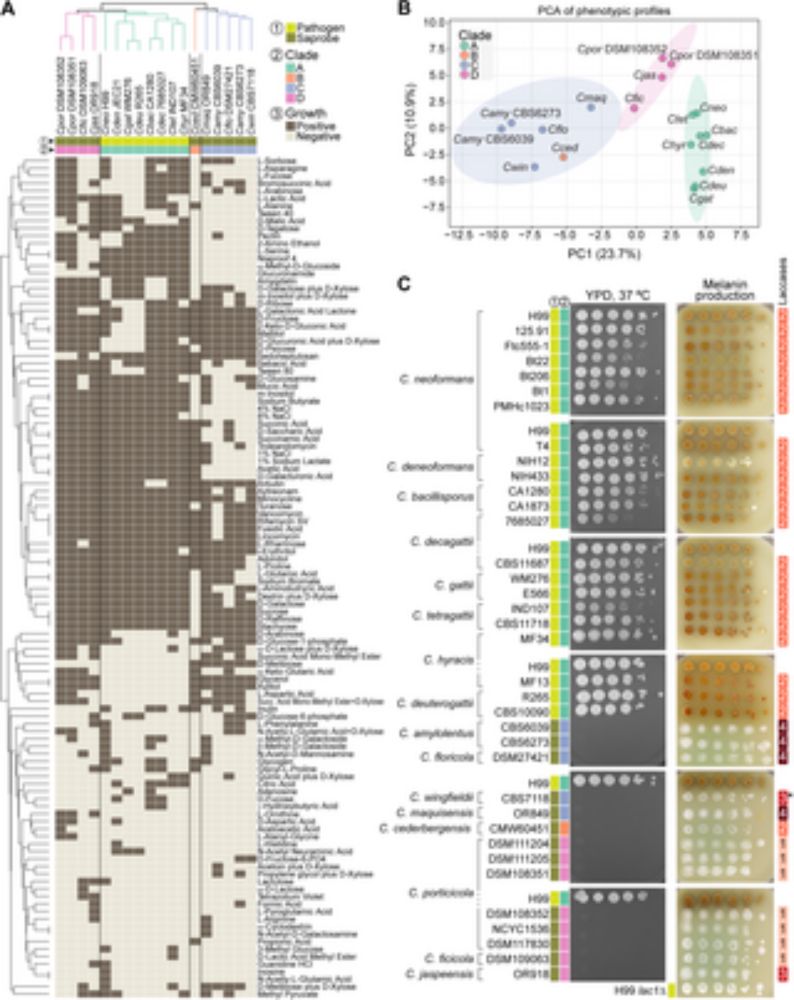
Genomic and phenotypic insights into the expanding phylogenetic landscape of the Cryptococcus genus
Author summary Cryptococcus is a genus of fungi that includes both pathogenic species capable of causing life-threatening infections in humans and many environmental species that inhabit soil, fruit, ...
journals.plos.org
November 11, 2025 at 10:35 AM
Genomic and phenotypic insights into the expanding phylogenetic landscape of the Cryptococcus genus journals.plos.org/plosgenetics...
Reposted by Guido Puccetti

Lifestyles shape genome size and gene content in fungal pathogens.
buff.ly/tec1Tds
buff.ly/tec1Tds

November 2, 2025 at 11:01 AM
Lifestyles shape genome size and gene content in fungal pathogens.
buff.ly/tec1Tds
buff.ly/tec1Tds
Reposted by Guido Puccetti

Still using 16S/ITS profiling? You might want to reconsider👀
Our new paper presents pangenome-informed amplicons that provide up to 10× higher phylogenetic resolution than full-length ribosomal markers- while remaining cost effective and scalable!
microbiomejournal.biomedcentral.com/articles/10....
Our new paper presents pangenome-informed amplicons that provide up to 10× higher phylogenetic resolution than full-length ribosomal markers- while remaining cost effective and scalable!
microbiomejournal.biomedcentral.com/articles/10....

High-resolution profiling of bacterial and fungal communities using pangenome-informed taxon-specific long-read amplicons - Microbiome
Background High-throughput sequencing technologies have greatly advanced our understanding of microbiomes, but resolving microbial communities at species and strain levels remains challenging. Results...
microbiomejournal.biomedcentral.com
October 30, 2025 at 1:32 PM
Still using 16S/ITS profiling? You might want to reconsider👀
Our new paper presents pangenome-informed amplicons that provide up to 10× higher phylogenetic resolution than full-length ribosomal markers- while remaining cost effective and scalable!
microbiomejournal.biomedcentral.com/articles/10....
Our new paper presents pangenome-informed amplicons that provide up to 10× higher phylogenetic resolution than full-length ribosomal markers- while remaining cost effective and scalable!
microbiomejournal.biomedcentral.com/articles/10....
Reposted by Guido Puccetti

WHY USE #YEAST AS A TOOL WHEN YOU'VE GOT STAGO?😁
Out now on @biorxivpreprint.bsky.social, our collab @theccdm.bsky.social led by @labkatz.bsky.social and Fran Lopez-Ruiz developed Parastagonospora nodorum as a tool to study #fungicideresistance genes.
www.biorxiv.org/content/10.1...
Out now on @biorxivpreprint.bsky.social, our collab @theccdm.bsky.social led by @labkatz.bsky.social and Fran Lopez-Ruiz developed Parastagonospora nodorum as a tool to study #fungicideresistance genes.
www.biorxiv.org/content/10.1...

Dissecting allele-specific fungicide resistance mechanisms by heterologous expression of the demethylase inhibitor target gene Cyp51 in a phytopathogen model
BACKGROUND Fungicide resistance is a major concern both in agriculture and clinical disease control. Whilst several mechanisms of resistance have been elucidated, assigning phenotype to genotype is of...
www.biorxiv.org
October 22, 2025 at 1:37 AM
WHY USE #YEAST AS A TOOL WHEN YOU'VE GOT STAGO?😁
Out now on @biorxivpreprint.bsky.social, our collab @theccdm.bsky.social led by @labkatz.bsky.social and Fran Lopez-Ruiz developed Parastagonospora nodorum as a tool to study #fungicideresistance genes.
www.biorxiv.org/content/10.1...
Out now on @biorxivpreprint.bsky.social, our collab @theccdm.bsky.social led by @labkatz.bsky.social and Fran Lopez-Ruiz developed Parastagonospora nodorum as a tool to study #fungicideresistance genes.
www.biorxiv.org/content/10.1...
Reposted by Guido Puccetti

Fungal #GenomeSize variation is largely driven by TEs & lineage-specific genome defenses. @tbadet.bsky.social & @danielcroll.bsky.social show that presence/absence of RIP mutation systems influences #genome architecture, identifying a likely novel defense mechanism @plosbiology.org 🧪 plos.io/4hcC5tx

October 16, 2025 at 7:58 AM
Fungal #GenomeSize variation is largely driven by TEs & lineage-specific genome defenses. @tbadet.bsky.social & @danielcroll.bsky.social show that presence/absence of RIP mutation systems influences #genome architecture, identifying a likely novel defense mechanism @plosbiology.org 🧪 plos.io/4hcC5tx
Reposted by Guido Puccetti

New preprint reveals bacteria can't just collect all resistance genes like Pokemon cards.
We found mutually exclusive evolutionary pathways to multidrug resistance in E. coli & P. aeruginosa - some resistance mechanisms actively prevent others from coexisting www.biorxiv.org/content/10.1...
We found mutually exclusive evolutionary pathways to multidrug resistance in E. coli & P. aeruginosa - some resistance mechanisms actively prevent others from coexisting www.biorxiv.org/content/10.1...

Genomic constraints shape the evolution of alternative routes to drug resistance in prokaryotes
Background Variation within the prokaryotic pangenome is not random, and natural selection that favours particular combinations of genes appears to dominate over random drift. What is less clear is wh...
www.biorxiv.org
August 29, 2025 at 2:05 PM
New preprint reveals bacteria can't just collect all resistance genes like Pokemon cards.
We found mutually exclusive evolutionary pathways to multidrug resistance in E. coli & P. aeruginosa - some resistance mechanisms actively prevent others from coexisting www.biorxiv.org/content/10.1...
We found mutually exclusive evolutionary pathways to multidrug resistance in E. coli & P. aeruginosa - some resistance mechanisms actively prevent others from coexisting www.biorxiv.org/content/10.1...
Reposted by Guido Puccetti

I thought the Aspergillus fumigatus pan-genome was pretty wild when we started this project.
Aspergillus flavus said, "hold my beer..." Not only does it have a strong population structure with differences between environmental and clinical strains, only 58%of genes are conserved across the species!
Aspergillus flavus said, "hold my beer..." Not only does it have a strong population structure with differences between environmental and clinical strains, only 58%of genes are conserved across the species!

Thrilled to share that the final chapter of my PhD with @rokaslab.bsky.social is now out in @natcomms.nature.com 🎉
Read it to find out how population structure impacts pathogenicity in Aspergillus flavus, a fungus that infects humans 🧪
rdcu.be/eAToj
Read it to find out how population structure impacts pathogenicity in Aspergillus flavus, a fungus that infects humans 🧪
rdcu.be/eAToj

Population structure in a fungal human pathogen is potentially linked to pathogenicity
Nature Communications - Genetic diversity between clinical and environmental fungal isolates of Aspergillus flavus is poorly studied. Here, the authors analysed genomic data from a global set of...
rdcu.be
August 22, 2025 at 6:38 AM
I thought the Aspergillus fumigatus pan-genome was pretty wild when we started this project.
Aspergillus flavus said, "hold my beer..." Not only does it have a strong population structure with differences between environmental and clinical strains, only 58%of genes are conserved across the species!
Aspergillus flavus said, "hold my beer..." Not only does it have a strong population structure with differences between environmental and clinical strains, only 58%of genes are conserved across the species!
Reposted by Guido Puccetti

🚨 Fungi + viruses + mammalian lungs? Buckle up! Our new paper in
@natmicrobiol.nature.com
uncovers the story of a deadly fungus and its gnarly viral hitchhiker — and how this duo may change how we diagnose & treat fungal disease 🍄🫁🚨 doi.org/10.1038/s415... ⬇️
@natmicrobiol.nature.com
uncovers the story of a deadly fungus and its gnarly viral hitchhiker — and how this duo may change how we diagnose & treat fungal disease 🍄🫁🚨 doi.org/10.1038/s415... ⬇️

Aspergillus fumigatus dsRNA virus promotes fungal fitness and pathogenicity in the mammalian host - Nature Microbiology
A mycovirus infecting the pathogenic fungus Aspergillus fumigatus enhances its stress tolerance and virulence in mice.
doi.org
August 14, 2025 at 9:46 AM
🚨 Fungi + viruses + mammalian lungs? Buckle up! Our new paper in
@natmicrobiol.nature.com
uncovers the story of a deadly fungus and its gnarly viral hitchhiker — and how this duo may change how we diagnose & treat fungal disease 🍄🫁🚨 doi.org/10.1038/s415... ⬇️
@natmicrobiol.nature.com
uncovers the story of a deadly fungus and its gnarly viral hitchhiker — and how this duo may change how we diagnose & treat fungal disease 🍄🫁🚨 doi.org/10.1038/s415... ⬇️
Reposted by Guido Puccetti
A little holiday news:
Evolution of antifungal resistance in the environment www.nature.com/articles/s41...
This started out as a little thought way back in early 2024 between @normanvanrhijn.bsky.social and I, and turned into a full on review! We hope it proves useful to the community.
Evolution of antifungal resistance in the environment www.nature.com/articles/s41...
This started out as a little thought way back in early 2024 between @normanvanrhijn.bsky.social and I, and turned into a full on review! We hope it proves useful to the community.
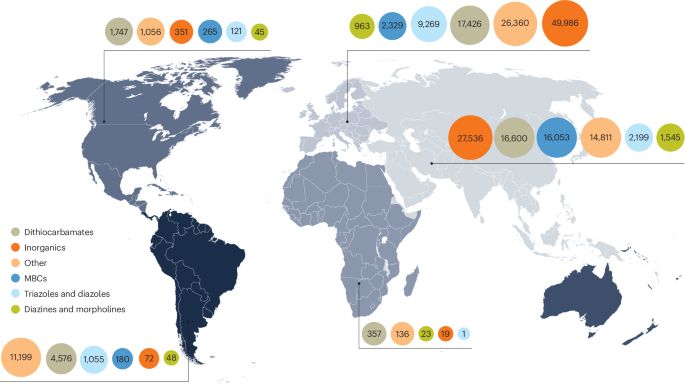
Evolution of antifungal resistance in the environment - Nature Microbiology
This Review discusses the evolution, emergence and expansion of environmental fungicide and antifungal drug resistance.
www.nature.com
July 29, 2025 at 11:29 AM
A little holiday news:
Evolution of antifungal resistance in the environment www.nature.com/articles/s41...
This started out as a little thought way back in early 2024 between @normanvanrhijn.bsky.social and I, and turned into a full on review! We hope it proves useful to the community.
Evolution of antifungal resistance in the environment www.nature.com/articles/s41...
This started out as a little thought way back in early 2024 between @normanvanrhijn.bsky.social and I, and turned into a full on review! We hope it proves useful to the community.
Reposted by Guido Puccetti

A pangenomics-enabled platform for the high-throughput discovery of antifungal resistance factors in crop pathogens https://www.biorxiv.org/content/10.1101/2025.07.18.665620v1
July 20, 2025 at 4:17 AM
A pangenomics-enabled platform for the high-throughput discovery of antifungal resistance factors in crop pathogens https://www.biorxiv.org/content/10.1101/2025.07.18.665620v1