




Genome Biology and Evolution
@genomebiolevol.bsky.social
GBE publishes leading original research at the interface between evolutionary biology and genomics.
🔗 academic.oup.com/gbe
🏠 @official-smbe.bsky.social
🤝 @molbioevol.bsky.social
#genome #evolution #science #biology #societyjournal
🔗 academic.oup.com/gbe
🏠 @official-smbe.bsky.social
🤝 @molbioevol.bsky.social
#genome #evolution #science #biology #societyjournal
Pinned

The December cover of Genome Biology and Evolution features Rojas-Triana et al., who publish a Review on the adaptive potential of extrachromosomal circular DNA across taxa.
🔗 doi.org/10.1093/gbe/evaf223
#genome #evolution
🔗 doi.org/10.1093/gbe/evaf223
#genome #evolution
Rao, @andreaslaustsen.bsky.social et al. present a chromosome-level genome assembly of the western nose-horned viper. The 1.55 Gbp assembly (contig N50 = 45.9 Mb; scaffold N50 = 210 Mb; BUSCO = 97.1%) is anchored into 18 pseudo-chromosomes.
🔗 doi.org/10.1093/gbe/evaf210
#genome #evolution
🔗 doi.org/10.1093/gbe/evaf210
#genome #evolution

December 9, 2025 at 8:50 AM
Rao, @andreaslaustsen.bsky.social et al. present a chromosome-level genome assembly of the western nose-horned viper. The 1.55 Gbp assembly (contig N50 = 45.9 Mb; scaffold N50 = 210 Mb; BUSCO = 97.1%) is anchored into 18 pseudo-chromosomes.
🔗 doi.org/10.1093/gbe/evaf210
#genome #evolution
🔗 doi.org/10.1093/gbe/evaf210
#genome #evolution
Migration is widespread in animals, but little is known about its genetic regulation. Peralta et al. compared genomes of lesser long-nosed bats, identifying 10 genomic regions with signatures of selection linked to migration.
🔗 doi.org/10.1093/gbe/evaf203
#genome #evolution #migration
🔗 doi.org/10.1093/gbe/evaf203
#genome #evolution #migration

December 8, 2025 at 6:59 PM
Migration is widespread in animals, but little is known about its genetic regulation. Peralta et al. compared genomes of lesser long-nosed bats, identifying 10 genomic regions with signatures of selection linked to migration.
🔗 doi.org/10.1093/gbe/evaf203
#genome #evolution #migration
🔗 doi.org/10.1093/gbe/evaf203
#genome #evolution #migration
Reposted by Genome Biology and Evolution
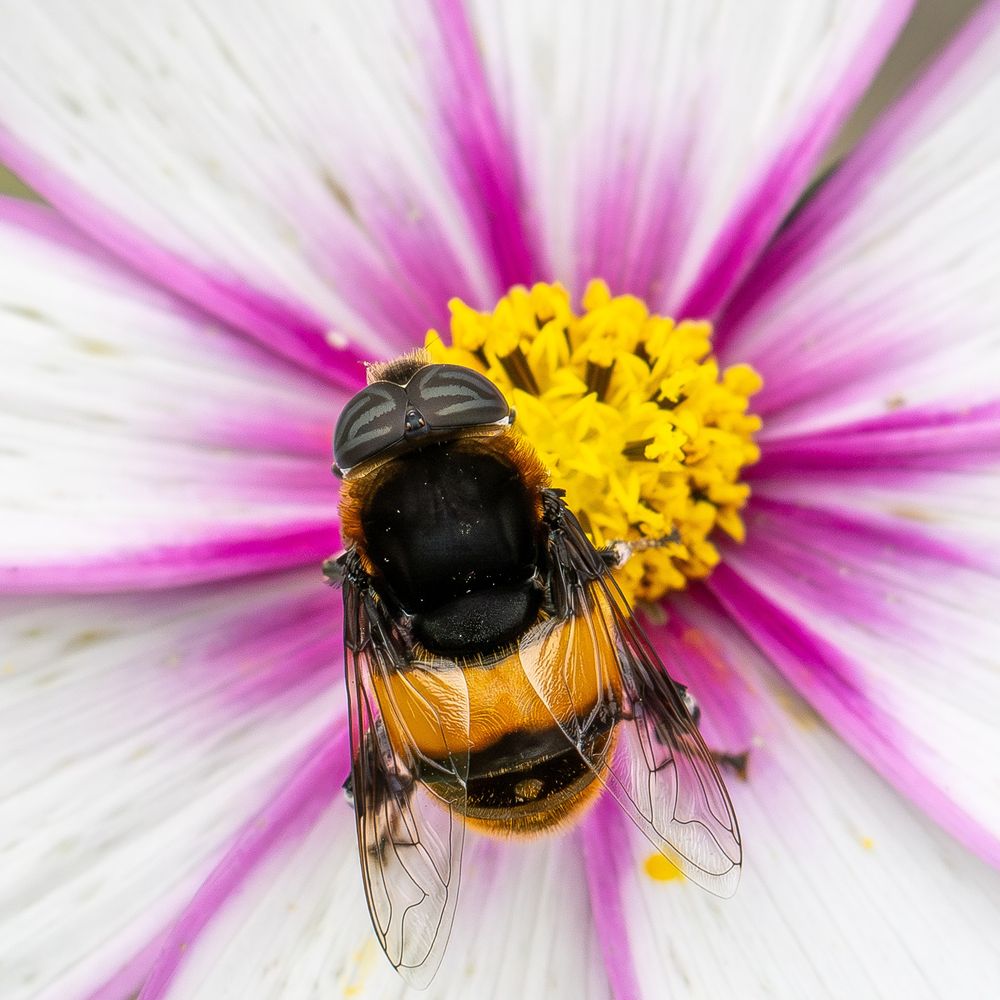
New #microbiome paper from our lab @ioes-ju.bsky.social! Unexpected host associations for Bartonellaceae - a bacterial family primarily known as mammalian pathogens. Striking #symbiont evolutionary trajectories, exemplified by a highly reduced, 158kb genome with no nutrient biosynthetic capacity!
Ma, @annamichalik.bsky.social, Deng, Hu & @sympiotr.bsky.social discover the presence of Bartonellaceae bacteria in planthoppers, broadening the host spectrum of nonpathogenic Bartonellaceae.
🔗 doi.org/10.1093/gbe/evaf216
#genome #evolution
🔗 doi.org/10.1093/gbe/evaf216
#genome #evolution

Contrasting Genomic Trajectories of Bartonellaceae Symbionts of Planthoppers
Abstract. Symbioses with microorganisms have shaped the nutritional biology and evolution of many insects. For example, several ant clades have adapted to
doi.org
December 5, 2025 at 9:49 PM
New #microbiome paper from our lab @ioes-ju.bsky.social! Unexpected host associations for Bartonellaceae - a bacterial family primarily known as mammalian pathogens. Striking #symbiont evolutionary trajectories, exemplified by a highly reduced, 158kb genome with no nutrient biosynthetic capacity!
Genetti & @russcd.bsky.social investigated Puerto Rico honeybees, suggesting that local pressures on bee behavior may have induced changes in alleles linked to different ancestries at loci involved in neuronal development, behavior, and mating.
🔗 doi.org/10.1093/gbe/evaf217
#genome #evolution
🔗 doi.org/10.1093/gbe/evaf217
#genome #evolution

Signals of Ancestry-Specific Selection in Gentle Africanized Honey Bees
Abstract. Understanding the genetic basis of adaptive responses to environmental and human mediated pressures is a central concern in evolutionary biology.
doi.org
December 5, 2025 at 10:41 AM
Genetti & @russcd.bsky.social investigated Puerto Rico honeybees, suggesting that local pressures on bee behavior may have induced changes in alleles linked to different ancestries at loci involved in neuronal development, behavior, and mating.
🔗 doi.org/10.1093/gbe/evaf217
#genome #evolution
🔗 doi.org/10.1093/gbe/evaf217
#genome #evolution
Orzechowski, @scottvedwards.bsky.social et al. integrated cytogenetic data, long-read assemblies, and whole-genome resequencing to test hypotheses of recombination suppression and the phylogenetic distribution of neo-sex chromosomes in honeyeaters.
🔗 doi.org/10.1093/gbe/evaf215
#genome #evolution
🔗 doi.org/10.1093/gbe/evaf215
#genome #evolution

Neo-sex Chromosomes Track the Mitochondrial Phylogeny and Exhibit an Extensive Added Stratum of Recombination Suppression in Honeyeaters (Aves: Meliphagidae)
Abstract. Mounting discoveries of avian neo-sex chromosomes are providing opportunities to understand the extent of variation in fundamental aspects of avi
doi.org
December 5, 2025 at 10:34 AM
Orzechowski, @scottvedwards.bsky.social et al. integrated cytogenetic data, long-read assemblies, and whole-genome resequencing to test hypotheses of recombination suppression and the phylogenetic distribution of neo-sex chromosomes in honeyeaters.
🔗 doi.org/10.1093/gbe/evaf215
#genome #evolution
🔗 doi.org/10.1093/gbe/evaf215
#genome #evolution
Lal, @kulsinsan.bsky.social et al. aligned genomes of 5 teleosts and identified 473 conserved noncoding elements specifically lost in cave-morphs, showing how dampened developmental pathways contributed to the evolutionary regression of phenotypes.
🔗 doi.org/10.1093/gbe/evaf211
#genome #evolution
🔗 doi.org/10.1093/gbe/evaf211
#genome #evolution

December 4, 2025 at 7:18 PM
Lal, @kulsinsan.bsky.social et al. aligned genomes of 5 teleosts and identified 473 conserved noncoding elements specifically lost in cave-morphs, showing how dampened developmental pathways contributed to the evolutionary regression of phenotypes.
🔗 doi.org/10.1093/gbe/evaf211
#genome #evolution
🔗 doi.org/10.1093/gbe/evaf211
#genome #evolution
Bjornson, Lax, Okamoto & @pjkeelinglab.bsky.social isolated a single cell from the pelagic Pacific Ocean, which SSU phylogenetic analysis reveals to be a TEL2 subgroup telonemid, and improving our understanding of eukaryote supergroup evolution.
🔗 doi.org/10.1093/gbe/evaf202
#genome #evolution
🔗 doi.org/10.1093/gbe/evaf202
#genome #evolution

Phylogenomic Analysis of Deep-Branching Telonemid
Abstract. The evolutionary history of eukaryotic supergroups has been investigated primarily by large-scale phylogenomics, but one major hindrance to conti
doi.org
December 4, 2025 at 9:47 AM
Bjornson, Lax, Okamoto & @pjkeelinglab.bsky.social isolated a single cell from the pelagic Pacific Ocean, which SSU phylogenetic analysis reveals to be a TEL2 subgroup telonemid, and improving our understanding of eukaryote supergroup evolution.
🔗 doi.org/10.1093/gbe/evaf202
#genome #evolution
🔗 doi.org/10.1093/gbe/evaf202
#genome #evolution
Reposted by Genome Biology and Evolution

Abstract submission & Award applications for SMBE 2026 are now open!
Submit your research and apply for SMBE awards via the submission portal.
📝 Read more & submit here: smbe2026.org/abstracts
And symposium selection is now finalized!
👉 See all accepted symposia: smbe2026.org/programme
#SMBE2026
Submit your research and apply for SMBE awards via the submission portal.
📝 Read more & submit here: smbe2026.org/abstracts
And symposium selection is now finalized!
👉 See all accepted symposia: smbe2026.org/programme
#SMBE2026
December 1, 2025 at 9:52 AM
Abstract submission & Award applications for SMBE 2026 are now open!
Submit your research and apply for SMBE awards via the submission portal.
📝 Read more & submit here: smbe2026.org/abstracts
And symposium selection is now finalized!
👉 See all accepted symposia: smbe2026.org/programme
#SMBE2026
Submit your research and apply for SMBE awards via the submission portal.
📝 Read more & submit here: smbe2026.org/abstracts
And symposium selection is now finalized!
👉 See all accepted symposia: smbe2026.org/programme
#SMBE2026
Ma, @annamichalik.bsky.social, Deng, Hu & @sympiotr.bsky.social discover the presence of Bartonellaceae bacteria in planthoppers, broadening the host spectrum of nonpathogenic Bartonellaceae.
🔗 doi.org/10.1093/gbe/evaf216
#genome #evolution
🔗 doi.org/10.1093/gbe/evaf216
#genome #evolution
Contrasting Genomic Trajectories of Bartonellaceae Symbionts of Planthoppers
Abstract. Symbioses with microorganisms have shaped the nutritional biology and evolution of many insects. For example, several ant clades have adapted to
doi.org
December 3, 2025 at 9:39 AM
Ma, @annamichalik.bsky.social, Deng, Hu & @sympiotr.bsky.social discover the presence of Bartonellaceae bacteria in planthoppers, broadening the host spectrum of nonpathogenic Bartonellaceae.
🔗 doi.org/10.1093/gbe/evaf216
#genome #evolution
🔗 doi.org/10.1093/gbe/evaf216
#genome #evolution
The December cover of Genome Biology and Evolution features Rojas-Triana et al., who publish a Review on the adaptive potential of extrachromosomal circular DNA across taxa.
🔗 doi.org/10.1093/gbe/evaf223
#genome #evolution
🔗 doi.org/10.1093/gbe/evaf223
#genome #evolution
December 3, 2025 at 9:29 AM
The December cover of Genome Biology and Evolution features Rojas-Triana et al., who publish a Review on the adaptive potential of extrachromosomal circular DNA across taxa.
🔗 doi.org/10.1093/gbe/evaf223
#genome #evolution
🔗 doi.org/10.1093/gbe/evaf223
#genome #evolution
Reposted by Genome Biology and Evolution

We are excited to present the accepted paper on the Mycetohabitans pangenome now in @genomebiolevol.bsky.social! 🧬🦠
Thanks to @bhuwanabbot.bsky.social
for leading and collaborators:
@raw937.bsky.social @andrabuchan.bsky.social
academic.oup.com/gbe/advance-...
Thanks to @bhuwanabbot.bsky.social
for leading and collaborators:
@raw937.bsky.social @andrabuchan.bsky.social
academic.oup.com/gbe/advance-...

Comparative genomics reveals multipartite genomes undergoing loss in the fungal endosymbiotic genus Mycetohabitans
Abstract. Endosymbiotic bacteria extensively impact phenotypes of their eukaryotic hosts, while experiencing dramatic changes to their own genome as they b
academic.oup.com
December 2, 2025 at 5:16 PM
We are excited to present the accepted paper on the Mycetohabitans pangenome now in @genomebiolevol.bsky.social! 🧬🦠
Thanks to @bhuwanabbot.bsky.social
for leading and collaborators:
@raw937.bsky.social @andrabuchan.bsky.social
academic.oup.com/gbe/advance-...
Thanks to @bhuwanabbot.bsky.social
for leading and collaborators:
@raw937.bsky.social @andrabuchan.bsky.social
academic.oup.com/gbe/advance-...
The staphylococcal cassette chromosome mec (SCCmec) is a mobile genetic element that confers antibiotic resistance. Muller & Andam investigate SCCmec diversification, revealing that its evolution is driven by horizontal gene transfer.
🔗 doi.org/10.1093/gbe/evaf214
#genome #evolution #microbiology
🔗 doi.org/10.1093/gbe/evaf214
#genome #evolution #microbiology

Diversification of the Staphylococcal Cassette Chromosome Through Distinct Mechanisms of Horizontal Transfer
Abstract. The staphylococcal cassette chromosome mec (SCCmec) is a mobile genetic element that carries the mecA gene conferring resistance to beta-lactam a
doi.org
November 27, 2025 at 9:37 AM
The staphylococcal cassette chromosome mec (SCCmec) is a mobile genetic element that confers antibiotic resistance. Muller & Andam investigate SCCmec diversification, revealing that its evolution is driven by horizontal gene transfer.
🔗 doi.org/10.1093/gbe/evaf214
#genome #evolution #microbiology
🔗 doi.org/10.1093/gbe/evaf214
#genome #evolution #microbiology
@simaranjohal.bsky.social et al. compared Sox gene orthologs and paralogs in vertebrates, highlighting the molecular basis for functional divergence via subfunctionalization through accelerated sequence divergence.
🔗 doi.org/10.1093/gbe/evaf213
#genome #evolution #evodevo
🔗 doi.org/10.1093/gbe/evaf213
#genome #evolution #evodevo

Molecular and Functional Divergence of Zebrafish Sox Paralogs Controlling Endoderm Formation and Left–Right Patterning
Abstract. Endoderm, one of three primary germ layers of vertebrate embryos, makes major contributions to the respiratory and gastrointestinal tracts and as
doi.org
November 26, 2025 at 4:59 PM
@simaranjohal.bsky.social et al. compared Sox gene orthologs and paralogs in vertebrates, highlighting the molecular basis for functional divergence via subfunctionalization through accelerated sequence divergence.
🔗 doi.org/10.1093/gbe/evaf213
#genome #evolution #evodevo
🔗 doi.org/10.1093/gbe/evaf213
#genome #evolution #evodevo
Joshi et al. used a comparative framework based on the annotation of regulatory sequences to show that these are under an increased natural selection than the genomic background.
🔗 doi.org/10.1093/gbe/evaf212
#genome #evolution
🔗 doi.org/10.1093/gbe/evaf212
#genome #evolution

November 26, 2025 at 4:50 PM
Joshi et al. used a comparative framework based on the annotation of regulatory sequences to show that these are under an increased natural selection than the genomic background.
🔗 doi.org/10.1093/gbe/evaf212
#genome #evolution
🔗 doi.org/10.1093/gbe/evaf212
#genome #evolution
Tabatabaee et al. introduce CASTLES-Pro for estimating species tree branch lengths while accounting for both gene duplication and loss and incomplete lineage sorting.
🔗 doi.org/10.1093/gbe/evaf200
#genome #evolution #phylogenetics
🔗 doi.org/10.1093/gbe/evaf200
#genome #evolution #phylogenetics

Species Tree Branch Length Estimation despite Incomplete Lineage Sorting, Duplication, and Loss
Abstract. Phylogenetic branch lengths are essential for many analyses, such as estimating divergence times, analyzing rate changes, and studying adaptation
doi.org
November 26, 2025 at 4:44 PM
Tabatabaee et al. introduce CASTLES-Pro for estimating species tree branch lengths while accounting for both gene duplication and loss and incomplete lineage sorting.
🔗 doi.org/10.1093/gbe/evaf200
#genome #evolution #phylogenetics
🔗 doi.org/10.1093/gbe/evaf200
#genome #evolution #phylogenetics
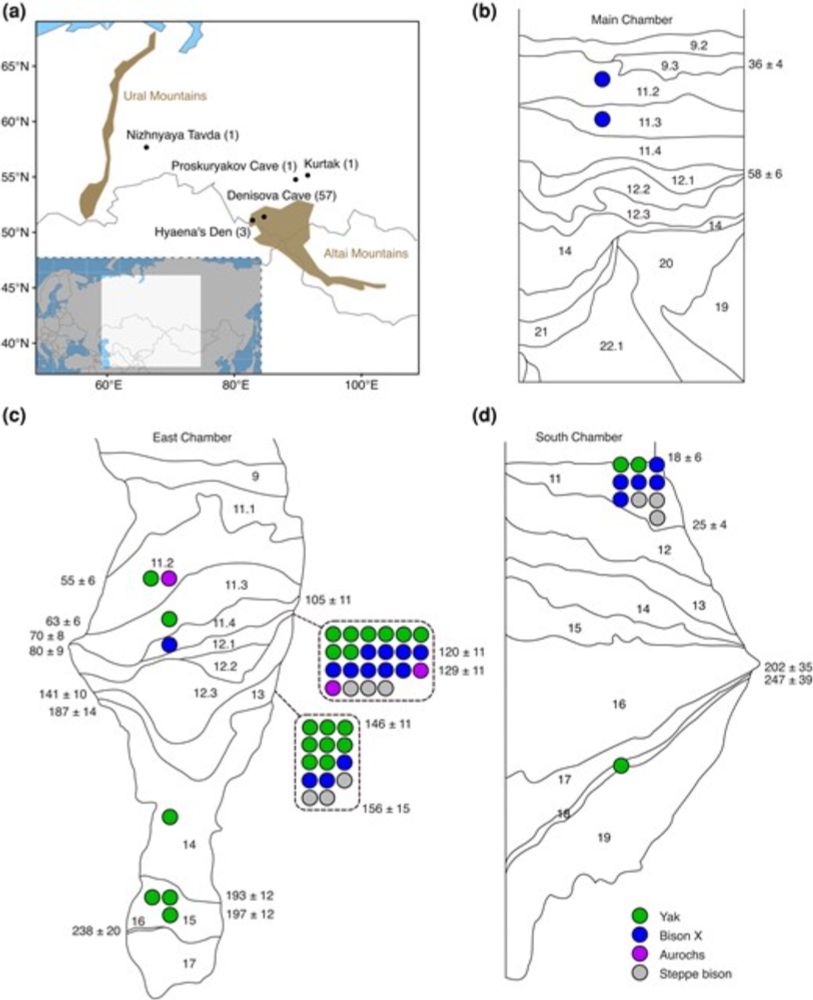
@alexgilardet.bsky.social et al. recovered ancient DNA from bovine bones in the Denisova cave to characterize Pleistocene bovine diversity, identifying the Altai Mountains as a hotspot for bovine diversity.
🔗 doi.org/10.1093/gbe/evaf206
#genome #evolution #aDNA #denisova
🔗 doi.org/10.1093/gbe/evaf206
#genome #evolution #aDNA #denisova

Paleogenomics Reveals a Loss of Bovine Lineages in Mid-latitude Asia Over the Last 200,000 Years
Abstract. Bovines have a complex yet poorly understood evolutionary history that is characterized by admixture and diversity loss during the Late Pleistoce
doi.org
November 24, 2025 at 9:31 AM
@alexgilardet.bsky.social et al. recovered ancient DNA from bovine bones in the Denisova cave to characterize Pleistocene bovine diversity, identifying the Altai Mountains as a hotspot for bovine diversity.
🔗 doi.org/10.1093/gbe/evaf206
#genome #evolution #aDNA #denisova
🔗 doi.org/10.1093/gbe/evaf206
#genome #evolution #aDNA #denisova
R. Yuan & J. Zhang tested whether males had a greater mtDNA mutation load than females - the mother's curse hypothesis - using genotype and phenotype data from the UK Biobank. Their findings do not support the mother's curse hypothesis in humans.
🔗 doi.org/10.1093/gbe/evaf207
#genome #evolution
🔗 doi.org/10.1093/gbe/evaf207
#genome #evolution

Testing the Mother's Curse Hypothesis in Human Mitochondrial Genome Evolution
Abstract. In species where mitochondrial DNA (mtDNA) is maternally inherited such as vertebrates, mtDNA mutations harming males only are not subject to pur
doi.org
November 24, 2025 at 9:22 AM
R. Yuan & J. Zhang tested whether males had a greater mtDNA mutation load than females - the mother's curse hypothesis - using genotype and phenotype data from the UK Biobank. Their findings do not support the mother's curse hypothesis in humans.
🔗 doi.org/10.1093/gbe/evaf207
#genome #evolution
🔗 doi.org/10.1093/gbe/evaf207
#genome #evolution
Reposted by Genome Biology and Evolution

New paper from the lab, where we sequenced the genome of Europe's most venomous snake, Western nose-horned viper (Vipera ammodytes ammodytes)!
Read paper in Genome Biology and Evolution: academic.oup.com/gbe/advance-...
Read paper in Genome Biology and Evolution: academic.oup.com/gbe/advance-...

November 11, 2025 at 2:33 PM
New paper from the lab, where we sequenced the genome of Europe's most venomous snake, Western nose-horned viper (Vipera ammodytes ammodytes)!
Read paper in Genome Biology and Evolution: academic.oup.com/gbe/advance-...
Read paper in Genome Biology and Evolution: academic.oup.com/gbe/advance-...
Reposted by Genome Biology and Evolution

🧬New from @symbionticism.bsky.social's Lab:
The male-killing gene wmk in Wolbachia splits into 5 types with distinct genomic patterns. Variation in copy number and expression helps explain male-biased lethality across hosts.
Read more: academic.oup.com/gbe/article/...
The male-killing gene wmk in Wolbachia splits into 5 types with distinct genomic patterns. Variation in copy number and expression helps explain male-biased lethality across hosts.
Read more: academic.oup.com/gbe/article/...

Evolutionary Diversification and Functions of the Candidate Male Killing Gene wmk
Abstract. Symbiont-mediated male killing (MK) is a mechanism that selectively eliminates male offspring, often by disrupting sex-specific developmental pro
academic.oup.com
November 18, 2025 at 9:47 PM
🧬New from @symbionticism.bsky.social's Lab:
The male-killing gene wmk in Wolbachia splits into 5 types with distinct genomic patterns. Variation in copy number and expression helps explain male-biased lethality across hosts.
Read more: academic.oup.com/gbe/article/...
The male-killing gene wmk in Wolbachia splits into 5 types with distinct genomic patterns. Variation in copy number and expression helps explain male-biased lethality across hosts.
Read more: academic.oup.com/gbe/article/...
Marturano et al. surveyed the presence and biological features of smithRNAs - a novel class of small noncoding RNAs - across Metazoa, identifying their presence in all species studied, including vertebrates, cnidarians, and arthropods.
🔗 doi.org/10.1093/gbe/evaf208
#genome #evolution
🔗 doi.org/10.1093/gbe/evaf208
#genome #evolution

November 21, 2025 at 12:34 PM
Marturano et al. surveyed the presence and biological features of smithRNAs - a novel class of small noncoding RNAs - across Metazoa, identifying their presence in all species studied, including vertebrates, cnidarians, and arthropods.
🔗 doi.org/10.1093/gbe/evaf208
#genome #evolution
🔗 doi.org/10.1093/gbe/evaf208
#genome #evolution
@tywooldr.bsky.social et al. present assemblies for three bear species — the sun, sloth, and Andean bears — and use a whole-genome alignment of all bear species and other carnivores to reconstruct the evolution of Ursidae.
🔗 doi.org/10.1093/gbe/evaf188
#genome #evolution
🔗 doi.org/10.1093/gbe/evaf188
#genome #evolution

Chromosome-scale Genomes Show Rapid Diversification and Ancient Gene Flow Among Bear Species
Abstract. Reconstructions of evolutionary history can be restricted by a lack of high-quality reference genomes. To date, only four of the eight species of
doi.org
November 20, 2025 at 4:46 PM
@tywooldr.bsky.social et al. present assemblies for three bear species — the sun, sloth, and Andean bears — and use a whole-genome alignment of all bear species and other carnivores to reconstruct the evolution of Ursidae.
🔗 doi.org/10.1093/gbe/evaf188
#genome #evolution
🔗 doi.org/10.1093/gbe/evaf188
#genome #evolution
Reposted by Genome Biology and Evolution

Our manuscript on bovine deep-time paleogenomics at Denisova Cave and in the broader mid-latitude Asia is online! doi.org/10.1093/gbe/... 🦬🦴🧬
Main findings in the 🧵 below ⬇️
@cpgsthlm.bsky.social @genomebiolevol.bsky.social #aDNA
Main findings in the 🧵 below ⬇️
@cpgsthlm.bsky.social @genomebiolevol.bsky.social #aDNA
Paleogenomics Reveals a Loss of Bovine Lineages in Mid-latitude Asia Over the Last 200,000 Years
Abstract. Bovines have a complex yet poorly understood evolutionary history that is characterized by admixture and diversity loss during the Late Pleistoce
doi.org
November 20, 2025 at 9:52 AM
Our manuscript on bovine deep-time paleogenomics at Denisova Cave and in the broader mid-latitude Asia is online! doi.org/10.1093/gbe/... 🦬🦴🧬
Main findings in the 🧵 below ⬇️
@cpgsthlm.bsky.social @genomebiolevol.bsky.social #aDNA
Main findings in the 🧵 below ⬇️
@cpgsthlm.bsky.social @genomebiolevol.bsky.social #aDNA
Pegan & Winger tested whether inversions are common within populations without phenotypic polymorphisms in 28 N. American bird species, finding that many polymorphisms are present at balanced frequencies, but possibly segregating neutrally.
🔗 doi.org/10.1093/gbe/evaf205
#genome #evolution #birds
🔗 doi.org/10.1093/gbe/evaf205
#genome #evolution #birds

November 20, 2025 at 12:05 PM
Pegan & Winger tested whether inversions are common within populations without phenotypic polymorphisms in 28 N. American bird species, finding that many polymorphisms are present at balanced frequencies, but possibly segregating neutrally.
🔗 doi.org/10.1093/gbe/evaf205
#genome #evolution #birds
🔗 doi.org/10.1093/gbe/evaf205
#genome #evolution #birds
Grandchamp, @drdomain.bsky.social et al. publish a new Review on commonly used methods for de novo gene detection, address the limitations of nomenclature and detection methods, and establish a de novo gene annotation format to standardize reporting
🔗 doi.org/10.1093/gbe/evaf197
#genome #evolution
🔗 doi.org/10.1093/gbe/evaf197
#genome #evolution

November 19, 2025 at 11:48 AM
Grandchamp, @drdomain.bsky.social et al. publish a new Review on commonly used methods for de novo gene detection, address the limitations of nomenclature and detection methods, and establish a de novo gene annotation format to standardize reporting
🔗 doi.org/10.1093/gbe/evaf197
#genome #evolution
🔗 doi.org/10.1093/gbe/evaf197
#genome #evolution
Reposted by Genome Biology and Evolution

New genome assembly of a land snail🐌🎉
Krishnan et al. present annotated nuclear and mitochondrial genome assemblies of Indrella ampulla, a color polymorphic land snail endemic to the Western Ghats of India. The assembly has N50 of 632 kb, and 93.5% BUSCO completeness.
🔗 doi.org/10.1093/gbe/evaf199
#genome #evolution #snail
🔗 doi.org/10.1093/gbe/evaf199
#genome #evolution #snail

November 19, 2025 at 2:50 AM
New genome assembly of a land snail🐌🎉