



Francesco Di Ciò
@fdi55.bsky.social
Ph.D. Candidate in the social neuroscience lab (ICN, UCL).|| Interested in social cognition, hyperscanning and group behaviour.
Reposted by Francesco Di Ciò

In the moments after the Big Bang, most of the visible matter in the present-day Universe existed as a hot ‘soup’ that included fundamental particles called quarks
go.nature.com/4bz0uZq
go.nature.com/4bz0uZq

Particle collisions cast light on how matter forms from seemingly empty space
Fundamental particles called quarks can be created in quantum-correlated pairs. These correlations can be passed on to larger particles that form from the quarks.
go.nature.com
February 10, 2026 at 9:26 AM
In the moments after the Big Bang, most of the visible matter in the present-day Universe existed as a hot ‘soup’ that included fundamental particles called quarks
go.nature.com/4bz0uZq
go.nature.com/4bz0uZq
Reposted by Francesco Di Ciò

🎉 New paper in Nature Communications 🎉
rdcu.be/e24jT
Does our environment influence how likely we are to help others?
rdcu.be/e24jT
Does our environment influence how likely we are to help others?
Humans are more prosocial in poor foraging environments
Nature Communications - People constantly decide whether to stop what they are doing to do something else. Here, the authors show that the quality of available options has a greater influence on...
rdcu.be
February 10, 2026 at 11:27 AM
🎉 New paper in Nature Communications 🎉
rdcu.be/e24jT
Does our environment influence how likely we are to help others?
rdcu.be/e24jT
Does our environment influence how likely we are to help others?
Reposted by Francesco Di Ciò

💡 Our new #preprint is available online!
How do people adapt their decisions when priorities change?
In our new study, we examine how the way people represent value shapes their ability to adjust in multi-goal environments.
🔗 OSF link: doi.org/10.31234/osf...
It's a thread 🧵
How do people adapt their decisions when priorities change?
In our new study, we examine how the way people represent value shapes their ability to adjust in multi-goal environments.
🔗 OSF link: doi.org/10.31234/osf...
It's a thread 🧵

February 9, 2026 at 2:01 PM
💡 Our new #preprint is available online!
How do people adapt their decisions when priorities change?
In our new study, we examine how the way people represent value shapes their ability to adjust in multi-goal environments.
🔗 OSF link: doi.org/10.31234/osf...
It's a thread 🧵
How do people adapt their decisions when priorities change?
In our new study, we examine how the way people represent value shapes their ability to adjust in multi-goal environments.
🔗 OSF link: doi.org/10.31234/osf...
It's a thread 🧵
Reposted by Francesco Di Ciò

Thrilled to share our latest paper, out now in Science Advances! We explored the development of cooperative behaviors — fairness, trustworthiness, forgiveness, & honesty — across five societies, culturally contextualizing them & seeing how they correlate. (1/5) www.science.org/doi/full/10....

February 7, 2026 at 3:09 PM
Thrilled to share our latest paper, out now in Science Advances! We explored the development of cooperative behaviors — fairness, trustworthiness, forgiveness, & honesty — across five societies, culturally contextualizing them & seeing how they correlate. (1/5) www.science.org/doi/full/10....
Reposted by Francesco Di Ciò

Witness the power of this fully operational Bayesian latent space social relations model - Lecture B05 of Statistical Rethinking 2026. Incremental model construction and testing workflow for dyadic and generalized exchange networks, posterior network simulation, one dank Insane Clown Posse meme.

Statistical Rethinking 2026 Lecture B05 - Social Networks II
YouTube video by Richard McElreath
www.youtube.com
February 6, 2026 at 1:04 PM
Witness the power of this fully operational Bayesian latent space social relations model - Lecture B05 of Statistical Rethinking 2026. Incremental model construction and testing workflow for dyadic and generalized exchange networks, posterior network simulation, one dank Insane Clown Posse meme.
Reposted by Francesco Di Ciò

Imagination in bonobos!
I am thrilled to share a new paper w/ Amalia Bastos, out now in @science.org
We provide the first experimental evidence that a nonhuman animal can follow along a pretend scenario & track imaginary objects. Work w/ Kanzi, the bonobo, at Ape Initiative
youtu.be/NUSHcQQz2Ko
I am thrilled to share a new paper w/ Amalia Bastos, out now in @science.org
We provide the first experimental evidence that a nonhuman animal can follow along a pretend scenario & track imaginary objects. Work w/ Kanzi, the bonobo, at Ape Initiative
youtu.be/NUSHcQQz2Ko

Apes Share Human Ability to Imagine
YouTube video by Johns Hopkins University
youtu.be
February 5, 2026 at 7:18 PM
Imagination in bonobos!
I am thrilled to share a new paper w/ Amalia Bastos, out now in @science.org
We provide the first experimental evidence that a nonhuman animal can follow along a pretend scenario & track imaginary objects. Work w/ Kanzi, the bonobo, at Ape Initiative
youtu.be/NUSHcQQz2Ko
I am thrilled to share a new paper w/ Amalia Bastos, out now in @science.org
We provide the first experimental evidence that a nonhuman animal can follow along a pretend scenario & track imaginary objects. Work w/ Kanzi, the bonobo, at Ape Initiative
youtu.be/NUSHcQQz2Ko
Reposted by Francesco Di Ciò

Our review on social interaction style in autism is finally published!
journals.sagepub.com/doi/10.1177/...
journals.sagepub.com/doi/10.1177/...
February 3, 2026 at 3:28 PM
Our review on social interaction style in autism is finally published!
journals.sagepub.com/doi/10.1177/...
journals.sagepub.com/doi/10.1177/...
Reposted by Francesco Di Ciò

HUGE EUROPA NEWS!!
OLD DATA HAS BEEN ANALYZED AND SHOWS THE PRESENCE OF AMONIA-BEARING COMPOUNDS ON EUROPA’S SURFACE!!!
THIS IS HUGE FOR THE SEARCH FOR LIFE!!
OLD DATA HAS BEEN ANALYZED AND SHOWS THE PRESENCE OF AMONIA-BEARING COMPOUNDS ON EUROPA’S SURFACE!!!
THIS IS HUGE FOR THE SEARCH FOR LIFE!!


January 29, 2026 at 8:55 PM
HUGE EUROPA NEWS!!
OLD DATA HAS BEEN ANALYZED AND SHOWS THE PRESENCE OF AMONIA-BEARING COMPOUNDS ON EUROPA’S SURFACE!!!
THIS IS HUGE FOR THE SEARCH FOR LIFE!!
OLD DATA HAS BEEN ANALYZED AND SHOWS THE PRESENCE OF AMONIA-BEARING COMPOUNDS ON EUROPA’S SURFACE!!!
THIS IS HUGE FOR THE SEARCH FOR LIFE!!
Reposted by Francesco Di Ciò

🧵 New paper in @NatureComms
Feedback-induced attitudinal changes in risk preferences
Nasioulas, Potier, Cerrotti, Lebreton & me (2026)
Does feedback really improve risky decision-making? Short answer: no! it changes attitudes, not learning. 👇
rdcu.be/e0VcO
Feedback-induced attitudinal changes in risk preferences
Nasioulas, Potier, Cerrotti, Lebreton & me (2026)
Does feedback really improve risky decision-making? Short answer: no! it changes attitudes, not learning. 👇
rdcu.be/e0VcO

Feedback-induced attitudinal changes in risk preferences
Nature Communications - Normative theory predicts that feedback should not affect decisions under risk, but past findings disagree. Here, the authors show that feedback shifts risk-taking by...
rdcu.be
January 27, 2026 at 12:12 PM
🧵 New paper in @NatureComms
Feedback-induced attitudinal changes in risk preferences
Nasioulas, Potier, Cerrotti, Lebreton & me (2026)
Does feedback really improve risky decision-making? Short answer: no! it changes attitudes, not learning. 👇
rdcu.be/e0VcO
Feedback-induced attitudinal changes in risk preferences
Nasioulas, Potier, Cerrotti, Lebreton & me (2026)
Does feedback really improve risky decision-making? Short answer: no! it changes attitudes, not learning. 👇
rdcu.be/e0VcO
Reposted by Francesco Di Ciò

New in Nature Neuroscience: We developed a flexible model that reveals how animals learn tasks—uncovering stages, sudden insights, and gradual improvements unique to each animal.
Learning isn't monotonic, and our model captures that complexity 🐭📊
www.nature.com/articles/s41...
Learning isn't monotonic, and our model captures that complexity 🐭📊
www.nature.com/articles/s41...

Infinite hidden Markov models can dissect the complexities of learning - Nature Neuroscience
Bruijns et al. present a modeling tool that enables the tracking of learning dynamics across subjects to reveal how behaviors emerge and adapt. Applying the tool to a decision-making task in mice unco...
www.nature.com
January 20, 2026 at 2:35 PM
New in Nature Neuroscience: We developed a flexible model that reveals how animals learn tasks—uncovering stages, sudden insights, and gradual improvements unique to each animal.
Learning isn't monotonic, and our model captures that complexity 🐭📊
www.nature.com/articles/s41...
Learning isn't monotonic, and our model captures that complexity 🐭📊
www.nature.com/articles/s41...
Reposted by Francesco Di Ciò
Introducing a new scientific computing library: syntropy.
Syntropy is a comprehensive package for information theory, aimed at both theoreticians and data analysts working on discrete, continuous, and mixed data.
1/N
github.com/thosvarley/s...
Syntropy is a comprehensive package for information theory, aimed at both theoreticians and data analysts working on discrete, continuous, and mixed data.
1/N
github.com/thosvarley/s...

GitHub - thosvarley/syntropy: A python package for information-theoretic analysis of discrete and continuous data.
A python package for information-theoretic analysis of discrete and continuous data. - thosvarley/syntropy
github.com
January 19, 2026 at 3:30 PM
Introducing a new scientific computing library: syntropy.
Syntropy is a comprehensive package for information theory, aimed at both theoreticians and data analysts working on discrete, continuous, and mixed data.
1/N
github.com/thosvarley/s...
Syntropy is a comprehensive package for information theory, aimed at both theoreticians and data analysts working on discrete, continuous, and mixed data.
1/N
github.com/thosvarley/s...
Reposted by Francesco Di Ciò

📖Published!
STbayes: An R package for creating, fitting and understanding Bayesian models of social transmission
This framework can be used to infer complex transmission rules🖥️ 🧪
Read more:
STbayes: An R package for creating, fitting and understanding Bayesian models of social transmission
This framework can be used to infer complex transmission rules🖥️ 🧪
Read more:
buff.ly
January 15, 2026 at 8:15 AM
📖Published!
STbayes: An R package for creating, fitting and understanding Bayesian models of social transmission
This framework can be used to infer complex transmission rules🖥️ 🧪
Read more:
STbayes: An R package for creating, fitting and understanding Bayesian models of social transmission
This framework can be used to infer complex transmission rules🖥️ 🧪
Read more:
Reposted by Francesco Di Ciò

New paper in Imaging Neuroscience by Hua Xie, Seok-Jun Hong, et al:
Local-global functional gradients of the thalamus capturing different aspects of thalamic structure and function
doi.org/10.1162/IMAG...
Local-global functional gradients of the thalamus capturing different aspects of thalamic structure and function
doi.org/10.1162/IMAG...

January 14, 2026 at 9:13 PM
New paper in Imaging Neuroscience by Hua Xie, Seok-Jun Hong, et al:
Local-global functional gradients of the thalamus capturing different aspects of thalamic structure and function
doi.org/10.1162/IMAG...
Local-global functional gradients of the thalamus capturing different aspects of thalamic structure and function
doi.org/10.1162/IMAG...
Reposted by Francesco Di Ciò

Our new paper in Hunter-Gatherer Research!
We explored women’s decision-making power within households in two subsistence communities with different gender norms (BaYaka foragers & Bandongo fisher-farmers) in the Congolese rainforest ✨
www.liverpooluniversitypress.co.uk/doi/abs/10.3...
We explored women’s decision-making power within households in two subsistence communities with different gender norms (BaYaka foragers & Bandongo fisher-farmers) in the Congolese rainforest ✨
www.liverpooluniversitypress.co.uk/doi/abs/10.3...

"Older women in both communities report higher autonomy than younger women. Both BaYaka and Bandongo women make decisions on food sharing. However, BaYaka women report greater control over financial and healthcare decisions than Bandongo women, who often share decision-making with their husbands"

Women’s self-reported autonomy in household decision-making varies between BaYaka foragers and Bandongo farmers in the Congo Basin | Hunter Gatherer Research
Women’s decision-making power within households is a critical aspect of gender equality, influencing the well-being of household members and family dynamics. This study examines women’s perceived autonomy in household decision-making among BaYaka hunter-...
www.liverpooluniversitypress.co.uk
January 14, 2026 at 8:46 AM
Our new paper in Hunter-Gatherer Research!
We explored women’s decision-making power within households in two subsistence communities with different gender norms (BaYaka foragers & Bandongo fisher-farmers) in the Congolese rainforest ✨
www.liverpooluniversitypress.co.uk/doi/abs/10.3...
We explored women’s decision-making power within households in two subsistence communities with different gender norms (BaYaka foragers & Bandongo fisher-farmers) in the Congolese rainforest ✨
www.liverpooluniversitypress.co.uk/doi/abs/10.3...
Reposted by Francesco Di Ciò

A hitchhiker’s guide to information theoretical measures in psychology
by @nielsvs.bsky.social with me and Yves Rosseel
authors.elsevier.com/c/1mOwr53na-...
osf.io/preprints/ps...
by @nielsvs.bsky.social with me and Yves Rosseel
authors.elsevier.com/c/1mOwr53na-...
osf.io/preprints/ps...

January 7, 2026 at 9:02 AM
A hitchhiker’s guide to information theoretical measures in psychology
by @nielsvs.bsky.social with me and Yves Rosseel
authors.elsevier.com/c/1mOwr53na-...
osf.io/preprints/ps...
by @nielsvs.bsky.social with me and Yves Rosseel
authors.elsevier.com/c/1mOwr53na-...
osf.io/preprints/ps...
Reposted by Francesco Di Ciò
Re-submitting the paper to other journals
January 5, 2026 at 7:28 PM
Re-submitting the paper to other journals
Reposted by Francesco Di Ciò
My co-authors and I are happy to present our framework "Collective Intelligence as Collective Information Processing (CIP)."
Here we propose decomposing different information processing mechanisms to unify disparate phenomena traditionally classified as "collective intelligence."
Here we propose decomposing different information processing mechanisms to unify disparate phenomena traditionally classified as "collective intelligence."


December 30, 2025 at 6:35 PM
My co-authors and I are happy to present our framework "Collective Intelligence as Collective Information Processing (CIP)."
Here we propose decomposing different information processing mechanisms to unify disparate phenomena traditionally classified as "collective intelligence."
Here we propose decomposing different information processing mechanisms to unify disparate phenomena traditionally classified as "collective intelligence."
Reposted by Francesco Di Ciò

🚨 Excited to end the year with a new preprint w/ Wenning Deng (not on bsky) and Dean Mobbs @fearbrain.bsky.social 🎉 🎉
"Blame and Compromise During Risky Dyadic Foraging" osf.io/preprints/ps...
Feedback is very welcome! Thread: 🧵 1/n
"Blame and Compromise During Risky Dyadic Foraging" osf.io/preprints/ps...
Feedback is very welcome! Thread: 🧵 1/n


December 22, 2025 at 4:34 PM
🚨 Excited to end the year with a new preprint w/ Wenning Deng (not on bsky) and Dean Mobbs @fearbrain.bsky.social 🎉 🎉
"Blame and Compromise During Risky Dyadic Foraging" osf.io/preprints/ps...
Feedback is very welcome! Thread: 🧵 1/n
"Blame and Compromise During Risky Dyadic Foraging" osf.io/preprints/ps...
Feedback is very welcome! Thread: 🧵 1/n
Reposted by Francesco Di Ciò
New paper for #neurips2025!
AI models adjust millions of internal settings to get better at a task. But how are these adjustments determined? For decades, we've mostly figured this out through trial & error.
We took a different approach...🧵 (1/6)
🔗 openreview.net/forum?id=oMi...
AI models adjust millions of internal settings to get better at a task. But how are these adjustments determined? For decades, we've mostly figured this out through trial & error.
We took a different approach...🧵 (1/6)
🔗 openreview.net/forum?id=oMi...

December 16, 2025 at 7:29 PM
New paper for #neurips2025!
AI models adjust millions of internal settings to get better at a task. But how are these adjustments determined? For decades, we've mostly figured this out through trial & error.
We took a different approach...🧵 (1/6)
🔗 openreview.net/forum?id=oMi...
AI models adjust millions of internal settings to get better at a task. But how are these adjustments determined? For decades, we've mostly figured this out through trial & error.
We took a different approach...🧵 (1/6)
🔗 openreview.net/forum?id=oMi...
Reposted by Francesco Di Ciò

🧪 Friends of all backgrounds: please enjoy this new paper whose findings “reveal that bees engage higher-order cognitive mechanisms under temporal uncertainty, suggesting that core features of awareness may be evolutionarily conserved across distant taxa.”
Yeah. 🫢
www.cell.com/iscience/ful...
Yeah. 🫢
www.cell.com/iscience/ful...

Serotonergic-dependent awareness is required for trace conditioning in honeybees
Entomology; Neuroscience; Behavioral neuroscience; Sensory neuroscience; Cognitive
neuroscience
www.cell.com
December 13, 2025 at 4:25 PM
🧪 Friends of all backgrounds: please enjoy this new paper whose findings “reveal that bees engage higher-order cognitive mechanisms under temporal uncertainty, suggesting that core features of awareness may be evolutionarily conserved across distant taxa.”
Yeah. 🫢
www.cell.com/iscience/ful...
Yeah. 🫢
www.cell.com/iscience/ful...
Reposted by Francesco Di Ciò
New paper in Imaging Neuroscience by Hecheng Jin, Ting Xu, et al:
Is Pearson’s correlation coefficient enough for functional connectivity in fMRI?
doi.org/10.1162/IMAG...
Is Pearson’s correlation coefficient enough for functional connectivity in fMRI?
doi.org/10.1162/IMAG...

December 8, 2025 at 11:20 PM
New paper in Imaging Neuroscience by Hecheng Jin, Ting Xu, et al:
Is Pearson’s correlation coefficient enough for functional connectivity in fMRI?
doi.org/10.1162/IMAG...
Is Pearson’s correlation coefficient enough for functional connectivity in fMRI?
doi.org/10.1162/IMAG...
Reposted by Francesco Di Ciò
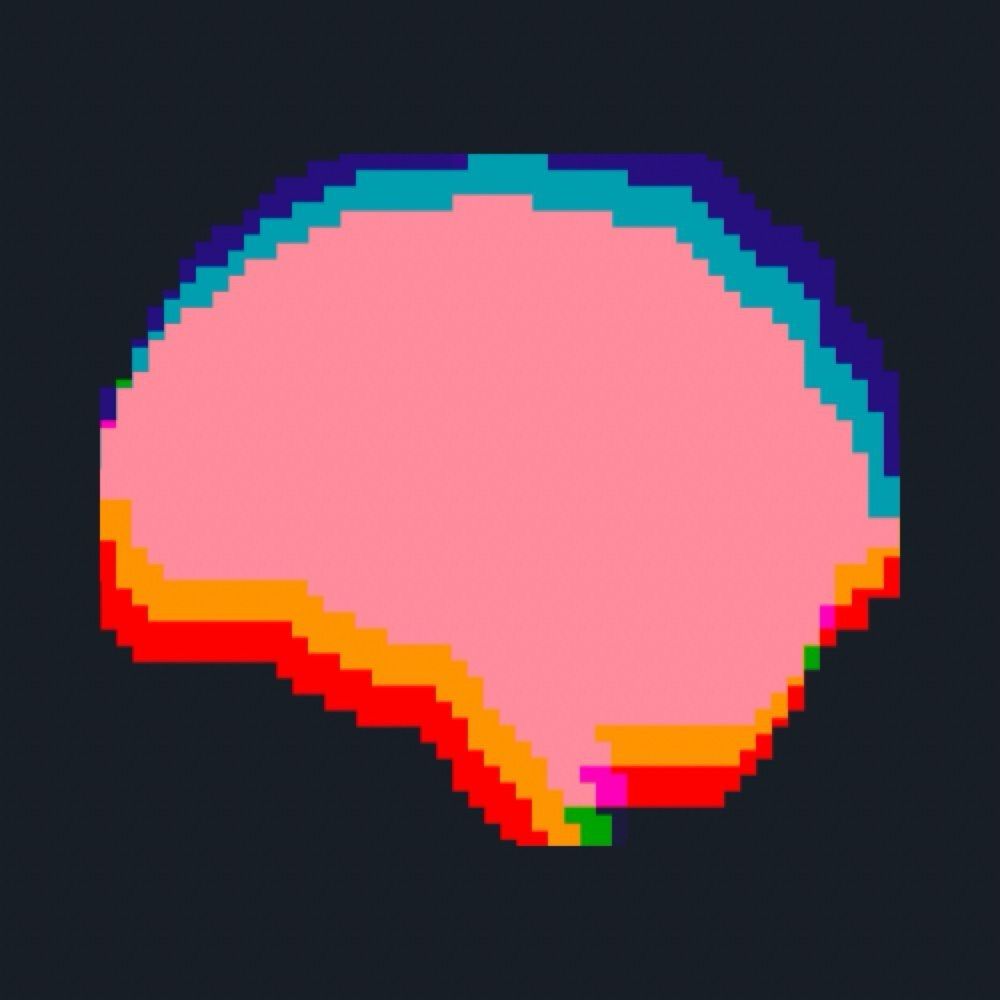
Speech decoding on the basis of single words has so far been limited to intracranial recordings. Scientists demonstrated the feasibility of non-invasive language decoding using EEG and MEG, finding that more training data consistently increases model performance
#neuroskyence #compneuro #neuroAI
#neuroskyence #compneuro #neuroAI

Towards decoding individual words from non-invasive brain recordings - Nature Communications
While deep learning has enabled the decoding of language from intracranial brain recordings, achieving this with non-invasive recordings remains an open challenge. Here the authors introduce a deep le...
www.nature.com
December 5, 2025 at 8:40 PM
Speech decoding on the basis of single words has so far been limited to intracranial recordings. Scientists demonstrated the feasibility of non-invasive language decoding using EEG and MEG, finding that more training data consistently increases model performance
#neuroskyence #compneuro #neuroAI
#neuroskyence #compneuro #neuroAI
Reposted by Francesco Di Ciò

New paper out in Phil Trans with Angel Jimenez, Keith Jensen and Lei Chang
From information free-riding to information sharing: how have humans solved the cooperative dilemma at the heart of cumulative cultural evolution?
royalsocietypublishing.org/rstb/article...
From information free-riding to information sharing: how have humans solved the cooperative dilemma at the heart of cumulative cultural evolution?
royalsocietypublishing.org/rstb/article...

From information free-riding to information sharing: how have humans solved the cooperative dilemma at the heart of cumulative cultural evolution?
Abstract. Cumulative cultural evolution, where populations accumulate ever-improving knowledge, technologies and social customs, is arguably a unique featu
royalsocietypublishing.org
December 4, 2025 at 10:23 AM
New paper out in Phil Trans with Angel Jimenez, Keith Jensen and Lei Chang
From information free-riding to information sharing: how have humans solved the cooperative dilemma at the heart of cumulative cultural evolution?
royalsocietypublishing.org/rstb/article...
From information free-riding to information sharing: how have humans solved the cooperative dilemma at the heart of cumulative cultural evolution?
royalsocietypublishing.org/rstb/article...
Reposted by Francesco Di Ciò

My very first paper is finally out in @pnas.org, with Catherine Tallon-Baudry and Patrick Haggard! Interoception, exteroception, the self and more, it's got it all.
Also it should go open access at some point
www.pnas.org/doi/10.1073/...
Also it should go open access at some point
www.pnas.org/doi/10.1073/...

Interoception vs. Exteroception: Cardiac interoception competes with tactile perception, yet also facilitates self-relevance encoding | PNAS
Internal bodily signals, notably the heartbeat, influence our perception of the external
world—but the nature of this influence remains unclear. Di...
www.pnas.org
December 3, 2025 at 9:35 AM
My very first paper is finally out in @pnas.org, with Catherine Tallon-Baudry and Patrick Haggard! Interoception, exteroception, the self and more, it's got it all.
Also it should go open access at some point
www.pnas.org/doi/10.1073/...
Also it should go open access at some point
www.pnas.org/doi/10.1073/...
Reposted by Francesco Di Ciò

This is now out in Cerebral Cortex.
Open Access: academic.oup.com/cercor/artic...
@antoniahamilton.bsky.social @gabriellavigliocco.bsky.social Uzair Hakim @paola182.bsky.social Danny Thompkings @fdi55.bsky.social
Open Access: academic.oup.com/cercor/artic...
@antoniahamilton.bsky.social @gabriellavigliocco.bsky.social Uzair Hakim @paola182.bsky.social Danny Thompkings @fdi55.bsky.social
December 2, 2025 at 12:19 PM
This is now out in Cerebral Cortex.
Open Access: academic.oup.com/cercor/artic...
@antoniahamilton.bsky.social @gabriellavigliocco.bsky.social Uzair Hakim @paola182.bsky.social Danny Thompkings @fdi55.bsky.social
Open Access: academic.oup.com/cercor/artic...
@antoniahamilton.bsky.social @gabriellavigliocco.bsky.social Uzair Hakim @paola182.bsky.social Danny Thompkings @fdi55.bsky.social