


Shark scientist since 1986. Passionate about sharks and rays, and their conservation and management. Lapsed academic.

Reposted by Colin A. Simpfendorfer
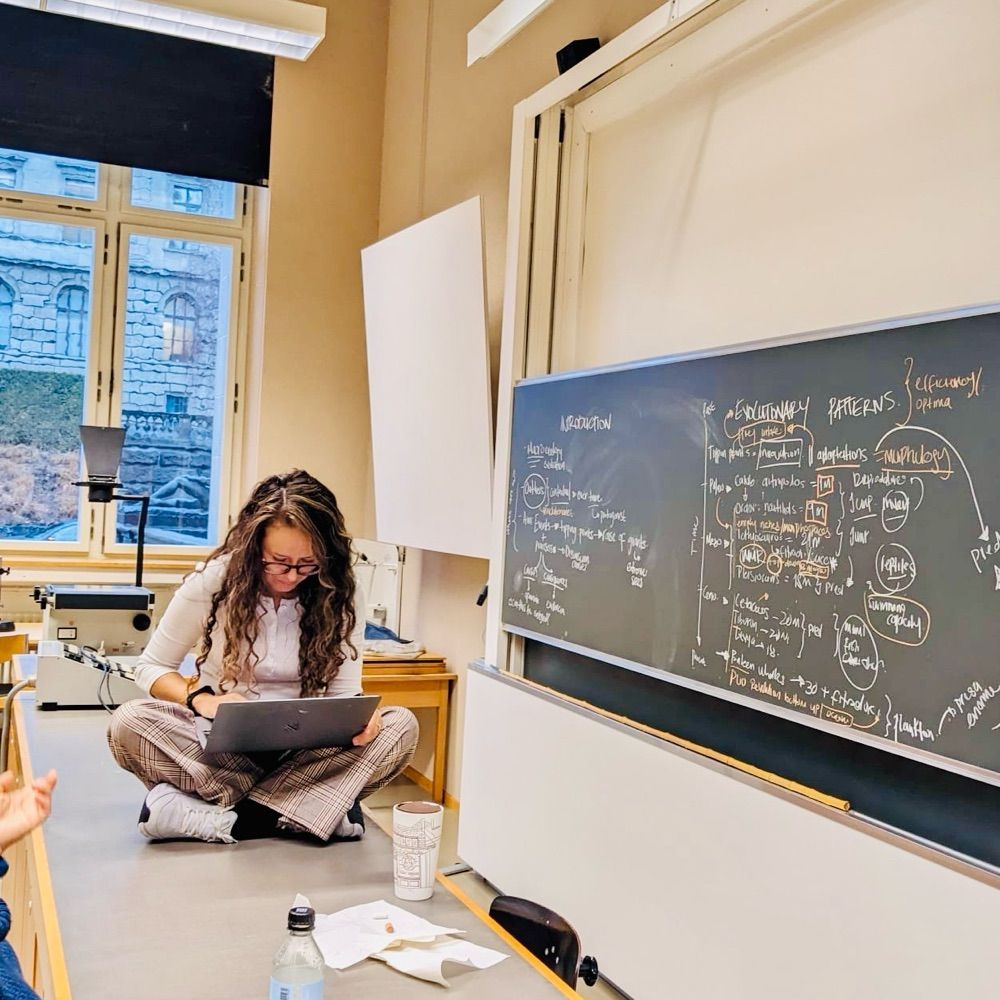

We reconstructed the 145-myr diversity of sharks & rays using deep learning, unveiling hidden patterns:
- modern diversity levels by the Cretaceous 📈
- small decline in the K/Pg 🤏
- a peak in the Eocene 🌄
- a long-term decline towards the present �
www.cell.com/current-biol...
Reposted by Colin A. Simpfendorfer, Julie L. Lockwood


Reposted by Colin A. Simpfendorfer, Patrícia Charvet


Fisheries management, trade rules, compliance, and demand must align to reduce fishing mortality at scale.
Implementation is the bottleneck.
@hollieboothie.bsky.social
@sharkcolin.bsky.social
Reposted by Colin A. Simpfendorfer, Patrícia Charvet

Where fishing mortality has been reduced — through catch limits, retention bans, or spatial protection — shark and ray populations are stabilizing or recovering.
Recoveries documented for wide-ranging and restricted-range species @charlie-huveneers.bsky.social
Reposted by Colin A. Simpfendorfer, Patrícia Charvet

Where management is complete, risk is lower and recovery is possible.
@hollieboothie.bsky.social
@sharkcolin.bsky.social
Read the paper here: rdcu.be/eZ9n9
Reposted by Colin A. Simpfendorfer, Patrícia Charvet

Fishing mortality is the primary driver &
management completeness (for guitarfishes & requiem sharks) stands at ~49% globally.
@sammsherman27.bsky.social
@vanderwright.bsky.social
Read the paper here: rdcu.be/eZ9n9
Reposted by Colin A. Simpfendorfer, Patrícia Charvet, Vincent Raoult

The crisis isn’t just fishing — it’s invisible fishing.
Much shark & ray catch is under-reported, aggregated, or mislabeled, masking real mortality & delaying management.
What we don’t measure, we don’t manage.
@cgmull.bsky.social
@nathanpacoureau.bsky.social
Reposted by Colin A. Simpfendorfer, Patrícia Charvet

- Global abundance has been fished down by 65%,
- Now 37.5% of species are threatened,
- The current extinction rate is 25–250 times greater than the background fossil record, with greatest losses in tropical coastal seas. #BiodiversityTargets

Read the paper here: rdcu.be/eZ9n9
@sfu.ca
@sfubiosciences.bsky.social
@earth2ocean.bsky.social
@iucnshark.bsky.social @nickdulvy.bsky.social @sharks-int.bsky.social

"The critically endangered bowmouth guitarfish (Rhina ancylostoma) in the open ocean with an associated tuna school"
dx.doi.org/10.1007/s125...
doi.org/10.1017/S002...

link.springer.com/article/10.1...
@imas-utas.bsky.social @iucnshark.bsky.social

"Bending back the curve of shark and ray biodiversity loss" in @natrevbiodiv.nature.com
go.nature.com/4jXOnaC
What will it take to reverse shark biodiversity loss? Find out in our new article out today.
@nickdulvy.bsky.social @iucnshark.bsky.social
Reposted by Colin A. Simpfendorfer


careers.alaska.edu/jobs/assista...
Reposted by Colin A. Simpfendorfer


Come join Dr. Jan Reubens and his team at the Flanders Marine Institute (@vliz.be) as a Fish Behavioral Ecology Researcher!
🔗Read more about the position and apply here: www.vliz.be/en/jobs/vliz...
❗Deadline 25 January, 2026
Reposted by Colin A. Simpfendorfer


This marks a major victory for sharks and rays as all proposals have been adopted!
#CITES #CoP20 #gulpershark #shark #ray #chimaera #biodiversity #conservation #trade #conference
Reposted by Colin A. Simpfendorfer


🔗 bit.ly/3MkLMKQ
#NCRISImpact
Reposted by Colin A. Simpfendorfer, Stephen D. Murphy

Want to work with tracking data from migratory species to identify ecological corridors and help inform biodiversity conservation priorities?
Apply by Dec 7th!
@bioprotectproject.bsky.social
tinyurl.com/ytfmfhfc
Reposted by Colin A. Simpfendorfer, Stacy D. VanDeveer

In English, French, and Spanish. Annex I is the actual report.
www.cms.int/document/dee...
Reposted by Colin A. Simpfendorfer


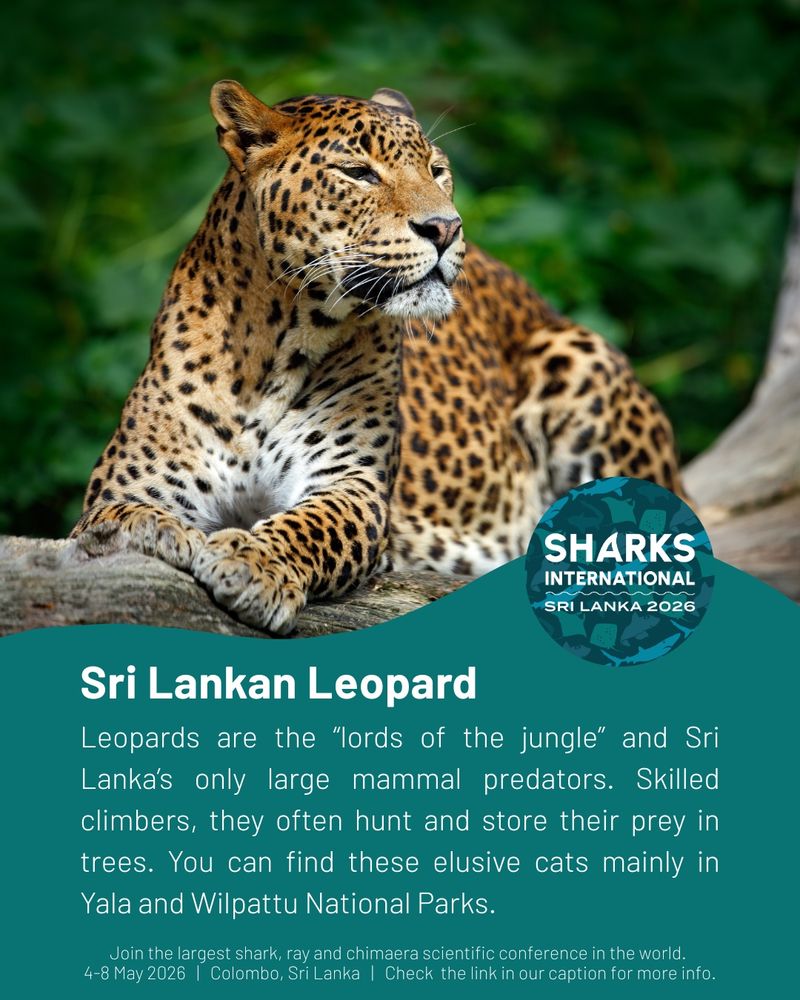


Sri Lanka is a global biodiversity hotspot, home to unique and endemic species, including around 140 mammals, 400 birds, and 170 reptiles.
🦈 SI2026
📅 Dates: 4-8 May
📍 Location: Colombo, Sri Lanka
🔗 si2026.org
Reposted by Colin A. Simpfendorfer

Being guilty of last minute submissions ourselves, we felt that a few more days would help those of you processing your abstract ideas!
👉 si2026.org
Reposted by Colin A. Simpfendorfer


See the full list here: clarivate.com/highly-cited...