




Simon Fisher
@profsimonfisher.bsky.social
Director of Language & Genetics at Max Planck Institute, Nijmegen.
Tracing the complex connections between genes, brains, speech & language.
Website: https://www.mpi.nl/people/fisher-simon-e
ORCID: https://orcid.org/0000-0002-3132-1996
Tracing the complex connections between genes, brains, speech & language.
Website: https://www.mpi.nl/people/fisher-simon-e
ORCID: https://orcid.org/0000-0002-3132-1996
Pinned

Remember when you first learned about genetics at school? All those fascinating examples of human traits that are each apparently determined by just a single gene? Time to check in on some of your favourites to see how they’re doing. 🧬🧵🧪 1/n
In interests of balance, I note that ancient DNA, the gift that keeps giving, is also serving the dog lovers among you. See this new study of 2 canines with gray wolf genetic ancestry from a human archaeological site (3-5kya) on a remote island in Baltic Sea, by @pontus-skoglund.bsky.social & co:🧬🐶🧪

Gray wolves in an anthropogenic context on a small island in prehistoric Scandinavia | PNAS
Dogs were domesticated at least once from a yet-unidentified wolf population at least
~15,000 y ago. However, how domestication took place is a top...
www.pnas.org
November 28, 2025 at 12:43 PM
In interests of balance, I note that ancient DNA, the gift that keeps giving, is also serving the dog lovers among you. See this new study of 2 canines with gray wolf genetic ancestry from a human archaeological site (3-5kya) on a remote island in Baltic Sea, by @pontus-skoglund.bsky.social & co:🧬🐶🧪
“Analysis of 87 ancient & modern cat genomes suggests that domestic cats did not spread to Europe with Neolithic farmers. Conversely, they were introduced to Europe around 2000 years ago, probably from North Africa....“ De Martino et al in @science.org. Ancient DNA + cats = science purrfection. 🧬🐱🧪

The dispersal of domestic cats from North Africa to Europe around 2000 years ago
The domestic cat (Felis catus) descends from the African wildcat Felis lybica lybica. Its global distribution alongside humans testifies to its successful adaptation to anthropogenic environments. Unc...
www.science.org
November 27, 2025 at 7:11 PM
“Analysis of 87 ancient & modern cat genomes suggests that domestic cats did not spread to Europe with Neolithic farmers. Conversely, they were introduced to Europe around 2000 years ago, probably from North Africa....“ De Martino et al in @science.org. Ancient DNA + cats = science purrfection. 🧬🐱🧪
Reposted by Simon Fisher
Origins of language, one of humanity’s most distinctive traits, may be best explained as a unique convergence of multiple capacities each with its own evolutionary history, involving intertwined roles of biology & culture. This framing can expand research horizons. A 🧵 on our @science.org paper.🧪1/n

What enables human language? A biocultural framework
Explaining the origins of language is a key challenge in understanding ourselves as a species. We present an empirical framework that draws on synergies across fields to facilitate robust studies of l...
www.science.org
November 23, 2025 at 11:54 AM
Origins of language, one of humanity’s most distinctive traits, may be best explained as a unique convergence of multiple capacities each with its own evolutionary history, involving intertwined roles of biology & culture. This framing can expand research horizons. A 🧵 on our @science.org paper.🧪1/n
Reposted by Simon Fisher

Happy World Linguistics Day! I write about #language in the key of narrative non-fiction; you might find my books interesting! A thread --
#lingsky #langsky #linguistics
#lingsky #langsky #linguistics

November 26, 2025 at 9:40 AM
Happy World Linguistics Day! I write about #language in the key of narrative non-fiction; you might find my books interesting! A thread --
#lingsky #langsky #linguistics
#lingsky #langsky #linguistics
You've never truly lived until you've tried explaining to an uninterested colleague why “Buffalo buffalo Buffalo buffalo buffalo buffalo Buffalo buffalo“ is indeed a grammatically correct sentence.
November 26, 2025 at 9:12 AM
You've never truly lived until you've tried explaining to an uninterested colleague why “Buffalo buffalo Buffalo buffalo buffalo buffalo Buffalo buffalo“ is indeed a grammatically correct sentence.
“Core aspects of language: it is inherently multimodal & semiotically diverse; it functions as a tool for semantic, pragmatic, & social inference; processes of interaction & transmission give rise to its central design features“ @symbolicstorage.bsky.social et al in @cp-trendscognsci.bsky.social:👇🧪

The ‘design features’ of language revisited
Language is often regarded as a defining trait of our species, but what are its core
properties? In 1960, Hockett published ‘The origin of speech’ enumerating 13 design
features presumed to be common ...
www.cell.com
November 25, 2025 at 8:37 PM
“Core aspects of language: it is inherently multimodal & semiotically diverse; it functions as a tool for semantic, pragmatic, & social inference; processes of interaction & transmission give rise to its central design features“ @symbolicstorage.bsky.social et al in @cp-trendscognsci.bsky.social:👇🧪
Testing 191 proposed linguistic universals with methods that account for genealogical descent & geographical proximity: “despite vast design space of possible grammars, languages don't evolve entirely at random. Shared cognitive/communicative pressures repeatedly push towards similar solutions.“👇🧪

Enduring constraints on grammar revealed by Bayesian spatiophylogenetic analyses - Nature Human Behaviour
Despite their great diversity, human languages are shaped by recurring grammatical universals. Verkerk et al. show that about one-third of the proposed universals hold cross-linguistically through ana...
www.nature.com
November 24, 2025 at 5:40 PM
Testing 191 proposed linguistic universals with methods that account for genealogical descent & geographical proximity: “despite vast design space of possible grammars, languages don't evolve entirely at random. Shared cognitive/communicative pressures repeatedly push towards similar solutions.“👇🧪
A generalizable framework for rare disease variant interpretation, especially in singleton cases, demonstrating utility of calibrated, evolution-informed scoring models for clinical genomics. In @natgenet.nature.com, from labs of Mafalda Dias, @jonnyfrazer.bsky.social & @deboramarks.bsky.social.🧬🧪👇

Proteome-wide model for human disease genetics - Nature Genetics
popEVE is a proteome-wide deep generative model to identify and predict pathogenicity of missense mutations causing genetic disorders.
www.nature.com
November 24, 2025 at 3:11 PM
A generalizable framework for rare disease variant interpretation, especially in singleton cases, demonstrating utility of calibrated, evolution-informed scoring models for clinical genomics. In @natgenet.nature.com, from labs of Mafalda Dias, @jonnyfrazer.bsky.social & @deboramarks.bsky.social.🧬🧪👇
Reposted by Simon Fisher

This overview dovetails very nicely with the complementary, more historical and theoretical (albeit short) review of the study of language evolution in this entry in the Open Encyclopedia of Cognitive Science (open access for all): oecs.mit.edu/pub/18miikqb/

Language Evolution
oecs.mit.edu
November 23, 2025 at 11:07 PM
This overview dovetails very nicely with the complementary, more historical and theoretical (albeit short) review of the study of language evolution in this entry in the Open Encyclopedia of Cognitive Science (open access for all): oecs.mit.edu/pub/18miikqb/
If you are unable to download the full version of our newly published language evolution article in Science, there is a link for direct free access on the Max Planck Institute website here:
November 23, 2025 at 7:09 PM
If you are unable to download the full version of our newly published language evolution article in Science, there is a link for direct free access on the Max Planck Institute website here:
Origins of language, one of humanity’s most distinctive traits, may be best explained as a unique convergence of multiple capacities each with its own evolutionary history, involving intertwined roles of biology & culture. This framing can expand research horizons. A 🧵 on our @science.org paper.🧪1/n
What enables human language? A biocultural framework
Explaining the origins of language is a key challenge in understanding ourselves as a species. We present an empirical framework that draws on synergies across fields to facilitate robust studies of l...
www.science.org
November 23, 2025 at 11:54 AM
Origins of language, one of humanity’s most distinctive traits, may be best explained as a unique convergence of multiple capacities each with its own evolutionary history, involving intertwined roles of biology & culture. This framing can expand research horizons. A 🧵 on our @science.org paper.🧪1/n
Reposted by Simon Fisher
Current me: It's only one more project/talk/paper/review...
Future me: Don't do this, I beg you.
Current me: Super interesting, could find a way to fit it in...
Future me: C'mon, remember the rule, just say no!
Current me: & loads of time before the deadline...
Future me: Wait, can you even hear me?
Future me: Don't do this, I beg you.
Current me: Super interesting, could find a way to fit it in...
Future me: C'mon, remember the rule, just say no!
Current me: & loads of time before the deadline...
Future me: Wait, can you even hear me?
January 17, 2025 at 4:02 PM
Current me: It's only one more project/talk/paper/review...
Future me: Don't do this, I beg you.
Current me: Super interesting, could find a way to fit it in...
Future me: C'mon, remember the rule, just say no!
Current me: & loads of time before the deadline...
Future me: Wait, can you even hear me?
Future me: Don't do this, I beg you.
Current me: Super interesting, could find a way to fit it in...
Future me: C'mon, remember the rule, just say no!
Current me: & loads of time before the deadline...
Future me: Wait, can you even hear me?
Advances in genomics are giving exciting new perspectives on biology of speech, language & reading. My latest peer-reviewed paper is a tutorial, guiding readers from different backgrounds through the history of the field, current state-of-the-art, & where we’re heading. A taster in this thread.🧪
1/n
1/n

Genomic Investigations of Spoken and Written Language Abilities: A Guide to Advances in Approaches, Technologies, and Discovery
Purpose: The aim of this tutorial is to show how the rise of molecular technologies
and analytical methods in human genetics yields exciting new ...
pubs.asha.org
November 17, 2025 at 5:54 PM
Advances in genomics are giving exciting new perspectives on biology of speech, language & reading. My latest peer-reviewed paper is a tutorial, guiding readers from different backgrounds through the history of the field, current state-of-the-art, & where we’re heading. A taster in this thread.🧪
1/n
1/n
There must be some fundamental law of the universe that no matter how many times you go over the galley proofs, no matter how intensively you & your coauthors examine them, a glaring typo will sneak its way through in plain sight. I just caught one at the final hurdle, next time may not be so lucky.
November 14, 2025 at 7:13 PM
There must be some fundamental law of the universe that no matter how many times you go over the galley proofs, no matter how intensively you & your coauthors examine them, a glaring typo will sneak its way through in plain sight. I just caught one at the final hurdle, next time may not be so lucky.
“Critically assessing the literature, we found it beset by conceptual & methodological flaws & limitations, undermining claims that the gut microbiome is causally involved in etiology/pathophysiology of autism”
Crucial PSA from @wiringthebrain.bsky.social @statsepi.bsky.social @deevybee.bsky.social🧪
Crucial PSA from @wiringthebrain.bsky.social @statsepi.bsky.social @deevybee.bsky.social🧪

Conceptual and methodological flaws undermine claims of a link between the gut microbiome and autism
Claims that the gut microbiome causally contributes to autism regularly appear in
the scientific literature and popular press. Mitchell et al. critically examine influential
studies underpinning these...
www.cell.com
November 13, 2025 at 9:18 PM
“Critically assessing the literature, we found it beset by conceptual & methodological flaws & limitations, undermining claims that the gut microbiome is causally involved in etiology/pathophysiology of autism”
Crucial PSA from @wiringthebrain.bsky.social @statsepi.bsky.social @deevybee.bsky.social🧪
Crucial PSA from @wiringthebrain.bsky.social @statsepi.bsky.social @deevybee.bsky.social🧪
With sequencing of Hitler's DNA making headlines, time for a reminder: analysing a polygenic score from a dead historically-significant figure won't give new insights into that person's behaviour. In a brief paper last year, we used Beethoven's genome to directly illustrate the fallacies involved.🧪👇
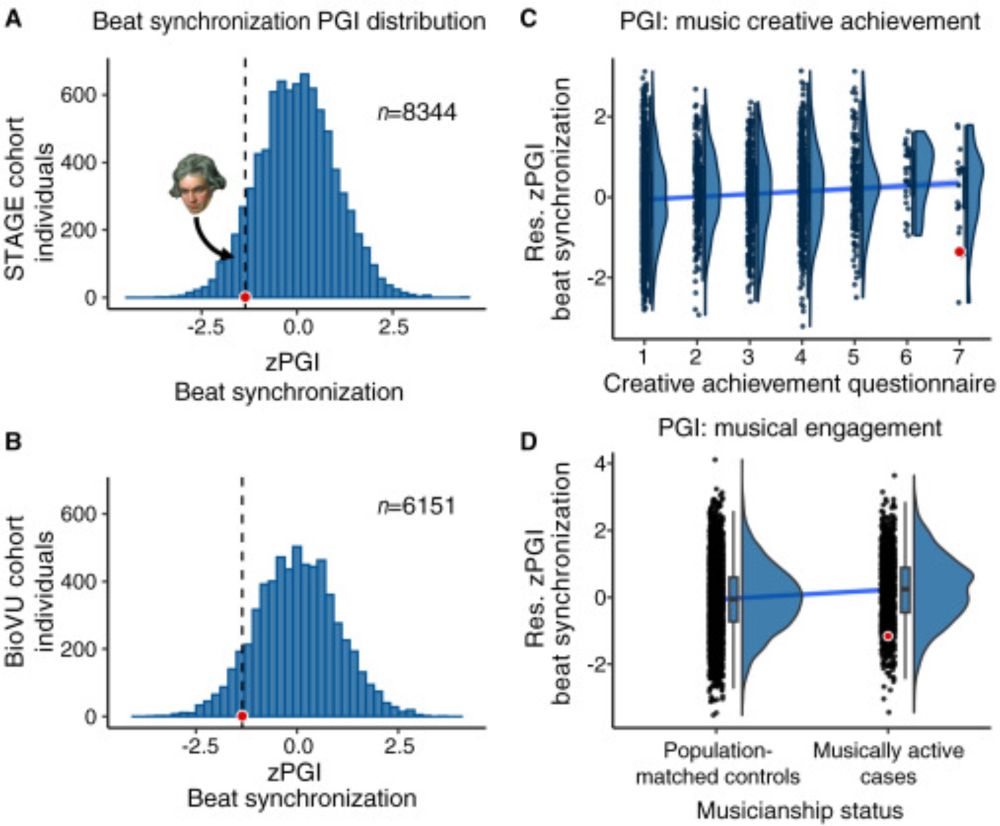
Notes from Beethoven’s genome
Wesseldijk et al. compare the genomic information collected from Ludwig van Beethoven
with population-based datasets used to quantify musical achievement.
www.cell.com
November 13, 2025 at 11:26 AM
With sequencing of Hitler's DNA making headlines, time for a reminder: analysing a polygenic score from a dead historically-significant figure won't give new insights into that person's behaviour. In a brief paper last year, we used Beethoven's genome to directly illustrate the fallacies involved.🧪👇
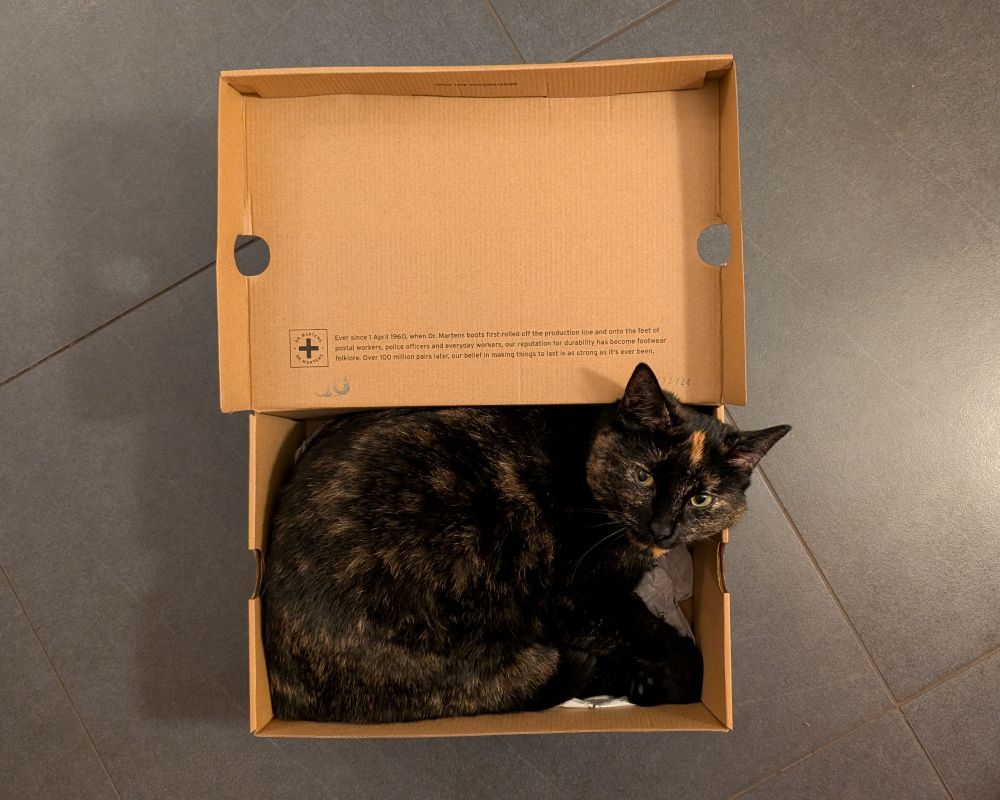
Unboxing Schrödinger's cat.
November 3, 2025 at 9:57 PM
Unboxing Schrödinger's cat.
Reposted by Simon Fisher
“Bonferonni correction”, an invaluable method in #statistics, refers to the act of repeatedly correcting misspellings of the word Bonferroni at multiple places in a draft manuscript.
#science #academia
#science #academia
November 11, 2024 at 2:52 PM
“Bonferonni correction”, an invaluable method in #statistics, refers to the act of repeatedly correcting misspellings of the word Bonferroni at multiple places in a draft manuscript.
#science #academia
#science #academia
If you're interested in how advances in human genomics are transforming our understanding of the biology of spoken & written language abilities, please do check out my new peer-reviewed "tutorial" article, just published.
🗣️🧬🧪
[Will also make a Bsky explainer 🧵 on it next week when I get some time🙂.]
🗣️🧬🧪
[Will also make a Bsky explainer 🧵 on it next week when I get some time🙂.]
Genomic Investigations of Spoken and Written Language Abilities: A Guide to Advances in Approaches, Technologies, and Discovery
Purpose: The aim of this tutorial is to show how the rise of molecular technologies
and analytical methods in human genetics yields exciting new ...
pubs.asha.org
October 30, 2025 at 3:49 PM
If you're interested in how advances in human genomics are transforming our understanding of the biology of spoken & written language abilities, please do check out my new peer-reviewed "tutorial" article, just published.
🗣️🧬🧪
[Will also make a Bsky explainer 🧵 on it next week when I get some time🙂.]
🗣️🧬🧪
[Will also make a Bsky explainer 🧵 on it next week when I get some time🙂.]
More than two decades have passed since we discovered that rare disruptions of the FOXP2 gene disturb development of proficient speech/language skills. Today we know of multiple FOXP genes that are directly implicated in distinct brain-related conditions with differences in symptoms & severity.🧪 1/n

October 29, 2025 at 5:09 PM
More than two decades have passed since we discovered that rare disruptions of the FOXP2 gene disturb development of proficient speech/language skills. Today we know of multiple FOXP genes that are directly implicated in distinct brain-related conditions with differences in symptoms & severity.🧪 1/n
A haunted house for academics but it's just a continual stream of ominous "decision on your manuscript" emails that you can never work up enough courage to open & read.
October 24, 2025 at 7:54 AM
A haunted house for academics but it's just a continual stream of ominous "decision on your manuscript" emails that you can never work up enough courage to open & read.
Come join us for a 4-year PhD on effects of rare gene disruptions involved in speech disorder, investigated in human neuronal models (via gene-editing, tissue culture, brain organoids, high-res microscopy, transcriptomics, epigenomics).
More info: www.mpi.nl/imprs-phd-fe...
#AcademicJobs #PhDJobs
🧬🧪
More info: www.mpi.nl/imprs-phd-fe...
#AcademicJobs #PhDJobs
🧬🧪

October 22, 2025 at 3:43 PM
Come join us for a 4-year PhD on effects of rare gene disruptions involved in speech disorder, investigated in human neuronal models (via gene-editing, tissue culture, brain organoids, high-res microscopy, transcriptomics, epigenomics).
More info: www.mpi.nl/imprs-phd-fe...
#AcademicJobs #PhDJobs
🧬🧪
More info: www.mpi.nl/imprs-phd-fe...
#AcademicJobs #PhDJobs
🧬🧪
Help spread the word about developmental language disorder, a common yet often hidden condition that makes it hard for children to understand what's said to them & to articulate thoughts & feelings. Lots of helpful resources & information at radld.org.
#DLDday #DevLangDis @radld.bsky.social
#DLDday #DevLangDis @radld.bsky.social

October 17, 2025 at 9:34 AM
Help spread the word about developmental language disorder, a common yet often hidden condition that makes it hard for children to understand what's said to them & to articulate thoughts & feelings. Lots of helpful resources & information at radld.org.
#DLDday #DevLangDis @radld.bsky.social
#DLDday #DevLangDis @radld.bsky.social
“NOVA1 is a gene distinguishing modern humans from extinct hominids but evolutionary pressures that selected the modern allele remain elusive...Lead exposure on human brain organoids carrying the archaic NOVA1 variant disrupts FOXP2 expression, a gene crucial for human speech/language abilities.”🤔🧪

Impact of intermittent lead exposure on hominid brain evolution
Lead exposure, as influenced by NOVA1 expression, affected brain function in multiple hominid species.
www.science.org
October 16, 2025 at 3:46 PM
“NOVA1 is a gene distinguishing modern humans from extinct hominids but evolutionary pressures that selected the modern allele remain elusive...Lead exposure on human brain organoids carrying the archaic NOVA1 variant disrupts FOXP2 expression, a gene crucial for human speech/language abilities.”🤔🧪
There should be a word for that strange mix of naive optimism & existential dread that you experience in the brief period between submitting your scientific manuscript & having it desk-rejected by the journal editor.
October 16, 2025 at 10:53 AM
There should be a word for that strange mix of naive optimism & existential dread that you experience in the brief period between submitting your scientific manuscript & having it desk-rejected by the journal editor.