


Aaron Hertzmann
@aaronhertzmann.com
www.dgp.toronto.edu/~hertzman
Pinned
Aaron Hertzmann
@aaronhertzmann.com
· Aug 19

SIGGRAPH 2024 Award Talk: My journey in art and computing (so far)
YouTube video by Aaron Hertzmann
www.youtube.com
Here's my the talk for the #SIGGRAPH 2024 Computer Graphics Achievement award, about my experiences in painting, computer graphics and the science of art. And how so much art and research are unplanned and unpredictable.
www.youtube.com/watch?v=ehgj...
aaronhertzmann.com/2024/08/19/j...
www.youtube.com/watch?v=ehgj...
aaronhertzmann.com/2024/08/19/j...
Reposted by Aaron Hertzmann

“What I had not realized is that extremely short exposures to a relatively simple computer program could induce powerful delusional thinking in quite normal people,” he wrote in 1976.

Why the Computer Scientist Behind the World's First Chatbot Dedicated His Life to Publicizing the Threat Posed by A.I.
Joseph Weizenbaum realized that programs like his Eliza chatbot could "induce powerful delusional thinking in quite normal people"
www.smithsonianmag.com
January 18, 2026 at 12:06 PM
“What I had not realized is that extremely short exposures to a relatively simple computer program could induce powerful delusional thinking in quite normal people,” he wrote in 1976.
Reposted by Aaron Hertzmann

Wrote a summary of a great keynote by @zey.bsky.social at NeurIPS, arguing that we’re having the wrong nightmares about AI: not AGI or superhuman benchmarks, but good-enough genAI at scale threatens "load bearing frictions" society relies on to signal effort, authenticity, sincerity, credibility.

Zeynep Tufecki on having the wrong nightmares about generative AI
I was writing a blog post where I was going to reference Zeynep Tufecki’s 2025 NeurIPS keynote, and realized there isn’t a solid synopsis online.
open.substack.com
January 9, 2026 at 4:42 PM
Wrote a summary of a great keynote by @zey.bsky.social at NeurIPS, arguing that we’re having the wrong nightmares about AI: not AGI or superhuman benchmarks, but good-enough genAI at scale threatens "load bearing frictions" society relies on to signal effort, authenticity, sincerity, credibility.
Reposted by Aaron Hertzmann

A Washington Post article suggests that, beyond a certain threshold, larger homes don't make people happier. Instead, well-being is correlated with affordable housing in walkable neighborhoods where they feel socially connected.
www.washingtonpost.com/climate-envi...
www.washingtonpost.com/climate-envi...
![Excerpt reads: "Prioritize your neighborhood
Neighborhoods drive our happiness (or unhappiness) more than we think.
When Lina Martinez, director of POLIS, the Center for Wellbeing Studies at Universidad Icesi in Colombia, studied the happiness of households in the city of Cali, she couldn’t find much difference between poorer and richer areas. “Their happiness is pretty much the same,” she said. But that changed when she isolated neighborhood conditions, such as access to transit, health care and parks. “The conditions of the neighborhood affect happiness,” she said. “I can’t link that to the space where [people] live.”
That aligns with findings from a 2023 study of the Vancouver metro area: Researchers found no significant differences in well-being between people living in single detached homes, duplexes, townhouses, laneway houses and apartment buildings (basement units smaller than 300 square feet were the only negative exception). What did people say they missed most in their neighborhood? Affordability, proximity to family and friends, and a sense of community. Home design was eighth on the list."](https://cdn.bsky.app/img/feed_thumbnail/plain/did:plc:ks3gpa6ftoyaq7hmf6c4qx4c/bafkreicapfknasylzk2lqzaxxeb5mchgnru75obggn45dusda6j5zogvuu@jpeg)
January 7, 2026 at 4:29 AM
A Washington Post article suggests that, beyond a certain threshold, larger homes don't make people happier. Instead, well-being is correlated with affordable housing in walkable neighborhoods where they feel socially connected.
www.washingtonpost.com/climate-envi...
www.washingtonpost.com/climate-envi...
Reposted by Aaron Hertzmann

Hey everyone! I have enough publications to stop working for the rest of the year!
December 31, 2025 at 5:34 AM
Hey everyone! I have enough publications to stop working for the rest of the year!
It’s tough to listen to recordings of my dog barking and howling intermittently while she learns to stay home alone, but I did like this auto-transcription produced by the audio recording app (Apple Voice Memos)

December 22, 2025 at 2:00 PM
It’s tough to listen to recordings of my dog barking and howling intermittently while she learns to stay home alone, but I did like this auto-transcription produced by the audio recording app (Apple Voice Memos)
Reposted by Aaron Hertzmann

Most LLM evals use API calls or offline inference, testing models in a memory-less silo. Our new Patterns paper shows this misses how LLMs actually behave in real user interfaces, where personalization and interaction history shape responses: arxiv.org/abs/2509.19364

December 12, 2025 at 8:42 PM
Most LLM evals use API calls or offline inference, testing models in a memory-less silo. Our new Patterns paper shows this misses how LLMs actually behave in real user interfaces, where personalization and interaction history shape responses: arxiv.org/abs/2509.19364
People say that the new "AI"-based ads look like garbage, but the Brian Eno quote is relevant: people learn to appreciate the quirks of a style. The tastes here are about associations, e.g., if people who hate "AI" take the glitches as signifying "AI", then people will hate the glitches.

December 12, 2025 at 2:17 AM
People say that the new "AI"-based ads look like garbage, but the Brian Eno quote is relevant: people learn to appreciate the quirks of a style. The tastes here are about associations, e.g., if people who hate "AI" take the glitches as signifying "AI", then people will hate the glitches.
Reposted by Aaron Hertzmann

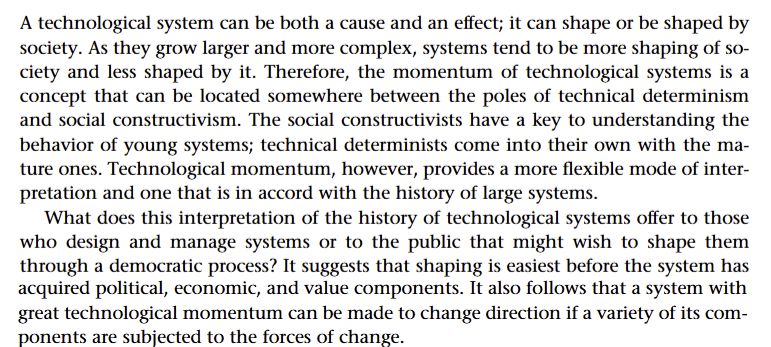
Historian Thomas Hughes argued that technologies are malleable when young, then harden. Right now we're still shaping AI, or at least it is being shaped by our institutions, norms & use cases
Eventually these systems build a momentum of their own. That is why choices now matter, things are fluid.
Eventually these systems build a momentum of their own. That is why choices now matter, things are fluid.
December 9, 2025 at 12:20 AM
Historian Thomas Hughes argued that technologies are malleable when young, then harden. Right now we're still shaping AI, or at least it is being shaped by our institutions, norms & use cases
Eventually these systems build a momentum of their own. That is why choices now matter, things are fluid.
Eventually these systems build a momentum of their own. That is why choices now matter, things are fluid.
I’m really enjoying @wdavidmarx.bsky.social 's wonderful new book “Blank Space.” He argues that 21st century “poptimism,” a belief in the value of all styles of music has led to a loss of cultural innovation; we no longer have movements of disco rejecting rock, punk rejecting disco, etc. 1/
December 2, 2025 at 6:13 PM
I’m really enjoying @wdavidmarx.bsky.social 's wonderful new book “Blank Space.” He argues that 21st century “poptimism,” a belief in the value of all styles of music has led to a loss of cultural innovation; we no longer have movements of disco rejecting rock, punk rejecting disco, etc. 1/
As we in the US gather with our families this weekend, it's a good time to consider the ways that technology brings us together—but also keeps us apart. In this blog post, I tell a story about how technology may have tended to increase social isolation.
aaronhertzmann.com/2025/10/26/i...
aaronhertzmann.com/2025/10/26/i...

Technology and Social Isolation: From Cars to “AI”
In this blog post, I tell a story of how some technologies from the past century or so have, overall, led to increased social isolation in the United States, as we replaced in-person social interactio...
aaronhertzmann.com
November 26, 2025 at 9:48 PM
As we in the US gather with our families this weekend, it's a good time to consider the ways that technology brings us together—but also keeps us apart. In this blog post, I tell a story about how technology may have tended to increase social isolation.
aaronhertzmann.com/2025/10/26/i...
aaronhertzmann.com/2025/10/26/i...
Reposted by Aaron Hertzmann

Today I learned that the US poverty line is still calculated as 3x the minimum food diet in 1963, a metric completely disconnected from today’s cost of living.
Here's a clear post explaining why middle and working class families are effectively getting poorer.
www.yesigiveafig.com/p/part-1-my-...
Here's a clear post explaining why middle and working class families are effectively getting poorer.
www.yesigiveafig.com/p/part-1-my-...

Part 1: My Life Is a Lie
How a Broken Benchmark Quietly Broke America
www.yesigiveafig.com
November 26, 2025 at 3:10 PM
Today I learned that the US poverty line is still calculated as 3x the minimum food diet in 1963, a metric completely disconnected from today’s cost of living.
Here's a clear post explaining why middle and working class families are effectively getting poorer.
www.yesigiveafig.com/p/part-1-my-...
Here's a clear post explaining why middle and working class families are effectively getting poorer.
www.yesigiveafig.com/p/part-1-my-...
These technologies illustrate how much of our culture follows common patterns

No wonder AI perfectly captured the contemporary country song, as Nashville Country is just a collection of clichés about an imaginary American Heartland.

Breaking Rust - Walk My Walk (Lyrics)
YouTube video by BangersOnly
www.youtube.com
November 12, 2025 at 1:16 AM
These technologies illustrate how much of our culture follows common patterns
Reposted by Aaron Hertzmann

This is the best parody of the AGI2027 report to date. Unintentionally from the Dallas Fed

AI could end scarcity, end humanity - or boost trend growth by 0.2 percentage points

November 7, 2025 at 3:03 PM
This is the best parody of the AGI2027 report to date. Unintentionally from the Dallas Fed
In vision science/psychology, I've often gotten adversarial paper reviews that do not seem to engage with the core argument of the paper, but instead list many perceived flaws. As I am new to the field, I thought maybe the culture is to only list flaws, and then accept when flaws are fixed. 1/
November 1, 2025 at 8:01 PM
In vision science/psychology, I've often gotten adversarial paper reviews that do not seem to engage with the core argument of the paper, but instead list many perceived flaws. As I am new to the field, I thought maybe the culture is to only list flaws, and then accept when flaws are fixed. 1/
Reposted by Aaron Hertzmann

Wednesday, November 5th at 11 AM CT: TTIC's Distinguished Lecture Series presents Aaron Hertzmann of Adobe Research with a talk titled "Can Computers Create Art?" Please join us in Room 530, 5th floor.

October 10, 2025 at 2:45 PM
Wednesday, November 5th at 11 AM CT: TTIC's Distinguished Lecture Series presents Aaron Hertzmann of Adobe Research with a talk titled "Can Computers Create Art?" Please join us in Room 530, 5th floor.
Thanks for the kind words!
The talk: www.youtube.com/watch?v=c2YR...
The talk: www.youtube.com/watch?v=c2YR...

enjoyed this talk very much — thank you; especially found understanding art as a social exchange meaningful… and the examples and illustrations are super inspiring :)
October 27, 2025 at 1:19 AM
Thanks for the kind words!
The talk: www.youtube.com/watch?v=c2YR...
The talk: www.youtube.com/watch?v=c2YR...
Here's a recording of my talk on the role of computers in making art, including so-called "AI", which was presented as the opening keynote of SIGGRAPH 2025, incorporating lessons from the history of computer graphics, photography, modern art, and philosophy of art. www.youtube.com/watch?v=c2YR... 1/

Can Computers Create Art? Lessons from art history
YouTube video by Aaron Hertzmann
www.youtube.com
October 24, 2025 at 3:34 PM
Here's a recording of my talk on the role of computers in making art, including so-called "AI", which was presented as the opening keynote of SIGGRAPH 2025, incorporating lessons from the history of computer graphics, photography, modern art, and philosophy of art. www.youtube.com/watch?v=c2YR... 1/
Reposted by Aaron Hertzmann

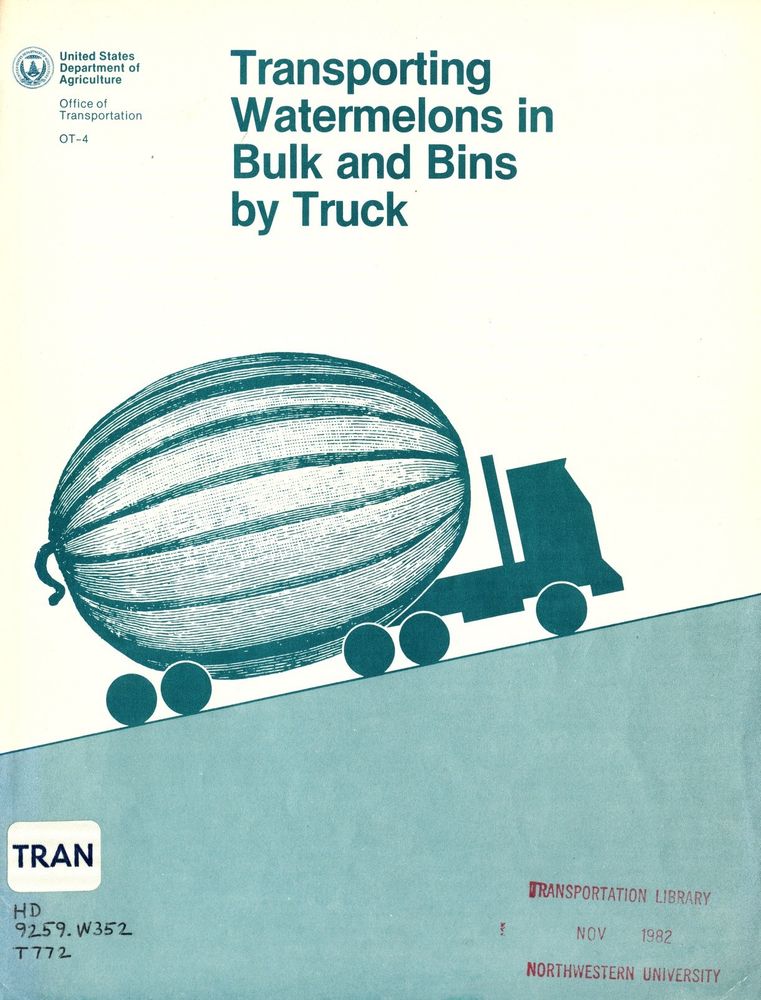
All reports in this thread are from the collections of Northwestern University's Transportation Library. Materials we've digitized can generally be found in HathiTrust. Learn more and search our catalog here: www.library.northwestern.edu/libraries-co...
January 29, 2024 at 4:12 PM
All reports in this thread are from the collections of Northwestern University's Transportation Library. Materials we've digitized can generally be found in HathiTrust. Learn more and search our catalog here: www.library.northwestern.edu/libraries-co...
Fascinating paper argues that (roughly) consciousness theories are untestable and unverifiable, and so instead they are selected to fit our moral preferences and preconceptions.

Consciousness science as a marketplace of rationalizations
my commentary on @smfleming.bsky.social and @matthiasmichel.bsky.social's thought-provoking BBS paper, and more generally about the field.
osf.io/preprints/ps...
my commentary on @smfleming.bsky.social and @matthiasmichel.bsky.social's thought-provoking BBS paper, and more generally about the field.
osf.io/preprints/ps...
OSF
osf.io
October 10, 2025 at 6:41 PM
Fascinating paper argues that (roughly) consciousness theories are untestable and unverifiable, and so instead they are selected to fit our moral preferences and preconceptions.
New blog post: In 1909, the famous composer John Philip Sousa wrote that recorded music would lead to a deterioration of music and musical taste. The more I thought about it, the more I think that he had a point.
aaronhertzmann.com/2025/09/30/m...
aaronhertzmann.com/2025/09/30/m...

The Menace of Mechanical Music: Was John Philip Sousa right?
In 1877, Edison introduced the phonograph cylinders, the first musical recording media. For the first time in history, you could listen to music without being in the same room as a performing musician...
aaronhertzmann.com
October 1, 2025 at 2:10 PM
New blog post: In 1909, the famous composer John Philip Sousa wrote that recorded music would lead to a deterioration of music and musical taste. The more I thought about it, the more I think that he had a point.
aaronhertzmann.com/2025/09/30/m...
aaronhertzmann.com/2025/09/30/m...
Here's a recording of my talk on how perspective works! If you're interested in learning about how picture perspective works in human vision, this is the video to watch. #visionscience
www.youtube.com/watch?v=eamc...
www.youtube.com/watch?v=eamc...

Picture Perspective and Our Eyes
YouTube video by Aaron Hertzmann
www.youtube.com
September 29, 2025 at 5:17 PM
Here's a recording of my talk on how perspective works! If you're interested in learning about how picture perspective works in human vision, this is the video to watch. #visionscience
www.youtube.com/watch?v=eamc...
www.youtube.com/watch?v=eamc...
Reposted by Aaron Hertzmann

Great to present my work "Five Illusions Challenge Our Understanding of Visual Experience" at the European Conference on Visual Perception (#ECVP2025)
Project Website + Preprint in link below 👇
@ecvp.bsky.social @italianacademy.bsky.social @zuckermanbrain.bsky.social
Project Website + Preprint in link below 👇
@ecvp.bsky.social @italianacademy.bsky.social @zuckermanbrain.bsky.social

Paul Linton, ECVP 2025: "Five Illusions Challenge Our Understanding of Visual Experience"
YouTube video by Kriegeskorte Lab
www.youtube.com
September 24, 2025 at 7:15 PM
Great to present my work "Five Illusions Challenge Our Understanding of Visual Experience" at the European Conference on Visual Perception (#ECVP2025)
Project Website + Preprint in link below 👇
@ecvp.bsky.social @italianacademy.bsky.social @zuckermanbrain.bsky.social
Project Website + Preprint in link below 👇
@ecvp.bsky.social @italianacademy.bsky.social @zuckermanbrain.bsky.social
Here is my commentary on @ruthrosenholtz.bsky.social's BBS paper. I point out deep parallels between topics in 2D and 3D human vision that are usually studied separately: summary statistics and attention in 2D, and 3D vision. This suggests studying them together. psyarxiv.com/dz3rx_v2
OSF
psyarxiv.com
September 26, 2025 at 3:57 AM
Here is my commentary on @ruthrosenholtz.bsky.social's BBS paper. I point out deep parallels between topics in 2D and 3D human vision that are usually studied separately: summary statistics and attention in 2D, and 3D vision. This suggests studying them together. psyarxiv.com/dz3rx_v2
Reposted by Aaron Hertzmann

me: maybe i can gain clarity by going over my notes
my notes:
my notes:
September 25, 2025 at 9:33 AM
me: maybe i can gain clarity by going over my notes
my notes:
my notes:
Reposted by Aaron Hertzmann

Our cognitive maps of the environment contain hierarchical structure, with some spaces nested in others.
Behavioral responses and brain activity in scene-responsive regions reflect this hierarchical structure.
Neat new work by Michael Peer & @russellepstein.bsky.social!
doi.org/10.1093/cerc...
Behavioral responses and brain activity in scene-responsive regions reflect this hierarchical structure.
Neat new work by Michael Peer & @russellepstein.bsky.social!
doi.org/10.1093/cerc...
September 22, 2025 at 4:36 PM
Our cognitive maps of the environment contain hierarchical structure, with some spaces nested in others.
Behavioral responses and brain activity in scene-responsive regions reflect this hierarchical structure.
Neat new work by Michael Peer & @russellepstein.bsky.social!
doi.org/10.1093/cerc...
Behavioral responses and brain activity in scene-responsive regions reflect this hierarchical structure.
Neat new work by Michael Peer & @russellepstein.bsky.social!
doi.org/10.1093/cerc...