



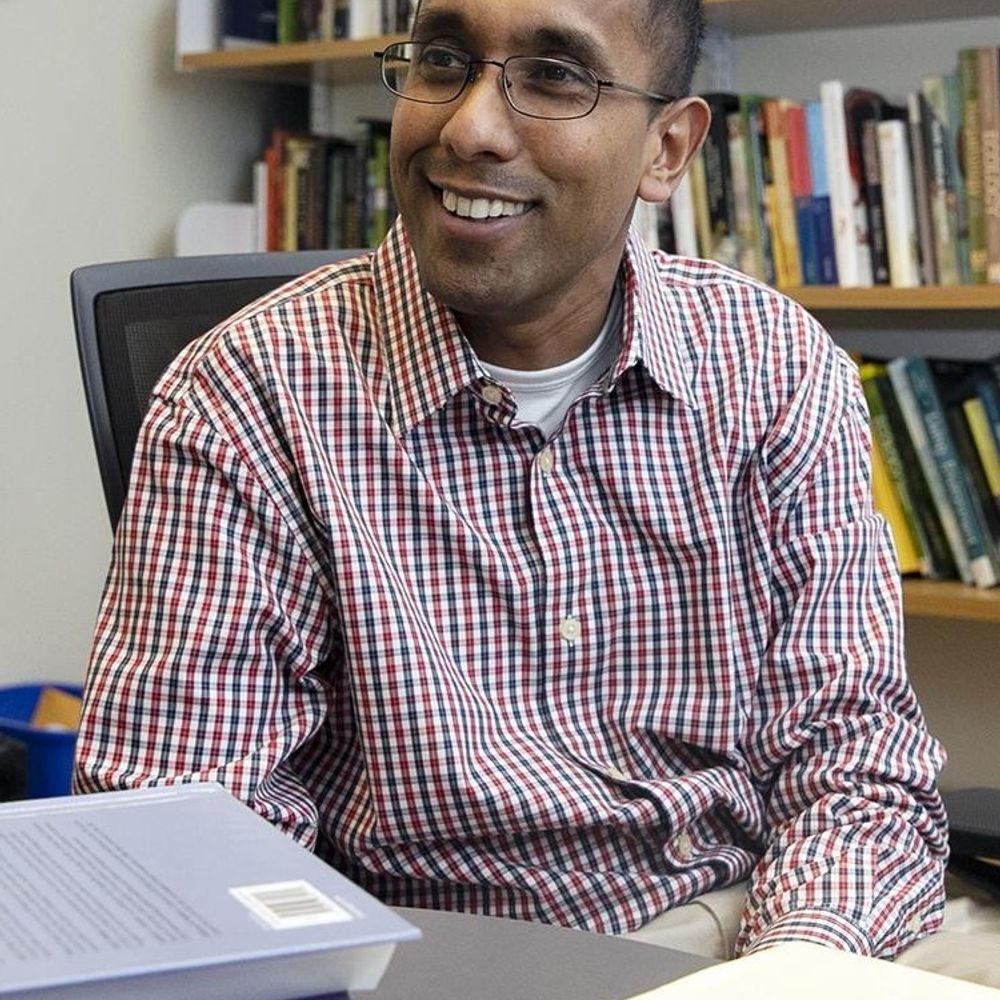
Conservation scientist, Professor, Dept of Biological Sciences, Bridgewater State University, MA, USA.
Research: #EcoRestore, #biodiversity, #conservation #urbanEcology, invasive species
PhD in Fisheries & Wildlife 🐢🐍🐸🐦 🐟🌃🧪🏞️📊🖥️🛰️🏳️🌈🌍🦤 ..
more
Conservation scientist, Professor, Dept of Biological Sciences, Bridgewater State University, MA, USA.
Research: #EcoRestore, #biodiversity, #conservation #urbanEcology, invasive species
PhD in Fisheries & Wildlife 🐢🐍🐸🐦 🐟🌃🧪🏞️📊🖥️🛰️🏳️🌈🌍🦤
Reposted by Thilina D. Surasinghe



Reposted by Randall A. Kramer, Stephen D. Murphy, Thilina D. Surasinghe

(1/7)
#Amphibians #Ecology #ConservationScience #EcosystemServices
They also support human livelihoods via agriculture, ecotourism, and cultural knowledge — yet nearly 40% of species are threatened 🚨📉.
In this synthesis, we show how amphibians underpin ecosystem functioning (#NutrientCycling, #FoodWebs, #PestControl), act as some of our most sensitive early-warning systems for environmental change (#Bioindicators)...🐸🌍🦤ec🌱
Reposted by Anthony Ricciardi, Thilina D. Surasinghe

🔓 via Philos Trans R Soc Lond B Biol Sci @royalsocietypublishing.org doi.org/10.1098/rstb... #BioInvasions 🧪🌏🐟
Reposted by Thilina D. Surasinghe, Samuele Ramellini

CISO, a deep learning-based method for species distribution modelling Conditioned on Incomplete Species Observations 🖥️ 🦌 🌍
🔎 Find out more:


Great meetings with our collaborators at Uni-CV Cabo Verde 🎓 and Biosfera Cabo Verde 🌱 — excited for the fieldwork and collaborations ahead! 🚀🧪


Reposted by Thilina D. Surasinghe

Source: doi.org/10.1093/bios... BioScience
@aibsbiology.bsky.social
🧪🌍🔥🌳🌿🍁🌐 wildfire #ecoevo
Reposted by Thilina D. Surasinghe
Reposted by Thilina D. Surasinghe


A new study confirms #oldgrowth #forests (>75 years) are better for freshwater #invertebrates and #vertebrates than young forests.
Diverse #habitats in older trees support more unique and specialized aquatic species 🌍
www.sciencedirect.com/science/arti...

Over half (approx 56%) occurred in #ProtectedAreas or #biodiversity hotspots, demanding urgent #conservation action 🌍
www.nature.com/articles/s41...


This summit brought together scientists working on #macrosystemsEcology, #biodiversity, #continentalScaleBiology using #NEON.
#EnvironmentalDataScience #OpenScience
🌐🌱🧪
We are asking: how do water levels 💦 and habitat structure 🌱 shape these invasion patterns?
Understanding this helps guide better wetland restoration and management.
🌍


We aim to understand how wetland hydrology 💧 and habitat structure 🪵🌾 influence the degree of invasion.
#InvasiveSpecies #WetlandRestoration #Phragmites #GenerationRestoration
#Wetlands #InvasionEcology
We are asking: how do water levels 💦 and habitat structure 🌱 shape these invasion patterns?
Understanding this helps guide better wetland restoration and management.
🌍
We aim to understand how wetland hydrology 💧 and habitat structure 🪵🌾 influence the degree of invasion.
#InvasiveSpecies #WetlandRestoration #Phragmites #GenerationRestoration
#Wetlands #InvasionEcology


Looking forward to working with amazing colleagues 🤝 on data-driven approaches 📊 to ecosystem change.
#OpenScience #EnvironmentalDataScience #Biodiversity
#Biodiversity #RemoteSensing
#GenerationRestoration
#OldDominionUniversity #AidData
Join me this Thursday, Oct 2 📅 at 5:00 PM in the Quartz Room for Session O.28: Restoration, Biodiversity & Climate.
I will share our remote-sensing–based approach to track #wetland restoration success 🌿🛰️...


#WetlandRestoration #RestorationEcology #Biodiversity #Amphibians #Reptiles #UndergraduateResearch #GenerationRestoration


#UndergraduateResearch
🌍🦤🧪🌐🌱🐢

www.researchgate.net/publication/...
#SriLanka #Biodiversity #Agroforestry #HomeGardens
🧪🌍🦤
Supporting home gardens (especially with traditional/indigenous practices) is not just sentimental—it’s a practical conservation tool.
Protect home garden designs that maximize structural complexity: multi‑strata trees, mixed plantings, integrating animals.
Our recent work published in Loris shows that home gardens are key players in conserving biodiversity AND delivering climate, social, and economic benefits.