



When the unwashed, trouser-wearing mob was bearing down on you, just what good did a flimsy fence and a mound of earth do?
Find out by clicking the link!
#ancientbluesky #romanarmy #history
open.substack.com/pub/jamescov...
Find out by clicking the link!
#ancientbluesky #romanarmy #history
open.substack.com/pub/jamescov...

How Defendable was a Roman Camp?
One of the things that has always fascinated me is etymology and, in particular, the etymology of placenames.
open.substack.com
January 6, 2026 at 12:23 PM
When the unwashed, trouser-wearing mob was bearing down on you, just what good did a flimsy fence and a mound of earth do?
Find out by clicking the link!
#ancientbluesky #romanarmy #history
open.substack.com/pub/jamescov...
Find out by clicking the link!
#ancientbluesky #romanarmy #history
open.substack.com/pub/jamescov...

The tombstone of a #Roman soldier named Gaius Valerius, who served in the Legio XV Apollinaris as a tubicen - a military musician who played a tuba to give commands, particularly on the battlefield. He died at the age of 36 after 16 years of service in the #RomanArmy
🏺 #AncientBlueSky
🏺 #AncientBlueSky


January 2, 2026 at 4:45 PM
The tombstone of a #Roman soldier named Gaius Valerius, who served in the Legio XV Apollinaris as a tubicen - a military musician who played a tuba to give commands, particularly on the battlefield. He died at the age of 36 after 16 years of service in the #RomanArmy
🏺 #AncientBlueSky
🏺 #AncientBlueSky
Bret Devereaux now has a whole post about theories of how ancient battles could last for hours when elite athletes need a break after a few minutes of boxing. Recommended https://acoup.blog/2025/12/18/intermission-battle-pulses/ #histodons #militaryhistory #antiquidons #romanarmy
Intermission: Battle Pulses
This week we’re going to take a brief break from our series on hoplites (I, II, IIIa, IIIb) to address a broader question in how we understand the mechanics of warfare with contact weapons, which is the mechanics of the concept of a ‘battle pulse.’ This notion, that front lines in contact might occasionally withdraw to catch their breath, replace wounded men at the front or simply to relieve the psychological pressure of the fighting keeps coming up in the comments and is worth addressing on its own. Because while it is an important question for understanding _any kind_ of contact warfare (because ‘pulse’ proponents insist on the pulse as being a _general_ feature of contact warfare, not restricted to any particular culture), it is both very relevant to understanding hoplites, but also _emerged_ as an extension of the argument about _othismos_ that extended _into Roman warfare_.
There is something of an irony that we are briefly disengaging from our discussion of hoplites to discuss if hoplites briefly disnegaged from battle.
So our question here is, “**was the fighting at the point of contact between two formations of heavy infantry a continuous run of fighting or did it proceed in pulses and bursts and if the latter, of what nature might they have been**?” I should note that the normal expression here is to describe the sparring at the line of contact as a ‘series of duels’ but anyone who has watched or participated in experiments in contact-line fighting will immediately recognize they are not ever a ‘series of duels’ as any given combatant on the front moving into measure is entering measure of several enemies and so may attack or be attacked by any of them (and indeed, striking the fellow to the left or right of the fellow in front of you, catching them unawares, is often useful). So the line of contact is not a series of 1-on-1s but rather a rolling series of ‘several-on-severals’ with each man having his own set of ‘several,’ depending on the length of the weapons used.
Now before we rush in, I want to make a clarification of two terms I am going to use here that might otherwise be confusing. I am going to make a distinction here between ‘**measure** ‘ and ‘**contact**.’ This is not some well-established distinction, so I am bending these terms a bit to make clear a different that I think matters. When I say _measure_ here, I mean the reach of the contact weapons the men have, how far they can actually deliver a strike. That’s going to vary a bit based on the weapons they have, but it’s going to be around 1-2 meters.1
When I say _contact_ what I mean is a bit looser: two formations standing a few yards apart might be out of measure, but they are certainly _in contact_ in that neither can maneuver freely and the men in the front of both must be focused on their enemies directly forward because anyone could dash into measure to strike at any time. For these units to move out of contact, I’d argue they need to back up a fair bit more, perhaps out to something like ‘javelin reach’ which with the heaviest of javelins might be around 20-25 meters. As we’re going to see, there’s a big difference between being _just outside measure_ at perhaps 2 or 3 meters away and being at ‘javelin range’ at say, 15 meters away. **But to be clear:_measure_ here is the closer proximity, _contact_ is the looser, more distant proximity**.
But first, as always, if you like what you are reading, please share it as I rely on word-of-mouth to find readers! And if you really like it, you can support this project over at Patreon; I don’t promise not to use the money to buy a full hoplite panoply, but I also don’t _not_ promise to do that. And if you want updates whenever a new post appears, you can click below for email updates or follow me on Twitter and Bluesky for updates when posts go live and my general musings; I have largely shifted over to Bluesky (I maintain some _de minimis_ presence on Twitter), given that it has become a much better place for historical discussion than Twitter.
##
Email Address
Subscribe!
## Whence the Pulse
We ought to begin with a brief history of the concept of the ‘battle pulse’ in ancient warfare and fortunately this can be quite brief.
As you will recall from our historiography on hoplites and Michael Taylor’s guest post on the book, John Keegan’s _The Face of Battle_ (1976) had quite an impact. It inspired Victor Davis Hanson to essentially replicate the approach in writing _Western Way of War_ , kicking off the modern period of hoplite debates, but it _also_ had imitators in the study of the Roman army, most notably Adrian Goldsworthy. Now I think it is worth noting that is something of an important _delay_ here: when Adrian Goldsworthy goes to write _The Roman Army at War_ , _100 BC – AD 200_ (1997), _WWoW_ (1989) has been out for nearly a decade and while the full-throated heterodox vision of _Myths and Realities_ hadn’t arrived yet, it was clearly _coming_. By this point, in particular, Peter Krentz, writing article after article, had punched some pretty significant holes in elements of orthodoxy, including the shoving-_othismos_. So when Goldsworthy (and Philip Saban, working at the same time) go to apply a Keegan-style _Face of Battle_ approach to the Romans, they are doing so downstream of the hoplite debate.
**And so in a sense you want to understand Goldsworthy and Sabin (and Zhmodikov, to whom we will come shortly) as essentially the extension of hoplite heterodoxy into the Roman sphere** ; you can see this, I think, quite clearly in their writing (and in turn they are relied upon and cited by more recent hoplite heterodox writers). Except, of course, the scholarship on _Roman_ warfare never had anything remotely as rigid or implausible as the ‘strong’ orthodox hoplite model, so the modifications to our understanding of Roman battle that these fellows offer are more modest.2
The starting point of this burst (dare we say ‘pulse?’) of Roman-legion-heterodoxy is P. Sabin, “The Mechanics of Battle in the Second Punic War” _BICS_ 67 (1996), followed very rapidly be the aforementioned A. Goldsworthy _The Roman Army at War_ , _100 BC – AD 200_ (1997) and then clarified and restated with Sabin, “The Face of Roman Battle” _JRS_ 90 (2000). Essentially Sabin raises the question first, noting that our sources often describe Roman battles in the Middle and Late Republic as lasting several hours (typically one to three) and noting that neither the number of casualties described nor the limits of human endurance would be consistent with a continuous exchange of sword blows for three hours. Hence, Sabin figures, the Romans must have moved in and out of contact, which in turn also helps him make sense of how battles in the Second Punic War seemed so often involve a formation getting ‘pushed’ backwards (not literally, of course) significant distances to create pockets or holes without collapsing. I should note that Sabin doesn’t really get into _how far out of contact_ these movements might be.
Goldsworthy then brings to this problem the work of S.L.A. Marshall in _Men against Fire_ (1947).3 Marshall had argued that only a small portion of soldiers in WWII had actually used their weapons, an extension of Ardant du Picq’s should-be-more-famous maxim, “Man does not enter battle to fight, but for victory. He does everything that he can to avoid the first and obtain the second.”4 Goldsworthy sought to apply this insight to Roman combat and argued that likewise in the front line of a Roman legion, many men, indeed “the majority of soldiers” even in the front rank must have done essentially no meaningful fighting, mostly staying safe behind their shields.5 It seems worth noting that this insight is being applied by analogy – no one ever had a chance to study contact warfare in this way – and so while I think there is an insight here going back to Ardant du Picq, it is not clear to me that the straight-forward application of very modern evidence of combat participation with guns can be applied to combat with contact weapons without considerable hazards. Goldsworthy also imagines Roman maniples – the basic maneuver unit of the legion in battle – more as ‘clouds’ of men fighting (a kind of presaging of van Wees’ skirmishing hoplites) rather than a coherent mass with men having a specific, assigned place in the formation. Instead, braver individuals might hype up the whole group to make a big push into contact, bringing the ‘cloud’ of soldiers forward, but men were equally able to hang back in the ‘cloud’ because there isn’t much sense of an assigned place.
**But how to keep that up for a few hours?**
**The solution was the ‘battle pulse.’** Sabin imagines Roman battle as a “natural stand-off punctuated by period and localized charges into contact.”6 In this vision entire Roman maniples might functionally withdraw to javelin range for extended periods to catch their breath, exchange some missiles and recover. This is, in theory, a separate process from the Roman triple _acies_ having the second (principes) and third (triarii) ranks move forward to take over the fight.7
So to be clear, what is being described here when we talk about ‘battle pulses’ is an action on the front line that consists of **pulses** and **lulls** , where in the **lulls** , **the two lines withdraw out of measure** (_well_ out of measure, by implication) **to momentarily rest and reconstitute** , before the ‘pulse’ when one side rushes back _into contact_ , precipitating another round of fighting.
This vision of battle then acquired key support with A. Zhmodikov, “Roman Republican Heavy Infantrymen in Battle (IV-II Centuries B.C.)” _Historia_ 49.1 (2000). Prior to Zhmodikov, the general model for Roman infantry combat was ‘volley-and-charge:’ the _hastati_ and _principes_ advanced and hurled their _pila_ at the outset of an engagement before closing in for a decisive action with swords. Zhmodikov instead pulls together all of the evidence for javelin use and argues that _pila_ remained in use over the whole battle. This was in the moment pretty important because it solved a problem that Goldsworthy and Sabin faced which **is that our ancient sources on battles almost never describe anything resembling** **the extended pause between pulses** : we get _pushes_ in the sources but not very often do we hear ‘lulls’ described (in stark contrast to their frequency in sources for gunpowder warfare, I might note). When a force is described as moving backward, it is generally because they are routing or _being pushed_ , not because they are mutually disengaging. **Zhmodikov’s article thus promised to provide an evidentiary basis that the Goldsworthy-Sabin ‘pulse’ model otherwise lacked** , albeit quite indirectly so (‘these guys throw lots of javelins, so there must be pauses’ is not the same as ‘the sources tell us there are pauses.’)
But note that Goldsworthy and Sabin are seeking to explain _Roman_ combat evidence and to do that they have resorted to _general_ arguments about human endurance and psychology because **they _do not have_ much direct source evidence** **for the lulls** in their pulse model (by contrast, I’d argue, the pulse itself – the ‘push’ – is attested). Consequently, this is a theory developed to explain _Roman warfare_ , which was **because of the _lack_ of direct testimony in the sources is instead posited as a _general rule_ of combat** (since the only argument available is one from human endurance and psychological capability),**from where it then gets applied to hoplites and dismounted knights and _Landsknechte_ and so on**. So we have to discuss it in this Roman context, but with a key warning: **Greeks are not Romans** and **the Roman tactical and broader institutional military systems _were not very much like Greek ones_**. Or, as Ardant du Picq quips:
> The Gaul, a fool in war, used barbarian tactics. After the first surprise, he was always beaten by the Greeks and Romans.
> The Greek, a warrior, but also a politician, had tactics far superior to those of the Gauls and the Asiatics.
> The Roman, a politician above all, with whom war was only a means, wanted perfect means. He had no illusions. He took into account human weakness and he discovered the legion.
> But this is merely affirming what should be demonstrated.
(It is not, in fact, clear to me that ‘The Greek’ had superior tactics to ‘the Asiatics’ by which Ardant du Picq means the Persians. The Macedonians certainly did, but that’s a separate question).
## What Pulse
So given that scholarship, why aren’t my discussions of hoplite tactics or, indeed, Roman tactics, full of discussions of pulses?
Because I don’t think they were _full_ of pulses, or more correctly, I don’t think they were full of what I am going to call **macro-pulses** , but they did include lots of what I am going to call **micro-pulses** , because I think it is important to distinguish between the two.
In a **micro-pulse** , what we’re really describing is ‘withdrawing to measure’ – the combatants separate not a huge amount, but just a few steps outside of the reach of their weapons (striking distance here is termed ‘measure’ so moving ‘into measure’ means moving into an opponent’s striking range (to strike yourself) and so too ‘out of measure.’) **I don’t think two opposing lines locked shields against each other and stayed _in measure_ for minutes or hours on end**. That doesn’t seem physically or psychologically possible. It would produce the casualty problem Sabin identifies and psychologically, as Ardant du Picq points to, men are going to want to pull out of reach of their opponents weapons and that psychological force is going to become swiftly overpowering. Anyone who watches combat sports or HEMA sparring, as an aside, can see this tendency for fighters to pull out of measure but remain ‘in contact’ (close enough to move back into measure at any moment) for themselves.
**So I have no problem with the ‘micro-pulse,’ and indeed, I think they must have been continually happening down the line, with men or groups of men stepping forward into measure to deliver one or two strikes (and likely take a few in return) before backing out**. And of course that pattern might also serve to conserve the men’s stamina, because the periods of really intense physical action – the throwing of blows or blocks – might be interspersed with longer periods of watching and smaller probing strikes. **I admit, it would be really interesting to see how long a set of reasonable fit reenactors could keep up this kind of pulsing fight** , never withdrawing much more than a few steps beyond measure. The key would be running the experiment as near to exhaustion as possible, because we ought to expect _battle_ to push men to the very limits of endurance as they struggle to survive.8
The broader question then is the **macro-pulse** , where we imagine the lines truly _break contact_ to the point where they are far enough apart that men cannot dash forward back into measure quickly. Now Goldsworthy-Sabin-Zhmodikov don’t, to my reading, draw a distinction between these two sorts of pulses, so it is hard to tell which they mean, but when they talk about extended javelin exchanges late in battles or lulls long enough to switch out wounded or fatigued men I read that as a _**macro**_ -pulse (or more correctly a ‘**macro-lull** ‘). To the degree that these authors actually intend what I’ve defined above as a _micro-pulse_ , then I don’t think I have any disagreement with them on this point. **But instead what they seem to imagine is a battle that consists _primarily_ of macro-lulls, punctuated by micro-pulses, where formations spend a lot of time at ‘javelin reach’ of each other** (so separated by perhaps 10 or 20 yards instead of 10 or 20 feet).
Critically, such a large disengagement requires the _whole formation_ to move. A **micro-pulse** can work by having the front ranks simply accordion into the back ranks, closing the ‘vertical’ distance between them, but a **macro-pulse** requires the rear ranks to _really back up_ and critically for men to keep backing up after contact is broken and thus there is no immediate pressure from the enemy (because the macro-pulse also requires the enemy not to advance back to the edge of measure). Indeed, Sabin seems to imagine it is in the context of these macro-pulses that the Roman changing out of battle lines occurs, so we are _really backing up quite a bit_.
**Fundamentally, the macro-pulse exists in tension then**(via Zhmodikov) **with a volley-and-charge model** (which has no trouble incorporating the ‘micro-pulse’ – no one has ever suggested Roman soldiers did anything like a shoving-_othismos_). The **macro-pulse model** **also generally asserts more flexible physical formation** , approaching ‘clouds’ or ‘mobs’ of soldiers, rather than a single formation with assigned places and it isn’t hard to see how that makes sense if this formation is supposed to pulse forward and backwards; by contrast the older vision of volley-and-charge **assumes a regular, somewhat rigid formation** , not _infinitely rigid_ as we’ll see, but there is at least the notion of a _block_ of men who are intended for the most part to maintain relative position. In essence, this macro-pulse model assumes that these fellows are doing something closer to what we might call ‘dense skirmishing’ in ‘clouds’ rather than formations spending most of their time _well_ out of measure for contact weapons. You can see how this works as a continuation of the hoplite-as-skirmisher ‘strong’ heterodox vision.
To put it bluntly, **I think micro-pulses happen and are in evidence in the sources** , however **I think macro-pulses –** situations where the two lines _truly disengage_ for a period without either routing**– seem very fairly rare and the source evidence for them as frequent occurrences is** **actually quite thin**.
## The Lull In the Pulse
And it seems like from some quarters when I express this view there is a degree of incredulity that I would ‘go against the scholarship’ on an issue that is treated as ‘solved.’ Which is odd to me because it seems clear that significant parts of the Goldsworthy-Sabin-Zhmodikov thesis have been softened or even overturned.
An effort to find Goldsworthy’s pulses-and-lulls in the sources was mounted by Sam Koon, _Infantry Combat in Livy’s Battle Narratives_ (2010).9 Koon set out to find the lulls though it is striking that the clearest example of a lull is also obviously exceptional: the two-part battle at Zama (202), where the ‘lull’ is very openly and visibly created by the recall of the _hastati_ behind the next line and the re-ordering of the formation, rather than by a pulse-and-lull model; we’ll come back to this. And there is certainly _some_ openness to this model. I am stuck, for instance by two chapters in _The Oxford Handbook of Warfare in the Classical World_ (2013), eds. B. Campbell and Lawrence Tritle: Michael Sage’s chapter (“The Rise of Rome”) which accepts the Goldsworthy-Sabin-Zhmodikov model and Brian Campbell’s chapter (“Arming Romans”) which implicitly rejects it, asserting a volley-and-charge purpose for the _pilum_. But problems with the macro-pulse model emerged.
**For one, some of the spacing and interval problems that Sabin brushed off as unsolveable (and thus avoids having to account for even flexible-but-real intervals and formations) have been revisited** by MT. Taylor, “Roman Infantry Tactics in the Mid-Republic: A Reassessment” _Historia_ 63 (2014) **and to a significant degree resolved** : there is a regular formation, it has both close-order and modestly-open-order standard intervals and we can also gauge to a significant degree the intervals _between_ maniples. The units of the army (and the army itself) were accordions, not clouds of soldiers and men could – and in the sources _do_ – close up to receive missiles or space out to fight in close combat (typically, we’ll get to this, they do the one and then the other). Most notably, the intervals between maniples are almost certainly – at points explicitly (Sall. _Jug._ 49.6) – where the _**light infantry**_(like the _velites_ , but also any slingers or archers) are, which in turn exposes a real weakness in Zhmodikov, which is a near-total failure to distinguish between heavy infantry throwing their _pila_ and the light infantry _velites_ throwing their lighter javelins (_hasta velitaris_). The heavy infantry have just two pila, but the _velites_ carry many javelins, which as you might imagine has implications for extended missile exchanges and intended function.
But crucially, Taylor’s approach fatally undermines the notion of the maniple as a ‘cloud’ of soldiers: these men have assigned spaces and semi-standard spacing with clear intervals between them. Polybius – who we must stress _describes standard spacing in this army which he was an eyewitness to_(18.30.6-8) – is not making it up. Instead, Taylor’s formation is not a cloud but an ‘accordion’ – the men have assigned spaces in which they are free to move around. Each man thus has _some_ flexibility of position, but not infinitely so. That accordion nature can accommodate ‘micro-pulses’ but for a macro-pulse you have the problem above: it requires the rear ranks to back up quite a bit.
**That point about distinguishing _who is throwing the javelins_** in turn becomes the cornerstone of J.F. Slavik, “ _Pilum_ and _Telum_ : The Roman Infantryman’s Style of Combat in the Middle Republic” _CJ_ 113 (2018) which argues that the _velites_ use showers of their light javelins -to enable the changing out of _hastati_ to _principes_ or _triarii_. Zhmodikov fails to distinguish the activity of the _velites_ and so as a result his battles of “long exchange of throwing weapons”10 functionally collapses into the action not of Roman heavy infantry, but of Rome’s dedicated light infantry skirmishers, operating in those intervals noted above. I don’t know that Slavik’s philological argument – that we can distinguish what is being thrown and thus who is throwing it by the words used – is airtight, but in the cases where we are told _explicitly_ what kind of soldiers are doing what, his argument holds much better: heavy infantry seem to volley-and-charge, while the _velites_ and other lights may be skirmishing on a more extended basis in the intervals and covering the line-changes.
That said, whereas the heterodox/orthodox line on hoplites has tended to be a hard division into two camps, **thinking on the Roman army, has tended much more towards synthesis** , in part because the individual questions (role of the _pilum_ , the extent of skirmishing, the presence of ‘pulses,’ the rigidity of the formation) **are not treated as forming a coherent orthodox/heterodox, but rather ‘sliding’ values capable of moving independently**. You can see this in general treatments, e.g. K.H. Milne, _Inside the Roman Legions_(2024), which clearly asserts a volley-and-charge model of _pilum_ usage (163) and a clear sense of a “static front line” implying a regular formation (159, 162) with assigned places (166) but frequent micro-pulses (164, 167), but no macro-pulses except for the changing out of lines (167), with most fighting done with swords, not _pila_ and supporting missiles to cover these movements by _velites_ , not heavy infantry (168). It’s a blended position. At some point it is hard to say if that is either a very softened version of volley-and-charge or a softened version of Goldsworthy-Sabin-Zhmodikov, because we’ve more or less met in the middle.
## So What of Battle Pulses?
**So I do not think the scholarship at present _requires_ me to adopt the complete Goldsworthy-Sabin-Zhmodikov model**. And, as it is clear, I _don’t_ entirely adopt that model, though I don’t think _everything_ about it is wrong either.
In particular, **I do not think macro-pulses, as I’ve defined them, were common** , **as distinct from the ‘micro-pulse,’ which I think must have been continuously happening,** where the lines remain loosely ‘in contact’ (within maybe a few yards of measure) or the ‘line change’ (from _hastati_ to _principes_ to _triarii_), probably covered not by _pila_ but by _velites_ throwing their _hastae velitares_.
Now I am not going to reproduce Koon’s book going in the other direction in a blog post – and in any case, one of the authors above is _already_ working on a monograph on Roman tactics which I shall not spoil here – but I want to give a few data-points as to why I lean this way.
The first is the soldier’s oath Livy reports before Cannae (Livy 22.38.4), “that they would not go away nor drop back **from their posts** [_ex ordine_] neither for flight or fear, unless to pick up or fetch a weapon, or to strike an enemy or to save a citizen.”11 The word _ordo_ in that sentence (_ex ordine_) means a row, a line, a series, a rank, an arrangement of things, but it is not a unit and it is certainly not a ‘cloud.’ It is an _assigned place_ that the soldier is bound to. The oath, which Livy represents as customary and regular, makes no sense unless these soldiers _**have an assigned place**_ in their unit to which they can swear not to leave nor even to shrink back from (_non…recessuros_ , “not to withdraw from, shrink back from, fall back from, give ground”).
**Meanwhile, we have a lot of evidence, I’d argue, as to the volley-and-charge nature of _pilum_ use**. We get lines like, “When he [the Roman commander] was leading the men-formed-up from the camp, scarcely before they cleared the rampart, the Romans threw their _pila._ The Spaniards ducked down against the javelins thrown by the enemies, then rose themselves to throw [their own] which when the Romans, clustered together as they are accustomed, had received with shields densely packed, then, with foot against foot and swords drawn, the matter was begun” (Livy 28.2.5-6), which is just a very clear statement of a volley-and-charge action, the throwing of _pila_ by the Romans in the perfect (coniecerunt, ‘perfect’ meaning ‘completed’) tense: it happened (once) and then stopped.12 Further examples of volley-and-charge in Livy are not hard to come by.13 Heck, Tacitus has a Roman general _lay out the sequence_ in an order to his men: “with _pila_ having been thrown then with shields and swords continue the butchery and slaughter” (Tac. _Ann_. 14.37).14
**Most striking are the incidents where the Romans don’t throw their _pila_ at all**. Livy, for instance, has one general, the dictator Aullus Cornelius Cossus, tell his men to drop their _pila_ and then note that the enemy (the Volsci who will have fought in the same manner as the Romans), “when they shall have thrown their missiles in vain” will have to come to close quarters where he expects the Roman line will triumph (Livy 6.12.8-9). Conversely, Q. Pubilius Philo’s troops are so eager on the attack that they drop their _pila_ to engage directly with swords (Livy 9.13.2, cf. also 7.16.5-6, this happens more than once). Likewise, Julius Caesar reports in one battle that, “Thus our men, the signal having been given sharply made an attack on the enemies and they charged the enemies so suddenly and rapidly that a space for throwing _pila_ at the enemy was not given. So throwing away their _pila_ , at close-quarters they fought with _gladii_ ” (Caes. _BGall_. 1.52.3-4). It happens in Sallust too (Sall. _Cat._ 61.2).
**If these guys think they are regularly going to _back off_ out of close-combat to throw javelins for a bit, _why do they drop their javelins_** (_pila_) **_the moment they come to close quarters?_** Surely, if having a ‘macro-lull’ was normal, they would want to save these weapons – at least in the back ranks – to be available in that event. Instead, the expectation is clearly not that the unit will back off after it has engaged nor that men in the rear ranks are throwing _pila_ over the heads of the men in front of them (the danger of which is noted in some ancient sources, e.g. Onasander 17).
Now for the man in the _front_ the answer is pretty obvious that _pila_ are quite heavy and you can’t sword-fight while carrying them _and_ a shield and so they have to go if youa re coming to close contact. But note that these lines don’t say “and then the front rank dropped their _pila_ ” but rather clearly _whole units do_. **Which really only makes sense if these fellows imagine that once they are going into contact, they are not going to _break contact_ for more missile-throwing or just to sit outside of contact**.
We might also consider what we know about Pydna. Now this relies a fair bit on Plutarch and Plutarch is often not the best source on battles, but on Pydna he is working from some known sources (Scipio Nasica Corculum’s writings and likely the account of Polybius) and his vignettes are instructive. By the time the general, Lucius Aemilius Paullus is on the field – this was, you will recall, an unplanned engagement – the armies are already to close combat (Plut. _Aem_. 18.4) and we’re given a really physical description that the _sarisae_ of the Macedonians were fixed in the shields of the Romans (19.1) so we know he intends us to understand these units are very much _in contact_ (though we’d say that while the Macedonians are in measure, the Romans are not). Certainly no one has backed out of contact.
Then we get two interesting passages which I think we might say are something like micro-pulses: a Paelignian chucks his unit’s standard into the enemy to compel them to make a push (20.1-5) and after taking heavy losses, they’re pushed back but evidently still to some degree in contact (perhaps pursued) because – as Michael Taylor notes in his reconstruction of the battle – they continue to hold up the Macedonian _agema_ which would otherwise flank the legion. Meanwhile we also get Marcus Cato (son of Cato the Elder), who loses his sword and has to gather up his friends to push forward to retrieve it (21.1-5). In both cases these are units that we have to understand are in contact, not back at javelin reach, where an individual is rallying men to _push forward_ in an effort to force the enemy back: Marcus Cato’s effort succeeds, whereas the Paelignians are thrown back (but buy essential time for the main Roman force). Both of these events have to involve units that are outside of _measure_ , but which do not seem – note the above line about pikes _touching Roman shields_ – to be fully out of _contact_.
The battle is won, as Livy (44.41.6-9) and Plutarch (20.7-10) both note, by having the Roman maniples engage separately, exploiting disruptions in the phalanx as it advanced. What I find striking here is that our sources – both relying on the (lost) Polybian account of the battle – evidently **think that this ‘engage at discretion’ order _needed to be given as an order_** (Plut. _Aem_. 20.7-9); dropping well back out of contact was evidently not a thing units normally were not supposed to do _on their own_. If engaging at discretion like this was the standard way of fighting, there would be no point in Plutarch having Aemilius order it, or Livy noting the unusual nature of many separate engagements.
**We can contrast what we’re told about the Battle of Zama, which gives us a very clear macro-scale battle lull** , albeit an unusual one (Polyb. 15.13-14). Both armies are drawn up (after Roman fashion) in multiple battle lines; the first lines of the two armies, the Carthaginian mercenaries and the Roman _hastati_ engage in a fierce close-combat fight, but separation doesn’t occur as a result of a macro-battle-pulse, it occurs because _the mercenary line collapses_ after the failure of the Carthaginian second line to move up to support it (Polyb. 15.13.3-4; the impression is psychological collapse, as Polybius is noting the cheering and encouragement of the so-far entirely unengaged Roman second line as decisive). The mercenaries collapse into the main Carthaginian line, which does not admit them, leading to a mercenary-on-Carthaginian engagement in which the fleeing mercenaries are slaughtered by their employers (Polyb. 13.5-6), which in turn now leaves the field of gore and wreckage between the Romans and their enemies (Polyb. 14.1-2). Scipio doesn’t want to advance over that so – and this is the thing – “recalling those still pursuing of the hastati _**by trumpet**_ ” [emphasis mine] Scipio reforms his ranks (Polyb. 14.4).
What is significant to me here is that the disengagement of the _hastati_ is not voluntary or automatic or natural, but in fact requires a trumpet signal: Scipio has to _order_ an _army-wide_ ‘pause’ in order to reorganize his units (really, he is ordering the ‘change out’ of the _hastati_ as a way to halt their pursuit), which he can do in part because the peculiar situation where Hannibal (himself seemingly mimicking Roman tactics he has by this point so much experience with) has not yet committed his main line of infantry. This thus isn’t an organic ‘macro-lull’ so much as it is both armies attempting to the classic Roman _hastati_ to _principes_ line change, with the Romans doing it more successfully because their fussy tactical system creates lanes, whereas Hannibal needs his mercenaries to run _all the way around_ his second (unbroken) line to get off of the field.
**I think this episode should also give us some meaningful pause when trying to apply Roman tactical thinking outside of Roman contexts.** The Roman system of maintaining multiple complete lines of heavy infantry, one in contact initially and two out of contact is, if not unique, certainly unusual. Likewise, a formation with wide, relatively regular intervals to enable the front battle line to be ‘changed out’ in a regular fashion is again, if not unique, highly unusual. Efforts to mimic that flexibility without the same complex and unusual tactical system often went badly, as with Hannibal’s mercenaries at Zama or, famously, the French dispositions at Agincourt, where an advanced cavalry force disrupted the two main lines of infantry attack15 as they advanced and then those lines, with no way to interchange, stacked up on each other to their ruin.
**But it is also indicative of how unusual a ‘macro-lull’ was** : this one only happens because Scipio Africanus gives an order to recall his front line as the enemy’s front ranks were breaking. Once again, the reason the armies end up separated after a ‘pulse’ of violence is not because that was the normal way these armies fought but because one general had specifically and somewhat unusually ordered it.
The other example of a large-scale macro-lull is equally instructive: Appian _BC_ 3.68. Appian is describing an engagement between two veteran Roman legions at the Forum Gallorum (43 BC). **Reading the passage, I think it is obvious we should not take the engagement as anything like typical** : they fight in silence, no battle cries but also cries or shouts even as men were wounded and killed. Each man who falls is instantly replaced, every blow was supposedly on target. And in this context of a literary description of inhuman mechanical precision in battle, we’re told “when they were overcome by fatigue they drew apart from each other for a brief space to take breath, as in gymnastic games, and then rushed again to the encounter.” Immediately after that, we’re told the other soldiers present were taken by amazement at the sight and sound of it. It is a description that is clearly heavily embroidered, about a battle where Appian is writing nearly two centuries after the fact, about an army that is supposed to seem superhuman in its actions through the motif of presenting the soldiers as treating the battle like gymnastic games. I do not think we can draw secure conclusions about actual battlefield practice from such a passage alone.
After this, I should note, we swiftly begin running out of examples of clear ‘macro-lulls’ in Roman battles. Plenty of units being ‘pushed’ (discussed below) or collapsing under pressure or armies being flanked experiencing crowd collapse under continuous pressure (e.g. Cannae), but almost no examples of units engaging and then backing off and then moving back to re-engage.
## The Roman Face of Battle And Implications for Hoplites
Summing all of this up, what do I think a Roman maniple engaging in pitched battle combat against heavy infantry looks like, given the evidence?
**The attack begins with the volley of _pila_ and it sure seems like usually any _pila_ not thrown at this point are discarded, given how often we hear of _pila_ being dropped without being thrown**.16 We’ve already discussed the weapon and its performance and so need not belabor the point here.
**The _hastati_ follow this with a charge to contact with swords. **A few things could happen at this point. **One side could collapse, leading to rout and slaughter, of course**. Alternately, both sides might stand firm: the Romans are heavily armored and have big shields and many of their opponents have big shields (if generally lighter armor) too, so a lot of strikes are going to not connect, or merely graze targets. Our ancient sources assume quite a lot of non-lethal, non-disabling wounding happening in these battles and we ought to believe them, given shields, armor, and movement.**If both sides stay firm then after a few blows we might expect them to ‘accordion’ out to measure as men refuse to stay inside of the ‘killing zone’ a few feet wide running along the line, a ‘micro-lull’ in which the units are still in contact, but much of their front lines are not in measure.**
**On either side, the soldiers now need to move up to advance into measure in order to strike** , **but in this model they can do so with just a step or two**. Because this is a formation with a regular order, the men in the front cannot simply drop back for fear – recall, they have sworn not to do so – and the eyes of their buddies are upon them, which is one of those things that can get men to fight when they might otherwise not, though one imagines many of the blows are very tentative and a high proportion of the total time here is spent watching and waiting. Sabin is right about that: it basically _must be_ given the relatively low casualties in these periods and the fact that they might stretch on for many minutes even to an hour or more in some cases.
The men in the front are being cheered on by their fellows behind them and at least in the case of the Romans also urged forward by their centurions and it is this context where you get the **micro-pulses** : individuals or more likely groups of men push forward into measure for a concerted ‘push’ on the enemy line. They’re not literally shoving, of course, but simply moving aggressively into measure to attack – in the case of the Romans they have to move _well_ into measure because they have swords and not spears, so they are relying on their heavy armor and big shield to absorb a strike from the enemy before they can reply. On the other hand, once they get through that range, they are _significantly_ more lethal, better able to strike over or under an enemy’s shield and pierce armor. **It’s a ‘high risk, high lethality’ tactical package that the Roman soldier carries, balanced with his heavier-than-typical armor and shield.**
Now the enemy can do two things: **they can hold firm against this ‘push’** or – seeing friends fall and feeling the danger –**they can push back out of measure on their side, backing up to get space**. This isn’t a rout yet, cohesion is not broken, they’re just going to back up into the empty space between them and the next man behind them and that man will then back up too to preserve space as the formation accordions in from the front, then accordions out again on the back. This probably isn’t a huge movement – it doesn’t need to be. A quick shuffle of a yard or two is enough to clear well out of measure. At which point the Romans can press _again_ or stop at measure to stabilize.
**Now what often happened, what Hannibal is _counting on_ at Cannae, is that this process is going to repeat over and over again, steadily _pushing_ a line backwards without breaking it**. The Roman, after all, has the shorter range weapon – he must, on some level, advance or he has to endure ‘potshots’ from longer spears forever. And he can advance, trusting his large shield and heavy armor to absorb a blow or two from his enemy while he pushes into his own, shorter but more lethal measure. So when the enemy backs up, the Romans quickly – perhaps immediately – push right back into measure. A few more foes fall, the enemy backs up again. After all, his enemy lacks that heavy armor and big shield to be so confident in very close quarters and so will want to move away from the Roman with his deadly sword, back to spear’s reach. So long as cohesion holds, each localized ‘push’ is perhaps only gaining a few meters and neither side is breaking contact, but the line is bending and moving. Roman maniples can adapt well to that shifting line; the _sarisa_ -phalanx cannot (thus Pydna).
In this sort of back and forth, I think we need to assume that wounded men (or utterly exhausted ones) can drop back through the ranks, but there’s clearly some shame in so doing, at least for the Romans (remember that oath). But there’s plenty of space with a Roman file width of c. 135cm. Heck, even at a conjectured hoplite phalanx’s 90cm, a hurt man could squeeze back – or be pulled back – by his comrades so long as the formation is hovering at the edge of measure rather than right up on the enemy. Cycling the front rank seems to have never been systematized, however, so I suspect the expectation is that many men in the front ranks will remain there through the whole fight if they’re not wounded.17
Because the line’s movement forward and back is driven mostly by **psychology** , it is a _visible_ indicator of the more confident side – the side with confidence is pushing into measure, their opponents backing out. For many armies using contact weapons, there’s not much a general can do at this stage even if they see that their line is getting the worst of it, but Roman armies are unusually complex and so the Roman general has an option here if things don’t seem to be going well: he can sound that trumpet to recall the _hastati_. What I suspect happens here is that the men at the front are going to – still facing the enemy with shields up – quickly shuffle backwards (getting out of measure and moving to exit contact) while the _velites_ (present in the gaps of the formation) shower javelins to give their opponents pause and then everyone breaks for the rear, passing through the intervals of the next line. The enemy cannot charge after them or they’ll run pell-mell into the well-ordered maniples of the _principes_ and be butchered. Surely this must have entailed the loss of some of the _hastati_ , but not many, I’d imagine, with the _velites_ covering (and the _velites_ , very lightly equipped, can easily flee an enemy’s heavy battle line).
The centurions rally the _hastati_ in the safety of the space behind the _principes_ , who now advance and the cycle repeats.
So **micro-pulses** but not **macro-pulses** : the lines once in contact don’t break that ‘loose’ contact except to flee, **but they do ‘push’** and **while there is no _general_ pause in fighting, _individually_ soldiers are not always swinging or being swung at**.
**What might that mean for a Greek hoplite phalanx?** Well quite a few of these elements must substantially drop away. While the Greeks certainly have light infantry, as we’ve discussed they do not have _integrated_ light infantry, nor the retreat lanes or tactical flexibility to use them in the way the Romans do; **Greeks are not Romans**. Equally, while the phalanx has a bunch of _organizational_ units, it does not have a lot of _maneuver_ units: the whole formation is supposed to move together. So the ability to maintain cohesion moving in and out of contact is going to be significantly less. And there is no way to change out entire battle lines, both because the phalanx is not built to do so and also because there is no second battle line waiting to rotate in any case.
But the other elements, I think, largely remain. No volley of _pila_ (at least, not after the Archaic, but we must assume that earlier Archaic throwing spear fills a similar role to a _pilum_ , a pre-charge volley weapon), but the hoplites charge to contact (as noted last time, either to measure or to impact). But they don’t start shoving, instead accordioning back out and then, as above, the **micro-pulses** : localized ‘pushes’ in sections of the line. In some cases, you might get the ‘pushing’ effect we see the Romans achieve although it is notable to me that it seems like hoplite armies achieve this effect less (though certainly not never!) and I suspect this is because everyone is working with a spear’s reach and thus a spear’s measure, so no one side is compelled (as the Romans are) to advance impetuously _through_ an opponent’s measure, nor is one side (as Macedonians might) able to relentlessly push an enemy back from _beyond_ their measure. But I don’t think the lines frequently _disengaged_ in the Classical period, because we’re not told that they do so in any source I can think of and because the phalanx would be even less capable of doing a ‘**macro-lull** ‘ than a Roman legion and it seems like the Roman legions almost never did them either.
The consequence of this model – micro-pulses but no macro-lulls – is to a degree to restore the role of heavy infantry as ‘shock’ based contact troops. These men – and I think this is true of hoplites as well – fight in formation, with assigned positions (or something very close to it) that they are expected to maintain for as long as they are able. **Once they advance into contact, they do not expect to break contact until one side has _won_ or _lost_ the fight in that part of the line**. But they do not stay permanently in measure swinging potentially lethal blows for an hour straight. Instead we might imagine an open space, roughly the width of measure (so a couple of meters), with men lunging or advancing forward to strike and then backing out. Every so often a concerted group of men will push into measure collectively. And sometimes their aggression causes the enemy to back up, leading to the ‘pushing’ effect we’re told about – which happens with no shoving.
But **what they are not doing is _backing out_ to go back to skirmishing**. The reason so many javelin-wielding line infantry (archaic hoplites, Roman heavy infantry, Iberian and Celtiberian infantry) carry just _one_ or _two_ javelins is that they expect to hurl these immediately before contact to intensify the force of their onset and then _not do any more throwing_. If these units break contact, it is because they are routing or – in the Roman case only – because they have been recalled to reform behind the next line of heavy infantry. But heavy contact infantry are not skirmishers and so we should not try to extrapolate their behavior entirely from watching the fighting of Dani skirmishers in Papua New Guinea. Our sources _resound_ with assertions and descriptions that heavy infantry worked differently on the battlefield than light infantry and that the two types were not interchangeable.
Hopefully that all clarifies my views on ‘pulses’ and ‘lulls.’ **Micro-pulses? Yes.** Macro-lulls? Only very rarely, in unusual circumstances.
Now as I write this, I am getting ready to fly out to attend the 2025 _Prancing Pony Podcast Moot_ to deliver a keynote on the historical grounding of Tolkien’s view of war. Next week is also the week of Christmas. So there will be no post _next week_ (the 26th), so we’ll be wrapping up our look at hoplites in the New Year.
### Share this:
* Click to share on X (Opens in new window) X
* Click to share on Facebook (Opens in new window) Facebook
*
1. Remember to keep in mind not just the length of the fellow’s weapon, but also his arm and also the amount of his weapon, especially for spears, behind his hand as a counter-balance.
2. Also, credit where credit is due, Goldsworthy and Sabin are both fully aware of their debt through Keegan to Ardant du Picq. As a result, this debate, though much smaller than its hoplite equivalent, is actually somewhat more aware of its theoretical basis.
3. As mentioned previously, it is a broadly known fact among military historians but perhaps not among readers that, “S.L.A. Marshall‘s work is shoddy where it isn’t outright fabrication, but he happens to be right,” though the shoddiness and fabrication was not as well known in the 1990s.
4. Again, an _openly admitted_ extension; Philip Sabin knows his Ardant du Picq.
5. Goldsworthy _op. cit._ , 222.
6. “The Face of Roman Battle,” 16.
7. As an aside, the idea that men to the rear are put under less psychological pressure, which Sabin and Goldsworthy argue for, works a lot better for the Romans, where those ‘men to the rear’ are in entirely seperate formations some distance behind, than it does when applied to hoplites (e.g. Konijnendijk (2018), 136) where the ‘men to the rear’ are just the back ranks of the same formation. Indeed, Ardant du Picq, from whom Sabin and Goldsworthy are borrowing this idea, is explicit that it is the great virtue _of the Roman way of fighting_ that it removes its reserves from the psychological pressure, whereas other forms (e.g. hoplites) _do not_. Another good reason to **read _Battle Studies_**.
8. As an aside, I will note that the assertions of the physical impossibility of carrying on this kind of fight without substantial lulls**is always made without evidence in the writings here cited**. Now I don’t have an experimental data either, but I’ll note that some sport activities demand quite a lot of endurance. The longest boxing match ever was _seven hours_ long, marathons can take upwards of two hours to run for well trained athletes, and so on. **I am not saying Sabin _et al_. is _wrong_ about the impossibility of maintaining contact for more than thirty-or-so minutes**, because I don’t have any evidence either **and they may very well be right**. But it is not clear to me that this argument is _so obviously true_ that I must accept it without evidence. I would like to see it proved in an experimental context.
9. Note also his chapter, “Phalanx and Legion: the “Face” of Punic War Battle” in _A Companion to the Punic Wars_ , ed. D. Hoyos (2011).
10. Zhmodikov, _op. cit._ , 70
11. _fugae atque fomidinis ergo non abituros neque ex ordine recessuros nisi teli sumendi aut petendi aut hostis feriendi aut civis servandi causa_.
12. Latin has a way to say the Romans ‘were throwing [continuously]’ rather than ‘they threw’ and Livy is not using it here.
13. Livy 7.23, 9.35, 23.29, 32.17, 38.22
14. Again, Latin being Latin, there is a clarity to the tenses here. _pilis emissis_ is a perfect passive participle in an ablative absolute, “with _pila_ having been thrown” that is quite clear this action is _completed_ , _finished, done_ as the precondition for the following clause. The _pila_ are not still being thrown, they get thrown, once, in the past and it is _done_ when the next action happens. Can you tell I’ve been teaching Latin this semester?
15. There was also a rear-guard and one wonders if the intent here was to recreate a Roman-style _triplex acies_ ; if so it was not a success.
16. Sabin notes the evidence for _pila_ being used after a charge but it is pretty thin: a specific response to a remarkably deep pike formation (Plut. _Sulla_ 19.6), two instances of spent javelins being picked up (Livy 10.29.6 by reserves coming into contact, not men moving out of it and Sall. _BJ_ 58, the latter a camp defense throwing back enemy missiles, hardly a strong example) and the purported _pilum_ of Marius (Plut. _Mar_. 25) which we’ve already discussed does not seem to have actually existed. Compared to the _far more numerous, frequent and clear_ evidence of _pila_ being discarded without being used in swift charges, this is pretty thin gruel.
17. Otherwise the placement of the officers of the Macedonian _sarisa_ -phalanx in the front rank makes very little sense. And we _know_ that the Macedonian phalanx has fixed positions in it: _lochogoi_ at the front, _ouragoi_ at the back.
### Like this:
Like Loading...
acoup.blog
December 20, 2025 at 4:43 AM
Bret Devereaux now has a whole post about theories of how ancient battles could last for hours when elite athletes need a break after a few minutes of boxing. Recommended https://acoup.blog/2025/12/18/intermission-battle-pulses/ #histodons #militaryhistory #antiquidons #romanarmy
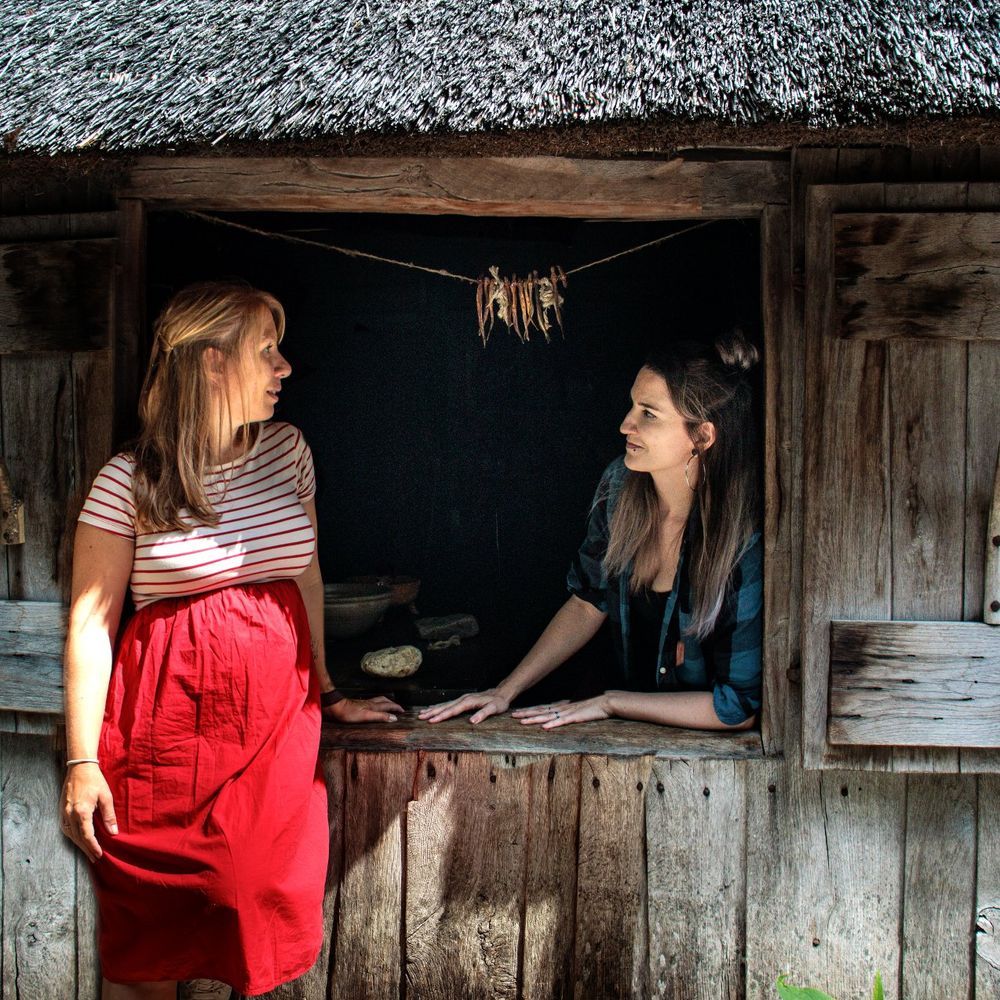
Who wore it best?
A little fun this #throwbackthursday
Don't both of us look smashing in our Roman soldier outfits? Well tanned, ripped and ready to face any enemy the empire throws at us!
#archaeologypodcast #roadtrip #romanarmy #romansoldiers #archeon
A little fun this #throwbackthursday
Don't both of us look smashing in our Roman soldier outfits? Well tanned, ripped and ready to face any enemy the empire throws at us!
#archaeologypodcast #roadtrip #romanarmy #romansoldiers #archeon

December 4, 2025 at 9:14 AM
Who wore it best?
A little fun this #throwbackthursday
Don't both of us look smashing in our Roman soldier outfits? Well tanned, ripped and ready to face any enemy the empire throws at us!
#archaeologypodcast #roadtrip #romanarmy #romansoldiers #archeon
A little fun this #throwbackthursday
Don't both of us look smashing in our Roman soldier outfits? Well tanned, ripped and ready to face any enemy the empire throws at us!
#archaeologypodcast #roadtrip #romanarmy #romansoldiers #archeon

Men during that time didn't use labels. You didn't need to be gay to suck cock or swallow cum 🏳️🌈 All you needed to be is a real brave man to have #GodCock in one of your holes or perhaps both! Men were competing for cock and those who were get to swallow were the bravest 💦💦
#CumSwallow #RomanArmy
#CumSwallow #RomanArmy

November 10, 2025 at 6:12 AM
Men during that time didn't use labels. You didn't need to be gay to suck cock or swallow cum 🏳️🌈 All you needed to be is a real brave man to have #GodCock in one of your holes or perhaps both! Men were competing for cock and those who were get to swallow were the bravest 💦💦
#CumSwallow #RomanArmy
#CumSwallow #RomanArmy

How the Roman Army Evolved From a Neighborhood Watch Into a World-Conquering Juggernaut #RomanArmy #history www.gsnsp.com/rise-roman-a...

The Rise of the Roman Army: From Kings to Empire
How did a village of farmers create the most dominant army in history? Explore the Roman army's evolution, world-conquering force.
www.gsnsp.com
November 9, 2025 at 2:46 PM
How the Roman Army Evolved From a Neighborhood Watch Into a World-Conquering Juggernaut #RomanArmy #history www.gsnsp.com/rise-roman-a...
New Book Alert: A discussion of Roman Militaria from the South East of England. What can Roman military finds tell us about the actions of the Roman army in the 'civil zone' of Roman Britain. www.barpublishing.com/book/britann...
#Roman #RomanBritian #RomanArmy #Archaeology
#Roman #RomanBritian #RomanArmy #Archaeology

October 1, 2025 at 9:02 AM
New Book Alert: A discussion of Roman Militaria from the South East of England. What can Roman military finds tell us about the actions of the Roman army in the 'civil zone' of Roman Britain. www.barpublishing.com/book/britann...
#Roman #RomanBritian #RomanArmy #Archaeology
#Roman #RomanBritian #RomanArmy #Archaeology

Roman soldiers bonded in tight groups; the smallest unit, the contubernium, held eight men who ate and marched together, and a typical legionary served about twenty‑five years. Read more: https://getnews.me/roman-soldiers-united-by-bonds-not-uniforms/ #romanarmy #contubernium

September 12, 2025 at 5:51 PM
Roman soldiers bonded in tight groups; the smallest unit, the contubernium, held eight men who ate and marched together, and a typical legionary served about twenty‑five years. Read more: https://getnews.me/roman-soldiers-united-by-bonds-not-uniforms/ #romanarmy #contubernium
#London, Mithraic relief.
Found close to the site later identified as a #temple of #Mithras. This piece was carved for the benefit of Ulpius Silvanus, #veteran of II Augusta, who may have joined the cult at Orange (Arausio) in #Gaul
#RomanArmy
#RomanBritain #roman #Archaeology #AncientBlueSky
Found close to the site later identified as a #temple of #Mithras. This piece was carved for the benefit of Ulpius Silvanus, #veteran of II Augusta, who may have joined the cult at Orange (Arausio) in #Gaul
#RomanArmy
#RomanBritain #roman #Archaeology #AncientBlueSky


August 27, 2025 at 12:52 PM
#London, Mithraic relief.
Found close to the site later identified as a #temple of #Mithras. This piece was carved for the benefit of Ulpius Silvanus, #veteran of II Augusta, who may have joined the cult at Orange (Arausio) in #Gaul
#RomanArmy
#RomanBritain #roman #Archaeology #AncientBlueSky
Found close to the site later identified as a #temple of #Mithras. This piece was carved for the benefit of Ulpius Silvanus, #veteran of II Augusta, who may have joined the cult at Orange (Arausio) in #Gaul
#RomanArmy
#RomanBritain #roman #Archaeology #AncientBlueSky

I feel like there's an essay to be written on roman soldier's clothing, masculinity, and historical memory but who wouldn't want to head off to a little garden party in this fetching hat after a long week of soldiering? #gardenlife #romanarmy #materialculture #camp #sunhats

Bolton Museum displays rare Roman sun hat following restoration
The 2,000-year-old hat, which kept soldiers cool in Ancient Egypt, is one of only three in the world.
www.bbc.com
August 11, 2025 at 5:09 PM
I feel like there's an essay to be written on roman soldier's clothing, masculinity, and historical memory but who wouldn't want to head off to a little garden party in this fetching hat after a long week of soldiering? #gardenlife #romanarmy #materialculture #camp #sunhats
Slavery, immigration, and the bilingual Aramaic-Latin tombstone from South Shields, England https://www.thenorthernecho.co.uk/news/24075802.south-shields-tombstone-loaned-british-museum/ #archaeology #antiquidons #romanarmy #epigraphy

Tombstone details life and death of British woman who was freed from Roman slavery
UNESCO World Heritage site, Arbeia, South Shields Roman Fort, is lending two of its most significant artefacts, the Regina tombstone and a Roman…
www.thenorthernecho.co.uk
June 29, 2025 at 6:03 AM
Slavery, immigration, and the bilingual Aramaic-Latin tombstone from South Shields, England https://www.thenorthernecho.co.uk/news/24075802.south-shields-tombstone-loaned-british-museum/ #archaeology #antiquidons #romanarmy #epigraphy

I made a minimalist Roman Legionary poster.
Which historical militia do you think had the biggest impact?
#romanarmy #romanreenactment #romavictrix #legionary #romanhistory #romansoldier #romanlegion #legionary #romanempire #legio
Which historical militia do you think had the biggest impact?
#romanarmy #romanreenactment #romavictrix #legionary #romanhistory #romansoldier #romanlegion #legionary #romanempire #legio


June 12, 2025 at 5:52 PM
I made a minimalist Roman Legionary poster.
Which historical militia do you think had the biggest impact?
#romanarmy #romanreenactment #romavictrix #legionary #romanhistory #romansoldier #romanlegion #legionary #romanempire #legio
Which historical militia do you think had the biggest impact?
#romanarmy #romanreenactment #romavictrix #legionary #romanhistory #romansoldier #romanlegion #legionary #romanempire #legio
A #Roman tombstone dedicated to Gaius Saufeius, a soldier in the 9th Legion. He died at the age of 40 after 22 years in the #RomanArmy. He was originally from Heraclea (Macedonia) but was buried in Lincoln, having dies while his legion was serving in Britannia #Archaeology #RomanArchaeology


June 11, 2025 at 4:24 PM
A #Roman tombstone dedicated to Gaius Saufeius, a soldier in the 9th Legion. He died at the age of 40 after 22 years in the #RomanArmy. He was originally from Heraclea (Macedonia) but was buried in Lincoln, having dies while his legion was serving in Britannia #Archaeology #RomanArchaeology

Laundry tag found in a storeroom of Caerleon legionary fortress in 2008.
‘Century of Domitius Maternus, (property) of Aurelius
Severus. Smoothed and for (?)darning.’
BRIT 42.33
#EpigraphyTuesday #RomanBritain #RomanArmy
‘Century of Domitius Maternus, (property) of Aurelius
Severus. Smoothed and for (?)darning.’
BRIT 42.33
#EpigraphyTuesday #RomanBritain #RomanArmy

June 3, 2025 at 10:24 PM
Laundry tag found in a storeroom of Caerleon legionary fortress in 2008.
‘Century of Domitius Maternus, (property) of Aurelius
Severus. Smoothed and for (?)darning.’
BRIT 42.33
#EpigraphyTuesday #RomanBritain #RomanArmy
‘Century of Domitius Maternus, (property) of Aurelius
Severus. Smoothed and for (?)darning.’
BRIT 42.33
#EpigraphyTuesday #RomanBritain #RomanArmy
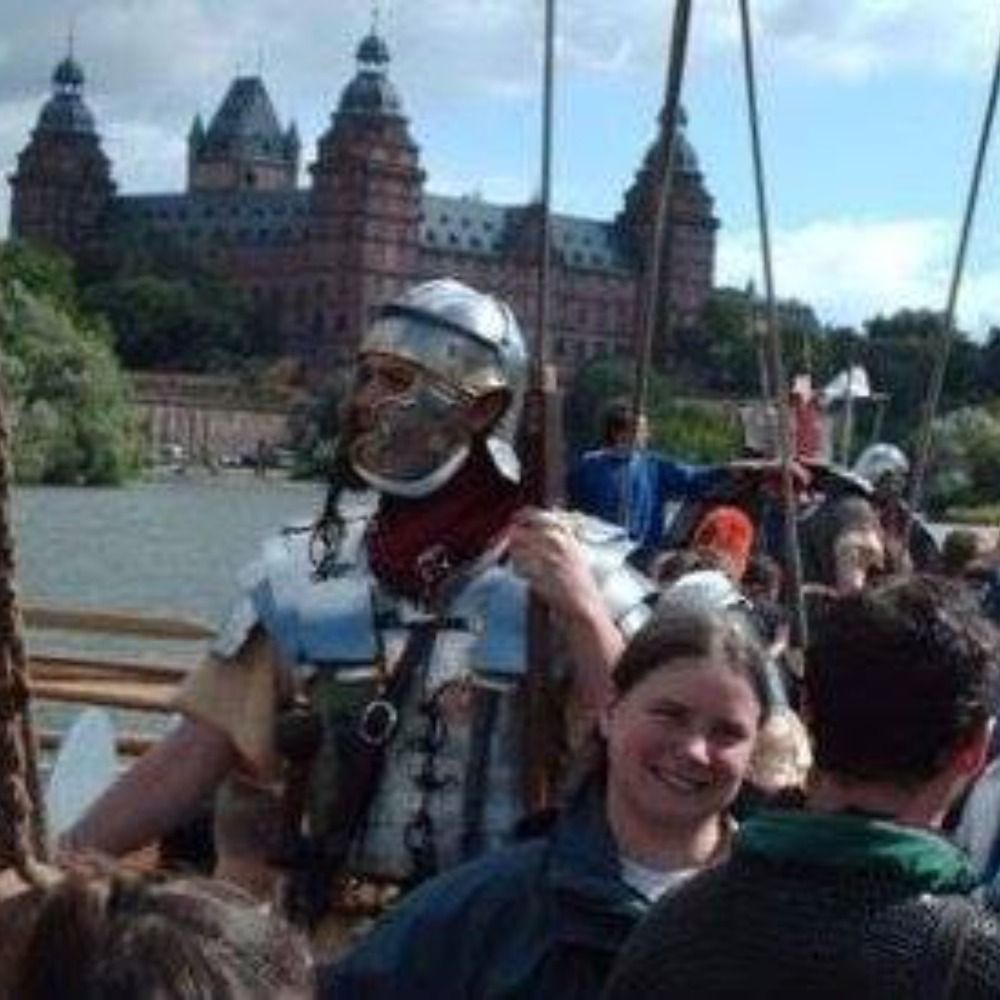
1/4 Had a fantastic time at the Roman fort "Saalburg" today - Roman re-enactors and cavalry brought history alive! This event, which takes place on 31 May to 1 June 2025, marks the Saalburg and the Upper Germanic-Raetian Limes being UNESCO World Heritage since 2005. #saalburg #limes #romanarmy


May 31, 2025 at 8:18 PM
1/4 Had a fantastic time at the Roman fort "Saalburg" today - Roman re-enactors and cavalry brought history alive! This event, which takes place on 31 May to 1 June 2025, marks the Saalburg and the Upper Germanic-Raetian Limes being UNESCO World Heritage since 2005. #saalburg #limes #romanarmy

Roman E4 = Miles Immunis
Master of chores evasion.
Wields the Shamshield of the Gods.
Saw nothing. Did nothing
#E4Mafia #RomanArmy #MilitaryMeme #HistoryNerds #LegionnaireLife
Master of chores evasion.
Wields the Shamshield of the Gods.
Saw nothing. Did nothing
#E4Mafia #RomanArmy #MilitaryMeme #HistoryNerds #LegionnaireLife

May 31, 2025 at 2:28 PM
Roman E4 = Miles Immunis
Master of chores evasion.
Wields the Shamshield of the Gods.
Saw nothing. Did nothing
#E4Mafia #RomanArmy #MilitaryMeme #HistoryNerds #LegionnaireLife
Master of chores evasion.
Wields the Shamshield of the Gods.
Saw nothing. Did nothing
#E4Mafia #RomanArmy #MilitaryMeme #HistoryNerds #LegionnaireLife
#AncientBlueSky🏛️
#London, Mithraic relief.
Found close to the site later identified as a temple of #Mithras. This piece was carved for the benefit of Ulpius Silvanus, #veteran of II Augusta, who may have joined the cult at #Orange (Arausio) in #Gaul
#RomanArmy
#RomanBritain #History #Archaeology
#London, Mithraic relief.
Found close to the site later identified as a temple of #Mithras. This piece was carved for the benefit of Ulpius Silvanus, #veteran of II Augusta, who may have joined the cult at #Orange (Arausio) in #Gaul
#RomanArmy
#RomanBritain #History #Archaeology
May 15, 2025 at 1:12 PM
#AncientBlueSky🏛️
#London, Mithraic relief.
Found close to the site later identified as a temple of #Mithras. This piece was carved for the benefit of Ulpius Silvanus, #veteran of II Augusta, who may have joined the cult at #Orange (Arausio) in #Gaul
#RomanArmy
#RomanBritain #History #Archaeology
#London, Mithraic relief.
Found close to the site later identified as a temple of #Mithras. This piece was carved for the benefit of Ulpius Silvanus, #veteran of II Augusta, who may have joined the cult at #Orange (Arausio) in #Gaul
#RomanArmy
#RomanBritain #History #Archaeology
So I am working over the Easter weekend....but frankly it is a real pleasure to review this book on #Women and the #RomanArmy for the #TRAJ. Brilliant scholarship and highly readable. Congratulations. #ancientbluesky

April 18, 2025 at 7:11 PM
So I am working over the Easter weekend....but frankly it is a real pleasure to review this book on #Women and the #RomanArmy for the #TRAJ. Brilliant scholarship and highly readable. Congratulations. #ancientbluesky

Step into the boots of a Roman soldier—The British Museum’s Legion: Life in the Roman Army brought history to life through the eyes of Claudius Terentianus. Grit, glory, and the human side of ancient warfare. ⚔️ #RomanArmy #BritishMuseum #HistoryExhibition

Legion: Life in the Roman Army – Storefront City
buff.ly
April 15, 2025 at 10:29 AM
Step into the boots of a Roman soldier—The British Museum’s Legion: Life in the Roman Army brought history to life through the eyes of Claudius Terentianus. Grit, glory, and the human side of ancient warfare. ⚔️ #RomanArmy #BritishMuseum #HistoryExhibition

Roman slinger using the Glans Plumbea, a slug of lead, an item of hand ammunition in the Roman army. Illustration by J. Shumate.
Learn more
www.archaeologs.com/w/glans-plum...
#archaeology #history #roman #slinger #glansplumbea #romanarmy #weapons #tools #war #arkeoloji #tarih #sanat #roma #sapan
Learn more
www.archaeologs.com/w/glans-plum...
#archaeology #history #roman #slinger #glansplumbea #romanarmy #weapons #tools #war #arkeoloji #tarih #sanat #roma #sapan

March 13, 2025 at 10:36 AM
Roman slinger using the Glans Plumbea, a slug of lead, an item of hand ammunition in the Roman army. Illustration by J. Shumate.
Learn more
www.archaeologs.com/w/glans-plum...
#archaeology #history #roman #slinger #glansplumbea #romanarmy #weapons #tools #war #arkeoloji #tarih #sanat #roma #sapan
Learn more
www.archaeologs.com/w/glans-plum...
#archaeology #history #roman #slinger #glansplumbea #romanarmy #weapons #tools #war #arkeoloji #tarih #sanat #roma #sapan

#RomanFortThursday
Viminacium was a major city (provincial capital) and #military camp of the #Roman province of Moesia (today's #Serbia), and the capital of Moesia Superior. Only a small percentage of the site has been explored.
#Archaeology #History #RomanArmy
Viminacium was a major city (provincial capital) and #military camp of the #Roman province of Moesia (today's #Serbia), and the capital of Moesia Superior. Only a small percentage of the site has been explored.
#Archaeology #History #RomanArmy


February 13, 2025 at 10:32 AM
#RomanFortThursday
Viminacium was a major city (provincial capital) and #military camp of the #Roman province of Moesia (today's #Serbia), and the capital of Moesia Superior. Only a small percentage of the site has been explored.
#Archaeology #History #RomanArmy
Viminacium was a major city (provincial capital) and #military camp of the #Roman province of Moesia (today's #Serbia), and the capital of Moesia Superior. Only a small percentage of the site has been explored.
#Archaeology #History #RomanArmy
The tombstone of Rufus Lucilius, a #Roman soldier in the Legio XV Apollinaris, who died at the age of just 21 after 4 years service in the #RomanArmy. The stone was dedicated by his brother Marcus, & features a small relief figure of lost deceased Rufus (📷 Ortolf Harl) AncientBlueSky #Archaeology


February 12, 2025 at 8:46 PM
The tombstone of Rufus Lucilius, a #Roman soldier in the Legio XV Apollinaris, who died at the age of just 21 after 4 years service in the #RomanArmy. The stone was dedicated by his brother Marcus, & features a small relief figure of lost deceased Rufus (📷 Ortolf Harl) AncientBlueSky #Archaeology

Savior of the Roman Empire, 69 CE open.substack.com/pub/crawdadd...
#Vespasian #Augustus #Principate #Nero #Titus #imperial #Rome #RomanArmy #Caligula #year69 #4Emperors #Empire #Bedriacum #FlavianDynasty #equestrian #MarcusAurelius #Hadrian #PretorianGuard #Colosseum
#Vespasian #Augustus #Principate #Nero #Titus #imperial #Rome #RomanArmy #Caligula #year69 #4Emperors #Empire #Bedriacum #FlavianDynasty #equestrian #MarcusAurelius #Hadrian #PretorianGuard #Colosseum

Savior of the Roman Empire, 69 CE
Review of Rome's Greatest Emperor: Vespasian by Tony Sullivan
open.substack.com
February 8, 2025 at 10:18 PM
Doomed republic, then the dictatorship of Augustus open.substack.com/pub/crawdadd...
#Rome #RomanArmy #RomanLegion #RomanEmpire #SPQR #History #RomanHistory #AncientHistory #MilitaryHistory #greece #greek #Greek-history #romeitaly #Augustus #imperium #Metelli #republic
#Rome #RomanArmy #RomanLegion #RomanEmpire #SPQR #History #RomanHistory #AncientHistory #MilitaryHistory #greece #greek #Greek-history #romeitaly #Augustus #imperium #Metelli #republic

Doomed republic, then the dictatorship of Augustus
Review of The Roman Revolution by Ronald Symes
open.substack.com
February 8, 2025 at 11:12 AM
Doomed republic, then the dictatorship of Augustus open.substack.com/pub/crawdadd...
#Rome #RomanArmy #RomanLegion #RomanEmpire #SPQR #History #RomanHistory #AncientHistory #MilitaryHistory #greece #greek #Greek-history #romeitaly #Augustus #imperium #Metelli #republic
#Rome #RomanArmy #RomanLegion #RomanEmpire #SPQR #History #RomanHistory #AncientHistory #MilitaryHistory #greece #greek #Greek-history #romeitaly #Augustus #imperium #Metelli #republic
The tombstone of Gaius Largennius, a #Roman soldier in the Legio II Augusta. He died at the age of 37 after serving 18 years in the #RomanArmy. He was originally from Lucca (Italy), but was buried in Strasbourg (France) where his legion was stationed (📷 Ji-Elle) AncientBlueSky #Archaeology


January 15, 2025 at 8:30 PM
The tombstone of Gaius Largennius, a #Roman soldier in the Legio II Augusta. He died at the age of 37 after serving 18 years in the #RomanArmy. He was originally from Lucca (Italy), but was buried in Strasbourg (France) where his legion was stationed (📷 Ji-Elle) AncientBlueSky #Archaeology