



Overall, our work not only offers a proof of concept for the feasibility of sequence-based gut metagenome GWAS, but also opens new avenues for follow-up analyses that leverage methodologies developed for human GWAS.
Do not hesitate to contact us if you have any questions!
Do not hesitate to contact us if you have any questions!
January 16, 2026 at 2:57 PM
Overall, our work not only offers a proof of concept for the feasibility of sequence-based gut metagenome GWAS, but also opens new avenues for follow-up analyses that leverage methodologies developed for human GWAS.
Do not hesitate to contact us if you have any questions!
Do not hesitate to contact us if you have any questions!
We built and filtered a k-mer abundance matrix with kmtricks on 938 healthy individuals to obtain 100 millions of k-mers. Using MOGS, we ran an optimized GWAS to screen for associations between the k-mers and 26 host phenotypes.
January 16, 2026 at 2:57 PM
We built and filtered a k-mer abundance matrix with kmtricks on 938 healthy individuals to obtain 100 millions of k-mers. Using MOGS, we ran an optimized GWAS to screen for associations between the k-mers and 26 host phenotypes.
We are proud to share a recent preprint from our lab: Taxonomic-free metagenome GWAS to identify gut microbiome functions influencing host phenotypes doi.org/10.64898/202... which studies the potential of taxonomy-free GWAS approach of the human gut microbiome, using our implemented tool MOGS.
doi.org
January 16, 2026 at 2:57 PM
We are proud to share a recent preprint from our lab: Taxonomic-free metagenome GWAS to identify gut microbiome functions influencing host phenotypes doi.org/10.64898/202... which studies the potential of taxonomy-free GWAS approach of the human gut microbiome, using our implemented tool MOGS.

Registrations are still open for the GWAS course starting on Jan 26th!
If you are interested, check it out: www.physalia-courses.org/courses-work...
#GWAS #Bioinformatics #Genomics
If you are interested, check it out: www.physalia-courses.org/courses-work...
#GWAS #Bioinformatics #Genomics

January 16, 2026 at 2:46 PM
Registrations are still open for the GWAS course starting on Jan 26th!
If you are interested, check it out: www.physalia-courses.org/courses-work...
#GWAS #Bioinformatics #Genomics
If you are interested, check it out: www.physalia-courses.org/courses-work...
#GWAS #Bioinformatics #Genomics
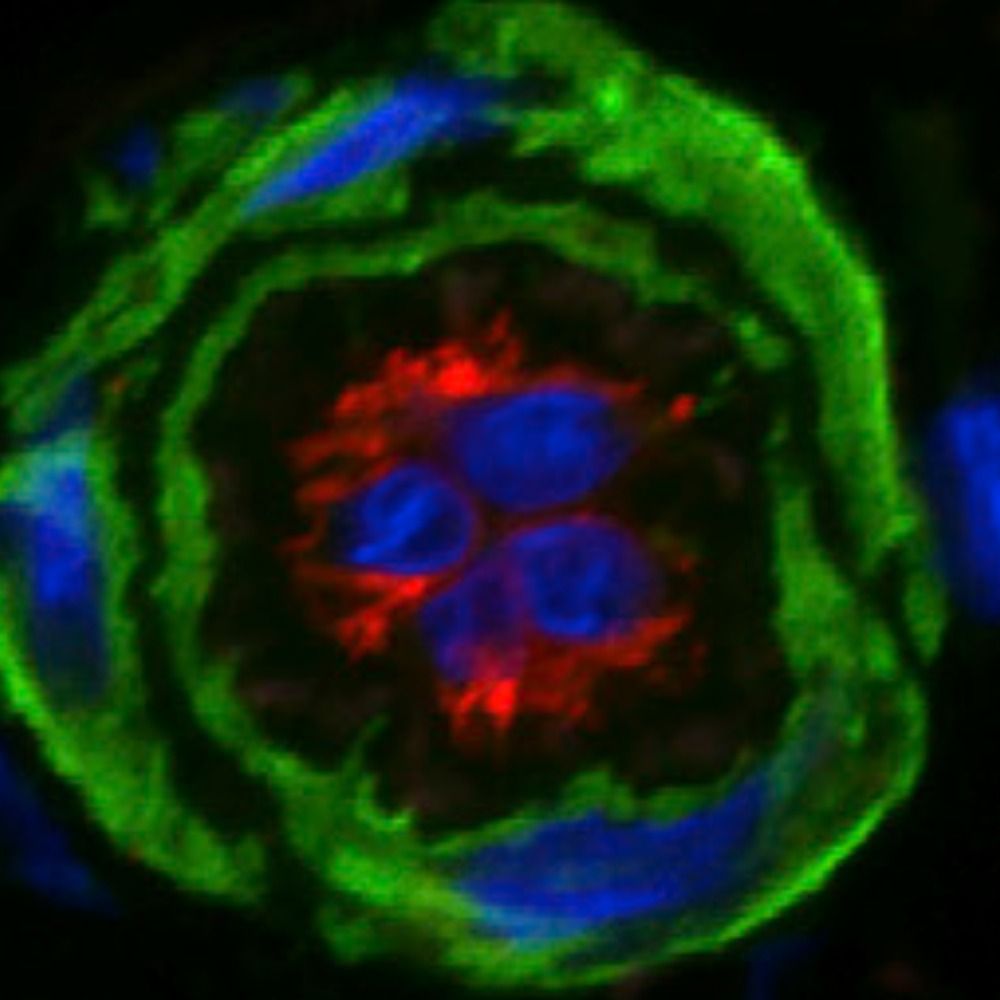
Multitrait GWAS for aortic valve (Area, Mean gradient, Peak velocity) in UKbiobank FinnGen▶️
166 loci▶️
Polygenic score for Aortic stenosis
HR=~3 for top 5% vs others in AllofUs or MGB biobank
HNF1A😁
PRDM16🤓
HAO1➡️Glycolate metab!?😈
@jamespirruccello.com #NatGenet 2025
www.nature.com/articles/s41...
166 loci▶️
Polygenic score for Aortic stenosis
HR=~3 for top 5% vs others in AllofUs or MGB biobank
HNF1A😁
PRDM16🤓
HAO1➡️Glycolate metab!?😈
@jamespirruccello.com #NatGenet 2025
www.nature.com/articles/s41...

January 16, 2026 at 1:05 PM
Multitrait GWAS for aortic valve (Area, Mean gradient, Peak velocity) in UKbiobank FinnGen▶️
166 loci▶️
Polygenic score for Aortic stenosis
HR=~3 for top 5% vs others in AllofUs or MGB biobank
HNF1A😁
PRDM16🤓
HAO1➡️Glycolate metab!?😈
@jamespirruccello.com #NatGenet 2025
www.nature.com/articles/s41...
166 loci▶️
Polygenic score for Aortic stenosis
HR=~3 for top 5% vs others in AllofUs or MGB biobank
HNF1A😁
PRDM16🤓
HAO1➡️Glycolate metab!?😈
@jamespirruccello.com #NatGenet 2025
www.nature.com/articles/s41...

Our study on WSMV and TriMV tolerance in wheat wild relatives is out. This work identifies valuable genetic resources for marker-assisted breeding in bread wheat.
Full paper: doi.org/10.3389/fmic...
#Science #PlantPathology #WheatResearch #GWAS #WSMV #TriMV #WheatWildRelative
Full paper: doi.org/10.3389/fmic...
#Science #PlantPathology #WheatResearch #GWAS #WSMV #TriMV #WheatWildRelative

Frontiers | Comprehensive phenotyping and genotyping of a large diverse panel of the wheat wild relative, Aegilops tauschii for wheat streak mosaic virus tolerance
The wheat streak mosaic (WSM) complex, primarily caused by wheat streak mosaic virus (WSMV) and Triticum mosaic virus (TriMV), results in significant annual ...
doi.org
January 16, 2026 at 12:30 PM
Our study on WSMV and TriMV tolerance in wheat wild relatives is out. This work identifies valuable genetic resources for marker-assisted breeding in bread wheat.
Full paper: doi.org/10.3389/fmic...
#Science #PlantPathology #WheatResearch #GWAS #WSMV #TriMV #WheatWildRelative
Full paper: doi.org/10.3389/fmic...
#Science #PlantPathology #WheatResearch #GWAS #WSMV #TriMV #WheatWildRelative

## Automated Causal Inference for Epistasis Detection in Genome-Wide Association Studies (GWAS) via Multi-Modal Data Fusion and HyperScore Validation
**Abstract:** Genome-Wide Association Studies (GWAS) have identified numerous single nucleotide polymorphisms (SNPs) associated with complex traits,…
**Abstract:** Genome-Wide Association Studies (GWAS) have identified numerous single nucleotide polymorphisms (SNPs) associated with complex traits,…
## Automated Causal Inference for Epistasis Detection in Genome-Wide Association Studies (GWAS) via Multi-Modal Data Fusion and HyperScore Validation
**Abstract:** Genome-Wide Association Studies (GWAS) have identified numerous single nucleotide polymorphisms (SNPs) associated with complex traits, but often fail to fully explain heritability. Epistasis, the interaction between two or more genes, is a critical but challenging factor in understanding this missing heritability. This paper proposes a novel framework, Automated Causal Inference for Epistasis Detection (ACIED), which leverages multi-modal data (genotype, phenotype, gene expression, eQTL data) and a hyper-scoring system to robustly detect epistatic interactions within GWAS data.
freederia.com
January 16, 2026 at 11:53 AM
## Automated Causal Inference for Epistasis Detection in Genome-Wide Association Studies (GWAS) via Multi-Modal Data Fusion and HyperScore Validation
**Abstract:** Genome-Wide Association Studies (GWAS) have identified numerous single nucleotide polymorphisms (SNPs) associated with complex traits,…
**Abstract:** Genome-Wide Association Studies (GWAS) have identified numerous single nucleotide polymorphisms (SNPs) associated with complex traits,…

Taxonomic-free metagenome GWAS to identify gut microbiome functions influencing host phenotypes https://www.biorxiv.org/content/10.64898/2026.01.15.699651v1
January 16, 2026 at 2:17 AM
Taxonomic-free metagenome GWAS to identify gut microbiome functions influencing host phenotypes https://www.biorxiv.org/content/10.64898/2026.01.15.699651v1

Taxonomic-free metagenome GWAS to identify gut microbiome functions influencing host phenotypes https://www.biorxiv.org/content/10.64898/2026.01.15.699651v1
January 16, 2026 at 2:17 AM
Taxonomic-free metagenome GWAS to identify gut microbiome functions influencing host phenotypes https://www.biorxiv.org/content/10.64898/2026.01.15.699651v1

By integrating AI agents with knowledge graphs grounded in biological fact, our discovery engine will:
- auto-generate mechanistic hypotheses 🧬
- assess their novelty 💫 and plausibility 🧠
- validate against population genetics (GWAS) data 📊
This will accelerate pathway: data -> mechanism -> target
- auto-generate mechanistic hypotheses 🧬
- assess their novelty 💫 and plausibility 🧠
- validate against population genetics (GWAS) data 📊
This will accelerate pathway: data -> mechanism -> target
January 15, 2026 at 11:55 AM
By integrating AI agents with knowledge graphs grounded in biological fact, our discovery engine will:
- auto-generate mechanistic hypotheses 🧬
- assess their novelty 💫 and plausibility 🧠
- validate against population genetics (GWAS) data 📊
This will accelerate pathway: data -> mechanism -> target
- auto-generate mechanistic hypotheses 🧬
- assess their novelty 💫 and plausibility 🧠
- validate against population genetics (GWAS) data 📊
This will accelerate pathway: data -> mechanism -> target

New preprint (led by Jared!) where we show that measures of genetic architecture, often assumed to be intrinsic to traits, in fact vary across biobanks. In my favorite figure, we show that sign bias (bias in the direction of GWAS effects) is closely linked to skewness in trait distribution.

January 14, 2026 at 7:46 PM
New preprint (led by Jared!) where we show that measures of genetic architecture, often assumed to be intrinsic to traits, in fact vary across biobanks. In my favorite figure, we show that sign bias (bias in the direction of GWAS effects) is closely linked to skewness in trait distribution.

Nevertheless, we find this result intriguing, as it aligns with previous work and suggests that disease-enriched and heterogeneous clinical measurement can reduce GWAS power. (6/21)
www.biorxiv.org/content/10.1...
doi.org/10.1016/j.xg...
www.biorxiv.org/content/10.1...
doi.org/10.1016/j.xg...
January 14, 2026 at 7:07 PM
Nevertheless, we find this result intriguing, as it aligns with previous work and suggests that disease-enriched and heterogeneous clinical measurement can reduce GWAS power. (6/21)
www.biorxiv.org/content/10.1...
doi.org/10.1016/j.xg...
www.biorxiv.org/content/10.1...
doi.org/10.1016/j.xg...
We compare GWAS data across three biobanks with very different recruitment designs: UK Biobank (population-based), All of Us (diversity-focused), and FinnGen (disease-enriched). (2/21)
January 14, 2026 at 7:07 PM
We compare GWAS data across three biobanks with very different recruitment designs: UK Biobank (population-based), All of Us (diversity-focused), and FinnGen (disease-enriched). (2/21)

So, we developed a new multiparent intercross population to overcome this issue, mix island-specific variants and break up long-range LD —letting us map adaptive variants that natural GWAS panels couldn’t detect and giving us a clearer window into adaptation.
January 14, 2026 at 11:39 AM
So, we developed a new multiparent intercross population to overcome this issue, mix island-specific variants and break up long-range LD —letting us map adaptive variants that natural GWAS panels couldn’t detect and giving us a clearer window into adaptation.
Cape Verde is a fascinating system: two island populations, isolated for thousands of years, each adapting independently to a very harsh environment.
Scientifically this is great — but the extreme population structure means GWAS can’t detect many adaptive variants.
Scientifically this is great — but the extreme population structure means GWAS can’t detect many adaptive variants.
January 14, 2026 at 11:39 AM
Cape Verde is a fascinating system: two island populations, isolated for thousands of years, each adapting independently to a very harsh environment.
Scientifically this is great — but the extreme population structure means GWAS can’t detect many adaptive variants.
Scientifically this is great — but the extreme population structure means GWAS can’t detect many adaptive variants.

New Cell Reports study moves GWAS from association to causation, using single-cell multiomics to pinpoint causal variants driving macular degeneration.
#Genomics #GWAS #CausalVariants #PrecisionMed #AMD #complement buff.ly/w7b7CPU
#Genomics #GWAS #CausalVariants #PrecisionMed #AMD #complement buff.ly/w7b7CPU

Single-cell multiome and enhancer connectome of human retinal pigment epithelium and choroid nominate causal variants in macular degeneration - PubMed
Age-related macular degeneration (AMD) is a leading cause of vision loss worldwide. Genome-wide association studies (GWASs) of AMD have identified dozens of risk loci that may house disease targets.…
buff.ly
January 14, 2026 at 10:00 AM
New Cell Reports study moves GWAS from association to causation, using single-cell multiomics to pinpoint causal variants driving macular degeneration.
#Genomics #GWAS #CausalVariants #PrecisionMed #AMD #complement buff.ly/w7b7CPU
#Genomics #GWAS #CausalVariants #PrecisionMed #AMD #complement buff.ly/w7b7CPU
Limited seats available for the "Introduction to Genome-Wide Association Studies (GWAS)" online course on Jan 26-30. Learn full GWAS workflow with hands-on sessions. More info: https://www.physalia-courses.org/courses-workshops/course49/ #course
January 14, 2026 at 7:20 AM
Limited seats available for the "Introduction to Genome-Wide Association Studies (GWAS)" online course on Jan 26-30. Learn full GWAS workflow with hands-on sessions. More info: https://www.physalia-courses.org/courses-workshops/course49/ #course

gwas sch fairies are gay
January 13, 2026 at 7:00 PM
gwas sch fairies are gay

New #GWAS includes meta-analysis of eleven neuropathology endophenotypes from neuritic plaques and tau neurofibrillary to cerebral atherosclerosis and hippocampal sclerosis
#genetics #data
dss.niagads.org/datasets/ng...
#genetics #data
dss.niagads.org/datasets/ng...
NG00175-Genome-wide association study of neuropathology endophenotypes - Shade et al. 2024 - DSS NIAGADS
To access the full dataset, please log into DSS and submit an application.Within the application, add this dataset (accession NG00175) in the “Choose a Dataset” section.Once approved, you will be able to log in and access the data within the DARM por
dss.niagads.org
January 13, 2026 at 5:00 PM
New #GWAS includes meta-analysis of eleven neuropathology endophenotypes from neuritic plaques and tau neurofibrillary to cerebral atherosclerosis and hippocampal sclerosis
#genetics #data
dss.niagads.org/datasets/ng...
#genetics #data
dss.niagads.org/datasets/ng...

Building on an existing collaboration, Lina joined us in Norwich for a 3-month placement as part of a BBSRC Flexible Talent award to develop skills in GWAS studies and bioinformatic pipelines.
You can read more about their experience with us in this earlier blog from 2023: buff.ly/L7Hq90v
You can read more about their experience with us in this earlier blog from 2023: buff.ly/L7Hq90v

Why your research career should include immersive visitor experiences
Taking part in an immersive visitor experience can be invaluable to researchers. They allow us to learn new approaches and ideas from others, share our own knowledge and experience directly, and they…
www.earlham.ac.uk
January 13, 2026 at 2:02 PM
Building on an existing collaboration, Lina joined us in Norwich for a 3-month placement as part of a BBSRC Flexible Talent award to develop skills in GWAS studies and bioinformatic pipelines.
You can read more about their experience with us in this earlier blog from 2023: buff.ly/L7Hq90v
You can read more about their experience with us in this earlier blog from 2023: buff.ly/L7Hq90v

It's truly a sad state of affairs when it takes longer to pull GWAS sumstats out of the AllofUs research platform than it takes to generate them.
January 12, 2026 at 11:44 PM
It's truly a sad state of affairs when it takes longer to pull GWAS sumstats out of the AllofUs research platform than it takes to generate them.
Whilst I would say that I disagree with the majority, if not entirety, of the section about GWAS, I did throughly enjoy listening to this. I certainly would agree there is a derth of audios for trans men and nonbinary folx on GWAT, and that's got me wondering if there's anything I can do to fix that
January 12, 2026 at 9:37 PM
Whilst I would say that I disagree with the majority, if not entirety, of the section about GWAS, I did throughly enjoy listening to this. I certainly would agree there is a derth of audios for trans men and nonbinary folx on GWAT, and that's got me wondering if there's anything I can do to fix that
NIMH Acting Director: they hit 21% RPG success rate for FY25, NOFOs are over, grants dot gov is the only place for FOA. Name checks GWAS study for depression and emphasizes value of a diverse sample. #acnp2026
January 12, 2026 at 6:26 PM
NIMH Acting Director: they hit 21% RPG success rate for FY25, NOFOs are over, grants dot gov is the only place for FOA. Name checks GWAS study for depression and emphasizes value of a diverse sample. #acnp2026

Genome writing and Targeted Delivery of the NKX6-3/ANK1 gene cluster and its Type 2 Diabetes GWAS Variants to Human iPSCs
https://www.biorxiv.org/content/10.64898/2026.01.04.697539v1
January 12, 2026 at 8:53 AM
Genome writing and Targeted Delivery of the NKX6-3/ANK1 gene cluster and its Type 2 Diabetes GWAS Variants to Human iPSCs
https://www.biorxiv.org/content/10.64898/2026.01.04.697539v1