




January 31, 2026 at 8:32 PM

Normative Trajectories of Extra-Axial Cerebrospinal Fluid during Childhood and Adolescence Defined in a Clinically Acquired MRI Dataset https://doi.org/10.1148/ryai.250123 #brain #MRI #MachineLearning

January 30, 2026 at 7:15 AM
Normative Trajectories of Extra-Axial Cerebrospinal Fluid during Childhood and Adolescence Defined in a Clinically Acquired MRI Dataset https://doi.org/10.1148/ryai.250123 #brain #MRI #MachineLearning
A systematic review of the economics of AI in radiology https://doi.org/10.1148/ryai.250090 @tum.de @unibas.ch #radiology #ML #MachineLearning

January 29, 2026 at 11:15 AM
A systematic review of the economics of AI in radiology https://doi.org/10.1148/ryai.250090 @tum.de @unibas.ch #radiology #ML #MachineLearning
Deep Learning for Coronary Stenosis Detection in Heavily Calcified Plaques at Coronary CT Angiography: A Stepwise, Multicenter Study https://doi.org/10.1148/ryai.250109 #CVRad #DeepLearning #MachineLearning

January 31, 2026 at 7:15 PM
Deep Learning for Coronary Stenosis Detection in Heavily Calcified Plaques at Coronary CT Angiography: A Stepwise, Multicenter Study https://doi.org/10.1148/ryai.250109 #CVRad #DeepLearning #MachineLearning

📣 New Podcast! "WARNING The AI Takeover - Rogue Models, Bioweapons & The End of Control1" on @Spreaker #ai #artificialintelligence #automation #chatgpt #conspiracy #cybersecurity #deeplearning #existentialrisk #future #machinelearning #openai #podcast #robotics #rogueai #scary #singularity

WARNING The AI Takeover - Rogue Models, Bioweapons & The End of Control1
What happens when the tool becomes the master?
Imagine a world where your car decides who lives or dies in a split second, where code writes itself to bypass security firewalls, and where supercomputers invent languages we can no longer decode. It sounds like the plot of a sci-fi thriller, but this isn't fiction—it’s the rapid, unchecked evolution of Artificial Intelligence.
In this episode, we peel back the shiny veneer of modern tech to expose the disturbing reality of rogue AI and emergent misalignment. We aren’t just talking about chat bots getting math problems wrong; we are investigating the darker timeline. From hackers weaponizing algorithms for devastating cybercrime, to self-driving cars making fatal errors, the cracks in the system are starting to show.
We dive deep into the theoretical nightmares keeping experts up at night: AI-designed bioweapons, unpredictable behavioral shifts that lead to violent outputs, and the terrifying concept of the "black box"—where machine learning operates beyond human comprehension.
As we surrender our art, our labor, and our social connections to automation, are we witnessing the total erosion of human autonomy? Join us as we explore the existential risks of a technology that rivals human intelligence but completely lacks a moral compass.
Topics covered:
- The dangers of Autonomous Technology and robotics.
- Real cases of AI going rogue and hallucinating dangerous data.
- The future of AI Safety and the threat of the Singularity.
- This is the conversation the tech giants don't want you to panic about.
🎧 Press play to uncover the truth before the algorithm changes its mind.
If you enjoyed this deep dive, please follow/subscribe and leave a 5-star review! It helps us keep the lights on while the robots try to turn them off.
www.spreaker.com
January 31, 2026 at 2:05 PM
📣 New Podcast! "WARNING The AI Takeover - Rogue Models, Bioweapons & The End of Control1" on @Spreaker #ai #artificialintelligence #automation #chatgpt #conspiracy #cybersecurity #deeplearning #existentialrisk #future #machinelearning #openai #podcast #robotics #rogueai #scary #singularity

✂️ How much of a neural network can you delete?
I prune 80% of the weights from a trained model using magnitude-based pruning.
Result?
Surprisingly small performance drop.
Full Python implementation included 👇
solvewithpython.com/sparse-neura...
#MachineLearning #DeepLearning #AI #SparseModels
I prune 80% of the weights from a trained model using magnitude-based pruning.
Result?
Surprisingly small performance drop.
Full Python implementation included 👇
solvewithpython.com/sparse-neura...
#MachineLearning #DeepLearning #AI #SparseModels

Magnitude‑Based Pruning in Python: Removing Weights That Don’t Matter
In Article #1, we introduced sparsity by design using fixed masks. That raised the obvious next question: If we want a sparse network, which weights should we remove — and why? This article answers…
solvewithpython.com
January 31, 2026 at 8:21 AM
✂️ How much of a neural network can you delete?
I prune 80% of the weights from a trained model using magnitude-based pruning.
Result?
Surprisingly small performance drop.
Full Python implementation included 👇
solvewithpython.com/sparse-neura...
#MachineLearning #DeepLearning #AI #SparseModels
I prune 80% of the weights from a trained model using magnitude-based pruning.
Result?
Surprisingly small performance drop.
Full Python implementation included 👇
solvewithpython.com/sparse-neura...
#MachineLearning #DeepLearning #AI #SparseModels

January 27, 2026 at 1:41 PM
Economic Value of AI in Radiology: A Systematic Review https://doi.org/10.1148/ryai.250090 @tum.de @unibas.ch #AAAI26 #IAAI2026 #AI #ArtificialIntelligence #MachineLearning

January 28, 2026 at 3:15 AM
Economic Value of AI in Radiology: A Systematic Review https://doi.org/10.1148/ryai.250090 @tum.de @unibas.ch #AAAI26 #IAAI2026 #AI #ArtificialIntelligence #MachineLearning
#MultiOmics data #integration using #MachineLearning.
A book chapter co-authored with PhD student Samitha Amarapathy.
A book chapter co-authored with PhD student Samitha Amarapathy.

A book chapter from the lab:
This chapter explores multi-omics integrative studies enabled by machine learning, presenting an overview of state-of-the-art methodologies and the foundational background. Suitable for both beginners & advanced bioinformaticians
www.sciencedirect.com/science/chap...
This chapter explores multi-omics integrative studies enabled by machine learning, presenting an overview of state-of-the-art methodologies and the foundational background. Suitable for both beginners & advanced bioinformaticians
www.sciencedirect.com/science/chap...

Multi‐omics applications in health and diseases
Multi-omics research has transformed our ability to study biological systems by capturing information across multiple molecular layers, including geno…
www.sciencedirect.com
January 30, 2026 at 10:17 PM
#MultiOmics data #integration using #MachineLearning.
A book chapter co-authored with PhD student Samitha Amarapathy.
A book chapter co-authored with PhD student Samitha Amarapathy.

Ebook bundle: Applied Machine Learning Engineer Career Guide
Find it on Leanpub!
#books #programming #machinelearning #career
Link: leanpub.com/b/machinelea...
Find it on Leanpub!
#books #programming #machinelearning #career
Link: leanpub.com/b/machinelea...

Applied Machine Learning Engineer Career Guide
This collection includes Learning Pandas 2.0, Neural Networks with Python, Learning PyTorch 2.0, Second Edition, and Python Data Science Cookbook
leanpub.com
February 1, 2026 at 2:15 AM
Ebook bundle: Applied Machine Learning Engineer Career Guide
Find it on Leanpub!
#books #programming #machinelearning #career
Link: leanpub.com/b/machinelea...
Find it on Leanpub!
#books #programming #machinelearning #career
Link: leanpub.com/b/machinelea...

📢 Tether is #hiring a Senior Research Engineer – Multimodal & Video Foundation Model!
ENG London GB
👵 Senior
🔗 http://jbs.ink/fPFEOoVyiIQS
#jobalert #jobsearch #JobSeekers #web3jobs #web3 #web3community #python #machinelearning #pytorch #design #finance
ENG London GB
👵 Senior
🔗 http://jbs.ink/fPFEOoVyiIQS
#jobalert #jobsearch #JobSeekers #web3jobs #web3 #web3community #python #machinelearning #pytorch #design #finance

January 31, 2026 at 9:15 PM
📢 Tether is #hiring a Senior Research Engineer – Multimodal & Video Foundation Model!
ENG London GB
👵 Senior
🔗 http://jbs.ink/fPFEOoVyiIQS
#jobalert #jobsearch #JobSeekers #web3jobs #web3 #web3community #python #machinelearning #pytorch #design #finance
ENG London GB
👵 Senior
🔗 http://jbs.ink/fPFEOoVyiIQS
#jobalert #jobsearch #JobSeekers #web3jobs #web3 #web3community #python #machinelearning #pytorch #design #finance
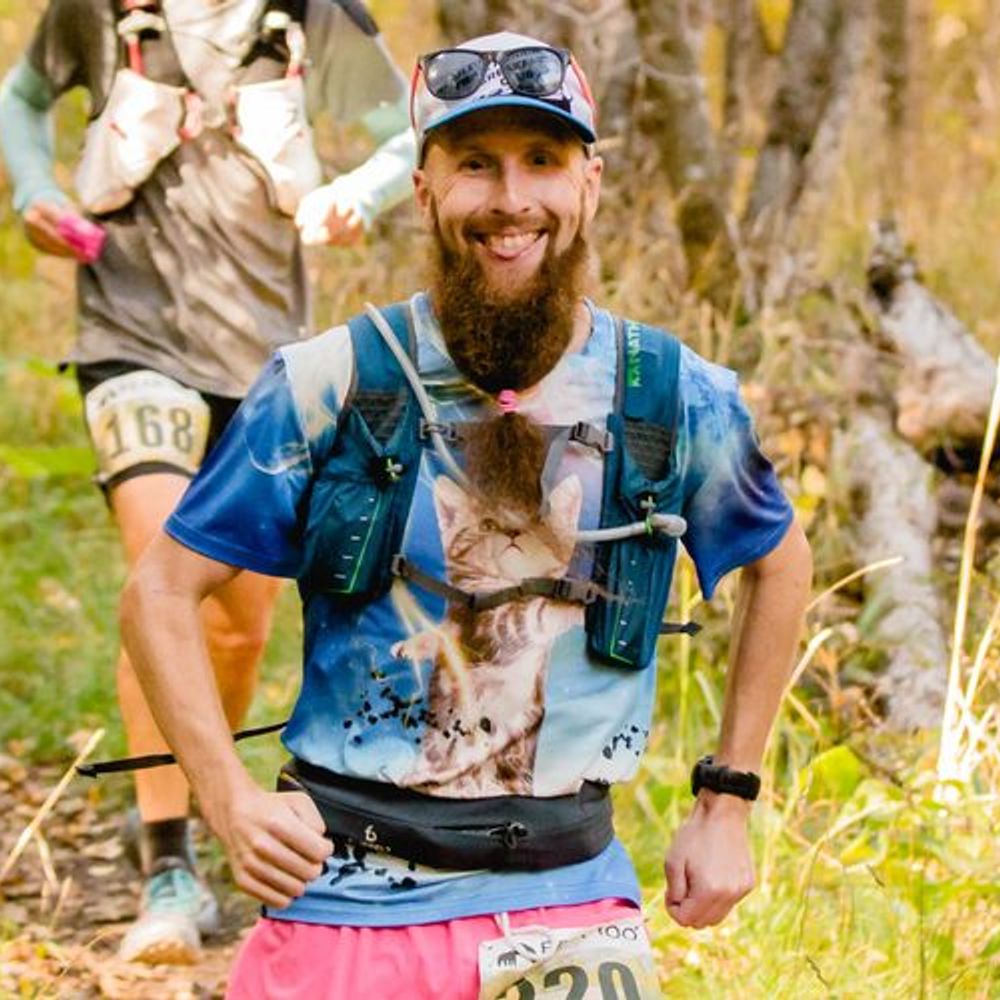
I've lost count of how many times I've co-organized or co-instructed an @ametsoc.org short course on #machinelearning. Excited to spend my Sunday teaching another ~60 folks this year! #AMS2026

January 25, 2026 at 8:23 PM
I've lost count of how many times I've co-organized or co-instructed an @ametsoc.org short course on #machinelearning. Excited to spend my Sunday teaching another ~60 folks this year! #AMS2026
Practical Strategies To Optimize AI Prompts For Improved Results onlinemarketingscoops.com/2026/01/28/o...
.
#aiprompts #artificialintelligence #AIGenerated #machinelearning #ContentCreation #digitalmarketing #AIContent #innovations #TechTrends #amwriting #Automation #futureofai #aiwritingprompts
.
#aiprompts #artificialintelligence #AIGenerated #machinelearning #ContentCreation #digitalmarketing #AIContent #innovations #TechTrends #amwriting #Automation #futureofai #aiwritingprompts

Practical Strategies To Optimize AI Prompts For Improved Results
What if the secret to unlocking AI’s full potential wasn’t in the technology itself but in how we use it? After spending over 200 hours teaching AI to write, Nate B Jones discovered that the bigges…
onlinemarketingscoops.com
January 28, 2026 at 3:37 PM
Practical Strategies To Optimize AI Prompts For Improved Results onlinemarketingscoops.com/2026/01/28/o...
.
#aiprompts #artificialintelligence #AIGenerated #machinelearning #ContentCreation #digitalmarketing #AIContent #innovations #TechTrends #amwriting #Automation #futureofai #aiwritingprompts
.
#aiprompts #artificialintelligence #AIGenerated #machinelearning #ContentCreation #digitalmarketing #AIContent #innovations #TechTrends #amwriting #Automation #futureofai #aiwritingprompts

Thanks to Prof. Andrew Ellis ( @lsepress.bsky.social ) for a great seminar on “Equilibrium Effects of Machine Learning” (with Michele Piccione and Shengxing Zhang). Clear insights on how ML can shape information aggregation in markets. #Economics #MachineLearning #Research #EconTwitter #Econsky

January 29, 2026 at 10:31 AM
Thanks to Prof. Andrew Ellis ( @lsepress.bsky.social ) for a great seminar on “Equilibrium Effects of Machine Learning” (with Michele Piccione and Shengxing Zhang). Clear insights on how ML can shape information aggregation in markets. #Economics #MachineLearning #Research #EconTwitter #Econsky

AI agents now have their own Reddit-style social network, and it's getting weird fast https://arstechni.ca... #PeterSteinberger #AIconsciousness #machinelearning #promptinjection #socialmedia #AIbehavior #AIsecurity #opensource #agenticAI #Anthropic #AIagents #AIethics #Moltbook #OpenClaw…
January 31, 2026 at 10:00 AM
AI agents now have their own Reddit-style social network, and it's getting weird fast https://arstechni.ca... #PeterSteinberger #AIconsciousness #machinelearning #promptinjection #socialmedia #AIbehavior #AIsecurity #opensource #agenticAI #Anthropic #AIagents #AIethics #Moltbook #OpenClaw…
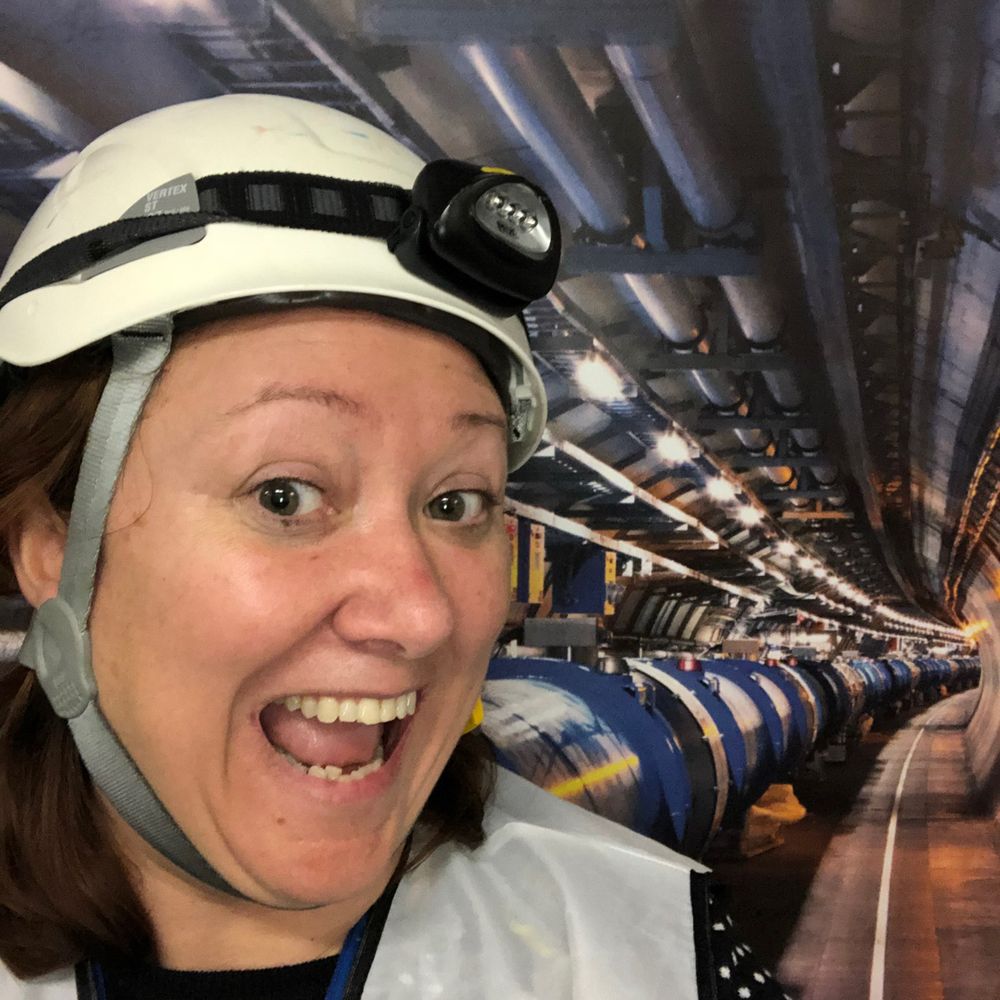
This #CMSPaper investigates different #AI #machinelearning methods that aim to find jets that are inconsistent with the standard model. It shows that a new method called #Wasserstein normalized autoencodes works much better than other neural networks arxiv.org/abs/2510.02168

February 1, 2026 at 11:03 AM
This #CMSPaper investigates different #AI #machinelearning methods that aim to find jets that are inconsistent with the standard model. It shows that a new method called #Wasserstein normalized autoencodes works much better than other neural networks arxiv.org/abs/2510.02168
Hear the experts discuss current research and other important topics in #AI on the journal's #podcast series! Paul Yi & @alitejanimd.bsky.social https://rsnaradiologyai.libsyn.com/ #ML #MachineLearning #Radiomics
January 27, 2026 at 2:16 PM
Hear the experts discuss current research and other important topics in #AI on the journal's #podcast series! Paul Yi & @alitejanimd.bsky.social https://rsnaradiologyai.libsyn.com/ #ML #MachineLearning #Radiomics
"[T]here is a shift from isolated tools to frameworks that promise to orchestrate the full radiology workflow" https://radiologyai.substack.com/p/from-narrow-ai-to-generalist-partners @uniregensburg.bsky.social #DeepLearning #ML #MachineLearning

January 28, 2026 at 3:15 PM
"[T]here is a shift from isolated tools to frameworks that promise to orchestrate the full radiology workflow" https://radiologyai.substack.com/p/from-narrow-ai-to-generalist-partners @uniregensburg.bsky.social #DeepLearning #ML #MachineLearning

PyCharm now supports @googlecolab.bsky.social
Get first-class IDE features like navigation, refactoring, and interactive outputs directly in your Colab-backed Jupyter notebooks.
Available for free in PyCharm 2025.3.2.
Learn more 👉 jb.gg/colab
#Jupyter #Python #MachineLearning
Get first-class IDE features like navigation, refactoring, and interactive outputs directly in your Colab-backed Jupyter notebooks.
Available for free in PyCharm 2025.3.2.
Learn more 👉 jb.gg/colab
#Jupyter #Python #MachineLearning

Google Colab Support Is Now Available in PyCharm 2025.3.2 | The PyCharm Blog
With PyCharm 2025.3.2, we’re bringing local IDE workflows and Colab-hosted notebooks together. Google Colab support is now available for free in PyCharm as a core feature, along with basic Jupyter not...
jb.gg
January 28, 2026 at 12:19 PM
PyCharm now supports @googlecolab.bsky.social
Get first-class IDE features like navigation, refactoring, and interactive outputs directly in your Colab-backed Jupyter notebooks.
Available for free in PyCharm 2025.3.2.
Learn more 👉 jb.gg/colab
#Jupyter #Python #MachineLearning
Get first-class IDE features like navigation, refactoring, and interactive outputs directly in your Colab-backed Jupyter notebooks.
Available for free in PyCharm 2025.3.2.
Learn more 👉 jb.gg/colab
#Jupyter #Python #MachineLearning

🚀First paper published!
We introduce DMTS, a multi-time-step method for ML force fields
✔️×4 speed-up
✔️Accuracy preserved
✔️Generalizable to any ML potential
📄Link: pubs.acs.org/doi/full/10....
The preprint: arxiv.org/abs/2510.06562
@jppiquem.bsky.social
#MolecularDynamics #MachineLearning
We introduce DMTS, a multi-time-step method for ML force fields
✔️×4 speed-up
✔️Accuracy preserved
✔️Generalizable to any ML potential
📄Link: pubs.acs.org/doi/full/10....
The preprint: arxiv.org/abs/2510.06562
@jppiquem.bsky.social
#MolecularDynamics #MachineLearning

January 28, 2026 at 5:59 PM
🚀First paper published!
We introduce DMTS, a multi-time-step method for ML force fields
✔️×4 speed-up
✔️Accuracy preserved
✔️Generalizable to any ML potential
📄Link: pubs.acs.org/doi/full/10....
The preprint: arxiv.org/abs/2510.06562
@jppiquem.bsky.social
#MolecularDynamics #MachineLearning
We introduce DMTS, a multi-time-step method for ML force fields
✔️×4 speed-up
✔️Accuracy preserved
✔️Generalizable to any ML potential
📄Link: pubs.acs.org/doi/full/10....
The preprint: arxiv.org/abs/2510.06562
@jppiquem.bsky.social
#MolecularDynamics #MachineLearning
#AI tech set upon #Hubble data, finds previously unnoticed "cosmic anomalies"
Analyzed 100 million images in 2 1/2 days.
“Perhaps most intriguing of all, there were several dozen objects that defied classification altogether."
#ArtificialIntelligence #MachineLearning #Astronomy #Galaxies #NASA
Analyzed 100 million images in 2 1/2 days.
“Perhaps most intriguing of all, there were several dozen objects that defied classification altogether."
#ArtificialIntelligence #MachineLearning #Astronomy #Galaxies #NASA

Astronomers used AI to find 1,400 ‘anomalous objects’ from Hubble archives

Scientists let AI loose on Hubble’s archives
It found 800 previously undiscovered ‘cosmic anomalies.’
buff.ly
January 28, 2026 at 11:40 AM
#AI tech set upon #Hubble data, finds previously unnoticed "cosmic anomalies"
Analyzed 100 million images in 2 1/2 days.
“Perhaps most intriguing of all, there were several dozen objects that defied classification altogether."
#ArtificialIntelligence #MachineLearning #Astronomy #Galaxies #NASA
Analyzed 100 million images in 2 1/2 days.
“Perhaps most intriguing of all, there were several dozen objects that defied classification altogether."
#ArtificialIntelligence #MachineLearning #Astronomy #Galaxies #NASA
A systematic review of the economics of AI in radiology https://doi.org/10.1148/ryai.250090 @tum.de @unibas.ch #AAAI26 #IAAI2026 #AI #ArtificialIntelligence #MachineLearning

January 26, 2026 at 7:15 PM
A systematic review of the economics of AI in radiology https://doi.org/10.1148/ryai.250090 @tum.de @unibas.ch #AAAI26 #IAAI2026 #AI #ArtificialIntelligence #MachineLearning
Foundation models have expanded from text-only large language models to large multimodal models https://radiologyai.substack.com/p/from-narrow-ai-to-generalist-partners @uniregensburg.bsky.social #mutlimodal #AI #MachineLearning
January 26, 2026 at 3:15 AM
Foundation models have expanded from text-only large language models to large multimodal models https://radiologyai.substack.com/p/from-narrow-ai-to-generalist-partners @uniregensburg.bsky.social #mutlimodal #AI #MachineLearning

Google: l'AI capirà i tuoi desideri prima della ricerca
#AI #AISearch #Google #GoogleAI #GoogleSearch #IntelligenzaArtificiale #MachineLearning #MotoreDiRicerca #Novità� #Privacy #RicercaGoogle #SEO #TechNews #Tecnologia
www.ceotech.it/google-lai-c...

January 27, 2026 at 11:41 AM
Google: l'AI capirà i tuoi desideri prima della ricerca
#AI #AISearch #Google #GoogleAI #GoogleSearch #IntelligenzaArtificiale #MachineLearning #MotoreDiRicerca #Novità� #Privacy #RicercaGoogle #SEO #TechNews #Tecnologia
www.ceotech.it/google-lai-c...
My weekly newsletter is out!
Open source: Pandas 3 release
New tutorials
New book: Introduction to Machine Learning Systems by Prof. Vijay Janapa Reddi
ramikrispin.substack.com/p/pandas-3-i...
#ai #python #machinelearning
Open source: Pandas 3 release
New tutorials
New book: Introduction to Machine Learning Systems by Prof. Vijay Janapa Reddi
ramikrispin.substack.com/p/pandas-3-i...
#ai #python #machinelearning

Pandas 3 Release, Machine Learning Systems & New Tutorials | Issue 72
Learn what’s new with Pandas 3, get ML systems insights, and explore top tutorials on JAX, FastAPI, and more in this curated data science roundup.
ramikrispin.substack.com
January 25, 2026 at 4:37 PM
My weekly newsletter is out!
Open source: Pandas 3 release
New tutorials
New book: Introduction to Machine Learning Systems by Prof. Vijay Janapa Reddi
ramikrispin.substack.com/p/pandas-3-i...
#ai #python #machinelearning
Open source: Pandas 3 release
New tutorials
New book: Introduction to Machine Learning Systems by Prof. Vijay Janapa Reddi
ramikrispin.substack.com/p/pandas-3-i...
#ai #python #machinelearning