




Patrick Mellacher
@pmellacher.bsky.social
Assistant Professor and Deputy Head of the Graz Schumpeter Centre of the University of Graz. Modelling economic & social dynamics (mainly with ABMs)
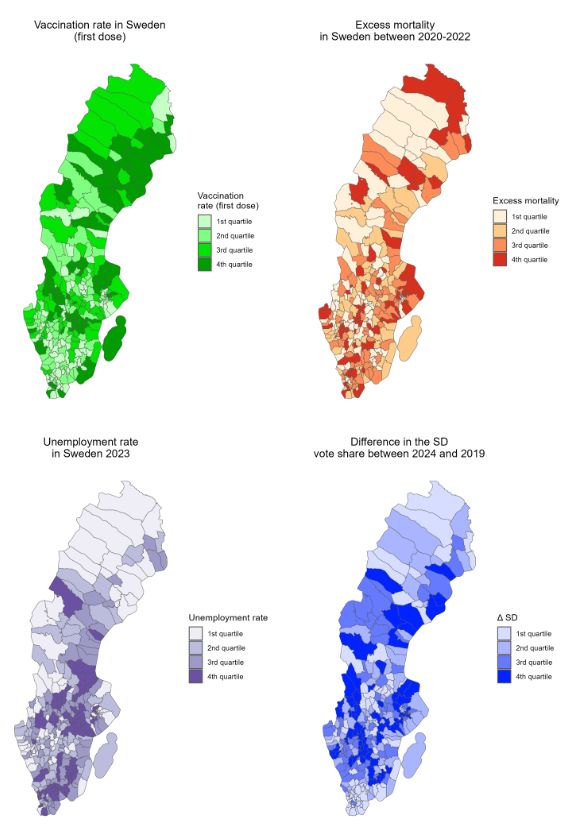
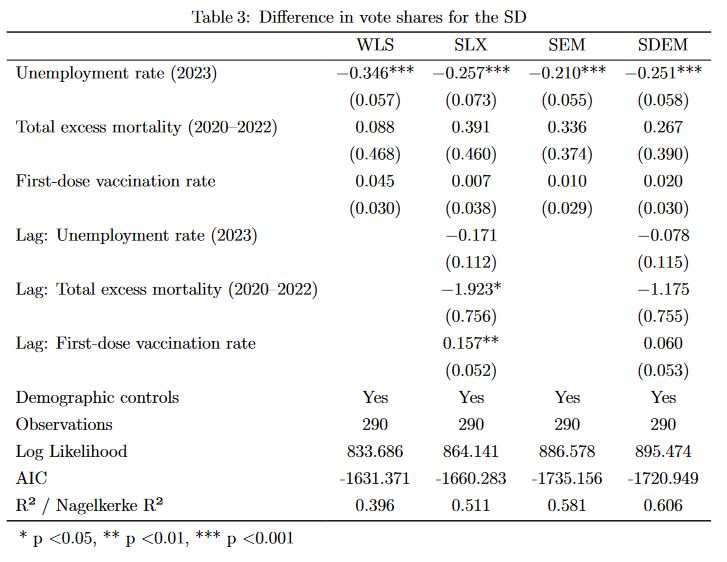
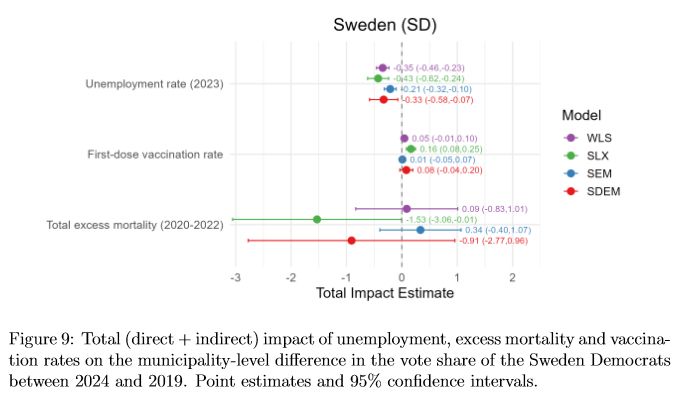
Finally, Sweden contrasts Italy and Austria, because i) the Swedish government had a much more lax approach to Covid-19, and ii) the Swedish major right-wing party SD demanded stricter containment policies. 9/12
July 22, 2025 at 11:57 AM
Finally, Sweden contrasts Italy and Austria, because i) the Swedish government had a much more lax approach to Covid-19, and ii) the Swedish major right-wing party SD demanded stricter containment policies. 9/12
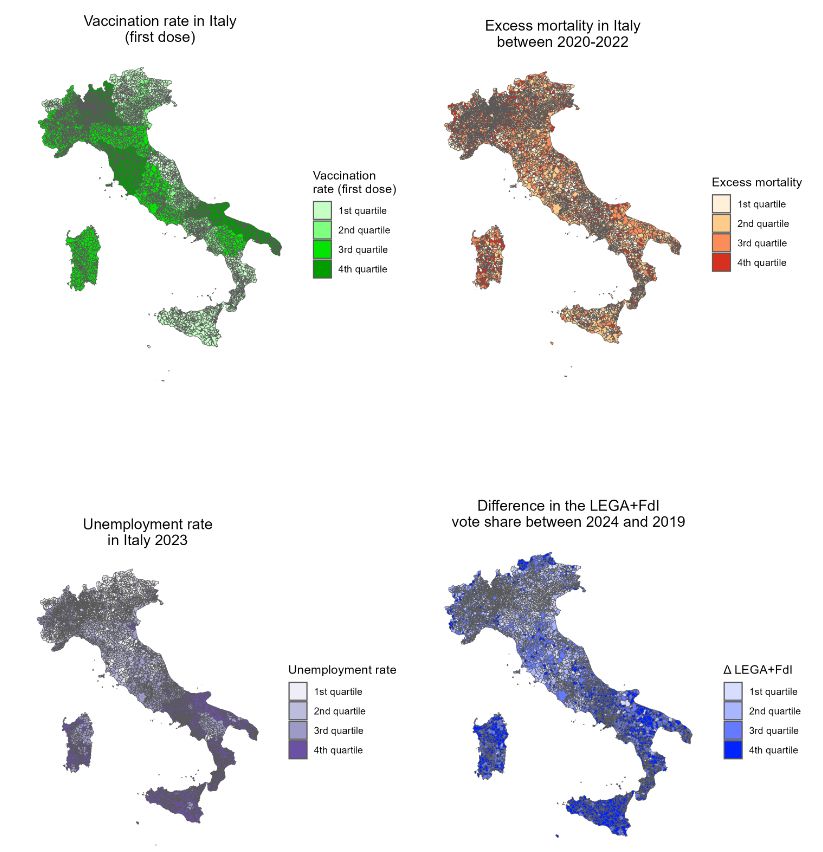
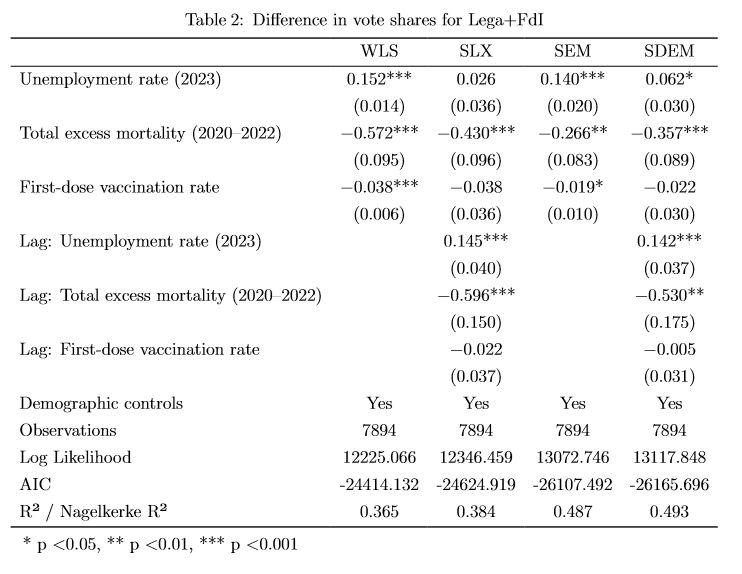
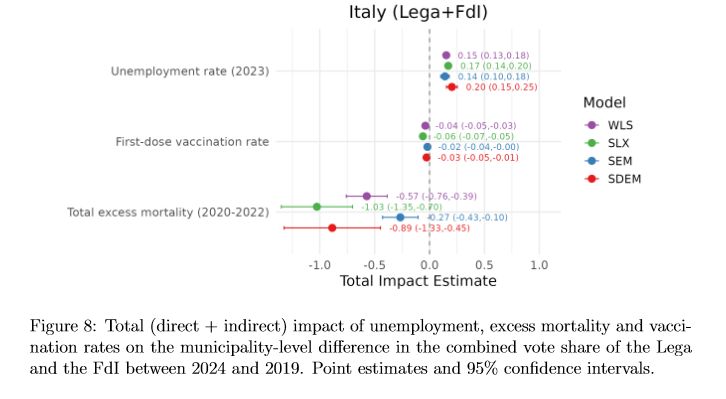
Italy saw a dramatic shift of votes between Salvini's Lega and Meloni's FdI, both being skeptical of containment policies. Together, they won compared to 2019, where unemployment was high and vaccination coverage low (as in Austria). In contrast to Austria, we also see a negative direct impact 6/12
July 22, 2025 at 11:57 AM
Italy saw a dramatic shift of votes between Salvini's Lega and Meloni's FdI, both being skeptical of containment policies. Together, they won compared to 2019, where unemployment was high and vaccination coverage low (as in Austria). In contrast to Austria, we also see a negative direct impact 6/12
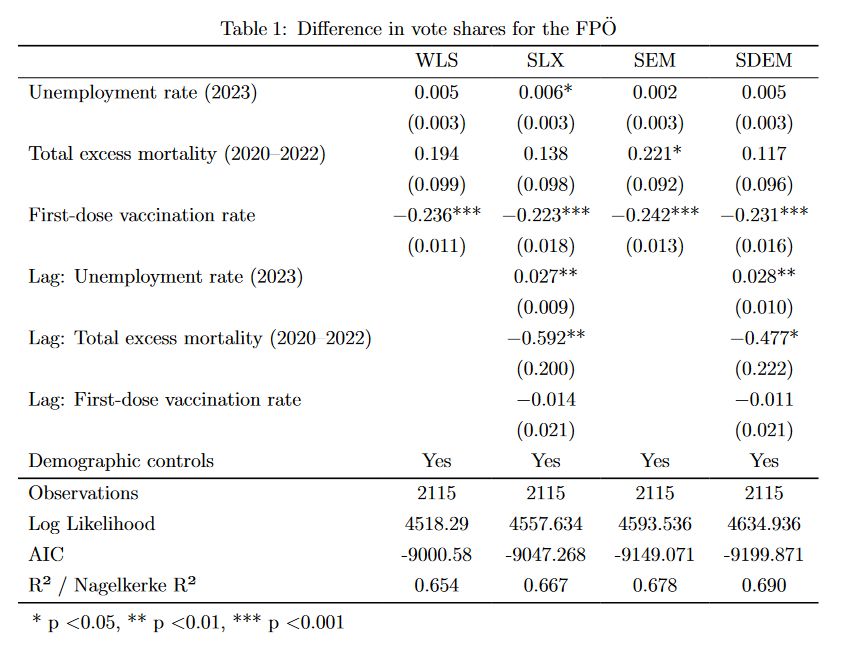
correlated with FPÖ performance), which is the level of skepticism in a given municipality. One specification (SEM) finds a positive (direct) association, but SLX and SDEM a negative indirect impact. This means that the FPÖ fared worse if a lot of people died in a neighboring municipality. 5/12
July 22, 2025 at 11:57 AM
correlated with FPÖ performance), which is the level of skepticism in a given municipality. One specification (SEM) finds a positive (direct) association, but SLX and SDEM a negative indirect impact. This means that the FPÖ fared worse if a lot of people died in a neighboring municipality. 5/12
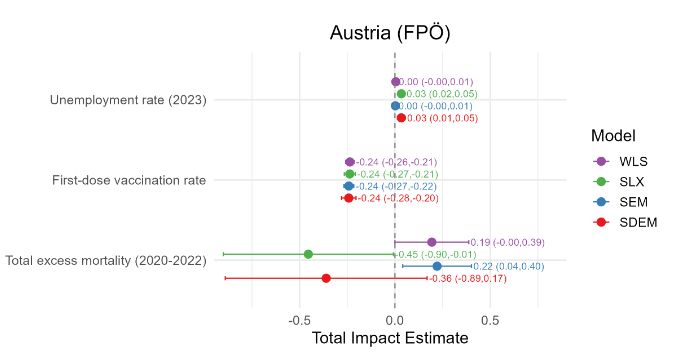
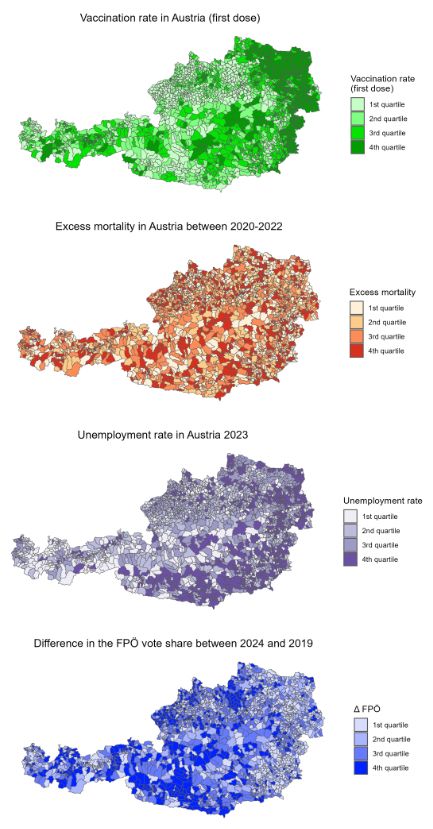
In Austria, the FPÖ staged a strong campaign against Covid-19 measures after performing a U-turn after the first wave of the pandemic (see my JEBO paper (www.sciencedirect.com/science/arti...). The party gained particularly in areas with high post-pandemic unemployment and low vaccination rates 3/12
July 22, 2025 at 11:57 AM
In Austria, the FPÖ staged a strong campaign against Covid-19 measures after performing a U-turn after the first wave of the pandemic (see my JEBO paper (www.sciencedirect.com/science/arti...). The party gained particularly in areas with high post-pandemic unemployment and low vaccination rates 3/12
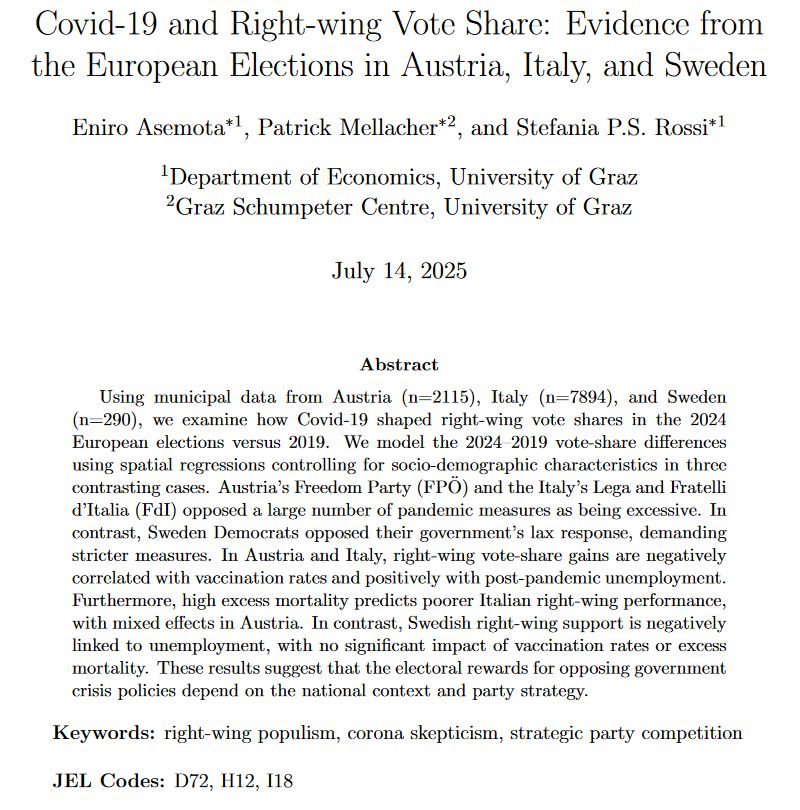
Happy to announce the publication of our new preprint: E. Asemota, S. Rossi and I explore how the Covid-19 pandemic has affected support for right-wing populist parties on a local level in the European Parliament elections of 2024 in three contrasting cases: Austria, Italy and Sweden 1/12
July 22, 2025 at 11:57 AM
Happy to announce the publication of our new preprint: E. Asemota, S. Rossi and I explore how the Covid-19 pandemic has affected support for right-wing populist parties on a local level in the European Parliament elections of 2024 in three contrasting cases: Austria, Italy and Sweden 1/12
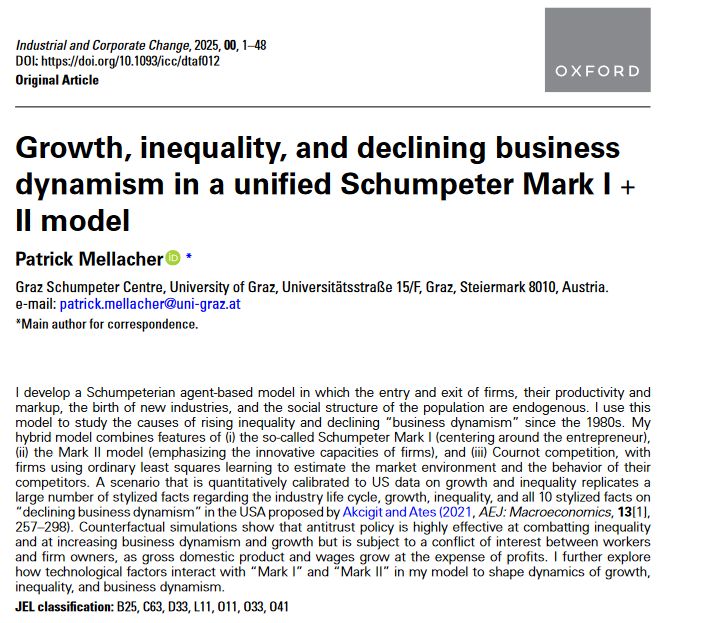
I'm thrilled to announce the #OA publication of my paper "Growth, inequality and declining business dynamism in a unified Schumpeter Mark I + II model" in Industrial and Corporate Change (annual issue on Macro and Development): academic.oup.com/icc/advance-...
May 15, 2025 at 7:35 AM
I'm thrilled to announce the #OA publication of my paper "Growth, inequality and declining business dynamism in a unified Schumpeter Mark I + II model" in Industrial and Corporate Change (annual issue on Macro and Development): academic.oup.com/icc/advance-...
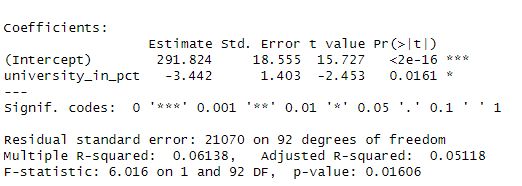
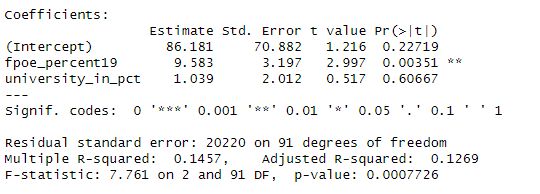
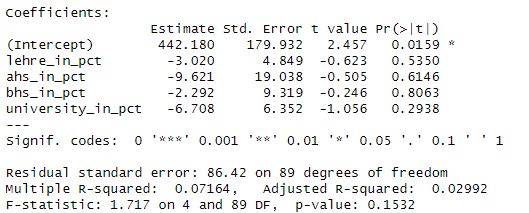
Es ist aber auch so, dass das Bildungsniveau die Differenzen in den Sterberaten weniger gut vorhersagen können, als Unterschiede im FPÖ-Anteil 2019. Hierzu ein paar Modelle mit und ohne FPÖ (bitte ALT-Text für eine Beschreibung lesen) 2/2
February 27, 2025 at 9:14 AM
Es ist aber auch so, dass das Bildungsniveau die Differenzen in den Sterberaten weniger gut vorhersagen können, als Unterschiede im FPÖ-Anteil 2019. Hierzu ein paar Modelle mit und ohne FPÖ (bitte ALT-Text für eine Beschreibung lesen) 2/2
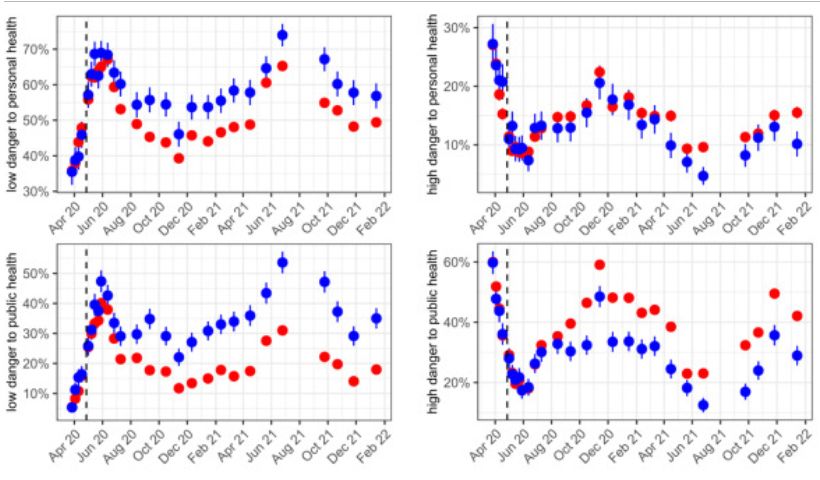
dass Personen, die die FPÖ 2019 gewählt haben, nach dem Schwenk der FPÖ im Durchschnitt andere Ansichten bzgl. der gesundheitlichen Risiken von Covid-19 teilten, als die restliche Bevölkerung - sie hielten die gesundheitliche Gefahr sowohl für sich, als auch für die Gesellschaft für niedriger. 14/16
February 26, 2025 at 9:43 AM
dass Personen, die die FPÖ 2019 gewählt haben, nach dem Schwenk der FPÖ im Durchschnitt andere Ansichten bzgl. der gesundheitlichen Risiken von Covid-19 teilten, als die restliche Bevölkerung - sie hielten die gesundheitliche Gefahr sowohl für sich, als auch für die Gesellschaft für niedriger. 14/16
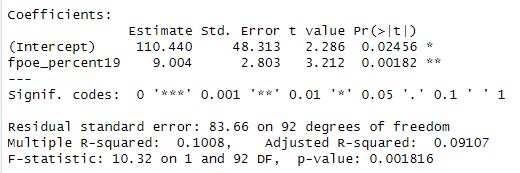
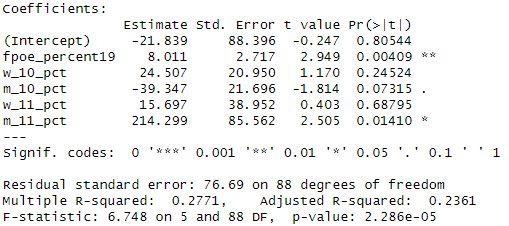
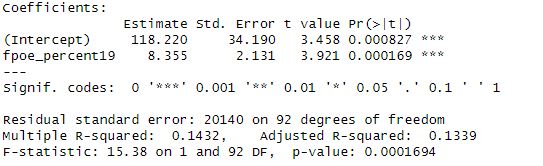
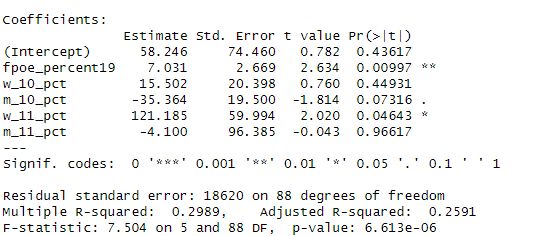
In ganz simplen OLS Regressionen reicht die Schätzung des Zusammenhangs von 9 Toten/100k EW pro Prozentpunkt FPÖ (nicht nach Bevölkerungsgröße gewichtet und ohne Kontrollvariablen) bis zu 7 Toten/100k EW pro Prozentpunkt FPÖ (gewichtet und mit altersspezifischen Kontrollvariablen). 10/16
February 26, 2025 at 9:43 AM
In ganz simplen OLS Regressionen reicht die Schätzung des Zusammenhangs von 9 Toten/100k EW pro Prozentpunkt FPÖ (nicht nach Bevölkerungsgröße gewichtet und ohne Kontrollvariablen) bis zu 7 Toten/100k EW pro Prozentpunkt FPÖ (gewichtet und mit altersspezifischen Kontrollvariablen). 10/16
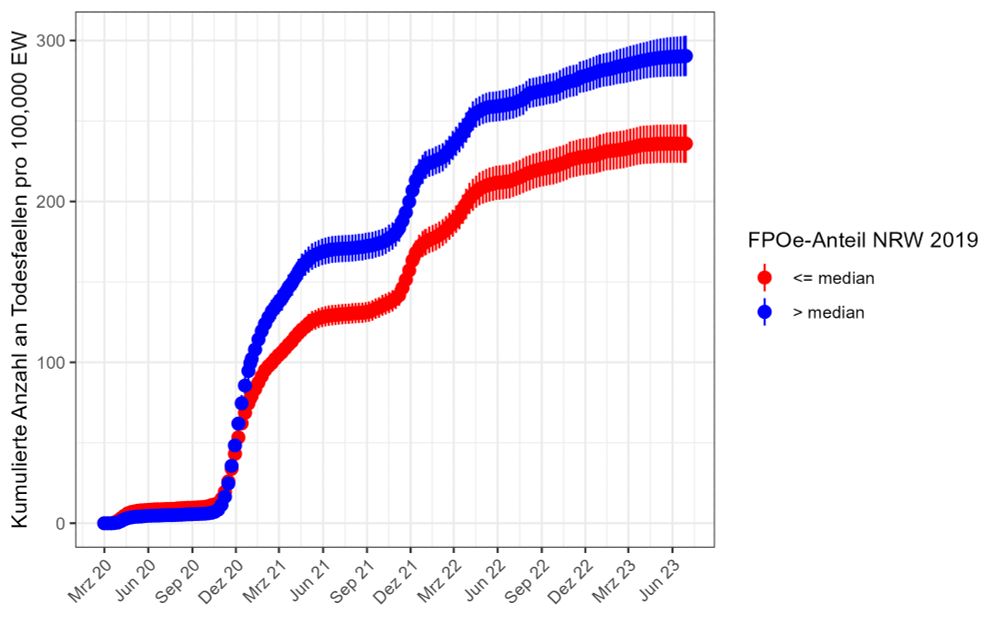
Betrachten wir nun die Sterblichkeit im Zeitverlauf: der Einfachheit halber habe ich die Bezirke in zwei Gruppen unterteilt: jene mit einem überdurchschnittlich hohen FPÖ-Anteil bei den NRW 2019 (blau) und der Rest (rot). Wir sehen eine große Divergenz in der Herbst/Winterwelle 2020/21 7/16
February 26, 2025 at 9:43 AM
Betrachten wir nun die Sterblichkeit im Zeitverlauf: der Einfachheit halber habe ich die Bezirke in zwei Gruppen unterteilt: jene mit einem überdurchschnittlich hohen FPÖ-Anteil bei den NRW 2019 (blau) und der Rest (rot). Wir sehen eine große Divergenz in der Herbst/Winterwelle 2020/21 7/16
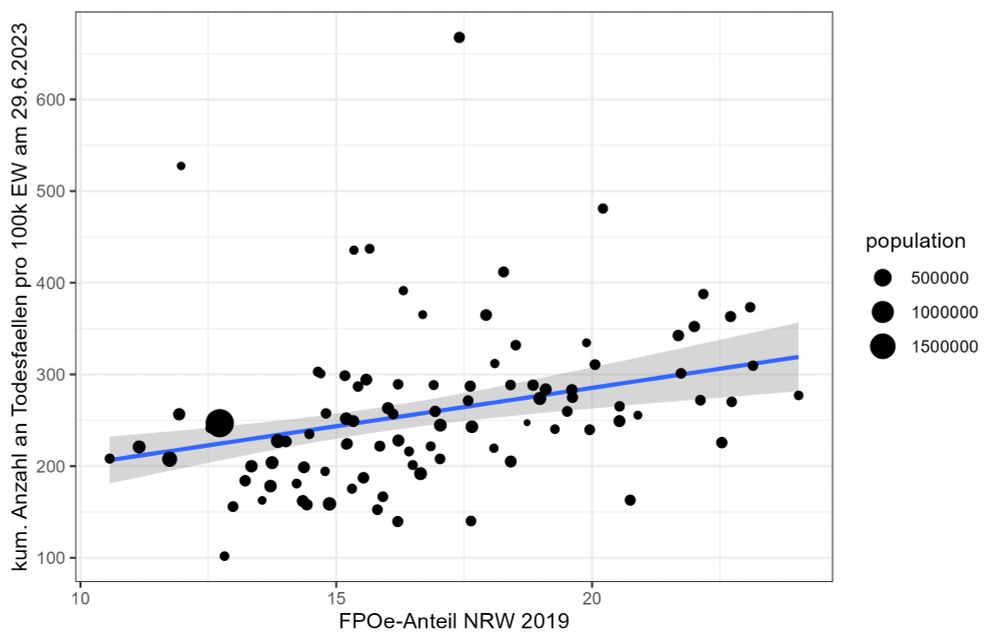
Am mittlerweile positiven Zusammenhang ändert sich auch kaum etwas, wenn man die Bevölkerungsgröße der einzelnen Bezirke in die Analyse miteinbezieht. 6/16
February 26, 2025 at 9:43 AM
Am mittlerweile positiven Zusammenhang ändert sich auch kaum etwas, wenn man die Bevölkerungsgröße der einzelnen Bezirke in die Analyse miteinbezieht. 6/16
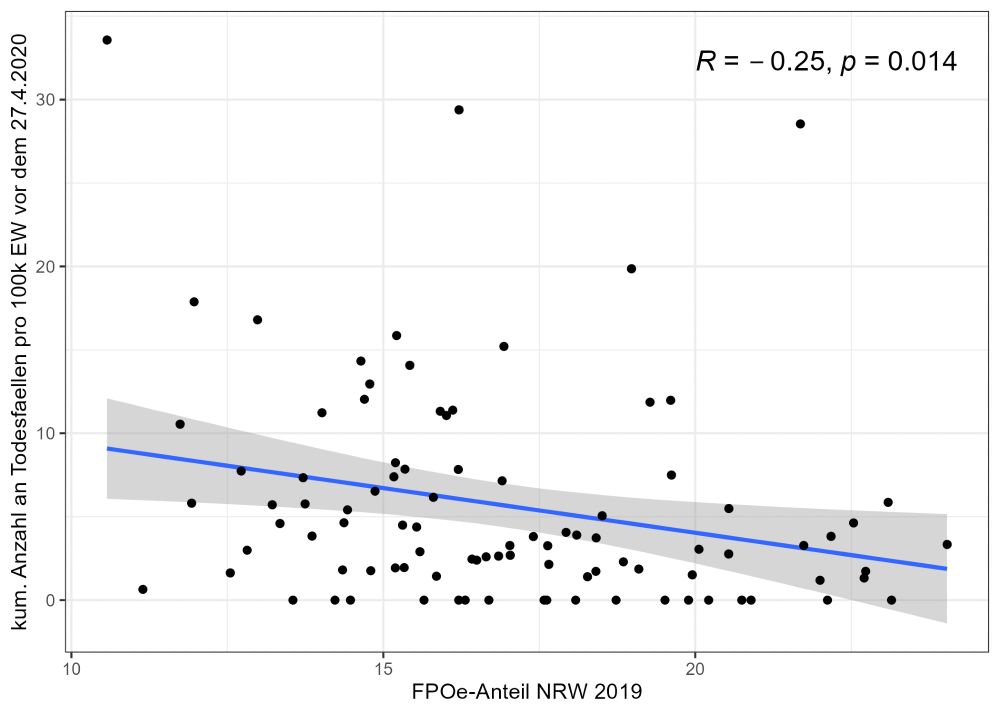
Erst Ende April 2020 ist sie auf einen stark gegen Eindämmungsmaßnahmen gerichteten Kurs umgeschwenkt. Ich habe diesen Kurs in meinem Paper als "Corona-Populismus" bezeichnet. Vor diesem Schwenk war der Zusammenhang zwischen FPÖ-Wahlergebnis 2019 und Covid-19 Sterblichkeit sogar negativ. 5/16
February 26, 2025 at 9:43 AM
Erst Ende April 2020 ist sie auf einen stark gegen Eindämmungsmaßnahmen gerichteten Kurs umgeschwenkt. Ich habe diesen Kurs in meinem Paper als "Corona-Populismus" bezeichnet. Vor diesem Schwenk war der Zusammenhang zwischen FPÖ-Wahlergebnis 2019 und Covid-19 Sterblichkeit sogar negativ. 5/16
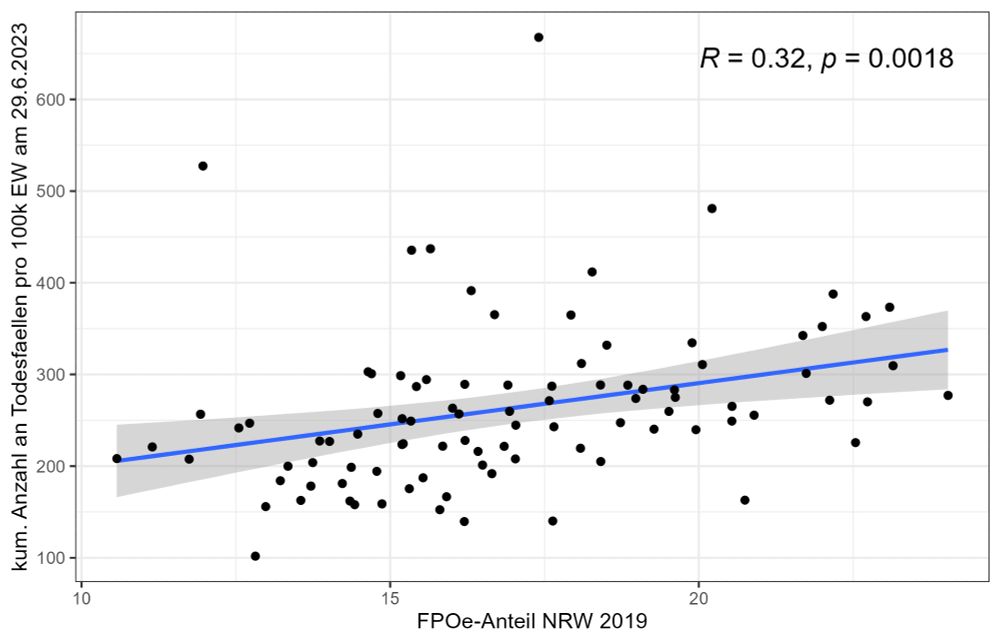
Schauen wir uns zunächst einmal den Zusammenhang zwischen Covid-19 Todesfällen und FPÖ-Anteil bei den NRW 2019 auf Bezirksebene am 29.6.2023 an. Wir sehen eine ziemlich hohe, hoch signifikante Korrelation. 3/16
February 26, 2025 at 9:43 AM
Schauen wir uns zunächst einmal den Zusammenhang zwischen Covid-19 Todesfällen und FPÖ-Anteil bei den NRW 2019 auf Bezirksebene am 29.6.2023 an. Wir sehen eine ziemlich hohe, hoch signifikante Korrelation. 3/16
Auf meine Studie angesprochen, fragte Fr. Belakowitsch gestern im #ORFreport nach den Zahlen zum Zusammenhang zwischen FPÖ Wahlergebnis und Covid-19 Sterblichkeit. Ich liefere diese gerne hier nach. 🧵
Etwas ältere Zahlen mit deutlich detaillierten Analysen hier: sciencedirect.com/science/arti...
Etwas ältere Zahlen mit deutlich detaillierten Analysen hier: sciencedirect.com/science/arti...
February 26, 2025 at 9:43 AM
Auf meine Studie angesprochen, fragte Fr. Belakowitsch gestern im #ORFreport nach den Zahlen zum Zusammenhang zwischen FPÖ Wahlergebnis und Covid-19 Sterblichkeit. Ich liefere diese gerne hier nach. 🧵
Etwas ältere Zahlen mit deutlich detaillierten Analysen hier: sciencedirect.com/science/arti...
Etwas ältere Zahlen mit deutlich detaillierten Analysen hier: sciencedirect.com/science/arti...
Very happy to share this new paper by Teresa Lackner, Luca Fierro and me out in JEBO 🥳 www.sciencedirect.com/science/arti...

December 18, 2024 at 12:27 PM
Very happy to share this new paper by Teresa Lackner, Luca Fierro and me out in JEBO 🥳 www.sciencedirect.com/science/arti...
We show that this has a strong impact on the results, both in terms of the success of various party strategies, as well as in terms of the resulting distribution of voters and parties.


November 20, 2024 at 10:04 AM
We show that this has a strong impact on the results, both in terms of the success of various party strategies, as well as in terms of the resulting distribution of voters and parties.
📢New working paper 📢
Spatial voting models have a long and rich history (1929!), but usually assume that voters' ideological preferences stay constant.
Leonie Geyer and I have developed a model where voters' opinions are influenced by other voters, as well as the party that they currently support.
Spatial voting models have a long and rich history (1929!), but usually assume that voters' ideological preferences stay constant.
Leonie Geyer and I have developed a model where voters' opinions are influenced by other voters, as well as the party that they currently support.

November 20, 2024 at 10:04 AM
📢New working paper 📢
Spatial voting models have a long and rich history (1929!), but usually assume that voters' ideological preferences stay constant.
Leonie Geyer and I have developed a model where voters' opinions are influenced by other voters, as well as the party that they currently support.
Spatial voting models have a long and rich history (1929!), but usually assume that voters' ideological preferences stay constant.
Leonie Geyer and I have developed a model where voters' opinions are influenced by other voters, as well as the party that they currently support.
Surpassed 100 google scholar citations. Thank you to all of those who have helped me along this journey. In particular I want to highlight the two physicists who invented time travel just to go back to 1996 to cite our 2024 paper. Feeling honored!

September 9, 2024 at 7:07 AM
Surpassed 100 google scholar citations. Thank you to all of those who have helped me along this journey. In particular I want to highlight the two physicists who invented time travel just to go back to 1996 to cite our 2024 paper. Feeling honored!