


IPSO - International Programme on the State of the Ocean
@oceanipso.bsky.social
Bridging Science and Policy for a Healthy Ocean 🌊 https://stateoftheocean.org
Pinned

🦋 For those new to BlueSky, let us introduce ourselves:
The International Programme on the State of the Ocean (IPSO) brings together science, communications, policy, and legal disciplines to drive ocean solutions.
The International Programme on the State of the Ocean (IPSO) brings together science, communications, policy, and legal disciplines to drive ocean solutions.
🌊 The Arctic is changing fast.
Retreating sea ice and warmer Atlantic waters are shifting north, boosting dense water formation.
This helps keep the Atlantic Meridional Overturning Circulation (#AMOC) flowing, even as other regions slow down. #ClimateChange
Retreating sea ice and warmer Atlantic waters are shifting north, boosting dense water formation.
This helps keep the Atlantic Meridional Overturning Circulation (#AMOC) flowing, even as other regions slow down. #ClimateChange

Collapse of key Atlantic currents may be held off by newly-discovered back-up system, study finds
Rising temperatures in the North Atlantic are slowing vital currents, but a new process in the Arctic could save the day, scientists say.
www.inkl.com
December 5, 2025 at 4:11 PM
🌊 The Arctic is changing fast.
Retreating sea ice and warmer Atlantic waters are shifting north, boosting dense water formation.
This helps keep the Atlantic Meridional Overturning Circulation (#AMOC) flowing, even as other regions slow down. #ClimateChange
Retreating sea ice and warmer Atlantic waters are shifting north, boosting dense water formation.
This helps keep the Atlantic Meridional Overturning Circulation (#AMOC) flowing, even as other regions slow down. #ClimateChange
#WorldWildlifeConservationDay is a reminder that protecting ocean life is essential to planetary stability.
🦈 #Sharks are declining due to overfishing, illegal trade, and habitat loss. Many species now sit at the brink, despite their critical role in maintaining balanced, functioning food webs.
🦈 #Sharks are declining due to overfishing, illegal trade, and habitat loss. Many species now sit at the brink, despite their critical role in maintaining balanced, functioning food webs.

December 4, 2025 at 4:45 PM
#WorldWildlifeConservationDay is a reminder that protecting ocean life is essential to planetary stability.
🦈 #Sharks are declining due to overfishing, illegal trade, and habitat loss. Many species now sit at the brink, despite their critical role in maintaining balanced, functioning food webs.
🦈 #Sharks are declining due to overfishing, illegal trade, and habitat loss. Many species now sit at the brink, despite their critical role in maintaining balanced, functioning food webs.
#MarineHeatwaves can disrupt organism development by altering the time between life stages.
Even moderate but prolonged heat can shift the timing of key life stages, risking failed reproduction and population decline.
@sosbangor.bsky.social
@awi.de
Even moderate but prolonged heat can shift the timing of key life stages, risking failed reproduction and population decline.
@sosbangor.bsky.social
@awi.de

Marine heatwaves impact organism developmental time - Communications Earth & Environment
Marine heatwaves impact organisms’ developmental time, which alters phenology and creates trophic and environmental mismatches, according to a framework examines different scenarios for understanding ...
www.nature.com
December 3, 2025 at 7:42 PM
#MarineHeatwaves can disrupt organism development by altering the time between life stages.
Even moderate but prolonged heat can shift the timing of key life stages, risking failed reproduction and population decline.
@sosbangor.bsky.social
@awi.de
Even moderate but prolonged heat can shift the timing of key life stages, risking failed reproduction and population decline.
@sosbangor.bsky.social
@awi.de
Seabirds can help support #CoralReef biodiversity and resilience.
Nutrient inputs from seabirds affect the feeding strategies and physical traits of reef fishes, enriching reef waters with nitrogen and phosphorus.
@lljeannot.bsky.social
https://royalsocietypublishing.org/doi/10.1098/rspb.2025.0539
Nutrient inputs from seabirds affect the feeding strategies and physical traits of reef fishes, enriching reef waters with nitrogen and phosphorus.
@lljeannot.bsky.social
https://royalsocietypublishing.org/doi/10.1098/rspb.2025.0539
Seabird-derived nutrients influence feeding pathways and body size in cryptobenthic reef fishes | Proceedings of the Royal Society B: Biological Sciences
Cross-ecosystem nutrient transfer can enhance coral reef functioning in an otherwise oligotrophic environment. While the influence of seabird-derived nutrients on coral reef organisms is increasingly recognized, how they are integrated into reef food we...
royalsocietypublishing.org
December 2, 2025 at 3:54 PM
Seabirds can help support #CoralReef biodiversity and resilience.
Nutrient inputs from seabirds affect the feeding strategies and physical traits of reef fishes, enriching reef waters with nitrogen and phosphorus.
@lljeannot.bsky.social
https://royalsocietypublishing.org/doi/10.1098/rspb.2025.0539
Nutrient inputs from seabirds affect the feeding strategies and physical traits of reef fishes, enriching reef waters with nitrogen and phosphorus.
@lljeannot.bsky.social
https://royalsocietypublishing.org/doi/10.1098/rspb.2025.0539
Antarctica remains one of Earth's last wilderness areas, but it is under increasing pressure from human activities.
On #AntarcticaDay, a few scientific studies remind us of the importance of urgent protection for this fragile continent. 🧵
📷 Kimberley Collins
On #AntarcticaDay, a few scientific studies remind us of the importance of urgent protection for this fragile continent. 🧵
📷 Kimberley Collins

December 1, 2025 at 3:46 PM
Antarctica remains one of Earth's last wilderness areas, but it is under increasing pressure from human activities.
On #AntarcticaDay, a few scientific studies remind us of the importance of urgent protection for this fragile continent. 🧵
📷 Kimberley Collins
On #AntarcticaDay, a few scientific studies remind us of the importance of urgent protection for this fragile continent. 🧵
📷 Kimberley Collins
🌊 This #BlueFriday, we’re choosing to value what truly sustains us: the ocean.
Today is a reminder that healthy seas regulate our climate, generate oxygen, and support life on Earth. Protecting the ocean is essential for a stable planet.
#OceanConservation #BluePlanet
Today is a reminder that healthy seas regulate our climate, generate oxygen, and support life on Earth. Protecting the ocean is essential for a stable planet.
#OceanConservation #BluePlanet

November 28, 2025 at 4:14 PM
🌊 This #BlueFriday, we’re choosing to value what truly sustains us: the ocean.
Today is a reminder that healthy seas regulate our climate, generate oxygen, and support life on Earth. Protecting the ocean is essential for a stable planet.
#OceanConservation #BluePlanet
Today is a reminder that healthy seas regulate our climate, generate oxygen, and support life on Earth. Protecting the ocean is essential for a stable planet.
#OceanConservation #BluePlanet
Global ocean governance could benefit from giving non-state actors a stronger role in international rule-making, this study states.
The IUCN is a case study of an active contributor to shaping ocean law by bridging governments and civil society, but it lacks effectiveness and enforcement power.
The IUCN is a case study of an active contributor to shaping ocean law by bridging governments and civil society, but it lacks effectiveness and enforcement power.

Frontiers | A new horizon for rule-making in global ocean governance? Reflections on the IUCN’s contributions and limitations
As traditional risks in global ocean governance continue to deteriorate and new challenges emerge, the state-centered pattern of the international rule-makin...
www.frontiersin.org
November 27, 2025 at 4:54 PM
Global ocean governance could benefit from giving non-state actors a stronger role in international rule-making, this study states.
The IUCN is a case study of an active contributor to shaping ocean law by bridging governments and civil society, but it lacks effectiveness and enforcement power.
The IUCN is a case study of an active contributor to shaping ocean law by bridging governments and civil society, but it lacks effectiveness and enforcement power.
#PlasticPollution has reached every corner of our planet.
Even remote areas like the Chagos Archipelago and Madagascar show contamination, revealing the widespread nature of marine plastic pollution. @margotthb.bsky.social
https://www.nature.com/articles/s41598-025-02893-0
Even remote areas like the Chagos Archipelago and Madagascar show contamination, revealing the widespread nature of marine plastic pollution. @margotthb.bsky.social
https://www.nature.com/articles/s41598-025-02893-0

Concentration gradient of plastic debris larger than 500 μm detected across the Southwest Indian ocean - Scientific Reports
Scientific Reports - Concentration gradient of plastic debris larger than 500 μm detected across the Southwest Indian ocean
www.nature.com
November 26, 2025 at 9:09 PM
#PlasticPollution has reached every corner of our planet.
Even remote areas like the Chagos Archipelago and Madagascar show contamination, revealing the widespread nature of marine plastic pollution. @margotthb.bsky.social
https://www.nature.com/articles/s41598-025-02893-0
Even remote areas like the Chagos Archipelago and Madagascar show contamination, revealing the widespread nature of marine plastic pollution. @margotthb.bsky.social
https://www.nature.com/articles/s41598-025-02893-0
Reposted by IPSO - International Programme on the State of the Ocean

Antarctica’s melt affects everybody but won’t hit every coastline the same.
New maps show where seas could rise the fastest, and why millions of coastal residents should pay attention now 🌊
New maps show where seas could rise the fastest, and why millions of coastal residents should pay attention now 🌊

Sea level doesn’t rise at the same rate everywhere – we mapped where Antarctica’s ice melt would have the biggest impact
Understanding what happens to Antarctica’s ice matters, because as it melts, sea levels rise, affecting lives and economies around the world.
buff.ly
November 26, 2025 at 7:48 AM
Antarctica’s melt affects everybody but won’t hit every coastline the same.
New maps show where seas could rise the fastest, and why millions of coastal residents should pay attention now 🌊
New maps show where seas could rise the fastest, and why millions of coastal residents should pay attention now 🌊
Reposted by IPSO - International Programme on the State of the Ocean
2025 is the International Year of Glaciers’ Preservation.
Authors call for urgent, collaborative action to preserve glaciers, highlighting their scientific, cultural and spiritual importance, urging integration of traditional knowledge into climate efforts. #Glaciers2025 #IYGP2025
Authors call for urgent, collaborative action to preserve glaciers, highlighting their scientific, cultural and spiritual importance, urging integration of traditional knowledge into climate efforts. #Glaciers2025 #IYGP2025
Reflections on United Nations’ Decade of Action for Cryospheric Sciences and International Year of Glaciers’ Preservation
journals.plos.org
November 26, 2025 at 8:22 AM
2025 is the International Year of Glaciers’ Preservation.
Authors call for urgent, collaborative action to preserve glaciers, highlighting their scientific, cultural and spiritual importance, urging integration of traditional knowledge into climate efforts. #Glaciers2025 #IYGP2025
Authors call for urgent, collaborative action to preserve glaciers, highlighting their scientific, cultural and spiritual importance, urging integration of traditional knowledge into climate efforts. #Glaciers2025 #IYGP2025
Reposted by IPSO - International Programme on the State of the Ocean

#CITESCoP20 opens today in Samarkand, a key moment for ensuring wildlife use is sustainable, legal and safe.
Progress here is essential for achieving Target 5 of the #KMGBF and protecting species and communities that depend on them.
Progress here is essential for achieving Target 5 of the #KMGBF and protecting species and communities that depend on them.

November 24, 2025 at 9:15 PM
#CITESCoP20 opens today in Samarkand, a key moment for ensuring wildlife use is sustainable, legal and safe.
Progress here is essential for achieving Target 5 of the #KMGBF and protecting species and communities that depend on them.
Progress here is essential for achieving Target 5 of the #KMGBF and protecting species and communities that depend on them.
Remember the 2007–2008 breakups of the Wilkins and Voyeykov shelves in #Antarctica?
A study reveals that large-scale calving events in Antarctic ice shelves are preceded by prolonged amplifications in flexural stress, driven by ocean swell and reduced sea-ice barriers.
A study reveals that large-scale calving events in Antarctic ice shelves are preceded by prolonged amplifications in flexural stress, driven by ocean swell and reduced sea-ice barriers.

Large-scale ice-shelf calving events follow prolonged amplifications in flexure - Nature Geoscience
The loss of sea ice enhances swell-induced flexural stress in Antarctic ice shelves before large-scale calving events, according to satellite observations and swell-induced flexural stress modelling.
www.nature.com
November 25, 2025 at 4:12 PM
Remember the 2007–2008 breakups of the Wilkins and Voyeykov shelves in #Antarctica?
A study reveals that large-scale calving events in Antarctic ice shelves are preceded by prolonged amplifications in flexural stress, driven by ocean swell and reduced sea-ice barriers.
A study reveals that large-scale calving events in Antarctic ice shelves are preceded by prolonged amplifications in flexural stress, driven by ocean swell and reduced sea-ice barriers.
🪸 #CoralReefs can help reconstruct continuous #SeaLevelRise.
Scientists found corals in the central Indian Ocean recording sea-level rise from 1930 to 2019 and showing an acceleration mid-century.
https://www.nature.com/articles/s41467-025-60972-2
Scientists found corals in the central Indian Ocean recording sea-level rise from 1930 to 2019 and showing an acceleration mid-century.
https://www.nature.com/articles/s41467-025-60972-2

Coral growth records 20th Century sea-level acceleration and climatic variability in the Indian Ocean - Nature Communications
A 90-year sea level record (1930-2019) is constructed from the growth of a tropical coral and reveals a marked acceleration in sea-level rise in the central Indian Ocean beginning in 1959 (3.44 ± 0.68...
www.nature.com
November 24, 2025 at 7:14 PM
🪸 #CoralReefs can help reconstruct continuous #SeaLevelRise.
Scientists found corals in the central Indian Ocean recording sea-level rise from 1930 to 2019 and showing an acceleration mid-century.
https://www.nature.com/articles/s41467-025-60972-2
Scientists found corals in the central Indian Ocean recording sea-level rise from 1930 to 2019 and showing an acceleration mid-century.
https://www.nature.com/articles/s41467-025-60972-2
#IllegalFishing detection is low across Chile’s fisheries supply chains.
A study finds that targeting upper-chain actors like processors improves detection and recommends smarter enforcement strategies to strengthen fisheries sustainability. #WorldFisheriesDay
A study finds that targeting upper-chain actors like processors improves detection and recommends smarter enforcement strategies to strengthen fisheries sustainability. #WorldFisheriesDay

Improving detectability of illegal fishing activities across supply chains - npj Ocean Sustainability
npj Ocean Sustainability - Improving detectability of illegal fishing activities across supply chains
www.nature.com
November 21, 2025 at 3:49 PM
#IllegalFishing detection is low across Chile’s fisheries supply chains.
A study finds that targeting upper-chain actors like processors improves detection and recommends smarter enforcement strategies to strengthen fisheries sustainability. #WorldFisheriesDay
A study finds that targeting upper-chain actors like processors improves detection and recommends smarter enforcement strategies to strengthen fisheries sustainability. #WorldFisheriesDay
A weakened #AMOC could trigger #SouthernOcean warming and reduce Antarctic sea ice within decades.
Model results show regionally significant changes, driven by increased heat transport and a new tropical–Antarctic atmospheric link. @bas.ac.uk
Model results show regionally significant changes, driven by increased heat transport and a new tropical–Antarctic atmospheric link. @bas.ac.uk

A Weakened AMOC Could Cause Southern Ocean Temperature and Sea‐Ice Change on Multidecadal Timescales
We present the first CMIP6 multi-model intercomparison of Atlantic meridional overturning circulation weakening impacts on Southern Ocean (SO) temperatures and sea ice Increased southwards heat t...
agupubs.onlinelibrary.wiley.com
November 20, 2025 at 4:48 PM
A weakened #AMOC could trigger #SouthernOcean warming and reduce Antarctic sea ice within decades.
Model results show regionally significant changes, driven by increased heat transport and a new tropical–Antarctic atmospheric link. @bas.ac.uk
Model results show regionally significant changes, driven by increased heat transport and a new tropical–Antarctic atmospheric link. @bas.ac.uk
Reposted by IPSO - International Programme on the State of the Ocean

If we don't rapidly phase out fossil fuels, we can say goodbye to coral reefs, the Greenland and Antarctic icesheets, and permafrost. The results will not be pretty.

3 massive changes you'll see as the climate careens toward tipping points
Scientists are increasingly concerned that the planet is headed for massive, irreversible changes due to global warming. In some cases, those changes have already begun.
www.npr.org
November 19, 2025 at 3:42 PM
If we don't rapidly phase out fossil fuels, we can say goodbye to coral reefs, the Greenland and Antarctic icesheets, and permafrost. The results will not be pretty.
Reposted by IPSO - International Programme on the State of the Ocean
At #COP30, the ocean community is coming together under #WaveForward: The Blue Thread at COP30, a shared effort to keep the ocean at the 💙 of the Action Agenda.
Learn more through the Wave Forward Voices series:
@ocean-climate.bsky.social
Learn more through the Wave Forward Voices series:
@ocean-climate.bsky.social

Wave Forward Voices: Ocean Insights from COP30
Ocean leaders share insights from COP30 in Belém through the Wave Forward Voices series highlighting ocean-based solutions for climate action.
www.oceanprotect.org
November 17, 2025 at 5:15 PM
At #COP30, the ocean community is coming together under #WaveForward: The Blue Thread at COP30, a shared effort to keep the ocean at the 💙 of the Action Agenda.
Learn more through the Wave Forward Voices series:
@ocean-climate.bsky.social
Learn more through the Wave Forward Voices series:
@ocean-climate.bsky.social
🐢Sea turtle habitats are shifting due to #ClimateChange, with over 50% of hotspots projected to disappear by 2050.
Many new habitats will emerge in high-traffic shipping areas, yet only 23% are currently protected in #MPAs. @ulbruxelles.bsky.social
https://www.science.org/doi/10.1126/sciadv.adw4495
Many new habitats will emerge in high-traffic shipping areas, yet only 23% are currently protected in #MPAs. @ulbruxelles.bsky.social
https://www.science.org/doi/10.1126/sciadv.adw4495

Climate change redefines sea turtle hotspots: Vessel strike risks and gaps in protected areas
As oceans warm, sea turtles flee the tropics, straight into the path of global maritime traffic.
www.science.org
November 19, 2025 at 9:21 PM
🐢Sea turtle habitats are shifting due to #ClimateChange, with over 50% of hotspots projected to disappear by 2050.
Many new habitats will emerge in high-traffic shipping areas, yet only 23% are currently protected in #MPAs. @ulbruxelles.bsky.social
https://www.science.org/doi/10.1126/sciadv.adw4495
Many new habitats will emerge in high-traffic shipping areas, yet only 23% are currently protected in #MPAs. @ulbruxelles.bsky.social
https://www.science.org/doi/10.1126/sciadv.adw4495
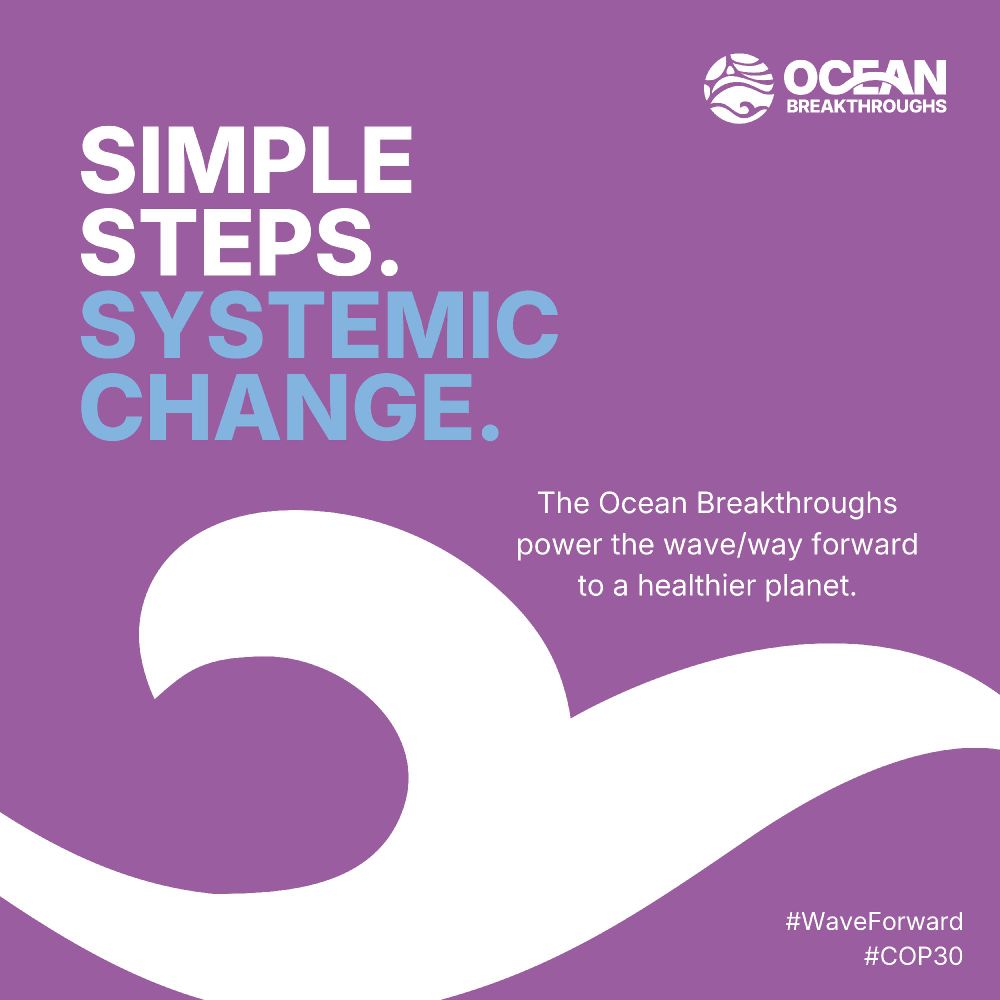
Tracking progress. Strengthening accountability. Driving action.
The new Ocean Breakthroughs Dashboard shows how ocean-based solutions are advancing, from renewable energy and shipping to blue food and conservation.
🌐 https://ocean-breakthroughs.org/dashboard/
#WaveForward
The new Ocean Breakthroughs Dashboard shows how ocean-based solutions are advancing, from renewable energy and shipping to blue food and conservation.
🌐 https://ocean-breakthroughs.org/dashboard/
#WaveForward
November 18, 2025 at 4:09 PM
Tracking progress. Strengthening accountability. Driving action.
The new Ocean Breakthroughs Dashboard shows how ocean-based solutions are advancing, from renewable energy and shipping to blue food and conservation.
🌐 https://ocean-breakthroughs.org/dashboard/
#WaveForward
The new Ocean Breakthroughs Dashboard shows how ocean-based solutions are advancing, from renewable energy and shipping to blue food and conservation.
🌐 https://ocean-breakthroughs.org/dashboard/
#WaveForward
⚠️ Fastest glacier retreat in history: Hektoria Glacier in the Antarctic retreated 25 km in 14 months after losing protective fast ice.
This fact reveals a new instability mechanism that may threaten other glaciers & accelerate #SeaLevelRise.
@drnaomio.bsky.social
@hannah-richter.bsky.social
This fact reveals a new instability mechanism that may threaten other glaciers & accelerate #SeaLevelRise.
@drnaomio.bsky.social
@hannah-richter.bsky.social

Antarctic glacier shows fastest retreat in modern history
Tides and glacial earthquakes caused record ice loss at Hektoria Glacier
www.science.org
November 17, 2025 at 7:09 PM
⚠️ Fastest glacier retreat in history: Hektoria Glacier in the Antarctic retreated 25 km in 14 months after losing protective fast ice.
This fact reveals a new instability mechanism that may threaten other glaciers & accelerate #SeaLevelRise.
@drnaomio.bsky.social
@hannah-richter.bsky.social
This fact reveals a new instability mechanism that may threaten other glaciers & accelerate #SeaLevelRise.
@drnaomio.bsky.social
@hannah-richter.bsky.social
Reposted by IPSO - International Programme on the State of the Ocean
The deep ocean is an enormous, natural carbon sink, storing massive amounts of carbon that would otherwise be in the atmosphere. Yet it can only continue to perform this critical role if it is healthy.
As #COP30 wakes into Ocean Day, we shout loud and clear: climate action starts with the deep.
As #COP30 wakes into Ocean Day, we shout loud and clear: climate action starts with the deep.
November 17, 2025 at 10:38 AM
The deep ocean is an enormous, natural carbon sink, storing massive amounts of carbon that would otherwise be in the atmosphere. Yet it can only continue to perform this critical role if it is healthy.
As #COP30 wakes into Ocean Day, we shout loud and clear: climate action starts with the deep.
As #COP30 wakes into Ocean Day, we shout loud and clear: climate action starts with the deep.
Reposted by IPSO - International Programme on the State of the Ocean

Did you know that November is #ManateeAwarenessMonth? 🌊
Dive in and learn 9 facts that will lead you to an even greater appreciation for our ocean's beloved sea cows! 🐮
🔗 https://bit.ly/3LHZuqS
Dive in and learn 9 facts that will lead you to an even greater appreciation for our ocean's beloved sea cows! 🐮
🔗 https://bit.ly/3LHZuqS

November 16, 2025 at 6:24 PM
Did you know that November is #ManateeAwarenessMonth? 🌊
Dive in and learn 9 facts that will lead you to an even greater appreciation for our ocean's beloved sea cows! 🐮
🔗 https://bit.ly/3LHZuqS
Dive in and learn 9 facts that will lead you to an even greater appreciation for our ocean's beloved sea cows! 🐮
🔗 https://bit.ly/3LHZuqS
🌊 At #COP30, the ocean is our greatest ally in tackling climate change.
The Ocean Breakthroughs chart a clear course for action, 5 tipping points across marine conservation, renewable energy, shipping, aquatic food, & coastal tourism that could deliver up to 35% of the emission cuts needed by 2050.
The Ocean Breakthroughs chart a clear course for action, 5 tipping points across marine conservation, renewable energy, shipping, aquatic food, & coastal tourism that could deliver up to 35% of the emission cuts needed by 2050.

November 14, 2025 at 4:09 PM
🌊 At #COP30, the ocean is our greatest ally in tackling climate change.
The Ocean Breakthroughs chart a clear course for action, 5 tipping points across marine conservation, renewable energy, shipping, aquatic food, & coastal tourism that could deliver up to 35% of the emission cuts needed by 2050.
The Ocean Breakthroughs chart a clear course for action, 5 tipping points across marine conservation, renewable energy, shipping, aquatic food, & coastal tourism that could deliver up to 35% of the emission cuts needed by 2050.
Reposted by IPSO - International Programme on the State of the Ocean

The Government of Iceland declared that the danger of the Amoc ocean current system collapsing poses a national security risk and existential threat.
This is the first time a climate phenomenon has been formally brought before the Icelandic National Security Council as a possible existential threat
This is the first time a climate phenomenon has been formally brought before the Icelandic National Security Council as a possible existential threat

Island erklærer havstrøm-kollaps nasjonal sikkerhetsrisiko
Den islandske regjeringen har erklært at faren for at havstrømssystemet Amoc kan bryte sammen utgjør en nasjonal sikkerhetsrisiko og eksistensiell trussel. Det gjør at landet kan planlegge for et vers...
www.nrk.no
November 14, 2025 at 7:00 AM
The Government of Iceland declared that the danger of the Amoc ocean current system collapsing poses a national security risk and existential threat.
This is the first time a climate phenomenon has been formally brought before the Icelandic National Security Council as a possible existential threat
This is the first time a climate phenomenon has been formally brought before the Icelandic National Security Council as a possible existential threat
🌱 Kelp forests and seagrass beds off Nova Scotia don’t just trap carbon, they also export it offshore, shaping how the ocean stores #BlueCarbon.
These findings inform blue carbon accounting and climate strategies, and emphasise the importance of these ecosystems for climate regulation. #CCS
These findings inform blue carbon accounting and climate strategies, and emphasise the importance of these ecosystems for climate regulation. #CCS

Pathways of blue carbon export from kelp and seagrass beds along the Atlantic coast of Nova Scotia
Kelp and seagrass beds rapidly export dissolved organic carbon to deep waters, where it contributes to ocean carbon sequestration.
www.science.org
November 13, 2025 at 4:11 PM
🌱 Kelp forests and seagrass beds off Nova Scotia don’t just trap carbon, they also export it offshore, shaping how the ocean stores #BlueCarbon.
These findings inform blue carbon accounting and climate strategies, and emphasise the importance of these ecosystems for climate regulation. #CCS
These findings inform blue carbon accounting and climate strategies, and emphasise the importance of these ecosystems for climate regulation. #CCS