



Mikael Ehn
@mikaelehn.bsky.social
Professor in Atmospheric Physical Chemistry, University of Helsinki.
Not an active poster, but hoping this will be the new place to discover what other scientists are doing.
Not an active poster, but hoping this will be the new place to discover what other scientists are doing.
Before you start getting distracted by the holiday season, plan for 2026 by noting that we are again convening this session on atmospheric organics at #EGU26.
If you work on sources and impacts of VOCs (biogenic or anthropogenic) from measurement to modeling perspectives please submit an abstract to our atmospheric organics session at #EGU26! Our invited speakers are @dbm.bsky.social and @jacquirickard.bsky.social See you in Vienna! tinyurl.com/55vda8u7
Session AS3.2
meetingorganizer.copernicus.org
November 27, 2025 at 1:01 PM
Before you start getting distracted by the holiday season, plan for 2026 by noting that we are again convening this session on atmospheric organics at #EGU26.
Over the last years I have shifted efforts towards the coastal environment, working together with ecologists and biogeochemists. Has been really exciting to learn new things, and now we even have a first publication out describing the atmospheric observations we have set up at our coastal station.

🚨New publication
Thakur et al present the comprehensive atmospheric observatory @tvarminne.bsky.social.
Initial results: sea-air exchange of aerosol precursor gases, VOCs and CO2 at the coast are highly dynamic, influenced by meteorological and biological conditions.
hdl.handle.net/10138/602793
Thakur et al present the comprehensive atmospheric observatory @tvarminne.bsky.social.
Initial results: sea-air exchange of aerosol precursor gases, VOCs and CO2 at the coast are highly dynamic, influenced by meteorological and biological conditions.
hdl.handle.net/10138/602793

November 26, 2025 at 10:30 AM
Over the last years I have shifted efforts towards the coastal environment, working together with ecologists and biogeochemists. Has been really exciting to learn new things, and now we even have a first publication out describing the atmospheric observations we have set up at our coastal station.
Reposted by Mikael Ehn

"academic publishing is dominated by profit-oriented, multinational companies for whom scientific knowledge is a commodity to be sold back to the academic community who created it... The dominant four collectively generated... $12 billion in profits between 2019 and 2024."

November 18, 2025 at 6:48 AM
"academic publishing is dominated by profit-oriented, multinational companies for whom scientific knowledge is a commodity to be sold back to the academic community who created it... The dominant four collectively generated... $12 billion in profits between 2019 and 2024."
This work started already pre-covid, which makes me even happier to see it finally in print. Thanks to @ayanezserrano.bsky.social for tremendous leadership in pushing it all the way through!
Happy to announce that our paper on "Unaccounted impacts of diterpene emissions on atmospheric aerosol loadings" has been published after years of efforts. Thank [email protected] @jpreixach.bsky.social @olgagarmash.bsky.social @apraplan.bsky.social @heidihellen.bsky.social
rdcu.be/ezAYI
rdcu.be/ezAYI

Unaccounted impacts of diterpene emissions on atmospheric aerosol loadings
Communications Earth & Environment - Diterpenes are an underestimated source of secondary organic aerosol, accounting for up to 13% of the secondary organic aerosol burden from isoprene,...
rdcu.be
September 30, 2025 at 6:57 AM
This work started already pre-covid, which makes me even happier to see it finally in print. Thanks to @ayanezserrano.bsky.social for tremendous leadership in pushing it all the way through!
Reposted by Mikael Ehn
Happy to announce that our paper on "Unaccounted impacts of diterpene emissions on atmospheric aerosol loadings" has been published after years of efforts. Thank [email protected] @jpreixach.bsky.social @olgagarmash.bsky.social @apraplan.bsky.social @heidihellen.bsky.social
rdcu.be/ezAYI
rdcu.be/ezAYI
Unaccounted impacts of diterpene emissions on atmospheric aerosol loadings
Communications Earth & Environment - Diterpenes are an underestimated source of secondary organic aerosol, accounting for up to 13% of the secondary organic aerosol burden from isoprene,...
rdcu.be
September 26, 2025 at 8:23 AM
Happy to announce that our paper on "Unaccounted impacts of diterpene emissions on atmospheric aerosol loadings" has been published after years of efforts. Thank [email protected] @jpreixach.bsky.social @olgagarmash.bsky.social @apraplan.bsky.social @heidihellen.bsky.social
rdcu.be/ezAYI
rdcu.be/ezAYI
Reposted by Mikael Ehn
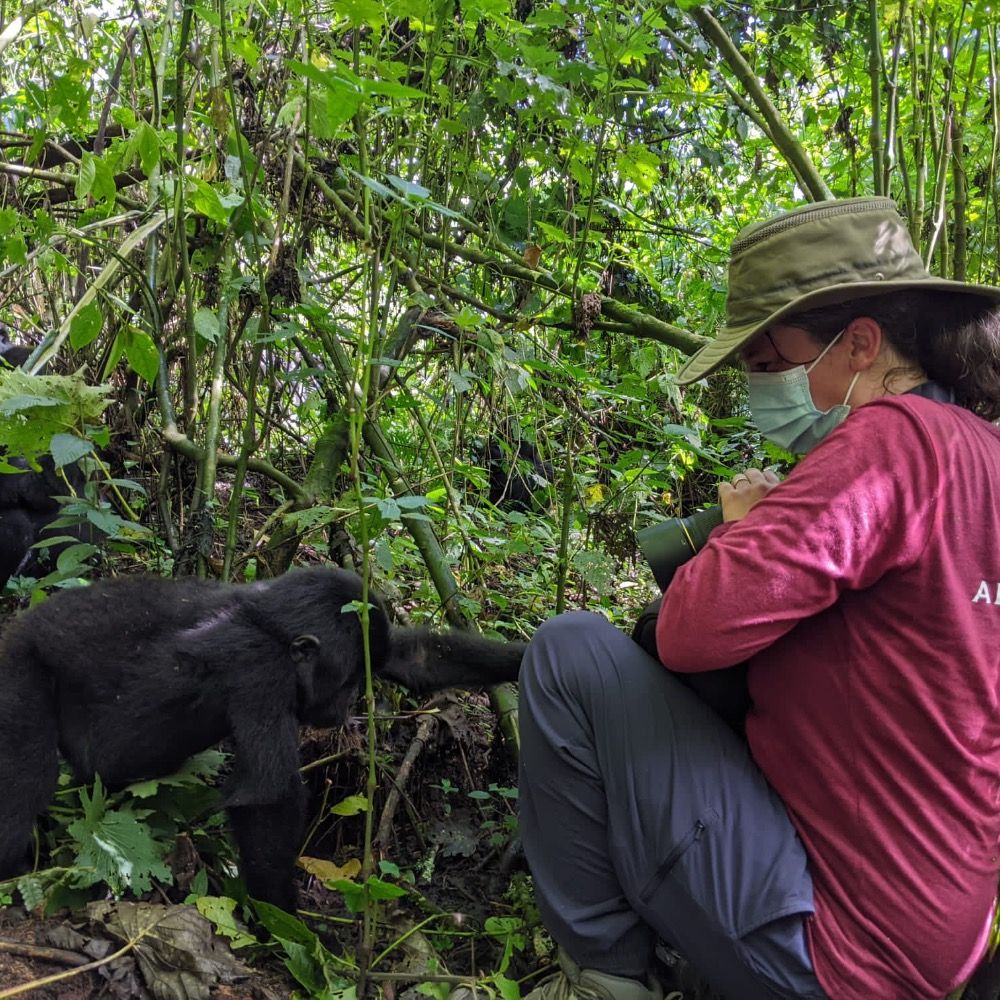
A rare bloom of Cosmo, CSU’s corpse plant, gave my group (Rose Rossell and @chemj.bsky.social) the chance to study corpse flower emissions in a fun collaboration with Tofwerk. Turns out to be an interesting, if stinky, story of pollination chemistry…

How a corpse plant makes its terrible smell − it has a strategy, and its female flowers do most of the work
When a corpse flower bloomed on campus, atmospheric scientists got to work. What they discovered provides new evidence about the unique pollination strategies of a very unusual flower.
theconversation.com
September 21, 2025 at 6:48 PM
A rare bloom of Cosmo, CSU’s corpse plant, gave my group (Rose Rossell and @chemj.bsky.social) the chance to study corpse flower emissions in a fun collaboration with Tofwerk. Turns out to be an interesting, if stinky, story of pollination chemistry…
Reposted by Mikael Ehn

Det är dags för Finland och Sverige att ta FNs havskonferens på allvar! @tvarminne.bsky.social @ostersjocentrum.bsky.social @coastclim.bsky.social @balticseacentre.bsky.social @helsinki.fi
www.hbl.fi/2025-06-07/f...
www.hbl.fi/2025-06-07/f...

DEBATT: Finland och Sverige måste sätta ett friskt hav främst
Ekologisk hållbarhet är en förutsättning för ekonomiska och sociala värden i haven, skriver Alf Norkko och Christoph…
www.hbl.fi
June 7, 2025 at 6:28 AM
Det är dags för Finland och Sverige att ta FNs havskonferens på allvar! @tvarminne.bsky.social @ostersjocentrum.bsky.social @coastclim.bsky.social @balticseacentre.bsky.social @helsinki.fi
www.hbl.fi/2025-06-07/f...
www.hbl.fi/2025-06-07/f...
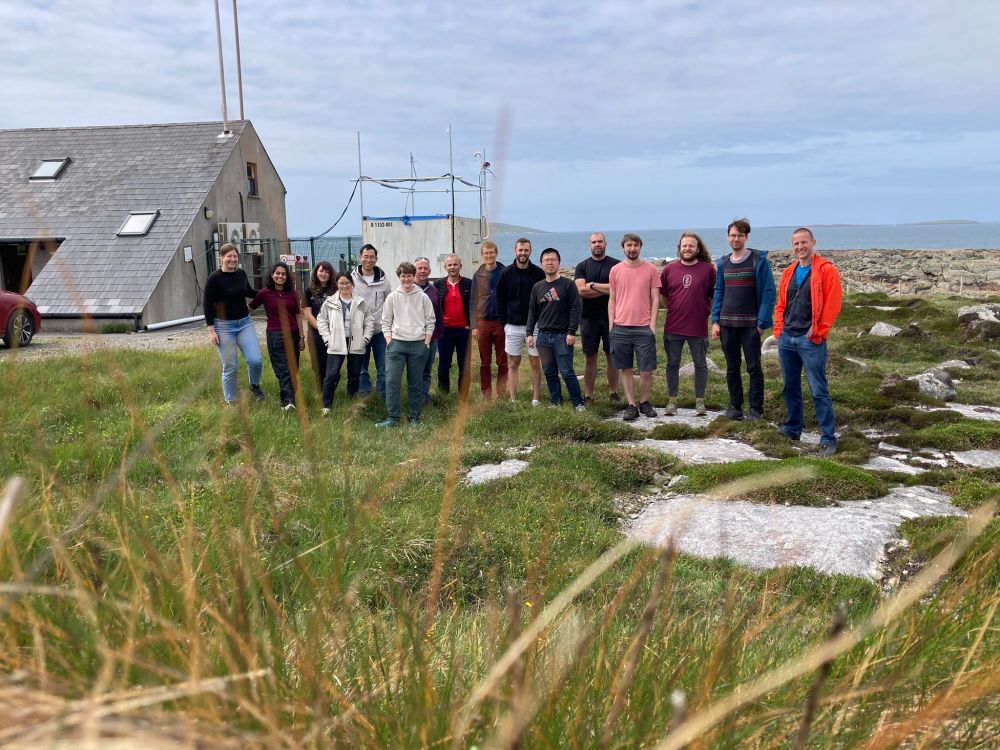
Sad I didn't manage to go to there myself this time, but thanks to Mace Head team for hosting these campaigns!
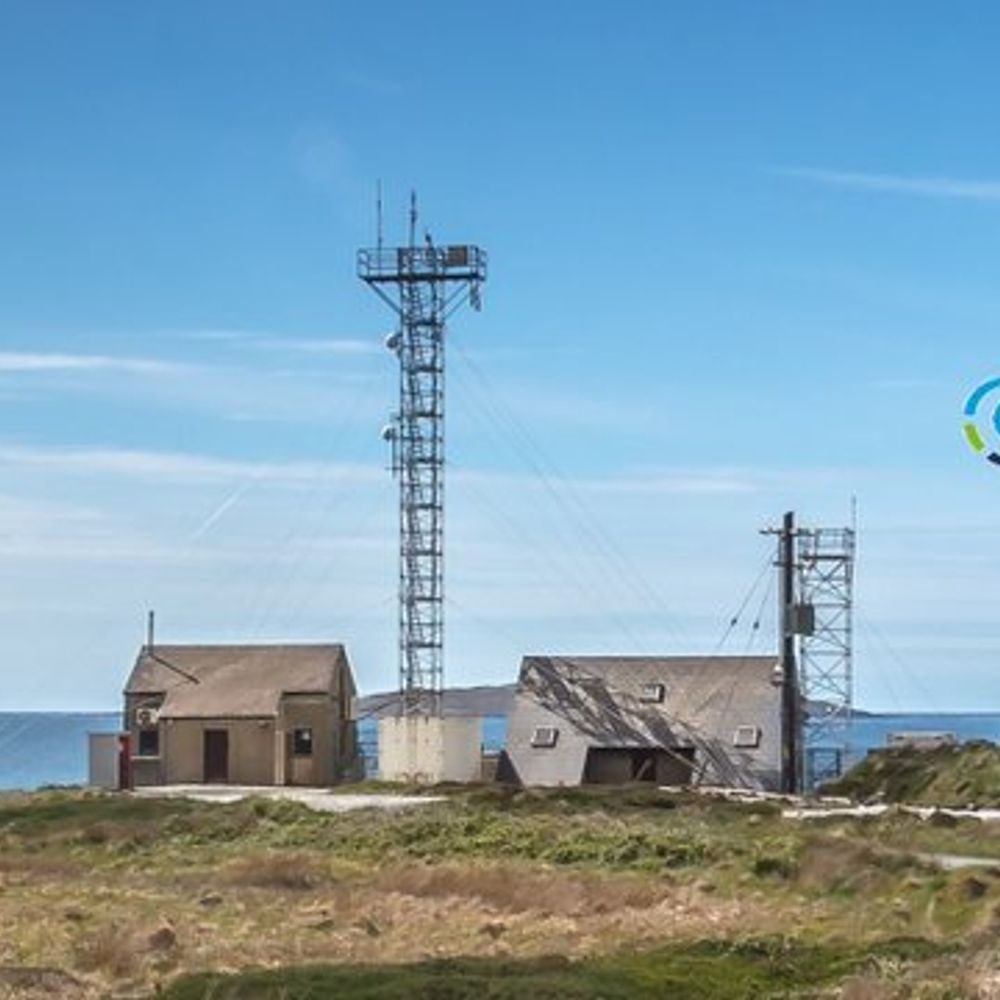
In the middle of hosting two amazing field campaigns! **COAST-VOC** (www.helsinki.fi/en/researchg...) and **CARES**: (nerccares.wordpress.com)
Science in action at the land-sea-atmosphere interface! 🌿 @ovadnevaite.bsky.social
#COASTVOC #CARES #ClimateScience #AtmosChem
Science in action at the land-sea-atmosphere interface! 🌿 @ovadnevaite.bsky.social
#COASTVOC #CARES #ClimateScience #AtmosChem
June 5, 2025 at 9:28 AM
Sad I didn't manage to go to there myself this time, but thanks to Mace Head team for hosting these campaigns!
Reposted by Mikael Ehn
There is some "amazing stuff" in here on Climeworks and carbon capture / carbon offsets model more generally.
brief🧵 after the caveat that I have no idea if what is reported is true (but it mostly doesn't matter whether/if the numbers are off by >10x)
brief🧵 after the caveat that I have no idea if what is reported is true (but it mostly doesn't matter whether/if the numbers are off by >10x)

Climeworks’ capture fails to cover its own emissions
The carbon capture company Climeworks only captures a fraction of the CO2 it promises its machines can capture. The company is failing to carbon offset the emissions resulting from its operations – wh...
heimildin.is
May 15, 2025 at 8:01 PM
There is some "amazing stuff" in here on Climeworks and carbon capture / carbon offsets model more generally.
brief🧵 after the caveat that I have no idea if what is reported is true (but it mostly doesn't matter whether/if the numbers are off by >10x)
brief🧵 after the caveat that I have no idea if what is reported is true (but it mostly doesn't matter whether/if the numbers are off by >10x)
EGU coming up next week! See below for details on our session on atmospheric organics. Hope to see many of you there!
I'm looking forward to EGU next week and seeing people - who will be there? If interested in Atmospheric Organics check out our oral session on Thursday and posters Friday morning (AS3.2). meetingorganizer.copernicus.org/EGU25/sessio...
You can also find Yumin and Flossie presenting on their work:
You can also find Yumin and Flossie presenting on their work:
Session AS3.2
meetingorganizer.copernicus.org
April 23, 2025 at 1:59 PM
EGU coming up next week! See below for details on our session on atmospheric organics. Hope to see many of you there!
Reposted by Mikael Ehn

⚒️ Article: High sensitivity of cloud formation to aerosol changes
@annelev.bsky.social @harrikokkola.bsky.social
www.nature.com/articles/s41...
@annelev.bsky.social @harrikokkola.bsky.social
www.nature.com/articles/s41...

High sensitivity of cloud formation to aerosol changes - Nature Geoscience
In situ observations indicate a greater susceptibility of cloud droplet number to cloud condensation nuclei than is estimated from satellite observations, which suggests that aerosols exert a stronger...
www.nature.com
April 3, 2025 at 3:00 PM
⚒️ Article: High sensitivity of cloud formation to aerosol changes
@annelev.bsky.social @harrikokkola.bsky.social
www.nature.com/articles/s41...
@annelev.bsky.social @harrikokkola.bsky.social
www.nature.com/articles/s41...
Reposted by Mikael Ehn

Hello Bluesky! EGU is pleased to be able to activate our account here, and share all the exciting news about the upcoming General Assembly: #EGU25, our #OpenAccess publications and more! Several of our Divisions will be making the move over from Twitter/X too, so keep an eye out for your favourites!

March 3, 2025 at 8:03 AM
Hello Bluesky! EGU is pleased to be able to activate our account here, and share all the exciting news about the upcoming General Assembly: #EGU25, our #OpenAccess publications and more! Several of our Divisions will be making the move over from Twitter/X too, so keep an eye out for your favourites!
Reposted by Mikael Ehn

Just over a week until EGU abstract deadline (Jan 15)! Come join us to learn about atmospheric organics! Featuring invited speakers @riikkarinnan.bsky.social and Matthew Coggon.
Starting to think about conference plans for 2025? Interested in atmospheric organics? Consider submitting an abstract to our session at EGU! @mikaelehn.bsky.social
meetingorganizer.copernicus.org/EGU25/sessio...
meetingorganizer.copernicus.org/EGU25/sessio...
Session AS3.2
meetingorganizer.copernicus.org
January 6, 2025 at 8:41 AM
Just over a week until EGU abstract deadline (Jan 15)! Come join us to learn about atmospheric organics! Featuring invited speakers @riikkarinnan.bsky.social and Matthew Coggon.
EGU 2025 coming up next spring, check out our session on atmospheric organics!
Starting to think about conference plans for 2025? Interested in atmospheric organics? Consider submitting an abstract to our session at EGU! @mikaelehn.bsky.social
meetingorganizer.copernicus.org/EGU25/sessio...
meetingorganizer.copernicus.org/EGU25/sessio...
Session AS3.2
meetingorganizer.copernicus.org
November 12, 2024 at 7:45 AM
EGU 2025 coming up next spring, check out our session on atmospheric organics!
My postdoc Jian Zhao did a great job in figuring out how to improve the performance of the vaporization inlet for aerosols (VIA). One of these days we need to do a direct comparison with the EESI-TOF to compare spectra and sensitivities for online detection of SOA.

Characterization of the Vaporization Inlet for Aerosols (VIA) for online measurements of particulate highly oxygenated organic molecules (HOMs)
Abstract. Particulate matter has major climate and health impacts, and it is therefore of utmost importance to be able to measure the composition of these particles to gain insights into their sources...
amt.copernicus.org
March 21, 2024 at 7:16 AM
My postdoc Jian Zhao did a great job in figuring out how to improve the performance of the vaporization inlet for aerosols (VIA). One of these days we need to do a direct comparison with the EESI-TOF to compare spectra and sensitivities for online detection of SOA.
Can we, in real-time, deduce the ozone formation regime by measuring highly oxygenated organics (HOM)? In theory, yes. In a simple lab system, yes. In ambient air, we are still looking into it. In any case, since HOM were discovered, we have thought about these links, so was nice to now test it.

On the potential use of highly oxygenated organic molecules (HOMs) as indicators for ozone formation sensitivity
Abstract. Ozone (O3), an important and ubiquitous trace gas, protects lives from harmful solar ultraviolet (UV) radiation in the stratosphere but is toxic to living organisms in the troposphere. Addit...
acp.copernicus.org
March 12, 2024 at 4:39 AM
Can we, in real-time, deduce the ozone formation regime by measuring highly oxygenated organics (HOM)? In theory, yes. In a simple lab system, yes. In ambient air, we are still looking into it. In any case, since HOM were discovered, we have thought about these links, so was nice to now test it.
Reposted by Mikael Ehn
Now that AGU has wrapped up, time to start thinking about EGU in April! Abstracts are due Jan 10. Consider submitting to our session on organics:
meetingorganizer.copernicus.org/EGU24/sessio...
meetingorganizer.copernicus.org/EGU24/sessio...
December 18, 2023 at 1:04 PM
Now that AGU has wrapped up, time to start thinking about EGU in April! Abstracts are due Jan 10. Consider submitting to our session on organics:
meetingorganizer.copernicus.org/EGU24/sessio...
meetingorganizer.copernicus.org/EGU24/sessio...
Reposted by Mikael Ehn
Reposted by Mikael Ehn
If you are interested in atmospheric organics and conferences in Vienna, please consider submitting an abstract to our session at EGU24!
meetingorganizer.copernicus.org/EGU24/sessio...
meetingorganizer.copernicus.org/EGU24/sessio...
November 3, 2023 at 1:58 PM
If you are interested in atmospheric organics and conferences in Vienna, please consider submitting an abstract to our session at EGU24!
meetingorganizer.copernicus.org/EGU24/sessio...
meetingorganizer.copernicus.org/EGU24/sessio...