



Department of Brain Sciences
@imperialbrains.bsky.social
Department of Brain Sciences at Imperial College London | Part of
the Faculty of Medicine | Delivering a unique portfolio of translational research in neuroscience and mental health
https://www.imperial.ac.uk/brain-sciences/
the Faculty of Medicine | Delivering a unique portfolio of translational research in neuroscience and mental health
https://www.imperial.ac.uk/brain-sciences/
Reposted by Department of Brain Sciences

"You can learn much more from failure than success."
Professor Anne Lingford-Hughes from @imperialbrains.bsky.social looks back on 30 years of #addiction research – and why lived experience must be at the heart of progress.
#WomenInSTEM 🌟 blogs.imperial.ac.uk/imperial-med...
Professor Anne Lingford-Hughes from @imperialbrains.bsky.social looks back on 30 years of #addiction research – and why lived experience must be at the heart of progress.
#WomenInSTEM 🌟 blogs.imperial.ac.uk/imperial-med...

My journey into addiction research and psychiatry - Imperial Medicine Blog
Professor Anne Lingford-Hughes, Professor of Addiction Biology, reflects on the journey that led her to become one of the UK’s leading experts in addiction psychiatry.
blogs.imperial.ac.uk
December 10, 2025 at 10:22 AM
"You can learn much more from failure than success."
Professor Anne Lingford-Hughes from @imperialbrains.bsky.social looks back on 30 years of #addiction research – and why lived experience must be at the heart of progress.
#WomenInSTEM 🌟 blogs.imperial.ac.uk/imperial-med...
Professor Anne Lingford-Hughes from @imperialbrains.bsky.social looks back on 30 years of #addiction research – and why lived experience must be at the heart of progress.
#WomenInSTEM 🌟 blogs.imperial.ac.uk/imperial-med...
🧠 For decades, astrocytes were dismissed as mere support cells. Now they're recognised as crucial for behaviour, memory, and cognition.
Dr Marco Brancaccio's breakthrough revealed how astrocytes regulate our body clock.
👉More: www.nature.com/articles/d41...
Dr Marco Brancaccio's breakthrough revealed how astrocytes regulate our body clock.
👉More: www.nature.com/articles/d41...
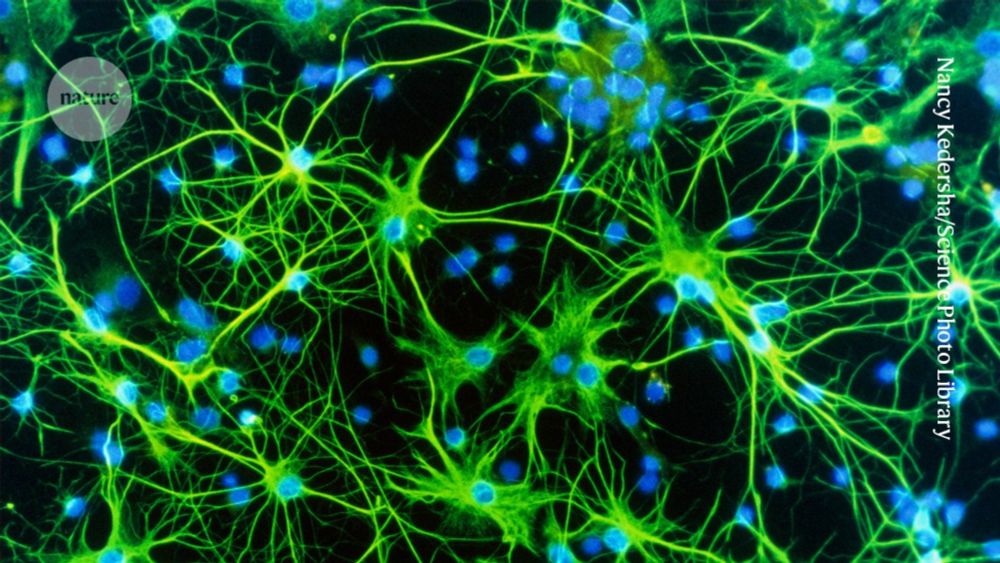
The ‘silent’ brain cells that shape our behaviour, memory and health
Astrocytes make up one-quarter of the brain, but researchers are only now realizing their true value.
www.nature.com
December 9, 2025 at 10:49 AM
🧠 For decades, astrocytes were dismissed as mere support cells. Now they're recognised as crucial for behaviour, memory, and cognition.
Dr Marco Brancaccio's breakthrough revealed how astrocytes regulate our body clock.
👉More: www.nature.com/articles/d41...
Dr Marco Brancaccio's breakthrough revealed how astrocytes regulate our body clock.
👉More: www.nature.com/articles/d41...
Reposted by Department of Brain Sciences
Weight loss jabs could have a surprising new role: slowing #alzheimers. 🧠
“We think liraglutide is protecting the brain by reducing inflammation, or improving how the brain’s nerve cells communicate”, says @imperialbrains.bsky.social's' Prof Paul Edison.
#AD www.independent.co.uk/news/health/...
“We think liraglutide is protecting the brain by reducing inflammation, or improving how the brain’s nerve cells communicate”, says @imperialbrains.bsky.social's' Prof Paul Edison.
#AD www.independent.co.uk/news/health/...

Weight loss jab could be used to slow progression of Alzheimer’s disease
Liraglutide, sold under the brand name Saxenda, is already prescribed on the NHS as a weight loss medication
www.independent.co.uk
December 5, 2025 at 1:36 PM
Weight loss jabs could have a surprising new role: slowing #alzheimers. 🧠
“We think liraglutide is protecting the brain by reducing inflammation, or improving how the brain’s nerve cells communicate”, says @imperialbrains.bsky.social's' Prof Paul Edison.
#AD www.independent.co.uk/news/health/...
“We think liraglutide is protecting the brain by reducing inflammation, or improving how the brain’s nerve cells communicate”, says @imperialbrains.bsky.social's' Prof Paul Edison.
#AD www.independent.co.uk/news/health/...
Reposted by Department of Brain Sciences
We have an exciting PhD (VIDA DTC) opportunity at
@imperialbrains.bsky.social & @ukdri.ac.uk, funded by
@alzheimerssoc.bsky.social. This project will use epigenomic/multiomic approaches to uncover novel biomarkers and drugs for SVD, a major contributor to stroke and Alzheimer’s.
lnkd.in/eviy2A5B
@imperialbrains.bsky.social & @ukdri.ac.uk, funded by
@alzheimerssoc.bsky.social. This project will use epigenomic/multiomic approaches to uncover novel biomarkers and drugs for SVD, a major contributor to stroke and Alzheimer’s.
lnkd.in/eviy2A5B
LinkedIn
This link will take you to a page that’s not on LinkedIn
lnkd.in
December 3, 2025 at 1:17 PM
We have an exciting PhD (VIDA DTC) opportunity at
@imperialbrains.bsky.social & @ukdri.ac.uk, funded by
@alzheimerssoc.bsky.social. This project will use epigenomic/multiomic approaches to uncover novel biomarkers and drugs for SVD, a major contributor to stroke and Alzheimer’s.
lnkd.in/eviy2A5B
@imperialbrains.bsky.social & @ukdri.ac.uk, funded by
@alzheimerssoc.bsky.social. This project will use epigenomic/multiomic approaches to uncover novel biomarkers and drugs for SVD, a major contributor to stroke and Alzheimer’s.
lnkd.in/eviy2A5B
Reposted by Department of Brain Sciences
A super proud moment, Dr Kevin Ziegler, who defended his PhD. 🥂 🎓 🎉
Kevin used epigenomic approaches to understand genetic risk for neurodegenerative conditions.
His work has now led the lab to explore small vessel disease and vascular cell types!
@ukdri.ac.uk @imperialbrains.bsky.social
Kevin used epigenomic approaches to understand genetic risk for neurodegenerative conditions.
His work has now led the lab to explore small vessel disease and vascular cell types!
@ukdri.ac.uk @imperialbrains.bsky.social


December 3, 2025 at 12:52 PM
A super proud moment, Dr Kevin Ziegler, who defended his PhD. 🥂 🎓 🎉
Kevin used epigenomic approaches to understand genetic risk for neurodegenerative conditions.
His work has now led the lab to explore small vessel disease and vascular cell types!
@ukdri.ac.uk @imperialbrains.bsky.social
Kevin used epigenomic approaches to understand genetic risk for neurodegenerative conditions.
His work has now led the lab to explore small vessel disease and vascular cell types!
@ukdri.ac.uk @imperialbrains.bsky.social
Reposted by Department of Brain Sciences
"I wasn’t seen as particularly clever at school."
Today, she’s one of the UK’s leading #addiction psychiatrists. ✨
@imperialbrains.bsky.social's Prof Anne Lingford-Hughes reflects on the twists, failures and serendipity that shaped her career 👇 blogs.imperial.ac.uk/imperial-med...
Today, she’s one of the UK’s leading #addiction psychiatrists. ✨
@imperialbrains.bsky.social's Prof Anne Lingford-Hughes reflects on the twists, failures and serendipity that shaped her career 👇 blogs.imperial.ac.uk/imperial-med...
My journey into addiction research and psychiatry - Imperial Medicine Blog
Professor Anne Lingford-Hughes, Professor of Addiction Biology, reflects on the journey that led her to become one of the UK’s leading experts in addiction psychiatry.
blogs.imperial.ac.uk
December 3, 2025 at 11:26 AM
"I wasn’t seen as particularly clever at school."
Today, she’s one of the UK’s leading #addiction psychiatrists. ✨
@imperialbrains.bsky.social's Prof Anne Lingford-Hughes reflects on the twists, failures and serendipity that shaped her career 👇 blogs.imperial.ac.uk/imperial-med...
Today, she’s one of the UK’s leading #addiction psychiatrists. ✨
@imperialbrains.bsky.social's Prof Anne Lingford-Hughes reflects on the twists, failures and serendipity that shaped her career 👇 blogs.imperial.ac.uk/imperial-med...
🧠 Novo Nordisk's latest trial findings: oral semaglutide (Ozempic/Wegovy) showed no benefit in slowing cognitive decline among 3,800 early-stage Alzheimer's patients.
✅ Dr Ivan Koychev from @imperialcollegeldn.bsky.social
comments on the study: reuters.com/sustainabili...
@ImperialMed
✅ Dr Ivan Koychev from @imperialcollegeldn.bsky.social
comments on the study: reuters.com/sustainabili...
@ImperialMed
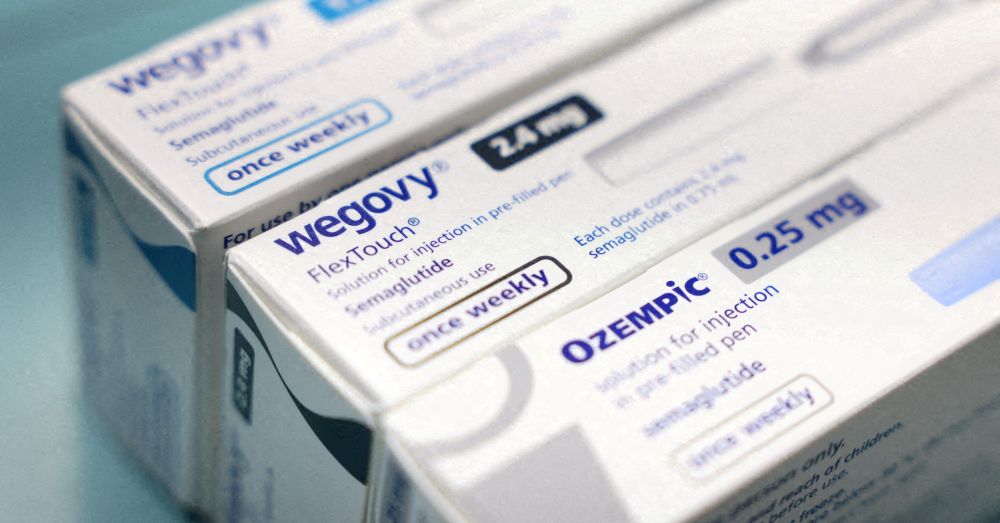
Undeterred by Novo Nordisk failure, scientists consider GLP-1s as Alzheimer's prevention
Novo Nordisk's highly anticipated but ultimately unsuccessful Alzheimer's trials were a long shot for the maker of blockbuster drugs Ozempic and Wegovy, but scientists are still asking if GLP-1 drugs ...
reuters.com
December 3, 2025 at 12:02 PM
🧠 Novo Nordisk's latest trial findings: oral semaglutide (Ozempic/Wegovy) showed no benefit in slowing cognitive decline among 3,800 early-stage Alzheimer's patients.
✅ Dr Ivan Koychev from @imperialcollegeldn.bsky.social
comments on the study: reuters.com/sustainabili...
@ImperialMed
✅ Dr Ivan Koychev from @imperialcollegeldn.bsky.social
comments on the study: reuters.com/sustainabili...
@ImperialMed
Reposted by Department of Brain Sciences
🧵 The #AIDS Quilt UK display opens today at @imperialsph.bsky.social!
A powerful tribute to those lost to #HIV, the Quilt will be on show in the School of Public Health foyer from 26 Nov – 3 Dec.
Free and open to all 👇 www.imperial.ac.uk/events/20054...
A powerful tribute to those lost to #HIV, the Quilt will be on show in the School of Public Health foyer from 26 Nov – 3 Dec.
Free and open to all 👇 www.imperial.ac.uk/events/20054...

AIDS Quilt UK – Display
Following the full display of the AIDS Quilt UK at the Tate Modern's Turbine Hall this summer, Imperial's School of Public Health will host several panels of the AIDS Quilt UK around World AIDS Day 20...
www.imperial.ac.uk
November 26, 2025 at 12:12 PM
🧵 The #AIDS Quilt UK display opens today at @imperialsph.bsky.social!
A powerful tribute to those lost to #HIV, the Quilt will be on show in the School of Public Health foyer from 26 Nov – 3 Dec.
Free and open to all 👇 www.imperial.ac.uk/events/20054...
A powerful tribute to those lost to #HIV, the Quilt will be on show in the School of Public Health foyer from 26 Nov – 3 Dec.
Free and open to all 👇 www.imperial.ac.uk/events/20054...
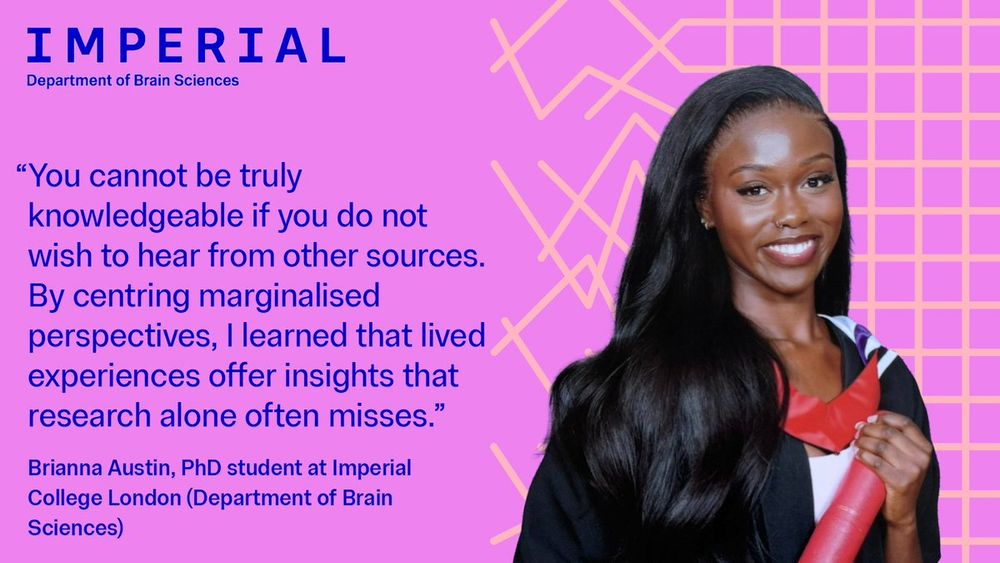
Meet Brianna Austin, a 1st-year PhD student @imperialmed.bsky.social. Her research aims to predict & improve outcomes for traumatic brain injury survivors. She's a co-creator of Craving Clarity, a podcast amplifying underrepresented voices in #neuroscience.
👉 More: bit.ly/4hNbPWE
👉 More: bit.ly/4hNbPWE
November 26, 2025 at 10:17 AM
Meet Brianna Austin, a 1st-year PhD student @imperialmed.bsky.social. Her research aims to predict & improve outcomes for traumatic brain injury survivors. She's a co-creator of Craving Clarity, a podcast amplifying underrepresented voices in #neuroscience.
👉 More: bit.ly/4hNbPWE
👉 More: bit.ly/4hNbPWE
A new study has revealed that the cells lining our brain’s blood vessels play a more significant role in #dementia than previously understood.
👉 Learn more: bit.ly/3Ly82k1
@nottalexi.bsky.social @imperialmed.bsky.social
👉 Learn more: bit.ly/3Ly82k1
@nottalexi.bsky.social @imperialmed.bsky.social

New study reveals how blood vessel cells shape dementia risk | Imperial News | Imperial College London
A new study has revealed that the cells lining our brain’s blood vessels play a more significant role in dementia than previously understood.
bit.ly
November 24, 2025 at 10:14 AM
A new study has revealed that the cells lining our brain’s blood vessels play a more significant role in #dementia than previously understood.
👉 Learn more: bit.ly/3Ly82k1
@nottalexi.bsky.social @imperialmed.bsky.social
👉 Learn more: bit.ly/3Ly82k1
@nottalexi.bsky.social @imperialmed.bsky.social
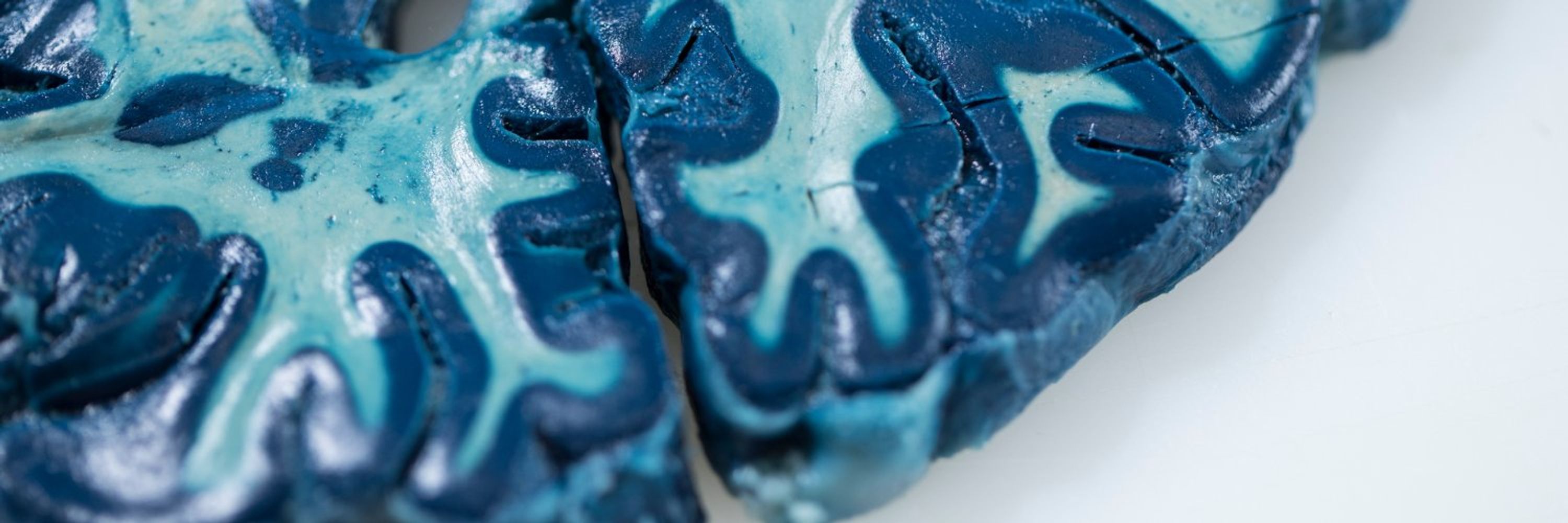
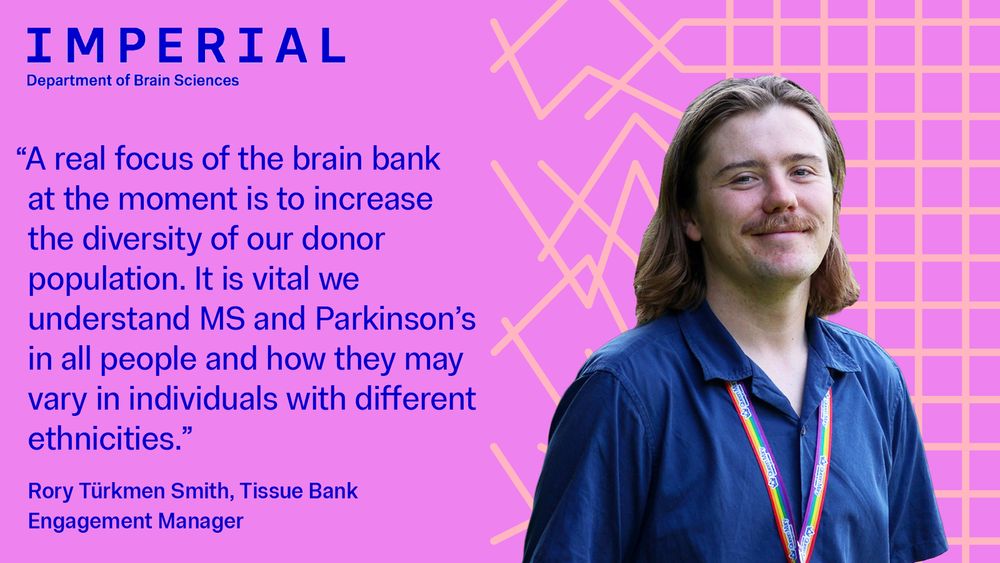
Every year, ~120 people donate their brain and spinal cord tissue to advance #MS & #Parkinson's research. We spoke with Rory Türkmen Smith, Tissue Bank Engagement Manager, about facilitating these precious donations.
🧠 Read more: bit.ly/43ZdR0f
@imperialmed.bsky.social
🧠 Read more: bit.ly/43ZdR0f
@imperialmed.bsky.social
November 7, 2025 at 1:27 PM
Every year, ~120 people donate their brain and spinal cord tissue to advance #MS & #Parkinson's research. We spoke with Rory Türkmen Smith, Tissue Bank Engagement Manager, about facilitating these precious donations.
🧠 Read more: bit.ly/43ZdR0f
@imperialmed.bsky.social
🧠 Read more: bit.ly/43ZdR0f
@imperialmed.bsky.social
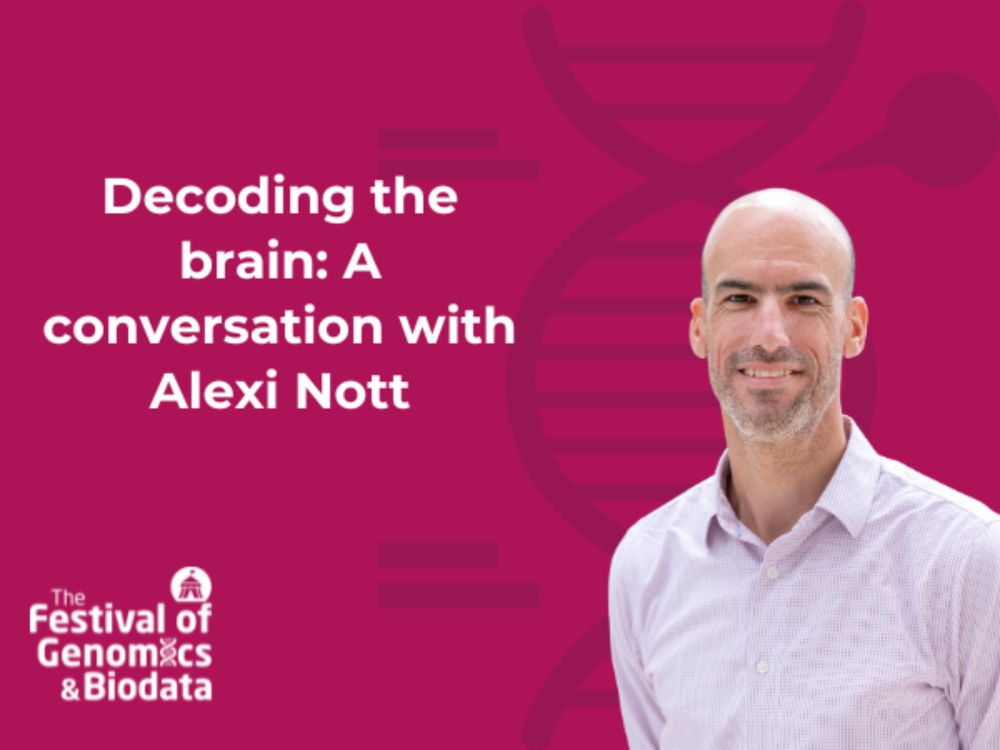
Listen to Dr Alexi Nott in conversation with The Festival of Genomics and Biodata about how epigenetics helps us understand Alzheimer’s, the challenges of studying human #brain tissue, and why inclusivity and mentorship matter in science.
✅ More: frontlinegenomics.com/decoding-the...
✅ More: frontlinegenomics.com/decoding-the...
Decoding the brain: A conversation with Alexi Nott - Front Line Genomics
In today’s interview, we speak to Alexi Nott about the role of epigenetics to help us understand conditions such as Alzheimer's
frontlinegenomics.com
October 30, 2025 at 9:11 AM
Listen to Dr Alexi Nott in conversation with The Festival of Genomics and Biodata about how epigenetics helps us understand Alzheimer’s, the challenges of studying human #brain tissue, and why inclusivity and mentorship matter in science.
✅ More: frontlinegenomics.com/decoding-the...
✅ More: frontlinegenomics.com/decoding-the...
Reposted by Department of Brain Sciences

How do meta-analyses transform clinical practice?
Join us for the next NHLI Masterclass on 22 October with Prof Jonathan Emberson, Oxford Population Health, exploring how carefully designed meta-analyses provide reliable evidence that changes care worldwide.
www.imperial.ac.uk/events/19956...
Join us for the next NHLI Masterclass on 22 October with Prof Jonathan Emberson, Oxford Population Health, exploring how carefully designed meta-analyses provide reliable evidence that changes care worldwide.
www.imperial.ac.uk/events/19956...

The Beauty of Meta-Analysis
Join this National Heart and Lung Institute (NHLI) Masterclass, where Professor Jonathan Emberson, University of Oxford, will discuss the beauty of meta-analysis – drawing on pivotal examples that hav...
www.imperial.ac.uk
October 1, 2025 at 11:47 AM
How do meta-analyses transform clinical practice?
Join us for the next NHLI Masterclass on 22 October with Prof Jonathan Emberson, Oxford Population Health, exploring how carefully designed meta-analyses provide reliable evidence that changes care worldwide.
www.imperial.ac.uk/events/19956...
Join us for the next NHLI Masterclass on 22 October with Prof Jonathan Emberson, Oxford Population Health, exploring how carefully designed meta-analyses provide reliable evidence that changes care worldwide.
www.imperial.ac.uk/events/19956...
Reposted by Department of Brain Sciences
Falls in later life can be devastating—but mindset matters.
Dr @tobyellmers.bsky.social from @imperialbrains.bsky.social explores how older adults’ beliefs about ageing significantly influence recovery after a fall.
#InternationalOlderPersonsDay
blogs.imperial.ac.uk/imperial-med...
Dr @tobyellmers.bsky.social from @imperialbrains.bsky.social explores how older adults’ beliefs about ageing significantly influence recovery after a fall.
#InternationalOlderPersonsDay
blogs.imperial.ac.uk/imperial-med...

What helps older adults bounce back after a fall? Their mindset might be key - Imperial Medicine Blog
Dr Toby Ellmers from the Department of Brain Sciences explores how older adults’ beliefs about ageing significantly influence recovery after a fall.
blogs.imperial.ac.uk
October 1, 2025 at 10:01 AM
Falls in later life can be devastating—but mindset matters.
Dr @tobyellmers.bsky.social from @imperialbrains.bsky.social explores how older adults’ beliefs about ageing significantly influence recovery after a fall.
#InternationalOlderPersonsDay
blogs.imperial.ac.uk/imperial-med...
Dr @tobyellmers.bsky.social from @imperialbrains.bsky.social explores how older adults’ beliefs about ageing significantly influence recovery after a fall.
#InternationalOlderPersonsDay
blogs.imperial.ac.uk/imperial-med...
Reposted by Department of Brain Sciences

Work from us @imperialbrains.bsky.social @ukdri.ac.uk, driven by Mike David, showing how #locuscoeruleus & #substantianigra integrity affect cognition and behaviour in clinical #AlzheimersDisease. #catecholamines #brainstem #neurodegeneration
alz-journals.onlinelibrary.wiley.com/doi/10.1002/...
alz-journals.onlinelibrary.wiley.com/doi/10.1002/...

Catecholaminergic nucleus integrity and Alzheimer's pathology, symptoms, and progression
BACKGROUND The noradrenergic locus coeruleus (LC) accumulates pathology early in Alzheimer's disease (AD), with LC dysfunction contributing to symptoms and disease progression. We investigated LC an...
alz-journals.onlinelibrary.wiley.com
September 30, 2025 at 7:16 AM
Work from us @imperialbrains.bsky.social @ukdri.ac.uk, driven by Mike David, showing how #locuscoeruleus & #substantianigra integrity affect cognition and behaviour in clinical #AlzheimersDisease. #catecholamines #brainstem #neurodegeneration
alz-journals.onlinelibrary.wiley.com/doi/10.1002/...
alz-journals.onlinelibrary.wiley.com/doi/10.1002/...
Reposted by Department of Brain Sciences
Could ketamine revolutionise #depression treatment?
Prof David Nutt from @imperialbrains.bsky.social says NHS trusts may soon use the drug to help patients where other treatments fail.👇
metro.co.uk/2025/09/19/k...
Prof David Nutt from @imperialbrains.bsky.social says NHS trusts may soon use the drug to help patients where other treatments fail.👇
metro.co.uk/2025/09/19/k...

Ketamine expert reveals how the drug could revolutionise depression treatment
metro.co.uk
September 26, 2025 at 12:48 PM
Could ketamine revolutionise #depression treatment?
Prof David Nutt from @imperialbrains.bsky.social says NHS trusts may soon use the drug to help patients where other treatments fail.👇
metro.co.uk/2025/09/19/k...
Prof David Nutt from @imperialbrains.bsky.social says NHS trusts may soon use the drug to help patients where other treatments fail.👇
metro.co.uk/2025/09/19/k...
Reposted by Department of Brain Sciences
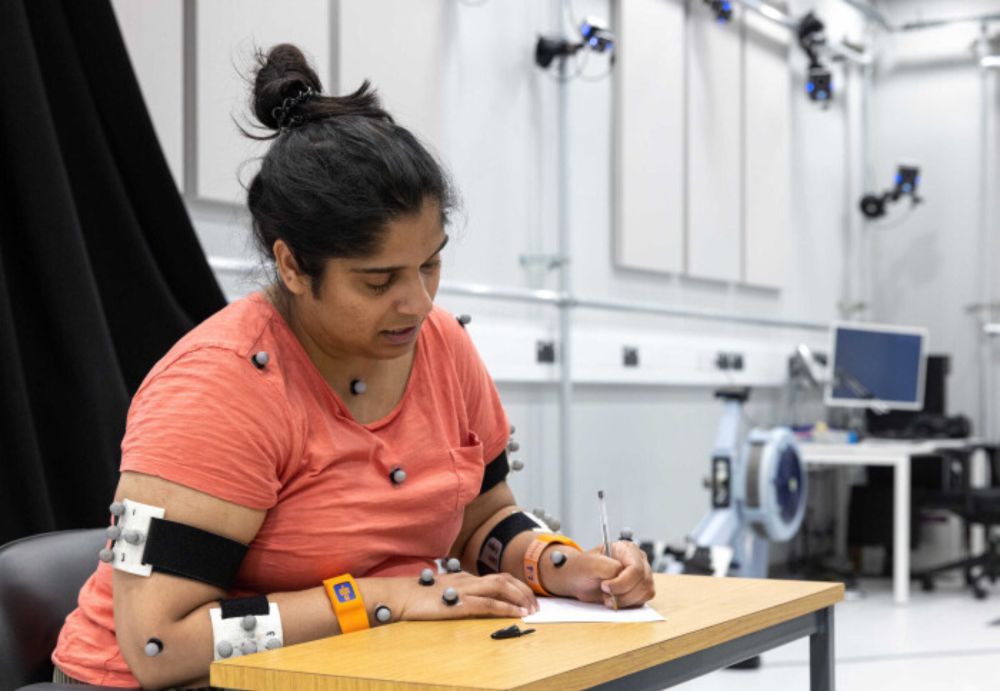
New research helps separate thinking speed from movement delays in digital #stroke tests, making results fairer + more accurate. 🧠
The approach means that patients are judged on how they think, not how fast they tap.
@imperialbrains.bsky.social www.imperial.ac.uk/news/268594/...
The approach means that patients are judged on how they think, not how fast they tap.
@imperialbrains.bsky.social www.imperial.ac.uk/news/268594/...
Imperial-led study delivers fairer remote cognitive testing for stroke | Imperial News | Imperial College London
Researchers have developed a way to separate motor delays from thinking time in digital stroke tests, improving accuracy and fairness in assessments.
www.imperial.ac.uk
September 19, 2025 at 11:33 AM
New research helps separate thinking speed from movement delays in digital #stroke tests, making results fairer + more accurate. 🧠
The approach means that patients are judged on how they think, not how fast they tap.
@imperialbrains.bsky.social www.imperial.ac.uk/news/268594/...
The approach means that patients are judged on how they think, not how fast they tap.
@imperialbrains.bsky.social www.imperial.ac.uk/news/268594/...
Reposted by Department of Brain Sciences
“People with #dementia are at greater risk of harm during heatwaves,” says Prof @pareshmalhotra.bsky.social from @imperialbrains.bsky.social
Brain changes, dehydration & other conditions make them especially vulnerable to extreme heat.
inews.co.uk/news/health/...
Brain changes, dehydration & other conditions make them especially vulnerable to extreme heat.
inews.co.uk/news/health/...

Why people with dementia are at greater risk during a heatwave
People living with the condition may not be able to explain that they are dehydrated or feeling unwell due to heat
inews.co.uk
August 19, 2025 at 1:58 PM
“People with #dementia are at greater risk of harm during heatwaves,” says Prof @pareshmalhotra.bsky.social from @imperialbrains.bsky.social
Brain changes, dehydration & other conditions make them especially vulnerable to extreme heat.
inews.co.uk/news/health/...
Brain changes, dehydration & other conditions make them especially vulnerable to extreme heat.
inews.co.uk/news/health/...
New research shows everyday wearables can detect early signs of Parkinson's Disease more sensitively than standard clinical tools.
Could this pave the way for cheaper, earlier diagnosis of Parkinsons? 👇
Could this pave the way for cheaper, earlier diagnosis of Parkinsons? 👇

Smartwatch data outperforms clinical scores in early Parkinson’s detection | Imperial News | Imperial College London
Data from smartwatches can detect early brain changes linked to Parkinson’s disease with greater sensitivity than established clinical risk scores.
www.imperial.ac.uk
August 27, 2025 at 12:23 PM
New research shows everyday wearables can detect early signs of Parkinson's Disease more sensitively than standard clinical tools.
Could this pave the way for cheaper, earlier diagnosis of Parkinsons? 👇
Could this pave the way for cheaper, earlier diagnosis of Parkinsons? 👇
New research has shown that Parkinson’s-linked brain regions retain a memory of the pesticide Rotenone.
Rotenone is banned in the UK and EU. But in the US and Canada is still used to control fish populations in lakes and reservoirs.👇
www.imperial.ac.uk/news/266673/...
Rotenone is banned in the UK and EU. But in the US and Canada is still used to control fish populations in lakes and reservoirs.👇
www.imperial.ac.uk/news/266673/...
August 26, 2025 at 12:47 PM
New research has shown that Parkinson’s-linked brain regions retain a memory of the pesticide Rotenone.
Rotenone is banned in the UK and EU. But in the US and Canada is still used to control fish populations in lakes and reservoirs.👇
www.imperial.ac.uk/news/266673/...
Rotenone is banned in the UK and EU. But in the US and Canada is still used to control fish populations in lakes and reservoirs.👇
www.imperial.ac.uk/news/266673/...
Could your diet could help heal nerve damage after spinal cord injury?
New research suggests that intermittent fasting improves leptin signialling, a “hunger” hormone that also promotes nerve repair, in mice.👇
New research suggests that intermittent fasting improves leptin signialling, a “hunger” hormone that also promotes nerve repair, in mice.👇

Diet could play a role in healing nerve damage after spinal cord injury | Imperial News | Imperial College London
Scientists have found that regulating the hunger hormone leptin through diet can enhance nerve repair after spinal cord and sciatic injury in mice.
www.imperial.ac.uk
August 25, 2025 at 11:43 AM
Could your diet could help heal nerve damage after spinal cord injury?
New research suggests that intermittent fasting improves leptin signialling, a “hunger” hormone that also promotes nerve repair, in mice.👇
New research suggests that intermittent fasting improves leptin signialling, a “hunger” hormone that also promotes nerve repair, in mice.👇
Psychosis can happen in depression, bipolar disorder & schizophrenia.
New research shows it’s linked to dopamine changes in all of them, suggesting treatments could be tailored by biology, not just diagnosis. 🧠👇
New research shows it’s linked to dopamine changes in all of them, suggesting treatments could be tailored by biology, not just diagnosis. 🧠👇
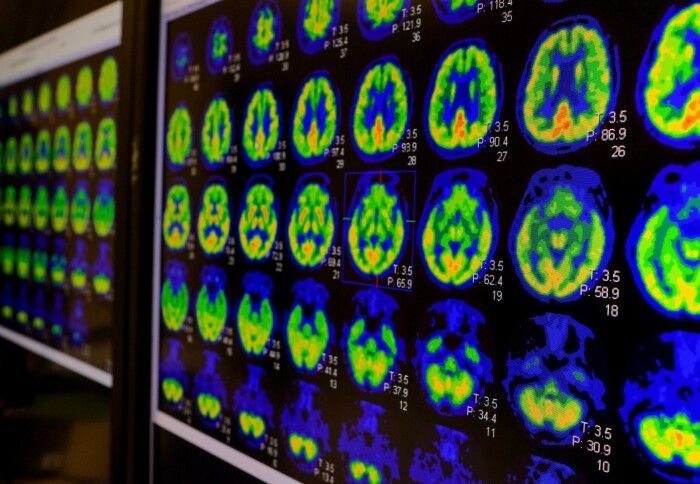
New brain scan study could change how psychosis is treated | Imperial News | Imperial College London
The findings of a new brain study could change the way doctors treat mood disorders involving psychosis in patients.
www.imperial.ac.uk
August 21, 2025 at 10:32 AM
Psychosis can happen in depression, bipolar disorder & schizophrenia.
New research shows it’s linked to dopamine changes in all of them, suggesting treatments could be tailored by biology, not just diagnosis. 🧠👇
New research shows it’s linked to dopamine changes in all of them, suggesting treatments could be tailored by biology, not just diagnosis. 🧠👇
People with dementia are at greater risk during heatwaves, warns Prof Paresh Malhotra (@pareshmalhotra.bsky.social).
Disrupted temperature control in the brain, difficulties with communication and hydration, and other health conditions increase vulnerability.👇
Disrupted temperature control in the brain, difficulties with communication and hydration, and other health conditions increase vulnerability.👇

Why people with dementia are at greater risk during a heatwave
People living with the condition may not be able to explain that they are dehydrated or feeling unwell due to heat
inews.co.uk
August 20, 2025 at 9:58 AM
People with dementia are at greater risk during heatwaves, warns Prof Paresh Malhotra (@pareshmalhotra.bsky.social).
Disrupted temperature control in the brain, difficulties with communication and hydration, and other health conditions increase vulnerability.👇
Disrupted temperature control in the brain, difficulties with communication and hydration, and other health conditions increase vulnerability.👇
🚨 PhD Opportunity!
A 3 year project on dopaminergic dysregulation in bipolar disorder & psychosis, using neuromelanin-sensitive MRI.
🔬Supervised by @sameerjauhar.bsky.social
📅 Deadline: 5 Sept
💸 £22,780 stipend
Apply now👇
A 3 year project on dopaminergic dysregulation in bipolar disorder & psychosis, using neuromelanin-sensitive MRI.
🔬Supervised by @sameerjauhar.bsky.social
📅 Deadline: 5 Sept
💸 £22,780 stipend
Apply now👇
www.findaphd.com
August 18, 2025 at 3:56 PM
🚨 PhD Opportunity!
A 3 year project on dopaminergic dysregulation in bipolar disorder & psychosis, using neuromelanin-sensitive MRI.
🔬Supervised by @sameerjauhar.bsky.social
📅 Deadline: 5 Sept
💸 £22,780 stipend
Apply now👇
A 3 year project on dopaminergic dysregulation in bipolar disorder & psychosis, using neuromelanin-sensitive MRI.
🔬Supervised by @sameerjauhar.bsky.social
📅 Deadline: 5 Sept
💸 £22,780 stipend
Apply now👇
🍷Is a glass of wine after work harmless?
Not according to Prof David Nutt @profdavidnutt.bsky.social who says the safe limit is one large glass of wine per year.
"If alcohol were invented today, it would fail safety checks".👇
Not according to Prof David Nutt @profdavidnutt.bsky.social who says the safe limit is one large glass of wine per year.
"If alcohol were invented today, it would fail safety checks".👇
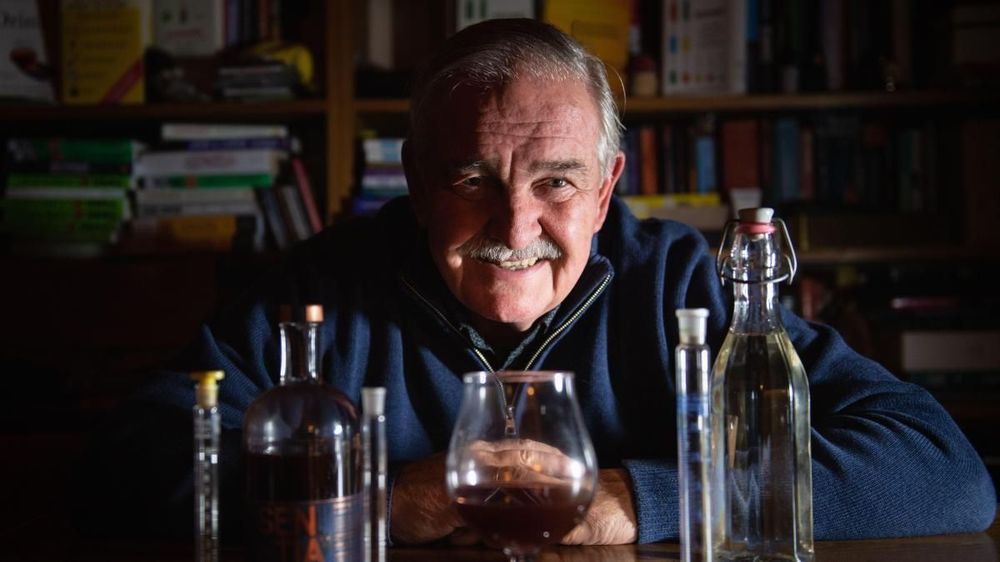
More than one glass of wine a year is harmful, says former drugs tsar
Professor David Nutt, who has often spoken about the harm done by alcohol, said if it was invented today it would not pass safety checks
www.thetimes.com
June 9, 2025 at 9:58 AM
🍷Is a glass of wine after work harmless?
Not according to Prof David Nutt @profdavidnutt.bsky.social who says the safe limit is one large glass of wine per year.
"If alcohol were invented today, it would fail safety checks".👇
Not according to Prof David Nutt @profdavidnutt.bsky.social who says the safe limit is one large glass of wine per year.
"If alcohol were invented today, it would fail safety checks".👇