




WILLIAM DARAN
@daranwilliam.bsky.social
An aspiring GENETICIST | PhD student in Human Genetics(2023-27)| MS(GWAS+GxE) & Genetics(behaviour,statistical,complex traits& evolutionary). NEFELIBATA I AM.
Reposted by WILLIAM DARAN

I wrote a little bit about the "missing heritability" question and several recent studies that have brought it to a close. A short 🧵

The missing heritability question is now (mostly) answered
Not with a bang but with a whimper
theinfinitesimal.substack.com
November 21, 2025 at 10:34 PM
I wrote a little bit about the "missing heritability" question and several recent studies that have brought it to a close. A short 🧵
Reposted by WILLIAM DARAN

Blog post: A Missing Heritability Update. Three legs and other problems. I follow up on the recent excellent post on the subject by @sashagusevposts.bsky.social. ericturkheimer.substack.com/p/missing-he...

Missing Heritability Revisited
Following up on Sasha
ericturkheimer.substack.com
November 25, 2025 at 3:04 PM
Blog post: A Missing Heritability Update. Three legs and other problems. I follow up on the recent excellent post on the subject by @sashagusevposts.bsky.social. ericturkheimer.substack.com/p/missing-he...
Reposted by WILLIAM DARAN
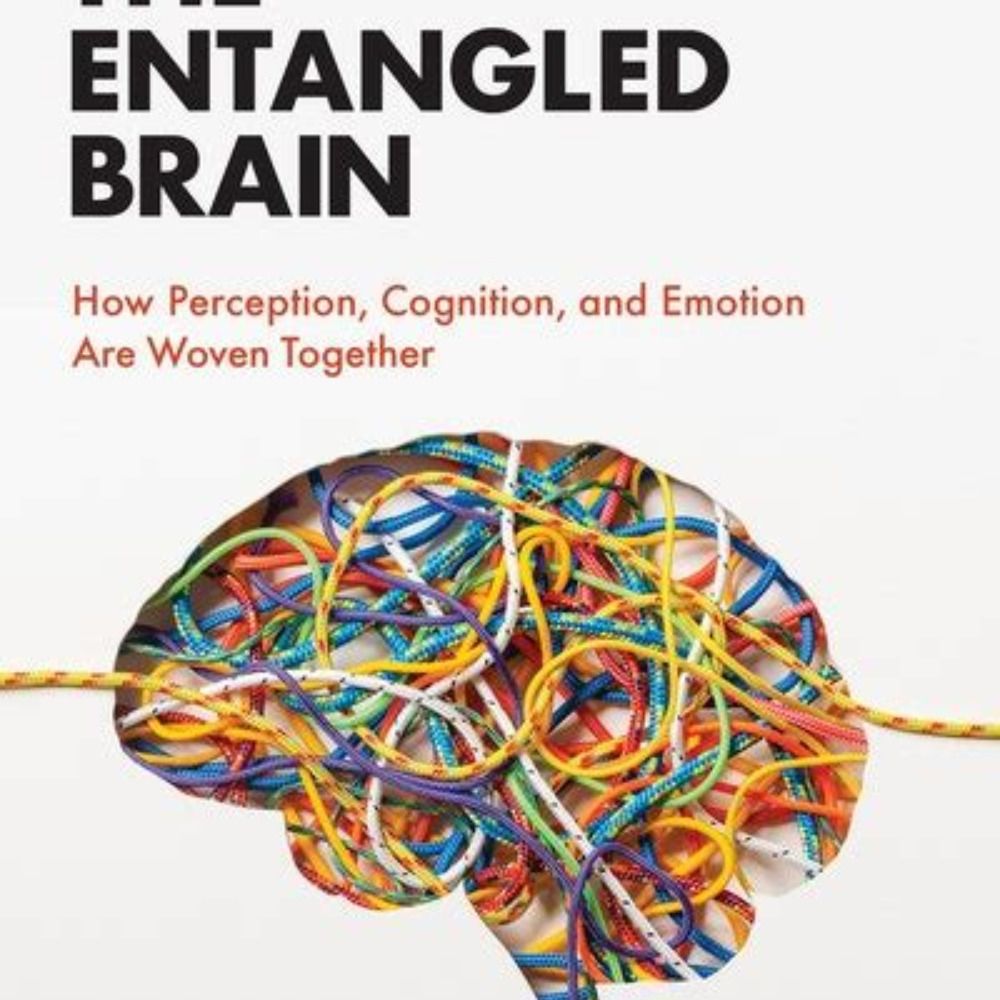
𝗪𝗵𝗮𝘁 𝗮𝗿𝗲 𝗯𝗿𝗮𝗶𝗻 𝗻𝗲𝘁𝘄𝗼𝗿𝗸𝘀?
Do they even exist...?
Join @lucinauddin.bsky.social who will present, followed by discussion in the Neuroscience & Philosophy Salon.
Open to all.
Date: Dec 9, 12pm EST-US
Register: umd.zoom.us/meeting/regi... (you need a zoom account which is free)
#neuroskyence
Do they even exist...?
Join @lucinauddin.bsky.social who will present, followed by discussion in the Neuroscience & Philosophy Salon.
Open to all.
Date: Dec 9, 12pm EST-US
Register: umd.zoom.us/meeting/regi... (you need a zoom account which is free)
#neuroskyence
Welcome! You are invited to join a meeting: NeuroPhilo Salon. After registering, you will receive a confirmation email about joining the meeting.
Welcome! You are invited to join a meeting: NeuroPhilo Salon. After registering, you will receive a confirmation email about joining the meeting.
umd.zoom.us
November 29, 2025 at 5:14 PM
𝗪𝗵𝗮𝘁 𝗮𝗿𝗲 𝗯𝗿𝗮𝗶𝗻 𝗻𝗲𝘁𝘄𝗼𝗿𝗸𝘀?
Do they even exist...?
Join @lucinauddin.bsky.social who will present, followed by discussion in the Neuroscience & Philosophy Salon.
Open to all.
Date: Dec 9, 12pm EST-US
Register: umd.zoom.us/meeting/regi... (you need a zoom account which is free)
#neuroskyence
Do they even exist...?
Join @lucinauddin.bsky.social who will present, followed by discussion in the Neuroscience & Philosophy Salon.
Open to all.
Date: Dec 9, 12pm EST-US
Register: umd.zoom.us/meeting/regi... (you need a zoom account which is free)
#neuroskyence
Reposted by WILLIAM DARAN

Wow
'MHRA-led study reveals major inconsistencies in global microbiome research'
www.gov.uk/government/n...
'Species identification varied from 63% to 100% accuracy across different methods, meaning that some laboratories failed to detect a third of the bacterial species present in the sample'
'MHRA-led study reveals major inconsistencies in global microbiome research'
www.gov.uk/government/n...
'Species identification varied from 63% to 100% accuracy across different methods, meaning that some laboratories failed to detect a third of the bacterial species present in the sample'

MHRA-led study reveals major inconsistencies in global microbiome research
International collaboration establishes new quality standards to improve reliability of gut health studies – improving accuracy to provide better diagnosis and treatment.
www.gov.uk
November 16, 2025 at 12:51 PM
Wow
'MHRA-led study reveals major inconsistencies in global microbiome research'
www.gov.uk/government/n...
'Species identification varied from 63% to 100% accuracy across different methods, meaning that some laboratories failed to detect a third of the bacterial species present in the sample'
'MHRA-led study reveals major inconsistencies in global microbiome research'
www.gov.uk/government/n...
'Species identification varied from 63% to 100% accuracy across different methods, meaning that some laboratories failed to detect a third of the bacterial species present in the sample'
Reposted by WILLIAM DARAN

We are looking for new graduate students! Feel free to repost or pass along to prospective students

November 6, 2025 at 9:01 PM
We are looking for new graduate students! Feel free to repost or pass along to prospective students
Reposted by WILLIAM DARAN

No Evidence the Gut Microbiome Causes Autism neurosciencenews.com/asd-microbio...

No Evidence the Gut Microbiome Causes Autism - Neuroscience News
Experts reviewing decades of research conclude there is no scientific evidence that the gut microbiome causes autism.
neurosciencenews.com
November 16, 2025 at 2:24 PM
No Evidence the Gut Microbiome Causes Autism neurosciencenews.com/asd-microbio...
Reposted by WILLIAM DARAN

"We would argue that selling embryo selection based on genetic testing is a form of privatization and commodification on steroids that takes preventive and private medicine to an extreme."

November 13, 2025 at 2:38 PM
"We would argue that selling embryo selection based on genetic testing is a form of privatization and commodification on steroids that takes preventive and private medicine to an extreme."
Reposted by WILLIAM DARAN

1/ 🚨New paper in Nature Genetics
Genetic factors are associated with the educational fields people study, from arts to engineering.
Article: www.nature.com/articles/s41...
FAQ: www.thehastingscenter.org/genomic-find...
Genetic factors are associated with the educational fields people study, from arts to engineering.
Article: www.nature.com/articles/s41...
FAQ: www.thehastingscenter.org/genomic-find...

Genetic associations with educational fields - Nature Genetics
Genome-wide analyses of 10 educational fields identify 17 associated loci. Analysis of genetic clustering across specializations identifies two key dimensions that show genetic overlap with personalit...
www.nature.com
November 4, 2025 at 10:23 AM
1/ 🚨New paper in Nature Genetics
Genetic factors are associated with the educational fields people study, from arts to engineering.
Article: www.nature.com/articles/s41...
FAQ: www.thehastingscenter.org/genomic-find...
Genetic factors are associated with the educational fields people study, from arts to engineering.
Article: www.nature.com/articles/s41...
FAQ: www.thehastingscenter.org/genomic-find...
Reposted by WILLIAM DARAN

First time on Bsky and first big announcement!
I am excited to announce that our new study explaining the missing heritability of many phenotypes using WGS data from ~347,000 UK Biobank participants has just been published in @Nature.
Our manuscript is here: www.nature.com/articles/s41....
I am excited to announce that our new study explaining the missing heritability of many phenotypes using WGS data from ~347,000 UK Biobank participants has just been published in @Nature.
Our manuscript is here: www.nature.com/articles/s41....

Estimation and mapping of the missing heritability of human phenotypes - Nature
WGS data were used from 347,630 individuals with European ancestry in the UK Biobank to obtain high-precision estimates of coding and non-coding rare variant heritability for 34 co...
www.nature.com
November 12, 2025 at 5:57 PM
First time on Bsky and first big announcement!
I am excited to announce that our new study explaining the missing heritability of many phenotypes using WGS data from ~347,000 UK Biobank participants has just been published in @Nature.
Our manuscript is here: www.nature.com/articles/s41....
I am excited to announce that our new study explaining the missing heritability of many phenotypes using WGS data from ~347,000 UK Biobank participants has just been published in @Nature.
Our manuscript is here: www.nature.com/articles/s41....
Reposted by WILLIAM DARAN

Thrilled to share the second half of my PhD work here!
We show how data on expression quantitative trait loci (eQTL) relates to the structure of gene regulatory networks (GRN). Much of the GRN / eQTL picture is unmapped, but what we do have says a lot… (1/)
doi.org/10.1101/2025...
We show how data on expression quantitative trait loci (eQTL) relates to the structure of gene regulatory networks (GRN). Much of the GRN / eQTL picture is unmapped, but what we do have says a lot… (1/)
doi.org/10.1101/2025...
August 22, 2025 at 7:50 PM
Thrilled to share the second half of my PhD work here!
We show how data on expression quantitative trait loci (eQTL) relates to the structure of gene regulatory networks (GRN). Much of the GRN / eQTL picture is unmapped, but what we do have says a lot… (1/)
doi.org/10.1101/2025...
We show how data on expression quantitative trait loci (eQTL) relates to the structure of gene regulatory networks (GRN). Much of the GRN / eQTL picture is unmapped, but what we do have says a lot… (1/)
doi.org/10.1101/2025...
Reposted by WILLIAM DARAN

Genetic architectures of #ComplexTraits vary widely. @yuvalsim.bsky.social @jkpritch.bsky.social @gs2747.bsky.social &co show these diffs arise from mutational target size & heritability per site; when controlled for, all tested traits have similar architectures @plosbiology.org 🧪 plos.io/47mZXqT

October 14, 2025 at 12:58 PM
Genetic architectures of #ComplexTraits vary widely. @yuvalsim.bsky.social @jkpritch.bsky.social @gs2747.bsky.social &co show these diffs arise from mutational target size & heritability per site; when controlled for, all tested traits have similar architectures @plosbiology.org 🧪 plos.io/47mZXqT
Reposted by WILLIAM DARAN

I'm recruiting a postdoc for my group (based in beautiful Eugene, OR). Please get in touch if you're interested, esp if you'd like to chat at #ASHG25!
We'll primarily work at the intersection of statistical and population genetics, and we also have active projects related to the ethical and social implications of human genetics (ELSI). Please get in touch if that's a combination that sounds interesting to you!
October 15, 2025 at 12:52 PM
I'm recruiting a postdoc for my group (based in beautiful Eugene, OR). Please get in touch if you're interested, esp if you'd like to chat at #ASHG25!
Reposted by WILLIAM DARAN

Proud of the latest edition of my free intro biostats book.
gitrepo: github.com/ybrandvain/b...
book: ybrandvain.github.io/biostats/
Not complete but at a good point to take a break, and I think its quite usable
dm me with comments , ideas etc
gitrepo: github.com/ybrandvain/b...
book: ybrandvain.github.io/biostats/
Not complete but at a good point to take a break, and I think its quite usable
dm me with comments , ideas etc
Applied Biostatistics
ybrandvain.github.io
October 24, 2025 at 2:33 PM
Proud of the latest edition of my free intro biostats book.
gitrepo: github.com/ybrandvain/b...
book: ybrandvain.github.io/biostats/
Not complete but at a good point to take a break, and I think its quite usable
dm me with comments , ideas etc
gitrepo: github.com/ybrandvain/b...
book: ybrandvain.github.io/biostats/
Not complete but at a good point to take a break, and I think its quite usable
dm me with comments , ideas etc
Reposted by WILLIAM DARAN

I've often wondered about what we should call organisms whose similarity might be due to acquired genetic material. It got a little complicated, but I made a stab at it here
Classifying Convergences in the Light of Horizontal Gene Transfer: Epaktovars and Xenotypes academic.oup.com/mbe/article/...
Classifying Convergences in the Light of Horizontal Gene Transfer: Epaktovars and Xenotypes academic.oup.com/mbe/article/...

Classifying Convergences in the Light of Horizontal Gene Transfer: Epaktovars and Xenotypes
Abstract. The classification of living systems presents significant challenges due to the prevalence of gene transfer between genomes. Traditional taxonomi
academic.oup.com
October 30, 2025 at 11:33 AM
I've often wondered about what we should call organisms whose similarity might be due to acquired genetic material. It got a little complicated, but I made a stab at it here
Classifying Convergences in the Light of Horizontal Gene Transfer: Epaktovars and Xenotypes academic.oup.com/mbe/article/...
Classifying Convergences in the Light of Horizontal Gene Transfer: Epaktovars and Xenotypes academic.oup.com/mbe/article/...
Reposted by WILLIAM DARAN
A hearty Denisovan stew ripe with stories of mixing and more mixing, even with a third more ‘archaic’ hominid.
www.biorxiv.org/content/10.1...
www.biorxiv.org/content/10.1...

A high-coverage genome from a 200,000-year-old Denisovan
Denisovans, an extinct sister group of Neandertals who lived in Eastern Eurasia during the Middle and Late Pleistocene, are known only from a handful of skeletal remains and limited genetic data, incl...
www.biorxiv.org
October 20, 2025 at 7:07 PM
A hearty Denisovan stew ripe with stories of mixing and more mixing, even with a third more ‘archaic’ hominid.
www.biorxiv.org/content/10.1...
www.biorxiv.org/content/10.1...
Reposted by WILLIAM DARAN

Sorry non-US friends--your science is still lovely but we're busy today starting the overthrow of a dictator
October 18, 2025 at 8:27 PM
Sorry non-US friends--your science is still lovely but we're busy today starting the overthrow of a dictator
Reposted by WILLIAM DARAN

Why studies about reconstructing the past based on contemporary DNA makes me think of the streetlight effect
open.substack.com/pub/kostaska...
open.substack.com/pub/kostaska...


September 15, 2025 at 6:19 PM
Why studies about reconstructing the past based on contemporary DNA makes me think of the streetlight effect
open.substack.com/pub/kostaska...
open.substack.com/pub/kostaska...
Reposted by WILLIAM DARAN
Great review on The Genetics of Human Handedness: Microtubules and Beyond www.cell.com/trends/genet... - handedness is such an interesting phenotype!

Genetics of human handedness: microtubules and beyond
Handedness (i.e., the preference to use either the left or the right hand for fine
motor tasks) is a widely investigated trait. Handedness heritability is consistently
estimated to be 25%. After decad...
www.cell.com
October 16, 2025 at 6:12 PM
Great review on The Genetics of Human Handedness: Microtubules and Beyond www.cell.com/trends/genet... - handedness is such an interesting phenotype!
Reposted by WILLIAM DARAN
Well, it could just be the processes of development themselves. They're noisy. There's just a lot of stochasticity and sometimes that can push development down one pathway versus another. journals.plos.org/plosbiology/...

October 16, 2025 at 6:20 PM
Well, it could just be the processes of development themselves. They're noisy. There's just a lot of stochasticity and sometimes that can push development down one pathway versus another. journals.plos.org/plosbiology/...
Reposted by WILLIAM DARAN
In 2018, Charles Murray challenged me to a bet: "We will understand IQ genetically—I think most of the picture will have been filled in by 2025—there will still be blanks—but we’ll know basically what’s going on." It's now 2025, and I claim a win. I write about it in The Atlantic.

Your Genes Are Simply Not Enough to Explain How Smart You Are
Seven years ago, I took a bet with Charles Murray about whether we’d basically understand the genetics of intelligence by now.
www.theatlantic.com
October 13, 2025 at 1:33 PM
In 2018, Charles Murray challenged me to a bet: "We will understand IQ genetically—I think most of the picture will have been filled in by 2025—there will still be blanks—but we’ll know basically what’s going on." It's now 2025, and I claim a win. I write about it in The Atlantic.
Reposted by WILLIAM DARAN

"Social science genetics encompasses the longest causal chain in science: from DNA to human culture."
Some people call it a minefield. Others call it dangerous, even irresponsible. I call it the most promising field in life sciences.
My love letter to social science genetics: communities.springernature.com/posts/a-love...
My love letter to social science genetics: communities.springernature.com/posts/a-love...

A Love Letter to Social Science Genetics
Some people call social science genetics a minefield. Others call it dangerous, even irresponsible. I call it the most promising field in life sciences.
communities.springernature.com
September 9, 2025 at 7:11 PM
"Social science genetics encompasses the longest causal chain in science: from DNA to human culture."
Reposted by WILLIAM DARAN
Some people call it a minefield. Others call it dangerous, even irresponsible. I call it the most promising field in life sciences.
My love letter to social science genetics: communities.springernature.com/posts/a-love...
My love letter to social science genetics: communities.springernature.com/posts/a-love...
A Love Letter to Social Science Genetics
Some people call social science genetics a minefield. Others call it dangerous, even irresponsible. I call it the most promising field in life sciences.
communities.springernature.com
September 8, 2025 at 5:55 AM
Some people call it a minefield. Others call it dangerous, even irresponsible. I call it the most promising field in life sciences.
My love letter to social science genetics: communities.springernature.com/posts/a-love...
My love letter to social science genetics: communities.springernature.com/posts/a-love...
Reposted by WILLIAM DARAN
I wrote about gene-gene interactions (epistasis) and the implications for heritability, trait definitions, natural selection, and therapeutic interventions. Biology is clearly full of causal interactions, so why don't we see them in the data? A 🧵:

Beneath the surface of the sum
When genetic interactions matter and when they don't
open.substack.com
August 27, 2025 at 8:41 PM
I wrote about gene-gene interactions (epistasis) and the implications for heritability, trait definitions, natural selection, and therapeutic interventions. Biology is clearly full of causal interactions, so why don't we see them in the data? A 🧵:
Reposted by WILLIAM DARAN

Excited to share our latest manuscript, "Exposure accumulation drives age-dependent disease architectures and polygenic risk scores," led by Xilin Jiang: www.medrxiv.org/content/10.1...
I am attempting an explainer thread for the first time here:
(I am usually too exhausted to post one)
I am attempting an explainer thread for the first time here:
(I am usually too exhausted to post one)

Exposure accumulation drives age-dependent disease architectures and polygenic risk scores
Our understanding of the dependence of the genetic and environmental architecture of common diseases on age is incomplete. Here, we use longitudinal data to quantify age-dependent genetic and environm...
www.medrxiv.org
September 2, 2025 at 11:08 PM
Excited to share our latest manuscript, "Exposure accumulation drives age-dependent disease architectures and polygenic risk scores," led by Xilin Jiang: www.medrxiv.org/content/10.1...
I am attempting an explainer thread for the first time here:
(I am usually too exhausted to post one)
I am attempting an explainer thread for the first time here:
(I am usually too exhausted to post one)
Reposted by WILLIAM DARAN

Brilliant paper by Visscher et al.
Populations differ in traits/disease burden. Are these differences due to genetics?
Comparing single variants or polygenic scores between populations is biased due to environmental confounders correlated with the variants.
1/3
www.medrxiv.org/content/10.1...
Populations differ in traits/disease burden. Are these differences due to genetics?
Comparing single variants or polygenic scores between populations is biased due to environmental confounders correlated with the variants.
1/3
www.medrxiv.org/content/10.1...

Direct effect of genetic ancestry on complex traits in a Mexican population
Human populations differ in disease prevalences and in average values of phenotypes, but the extent to which differences are caused by genetic or environmental factors is unknown for most complex trai...
www.medrxiv.org
September 11, 2025 at 5:57 AM
Brilliant paper by Visscher et al.
Populations differ in traits/disease burden. Are these differences due to genetics?
Comparing single variants or polygenic scores between populations is biased due to environmental confounders correlated with the variants.
1/3
www.medrxiv.org/content/10.1...
Populations differ in traits/disease burden. Are these differences due to genetics?
Comparing single variants or polygenic scores between populations is biased due to environmental confounders correlated with the variants.
1/3
www.medrxiv.org/content/10.1...