




C5 EU Project
@c5-project.eu
Our EU-funded project uses metabolic engineering in cyanobacteria and synthetic cellular organelles to convert sunlight, water, and CO2 into bio-isoprene in a more sustainable way.
https://c5-project.eu
Author’s views only. Grant agreement ID: 101223091
https://c5-project.eu
Author’s views only. Grant agreement ID: 101223091
Pinned
C5 EU Project
@c5-project.eu
· Dec 18
Our team met at Córdoba to kick off our @horizoneu.bsky.social project last month! 🇪🇺
“It was a fantastic opportunity for everyone to dive into the plans for metabolic engineering of cyanobacteria.”
Partners sharer their experience and roles in the C5 project.
Thank you for hosting us @uco.es!
“It was a fantastic opportunity for everyone to dive into the plans for metabolic engineering of cyanobacteria.”
Partners sharer their experience and roles in the C5 project.
Thank you for hosting us @uco.es!
Reposted by C5 EU Project

Our partner from @w-u-r.bsky.social, @nicoc-micsynmet.bsky.social, is one of the 10 new members joining The Young Academy, a “dynamic group of top young researchers with outspoken views on science and science policy.” 💡
www.dejongeakademie.nl/en/news/3197...
www.dejongeakademie.nl/en/news/3197...

January 19, 2026 at 2:29 PM
Our partner from @w-u-r.bsky.social, @nicoc-micsynmet.bsky.social, is one of the 10 new members joining The Young Academy, a “dynamic group of top young researchers with outspoken views on science and science policy.” 💡
www.dejongeakademie.nl/en/news/3197...
www.dejongeakademie.nl/en/news/3197...
Reposted by C5 EU Project
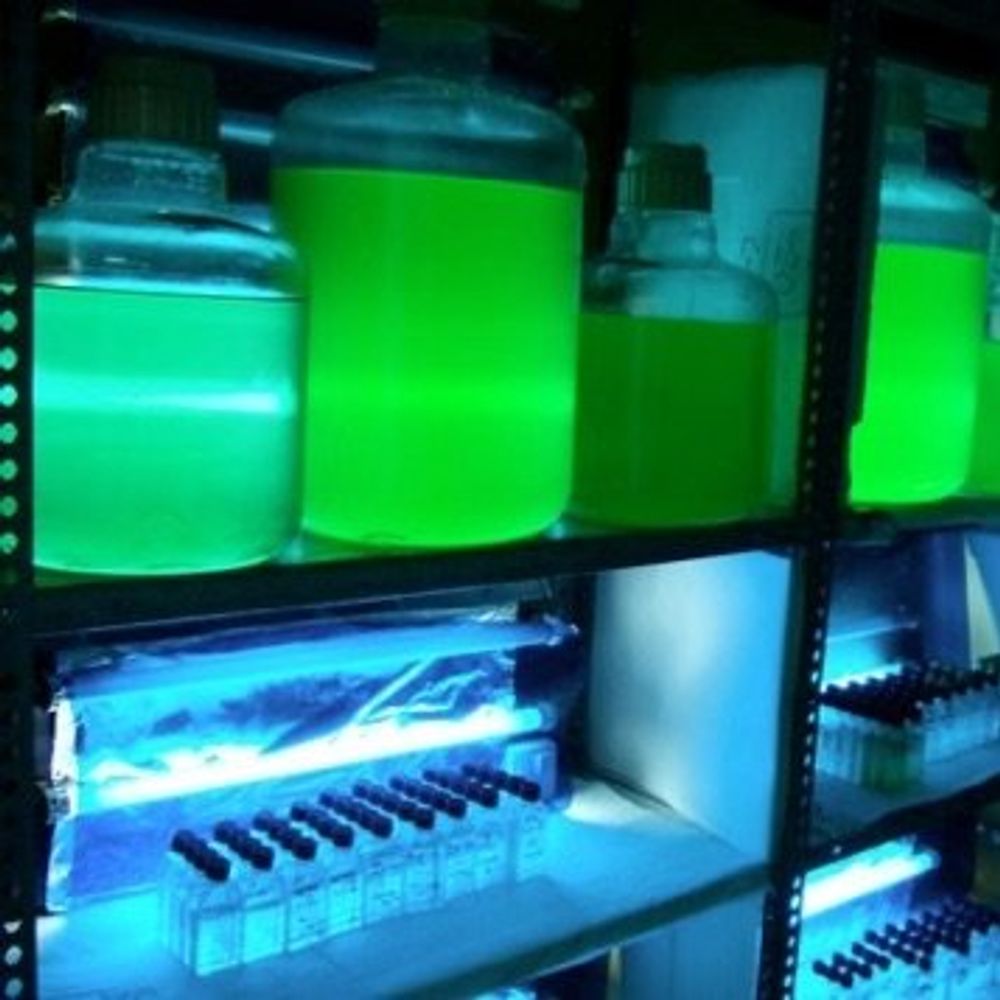
Establishing heterologous betaxanthin pigment biosynthesis in cyanobacteria www.sciencedirect.com/science/arti...

Establishing heterologous betaxanthin pigment biosynthesis in cyanobacteria
Betalains are water-soluble pigments with two major classes: red-violet betacyanins and yellow-orange betaxanthins. These pigments are increasingly be…
www.sciencedirect.com
January 9, 2026 at 11:06 AM
Establishing heterologous betaxanthin pigment biosynthesis in cyanobacteria www.sciencedirect.com/science/arti...
Reposted by C5 EU Project
Our project partner, Jasmin from the @uva.nl and SolarFoil, will present her poster at the NWO Physics conference in the Netherlands! If you’re attending, save a slot on your schedule. 📌
Wednesday January 21, from 13:00 to 14:10. Poster number 91
#NWOPhysics2025
Wednesday January 21, from 13:00 to 14:10. Poster number 91
#NWOPhysics2025

January 15, 2026 at 4:27 PM
Our project partner, Jasmin from the @uva.nl and SolarFoil, will present her poster at the NWO Physics conference in the Netherlands! If you’re attending, save a slot on your schedule. 📌
Wednesday January 21, from 13:00 to 14:10. Poster number 91
#NWOPhysics2025
Wednesday January 21, from 13:00 to 14:10. Poster number 91
#NWOPhysics2025
Reposted by C5 EU Project
Assessment of Polyhydroxybutyrate Production by Cyanobacteria Strains Isolated from Environmental Water Sources Using a Secondary Effluent | ACS ES&T Water pubs.acs.org/doi/10.1021/...

Assessment of Polyhydroxybutyrate Production by Cyanobacteria Strains Isolated from Environmental Water Sources Using a Secondary Effluent
Growing concern over plastic pollution has intensified research on biodegradable alternatives, such as polyhydroxybutyrate (PHB), a biopolymer produced by cyanobacteria. Despite their sustainability advantages, photoautotrophic PHB production remains limited, and cultivation strategies need optimization. In this study, five cyanobacterial strains were isolated from environmental microbiome cultures to evaluate their PHB production potential. The goal was to identify the most productive strains and optimal conditions for polymer synthesis. Cultures were grown in modified BG11 media (without nitrogen, phosphorus, or inorganic carbon) and in a secondary effluent from treated urban wastewater, both supplemented with acetate (0, 0.6, or 4 g/L) and incubated for 7 days in darkness. The biomass remained stable in most strains but declined to 0.28 g/L in the secondary effluent, except for one Leptolyngbya sp. strain that increased the biomass with acetate. The highest PHB yield per acetate consumed was achieved by Synechocystis sp. from an agricultural pond, reaching 3.1% dry cell weight in modified BG11 with 0.6 g/L acetate. In the secondary effluent, the maximum PHB content reached 2.9% in another Leptolyngbya sp. strain with 4 g/L acetate. These findings highlight strain-specific responses and the potential of wastewater-based cultivation for sustainable bioplastic production.
pubs.acs.org
December 19, 2025 at 9:06 AM
Assessment of Polyhydroxybutyrate Production by Cyanobacteria Strains Isolated from Environmental Water Sources Using a Secondary Effluent | ACS ES&T Water pubs.acs.org/doi/10.1021/...
Our team met at Córdoba to kick off our @horizoneu.bsky.social project last month! 🇪🇺
“It was a fantastic opportunity for everyone to dive into the plans for metabolic engineering of cyanobacteria.”
Partners sharer their experience and roles in the C5 project.
Thank you for hosting us @uco.es!
“It was a fantastic opportunity for everyone to dive into the plans for metabolic engineering of cyanobacteria.”
Partners sharer their experience and roles in the C5 project.
Thank you for hosting us @uco.es!
December 18, 2025 at 3:22 PM
Our team met at Córdoba to kick off our @horizoneu.bsky.social project last month! 🇪🇺
“It was a fantastic opportunity for everyone to dive into the plans for metabolic engineering of cyanobacteria.”
Partners sharer their experience and roles in the C5 project.
Thank you for hosting us @uco.es!
“It was a fantastic opportunity for everyone to dive into the plans for metabolic engineering of cyanobacteria.”
Partners sharer their experience and roles in the C5 project.
Thank you for hosting us @uco.es!
Reposted by C5 EU Project

Last week, I attended the kick-off meeting for our EU-funded C5 project in Cordoba, Spain. It was great to discuss our plans for the metabolic engineering of Cyanobacteria in detail with all partners, and I really enjoyed the visit to sunny Andalusia.

November 28, 2025 at 9:58 AM
Last week, I attended the kick-off meeting for our EU-funded C5 project in Cordoba, Spain. It was great to discuss our plans for the metabolic engineering of Cyanobacteria in detail with all partners, and I really enjoyed the visit to sunny Andalusia.