



Brian
@brianpaulmarcum.bsky.social
Reposted by Brian

Reposted by Brian
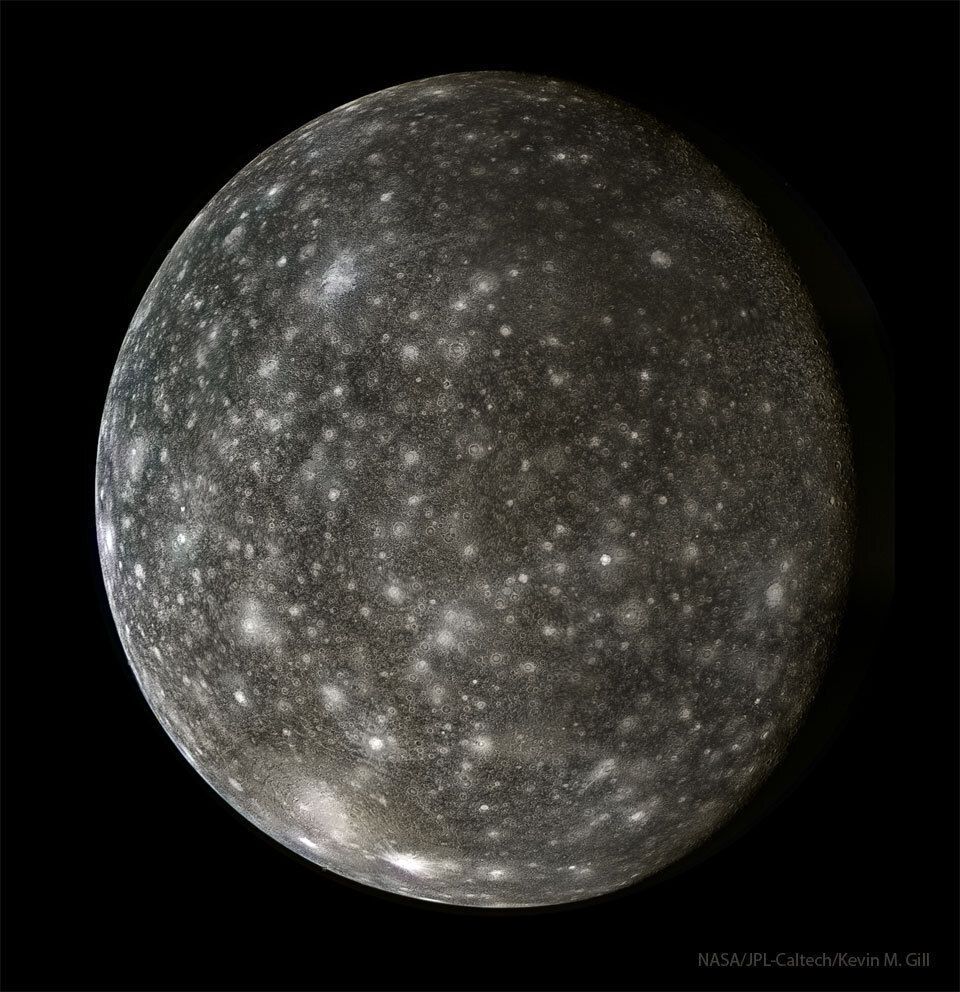
#PPOD: This image from NASA's Voyager 2 spacecraft captures Callisto, the outermost of Jupiter's four large Galilean moons. Callisto has a diameter of approximately 4,800 km, making it almost the same size as the planet Mercury. 🧪 🔭
Credit: NASA, JPL-Caltech, Voyager 2; Processing: Kevin M. Gill
Credit: NASA, JPL-Caltech, Voyager 2; Processing: Kevin M. Gill
December 4, 2025 at 4:02 PM
#PPOD: This image from NASA's Voyager 2 spacecraft captures Callisto, the outermost of Jupiter's four large Galilean moons. Callisto has a diameter of approximately 4,800 km, making it almost the same size as the planet Mercury. 🧪 🔭
Credit: NASA, JPL-Caltech, Voyager 2; Processing: Kevin M. Gill
Credit: NASA, JPL-Caltech, Voyager 2; Processing: Kevin M. Gill

Reposted by Brian

Let's dive into the dusty central region of the Milky Way!
There, a swarm of stars orbits an invisible, supermassive #BlackHole. As we get closer to it, we see these stars, as observed by the VLT (in 2019) and VLTI (mid-2021).
Read more: https://www.eso.org/public/news/eso2119/ 🔭
There, a swarm of stars orbits an invisible, supermassive #BlackHole. As we get closer to it, we see these stars, as observed by the VLT (in 2019) and VLTI (mid-2021).
Read more: https://www.eso.org/public/news/eso2119/ 🔭
December 3, 2025 at 1:05 PM
Let's dive into the dusty central region of the Milky Way!
There, a swarm of stars orbits an invisible, supermassive #BlackHole. As we get closer to it, we see these stars, as observed by the VLT (in 2019) and VLTI (mid-2021).
Read more: https://www.eso.org/public/news/eso2119/ 🔭
There, a swarm of stars orbits an invisible, supermassive #BlackHole. As we get closer to it, we see these stars, as observed by the VLT (in 2019) and VLTI (mid-2021).
Read more: https://www.eso.org/public/news/eso2119/ 🔭
Reposted by Brian



Reposted by Brian
#PPOD: NASA's Perseverance rover captured this view of Deimos, the smaller of Mars' two moons, shining in the sky at 4:27 a.m. local time on March 1, 2025, the 1,433rd Martian day, or sol, of the mission. 🧪 🔭
Credit: NASA/JPL-Caltech
Credit: NASA/JPL-Caltech

December 2, 2025 at 4:04 PM
#PPOD: NASA's Perseverance rover captured this view of Deimos, the smaller of Mars' two moons, shining in the sky at 4:27 a.m. local time on March 1, 2025, the 1,433rd Martian day, or sol, of the mission. 🧪 🔭
Credit: NASA/JPL-Caltech
Credit: NASA/JPL-Caltech

Reposted by Brian
#PPOD: The object captured here by the Hubble Space Telescope is a reflection nebula, identified as GN 04.32.8. Reflection nebulae are clouds of dust in space that don't emit their own light, as other nebulae do. 🧪 🔭
Credit: ESA/Hubble & NASA, G. Duchêne
Credit: ESA/Hubble & NASA, G. Duchêne

December 1, 2025 at 4:01 PM
#PPOD: The object captured here by the Hubble Space Telescope is a reflection nebula, identified as GN 04.32.8. Reflection nebulae are clouds of dust in space that don't emit their own light, as other nebulae do. 🧪 🔭
Credit: ESA/Hubble & NASA, G. Duchêne
Credit: ESA/Hubble & NASA, G. Duchêne

Reposted by Brian
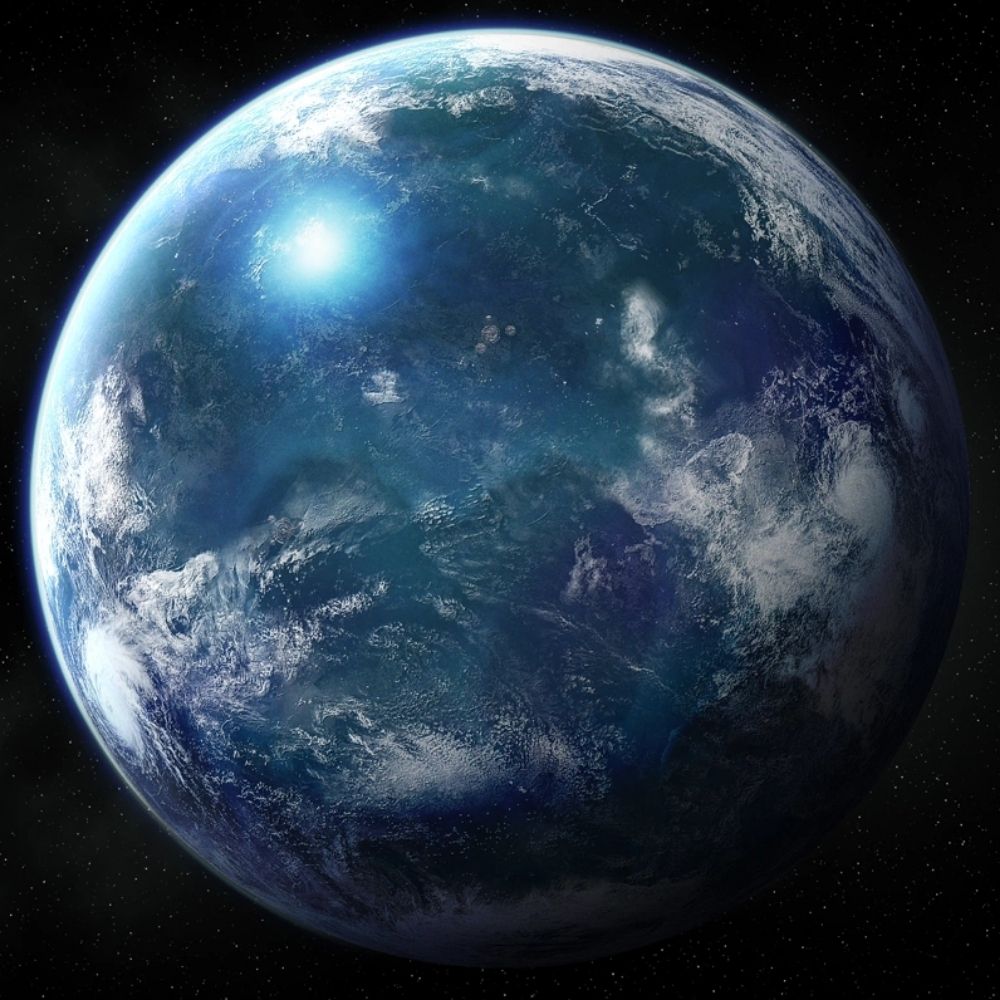
Here's a cool photo of Uranus.

November 29, 2025 at 1:36 AM
Here's a cool photo of Uranus.

Reposted by Brian

Dan Farah doing the round might be doing more than the actual documentary to move the needle.
youtu.be/vqXMsUjoWbk?...
youtu.be/vqXMsUjoWbk?...

Laura Coates/CNN discusses The Age of Disclosure with Director/Producer Dan Farah
YouTube video by The Age Of Disclosure
youtu.be
November 27, 2025 at 12:26 PM
Dan Farah doing the round might be doing more than the actual documentary to move the needle.
youtu.be/vqXMsUjoWbk?...
youtu.be/vqXMsUjoWbk?...
Reposted by Brian
Io beauty shot.
Taken by the Juno spacecraft on 3 February 2024.
The right-hand hemisphere is illuminated by the Sun.
On the left, the night side isn't totally dark because of Jupitershine.
Image credit: NASA/SwRI/MSSS
Taken by the Juno spacecraft on 3 February 2024.
The right-hand hemisphere is illuminated by the Sun.
On the left, the night side isn't totally dark because of Jupitershine.
Image credit: NASA/SwRI/MSSS

November 27, 2025 at 3:54 AM
Io beauty shot.
Taken by the Juno spacecraft on 3 February 2024.
The right-hand hemisphere is illuminated by the Sun.
On the left, the night side isn't totally dark because of Jupitershine.
Image credit: NASA/SwRI/MSSS
Taken by the Juno spacecraft on 3 February 2024.
The right-hand hemisphere is illuminated by the Sun.
On the left, the night side isn't totally dark because of Jupitershine.
Image credit: NASA/SwRI/MSSS

Reposted by Brian
Monumental: This is the first biography of Allan Bennett, one of the first British men to gain higher ordination as a Buddhist monk and one of the seminal figures in the development of Buddhism (and Thelema) in the UK.
#occultsky #thelema
#occultsky #thelema

The Life of Allan Bennett, Bhikkhu Ananda Metteyya
Amazon.com: The Life of Allan Bennett, Bhikkhu Ananda Metteyya: 9781781797983: Crow, John L., Harris, Elizabeth J.: Books
www.amazon.com
November 26, 2025 at 4:52 PM
Monumental: This is the first biography of Allan Bennett, one of the first British men to gain higher ordination as a Buddhist monk and one of the seminal figures in the development of Buddhism (and Thelema) in the UK.
#occultsky #thelema
#occultsky #thelema
Reposted by Brian
Join us on a trip to the region between the Scorpius and Ophiuchus constellations, home to tens of rogue planets.
Rogue planets do not orbit a star but roam freely. Since they are not illuminated by nearby stars, they are hard to discover.
Read more: https://www.eso.org/public/news/eso2120/ 🔭
Rogue planets do not orbit a star but roam freely. Since they are not illuminated by nearby stars, they are hard to discover.
Read more: https://www.eso.org/public/news/eso2120/ 🔭
November 26, 2025 at 1:04 PM
Join us on a trip to the region between the Scorpius and Ophiuchus constellations, home to tens of rogue planets.
Rogue planets do not orbit a star but roam freely. Since they are not illuminated by nearby stars, they are hard to discover.
Read more: https://www.eso.org/public/news/eso2120/ 🔭
Rogue planets do not orbit a star but roam freely. Since they are not illuminated by nearby stars, they are hard to discover.
Read more: https://www.eso.org/public/news/eso2120/ 🔭

Reposted by Brian
The night sky is not the only marvel of the Atacama Desert.
One example? The Licancabur volcano, one of the great gatekeepers of ALMA. 5920 m high, it‘s part of a chain of mountains that separate Chile and Bolivia 🌋
https://www.eso.org/public/images/licancabur-yuri/ 🔭
One example? The Licancabur volcano, one of the great gatekeepers of ALMA. 5920 m high, it‘s part of a chain of mountains that separate Chile and Bolivia 🌋
https://www.eso.org/public/images/licancabur-yuri/ 🔭

November 25, 2025 at 11:03 AM
The night sky is not the only marvel of the Atacama Desert.
One example? The Licancabur volcano, one of the great gatekeepers of ALMA. 5920 m high, it‘s part of a chain of mountains that separate Chile and Bolivia 🌋
https://www.eso.org/public/images/licancabur-yuri/ 🔭
One example? The Licancabur volcano, one of the great gatekeepers of ALMA. 5920 m high, it‘s part of a chain of mountains that separate Chile and Bolivia 🌋
https://www.eso.org/public/images/licancabur-yuri/ 🔭
Reposted by Brian
This is an incredible image of comet 3I/ATLAS, taken by Satoru Murata ICQ Comet Observations group on 16 November 2025 from western New Mexico.
Structure within the major dust tail from the comet is clearly visible, together with two smaller jets trailing the nucleus and maybe even an anti-tail.
Structure within the major dust tail from the comet is clearly visible, together with two smaller jets trailing the nucleus and maybe even an anti-tail.

November 24, 2025 at 11:50 PM
This is an incredible image of comet 3I/ATLAS, taken by Satoru Murata ICQ Comet Observations group on 16 November 2025 from western New Mexico.
Structure within the major dust tail from the comet is clearly visible, together with two smaller jets trailing the nucleus and maybe even an anti-tail.
Structure within the major dust tail from the comet is clearly visible, together with two smaller jets trailing the nucleus and maybe even an anti-tail.

Reposted by Brian
#PPOD: Astronomers using ESO’s Very Large Telescope in Chile have captured this eye-catching image of planetary nebula Abell 33. Created when an aging star blew off its outer layers, this beautiful blue bubble is, by chance, aligned with a foreground star... 🧪 🔭
Credit: ESO
Credit: ESO

November 24, 2025 at 4:03 PM
#PPOD: Astronomers using ESO’s Very Large Telescope in Chile have captured this eye-catching image of planetary nebula Abell 33. Created when an aging star blew off its outer layers, this beautiful blue bubble is, by chance, aligned with a foreground star... 🧪 🔭
Credit: ESO
Credit: ESO

Reposted by Brian
I find this image remarkable.
It's of the nucleus of comet 67P/Churyumov–Gerasimenko, photographed by the ESA Rosetta spacecraft.
That bright white plume is a jet of dust and water ice blasting from the nucleus—helping form the comet's long, dusty tail as it approaches the Sun.
It's of the nucleus of comet 67P/Churyumov–Gerasimenko, photographed by the ESA Rosetta spacecraft.
That bright white plume is a jet of dust and water ice blasting from the nucleus—helping form the comet's long, dusty tail as it approaches the Sun.

November 22, 2025 at 1:51 AM
I find this image remarkable.
It's of the nucleus of comet 67P/Churyumov–Gerasimenko, photographed by the ESA Rosetta spacecraft.
That bright white plume is a jet of dust and water ice blasting from the nucleus—helping form the comet's long, dusty tail as it approaches the Sun.
It's of the nucleus of comet 67P/Churyumov–Gerasimenko, photographed by the ESA Rosetta spacecraft.
That bright white plume is a jet of dust and water ice blasting from the nucleus—helping form the comet's long, dusty tail as it approaches the Sun.
Reposted by Brian
This is part of our universe.
An area of sky about the size of a grain of sand held at arm's length.
The spiked features are stars in the Milky Way.
EVERYTHING ELSE IS A GALAXY.
An area of sky about the size of a grain of sand held at arm's length.
The spiked features are stars in the Milky Way.
EVERYTHING ELSE IS A GALAXY.

November 20, 2025 at 6:04 PM
This is part of our universe.
An area of sky about the size of a grain of sand held at arm's length.
The spiked features are stars in the Milky Way.
EVERYTHING ELSE IS A GALAXY.
An area of sky about the size of a grain of sand held at arm's length.
The spiked features are stars in the Milky Way.
EVERYTHING ELSE IS A GALAXY.