


Andarzgar
@andarzgar.bsky.social
/anˈdarzɣar/
An independent researcher, reviver, and teacher of late antiquity Persian astrology.
andarzgar.com
An independent researcher, reviver, and teacher of late antiquity Persian astrology.
andarzgar.com
Pinned
Andarzgar
@andarzgar.bsky.social
· Sep 15

Get more from Andarzgar on Patreon
Persian Astrology in its Purest Form
Patreon.com
The project is officially on Patreon! 🌞
patreon.com/andarzgar
patreon.com/andarzgar
Reposted by Andarzgar
One intriguing element of having a moveable sign rising is that it also means having a double-bodied ninth house... which the Persians of old deemed a mark of inconstancy in one's faith.
May 16, 2025 at 6:10 PM
One intriguing element of having a moveable sign rising is that it also means having a double-bodied ninth house... which the Persians of old deemed a mark of inconstancy in one's faith.
Smartly employing the administrative tactics of Cyrus the Great.

Zohran Mamdani’s win shows how multilingualism bridges divides in diverse democracies

Zohran Mamdani’s win shows how multilingualism bridges divides in diverse democracies
When a politician addresses issues such as Islamophobia, immigration or housing in multiple languages, they’re engaging with a wider world of shared experiences that migration has woven together.
theconversation.com
November 28, 2025 at 12:59 PM
Smartly employing the administrative tactics of Cyrus the Great.
Fascinating how the same homonym occurs in both Middle Persian and Arabic:
MP. dād (‘age’, ‘tooth’)
Ar. sinn (‘age’, ‘tooth’)
MP. dād (‘age’, ‘tooth’)
Ar. sinn (‘age’, ‘tooth’)
November 28, 2025 at 8:44 AM
Fascinating how the same homonym occurs in both Middle Persian and Arabic:
MP. dād (‘age’, ‘tooth’)
Ar. sinn (‘age’, ‘tooth’)
MP. dād (‘age’, ‘tooth’)
Ar. sinn (‘age’, ‘tooth’)
Ērān simply means ‘the Aryans’.
Ēr (‘Aryan’) + -ān (plural suffix; commonly forms patronymics and ethnonyms)
Ēr (‘Aryan’) + -ān (plural suffix; commonly forms patronymics and ethnonyms)
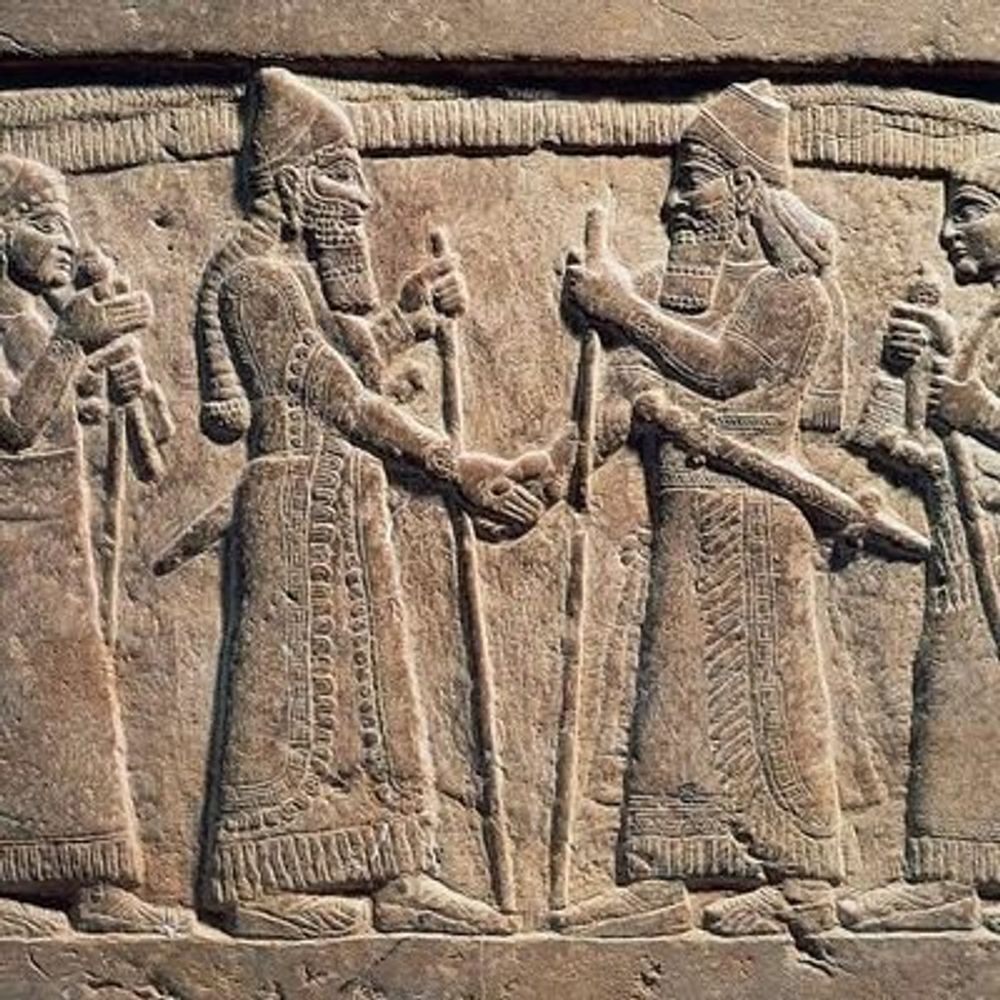
The name Iran comes from Middle Persian Ērān, meaning ‘of the Aryans.’ Derived from Old Persian ariya- (‘Aryan’ or ‘Iranian’), this 3500-year-old self-designation reaches back to the age of Zarathustra.
#archaeohistories
#archaeohistories

November 25, 2025 at 8:24 PM
Ērān simply means ‘the Aryans’.
Ēr (‘Aryan’) + -ān (plural suffix; commonly forms patronymics and ethnonyms)
Ēr (‘Aryan’) + -ān (plural suffix; commonly forms patronymics and ethnonyms)
For the record:
I'm not in any way opposed to Indian astrology. As always, my criticism is directed at the average modern practitioner who notoriously operates beyond the spacious confines of consistency and reason.
This ubiquitous character is not exclusive to any one tradition, needless to say.
I'm not in any way opposed to Indian astrology. As always, my criticism is directed at the average modern practitioner who notoriously operates beyond the spacious confines of consistency and reason.
This ubiquitous character is not exclusive to any one tradition, needless to say.
Nobody ever seems to wonder how an Indian astrologer is both a fatalist and a proponent of "planetary remediation" at the same time.
November 25, 2025 at 5:15 PM
For the record:
I'm not in any way opposed to Indian astrology. As always, my criticism is directed at the average modern practitioner who notoriously operates beyond the spacious confines of consistency and reason.
This ubiquitous character is not exclusive to any one tradition, needless to say.
I'm not in any way opposed to Indian astrology. As always, my criticism is directed at the average modern practitioner who notoriously operates beyond the spacious confines of consistency and reason.
This ubiquitous character is not exclusive to any one tradition, needless to say.
Nobody ever seems to wonder how an Indian astrologer is both a fatalist and a proponent of "planetary remediation" at the same time.
November 25, 2025 at 4:22 PM
Nobody ever seems to wonder how an Indian astrologer is both a fatalist and a proponent of "planetary remediation" at the same time.

Fun fact:
Mamdani is a Twelver Shia with roots in the Khoja community in Gujarat, India. A significant amount of Gujaratis, namely Parsis (Mazdean Persians) and Shias, are of Iranian descent.
Mamdani is a Twelver Shia with roots in the Khoja community in Gujarat, India. A significant amount of Gujaratis, namely Parsis (Mazdean Persians) and Shias, are of Iranian descent.
November 6, 2025 at 8:40 PM
Fun fact:
Mamdani is a Twelver Shia with roots in the Khoja community in Gujarat, India. A significant amount of Gujaratis, namely Parsis (Mazdean Persians) and Shias, are of Iranian descent.
Mamdani is a Twelver Shia with roots in the Khoja community in Gujarat, India. A significant amount of Gujaratis, namely Parsis (Mazdean Persians) and Shias, are of Iranian descent.
Mihr enthroned.
Coin of Kušānšāh Ardašīr.
Coin of Kušānšāh Ardašīr.

October 31, 2025 at 7:09 PM
Mihr enthroned.
Coin of Kušānšāh Ardašīr.
Coin of Kušānšāh Ardašīr.
The Greeks characterized the 2nd place by its axial relation to the 8th, believing the “Gate of Hades” to be the other side of death. I presume this was an attempt to reconcile their eschatology with the astrology that they were developing.
In any case, this characterization is wildly misleading.
In any case, this characterization is wildly misleading.
October 30, 2025 at 3:28 PM
The Greeks characterized the 2nd place by its axial relation to the 8th, believing the “Gate of Hades” to be the other side of death. I presume this was an attempt to reconcile their eschatology with the astrology that they were developing.
In any case, this characterization is wildly misleading.
In any case, this characterization is wildly misleading.
Every letter in the alphabet carries a specific planetary energy.
October 29, 2025 at 3:28 PM
Every letter in the alphabet carries a specific planetary energy.
The astrological connection between Hōrmazd and large-scale demonstrations is truly a beautiful one to observe.
October 20, 2025 at 6:17 PM
The astrological connection between Hōrmazd and large-scale demonstrations is truly a beautiful one to observe.
One of the (many) things that I plan to do with my Patreon is to translate some of my Persian and Arabic sources into English, making them a bit more accessible to anglophones.
Would anyone be interested in that?
Would anyone be interested in that?
October 20, 2025 at 5:29 PM
One of the (many) things that I plan to do with my Patreon is to translate some of my Persian and Arabic sources into English, making them a bit more accessible to anglophones.
Would anyone be interested in that?
Would anyone be interested in that?
The project is officially on Patreon! 🌞
patreon.com/andarzgar
patreon.com/andarzgar
Get more from Andarzgar on Patreon
Persian Astrology in its Purest Form
Patreon.com
September 15, 2025 at 2:40 AM
The project is officially on Patreon! 🌞
patreon.com/andarzgar
patreon.com/andarzgar
The Persian way to get through eclipse season, in a nutshell:
- Praying.
- Keeping away from the noxious rays.
- Abstaining from sex.
- Avoiding mind-altering substances (incl. alcohol).
- Moderating food intake.
- Maintaining cleanliness of body, mind, and environment.
- Taking it easy.
- Praying.
- Keeping away from the noxious rays.
- Abstaining from sex.
- Avoiding mind-altering substances (incl. alcohol).
- Moderating food intake.
- Maintaining cleanliness of body, mind, and environment.
- Taking it easy.
September 11, 2025 at 9:31 PM
The Persian way to get through eclipse season, in a nutshell:
- Praying.
- Keeping away from the noxious rays.
- Abstaining from sex.
- Avoiding mind-altering substances (incl. alcohol).
- Moderating food intake.
- Maintaining cleanliness of body, mind, and environment.
- Taking it easy.
- Praying.
- Keeping away from the noxious rays.
- Abstaining from sex.
- Avoiding mind-altering substances (incl. alcohol).
- Moderating food intake.
- Maintaining cleanliness of body, mind, and environment.
- Taking it easy.
This all just goes to show you... there's no such thing as a "good" eclipse.
September 11, 2025 at 8:51 PM
This all just goes to show you... there's no such thing as a "good" eclipse.
Two major meteor showers will overlap on the tail end of this month, from the 29th–31st of July.

July 9, 2025 at 2:20 PM
Two major meteor showers will overlap on the tail end of this month, from the 29th–31st of July.
Little bit about the hīlāg:
In Middle Persian, hil- or (inf.) *hištan means ‘to release’ or ‘to abandon’. If we combine this verb with -āg, a suffix that forms agent nouns from the present stems of verbs, we get hīlāg (‘releaser’).
In Middle Persian, hil- or (inf.) *hištan means ‘to release’ or ‘to abandon’. If we combine this verb with -āg, a suffix that forms agent nouns from the present stems of verbs, we get hīlāg (‘releaser’).
June 28, 2025 at 1:25 AM
Little bit about the hīlāg:
In Middle Persian, hil- or (inf.) *hištan means ‘to release’ or ‘to abandon’. If we combine this verb with -āg, a suffix that forms agent nouns from the present stems of verbs, we get hīlāg (‘releaser’).
In Middle Persian, hil- or (inf.) *hištan means ‘to release’ or ‘to abandon’. If we combine this verb with -āg, a suffix that forms agent nouns from the present stems of verbs, we get hīlāg (‘releaser’).

Who's to say that reducing a long venerated deity into an abstract Jungian archetype isn't itself a consequence of modern "cultural conditioning"?

Ok, hear me out. I’m having some feelings about Jupiter as the greater benefic and Saturn as the greater malefic. What if our perspectives on these archetypes are the result of cultural conditioning and religious biases? 🧵
May 18, 2025 at 9:56 PM
Who's to say that reducing a long venerated deity into an abstract Jungian archetype isn't itself a consequence of modern "cultural conditioning"?
One intriguing element of having a moveable sign rising is that it also means having a double-bodied ninth house... which the Persians of old deemed a mark of inconstancy in one's faith.
May 16, 2025 at 6:10 PM
One intriguing element of having a moveable sign rising is that it also means having a double-bodied ninth house... which the Persians of old deemed a mark of inconstancy in one's faith.