




Meg Schwamb
@megschwamb.bsky.social
Planetary scientist & astronomer at Queen’s University Belfast: KBOs, Planet Four(Mars), exoplanets (Planet Hunters NGTS) ,LSST SSSC co-chair. Opinions posted are my own. Pronouns: she/her
Reposted by Meg Schwamb

Stefanie is one of my very favorite people, and I encourage you to tune in for this! 🔭 🧪

SAVE THE DATE: Dr. Stefanie Milam will discuss how #NASAWebb is revealing details across the Solar System that were not previously known—December 17 at 4 p.m. ET.
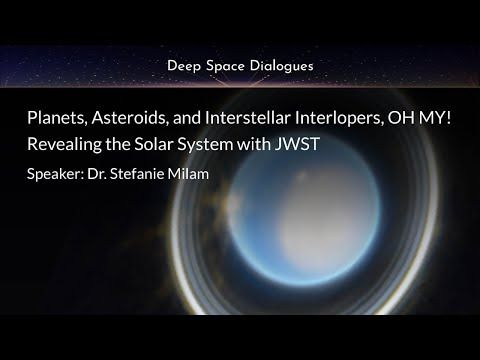
Planets, Asteroids, and Interstellar Interlopers, OH MY! Revealing the Solar System with JWST
YouTube video by Space Telescope Science Institute
www.youtube.com
December 12, 2025 at 7:57 PM
Stefanie is one of my very favorite people, and I encourage you to tune in for this! 🔭 🧪
Fingers crossed the 10,000 word report about the progress of gender equality and future plans to further tackle the issue in my School (Math and Physics department) is done and it's just tweaks to the action plan.
December 12, 2025 at 10:50 AM
Fingers crossed the 10,000 word report about the progress of gender equality and future plans to further tackle the issue in my School (Math and Physics department) is done and it's just tweaks to the action plan.
Reposted by Meg Schwamb

A bit inconvenient for potential alien life forms if they’re constantly being incinerated by their own suns

For the first time, astronomers have detected a coronal mass ejection from a star other than our Sun, and it was a big one – powerful enough to strip the atmosphere from nearby planets. That's bad news for the search for extraterrestrial life. Here's why: physicsworld.com/a/astronomer... 🧪⚛️🔭

Astronomers observe a coronal mass ejection from a distant star – Physics World
Burst from M-dwarf star could be powerful enough to strip the atmosphere of any planets that orbit it, with implications for the search for extraterrestrial life
physicsworld.com
December 11, 2025 at 11:49 AM
A bit inconvenient for potential alien life forms if they’re constantly being incinerated by their own suns
Reposted by Meg Schwamb
The US social media vetting for visas will be devastating for scientific and journalistic conferences, fellowships etc. No global organisation can seriously consider holding an international conference in the US while this policy exists.
December 11, 2025 at 5:35 AM
The US social media vetting for visas will be devastating for scientific and journalistic conferences, fellowships etc. No global organisation can seriously consider holding an international conference in the US while this policy exists.
Reposted by Meg Schwamb

We’ve taken images of two supermassive black holes…why not more? 🧪🔭
December 10, 2025 at 4:28 PM
We’ve taken images of two supermassive black holes…why not more? 🧪🔭
Reposted by Meg Schwamb

Really interesting analysis here on how claims get amplified by our current media environment (and a rebuttal of sorts to those who argue that Avi Loeb's alien spacecraft hype is good because any science engagement is good engagement):
www.cip.uw.edu/2025/12/03/3...
www.cip.uw.edu/2025/12/03/3...

Alien of the gaps: How 3I/ATLAS was turned into a spaceship online
When we reach the frontier of current knowledge, we’re tempted to insert a higher power into the space where answers aren’t yet satisfying for all.
www.cip.uw.edu
December 8, 2025 at 5:38 PM
Really interesting analysis here on how claims get amplified by our current media environment (and a rebuttal of sorts to those who argue that Avi Loeb's alien spacecraft hype is good because any science engagement is good engagement):
www.cip.uw.edu/2025/12/03/3...
www.cip.uw.edu/2025/12/03/3...
Listening to the Mountain Goats while going through the big report draft due in the new few days - "I am going to make it through this year if it kills me." open.spotify.com/track/0s9aeZ...

This Year
open.spotify.com
December 10, 2025 at 1:37 PM
Listening to the Mountain Goats while going through the big report draft due in the new few days - "I am going to make it through this year if it kills me." open.spotify.com/track/0s9aeZ...
Reposted by Meg Schwamb
Interesting description of an effect I have very much experienced.

The Gollum Effect: 44 Percent of Scientists Report Territorial Research Experiences
Territorial behavior in academia, or the Gollum effect, affects 44 percent of researchers, a survey found, causing some to shift career trajectories or even behave like Gollum themselves. Image credit:©iStock,…
Territorial behavior in academia, or the Gollum effect, affects 44 percent of researchers, a survey found, causing some to shift career trajectories or even behave like Gollum themselves. Image credit:©iStock,…

The Gollum Effect: 44 Percent of Scientists Report Territorial Research Experiences
Territorial behavior in academia, or the Gollum effect, affects 44 percent of researchers, a survey found, causing some to shift career trajectories or even behave like Gollum themselves. Image credit:©iStock, Kerrick Even those who have not seen The Lord of the Rings are likely familiar with Gollum’s iconic line, “My precious,” which embodies his obsession with the One Ring. Gollum’s extreme territorial behavior rang a bell for Jose Valdez, a postdoctoral researcher at the German Centre for Integrative Biodiversity Research, as he experienced similar behaviors from fellow researchers as a trainee.
pixegias.com
December 10, 2025 at 12:59 PM
Interesting description of an effect I have very much experienced.
Reposted by Meg Schwamb

We are continuing to expand our efforts to protect the night skies.
ESO signed an agreement with the IAU's Centre for the Protection of the Dark and Quiet Sky to become a contributing partner.
https://www.eso.org/public/announcements/ann25010/
🔭 🧪
📷 A. Daniels (SKAO)
ESO signed an agreement with the IAU's Centre for the Protection of the Dark and Quiet Sky to become a contributing partner.
https://www.eso.org/public/announcements/ann25010/
🔭 🧪
📷 A. Daniels (SKAO)

December 10, 2025 at 1:11 PM
We are continuing to expand our efforts to protect the night skies.
ESO signed an agreement with the IAU's Centre for the Protection of the Dark and Quiet Sky to become a contributing partner.
https://www.eso.org/public/announcements/ann25010/
🔭 🧪
📷 A. Daniels (SKAO)
ESO signed an agreement with the IAU's Centre for the Protection of the Dark and Quiet Sky to become a contributing partner.
https://www.eso.org/public/announcements/ann25010/
🔭 🧪
📷 A. Daniels (SKAO)
Reposted by Meg Schwamb
I'm happy to report that "Scenario 2" won't be necessary, as NASA has just communicated to us that SciX funding will continue in 2026 (albeit at a reduced level). Therefore, we will not be forcing astronomers to leave ADS, but rather develop a plan that allows a longer transition.
December 9, 2025 at 5:20 PM
I'm happy to report that "Scenario 2" won't be necessary, as NASA has just communicated to us that SciX funding will continue in 2026 (albeit at a reduced level). Therefore, we will not be forcing astronomers to leave ADS, but rather develop a plan that allows a longer transition.
Reposted by Meg Schwamb
#StormBram brought strong winds and further heavy and persistent rain to northern and western parts of the UK last night and through today.
But how is climate change influencing extreme events like this in the UK?
Find out more 👇
But how is climate change influencing extreme events like this in the UK?
Find out more 👇
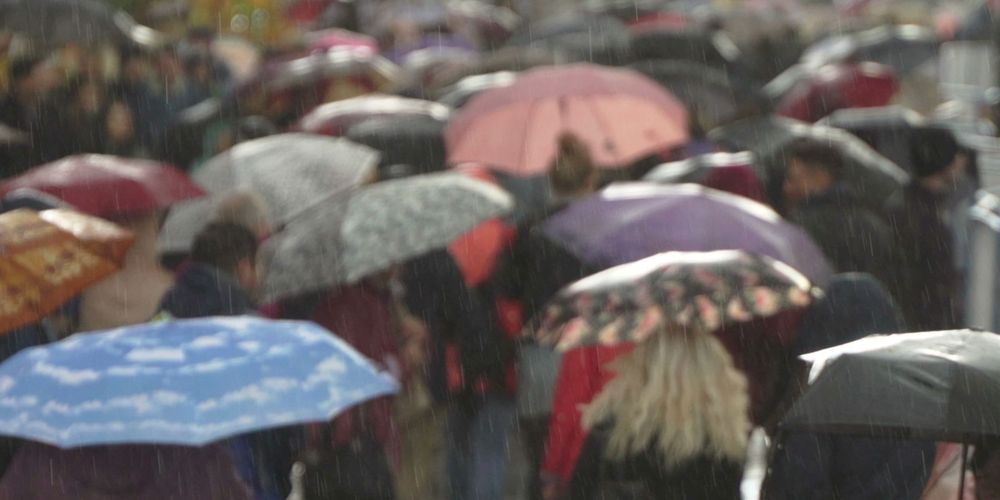
UK and Global extreme events – Heavy rainfall and floods
Determining the likelihood and severity of extreme events for the past, present and future.
www.metoffice.gov.uk
December 9, 2025 at 2:30 PM
#StormBram brought strong winds and further heavy and persistent rain to northern and western parts of the UK last night and through today.
But how is climate change influencing extreme events like this in the UK?
Find out more 👇
But how is climate change influencing extreme events like this in the UK?
Find out more 👇
It’s very windy outside, so I am hiding out at home today. Working from home has its perks

December 9, 2025 at 3:49 PM
It’s very windy outside, so I am hiding out at home today. Working from home has its perks
First attempt at crinkle cookies for the research group holiday cookie (biscuit) exchange

December 8, 2025 at 7:45 PM
First attempt at crinkle cookies for the research group holiday cookie (biscuit) exchange
Reposted by Meg Schwamb

The XRISM satellite has detected the x-ray glow of Comet 3I/ATLAS. This is the first time anyone has managed to obseve x-ray emission from an interstellar comet!
(FYI: X-rays result from the comet interacting with the solar wind. No spaceships required.) 🔭🧪
www.xrism.jaxa.jp/en/topics/ne...
(FYI: X-rays result from the comet interacting with the solar wind. No spaceships required.) 🔭🧪
www.xrism.jaxa.jp/en/topics/ne...

December 7, 2025 at 12:58 PM
The XRISM satellite has detected the x-ray glow of Comet 3I/ATLAS. This is the first time anyone has managed to obseve x-ray emission from an interstellar comet!
(FYI: X-rays result from the comet interacting with the solar wind. No spaceships required.) 🔭🧪
www.xrism.jaxa.jp/en/topics/ne...
(FYI: X-rays result from the comet interacting with the solar wind. No spaceships required.) 🔭🧪
www.xrism.jaxa.jp/en/topics/ne...
Reposted by Meg Schwamb
My teen, who had dreamt of being an astrophysicist, just told me he wants to go to law school because, “Science isn’t going to be a priority in the US in the future…I don’t want a job where I’ll be constantly worried my funding will be taken away.”
Gutting. How many future scientists have we lost?
Gutting. How many future scientists have we lost?
December 7, 2025 at 1:23 AM
My teen, who had dreamt of being an astrophysicist, just told me he wants to go to law school because, “Science isn’t going to be a priority in the US in the future…I don’t want a job where I’ll be constantly worried my funding will be taken away.”
Gutting. How many future scientists have we lost?
Gutting. How many future scientists have we lost?
Reposted by Meg Schwamb
This article suggests the possibility of training AI on pre-existing proposals and their review reports, scores and related decisions. I.e. training them on a system which is known to preferentially award larger amounts of money to white men. What could possibly go wrong?
UKRI exploring use of AI in grant review - this will prompt debate but interested to know if people think it’d encourage novelty or the opposite? www.chemistryworld.com/news/ukri-op...

UKRI opens up grant proposal data to explore using AI to smooth peer review
Surging applications has led the UK's main funder to look at ways to reduce the burden on reviewers
www.chemistryworld.com
December 4, 2025 at 10:49 PM
This article suggests the possibility of training AI on pre-existing proposals and their review reports, scores and related decisions. I.e. training them on a system which is known to preferentially award larger amounts of money to white men. What could possibly go wrong?
Reposted by Meg Schwamb


The ejection velocities of interstellar objects signpost their progenitor system architectures (by Albrow et al., submitted) arxiv.org/abs/2512.04700

The ejection velocities of interstellar objects signpost their progenitor system architectures
Interstellar objects (ISOs) ejected from planetary systems carry kinematic signatures of their formation environments. The properties of these velocity distributions govern the ISOs' propagation and d...
arxiv.org
December 5, 2025 at 11:41 AM
The ejection velocities of interstellar objects signpost their progenitor system architectures (by Albrow et al., submitted) arxiv.org/abs/2512.04700
More @vrubinobs.bsky.social Solar System predictions - a paper led by grad student Joe Murtagh in my group - we're going to learn some cool things about Neptune Trojans particularly the elusive L5 cloud that's been too close to the galactic plane to previously study well. arxiv.org/abs/2512.03892
Predictions of the LSST Solar System Yield: Neptune Trojans
The NSF-DOE Vera C. Rubin Observatory's Legacy Survey of Space and Time (LSST), beginning full operations in late 2025, will dramatically transform solar system science by vastly expanding discoveries...
arxiv.org
December 5, 2025 at 10:28 AM
More @vrubinobs.bsky.social Solar System predictions - a paper led by grad student Joe Murtagh in my group - we're going to learn some cool things about Neptune Trojans particularly the elusive L5 cloud that's been too close to the galactic plane to previously study well. arxiv.org/abs/2512.03892
Reposted by Meg Schwamb
Wow! Big Science organization leading the way on #openscience !
Well done!
"The CNRS is breaking free from the Web of Science"
https://www.cnrs.fr/en/update/cnrs-breaking-free-web-science
h/t @louisvgn
Well done!
"The CNRS is breaking free from the Web of Science"
https://www.cnrs.fr/en/update/cnrs-breaking-free-web-science
h/t @louisvgn
December 4, 2025 at 1:31 PM
Wow! Big Science organization leading the way on #openscience !
Well done!
"The CNRS is breaking free from the Web of Science"
https://www.cnrs.fr/en/update/cnrs-breaking-free-web-science
h/t @louisvgn
Well done!
"The CNRS is breaking free from the Web of Science"
https://www.cnrs.fr/en/update/cnrs-breaking-free-web-science
h/t @louisvgn
A reminder 🔭 🧪 - the PhD application information session for the QUB Astrophysics Research Centre is on Monday
If you're interested in pursuing a PhD in planetary astronomy (or other astronomy/astrophysics) topics at Queen's University Belfast - we're having a information session (in-person and online participation) on Monday December 8 12pm - Register: forms.office.com/e/DSk4A9K3dB 🔭 🧪
Microsoft Forms
forms.office.com
December 4, 2025 at 5:20 PM
A reminder 🔭 🧪 - the PhD application information session for the QUB Astrophysics Research Centre is on Monday
Reposted by Meg Schwamb
Samples of Bennu, a primitive asteroid orbiting near Earth, contain some surprising ingredients: natural sugars, gummy polymers, and specks of stardust that are even older than our solar system.
There's a lot of complex chemistry brewing in space! 🧪🔭
www.nasa.gov/missions/osi...
There's a lot of complex chemistry brewing in space! 🧪🔭
www.nasa.gov/missions/osi...

December 4, 2025 at 4:42 AM
Samples of Bennu, a primitive asteroid orbiting near Earth, contain some surprising ingredients: natural sugars, gummy polymers, and specks of stardust that are even older than our solar system.
There's a lot of complex chemistry brewing in space! 🧪🔭
www.nasa.gov/missions/osi...
There's a lot of complex chemistry brewing in space! 🧪🔭
www.nasa.gov/missions/osi...
Reposted by Meg Schwamb
When you're dealing with a precious sample of an asteroid, you want to make use of every bit. Here you can see scientists harvesting a miniature chunk of Bennu for analysis. The piece they are moving is just 30 microns (1/1000th of an inch) wide! 🧪🔭
www.nasa.gov/missions/osi...
www.nasa.gov/missions/osi...
December 4, 2025 at 4:56 AM
When you're dealing with a precious sample of an asteroid, you want to make use of every bit. Here you can see scientists harvesting a miniature chunk of Bennu for analysis. The piece they are moving is just 30 microns (1/1000th of an inch) wide! 🧪🔭
www.nasa.gov/missions/osi...
www.nasa.gov/missions/osi...
Reposted by Meg Schwamb
Interested in finding transiting planets at long periods, e.g. with the @platomissioncon.bsky.social?
We just published a Research Note led by Geert Jan Talens, showing that such transits can be much longer or shorter than usually assumed iopscience.iop.org/article/10.3...
We just published a Research Note led by Geert Jan Talens, showing that such transits can be much longer or shorter than usually assumed iopscience.iop.org/article/10.3...

December 3, 2025 at 12:21 PM
Interested in finding transiting planets at long periods, e.g. with the @platomissioncon.bsky.social?
We just published a Research Note led by Geert Jan Talens, showing that such transits can be much longer or shorter than usually assumed iopscience.iop.org/article/10.3...
We just published a Research Note led by Geert Jan Talens, showing that such transits can be much longer or shorter than usually assumed iopscience.iop.org/article/10.3...
I'm really liking the new features add to the Minor Planet Center Explorer including the new lists (such as past known Earth impactors) data.minorplanetcenter.net/explorer/

We are the official body that deals with astrometric observations and orbits of minor planets (asteroids) and comets.
data.minorplanetcenter.net
December 3, 2025 at 2:29 PM
I'm really liking the new features add to the Minor Planet Center Explorer including the new lists (such as past known Earth impactors) data.minorplanetcenter.net/explorer/