




@maryrussell.bsky.social
Theologian, detective. My 19th memoir, Knave of Diamonds, will be released in 2025. Sample the first memoir, THE BEEKEEPER'S APPRENTICE, http://bit.ly/24Pm4hf
Reposted

St Nicholas, shown here resurrecting three boys from a pickling tub, became known for genorosity and protecting children.
Such stories shaped Europe’s Sinterklaas, which evolved into Santa Claus and eventually, Father Christmas. 🎅
MS. Douce 51 fol. 069v
#MedievalMonday
Such stories shaped Europe’s Sinterklaas, which evolved into Santa Claus and eventually, Father Christmas. 🎅
MS. Douce 51 fol. 069v
#MedievalMonday

December 8, 2025 at 4:12 PM
St Nicholas, shown here resurrecting three boys from a pickling tub, became known for genorosity and protecting children.
Such stories shaped Europe’s Sinterklaas, which evolved into Santa Claus and eventually, Father Christmas. 🎅
MS. Douce 51 fol. 069v
#MedievalMonday
Such stories shaped Europe’s Sinterklaas, which evolved into Santa Claus and eventually, Father Christmas. 🎅
MS. Douce 51 fol. 069v
#MedievalMonday
Such a charming painting. It always reminds me of the time I ran into a bear while in Japan.

#AshmoleanAdvent Day 8: Black Bear Cub
Painted by Japanese artist Mori Shūhō, this small bear looks directly out at the viewer while it sits uneasily on a ledge amid the snowflakes. Shūhō was a member of the Mori School of artists who specialised in lifelike depictions of animals.
🐻 EA1964.95.F
Painted by Japanese artist Mori Shūhō, this small bear looks directly out at the viewer while it sits uneasily on a ledge amid the snowflakes. Shūhō was a member of the Mori School of artists who specialised in lifelike depictions of animals.
🐻 EA1964.95.F

December 8, 2025 at 5:10 PM
Such a charming painting. It always reminds me of the time I ran into a bear while in Japan.
Intricate work that usually wouldn't be seen.
#AshmoleanAdvent Day 7: Decorated Elizabethan Trenchers
These decorated wooden trenchers, made around 1600, would have been used as dining plates at banquets on special occasions. Placed face down on a table they would have held sugared fruits, marzipan or other sugary delicacies.
These decorated wooden trenchers, made around 1600, would have been used as dining plates at banquets on special occasions. Placed face down on a table they would have held sugared fruits, marzipan or other sugary delicacies.

December 7, 2025 at 4:34 PM
Intricate work that usually wouldn't be seen.
Reposted
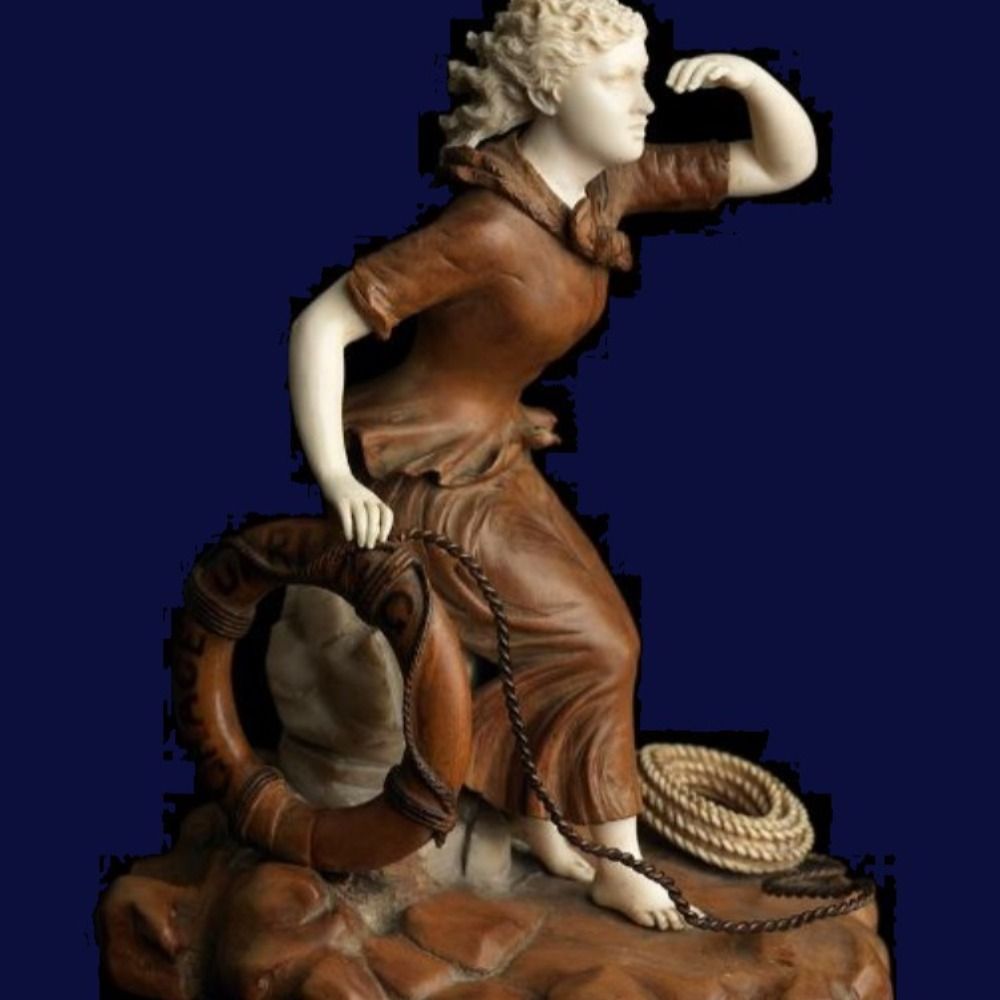
The reason why Sussex is a 'shipwreck coast' -- prevailing winds are usually from the south or southeast, and drove vessels towards the cliffs. Spending the windy evening looking at ship "wrecking" cases for two upcoming talks. #SussexCoast
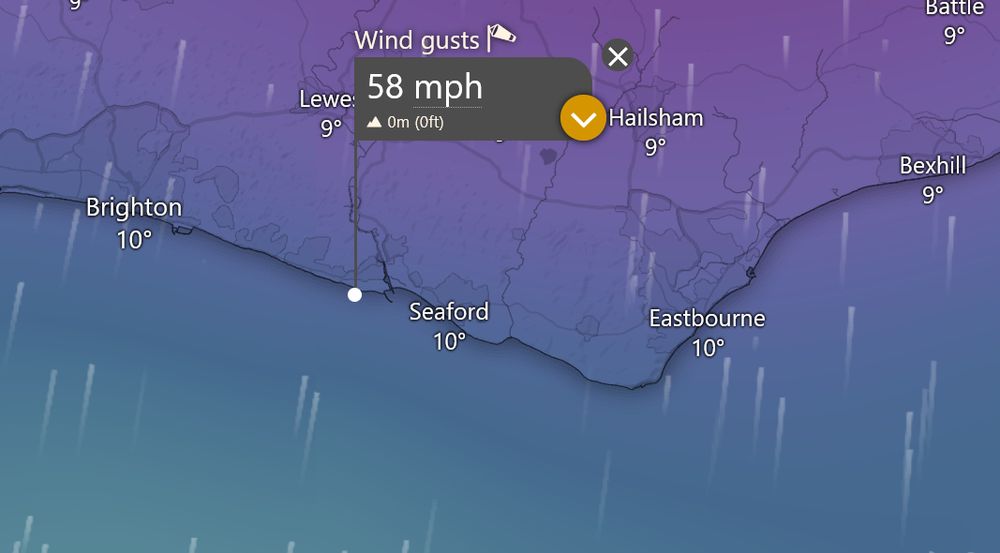
December 5, 2025 at 9:24 PM
The reason why Sussex is a 'shipwreck coast' -- prevailing winds are usually from the south or southeast, and drove vessels towards the cliffs. Spending the windy evening looking at ship "wrecking" cases for two upcoming talks. #SussexCoast
Happy St. Nicholas Day.
#AshmoleanAdvent Day 6: St Nicholas
Today marks St Nicholas Day.
St. Nicholas of Myra was a 4th-century Christian bishop known for his kindness and generosity.
In this icon dating back to the 15th century, St Nicholas is shown as the Miracle Worker.
Today marks St Nicholas Day.
St. Nicholas of Myra was a 4th-century Christian bishop known for his kindness and generosity.
In this icon dating back to the 15th century, St Nicholas is shown as the Miracle Worker.

December 6, 2025 at 5:15 PM
Happy St. Nicholas Day.
I enjoy the #AshmoleanAdventCalendar I hope you do too.
#AshmoleanAdvent Day 5 – Five Gold Rings
These hooped earrings are richly decorated with wire, beads, and animal-heads (bull, wild goat, and ram).
These earrings were from one of two exceptional hoards discovered in 1905 at Tukh el-Qaramus.
🟡 Late 4th – early 3rd century BCE, AN1926.99–104
These hooped earrings are richly decorated with wire, beads, and animal-heads (bull, wild goat, and ram).
These earrings were from one of two exceptional hoards discovered in 1905 at Tukh el-Qaramus.
🟡 Late 4th – early 3rd century BCE, AN1926.99–104

December 5, 2025 at 8:09 PM
I enjoy the #AshmoleanAdventCalendar I hope you do too.
Catching up.
#AshmoleanAdvent Day 4: Roman Star Coin
Prominent on the reverse of this rare silver coin from the Kingdom of Pontus, located in the Black Sea region of modern Turkey, is a large eight-pointed star.
Prominent on the reverse of this rare silver coin from the Kingdom of Pontus, located in the Black Sea region of modern Turkey, is a large eight-pointed star.

December 5, 2025 at 8:08 PM
Catching up.
There have been some spectacular jewel thefts in the past...and more recently. Some are solved, and some are not.

December 3, 2025 at 4:40 PM
There have been some spectacular jewel thefts in the past...and more recently. Some are solved, and some are not.
It is still true.

“Men do, I've found, accept the most errant nonsense from a well dressed woman.”
― Laurie R. King, Justice Hall
― Laurie R. King, Justice Hall

December 3, 2025 at 4:37 PM
It is still true.
Both BEEK and MOOR are on sale in the Kindle version in the U.S.


December 2, 2025 at 4:28 PM
Both BEEK and MOOR are on sale in the Kindle version in the U.S.
An astronomer and brewer...the man had range.

In 1647, self-taught astronomer and brewer Johannes Hevelius created the first detailed map of the Moon 🌕
Nearly four centuries later, @bodleian.ox.ac.uk have brought his Selenographia into the digital age – letting anyone explore the world’s first lunar atlas.
Learn more ⬇️
Nearly four centuries later, @bodleian.ox.ac.uk have brought his Selenographia into the digital age – letting anyone explore the world’s first lunar atlas.
Learn more ⬇️

Mapping the Moon: the world’s first lunar atlas goes digital |
www.ox.ac.uk
December 2, 2025 at 4:15 PM
An astronomer and brewer...the man had range.
Catching up on the #AshmoleanAdventCalendar
#AshmoleanAdvent Day 2: A Bronze Stag 🦌
This Roman bronze brooch in the shape of a stag would have been used to fasten a shawl or cloak.
This brooch was once decorated with bright multi-coloured enamel which was very popular in Britain and France during the Roman period.
🦌 AN1927.418
This Roman bronze brooch in the shape of a stag would have been used to fasten a shawl or cloak.
This brooch was once decorated with bright multi-coloured enamel which was very popular in Britain and France during the Roman period.
🦌 AN1927.418

December 2, 2025 at 4:13 PM
Catching up on the #AshmoleanAdventCalendar
Isn't this lovely?
#AshmoleanAdvent Day 1: Snow at Kinryūzan Temple
Our Ashmolean Advent Calendar is here! Check back each day until Christmas for a new seasonal treat from our collections.
The first festive treat from the collection is Utagawa Kuniyoshi’s View of Snow on Benten Hill at Kinryūzan Temple in Asakusa.
Our Ashmolean Advent Calendar is here! Check back each day until Christmas for a new seasonal treat from our collections.
The first festive treat from the collection is Utagawa Kuniyoshi’s View of Snow on Benten Hill at Kinryūzan Temple in Asakusa.

December 2, 2025 at 4:13 PM
Isn't this lovely?
And it is windy today, too.


December 1, 2025 at 4:55 PM
And it is windy today, too.
It is beautiful, and there will always be those who come unprepared for the day.
The 1178 Ranshofen Gospels give big Monday energy: three evangelists turn up to work missing key tools: no pen, wrong ink, no parchment.... only St John is prepared for the day.
A medieval reminder that some Mondays haven’t changed!
MS. Canon. Bibl. Lat. 60
#MedievalMonday
A medieval reminder that some Mondays haven’t changed!
MS. Canon. Bibl. Lat. 60
#MedievalMonday

December 1, 2025 at 4:54 PM
It is beautiful, and there will always be those who come unprepared for the day.
To all my readers in Scotland.

November 30, 2025 at 4:48 PM
To all my readers in Scotland.
Mr Lewis was a talented cartographer as well as a brilliant writer.
Born #OTD in 1898: C. S. Lewis, creator of Narnia!
This hand-drawn map is his own sketch, later redrafted by Pauline Baynes for Prince Caspian.
Spot Aslan’s How, Cair Paravel and Lantern Waste on the map. 🦁
Shelfmark: MS. Eng. lett. c. 220/1, fol. 160
This hand-drawn map is his own sketch, later redrafted by Pauline Baynes for Prince Caspian.
Spot Aslan’s How, Cair Paravel and Lantern Waste on the map. 🦁
Shelfmark: MS. Eng. lett. c. 220/1, fol. 160

November 30, 2025 at 4:44 PM
Mr Lewis was a talented cartographer as well as a brilliant writer.
Today has been cloudy, windy, and grey. Staying by the fire with a cuppa was mandatory.
November 29, 2025 at 4:47 PM
Today has been cloudy, windy, and grey. Staying by the fire with a cuppa was mandatory.
A well-rendered crab.
This wonderful Ancient Greek gold coin dates from late 5th-century BCE.
It was issued by the city of Akragas, today’s Agrigento, in Sicily.
The coin features a crab on the reverse, and an eagle standing on a rock, devouring a snake.These symbols were common designs on the coinage of Akragas.
It was issued by the city of Akragas, today’s Agrigento, in Sicily.
The coin features a crab on the reverse, and an eagle standing on a rock, devouring a snake.These symbols were common designs on the coinage of Akragas.

November 29, 2025 at 4:44 PM
A well-rendered crab.
People, all people it seems, enjoy a game of chance.
This terracotta die comes from the ancient city of Mohenjo-Daro, one of the first urban centres in human history 🎲⠀
⠀
Gaming with dice has been a popular pastime in India for millennia, with this object dating back to 2500–1900 BCE.
🎲 Terracotta Die, 2500–1900 BCE. 2 x 2 x 2 cm. EAMd.25
⠀
Gaming with dice has been a popular pastime in India for millennia, with this object dating back to 2500–1900 BCE.
🎲 Terracotta Die, 2500–1900 BCE. 2 x 2 x 2 cm. EAMd.25

November 28, 2025 at 4:32 PM
People, all people it seems, enjoy a game of chance.
A unique composition.

November 28, 2025 at 4:31 PM
A unique composition.
It looks more cared for now.

November 28, 2025 at 4:30 PM
It looks more cared for now.
Happy Thanksgiving to all my American Readers. May your day be filled with good food and interesting cheer.
November 27, 2025 at 5:11 PM
Happy Thanksgiving to all my American Readers. May your day be filled with good food and interesting cheer.
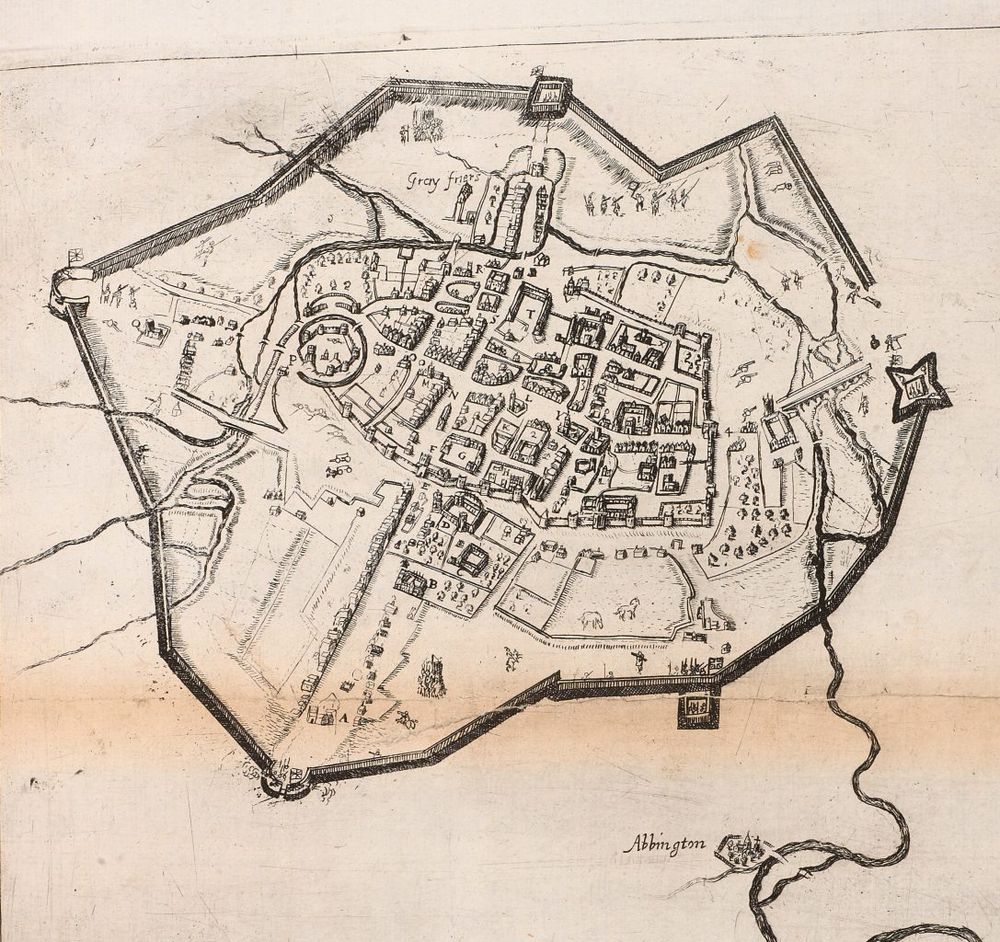
I love maps, but one that states it is a false map is a bit off-putting.
Our next @bodleian.ox.ac.uk #maps blog by @stuartackland.bsky.social features the "false" map of #Oxford from 1644. Look at this and be prepared to be confused!
blogs.bodleian.ox.ac.uk/maps/. When is north not north? And who was Anthony Wood? @bcsmaps.bsky.social @ox.ac.uk @bbcoxford.bsky.social
blogs.bodleian.ox.ac.uk/maps/. When is north not north? And who was Anthony Wood? @bcsmaps.bsky.social @ox.ac.uk @bbcoxford.bsky.social


November 27, 2025 at 5:10 PM
I love maps, but one that states it is a false map is a bit off-putting.
Fun fairs are for the young, but I agree, books are better.

I'd rather use the money to buy ten books than spend half an hour on that 😁
November 26, 2025 at 6:05 PM
Fun fairs are for the young, but I agree, books are better.