


Eva Dvorak Tomastikova
@evadt.bsky.social
Scientist working on DNA damage repair in plants
Chromatin organization and function group of Aleš Pečinka
Chromatin organization and function group of Aleš Pečinka
Reposted by Eva Dvorak Tomastikova
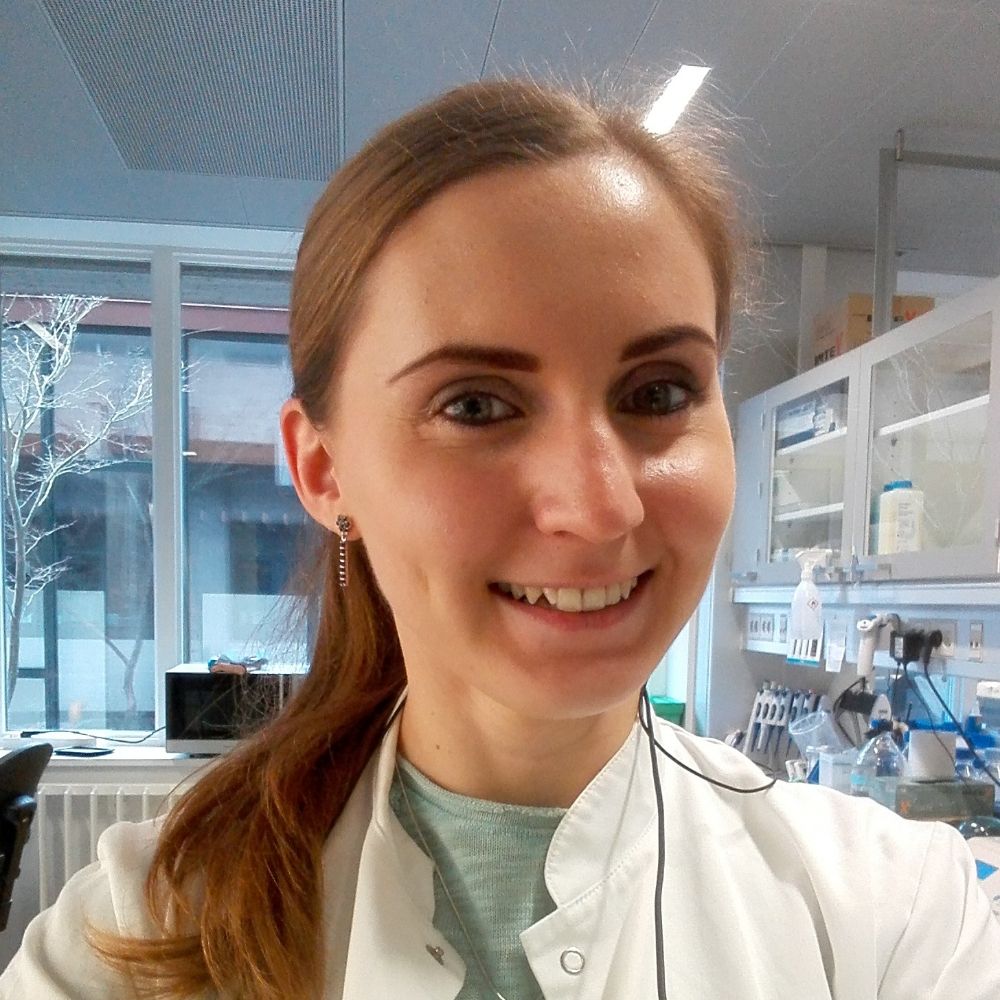
Thrilled to be selected as one of the 28 EMBO Young Investigators for 2026! It is an incredible honor, and I am especially proud to be the second scientist from Czechia chosen since the programme began in 2001. Happy to join Tomas Pluskal in representing our country in the EMBO YIP.

Congratulations to the new cohort of 28 EMBO Young Investigators! They are joining an international network of more than 800 life scientists – Welcome!
Read the press release here:
https://www.embo.org/press-releases/twenty-eight-group-leaders-become-embo-young-investigators/
Read the press release here:
https://www.embo.org/press-releases/twenty-eight-group-leaders-become-embo-young-investigators/

December 2, 2025 at 3:52 PM
Thrilled to be selected as one of the 28 EMBO Young Investigators for 2026! It is an incredible honor, and I am especially proud to be the second scientist from Czechia chosen since the programme began in 2001. Happy to join Tomas Pluskal in representing our country in the EMBO YIP.
Reposted by Eva Dvorak Tomastikova
New @natcomms.nature.com paper today from Tracy Bryan's lab @cmri.bsky.social: "Nuclear actin and DNA replication stress regulate telomere maintenance by telomerase".
Happy our lab could play a small part.
Congrats Tracy, Ash Harman, Noa Lamm and the whole team.
www.nature.com/articles/s41...
Happy our lab could play a small part.
Congrats Tracy, Ash Harman, Noa Lamm and the whole team.
www.nature.com/articles/s41...

Nuclear actin and DNA replication stress regulate telomere maintenance by telomerase - Nature Communications
Telomerase recruitment to telomeres is a tightly regulated process which is stimulated by replication stress. Here, the authors identify that nuclear filamentous actin is important for interaction bet...
www.nature.com
December 3, 2025 at 12:19 AM
New @natcomms.nature.com paper today from Tracy Bryan's lab @cmri.bsky.social: "Nuclear actin and DNA replication stress regulate telomere maintenance by telomerase".
Happy our lab could play a small part.
Congrats Tracy, Ash Harman, Noa Lamm and the whole team.
www.nature.com/articles/s41...
Happy our lab could play a small part.
Congrats Tracy, Ash Harman, Noa Lamm and the whole team.
www.nature.com/articles/s41...
Reposted by Eva Dvorak Tomastikova

We’ve built this virtual plant scientist PlantScience.ai to grow alongside human researchers🌿. It thinks like an expert, cites like a scholar, and never stops learning. Come and have a chat with it! @yiliangding.bsky.social @johninnescentre.bsky.social
www.biorxiv.org/content/10.1...
www.biorxiv.org/content/10.1...
PlantScience.ai
PlantScience.ai
October 28, 2025 at 12:44 PM
We’ve built this virtual plant scientist PlantScience.ai to grow alongside human researchers🌿. It thinks like an expert, cites like a scholar, and never stops learning. Come and have a chat with it! @yiliangding.bsky.social @johninnescentre.bsky.social
www.biorxiv.org/content/10.1...
www.biorxiv.org/content/10.1...
Reposted by Eva Dvorak Tomastikova

How does messenger RNA (mRNA) get out of the nucleus to become a protein? Eukaryotic mRNA is packaged, exported, and then translated in the cytoplasm. But how do these steps work? And what are open questions? Check out our new review for our take: www.annualreviews.org/content/jour... (1/3)

November 21, 2025 at 5:37 PM
How does messenger RNA (mRNA) get out of the nucleus to become a protein? Eukaryotic mRNA is packaged, exported, and then translated in the cytoplasm. But how do these steps work? And what are open questions? Check out our new review for our take: www.annualreviews.org/content/jour... (1/3)
Reposted by Eva Dvorak Tomastikova
⌛Only 10 days left!
Don’t miss the chance to showcase your latest scientific breakthroughs with the global research community
Submit your abstract now and be part of the conversation that shapes tomorrow’s science
Your ideas deserve to be heard. Let’s make them count!
@episeedlink.bsky.social
Don’t miss the chance to showcase your latest scientific breakthroughs with the global research community
Submit your abstract now and be part of the conversation that shapes tomorrow’s science
Your ideas deserve to be heard. Let’s make them count!
@episeedlink.bsky.social

November 28, 2025 at 9:26 AM
⌛Only 10 days left!
Don’t miss the chance to showcase your latest scientific breakthroughs with the global research community
Submit your abstract now and be part of the conversation that shapes tomorrow’s science
Your ideas deserve to be heard. Let’s make them count!
@episeedlink.bsky.social
Don’t miss the chance to showcase your latest scientific breakthroughs with the global research community
Submit your abstract now and be part of the conversation that shapes tomorrow’s science
Your ideas deserve to be heard. Let’s make them count!
@episeedlink.bsky.social
Reposted by Eva Dvorak Tomastikova

Thanks Mary! Available in all good bookstores ;)

November 28, 2025 at 3:25 PM
Thanks Mary! Available in all good bookstores ;)
Reposted by Eva Dvorak Tomastikova
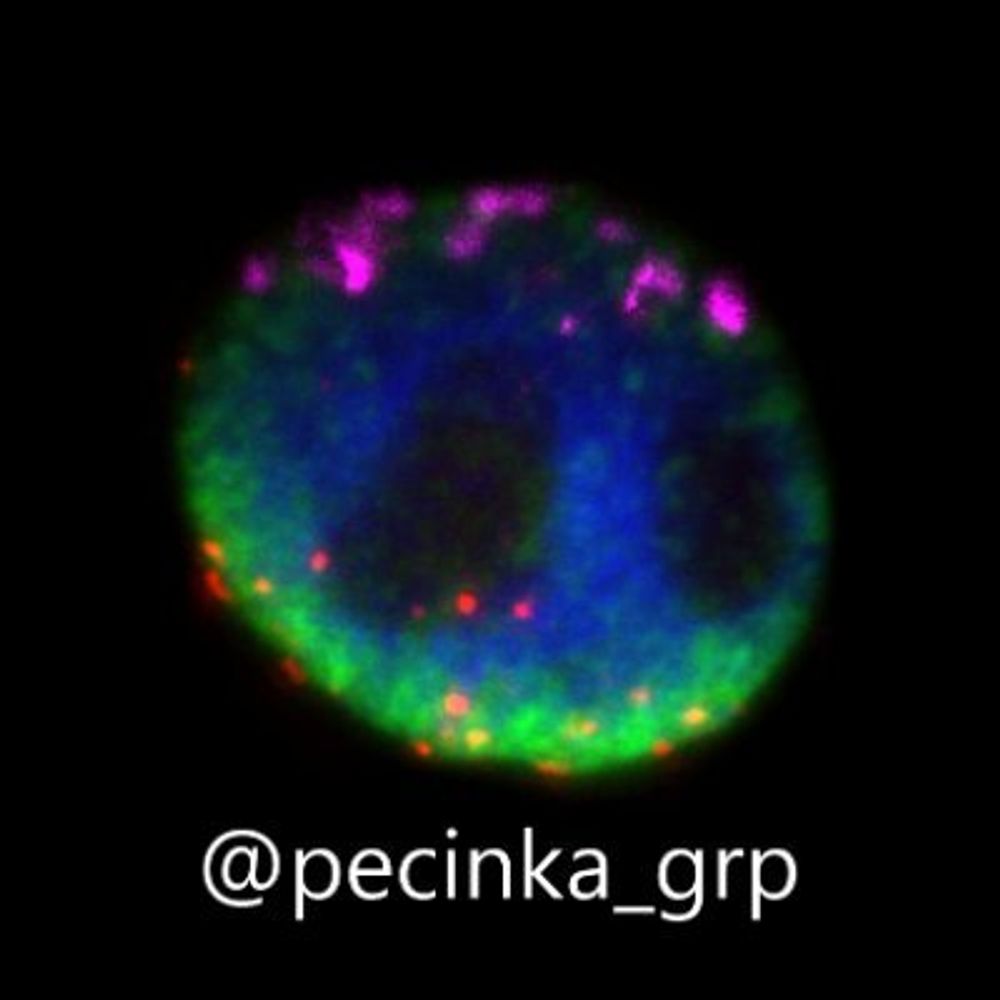
This week part of our group attended TANGENC Conference 2025 at @ceitec.eu in Brno. Katka presented "Imaging the heat stress in barley roots: Can DNA Replication and Mitosis survive?" 🌱🥵


November 27, 2025 at 9:21 AM
This week part of our group attended TANGENC Conference 2025 at @ceitec.eu in Brno. Katka presented "Imaging the heat stress in barley roots: Can DNA Replication and Mitosis survive?" 🌱🥵
Reposted by Eva Dvorak Tomastikova
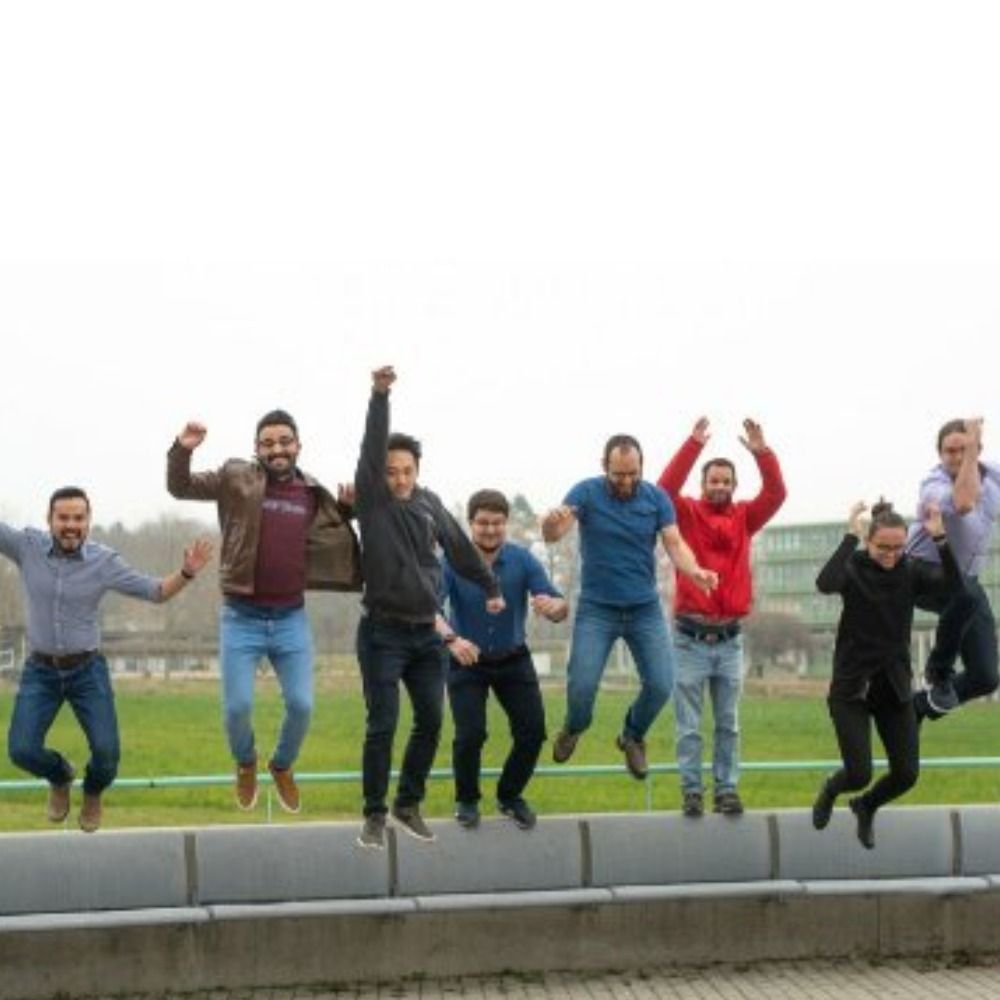
The hinge bypass gate paper is finally out! doi.org/10.1038/s414...
We show how loop-extruding SMC complexes can maintain DNA entrapment while bypassing obstacles on DNA — including transcription machinery & potentially other SMCs.
A lucky convergence of 3 projects lead to the initial discovery!
We show how loop-extruding SMC complexes can maintain DNA entrapment while bypassing obstacles on DNA — including transcription machinery & potentially other SMCs.
A lucky convergence of 3 projects lead to the initial discovery!

The SMC Hinge is a Selective Gate for Obstacle Bypass - Nature Communications
SMC complexes are ring-shaped motors that fold DNA by extruding loops, but how they navigate large DNA obstacles is unclear. Here, Liu et al., show that SMC complexes bypass obstacles by threading obs...
doi.org
November 25, 2025 at 3:26 PM
The hinge bypass gate paper is finally out! doi.org/10.1038/s414...
We show how loop-extruding SMC complexes can maintain DNA entrapment while bypassing obstacles on DNA — including transcription machinery & potentially other SMCs.
A lucky convergence of 3 projects lead to the initial discovery!
We show how loop-extruding SMC complexes can maintain DNA entrapment while bypassing obstacles on DNA — including transcription machinery & potentially other SMCs.
A lucky convergence of 3 projects lead to the initial discovery!
Reposted by Eva Dvorak Tomastikova

Functions of Arabidopsis root lipid droplets
Scholz et al.
nph.onlinelibrary.wiley.com/doi/10.1111/...
Scholz et al.
nph.onlinelibrary.wiley.com/doi/10.1111/...

November 26, 2025 at 8:43 PM
Functions of Arabidopsis root lipid droplets
Scholz et al.
nph.onlinelibrary.wiley.com/doi/10.1111/...
Scholz et al.
nph.onlinelibrary.wiley.com/doi/10.1111/...
Reposted by Eva Dvorak Tomastikova

“Analysis of 87 ancient & modern cat genomes suggests that domestic cats did not spread to Europe with Neolithic farmers. Conversely, they were introduced to Europe around 2000 years ago, probably from North Africa....“ De Martino et al in @science.org. Ancient DNA + cats = science purrfection. 🧬🐱🧪

The dispersal of domestic cats from North Africa to Europe around 2000 years ago
The domestic cat (Felis catus) descends from the African wildcat Felis lybica lybica. Its global distribution alongside humans testifies to its successful adaptation to anthropogenic environments. Unc...
www.science.org
November 27, 2025 at 7:11 PM
“Analysis of 87 ancient & modern cat genomes suggests that domestic cats did not spread to Europe with Neolithic farmers. Conversely, they were introduced to Europe around 2000 years ago, probably from North Africa....“ De Martino et al in @science.org. Ancient DNA + cats = science purrfection. 🧬🐱🧪
Reposted by Eva Dvorak Tomastikova

Looks like it is becoming a trend 😅!
@newphyt.bsky.social you may also want to edit that title 🔽
nph.onlinelibrary.wiley.com/doi/10.1111/...
@newphyt.bsky.social you may also want to edit that title 🔽
nph.onlinelibrary.wiley.com/doi/10.1111/...
November 10, 2025 at 1:43 PM
Looks like it is becoming a trend 😅!
@newphyt.bsky.social you may also want to edit that title 🔽
nph.onlinelibrary.wiley.com/doi/10.1111/...
@newphyt.bsky.social you may also want to edit that title 🔽
nph.onlinelibrary.wiley.com/doi/10.1111/...
Reposted by Eva Dvorak Tomastikova


November 26, 2025 at 5:15 PM
Reposted by Eva Dvorak Tomastikova

The second part of our (with @origichals.bsky.social and El Hadji) two-part review on non-covalent SUMO interactions is now published, focussing on SUMO-interacting motifs (SIMs), but discussing also other confirmed or potential SUMO-interacting elements.
Non-covalent SUMO interactions with ligases and effectors: SUMO-interacting motifs and beyond
SUMOylation, a protein post-translational modification (PTM) involving the covalent attachment of small ubiquitin-like modifier (SUMO), regulates a wide range of cellular processes. The key hallmark o...
portlandpress.com
November 24, 2025 at 9:06 PM
The second part of our (with @origichals.bsky.social and El Hadji) two-part review on non-covalent SUMO interactions is now published, focussing on SUMO-interacting motifs (SIMs), but discussing also other confirmed or potential SUMO-interacting elements.
Reposted by Eva Dvorak Tomastikova
Thank you, Daniela, @danielabarilla.bsky.social, for a wonderful commentary! 🤗🤗 More spotlight on the Asgards and their chromatin! ❤️ #archaea #chromatin
Let’s wrap things up: my commentary on the Asgard hypernucleosomes.
Congratulations to all the authors of the paper 🍾!
kwnsfk27.r.eu-west-1.awstrack.me/L0/https:%2F...
Cryo-EM reveals open and closed Asgard chromatin assemblies: Molecular Cell www.cell.com/molecular-ce...
Congratulations to all the authors of the paper 🍾!
kwnsfk27.r.eu-west-1.awstrack.me/L0/https:%2F...
Cryo-EM reveals open and closed Asgard chromatin assemblies: Molecular Cell www.cell.com/molecular-ce...

Cryo-EM reveals open and closed Asgard chromatin assemblies
Ranawat et al. show the cryo-EM structures of Asgard archaeal chromatin assemblies,
revealing that the histone HHoB assembles into both compact closed and extended open
hypernucleosomes. The closed co...
www.cell.com
November 20, 2025 at 5:53 PM
Thank you, Daniela, @danielabarilla.bsky.social, for a wonderful commentary! 🤗🤗 More spotlight on the Asgards and their chromatin! ❤️ #archaea #chromatin
Reposted by Eva Dvorak Tomastikova

Brand new preprint from my lab, showing that TnpB, the ancestor of Cas12, acts as a gene drive in plasmids! And it turns out in conjugative plasmids that it acts as a primitive anti-self defense system, providing a potential link between its transposon effect and becoming CRISPR!
What is the best strategy to win any contest?
Eliminate your opponents of course.
Recently, my friend @fernpizza.bsky.social showed how plasmids compete intracellularly (check out his paper published in Science today!). With @baym.lol, we now know they can fight.
www.biorxiv.org/content/10.1...
Eliminate your opponents of course.
Recently, my friend @fernpizza.bsky.social showed how plasmids compete intracellularly (check out his paper published in Science today!). With @baym.lol, we now know they can fight.
www.biorxiv.org/content/10.1...

November 20, 2025 at 10:17 PM
Brand new preprint from my lab, showing that TnpB, the ancestor of Cas12, acts as a gene drive in plasmids! And it turns out in conjugative plasmids that it acts as a primitive anti-self defense system, providing a potential link between its transposon effect and becoming CRISPR!
Reposted by Eva Dvorak Tomastikova

Team around Holger Puchta @kit.edu, Andreas Houben @leibnizipk.bsky.social et al. altered chromosome numbers in Arabidopsis specifically using CRISPR/Cas -> plants with 8 instead of 10 chromosomes, which appeared to be phenotypically normal + were self-fertile.
@science.org
doi.org/10.1126/scie...
@science.org
doi.org/10.1126/scie...

CRISPR-Cas–mediated heritable chromosome fusions in Arabidopsis
The genome of Arabidopsis thaliana consists of 10 chromosomes. By inducing CRISPR-Cas–mediated breaks at subcentromeric and subtelomeric sequences, we fused entire chromosome arms, obtaining two eight...
doi.org
November 21, 2025 at 4:06 PM
Team around Holger Puchta @kit.edu, Andreas Houben @leibnizipk.bsky.social et al. altered chromosome numbers in Arabidopsis specifically using CRISPR/Cas -> plants with 8 instead of 10 chromosomes, which appeared to be phenotypically normal + were self-fertile.
@science.org
doi.org/10.1126/scie...
@science.org
doi.org/10.1126/scie...
Reposted by Eva Dvorak Tomastikova

Our paper is out in @nature.com! Oncogenes are often copy-number amplified on extrachromosomal DNA (ecDNA) in cancer, but how is ecDNA inherited by dividing cells? Here we identified elements within ecDNA that promote its retention in dividing cells. 1/11
www.nature.com/articles/s41...
www.nature.com/articles/s41...

Genetic elements promote retention of extrachromosomal DNA in cancer cells - Nature
A combination of genome-wide functional screening, imaging and chromatin profiling identifies a new class of highly prevalent genomic elements that help retain extrachromosomal DNA copies in dividing ...
www.nature.com
November 19, 2025 at 7:03 PM
Our paper is out in @nature.com! Oncogenes are often copy-number amplified on extrachromosomal DNA (ecDNA) in cancer, but how is ecDNA inherited by dividing cells? Here we identified elements within ecDNA that promote its retention in dividing cells. 1/11
www.nature.com/articles/s41...
www.nature.com/articles/s41...
Reposted by Eva Dvorak Tomastikova

Reposted by Eva Dvorak Tomastikova

Latest research from the Bäurle lab on the function of our favourite memory TF - HSFA2!

Promoter and domain swap analysis delineates heat stress memory-specific determinants of heat shock factor HSFA2
The function of the transcription factor HSFA2 in heat-stress induced transcriptional memory maps to functional domains within the protein.
academic.oup.com
November 16, 2025 at 8:57 AM
Latest research from the Bäurle lab on the function of our favourite memory TF - HSFA2!
Arabidopsis p35s-NLS-myc tag and p35S-NLS-TbID-GFP lines NEEDED! Is someone able to share with me or with your community? Plasmid constructs are also fine. Please please 🙏 #arabidopsis
November 15, 2025 at 11:27 AM
Arabidopsis p35s-NLS-myc tag and p35S-NLS-TbID-GFP lines NEEDED! Is someone able to share with me or with your community? Plasmid constructs are also fine. Please please 🙏 #arabidopsis
Reposted by Eva Dvorak Tomastikova

New online: AlphaSync is an enhanced AlphaFold structure database synchronized with UniProt

AlphaSync is an enhanced AlphaFold structure database synchronized with UniProt
Nature Structural & Molecular Biology, Published online: 11 November 2025; doi:10.1038/s41594-025-01719-xAlphaSync synchronizes AlphaFold Protein Structure Database predictions with UniProt sequences, providing up-to-date protein structures with residue-level annotations for humans, model organisms and pathogens through an accessible web interface and application programming interface.
go.nature.com
November 12, 2025 at 8:35 AM
New online: AlphaSync is an enhanced AlphaFold structure database synchronized with UniProt
Reposted by Eva Dvorak Tomastikova

📣 Looking for a 3-Year Postdoc @johninnescentre.bsky.social to join my Wellcome project.
This is a highly interdisciplinary project that explores chromatin dynamics in 🌱 plant responses across timescales, from circadian rhythms to seasonal changes
📅 Closes on 10 Dec.
www.jic.ac.uk/vacancies/36...
This is a highly interdisciplinary project that explores chromatin dynamics in 🌱 plant responses across timescales, from circadian rhythms to seasonal changes
📅 Closes on 10 Dec.
www.jic.ac.uk/vacancies/36...

Postdoctoral Researcher (Dr Miguel Montez) | John Innes Centre
An exciting opportunity has arisen for a Postdoctoral Researcher to join the Wellcome Trust project led by Dr Miguel Montez and hosted within the Dodd Group at the John Innes Centre.
www.jic.ac.uk
November 13, 2025 at 8:34 AM
📣 Looking for a 3-Year Postdoc @johninnescentre.bsky.social to join my Wellcome project.
This is a highly interdisciplinary project that explores chromatin dynamics in 🌱 plant responses across timescales, from circadian rhythms to seasonal changes
📅 Closes on 10 Dec.
www.jic.ac.uk/vacancies/36...
This is a highly interdisciplinary project that explores chromatin dynamics in 🌱 plant responses across timescales, from circadian rhythms to seasonal changes
📅 Closes on 10 Dec.
www.jic.ac.uk/vacancies/36...
Reposted by Eva Dvorak Tomastikova
PhD positions!
For next year (deadline 15th april 2026, start date ~september 2026), we are looking for 15 PhD students for AGILE: "Advanced Training for Next Generation Scientists in Spatio-Temporal Imaging of Plant Cells"
cordis.europa.eu/project/id/1...
please repost!
www.photobodies.com/about-6
For next year (deadline 15th april 2026, start date ~september 2026), we are looking for 15 PhD students for AGILE: "Advanced Training for Next Generation Scientists in Spatio-Temporal Imaging of Plant Cells"
cordis.europa.eu/project/id/1...
please repost!
www.photobodies.com/about-6

Advanced Training for Next Generation Scientists in Spatio-Temporal Imaging of Plant Cells | AGILE | Project | Fact Sheet | HORIZON | CORDIS | European Commission
Quantitative microscopy imaging holds transformative potential in plant sciences by uncovering structural and functional principles at unprecedented spatial and temporal scale revealing how plants adapt their growth and physiology to environmental changes. Despite its promise...
cordis.europa.eu
November 10, 2025 at 4:28 PM
PhD positions!
For next year (deadline 15th april 2026, start date ~september 2026), we are looking for 15 PhD students for AGILE: "Advanced Training for Next Generation Scientists in Spatio-Temporal Imaging of Plant Cells"
cordis.europa.eu/project/id/1...
please repost!
www.photobodies.com/about-6
For next year (deadline 15th april 2026, start date ~september 2026), we are looking for 15 PhD students for AGILE: "Advanced Training for Next Generation Scientists in Spatio-Temporal Imaging of Plant Cells"
cordis.europa.eu/project/id/1...
please repost!
www.photobodies.com/about-6
Reposted by Eva Dvorak Tomastikova

An Asgard archaeon with internal membrane compartments
Brilliant study led by @fmacleod.bsky.social and Andriko von Kügelgen. Tight collaboration with @buzzbaum.bsky.social and lab. Congrats to all authors!
www.biorxiv.org/content/10.1...
Brilliant study led by @fmacleod.bsky.social and Andriko von Kügelgen. Tight collaboration with @buzzbaum.bsky.social and lab. Congrats to all authors!
www.biorxiv.org/content/10.1...

November 7, 2025 at 10:44 AM
An Asgard archaeon with internal membrane compartments
Brilliant study led by @fmacleod.bsky.social and Andriko von Kügelgen. Tight collaboration with @buzzbaum.bsky.social and lab. Congrats to all authors!
www.biorxiv.org/content/10.1...
Brilliant study led by @fmacleod.bsky.social and Andriko von Kügelgen. Tight collaboration with @buzzbaum.bsky.social and lab. Congrats to all authors!
www.biorxiv.org/content/10.1...
Reposted by Eva Dvorak Tomastikova
🚀 Exciting news for the imaging community!
The EMBO Practical Course – Hack Your Microscope is coming to ITQB NOVA (Oeiras, Portugal) on April 20–25, 2026 🧠🔬
👉 Course details & registration: meetings.embo.org/event/26-mic...
#Microscopy #OpenScience #Bioimaging #EMBOmicroscope
The EMBO Practical Course – Hack Your Microscope is coming to ITQB NOVA (Oeiras, Portugal) on April 20–25, 2026 🧠🔬
👉 Course details & registration: meetings.embo.org/event/26-mic...
#Microscopy #OpenScience #Bioimaging #EMBOmicroscope
November 10, 2025 at 9:10 AM
🚀 Exciting news for the imaging community!
The EMBO Practical Course – Hack Your Microscope is coming to ITQB NOVA (Oeiras, Portugal) on April 20–25, 2026 🧠🔬
👉 Course details & registration: meetings.embo.org/event/26-mic...
#Microscopy #OpenScience #Bioimaging #EMBOmicroscope
The EMBO Practical Course – Hack Your Microscope is coming to ITQB NOVA (Oeiras, Portugal) on April 20–25, 2026 🧠🔬
👉 Course details & registration: meetings.embo.org/event/26-mic...
#Microscopy #OpenScience #Bioimaging #EMBOmicroscope