



Dynamognathus
@dynamoterror.bsky.social
Wildlife, rewilding, spec-evo, and paleontology enthusiast/artist.
Pinned

Starting off 2026 with a commissions announcement! I’ve drawn a few commissioned pieces in the past, but haven’t widely advertised it before. If you would like to fund custom-made drawings from a young artist, contact me and we can discuss all the details. #commissions #paleoart #wildlifeart
Reposted by Dynamognathus


January 20, 2026 at 10:38 AM
Reposted by Dynamognathus
I highly recommend any scientific researchers to consider commissioning JW. Not only is he extremely knowledgeable in many groups from fish to mammals to inverts, he is also one of the most prolific paleo artists with all of his Wikipedia illustrations. He is also a really genuine and great person!
I'm finally putting up a commission sheet since I've been wanting to for a while! I mostly specialize in fish and mammals, but I can draw almost anything. Contact me so we can figure out how to work together! #commissions #paleoart #sciart

January 20, 2026 at 12:32 AM
I highly recommend any scientific researchers to consider commissioning JW. Not only is he extremely knowledgeable in many groups from fish to mammals to inverts, he is also one of the most prolific paleo artists with all of his Wikipedia illustrations. He is also a really genuine and great person!
Reposted by Dynamognathus

I'm finally putting up a commission sheet since I've been wanting to for a while! I mostly specialize in fish and mammals, but I can draw almost anything. Contact me so we can figure out how to work together! #commissions #paleoart #sciart
January 19, 2026 at 11:52 PM
I'm finally putting up a commission sheet since I've been wanting to for a while! I mostly specialize in fish and mammals, but I can draw almost anything. Contact me so we can figure out how to work together! #commissions #paleoart #sciart
Reposted by Dynamognathus
Very happy with how the commission turned out. I encourage you all to give Dynamo a follow.
:D
:D
A drawing of Allodelphis woodburnei, a marine Platanistoid (cousin of South-Asian River Dolphins) from miocene California. It and its close relatives had flexible necks and large fins, making them slow yet agile hunters of small prey. A commission from @shamublackfish.bsky.social
#paleoart #sciart
#paleoart #sciart

January 18, 2026 at 3:44 AM
Very happy with how the commission turned out. I encourage you all to give Dynamo a follow.
:D
:D
One of the greatest prehistoric-ungulate artists of our time, every piece is stunning!
Palaeoplatyceros hispanicus- a muntjac-like deer from the Middle Miocene of Spain. Numerous antlers found on Otero Hill in Palencia allow to trace the age-related dimorphism of these animals. The illustration shows an adult, possibly even old, animal and a younger deer in the background.

January 18, 2026 at 7:42 PM
One of the greatest prehistoric-ungulate artists of our time, every piece is stunning!
Reposted by Dynamognathus
Pleistocene steppe bison Bison Priscus. It inhabited Europe, Asia, and North America until the early Holocene and is the ancestor of modern European bison and American bison.
I'm not sure if it's noticeable, but I was inspired by ancient images of bison and Altamira and other caves.
I'm not sure if it's noticeable, but I was inspired by ancient images of bison and Altamira and other caves.

January 18, 2026 at 1:12 PM
Pleistocene steppe bison Bison Priscus. It inhabited Europe, Asia, and North America until the early Holocene and is the ancestor of modern European bison and American bison.
I'm not sure if it's noticeable, but I was inspired by ancient images of bison and Altamira and other caves.
I'm not sure if it's noticeable, but I was inspired by ancient images of bison and Altamira and other caves.
A drawing of Allodelphis woodburnei, a marine Platanistoid (cousin of South-Asian River Dolphins) from miocene California. It and its close relatives had flexible necks and large fins, making them slow yet agile hunters of small prey. A commission from @shamublackfish.bsky.social
#paleoart #sciart
#paleoart #sciart
January 18, 2026 at 1:19 AM
A drawing of Allodelphis woodburnei, a marine Platanistoid (cousin of South-Asian River Dolphins) from miocene California. It and its close relatives had flexible necks and large fins, making them slow yet agile hunters of small prey. A commission from @shamublackfish.bsky.social
#paleoart #sciart
#paleoart #sciart
Reposted by Dynamognathus
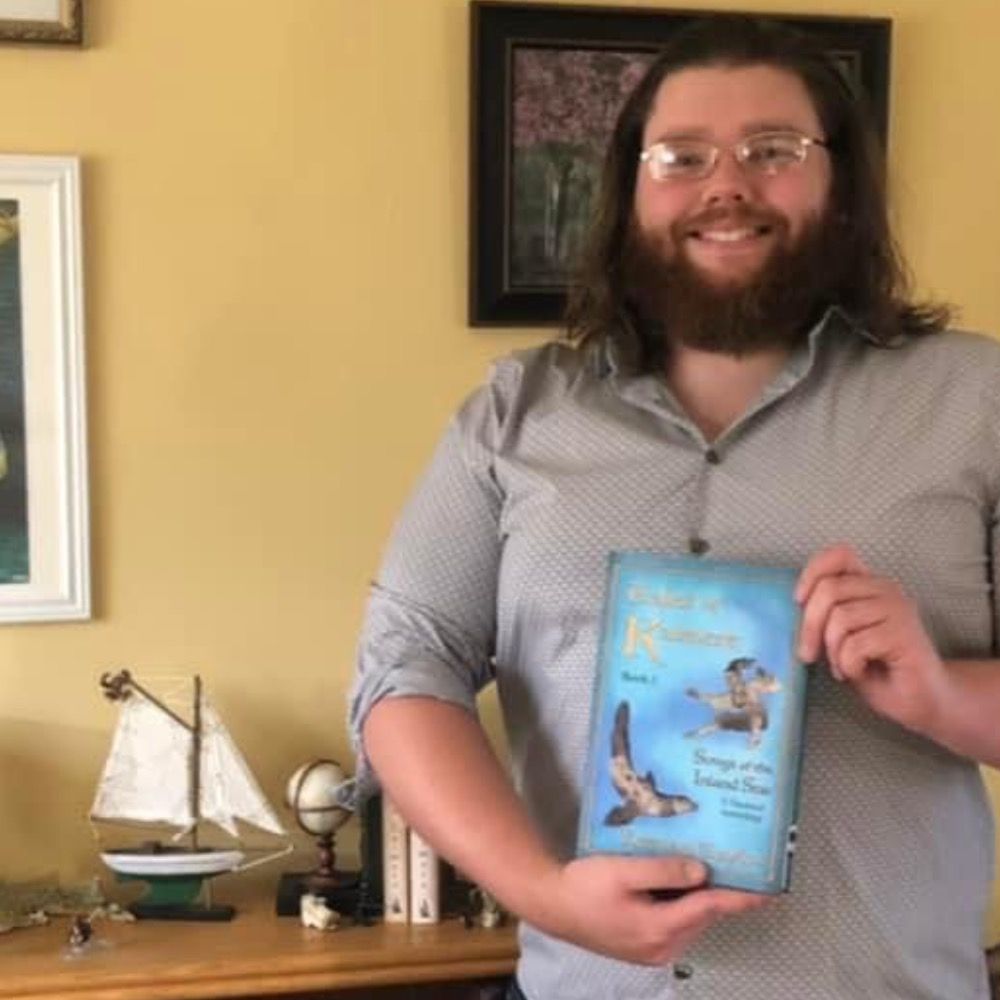
Though megathere sloths were once among the dominant large herbivores, most of them went extinct with the most recent major faunal turnover 1.5 million years ago. In the western reaches of southern Arvel, a relic of a lost age soldiers on.
Link: www.youtube.com/watch?v=jU1m...
Link: www.youtube.com/watch?v=jU1m...

The Reaper Sloth: Last of the Megatheres
YouTube video by Keenan Taylor's Tales of Kaimere
www.youtube.com
January 13, 2026 at 3:27 PM
Though megathere sloths were once among the dominant large herbivores, most of them went extinct with the most recent major faunal turnover 1.5 million years ago. In the western reaches of southern Arvel, a relic of a lost age soldiers on.
Link: www.youtube.com/watch?v=jU1m...
Link: www.youtube.com/watch?v=jU1m...
Reposted by Dynamognathus
Hiya, I have 4 more school fact file sheets for #FossilFriday:
#Tianyulong, #Darwinopterus, #Oregramma, and #Caytonia! These are really relaxing to do, and I plan on doing more plants next!
I hope you like them!
#paleontology #paleobotany #paleoart #sciart #scicomm #schoolwork #publiccommunication
#Tianyulong, #Darwinopterus, #Oregramma, and #Caytonia! These are really relaxing to do, and I plan on doing more plants next!
I hope you like them!
#paleontology #paleobotany #paleoart #sciart #scicomm #schoolwork #publiccommunication


January 16, 2026 at 11:09 AM
Hiya, I have 4 more school fact file sheets for #FossilFriday:
#Tianyulong, #Darwinopterus, #Oregramma, and #Caytonia! These are really relaxing to do, and I plan on doing more plants next!
I hope you like them!
#paleontology #paleobotany #paleoart #sciart #scicomm #schoolwork #publiccommunication
#Tianyulong, #Darwinopterus, #Oregramma, and #Caytonia! These are really relaxing to do, and I plan on doing more plants next!
I hope you like them!
#paleontology #paleobotany #paleoart #sciart #scicomm #schoolwork #publiccommunication
Quick sketch of the newly described Clethrionomys sibiricola, the early-Pleistocene ancestor of the Northern Red-backed Vole (Clethrionomys rutilus). Its fossils (several teeth and a partial mandible) are known from Western Siberia. #sciart #paleoart #pleistocene #vole

January 15, 2026 at 10:37 PM
Quick sketch of the newly described Clethrionomys sibiricola, the early-Pleistocene ancestor of the Northern Red-backed Vole (Clethrionomys rutilus). Its fossils (several teeth and a partial mandible) are known from Western Siberia. #sciart #paleoart #pleistocene #vole
Reposted by Dynamognathus
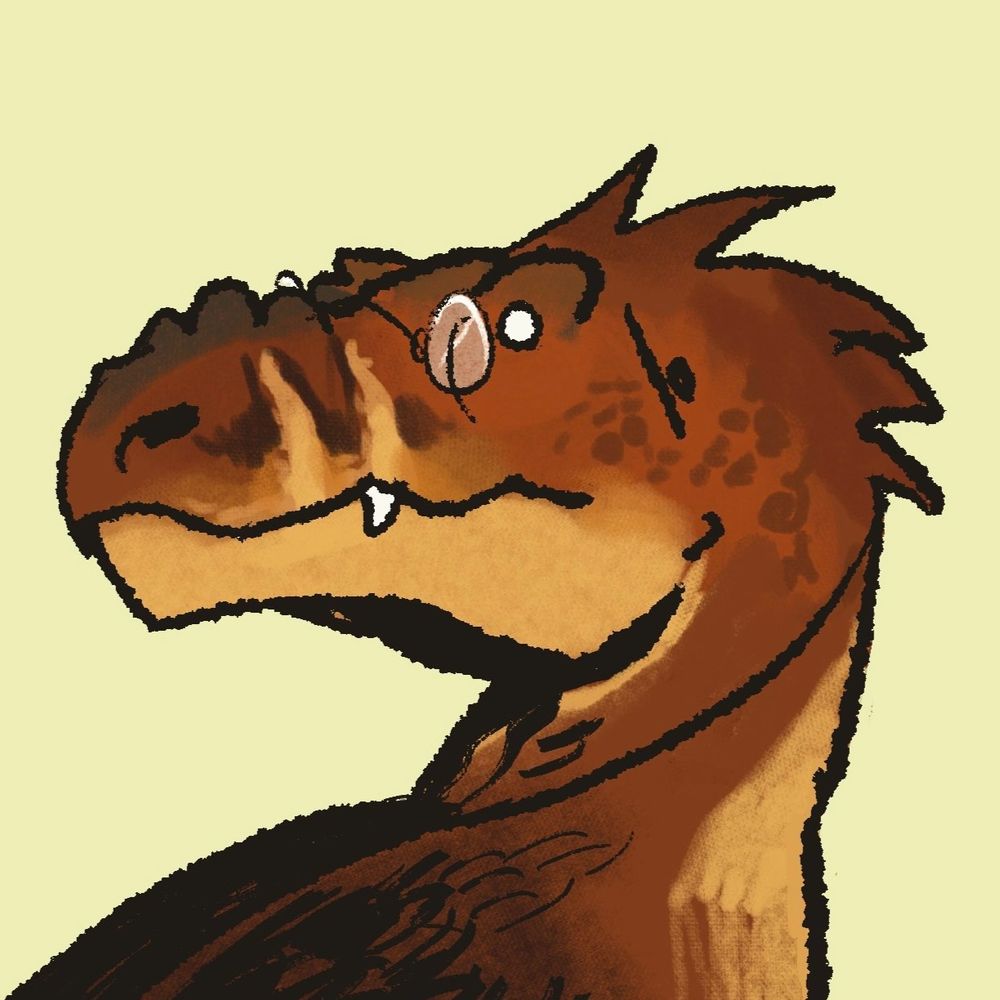

Anchitherium sensibly responding to the current situation. Btw, a lot of early horses seem to have big preorbital glands and more people should draw that.

January 13, 2026 at 6:07 AM
Anchitherium sensibly responding to the current situation. Btw, a lot of early horses seem to have big preorbital glands and more people should draw that.
Reposted by Dynamognathus
I'm making a series of infographics at the moment for some school groups, and, honestly, I'm really enjoying it!!!
They're learning about paleontology, and I was asked if I could provide some images of extinct plants and animals! Here are the first few: #paleoart #scicomm #education #paleontology
They're learning about paleontology, and I was asked if I could provide some images of extinct plants and animals! Here are the first few: #paleoart #scicomm #education #paleontology


January 12, 2026 at 2:32 AM
I'm making a series of infographics at the moment for some school groups, and, honestly, I'm really enjoying it!!!
They're learning about paleontology, and I was asked if I could provide some images of extinct plants and animals! Here are the first few: #paleoart #scicomm #education #paleontology
They're learning about paleontology, and I was asked if I could provide some images of extinct plants and animals! Here are the first few: #paleoart #scicomm #education #paleontology
Tonight’s flocking-together #Paleostream was nothing but synapsids, three gorgonopsians in a row (Dinogorgon, Viatkogorgon, and Njalila) and then the Pleistocene South American horse Hippidion. #paleoart #sciart #permian #pleistocene

January 10, 2026 at 6:23 AM
Tonight’s flocking-together #Paleostream was nothing but synapsids, three gorgonopsians in a row (Dinogorgon, Viatkogorgon, and Njalila) and then the Pleistocene South American horse Hippidion. #paleoart #sciart #permian #pleistocene
Reposted by Dynamognathus


January 9, 2026 at 5:48 PM
Illustration of the African middle-miocene Elasmotheriine Victoriaceros kenyensis, made for the Victoriaceros Wikipedia page. The few existing reconstructions of this rhino give it a prominent nasal horn, while I depicted it with a large callus-like growth. #miocene #paleoart #sciart

January 8, 2026 at 8:30 PM
A scene from middle Miocene Slovakia: a Pseudocyon rears up in surprise as a defensive mother Parvorhinus charges it, protective of her clueless calf. Parvorhinus, named a few years ago, was one of the smallest rhinos of the #Miocene and makes for a fun first sketch of 2026! #paleoart #sciart

January 8, 2026 at 6:56 PM
Reposted by Dynamognathus
This is not a model. This is a "fossilised" taxidermy of a Woolly Rhino, discovered in Starunia mine in Carpathian Poland (now Ukraine) in 1929. Dating to the Pleistocene, its exquisite preservation is owed to a mixture of brine, oil and clays. 🧵

January 8, 2026 at 5:52 AM
This is not a model. This is a "fossilised" taxidermy of a Woolly Rhino, discovered in Starunia mine in Carpathian Poland (now Ukraine) in 1929. Dating to the Pleistocene, its exquisite preservation is owed to a mixture of brine, oil and clays. 🧵


Reposted by Dynamognathus
So It Begins...

January 7, 2026 at 2:21 AM
So It Begins...
Reposted by Dynamognathus

Exhibit #SciArt 🎨 Florida Pleistocene
Paleontologists have found Pleistocene fossils in almost every county in Florida, speaking to our state’s rich biodiversity during this period.
🗝️ Check out the exhibit art + key, and fossils from our collections:
www.floridamuseum.ufl.edu/exhibits/blo...
Paleontologists have found Pleistocene fossils in almost every county in Florida, speaking to our state’s rich biodiversity during this period.
🗝️ Check out the exhibit art + key, and fossils from our collections:
www.floridamuseum.ufl.edu/exhibits/blo...


January 5, 2026 at 9:43 PM
Exhibit #SciArt 🎨 Florida Pleistocene
Paleontologists have found Pleistocene fossils in almost every county in Florida, speaking to our state’s rich biodiversity during this period.
🗝️ Check out the exhibit art + key, and fossils from our collections:
www.floridamuseum.ufl.edu/exhibits/blo...
Paleontologists have found Pleistocene fossils in almost every county in Florida, speaking to our state’s rich biodiversity during this period.
🗝️ Check out the exhibit art + key, and fossils from our collections:
www.floridamuseum.ufl.edu/exhibits/blo...
The first flocking #Paleostream of 2026: speculative new discoveries that we hope to see this year. Intermediate/half-way-there pterosaur, ancestral bat, late-surviving radiodont, and arthropleura-size house centipede were the chosen prompts, which were all very fun to ponder and draw.

January 3, 2026 at 3:57 AM
The first flocking #Paleostream of 2026: speculative new discoveries that we hope to see this year. Intermediate/half-way-there pterosaur, ancestral bat, late-surviving radiodont, and arthropleura-size house centipede were the chosen prompts, which were all very fun to ponder and draw.
Starting off 2026 with a commissions announcement! I’ve drawn a few commissioned pieces in the past, but haven’t widely advertised it before. If you would like to fund custom-made drawings from a young artist, contact me and we can discuss all the details. #commissions #paleoart #wildlifeart
January 2, 2026 at 8:28 PM
Starting off 2026 with a commissions announcement! I’ve drawn a few commissioned pieces in the past, but haven’t widely advertised it before. If you would like to fund custom-made drawings from a young artist, contact me and we can discuss all the details. #commissions #paleoart #wildlifeart
Reposted by Dynamognathus
Ancient DNA and dating evidence for the dispersal of hippos into central Europe during the last glacial: www.cell.com/current-biol...

Ancient DNA and dating evidence for the dispersal of hippos into central Europe during the last glacial
Arnold et al. present evidence that Late Pleistocene hippos from the Upper Rhine Graben
show close genetic ties to modern African hippos. Although hippos have been thought
to have gone extinct around ...
www.cell.com
January 2, 2026 at 6:41 PM
Ancient DNA and dating evidence for the dispersal of hippos into central Europe during the last glacial: www.cell.com/current-biol...
For my last #NearbyNature2025, I’ve drawn one of the rarest birds in North America: the Whooping Crane. They are the tallest bird on the continent at nearly 5 feet, a bit taller than the more abundant Sandhill Crane. On this New Year’s Eve, I saw these magnificent birds for the first time. #alabama

January 1, 2026 at 3:06 AM
For my last #NearbyNature2025, I’ve drawn one of the rarest birds in North America: the Whooping Crane. They are the tallest bird on the continent at nearly 5 feet, a bit taller than the more abundant Sandhill Crane. On this New Year’s Eve, I saw these magnificent birds for the first time. #alabama