



Pinned
BoneJ
@bonej.org
· 10d
📢 Release alert!
This one lets *all* Intel GPUs use BoneJ+ 🤖
If you have an Intel Iris Xe, UHD or Arc, support is more robust.
Background:
Intel omitted 64-bit floating point precision (double) in their GPUs since c. 2020: this update uses the universally-supported single-precision float type.
This one lets *all* Intel GPUs use BoneJ+ 🤖
If you have an Intel Iris Xe, UHD or Arc, support is more robust.
Background:
Intel omitted 64-bit floating point precision (double) in their GPUs since c. 2020: this update uses the universally-supported single-precision float type.
📢 Release alert!
This one lets *all* Intel GPUs use BoneJ+ 🤖
If you have an Intel Iris Xe, UHD or Arc, support is more robust.
Background:
Intel omitted 64-bit floating point precision (double) in their GPUs since c. 2020: this update uses the universally-supported single-precision float type.
This one lets *all* Intel GPUs use BoneJ+ 🤖
If you have an Intel Iris Xe, UHD or Arc, support is more robust.
Background:
Intel omitted 64-bit floating point precision (double) in their GPUs since c. 2020: this update uses the universally-supported single-precision float type.
January 7, 2026 at 7:57 PM
📢 Release alert!
This one lets *all* Intel GPUs use BoneJ+ 🤖
If you have an Intel Iris Xe, UHD or Arc, support is more robust.
Background:
Intel omitted 64-bit floating point precision (double) in their GPUs since c. 2020: this update uses the universally-supported single-precision float type.
This one lets *all* Intel GPUs use BoneJ+ 🤖
If you have an Intel Iris Xe, UHD or Arc, support is more robust.
Background:
Intel omitted 64-bit floating point precision (double) in their GPUs since c. 2020: this update uses the universally-supported single-precision float type.
📢 New release!
This one makes BoneJ's GPU-accelerated extensions easier to access from Python by using ImageJ2 / scijava-style wrappers.
Just let the Fiji updater run and grab a voucher from bonej.org/shop
This one makes BoneJ's GPU-accelerated extensions easier to access from Python by using ImageJ2 / scijava-style wrappers.
Just let the Fiji updater run and grab a voucher from bonej.org/shop
bonej.org
bonej.org
November 27, 2025 at 7:29 PM
📢 New release!
This one makes BoneJ's GPU-accelerated extensions easier to access from Python by using ImageJ2 / scijava-style wrappers.
Just let the Fiji updater run and grab a voucher from bonej.org/shop
This one makes BoneJ's GPU-accelerated extensions easier to access from Python by using ImageJ2 / scijava-style wrappers.
Just let the Fiji updater run and grab a voucher from bonej.org/shop
Reposted by BoneJ
Join me for a tutorial on @bonej.org 17 November 13h00 CET

Do you want to learn more about 25+ bioimage analysis tools, 100% for free? Sign up to attend Halfway to I2K today! tinyurl.com/Halfway-to-I...
Wishing you'd submitted a tool or workshop but missed the deadline? GREAT NEWS, we just extended one week! Submit by Friday - airtable.com/app2zpB8d82r...
Wishing you'd submitted a tool or workshop but missed the deadline? GREAT NEWS, we just extended one week! Submit by Friday - airtable.com/app2zpB8d82r...

#HappyFluorescenceFriday #microscopycommunity
Got an idea for an image analysis workshop? Share it at Halfway to I2K: Online Tutorials on Image Analysis (Nov 17–19, 2025), held with Zoom Events!
Submit by Oct 31: buff.ly/lMhK4vz
Website: buff.ly/QP36RZB
Register for the workshops: buff.ly/8nNAI18
Got an idea for an image analysis workshop? Share it at Halfway to I2K: Online Tutorials on Image Analysis (Nov 17–19, 2025), held with Zoom Events!
Submit by Oct 31: buff.ly/lMhK4vz
Website: buff.ly/QP36RZB
Register for the workshops: buff.ly/8nNAI18
November 3, 2025 at 11:00 PM
Join me for a tutorial on @bonej.org 17 November 13h00 CET
Could be fixed by determining the total number of slices and start and end slice position, then calculating average slice spacing and interpolating the original image data accordingly. A bit messy. Good on 3D Slicer for detecting, alerting users and sorting it!
October 27, 2025 at 11:53 AM
Could be fixed by determining the total number of slices and start and end slice position, then calculating average slice spacing and interpolating the original image data accordingly. A bit messy. Good on 3D Slicer for detecting, alerting users and sorting it!
A closer read of this paper makes it seem that some of the scans were done in chunks of a few slices each, and that the chunks had different slice spacing from each other. That's a bit of a mess: making a composite assuming equal z-spacing throughout the volume will lead to distortions.
October 27, 2025 at 11:46 AM
A closer read of this paper makes it seem that some of the scans were done in chunks of a few slices each, and that the chunks had different slice spacing from each other. That's a bit of a mess: making a composite assuming equal z-spacing throughout the volume will lead to distortions.
Reposted by BoneJ
ImageJ/Fiji users will be pleased to know that opening a DICOM stack with File > Import > Image Sequence results in correctly calibrated z pixel spacing.
DICOM slice position (0020,0032) and not slice thickness (0018,0050) fields are used to determine the size of the image stack.
DICOM slice position (0020,0032) and not slice thickness (0018,0050) fields are used to determine the size of the image stack.
October 27, 2025 at 11:08 AM
ImageJ/Fiji users will be pleased to know that opening a DICOM stack with File > Import > Image Sequence results in correctly calibrated z pixel spacing.
DICOM slice position (0020,0032) and not slice thickness (0018,0050) fields are used to determine the size of the image stack.
DICOM slice position (0020,0032) and not slice thickness (0018,0050) fields are used to determine the size of the image stack.
Reposted by BoneJ
It also speaks to the good scientific hygiene of taking some basic measurements from the physical specimens using tape, ruler or caliper, and including standard objects in the image to use as calibration sanity checks prior to later image analysis.
DON'T ASSUME THE INSTRUMENT IS PROPERLY CALIBRATED
DON'T ASSUME THE INSTRUMENT IS PROPERLY CALIBRATED
OMG this is a good catch. We wrestled with this a long time ago when setting up Slice Geometry. The correct way to set slice spacing (pixel spacing in z) from a DICOM is to use the slice position info (0020,1041 or 0020,0032) and divide by (stack size - 1). It can be out by not much or quite a bit.
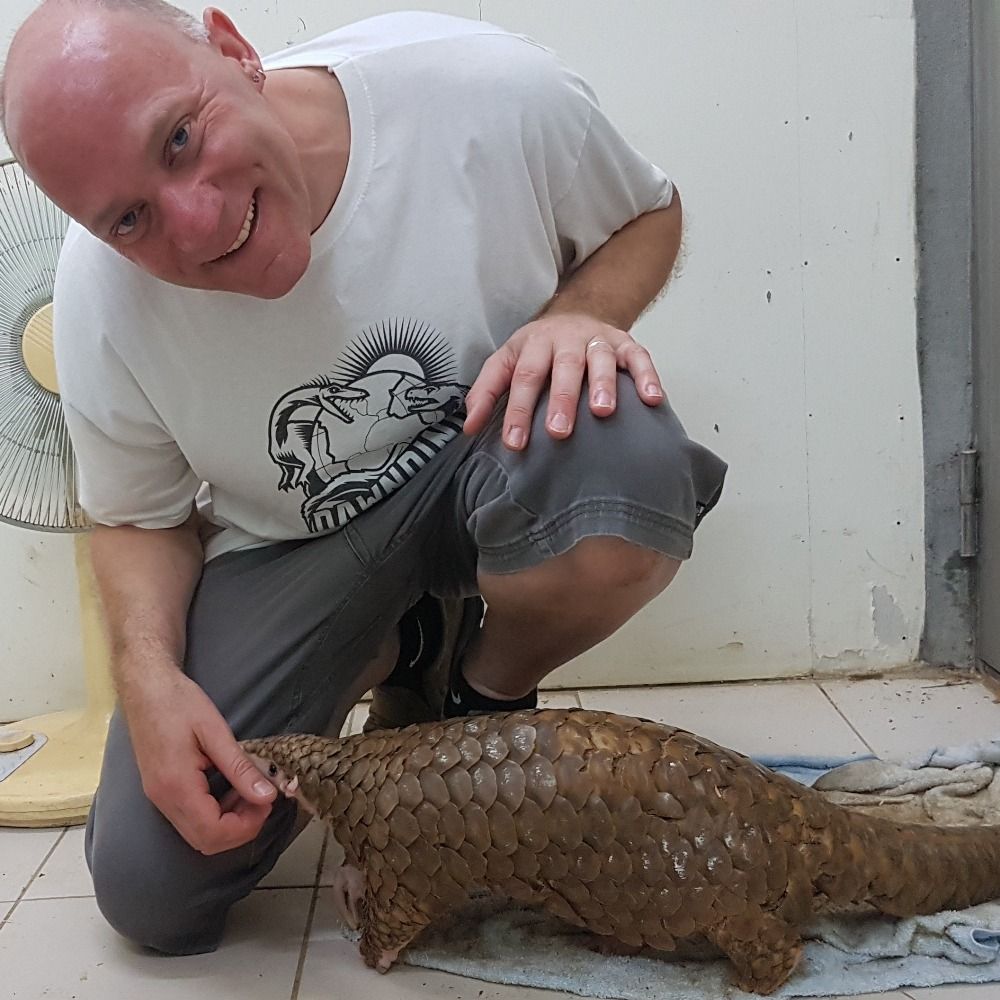
Analysis of 985(!!) baboon skulls' CT scan data from MorphoSource shows that >18% have slice spacing errors that propagate to downstream analyses-- an important cautionary tale on checking CT metadata vs. errors, and a goliath effort: peerj.com/articles/201...
October 27, 2025 at 10:37 AM
It also speaks to the good scientific hygiene of taking some basic measurements from the physical specimens using tape, ruler or caliper, and including standard objects in the image to use as calibration sanity checks prior to later image analysis.
DON'T ASSUME THE INSTRUMENT IS PROPERLY CALIBRATED
DON'T ASSUME THE INSTRUMENT IS PROPERLY CALIBRATED
OMG this is a good catch. We wrestled with this a long time ago when setting up Slice Geometry. The correct way to set slice spacing (pixel spacing in z) from a DICOM is to use the slice position info (0020,1041 or 0020,0032) and divide by (stack size - 1). It can be out by not much or quite a bit.
Analysis of 985(!!) baboon skulls' CT scan data from MorphoSource shows that >18% have slice spacing errors that propagate to downstream analyses-- an important cautionary tale on checking CT metadata vs. errors, and a goliath effort: peerj.com/articles/201...
Easier said than done: unexpected hurdles to preparing ∼1,000 cranial CT scans for data collection from an online digital repository
Background As science becomes more open and accessible, researchers are increasingly encouraged—and sometimes required—to share their digital data on public repositories. While this promotes transpare...
peerj.com
October 27, 2025 at 10:34 AM
OMG this is a good catch. We wrestled with this a long time ago when setting up Slice Geometry. The correct way to set slice spacing (pixel spacing in z) from a DICOM is to use the slice position info (0020,1041 or 0020,0032) and divide by (stack size - 1). It can be out by not much or quite a bit.
👀
Analysis of 985(!!) baboon skulls' CT scan data from MorphoSource shows that >18% have slice spacing errors that propagate to downstream analyses-- an important cautionary tale on checking CT metadata vs. errors, and a goliath effort: peerj.com/articles/201...
Easier said than done: unexpected hurdles to preparing ∼1,000 cranial CT scans for data collection from an online digital repository
Background As science becomes more open and accessible, researchers are increasingly encouraged—and sometimes required—to share their digital data on public repositories. While this promotes transpare...
peerj.com
October 27, 2025 at 10:18 AM
👀
Reposted by BoneJ
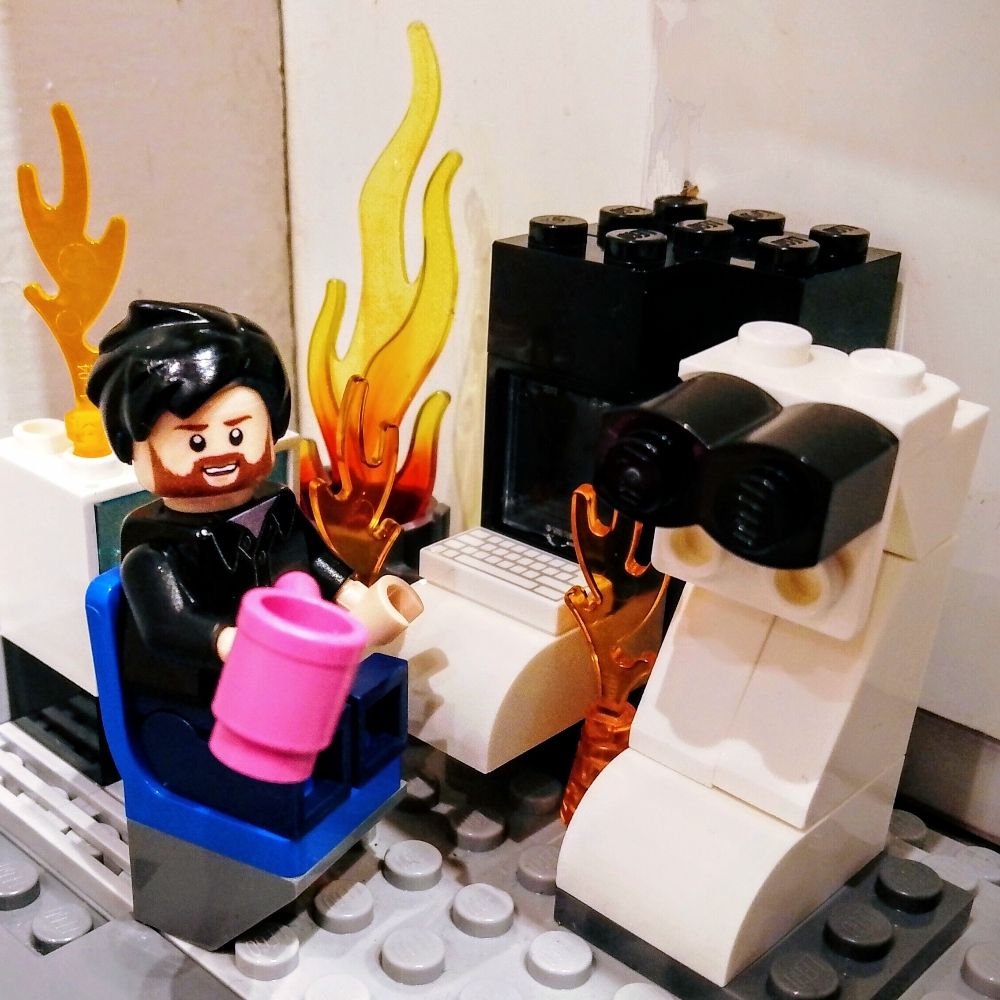
Want to automate workflows in #FIJI?
Don't know where to start?
We (@lankylaste.bsky.social, Alicja Skórkowska and Sara Salgueiro Torres) have added a step-by-step tutorial to the wiki to get you started.
Thanks @ctrue.bsky.social for adding!
imagej.github.io/tutorials/ba...
Don't know where to start?
We (@lankylaste.bsky.social, Alicja Skórkowska and Sara Salgueiro Torres) have added a step-by-step tutorial to the wiki to get you started.
Thanks @ctrue.bsky.social for adding!
imagej.github.io/tutorials/ba...

Batch Processing with the ImageJ Macro Language
The ImageJ wiki is a community-edited knowledge base on topics relating to ImageJ, a public domain program for processing and analyzing scientific images, and its ecosystem of derivatives and variants...
imagej.github.io
October 23, 2025 at 4:32 PM
Want to automate workflows in #FIJI?
Don't know where to start?
We (@lankylaste.bsky.social, Alicja Skórkowska and Sara Salgueiro Torres) have added a step-by-step tutorial to the wiki to get you started.
Thanks @ctrue.bsky.social for adding!
imagej.github.io/tutorials/ba...
Don't know where to start?
We (@lankylaste.bsky.social, Alicja Skórkowska and Sara Salgueiro Torres) have added a step-by-step tutorial to the wiki to get you started.
Thanks @ctrue.bsky.social for adding!
imagej.github.io/tutorials/ba...
Reposted by BoneJ
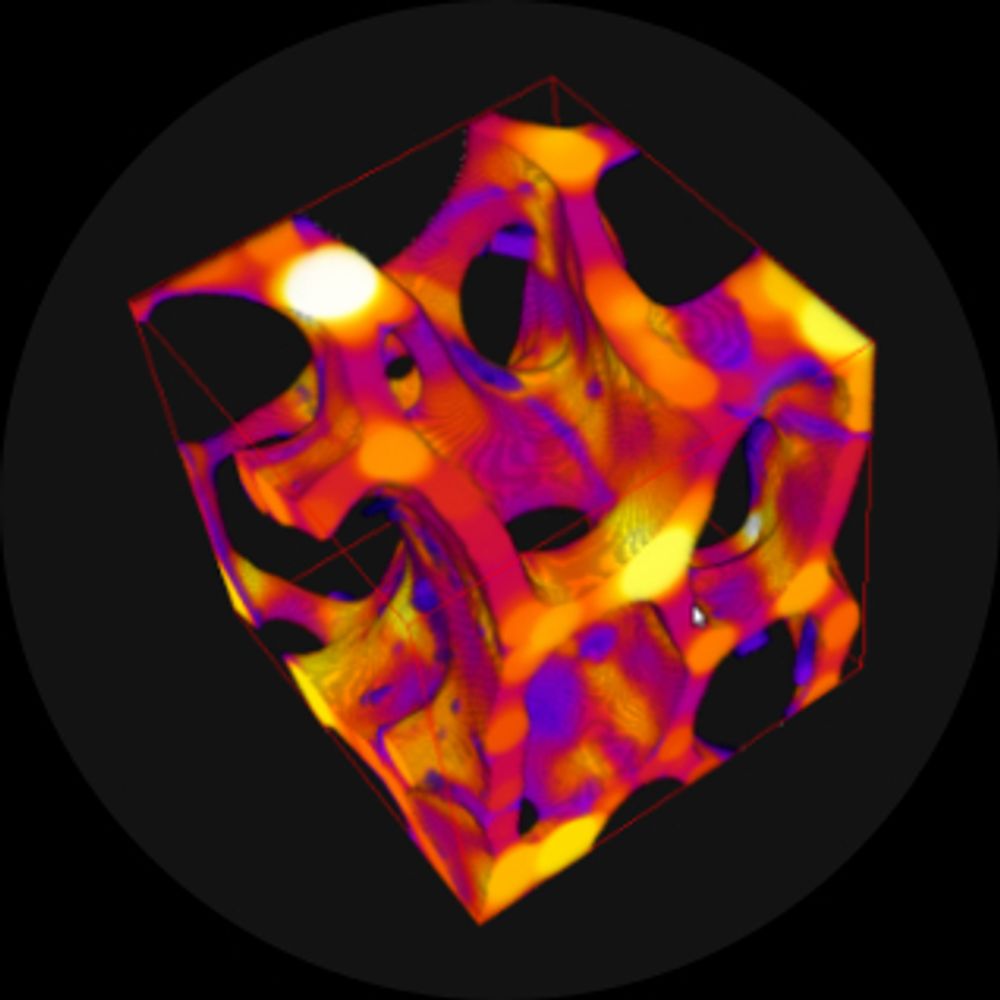
Gotta admit, I'm pretty excited about this one. GPU-accelerated Local Thickness, for Tb.Th and Tb.Sp. This is the plugin in the @bonej.org logo, made MUCH faster by re-engineering for GPU parallelism.
Drop me a PM to get a token to try it out for free.
Drop me a PM to get a token to try it out for free.

October 13, 2025 at 4:37 PM
Gotta admit, I'm pretty excited about this one. GPU-accelerated Local Thickness, for Tb.Th and Tb.Sp. This is the plugin in the @bonej.org logo, made MUCH faster by re-engineering for GPU parallelism.
Drop me a PM to get a token to try it out for free.
Drop me a PM to get a token to try it out for free.
The CPU implementation has a problem of thickness spheres overhanging the input mask by a pixel, introducing some inaccuracy. This GPU implementation has a more accurate Euclidean distance transform giving the sphere-fitting higher fidelity to the input geometry and less orthogonal grid bias.
October 13, 2025 at 4:30 PM
The CPU implementation has a problem of thickness spheres overhanging the input mask by a pixel, introducing some inaccuracy. This GPU implementation has a more accurate Euclidean distance transform giving the sphere-fitting higher fidelity to the input geometry and less orthogonal grid bias.
Small structures are also problematic as ever. But what's the thickness of a 1-pixel-wide line? The answer is much more meaningful for features represented by at least several pixels' thickness (what is several you may ask, well, try it and see...).
October 13, 2025 at 4:28 PM
Small structures are also problematic as ever. But what's the thickness of a 1-pixel-wide line? The answer is much more meaningful for features represented by at least several pixels' thickness (what is several you may ask, well, try it and see...).
Smaller simpler images now complete in a few seconds or less, depending on image size and feature size.
Unconstrained 'outside' is still challenging, but is now handled by treating it as spheres seeded from the image borders with a radius equal to the distance to the nearest feature in the image.
Unconstrained 'outside' is still challenging, but is now handled by treating it as spheres seeded from the image borders with a radius equal to the distance to the nearest feature in the image.
October 13, 2025 at 4:24 PM
Smaller simpler images now complete in a few seconds or less, depending on image size and feature size.
Unconstrained 'outside' is still challenging, but is now handled by treating it as spheres seeded from the image borders with a radius equal to the distance to the nearest feature in the image.
Unconstrained 'outside' is still challenging, but is now handled by treating it as spheres seeded from the image borders with a radius equal to the distance to the nearest feature in the image.
Large structures could make Tb.Sp in particular seem to run forever, or least longer than you would reasonably wait. 😴
Try it now. Big structures are still challenging, but should be done in like 1 hour instead of a week.
Try it now. Big structures are still challenging, but should be done in like 1 hour instead of a week.
October 13, 2025 at 4:22 PM
Large structures could make Tb.Sp in particular seem to run forever, or least longer than you would reasonably wait. 😴
Try it now. Big structures are still challenging, but should be done in like 1 hour instead of a week.
Try it now. Big structures are still challenging, but should be done in like 1 hour instead of a week.
📢 Release announcement!
Local Thickness+ brings GPU-accelerated Tb.Th and Tb.Sp, for much faster measurements.
Now out in BoneJ.
Just let the updater run, and grab a token from bonej.org/shop to make it go. Drop us a PM to get a coupon for a free token.
Local Thickness+ brings GPU-accelerated Tb.Th and Tb.Sp, for much faster measurements.
Now out in BoneJ.
Just let the updater run, and grab a token from bonej.org/shop to make it go. Drop us a PM to get a coupon for a free token.
October 13, 2025 at 4:18 PM
📢 Release announcement!
Local Thickness+ brings GPU-accelerated Tb.Th and Tb.Sp, for much faster measurements.
Now out in BoneJ.
Just let the updater run, and grab a token from bonej.org/shop to make it go. Drop us a PM to get a coupon for a free token.
Local Thickness+ brings GPU-accelerated Tb.Th and Tb.Sp, for much faster measurements.
Now out in BoneJ.
Just let the updater run, and grab a token from bonej.org/shop to make it go. Drop us a PM to get a coupon for a free token.
Reposted by BoneJ
Do you want to work with Michalis and us on a fun and ambitious LSFM, tracking and gamification project?
Apply!!
Apply!!

Cool collaborations on light sheet microscopy @huiskenlab.bsky.social, cellular barcoding @mgrillo.bsky.social, AI-based cell tracking @jytinevez.bsky.social, and citizen science through video game for cell tracking @rebelpixel.fr
see www.averof-lab.org/pages/tracman
3/3
see www.averof-lab.org/pages/tracman
3/3
October 3, 2025 at 11:16 AM
Do you want to work with Michalis and us on a fun and ambitious LSFM, tracking and gamification project?
Apply!!
Apply!!
🤔
Long, slender trabeculae pass across the marrow space. Trabeculae help resist weightbearing loads. But these ones don't appear to be in a good configuration to do that, unlike the spongy trabeculae nearby.
Maybe they're holding adipose tissue in place, preventing it from wobbling during locomotion?
Maybe they're holding adipose tissue in place, preventing it from wobbling during locomotion?

October 3, 2025 at 10:23 AM
🤔
🤩
The leftovers from last week's bœuf bourguignon. This is a 'marrow bone' after boiling out the adipose tissue for gravy and washing in lots of warm tap water, household detergents and a little chlorine bleach. Cortex & (glorious) trabeculae, growth plate 'scar', marrow cavity visible.

October 3, 2025 at 10:23 AM
🤩
Signed up! Come along and get an intro on BoneJ's features.
Halfway to I2K is BACK, friends of all kinds! Last year, 650 people attended 30+ TOTALLY FREE image analysis workshops of all kinds, across many timezones.
If you make image analysis software and want to teach it, workshop submissions are open now! We'd love to have your tool highlighted.
If you make image analysis software and want to teach it, workshop submissions are open now! We'd love to have your tool highlighted.
#HappyFluorescenceFriday!
#microscopycommunity- want to learn open source image analysis or share your knowledge to help others? We’ve got a FREE virtual workshop Nov 17-19! Now accepting workshop session applications!
Learn more & sign up: buff.ly/esGIotD
#microscopycommunity- want to learn open source image analysis or share your knowledge to help others? We’ve got a FREE virtual workshop Nov 17-19! Now accepting workshop session applications!
Learn more & sign up: buff.ly/esGIotD
October 2, 2025 at 1:03 PM
Signed up! Come along and get an intro on BoneJ's features.
Reposted by BoneJ
📣 We’re hiring, please RT! Fully funded 4-year PhD position in our CVPD group at @informatikaehu.bsky.social!
Research at the intersection of AI, deep learning & bioimage analysis. 🧠🔬
📅 Applications open Oct 6 (deadline: ~Oct 27)
📍 San Sebastian, Spain.
👉 cvpd.github.io/post/2025-09...
Research at the intersection of AI, deep learning & bioimage analysis. 🧠🔬
📅 Applications open Oct 6 (deadline: ~Oct 27)
📍 San Sebastian, Spain.
👉 cvpd.github.io/post/2025-09...

📢 Open 4-year PhD Position in Deep Learning for Bioimage Analysis! | CVPD Research group
The Computer Vision and Pattern Discovery (CVPD) group at the University of the Basque Country (UPV/EHU) is offering a fully funded 4-year PhD position within the recently awarded project TOSBI: Towar...
cvpd.github.io
September 30, 2025 at 11:01 AM
📣 We’re hiring, please RT! Fully funded 4-year PhD position in our CVPD group at @informatikaehu.bsky.social!
Research at the intersection of AI, deep learning & bioimage analysis. 🧠🔬
📅 Applications open Oct 6 (deadline: ~Oct 27)
📍 San Sebastian, Spain.
👉 cvpd.github.io/post/2025-09...
Research at the intersection of AI, deep learning & bioimage analysis. 🧠🔬
📅 Applications open Oct 6 (deadline: ~Oct 27)
📍 San Sebastian, Spain.
👉 cvpd.github.io/post/2025-09...
Reposted by BoneJ

BioImage analysis friends - King's are recruiting for a full-time, permanent facility position! Come and work with fun microscopes and fun people (and me!) - please share! www.kcl.ac.uk/jobs/126345-...

Bioimage Analysis Specialist | King's College London
www.kcl.ac.uk
September 29, 2025 at 9:48 AM
BioImage analysis friends - King's are recruiting for a full-time, permanent facility position! Come and work with fun microscopes and fun people (and me!) - please share! www.kcl.ac.uk/jobs/126345-...
🦴 Up next for BoneJ+: GPU-accelerated Local Thickness.
The classic version is widely used for measuring trabecular thickness and separation (Tb.Th, Tb.Sp), but suffers from g.o.i.n.g v.e.r.y s.l.ow. on images with large or unbound features.
Looking at a release in October: stay tuned! 📻
The classic version is widely used for measuring trabecular thickness and separation (Tb.Th, Tb.Sp), but suffers from g.o.i.n.g v.e.r.y s.l.ow. on images with large or unbound features.
Looking at a release in October: stay tuned! 📻
September 25, 2025 at 8:41 AM
🦴 Up next for BoneJ+: GPU-accelerated Local Thickness.
The classic version is widely used for measuring trabecular thickness and separation (Tb.Th, Tb.Sp), but suffers from g.o.i.n.g v.e.r.y s.l.ow. on images with large or unbound features.
Looking at a release in October: stay tuned! 📻
The classic version is widely used for measuring trabecular thickness and separation (Tb.Th, Tb.Sp), but suffers from g.o.i.n.g v.e.r.y s.l.ow. on images with large or unbound features.
Looking at a release in October: stay tuned! 📻