




Sarah Jo 🦇
@battysarah.bsky.social
Educator. Volunteer bat worker. Charity trustee. BSc (Hons) Ecology. Vegan for the animals and the planet. Childfree by choice. Northern. She/her.
🖤🦇💚🌱💙🌍
🖤🦇💚🌱💙🌍
Pinned
Sarah Jo 🦇
@battysarah.bsky.social
· Nov 24

I'm Sarah: teacher by day, volunteer bat worker by night. Passionate about nature, conservation and talking about bats to anyone who will listen! Trustee of South Lancashire Bat Group. 🦇🖤🦇
Favourite bat? Probably common pipistrelles! You can always rely on them to make an appearance!
Favourite bat? Probably common pipistrelles! You can always rely on them to make an appearance!
Reposted by Sarah Jo 🦇

Day 10 #BatMas: Rafinesque's big-eared bat (Corynorhinus rafinesquii)🦇🌎🧪
This species is found only in the southeastern US & prefers to roost in mature forests. Bats have ears that are over 2.5 cm (1 inch long)! Although they eat a range of insects, they primarily feed on moths.
📸: Michael Durham
This species is found only in the southeastern US & prefers to roost in mature forests. Bats have ears that are over 2.5 cm (1 inch long)! Although they eat a range of insects, they primarily feed on moths.
📸: Michael Durham

December 10, 2025 at 9:03 PM
Day 10 #BatMas: Rafinesque's big-eared bat (Corynorhinus rafinesquii)🦇🌎🧪
This species is found only in the southeastern US & prefers to roost in mature forests. Bats have ears that are over 2.5 cm (1 inch long)! Although they eat a range of insects, they primarily feed on moths.
📸: Michael Durham
This species is found only in the southeastern US & prefers to roost in mature forests. Bats have ears that are over 2.5 cm (1 inch long)! Although they eat a range of insects, they primarily feed on moths.
📸: Michael Durham
Reposted by Sarah Jo 🦇
🦇 Our advice pages are there to answer the most widely asked questions we get. From what to do if you find a bat to making your garden more bat friendly: www.bats.org.uk/advice

December 13, 2025 at 3:12 PM
🦇 Our advice pages are there to answer the most widely asked questions we get. From what to do if you find a bat to making your garden more bat friendly: www.bats.org.uk/advice
🦇 news!
"Bats bend the usual rules of aging."
#bats #lovebats #conservation #nature
phys.org/news/2025-12...
"Bats bend the usual rules of aging."
#bats #lovebats #conservation #nature
phys.org/news/2025-12...

Bat study shows motherhood comes with a cost, but not for all
Is it better to have children early or later in life, and does parenthood accelerate aging? Researchers at University College Dublin and the University of Bristol have tackled these questions by study...
phys.org
December 10, 2025 at 7:34 PM
🦇 news!
"Bats bend the usual rules of aging."
#bats #lovebats #conservation #nature
phys.org/news/2025-12...
"Bats bend the usual rules of aging."
#bats #lovebats #conservation #nature
phys.org/news/2025-12...
Reposted by Sarah Jo 🦇
🦇Interested in a bat-related PhD? 👇
Using genomics to understand bat population declines under global environmental change with @orlyrazgour.bsky.social ,
@bfraser.bsky.social l and BCT, based at the University of Exeter.
Application deadline 8 January 2026: www.findaphd.com/phds/project...
Using genomics to understand bat population declines under global environmental change with @orlyrazgour.bsky.social ,
@bfraser.bsky.social l and BCT, based at the University of Exeter.
Application deadline 8 January 2026: www.findaphd.com/phds/project...

Applying genomic approaches to understand bat population declines. NERC GW4+ DTP PhD studentship for September 2026 Entry at University of Exeter on FindAPhD.com
PhD Project - Applying genomic approaches to understand bat population declines. NERC GW4+ DTP PhD studentship for September 2026 Entry at University of Exeter, listed on FindAPhD.com
www.findaphd.com
December 9, 2025 at 5:28 PM
🦇Interested in a bat-related PhD? 👇
Using genomics to understand bat population declines under global environmental change with @orlyrazgour.bsky.social ,
@bfraser.bsky.social l and BCT, based at the University of Exeter.
Application deadline 8 January 2026: www.findaphd.com/phds/project...
Using genomics to understand bat population declines under global environmental change with @orlyrazgour.bsky.social ,
@bfraser.bsky.social l and BCT, based at the University of Exeter.
Application deadline 8 January 2026: www.findaphd.com/phds/project...
Reposted by Sarah Jo 🦇
🦇#NewVideo!
An update on white-nose syndrome in Alberta and the application of probiotics for the first time (outside of the initial experiment). We will try to keep updating on this story. The plan is to return to this site in spring for bat capture & assessment.
youtu.be/PU2ZnUvwvVY?...
An update on white-nose syndrome in Alberta and the application of probiotics for the first time (outside of the initial experiment). We will try to keep updating on this story. The plan is to return to this site in spring for bat capture & assessment.
youtu.be/PU2ZnUvwvVY?...

Alberta's first probiotic trial to protect bats
YouTube video by Wildlife Conservation Society (WCS) Canada
youtu.be
December 9, 2025 at 10:02 PM
🦇#NewVideo!
An update on white-nose syndrome in Alberta and the application of probiotics for the first time (outside of the initial experiment). We will try to keep updating on this story. The plan is to return to this site in spring for bat capture & assessment.
youtu.be/PU2ZnUvwvVY?...
An update on white-nose syndrome in Alberta and the application of probiotics for the first time (outside of the initial experiment). We will try to keep updating on this story. The plan is to return to this site in spring for bat capture & assessment.
youtu.be/PU2ZnUvwvVY?...
Reposted by Sarah Jo 🦇
Day 9 #BatMas: Eastern red bat (Lasiurus borealis) 🦇🌎🧪
While most bats species give birth to only one pup per year, eastern red’s give birth to about 3 pups on average – with the most being 5 pups! The pups will stay with their mom until they’re weaned at about 1 month of age.
📸: Josh Henderson
While most bats species give birth to only one pup per year, eastern red’s give birth to about 3 pups on average – with the most being 5 pups! The pups will stay with their mom until they’re weaned at about 1 month of age.
📸: Josh Henderson

December 10, 2025 at 1:17 AM
Day 9 #BatMas: Eastern red bat (Lasiurus borealis) 🦇🌎🧪
While most bats species give birth to only one pup per year, eastern red’s give birth to about 3 pups on average – with the most being 5 pups! The pups will stay with their mom until they’re weaned at about 1 month of age.
📸: Josh Henderson
While most bats species give birth to only one pup per year, eastern red’s give birth to about 3 pups on average – with the most being 5 pups! The pups will stay with their mom until they’re weaned at about 1 month of age.
📸: Josh Henderson
Reposted by Sarah Jo 🦇
Day 8 #BatMas: Sulawesi fruit bat (Acerodon celebenesis) 🦇🌎🧪
A species found in Indonesia & classified by the IUCN as Vulnerable due to unstainable levels of hunting. They're frugivores, feeding mainly on coconuts and breadfuits – but also act as pollinators for these plants!
📸: Scott Heinrichs
A species found in Indonesia & classified by the IUCN as Vulnerable due to unstainable levels of hunting. They're frugivores, feeding mainly on coconuts and breadfuits – but also act as pollinators for these plants!
📸: Scott Heinrichs

December 8, 2025 at 6:46 AM
Day 8 #BatMas: Sulawesi fruit bat (Acerodon celebenesis) 🦇🌎🧪
A species found in Indonesia & classified by the IUCN as Vulnerable due to unstainable levels of hunting. They're frugivores, feeding mainly on coconuts and breadfuits – but also act as pollinators for these plants!
📸: Scott Heinrichs
A species found in Indonesia & classified by the IUCN as Vulnerable due to unstainable levels of hunting. They're frugivores, feeding mainly on coconuts and breadfuits – but also act as pollinators for these plants!
📸: Scott Heinrichs
Reposted by Sarah Jo 🦇
Great resource thread 🧵 here for people preparing their response to their councils Local Nature Recovery Strategy👇🦇

Lots of great new OA 🦇 research 📄 published recently that provide valuable insights into different aspects of bat responses to natural and man-made elements of the #environment. Whilst these may not seem particularly "exciting" they provide crucial evidence to aid bat conservation.
🧵 below
🧵 below
December 8, 2025 at 10:33 AM
Great resource thread 🧵 here for people preparing their response to their councils Local Nature Recovery Strategy👇🦇
Reposted by Sarah Jo 🦇
As the weather gets consistently cooler and/or more miserable the #bats are tucking themselves away for hibernation. But, unlike bears, they don't typically sleep the entire winter away, typically waking periodically to adjust position, change roosts, or for a drink and snack in milder periods 🦇


December 7, 2025 at 9:57 AM
As the weather gets consistently cooler and/or more miserable the #bats are tucking themselves away for hibernation. But, unlike bears, they don't typically sleep the entire winter away, typically waking periodically to adjust position, change roosts, or for a drink and snack in milder periods 🦇
Reposted by Sarah Jo 🦇
🦇 Did you know there is a rainforest in Wales? Our Wales Woodland Wonders project is learning more the health of these rare woodlands and the bats that call this habitat home. Find out more here:

Rhyfeddodau Coetir Cymru / Wales Woodland Wonders - In Wales - Bat Conservation Trust
Mae gwaith Rhyfeddodau Coetir Cymru yn canolbwyntio ar fforest law dymherus Eryri, gan gofnodi gwybodaeth hanfodol am iechyd y coetiroedd prin hyn a’r y...
www.bats.org.uk
December 7, 2025 at 11:47 AM
🦇 Did you know there is a rainforest in Wales? Our Wales Woodland Wonders project is learning more the health of these rare woodlands and the bats that call this habitat home. Find out more here:
Beautiful 🦇
Been lucky enough to take part in emergence surveys of this bat species in North Wales.
Been lucky enough to take part in emergence surveys of this bat species in North Wales.
Day 7 #BatMas: Lesser horseshoe bat (Rhinolophus hipposideros) 🦇🌎🧪
A species found in Europe & North Africa, it is one of the world’s smallest bats (about 5-9 g). They are solitary, however females will congregate in maternity roosts in June where they give birth & raise pups
📸: Rollin Verlind
A species found in Europe & North Africa, it is one of the world’s smallest bats (about 5-9 g). They are solitary, however females will congregate in maternity roosts in June where they give birth & raise pups
📸: Rollin Verlind

December 7, 2025 at 10:05 PM
Beautiful 🦇
Been lucky enough to take part in emergence surveys of this bat species in North Wales.
Been lucky enough to take part in emergence surveys of this bat species in North Wales.
Reposted by Sarah Jo 🦇
🦇 Please continue supporting our #ChristmasChallenge campaign! Until the 9 December (midday) every donation up to £10K will be DOUBLED at no extra cost to you: donate.biggive.org/campaign/a05... .

December 6, 2025 at 7:45 PM
🦇 Please continue supporting our #ChristmasChallenge campaign! Until the 9 December (midday) every donation up to £10K will be DOUBLED at no extra cost to you: donate.biggive.org/campaign/a05... .
Reposted by Sarah Jo 🦇
Day 6 #BatMas: Greater false vampire bat (Lyroderma lyra) 🦇🌎🧪
Being a highly carnivorous species – these bats will eat other bats, birds, reptiles and fish. To catch their prey, they use either short searching flights, or they use a sit-and-wait strategy to capture their prey.
📸: gdevender
Being a highly carnivorous species – these bats will eat other bats, birds, reptiles and fish. To catch their prey, they use either short searching flights, or they use a sit-and-wait strategy to capture their prey.
📸: gdevender

December 6, 2025 at 9:41 PM
Day 6 #BatMas: Greater false vampire bat (Lyroderma lyra) 🦇🌎🧪
Being a highly carnivorous species – these bats will eat other bats, birds, reptiles and fish. To catch their prey, they use either short searching flights, or they use a sit-and-wait strategy to capture their prey.
📸: gdevender
Being a highly carnivorous species – these bats will eat other bats, birds, reptiles and fish. To catch their prey, they use either short searching flights, or they use a sit-and-wait strategy to capture their prey.
📸: gdevender
Reposted by Sarah Jo 🦇
Day 5 #BatMas: Pied butterfly bat (Glauconycteris superba) 🦇🌎🧪
This bat is very rare! It’s been captured a few of times, but after the 5th time, the species was put in the genus ‘Niumbaha’, named after the Zande word for ‘rare’. However, it is now part of the genus ‘Glauconycteris’
📸: Jacob Fahr
This bat is very rare! It’s been captured a few of times, but after the 5th time, the species was put in the genus ‘Niumbaha’, named after the Zande word for ‘rare’. However, it is now part of the genus ‘Glauconycteris’
📸: Jacob Fahr

December 5, 2025 at 5:28 PM
Day 5 #BatMas: Pied butterfly bat (Glauconycteris superba) 🦇🌎🧪
This bat is very rare! It’s been captured a few of times, but after the 5th time, the species was put in the genus ‘Niumbaha’, named after the Zande word for ‘rare’. However, it is now part of the genus ‘Glauconycteris’
📸: Jacob Fahr
This bat is very rare! It’s been captured a few of times, but after the 5th time, the species was put in the genus ‘Niumbaha’, named after the Zande word for ‘rare’. However, it is now part of the genus ‘Glauconycteris’
📸: Jacob Fahr

Fascinating story about evidence that #H5N1 #birdflu infected vampire bats in South America, raising the prospect of a potential new & dangerous host for the virus. Some good news: The virus didn't appear to spread well among the bats. By @martinenserink.bsky.social. www.science.org/content/arti...
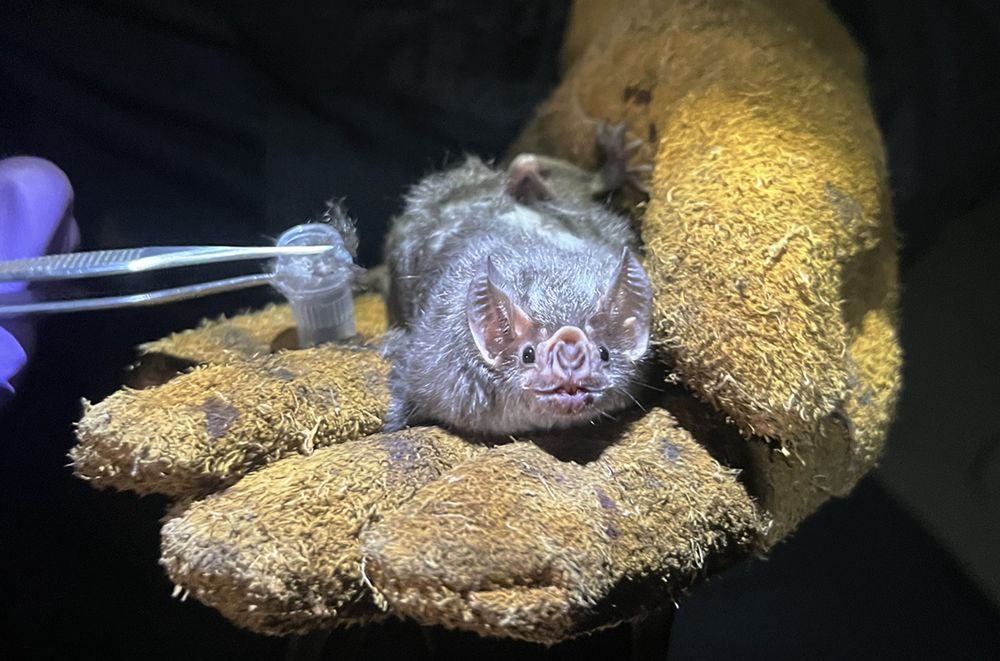
Vampire bats may have contracted H5N1 bird flu in Peru, raising worries about further spread
Bats could form a bridge between marine and terrestrial mammals, scientists say
www.science.org
December 6, 2025 at 1:46 PM

Reposted by Sarah Jo 🦇
Throwback to the Allen's big-eared bat that came to us. Arizona is home to many remarkable ears. 🦇
#bats #arizona #wildanimals
#bats #arizona #wildanimals

December 5, 2025 at 7:57 PM
Throwback to the Allen's big-eared bat that came to us. Arizona is home to many remarkable ears. 🦇
#bats #arizona #wildanimals
#bats #arizona #wildanimals
Reposted by Sarah Jo 🦇
Day 4 #BatMas: Proboscis bat (Rhynchonycteris naso)🦇🌎🧪
A species characterized by its elongated peaked nose & white stripes on its back – these bats also have a distinct fur colouration that allows it to blend in with tree bark with other bats, protecting it from predators.
📸: Karin Schneeberger
A species characterized by its elongated peaked nose & white stripes on its back – these bats also have a distinct fur colouration that allows it to blend in with tree bark with other bats, protecting it from predators.
📸: Karin Schneeberger

December 4, 2025 at 5:41 PM
Day 4 #BatMas: Proboscis bat (Rhynchonycteris naso)🦇🌎🧪
A species characterized by its elongated peaked nose & white stripes on its back – these bats also have a distinct fur colouration that allows it to blend in with tree bark with other bats, protecting it from predators.
📸: Karin Schneeberger
A species characterized by its elongated peaked nose & white stripes on its back – these bats also have a distinct fur colouration that allows it to blend in with tree bark with other bats, protecting it from predators.
📸: Karin Schneeberger
Reposted by Sarah Jo 🦇
🦇 Every now and again, our National Bat Helpline deals with peculiar cases. This one was too good not to share with you - keep reading!
batconservationtrust.substack.com/p/bats-at-sea
batconservationtrust.substack.com/p/bats-at-sea

December 6, 2025 at 10:16 AM
🦇 Every now and again, our National Bat Helpline deals with peculiar cases. This one was too good not to share with you - keep reading!
batconservationtrust.substack.com/p/bats-at-sea
batconservationtrust.substack.com/p/bats-at-sea
Reposted by Sarah Jo 🦇
Day 3 #BatMas: Ghost-faced bat (Mormoops megalophylla)🦇🌎🧪
A species with a VERY distinctive face due to flaps of skin, a poorly developed nose, large round ears & red/brown fur that darkens as they age. They roost in large colonies but stay about 15cm from one another!
📸: José F. Martínez-Fonesca
A species with a VERY distinctive face due to flaps of skin, a poorly developed nose, large round ears & red/brown fur that darkens as they age. They roost in large colonies but stay about 15cm from one another!
📸: José F. Martínez-Fonesca

December 3, 2025 at 10:28 PM
Day 3 #BatMas: Ghost-faced bat (Mormoops megalophylla)🦇🌎🧪
A species with a VERY distinctive face due to flaps of skin, a poorly developed nose, large round ears & red/brown fur that darkens as they age. They roost in large colonies but stay about 15cm from one another!
📸: José F. Martínez-Fonesca
A species with a VERY distinctive face due to flaps of skin, a poorly developed nose, large round ears & red/brown fur that darkens as they age. They roost in large colonies but stay about 15cm from one another!
📸: José F. Martínez-Fonesca
Reposted by Sarah Jo 🦇
Day 2 #BatMas: X: Desert long-eared bat (Otonycteris hemprichii)🦇🌎🧪
A species in North Africa & Middle East, these bats use echolocation to find scorpions (including the highly venomous deathstalker) which the bats catch & eat. The bats are considered immune to the venom!
📸: Christian Dietz
A species in North Africa & Middle East, these bats use echolocation to find scorpions (including the highly venomous deathstalker) which the bats catch & eat. The bats are considered immune to the venom!
📸: Christian Dietz

December 2, 2025 at 10:31 PM
Day 2 #BatMas: X: Desert long-eared bat (Otonycteris hemprichii)🦇🌎🧪
A species in North Africa & Middle East, these bats use echolocation to find scorpions (including the highly venomous deathstalker) which the bats catch & eat. The bats are considered immune to the venom!
📸: Christian Dietz
A species in North Africa & Middle East, these bats use echolocation to find scorpions (including the highly venomous deathstalker) which the bats catch & eat. The bats are considered immune to the venom!
📸: Christian Dietz
Reposted by Sarah Jo 🦇
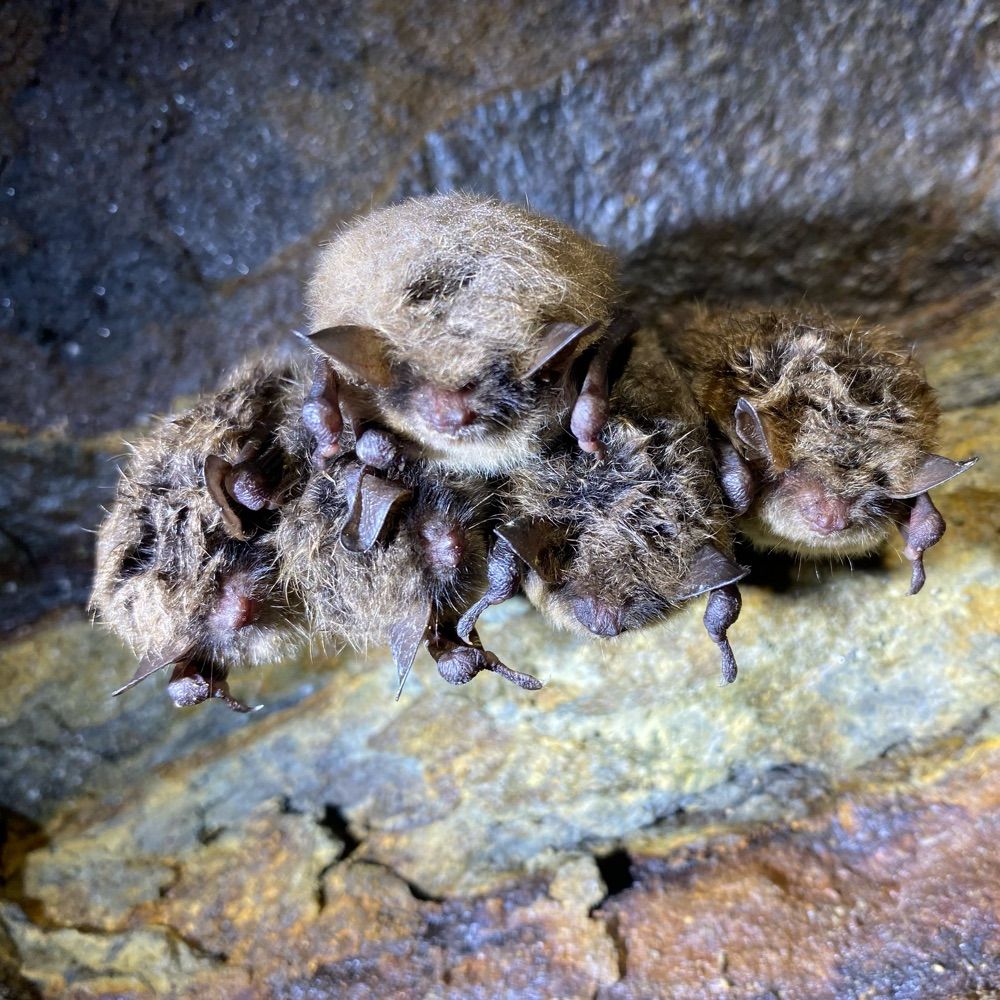
Bats, lime kilns, caves, mines, hibernation, autumn swarming and #fieldworkfriday 🦇 in the Yorkshire Dales.
Didn’t realise I’d mentioned your name quite so many times @johnaltringham.bsky.social
Didn’t realise I’d mentioned your name quite so many times @johnaltringham.bsky.social
🦇A new episode of our podcast, BatChat, is out now - The Hoffman Kiln: Where Bats Reclaim the Dales.
North of Settle in the Yorkshire Dales lies the Hoffman Kiln, a relic of the industrial revolution. It's now an important site for bats of the Dales all year round.
North of Settle in the Yorkshire Dales lies the Hoffman Kiln, a relic of the industrial revolution. It's now an important site for bats of the Dales all year round.
December 3, 2025 at 10:21 AM
Bats, lime kilns, caves, mines, hibernation, autumn swarming and #fieldworkfriday 🦇 in the Yorkshire Dales.
Didn’t realise I’d mentioned your name quite so many times @johnaltringham.bsky.social
Didn’t realise I’d mentioned your name quite so many times @johnaltringham.bsky.social
Reposted by Sarah Jo 🦇
Day 1 #BatMas: Egyptian fruit bat (Rousettus aegyptiacus)🦇🌎🧪
This species is an important seed disperser of many plants – which includes those which produce loquat, figs and dates! The bats can eat anywhere from 50 to 150% of their body weight in fruit per evening!
📸: Seregraff/Getty Images
This species is an important seed disperser of many plants – which includes those which produce loquat, figs and dates! The bats can eat anywhere from 50 to 150% of their body weight in fruit per evening!
📸: Seregraff/Getty Images

December 1, 2025 at 9:32 PM
Day 1 #BatMas: Egyptian fruit bat (Rousettus aegyptiacus)🦇🌎🧪
This species is an important seed disperser of many plants – which includes those which produce loquat, figs and dates! The bats can eat anywhere from 50 to 150% of their body weight in fruit per evening!
📸: Seregraff/Getty Images
This species is an important seed disperser of many plants – which includes those which produce loquat, figs and dates! The bats can eat anywhere from 50 to 150% of their body weight in fruit per evening!
📸: Seregraff/Getty Images
Reposted by Sarah Jo 🦇
🦇 December is here! Bats are hibernating. They may roost on their own or in small groups, often in cool, quiet places like disused buildings, old trees or caves, where they hopefully won't be disturbed.

December 1, 2025 at 10:17 AM
🦇 December is here! Bats are hibernating. They may roost on their own or in small groups, often in cool, quiet places like disused buildings, old trees or caves, where they hopefully won't be disturbed.
Reposted by Sarah Jo 🦇

🦇 Bat box scheme in old quarry phenomenally successful for pipistrelle sp. and has also attracted occasional long-eared bats. But yesterday we all did happy dances when we found a Noctule bat in a "small hollow" box, 4.5m up beech tree, good flight lines. #lovebats #greenwoodsecohabitats

December 1, 2025 at 10:34 AM
🦇 Bat box scheme in old quarry phenomenally successful for pipistrelle sp. and has also attracted occasional long-eared bats. But yesterday we all did happy dances when we found a Noctule bat in a "small hollow" box, 4.5m up beech tree, good flight lines. #lovebats #greenwoodsecohabitats