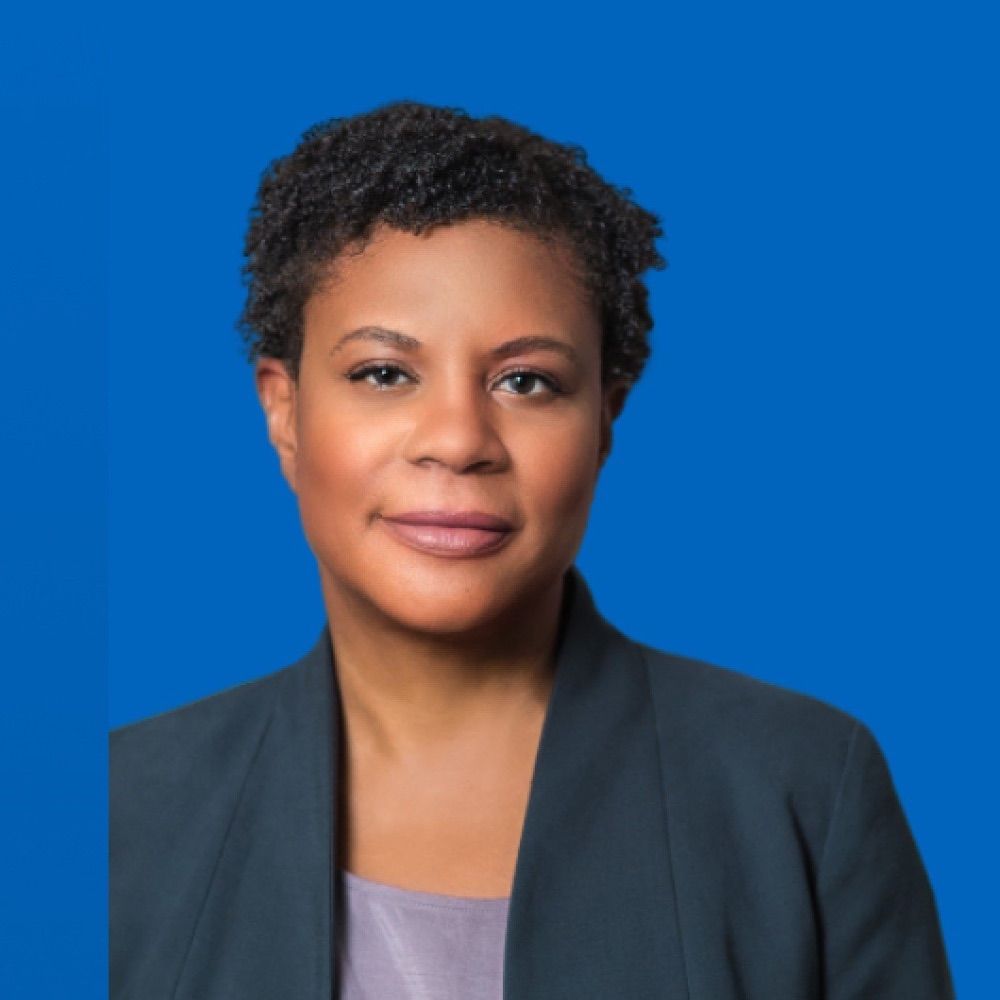
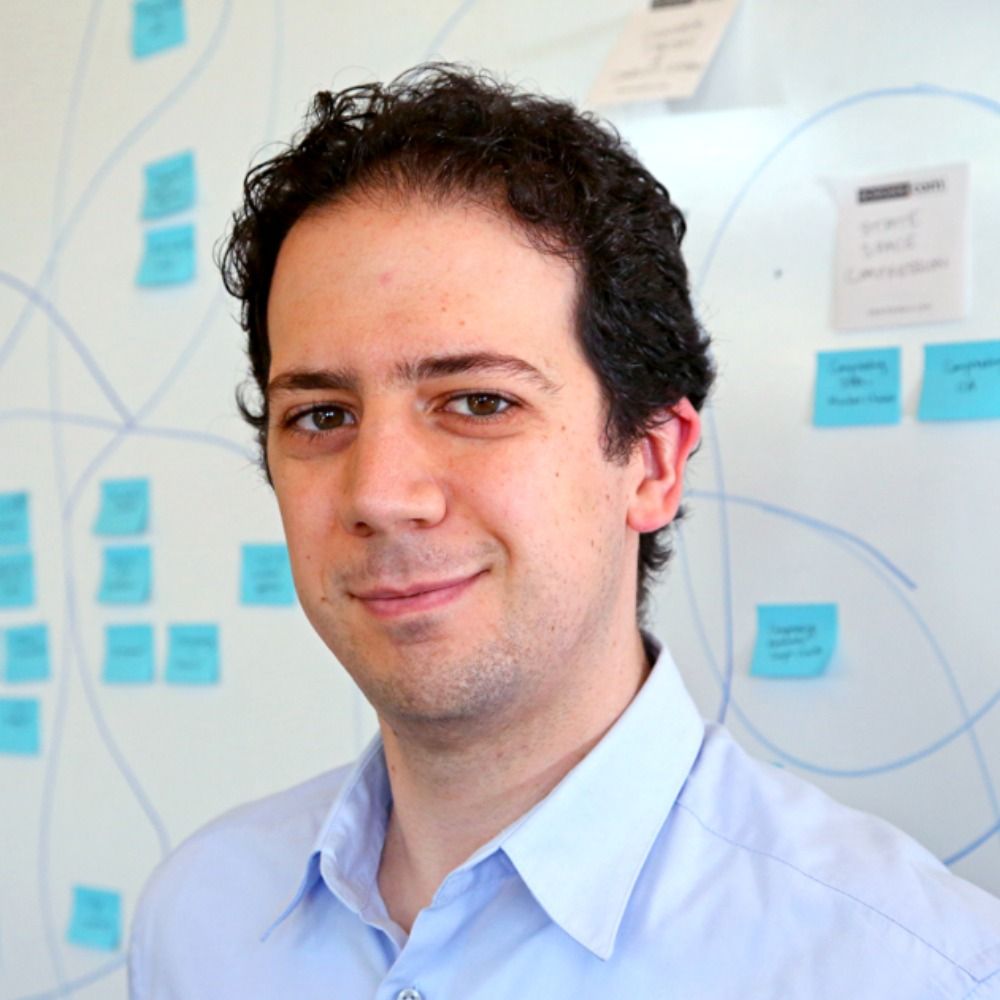
Suresh Venkatasubramanian
geomblog.bsky.social
Suresh Venkatasubramanian
@geomblog.bsky.social

Director, Center for Tech Responsibility@Brown. FAccT OG. AI Bill of Rights coauthor. Former tech advisor to President Biden @WHOSTP. He/him/his. Posts my own.

Suresh Venkatasubramanian is an Indian computer scientist and professor at Brown University. In 2021, Prof. Venkatasubramanian was appointed to the White House Office of Science and Technology Policy, advising on matters relating to fairness and bias in tech systems. He was formerly a professor at the University of Utah. He is known for his contributions in computational geometry and differential privacy, and his work has been covered by news outlets such as Science Friday, NBC News, and Gizmodo. He also runs the Geomblog, which has received coverage from the New York Times, Hacker News, KDnuggets and other media outlets. He has served as associate editor of the International Journal of Computational Geometry and Applications and as the academic editor of PeerJ Computer Science, and on program committees for the IEEE International Conference on Data Mining, the SIAM Conference on Data Mining, NIPS, SIGKDD, SODA, and STACS. .. more

Computer science 89%
Engineering 5%
Those of us who have worked on progressive domestic policy at the federal level are used to negotiating with a seemingly immovable NSC apparatus that often invokes ambiguous or unspecifiable national security concerns as a reason to kill any number of civil/human rights priorities.
I worked in a Democratic presidential administration and, even then, DHS was very often the most problematic, obstinate part of negotiating a civil/human rights provision into executive branch policy.

I have been thinking about this a lot in recent weeks and want to offer a short 🧵with reflections:
When I was at the White House my team wrote policy that specifically addressed this - the use of often discriminatory facial recognition tools in law enforcement contexts or other areas where civil rights were in play. The image below was the worst case scenario - what we were trying to avoid. 1/3

What is .... an algorithm?
Things we hoped for when we wrote the A.I. Bill of Rights under @alondra.bsky.social at the White House in 2022: new legislation, executive action, holding tech companies accountable

Things that we *literally* would not have believed: a Jeopardy! clue in 2026

@friedler.net @geomblog.bsky.social
Things we hoped for when we wrote the A.I. Bill of Rights under @alondra.bsky.social at the White House in 2022: new legislation, executive action, holding tech companies accountable

Things that we *literally* would not have believed: a Jeopardy! clue in 2026

@friedler.net @geomblog.bsky.social

This is a sharp and perceptive point.
🧵 Trump administration AI policy is widely described as deregulatory. This description is misleading. What's happening is not the absence of governance but its rearrangement--intensive state intervention operating through mechanisms we don't typically call regulation. www.science.org/doi/10.1126/...
The mirage of AI deregulation
One of the most interventionist approaches to technology governance in the United States in a generation has cloaked itself in the language of deregulation. In early December 2025, President Donald Tr...
www.science.org

The article is amazing. I strongly recommend reading the whole thing for anyone interested in scaling properties. The thoughtfulness of the scientific process is refreshing (sadly, because it should be the norm for ML papers)
This post on scale discontinuities by @ericjmichaud.bsky.social has my best citation yet ericjmichaud.com/quanta/
🧵 Trump administration AI policy is widely described as deregulatory. This description is misleading. What's happening is not the absence of governance but its rearrangement--intensive state intervention operating through mechanisms we don't typically call regulation. www.science.org/doi/10.1126/...
The mirage of AI deregulation
One of the most interventionist approaches to technology governance in the United States in a generation has cloaked itself in the language of deregulation. In early December 2025, President Donald Tr...
www.science.org
The Rolling Pebbles
Stationary stone?

Led Balloon
Slightly diminish a band:

Jefferson Kite
Slightly diminish a band:

They Might Be Unusually Large
Suspect arrested in predawn fire that left parts of Mississippi’s largest synagogue in charred ruins

A fire heavily damaged Jackson’s only synagogue before dawn Saturday – the same house of worship that was firebombed by the Ku Klux Klan in 1967 because the rabbi had been an advocate for civil…
Suspect arrested in predawn fire that left parts of Mississippi’s largest synagogue in charred ruins
A fire heavily damaged Jackson’s only synagogue before dawn Saturday – the same house of worship that was firebombed by the Ku Klux Klan in 1967 because the rabbi had been an advocate for civil rights.
mississippitoday.org
Slightly diminish a band:

Jefferson Kite
Slightly diminish a band:

They Might Be Unusually Large
Slightly diminish a band

Something Something
ACLU @aclu.org · 10d
We released a new report in partnership with the Center for Tech Responsibility at Brown University on how policymakers and researchers can better analyze AI legislation to protect our civil rights and liberties.
Making Sense of AI Policy Using Computational Tools | TechPolicy.Press
A new report examines how to use computational tools to evaluate policy, with AI policy as a case study.
www.techpolicy.press

How much is Slack paying you :):)

is it a fancy LLM? and is it something that provides useful and relevant feedback? how is it being trained to do that? and is there a non-deli paper that describes said process of training?

I don't know if it is. Presumably the ICML organizers do. The structure of these interventions is basically to address "authors as DDOS attack on ICML" :), with the hope that this will free up reviewers.

The new policy on deli papers (aka thinly sliced:)) seems quite strong and new. I wonder how it will play out. In brief, authors have to disclose all papers they are submitting as prior work to the one under review. I'm also not encouraged by the "use our LLM to review your work"

I am seen.
Here are some otters hammock hugging - Enjoy!
some citation graphs data pipelines will create new "paper" nodes based on extracted bibstrings from PDFs

so in 2026 the papers we hallucinated in 2025 might end up being "real" papers on gscholar or sthn lol

given the way fast bowlers are breaking down, I'd guess they are NOT using PEDs because that's one value add there - for recovery from injury (unlike the EPO stuff that seems cycling specific)

This is beginning to sound like an episode of Wait Wait Don't tell me where you have to identify the true news story from the fake ones :)

Not sure why that would help. Some amount of adrenaline is a good thing for a batsman :)

One aspect of SVMs that are enduring is the idea of high dimensional representations that allow for simple classifiers. You see a lot of that emerging in LLM land as well.

Yes. A standard measure might be the ranking distance (number of swaps needed to go from one order to the other). I don't have data on prior years though.

Why it's hard to predict NFL standings. This is a comparison of preseason and current standings.
Oh, but did you know that b/c of the number-theoretics of 2026, the year allows us to give a dynamical reformulation of the P vs NP problem (A Millennium Prize Problem, worth $1M), thereby showing both that it is the wrong question to ask and that P is different from NP. (10 pages, written with AGI)