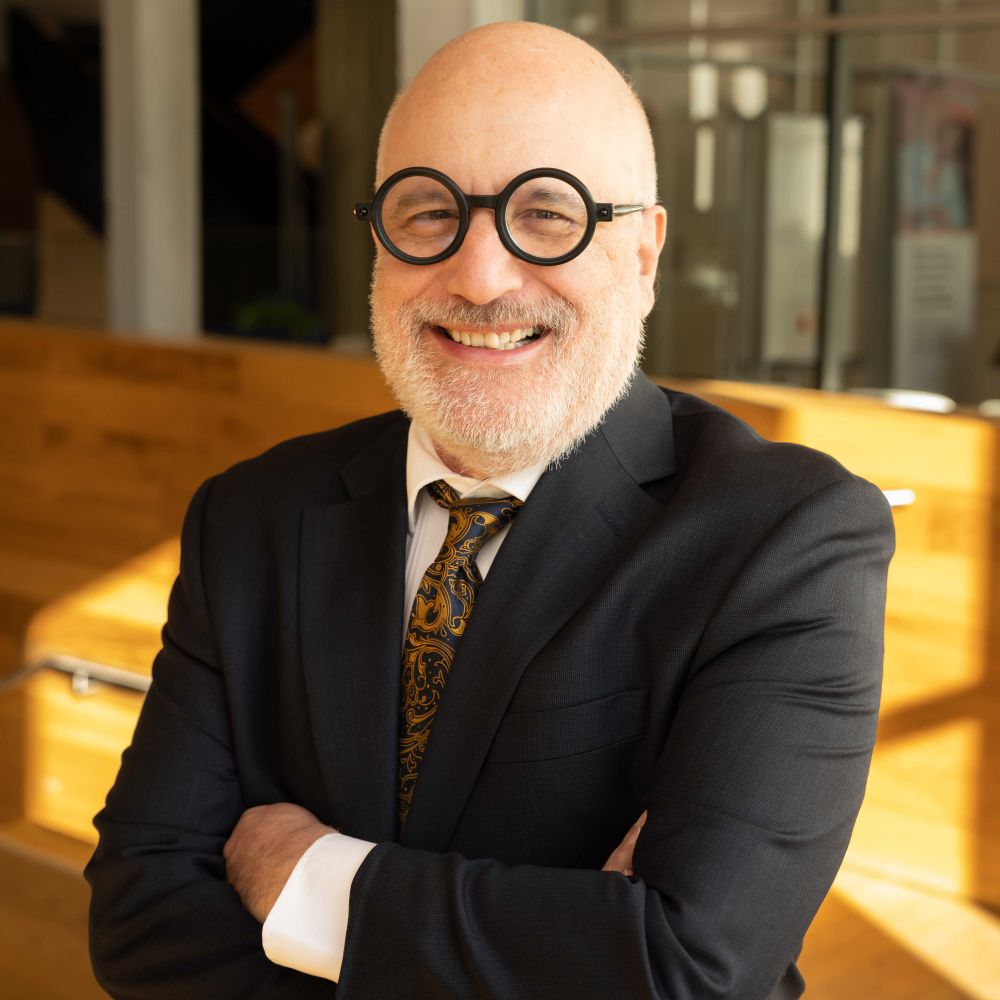
Steven Durlauf
durlauf.bsky.social
Steven Durlauf
@durlauf.bsky.social

Professor, Harris School of Public Policy, Director, Stone Center for Research on Wealth Inequality and Mobility, University of Chicago

Steven Neil Durlauf is an American economist and social scientist. He is currently Frank P. Hixon Distinguished Service Professor and the inaugural Director of the Stone Center for Research on Wealth Inequality and Mobility at the Harris School of Public Policy Studies at the University of Chicago. Durlauf was previously the William F. Vilas Research Professor and Kenneth J. Arrow Professor of Economics at the University of Wisconsin-Madison. As of 2021, is also a Part Time Professor at the New Economic School. .. more

Economics 66%
Sociology 10%

3/ As for the finalists for next Federal Reserve Chair, the willingness to accept the position under these circumstances is automatically disqualifying.

2/ No marginal value played in policy design that can justify acquiescence in the destruction of Federal Reserve (and by implication, all agency) independence via the weaponizing of the Justice Department in this fashion. The damage to economic policymaking that is involved cannot be understated.

1/ Any economist who has accepted a position in the Trump administration should resign over the abuse of power involved in this attack on Jerome Powell.

www.youtube.com/watch?v=KckG...
Statement by Federal Reserve Chair Jerome H. Powell
YouTube video by Federal Reserve
www.youtube.com

A belated thanks!
📊 Inequality, Reconsidered was a week-long series of @ucstonecenter.bsky.social events to rethink how we study and address inequality. Led by insights from Samuel Bowles and @durlauf.bsky.social, the series emphasized power, institutions, and lived experience alongside data. https://har.rs/4baRCc2
Inequality Reconsidered: The Stone Center's Distinctive Approach
When it was established in 2022, the Stone Center for Research on Wealth Inequality and Mobility at the Harris School of Public Policy set out to advance groundbreaking, interdisciplinary research on the origins and nature of contemporary inequalities.
har.rs

Reposted by Steven N. Durlauf

Meritocracy remains controversial yet increasingly central to policy debates. Evaluating it requires care: we must first define “merit” relative to social objectives, whether prospectively or retrospectively. @durlauf.bsky.social's latest essay offers ways to think about these issues→ bit.ly/3Y283jj
Meritocracy and Its Discontents
<p>In this essay, I outline some ways to think about meritocracy. I interpret <span>meritocracy as a constellation of claims about who deserves certain thi
bit.ly
Bravo! As deserved as it gets. Wendy Carlin is a treasure.
Following her fireside chat on the Future of Higher Education CEPR is proud to announce Wendy Carlin was awarded the Lifetime Service to the Profession for her contributions to The CORE Project, increasing access and changing the way economics is taught. Our heartfelt congratulations to Wendy!

Thank you! The amazing work is in fact the extraordinary data sets you have constructed- a gamechanger for quantitative historical social science.

Reposted by Steven N. Durlauf

What can 13 minutes teach us about inequality? A lot, it turns out. @durlauf.bsky.social and @jadenreports.bsky.social cover wealth, education, and capitalism in a recent interview. Zoe Cobb, Stone Center staffer and youth voice, captures the key insights in a must-read summary → bit.ly/43ZFVke
Wealth Inequality and the U.S. Economy: Steven Durlauf with Youth Journalist, Jaden Jefferson - Stone Center
Stone Center Director Steven Durlauf sits down with award-winning youth journalist Jaden Jefferson to dive into a conversation about wealth inequality, educational attainment, and American capitalism....
bit.ly

9. Fateful Hours: The Collapse of the Weimar Republic, Volker Ullrich

8. What is Ancient History?, Walter Scheidel

7. The Age of Choice: A History of Freedom in Modern Life, Sophia Rosenfeld

6. The First Russian Revolution: The Decembrist Revolt of 1825, Susanna Rabow-Edling

5. The Revolutionary Self: Social Change and the Emergence of the Modern Individual, 1770-1800, Lynn Hunt

4. Crucibles of Power: Smolensk under Stalinist and Nazi Rule, Michael David-Fox

3. The German Empire, 1971-1918, Roger Chickering

2. Surviving Rome: The Economic Lives of the Ninety Percent, Kim Bowes

9 favorite history books 2025.

1. Capitalism: A Global History, Sven Beckert

Reposted by Steven N. Durlauf

Shopping this Black Friday? Wondering how tariffs will affect prices? Steven Durlauf (@durlauf.bsky.social) tells KQ2 that while the impact might not hit consumers immediately, the long-term effects could be significant.
www.kq2.com/news/u-s-tar...
U.S. tariffs could cast shadow over holiday shopping season
ST. JOSEPH, Mo. (News-Press NOW) — The busiest time of year for U.S. shoppers and retail consumers is right around the corner.
www.kq2.com

Fantastic opportunity!
Come and do a PhD at the #EUI! We are five professors in sociology, within the department of Political and Social Sciences. Social stratification, education, family demography, analytical sociology, experimental sociology, it’s all here!
🚨 Applications Now Open for the EUI PhD Programmes 2026-2027!

📊 Economics |⚖️ Law |📘 History | 🏛 Political and Social Sciences

Join the EUI's 50th PhD cohort!

Apply by 15 January 2026 (14:00 CET) for the academic journey of a lifetime! 👉: eui.eu/phd

#EUIPhD #PhDOpportunity
Come and do a PhD at the #EUI! We are five professors in sociology, within the department of Political and Social Sciences. Social stratification, education, family demography, analytical sociology, experimental sociology, it’s all here!
🚨 Applications Now Open for the EUI PhD Programmes 2026-2027!

📊 Economics |⚖️ Law |📘 History | 🏛 Political and Social Sciences

Join the EUI's 50th PhD cohort!

Apply by 15 January 2026 (14:00 CET) for the academic journey of a lifetime! 👉: eui.eu/phd

#EUIPhD #PhDOpportunity

Thank you!

In contrast, I emphasized what I believe are unique types of distributional instabilities that can arise in growing societies, specifically as technical change occurs. And I questioned whether the selection mechanisms Sam described well capture history.

Sam's remarks were optimistic. He emphasized capacities of societies to act to reduce inequality and goes so far as to suggest that, in the spirit of Talcott Parson's evolutionary universals, more egalitarian societies are selected for over time.

Reposted by David Brady

Delighted to post this recording of my public conversation with Sam Bowles, moderated by @ethanbdm.bsky.social,
on Why Economic Inequalities Endure.

Our discussion ranges from the distant past to speculation on how AI will affect future inequality.

www.youtube.com/watch?v=GG0C...
UChicago Stone Center | Why Economic Inequalities Endure
YouTube video by Harris Public Policy
www.youtube.com

Reposted by Steven N. Durlauf

It's not a perfect analogy but I've been thinking about this 1792 cartoon ever since I saw yesterday's photo

Reposted by Nathan Nunn

Sam's thinking has also evolved in deep ways over time. His incredible interest in all domains of social science and his complete comfort in adapting his thinking are another type of courage.

Reposted by Nathan Nunn

Sam's dedication to understanding inequality and his particular modes of analysis were deeply controversial in the early parts of his career. This courage in challenging conventional paradigms regardless of professional cost are well known.

Reposted by Nathan Nunn

In my opinion, there is no economist who has contributed more to understanding inequality in the last 60 years than Sam Bowles.