Nik Heynen
banner
nik-heynen.bsky.social
Nik Heynen
@nik-heynen.bsky.social

Geographer, University of Georgia | Spelman College | UGA's Cornelia Walker Bailey Program on Land, Sea and Agriculture | Shell to Shore | Birkley Heynen Environmental Foundation

https://linktr.ee/cornbreadheynen

Political science 35%
Sociology 23%

The Honey Drippers were a band of Black high school kids from Queens brought together by Georgia-born songwriter Roy C. Hammond. When all record labels were scared to put this anti-Nixon jam out, Hammond released it himself. It’s been sampled by many hip hop artists. Rest in Power Mr. Hammond.
Impeach the President
YouTube video by The Honey Drippers - Topic
youtu.be

New Black owned bookstore alert in ATL:

“This year, it felt necessary,” Hallmon said. “When books are banned, and stories are erased, especially Black and brown stories, we have to build safety within our community.”
Village Books brings community and culture to downtown Atlanta
Village Books on Mitchell Street, opened by Dr. Lakeysha Hallmon, offers a diverse selection of Black authors and fosters community and cultural connection.
theatlantavoice.com

“Our defeat was always implicit in the victory of others; our wealth has always generated our poverty by nourishing the prosperity of others—the empires and their native overseers.”
-Eduardo Galeano
In light of illegal actions by the U.S. gov't in Venezuela, we highlight a few teaching resources, starting with the classic "people's history" of Latin America by Eduardo Galeano, "Open Veins of Latin America: Five Centuries of the Pillage of a Continent." 🧵
www.zinnedproject.org/materials/op...
Open Veins of Latin America: Five Centuries of the Pillage of a Continent
Book — Non-fiction. By Eduardo Galeano. 1997. 360 pages. Gripping history of the land and people of Latin America.
www.zinnedproject.org

Reposted by Nik Heynen

In light of illegal actions by the U.S. gov't in Venezuela, we highlight a few teaching resources, starting with the classic "people's history" of Latin America by Eduardo Galeano, "Open Veins of Latin America: Five Centuries of the Pillage of a Continent." 🧵
www.zinnedproject.org/materials/op...
Open Veins of Latin America: Five Centuries of the Pillage of a Continent
Book — Non-fiction. By Eduardo Galeano. 1997. 360 pages. Gripping history of the land and people of Latin America.
www.zinnedproject.org

“There’s a famous quote from author Tony Cade Bambara that often gets repeated in activist circles, that it’s the role of the artist to “make the revolution irresistible.” For over six decades, Emory Douglas has been showing creatives how to do just that.”
‘Emory Douglas: In Our Lifetime’ Shows the Evolution of a Revolutionary Artist | KQED
The Black Panther Party artist’s new exhibit in San Francisco features works from the past 15 years.
www.kqed.org

Reposted by Nik Heynen

“An expansive follow-up to the field-defining Cultivating Food Justice, this edited volume provides an overview of food justice scholar-activism, redefining the field and looking to future theoretical and political futures.” Available now for preorder! mitpress.mit.edu/978026255369...
Nurturing Food Justice
Amid the intersecting crises of climate change and inequalities, Nurturing Food Justice offers an unflinching and inspiring take on the ways communities are ...
mitpress.mit.edu

In very good company here in @proghumgeog.bsky.social with Pavithra Vasudevan and Laura Pulido reflecting on the importance of Laura’s 2000 “Rethinking Environmental Racism” published in Annals of @geographers.bsky.social
Classics in human geography revisited: Laura Pulido’s “Rethinking Environmental Racism: White Privilege and Urban Development in Southern California” (Annals of the Association of American Geographers...
journals.sagepub.com
Please consider joining our 2026 Political Ecology spring school!

Planetary Political Ecologies: Environmental disasters, conflicts and possibilities in & beyond capitalism

▶️ 13-17 April 2026
▶️ Wageningen

With Annah Zhu, Erik Swyngedouw, Sumit Vij & others!

wass.crs.wur.nl/courses/deta...
WASS Courses
Prof. Bram Büscher (Wageningen University) Prof. Robert Fletcher (Wageningen University) Prof. Erik Swyngedouw (Manchester University) Dr. Annah Zhu (Wageningen University)  Dr. Sumit Vij (Wageningen University)
wass.crs.wur.nl
Apply now — Antipode’s 10th Institute for the Geographies of Justice, “Organizing and Solidarity in a Polycrisis”, deadline 20 December 2025 antipodeonline.org/2025/11/13/a...
Apply now—Antipode’s 10th Institute for the Geographies of Justice, “Organizing and Solidarity in a Polycrisis” - Antipode Online
Toronto, Ontario, Canadathe traditional territory of the Huron Wendat, the Seneca and the Mississaugas of the Credit June 1st – 5th, 2026 The contemporary global landscape is increasingly defined by w...
antipodeonline.org

Snippet from the work we are doing on the Georgia coast.
Creating Living Shorelines in Georgia: Mission Possible
YouTube video by The Nature Conservancy
youtu.be
Announcing Antipode’s 10th Institute for the Geographies of Justice (IGJ), "Organizing and Solidarity in a Polycrisis", Toronto, 1-5 June 2026 antipodeonline.org/institute-fo... -- submit your application by 20 December 2025
Pls share: Applications open for Summer Institute in Economic Geography, Toronto, 5-10 July 2026

Featuring: Lars Coenen, Karen Lai, Devika Narayan and Stefan Ouma

Early career economic geographers (broadly defined) are welcome to apply. Stipends available. www.econgeog.net/Toronto2026
Toronto 2026 | Summer Institute in Economic Geography
www.econgeog.net

Taught Ntozake Shange’s “If I can Cook / You Know God Can” and “Bocas: A Daughter’s Geography” today. Felt worth sharing for folks who might not yet know this poem or haven’t read it in a while.
POEM: Bocas: A Daughter's Geography, Ntozake Shange, 1983 | Black Agenda Report
Ntozake Shange reminds us that whether we come from Haiti, Savannah, Luanda, or Palestine, we may not speak the same language, but “we fight the same old men.”
www.blackagendareport.com
“Fascism is not new. It wears a new dress, buys new boots—but it can only reproduce fear, denial, and the loss of will to fight.”

Toni Morrison’s timeless warning on fascism & censorship still rings out today.

inthesetimes.com/article/toni...
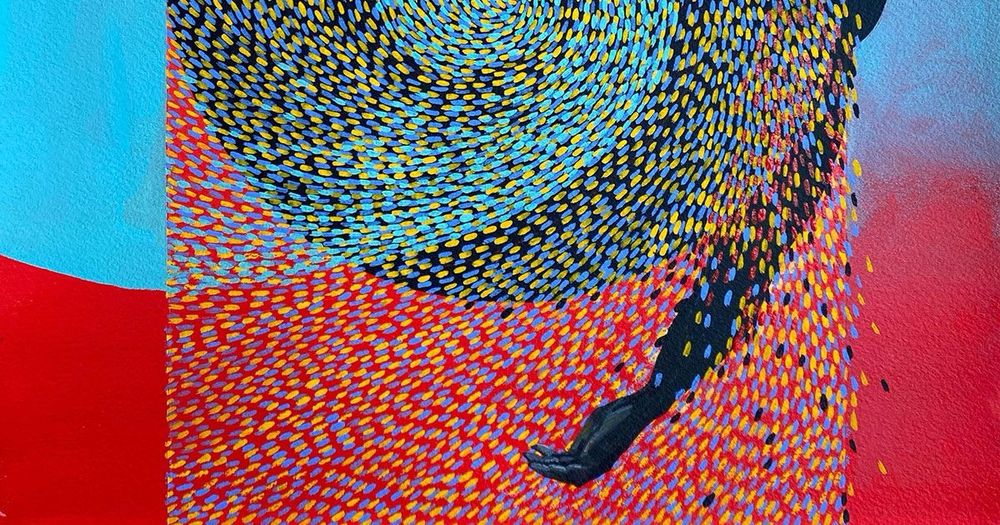
“Setting forms of identity, such as race, against class as fundamentally opposed bases of politics misrepresents how building working-class power works on the ground, both today and throughout history.”
The False Choice Between Identity Politics and Economic Populism
A left that ignores the differences within the working class will never build power.
hammerandhope.org

Proposals to “repair” or “restore” the planet therefore must answer the questions: Which ecosystems—and whose—will we repair and restore? Which—and whose—flourishings will we enable? What planet are we making, and for whom? @alybatt.bsky.social
The Value of Nature - Dissent Magazine
Why have some gifts of nature remained free?
www.dissentmagazine.org

In the tradition of “can’t stop, won’t stop”….

”In these cities, climate justice is more than a policy priority – it’s a survival strategy…. As federal funding evaporates, many cities are strengthening ties with frontline organizations — the local experts who’ve been leading the fight for decades.”
As Trump Guts Climate Justice Work, Coastal Cities Are Pushing Back
Federal support for climate resilience and environmental justice is collapsing. Cities across the country are stepping up.
www.rollingstone.com

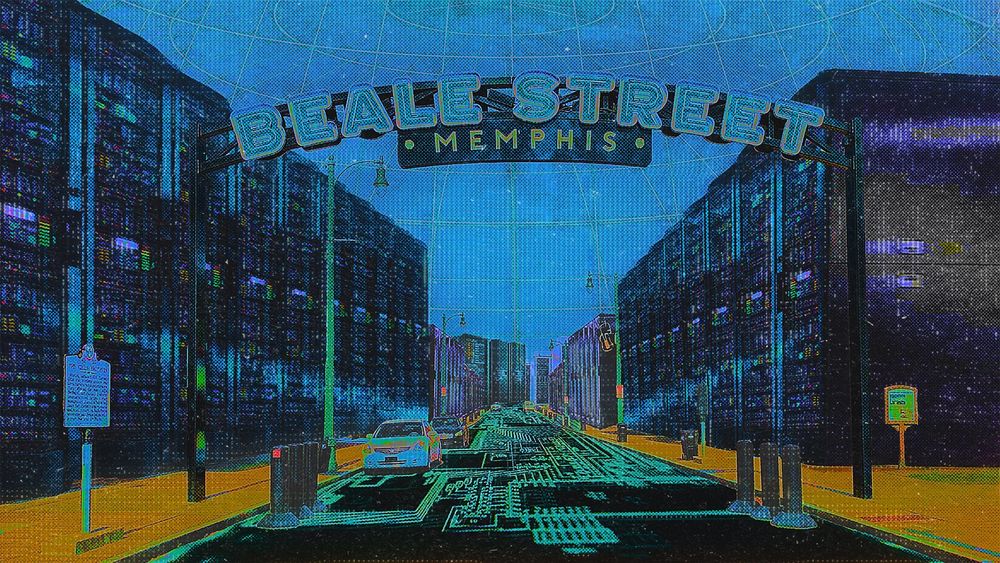
“Memphis history is full of destructive alliances between local government and major industry, forcing working-class Black neighborhoods to accept ecological and corporal violence in order to boost the region's economy…But AI data centers also represent a troubling new frontier…..”
Musk’s Memphis xAI data center and the making of a ‘Digital Delta’ – Scalawag
The fight over xAI’s Colossus highlights a close alliance between Trump-style fascism and big tech in the South.
scalawagmagazine.org

“We’ve asked…the CEOs of banks like Citibank, JPMorgan Chase, insurance companies like Chubb and AIG — we’ve asked them to come to our communities, breathe the air, drink the water and get a taste of what we live every day. And they’ve refused to come. So we brought our community here to them.”
“Toxic Air”: Meet the Mother-Daughter Duo Fighting Pollution in Louisiana’s “Cancer Alley”
We’re joined by a mother-daughter duo from Louisiana’s “Cancer Alley.” Roishetta and Kamea Ozane are part of a group of environmental activists on a national tour to confront the financial backers of ...
www.democracynow.org

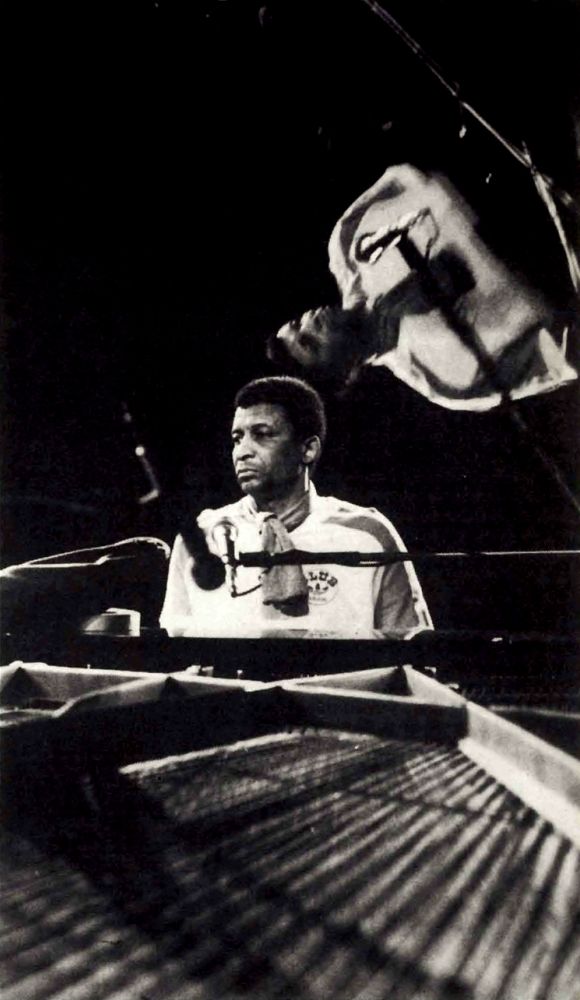
"They call us terrorists. We are being terrorised! Our doors are kicked open at four in the morning and our families dragged off to prison, never to be seen again....We are the ones who suffer all these horrors. They are the terrorists."

#Apartheid then, Apartheid now.
Unearthed: An exclusive interview with Abdullah Ibrahim published by The Wire in 1984
Abdullah Ibrahim performs at Le Guess Who? 2022 on Sunday, 13 November.
leguesswho.com

Important thinking going on at Clark Atlanta University this Fall. “Through A Du Boisian Lens: Informing Public Policy Through Empirical Social Research”.

Interesting #abolitionist connections to #energy geography here:

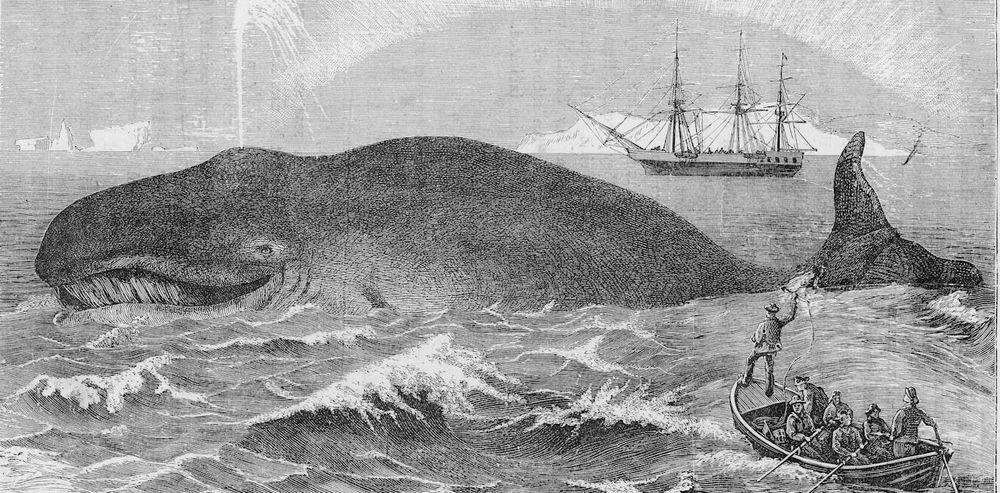
“….whaling’s role in funding abolition and providing economic opportunities for free Black Americans is undeniable. It was, in many ways, a bridge between the world of forced labor and the energy-driven economy of the modern age.”
Abolition wasn’t fueled by just moral or economic concerns – the booming whaling industry also helped sink slavery
New research shows that when the whaling industry in the US produced more products, the proportion of slaves also declined in the 1700s and 1800s.
theconversation.com

Reposted by Nik Heynen

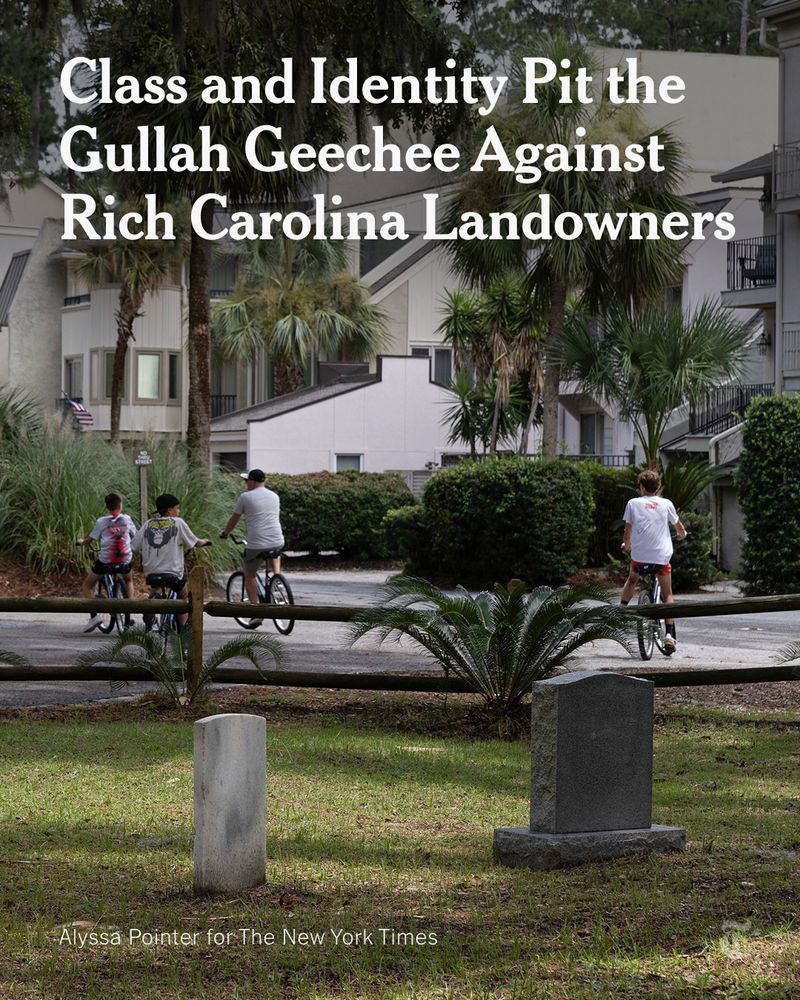
The Gullah Geechee, descendants from enslaved West Africans who were forced to work in the Carolina Lowcountry, are struggling to preserve sacred traditions as wealthy northerners swallow up valuable property around Hilton Head Island. nyti.ms/4mmAwdW

Reposted by Nik Heynen

The Lowcountry Food Bank has provided culturally relevant foods like okra, squash and yams to the Gullah Geechee people in South Carolina for 20 years.
The US food bank keeping Gullah Geechee farming traditions alive: ‘Our local food is like no other’
www.theguardian.com

Reposted by Nik Heynen

No effective abolitionist and certainly no enslaved person walked up to a total stranger expressing dismay over the passage of the fugitive slave act to say, “well this is a racist country, what did you expect.” People kept organizing and building hope through collective resistance and rebellion.

Reposted by Nik Heynen

"How do different political blocs emerge in different places to influence carceral developments?" @lydiajean.bsky.social with Ruth WIlson Gilmore, ‪@craiggilmore.bsky.social & Judah Schept in Part 1 of their new carceral geography series. inquest.org/uneven-e...
Uneven Expansions - Ruth Wilson Gilmore, Craig Gilmore, Judah Schept, & Lydia Pelot-Hobbs - Inquest
In the fight to abolish prisons, it’s vital to attend simultaneously to the scale of U.S. mass incarceration and how it manifests differently in specific regions.
inquest.org

Reposted by Nik Heynen

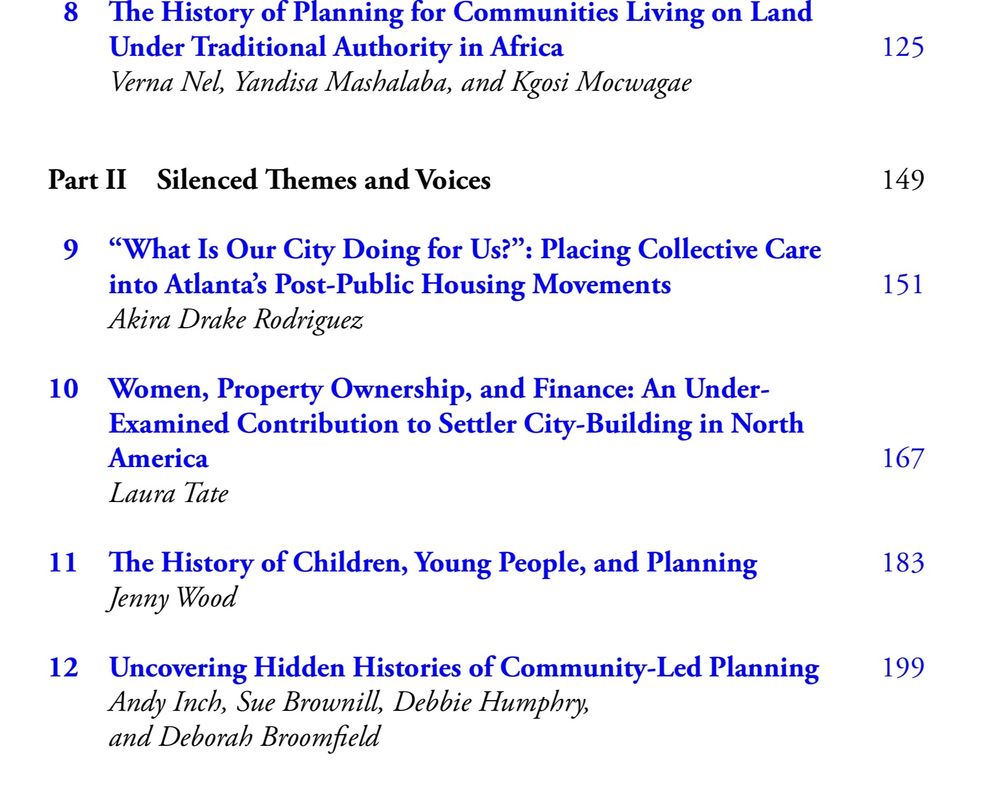
I have a chapter in the New Planning Histories edited volume. Lots of great chapters covering a range of topics and cities!
link.springer.com/book/9789819...

“The #South got something to say.”
André 3000

(very teachable)

“The term ‘the Dirty South’ developed as a means to define hip hop music emerging from the Southeastern United States and was quickly understood as an abbreviation for the history and development of Black culture in the South.”
The Dirty South
YouTube video by Virginia Museum of Fine Arts
youtu.be

Toni Morrison (1981) for political ecologists: "I must confess, though, that I sometimes lose interest in the characters and get much more interested in the trees and animals....my editor says 'Would you stop this beauty business.' And I say 'Wait, wait until I tell you about these ants.'"
‘The Language Must Not Sweat’
A conversation with Toni Morrison.
newrepublic.com