
Adam Sacarny
asacarny.bsky.social
Adam Sacarny
@asacarny.bsky.social

Associate Professor @columbiahpm.bsky.social. Also @nber.org & @j-pal.bsky.social. Economics & health policy. #econsky #healthpolicy #medsky πŸ“ˆπŸšžπŸˆπŸ—½πŸ³οΈβ€πŸŒˆ
http://sacarny.com
Posts represent my views, not my employer's

Economics 44%
Public Health 18%

Yes! I think so...

Yeah, I feel like the one sided test only makes sense in the world where you know a priori the true coefficient could not be <0. So in this case you'd have to be comfortable saying wow we must have gotten a ton of negative measurement error on beta.

Hmm, I think the idea is that if any of the b_i >>> 0 then the test could reject. But depending on the true values of the b_i it could be low-powered.

The origin of this is that we prespecified joint one-sided tests in our analysis plan. Then we went to do the analysis and learned that there is no off the shelf tool to run joint one-sided tests, nor is there a well-accepted approach to doing so. Oops!

I think it is testing against the correct alternative, but there is something arbitrary about weighting each outcome equally, and if the "correct" weighting is different then the test could be very low-powered.

I think this is exactly what @scottbarkowski.bsky.social is suggesting

I wish I had the code. But if I remember correctly, we basically did this by running a constrained regression where b1hat=b2hat=b3hat, so you just estimate a single b_hat, and we ran a one-sided test on that estimate. This is the approach with equal weighting on the 3 endpoints.

Ran into a related problem in an RCT. We had 3 coprimary endpoints and wanted to run one-sided tests (b1=b2=b3=0 vs. b1<0 b2<0 b3<0). We ended up using an approach like this one: www.sciencedirect.com/science/arti...

Once I can get a full keyboard of this I will consider it

πŸ‘†Came here to say thisπŸ‘†
I'm on the #EconJobMarket! I study how policies and childhood environments shape outcomes of low-income & vulnerable kids.

In my JMP, I study the effects of allowing youth who would have aged out of foster care at 18 to stay until 21β€”offering support their peers not in foster care get from parents.

For sure. When we wrote the peer effects research letter, we couldn’t have a supplement so even the methods went mostly unexplained. (We cited our analysis plan which did describe them… maybe good enough but not ideal)

I wish they were more of a thing for econ papers. 600 words prob too short but 1,000 might work. Like I'm v proud of our paper on peer effects w/ @andrewolenski.bsky.social @mlbarnett.bsky.social (jamanetwork.com/journals/jam...). JHE would have been a logical target but writing costs were high.

Love them for getting a simple fact out! Or reporting a study that might otherwise get file-drawered because costs of writing up the whole thing are too high. One thing that bugged me was that JAMA series journals wouldn't accept supplements for them, but that seems to have changed.

Reposted by Adam Sacarny

Do you love health economics and learning about cool new research? Do you like telling other people about it? Come and be a social media editor at AJHE!! We're looking for someone to join our editorial team @ashecon.bsky.social

This is *extremely* bad (for the accuracy of my paper introductions about tech adoption)

Reposted by Adam Sacarny

...we were wrong. A trial in this month's NEJM confirms what many cardiologists had already come to realize: beta blockers don't help most of the time in the reperfusion era. (2/2) www.nejm.org/doi/full/10....
Beta-Blockers after Myocardial Infarction without Reduced Ejection Fraction | NEJM
Current guideline recommendations for the use of beta-blockers after myocardial infarction without reduced ejection fraction are based on trials conducted before routine reperfusion, invasive care,...
www.nejm.org
HP OfficeJet 3550 regrets to inform you that your document was not selected for printing. Unfortunately, the number of jobs submitted far exceeded the paper in the paper tray.

If you would like to print, we encourage you to submit another job in the future.
@allanmjoseph.bsky.social has been telling me there needs to be a "Dartmouth Atlas, but for pediatrics" for maybe a literal decade? And now there is!

(h/t to coauthor @johngraves.bsky.social)
Development of an Atlas for US Pediatric Acute Care
This cross-sectional study offers a national US atlas of pediatric acute care centers in the US.
jamanetwork.com

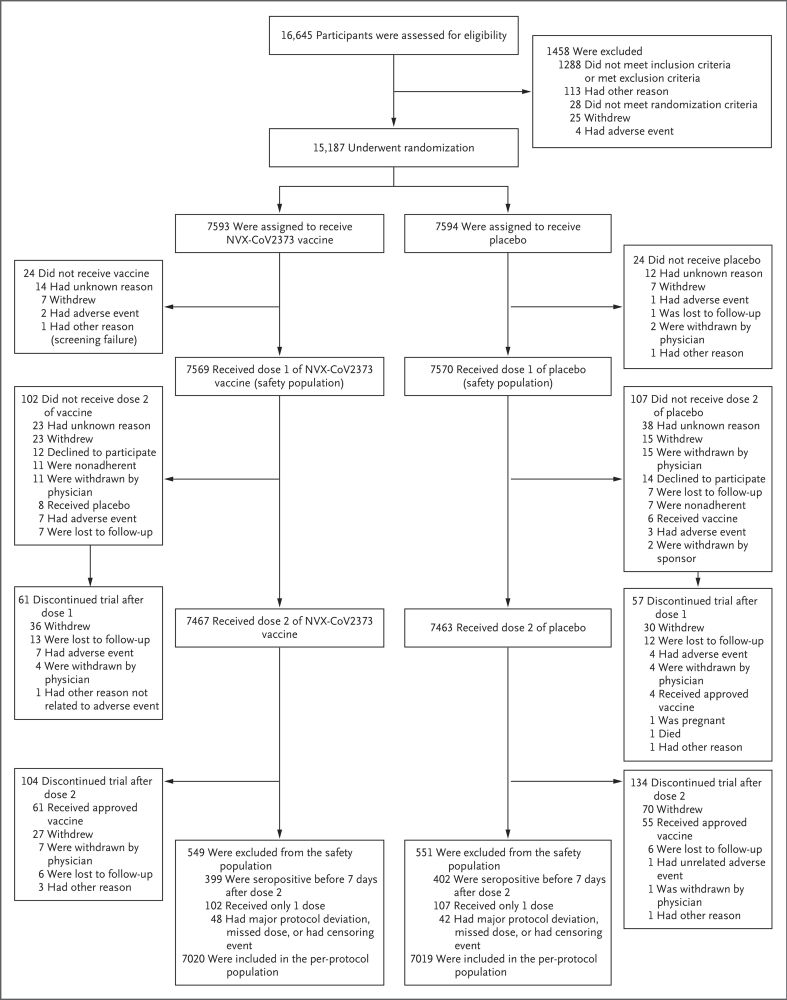
I believe it’s used all the time in epi / public health for binary outcomes! Coefficients have a nice interpretation as relative risk ratios. And often used for estimating vaccine effectiveness, like in the RCT of the Novavax vaccine for Covid: www.nejm.org/doi/full/10....
Safety and Efficacy of NVX-CoV2373 Covid-19 Vaccine | NEJM
Early clinical data from studies of the NVX-CoV2373 vaccine (Novavax), a recombinant nanoparticle vaccine against severe acute respiratory syndrome coronavirus 2 (SARS-CoV-2) that contains the full...
www.nejm.org

This rules!! Just FYI there is a minor typo on the Scheduling page ("Both Intercity and Commuter trains are scheudled every 15 minutes at consistent and predictable intervals.")

Just don't run predictive margins!! They are not the same!

Toying around with this yesterday in Stata, clogit, xtpoisson, and ppmlhdfe were pretty similar in speed. But I just had one level of fixed effects (the group id). I would bet if you have additional fixed effects in the regression ppmlhdfe is far superior.

Fun fact: you can estimate a conditional logit by running a fixed effects Poisson. They yield the same estimates and standard errors - they maximize the same likelihood. Poisson regression forever!

@instrumenthull.bsky.social where are we on this?

lol he is???

Also hopefully not a β€œDoctor Mike Reacts to Confused Health Economist” video situation

Not everyone in the US knows each other Rafe!!

Only in the sense that the algorithm is pushing me his entire repertoire