



@jalcine you seen https://github.com/rqlite/rqlite ?

GitHub - rqlite/rqlite: The lightweight, fault-tolerant database built on SQLite. Designed to keep your data highly available with minimal effort.
The lightweight, fault-tolerant database built on SQLite. Designed to keep your data highly available with minimal effort. - rqlite/rqlite
github.com
December 10, 2025 at 6:15 AM
@jalcine you seen https://github.com/rqlite/rqlite ?

October 28, 2025 at 12:00 PM

#454306 reaper-go: 0.2.3 -> 0.2.5
#454304 rqlite: 9.1.2 -> 9.1.3
#454303 uv: 0.9.4 -> 0.9.5
#454300 telegraf: 1.36.2 -> 1.36.3
#454280 hyprland-qtutils: fix build with Qt 6.10
#454279 python3Packages.chromadb: 1.1.1 -> 1.2.1
#454272 python313Packages.pylitterbot: 2024.2.4 -> 2024.2.6
#454304 rqlite: 9.1.2 -> 9.1.3
#454303 uv: 0.9.4 -> 0.9.5
#454300 telegraf: 1.36.2 -> 1.36.3
#454280 hyprland-qtutils: fix build with Qt 6.10
#454279 python3Packages.chromadb: 1.1.1 -> 1.2.1
#454272 python313Packages.pylitterbot: 2024.2.4 -> 2024.2.6
October 22, 2025 at 12:05 AM
#454306 reaper-go: 0.2.3 -> 0.2.5
#454304 rqlite: 9.1.2 -> 9.1.3
#454303 uv: 0.9.4 -> 0.9.5
#454300 telegraf: 1.36.2 -> 1.36.3
#454280 hyprland-qtutils: fix build with Qt 6.10
#454279 python3Packages.chromadb: 1.1.1 -> 1.2.1
#454272 python313Packages.pylitterbot: 2024.2.4 -> 2024.2.6
#454304 rqlite: 9.1.2 -> 9.1.3
#454303 uv: 0.9.4 -> 0.9.5
#454300 telegraf: 1.36.2 -> 1.36.3
#454280 hyprland-qtutils: fix build with Qt 6.10
#454279 python3Packages.chromadb: 1.1.1 -> 1.2.1
#454272 python313Packages.pylitterbot: 2024.2.4 -> 2024.2.6

Has anyone tried rqlite?
September 27, 2025 at 7:49 PM
Has anyone tried rqlite?

rqlite now has Change Data Capture. Which is awesome if you want to build a distributed application without having to deploy additional dependencies just to create a message bus between peers to get state changes from the other peers […]
Original post on mastodon.samfira.com
mastodon.samfira.com
September 16, 2025 at 1:28 PM
rqlite now has Change Data Capture. Which is awesome if you want to build a distributed application without having to deploy additional dependencies just to create a message bus between peers to get state changes from the other peers […]

rqlite 9.0: Real-Time Change Data Capture for Distributed SQLite
L: https://philipotoole.com/rqlite-9-0-real-time-change-data-capture-for-distributed-sqlite/
C: https://news.ycombinator.com/item?id=45257349
posted on 2025.09.15 at 22:24:00 (c=0, p=3)
L: https://philipotoole.com/rqlite-9-0-real-time-change-data-capture-for-distributed-sqlite/
C: https://news.ycombinator.com/item?id=45257349
posted on 2025.09.15 at 22:24:00 (c=0, p=3)
September 16, 2025 at 2:32 AM
rqlite 9.0: Real-Time Change Data Capture for Distributed SQLite
L: https://philipotoole.com/rqlite-9-0-real-time-change-data-capture-for-distributed-sqlite/
C: https://news.ycombinator.com/item?id=45257349
posted on 2025.09.15 at 22:24:00 (c=0, p=3)
L: https://philipotoole.com/rqlite-9-0-real-time-change-data-capture-for-distributed-sqlite/
C: https://news.ycombinator.com/item?id=45257349
posted on 2025.09.15 at 22:24:00 (c=0, p=3)


rqlite/rqlite: The lightweight, user-friendly, distributed relational database built on SQLite. #SuggestedRead #devopsish

GitHub - rqlite/rqlite: The lightweight, user-friendly, distributed relational database built on SQLite.
The lightweight, user-friendly, distributed relational database built on SQLite. - rqlite/rqlite
github.com
September 11, 2025 at 12:08 PM
rqlite/rqlite: The lightweight, user-friendly, distributed relational database built on SQLite. #SuggestedRead #devopsish

September 3, 2025 at 5:48 PM
#435032 python3Packages.posthog: 6.5.0 -> 6.6.0
#435026 Revert "linuxPackages.nvidiaPackages.production: 570.181 -> 580.76.05"
#435025 rqlite: 8.43.2 -> 8.43.3
#435024 uv: 0.8.11 -> 0.8.12
#435023 ty: 0.0.1-alpha.18 -> 0.0.1-alpha.19
#435022 kubeshark: 52.8.0 -> 52.8.1
#435026 Revert "linuxPackages.nvidiaPackages.production: 570.181 -> 580.76.05"
#435025 rqlite: 8.43.2 -> 8.43.3
#435024 uv: 0.8.11 -> 0.8.12
#435023 ty: 0.0.1-alpha.18 -> 0.0.1-alpha.19
#435022 kubeshark: 52.8.0 -> 52.8.1
August 20, 2025 at 12:05 AM
#435032 python3Packages.posthog: 6.5.0 -> 6.6.0
#435026 Revert "linuxPackages.nvidiaPackages.production: 570.181 -> 580.76.05"
#435025 rqlite: 8.43.2 -> 8.43.3
#435024 uv: 0.8.11 -> 0.8.12
#435023 ty: 0.0.1-alpha.18 -> 0.0.1-alpha.19
#435022 kubeshark: 52.8.0 -> 52.8.1
#435026 Revert "linuxPackages.nvidiaPackages.production: 570.181 -> 580.76.05"
#435025 rqlite: 8.43.2 -> 8.43.3
#435024 uv: 0.8.11 -> 0.8.12
#435023 ty: 0.0.1-alpha.18 -> 0.0.1-alpha.19
#435022 kubeshark: 52.8.0 -> 52.8.1

https://philipotoole.com/consistency-over-availability-how-rqlite-handles-the-cap-theorem/
この記事では、分散データベースにおけるCAP定理と、rqliteがどのように整合性と可用性のトレードオフを扱っているかを解説しています。
rqliteはRaftコンセンサスプロトコルに基づいたCPシステムであり、ネットワーク分断時には整合性を優先します。
また、rqliteは読み取り一貫性レベルを調整可能で、アプリケーションの要件に応じて最適なバランスを選択できます。
この記事では、分散データベースにおけるCAP定理と、rqliteがどのように整合性と可用性のトレードオフを扱っているかを解説しています。
rqliteはRaftコンセンサスプロトコルに基づいたCPシステムであり、ネットワーク分断時には整合性を優先します。
また、rqliteは読み取り一貫性レベルを調整可能で、アプリケーションの要件に応じて最適なバランスを選択できます。
Consistency Over Availability: How rqlite handles the CAP Theorem – Vallified
philipotoole.com
August 10, 2025 at 12:35 PM
https://philipotoole.com/consistency-over-availability-how-rqlite-handles-the-cap-theorem/
この記事では、分散データベースにおけるCAP定理と、rqliteがどのように整合性と可用性のトレードオフを扱っているかを解説しています。
rqliteはRaftコンセンサスプロトコルに基づいたCPシステムであり、ネットワーク分断時には整合性を優先します。
また、rqliteは読み取り一貫性レベルを調整可能で、アプリケーションの要件に応じて最適なバランスを選択できます。
この記事では、分散データベースにおけるCAP定理と、rqliteがどのように整合性と可用性のトレードオフを扱っているかを解説しています。
rqliteはRaftコンセンサスプロトコルに基づいたCPシステムであり、ネットワーク分断時には整合性を優先します。
また、rqliteは読み取り一貫性レベルを調整可能で、アプリケーションの要件に応じて最適なバランスを選択できます。

How rqlite handles the CAP Theorem – Vallified
rqlite is a lightweight, user-friendly, open-source, distributed relational database. It’s written in Go and uses SQLite as its storage engine. When it comes to distributed systems the CAP theorem is an essential concept. It states that it’s…
rqlite is a lightweight, user-friendly, open-source, distributed relational database. It’s written in Go and uses SQLite as its storage engine. When it comes to distributed systems the CAP theorem is an essential concept. It states that it’s…
How rqlite handles the CAP Theorem – Vallified
rqlite is a lightweight, user-friendly, open-source, distributed relational database. It’s written in Go and uses SQLite as its storage engine. When it comes to distributed systems the CAP theorem is an essential concept. It states that it’s impossible for a distributed database to simultaneously provide Consistency, Availability, and Partition tolerance. The challenge is in the face of a network partition, a database can only be available or consistent, but not both. Let’s take a look at the CAP theorem and see how rqlite fits into this fundamental trade-off. Understanding Consistency, Availability, and Partition Tolerance…
n24usa.com
August 10, 2025 at 12:09 AM
How rqlite handles the CAP Theorem – Vallified
rqlite is a lightweight, user-friendly, open-source, distributed relational database. It’s written in Go and uses SQLite as its storage engine. When it comes to distributed systems the CAP theorem is an essential concept. It states that it’s…
rqlite is a lightweight, user-friendly, open-source, distributed relational database. It’s written in Go and uses SQLite as its storage engine. When it comes to distributed systems the CAP theorem is an essential concept. It states that it’s…

Interessante acompanhar o desenvolvimento do rqlite.
Consistency Over Availability: How rqlite Handles the CAP Theorem
https://philipotoole.com/consistency-over-availability-how-rqlite-handles-the-cap-theorem/
Consistency Over Availability: How rqlite Handles the CAP Theorem
https://philipotoole.com/consistency-over-availability-how-rqlite-handles-the-cap-theorem/
rqlite is a lightweight, user-friendly, open-source, distributed relational database. It’s written in Go and uses SQLite as its storage engine.
When it comes to distributed systems the CAP theorem is an essential concept. It states that it’s impossible for a distributed database to simultaneously provide **C** onsistency, **A** vailability, and **P** artition tolerance. The challenge is in the face of a network partition, a database can only be available or consistent, but not both.
Let’s take a look at the CAP theorem and see how rqlite fits into this fundamental trade-off.
### **Understanding Consistency, Availability, and Partition Tolerance**
* **Consistency (C):** A consistent system ensures that all nodes in a distributed cluster have the same data — or network access to the same data — at the same time. This means any read request will return the most recently written data.
* **Availability (A):** An available system ensures that every request receives a response, regardless of network issues. The system continues to operate even if some nodes are unreachable. But there’s no guarantee that any read request will return to most recent data, nor is any write request guaranteed to be reflected in a subsequent read.
* **Partition tolerance (P):** A partition-tolerant system continues to function even when network failures partition the system into isolated groups of nodes.
When a network partition occurs, a choice must be made. Do you prioritize consistency by not responding to requests on the “bad” side of the partition, or do you prioritize availability by continuing to serve requests, even if it means potentially serving stale data? This is the core trade-off between **CP** and **AP**.
### **CP vs. AP Systems**
A **CP** (Consistency-Partition tolerant) system prioritizes consistency. If a network partition occurs, the system will block writes on the minority side of the cluster to prevent data inconsistencies. This ensures that any data written is consistent, and when the partition is resolved, the system synchronizes without conflicts.
An **AP** (Availability-Partition tolerant) system prioritizes availability. It continues to accept write requests on both sides of a partition, even though it risks data divergence. After the partition is healed, the system must deal with potentially conflicting data.
### **Where rqlite Fits: A CP System**
rqlite is a **CP system**. It’s built on the Raft consensus protocol, which inherently prioritizes consistency. If a network partition occurs, an rqlite cluster will remain available only on the side of the partition that contains a **majority of nodes**. The other side — **by default** — will stop accepting requests.
This design guarantees that any data written to the majority side remains consistent across all available nodes. Once the network partition is resolved, the minority nodes are updated, and the cluster resumes normal, consistent operation. This CP approach ensures data correctness and integrity, making rqlite an important tool for applications where data consistency is a core requirement.
### Read Consistency: Beyond the CAP Theorem
While rqlite is fundamentally a CP system, it gives you fine-grained control over the **C** and **A** trade-off through its selectable read consistency levels: **weak** , **linearizable** , **strong** , and **none**. These levels allow you to balance performance with data correctness, and choose the best trade-off for your application. You can even choose your consistency level on a per-read-request basis, allowing you to fine-tune consistency to meet application needs.
#### Weak: Great but not Perfect
**Weak** consistency is rqlite’s default and is typically the right choice for most applications. With _weak consistency_ a node receiving a read request checks if it’s the leader — **but only by checking local state** — and, if it is the leader, reads its local SQLite database. If the node is not the leader it will transparently forward the request to the leader, waiting for the response before returning to the client. The end result is very fast reads, almost always perfectly consistent.
However, with weak consistency, there is a very small window of time where a node may think it’s the leader after it’s been deposed, and a write has taken place, potentially resulting in a stale read. While this risk is minimal in a stable cluster, it’s an important consideration. Interestingly this was one of the very first issues fixed in rqlite.
#### Strong: A Testing Tool, Not for Production
**Strong** consistency provides the highest level of data freshness by sending the read request through the Raft log itself. This ensures all committed entries are applied before the read is executed. While this removes any doubt about data staleness — every write to the database is guaranteed to precede the read — it comes with a significant performance penalty, making it generally unsuitable for production use. It is primarily useful for certain testing scenarios, and its use is a key pattern in the rqlite test suite.
#### Linearizable: The Best of Both Worlds
For applications where up-to-date data is critical but the performance cost of `strong` consistency is too high, _**linearizable**_ reads are the answer. This method (described in section 8 of the Raft paper) ensures that the data returned is absolutely current by having the leader first confirm its status with a quorum of followers. This provides the same strong consistency guarantees as `strong` reads but with significantly less latency, making it the ideal solution for both performance and data correctness.
#### None: Max Speed, (Almost) Zero Guarantees
With **none** consistency, the node receiving the read request simply queries its local SQLite database without any Leadership or cluster-connection checks. This is the fastest possible read, but there are no guarantees about the data’s freshness. The node could be completely disconnected from the rest of the cluster and still serve the request. This level is particularly effective when used with read-only nodes, where you can combine it with `freshness` parameters to add a layer of safety, ensuring a node hasn’t been out of contact with the leader for too long.
### Next Steps
Hopefully this post helped you understand the connection between the CAP Theorem and rqlite. To learn more about rqlite guarantees and Read Consistency levels and how to use them in your projects, visit the rqlite documentation or join the discussion in our Slack channel.
philipotoole.com
August 7, 2025 at 12:24 PM
Interessante acompanhar o desenvolvimento do rqlite.
Consistency Over Availability: How rqlite Handles the CAP Theorem
https://philipotoole.com/consistency-over-availability-how-rqlite-handles-the-cap-theorem/
Consistency Over Availability: How rqlite Handles the CAP Theorem
https://philipotoole.com/consistency-over-availability-how-rqlite-handles-the-cap-theorem/

Consistency over Availability: How rqlite Handles the CAP theorem
https://philipotoole.com/consistency-over-availability-how-rqlite-handles-the-cap-theorem/
https://philipotoole.com/consistency-over-availability-how-rqlite-handles-the-cap-theorem/
August 6, 2025 at 9:00 PM
Consistency over Availability: How rqlite Handles the CAP theorem
https://philipotoole.com/consistency-over-availability-how-rqlite-handles-the-cap-theorem/
https://philipotoole.com/consistency-over-availability-how-rqlite-handles-the-cap-theorem/
Consistency over Availability: How rqlite Handles the CAP theorem
L: https://philipotoole.com/consistency-over-availability-how-rqlite-handles-the-cap-theorem/
C: https://news.ycombinator.com/item?id=44814587
posted on 2025.08.06 at 12:57:08 (c=0, p=3)
L: https://philipotoole.com/consistency-over-availability-how-rqlite-handles-the-cap-theorem/
C: https://news.ycombinator.com/item?id=44814587
posted on 2025.08.06 at 12:57:08 (c=0, p=3)
August 6, 2025 at 8:53 PM
Consistency over Availability: How rqlite Handles the CAP theorem
L: https://philipotoole.com/consistency-over-availability-how-rqlite-handles-the-cap-theorem/
C: https://news.ycombinator.com/item?id=44814587
posted on 2025.08.06 at 12:57:08 (c=0, p=3)
L: https://philipotoole.com/consistency-over-availability-how-rqlite-handles-the-cap-theorem/
C: https://news.ycombinator.com/item?id=44814587
posted on 2025.08.06 at 12:57:08 (c=0, p=3)


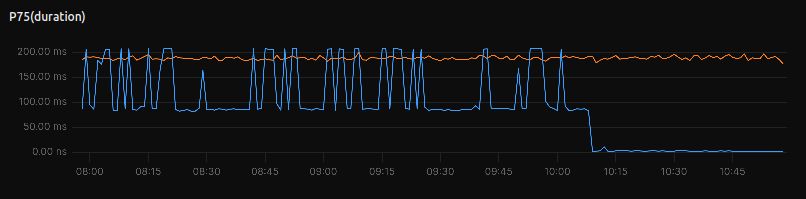

rqlite turns 10: Observations from a decade building Distributed Systems https://lobste.rs/s/tvi48r ##databases ##distributed
rqlite turns 10: Observations from a decade building Distributed Systems
philipotoole.com
May 24, 2025 at 6:50 AM
rqlite turns 10: Observations from a decade building Distributed Systems https://lobste.rs/s/tvi48r ##databases ##distributed
#396425 aide: 0.18.8 -> 0.19
#396418 libubox: bump to 2024-12-19
#396414 jellyfin{,-web}: 10.10.6 -> 10.10.7
#396415 terraform-providers.google-beta: 6.26.0 -> 6.28.0
#396409 spicetify-cli: 2.39.5 -> 2.39.6
#396403 rqlite: 8.36.14 -> 8.36.16
#396418 libubox: bump to 2024-12-19
#396414 jellyfin{,-web}: 10.10.6 -> 10.10.7
#396415 terraform-providers.google-beta: 6.26.0 -> 6.28.0
#396409 spicetify-cli: 2.39.5 -> 2.39.6
#396403 rqlite: 8.36.14 -> 8.36.16
April 6, 2025 at 12:05 AM
#396425 aide: 0.18.8 -> 0.19
#396418 libubox: bump to 2024-12-19
#396414 jellyfin{,-web}: 10.10.6 -> 10.10.7
#396415 terraform-providers.google-beta: 6.26.0 -> 6.28.0
#396409 spicetify-cli: 2.39.5 -> 2.39.6
#396403 rqlite: 8.36.14 -> 8.36.16
#396418 libubox: bump to 2024-12-19
#396414 jellyfin{,-web}: 10.10.6 -> 10.10.7
#396415 terraform-providers.google-beta: 6.26.0 -> 6.28.0
#396409 spicetify-cli: 2.39.5 -> 2.39.6
#396403 rqlite: 8.36.14 -> 8.36.16