


Climate change is increasing agricultural water demand across Central Asia. Rising temperatures and higher evapotranspiration are the main drivers, outweighing the effects of changes in cropping practices. 🌾💧
Publication: doi.org/10.1038/s432...
Publication: doi.org/10.1038/s432...

Climate change has increased crop water consumption in Central Asia despite less water-intensive cropping - Communications Earth & Environment
Total crop water consumption increased by 10% from 1987 to 2019 in Central Asia’s Amu Darya Basin, mainly driven by climate change as less water-intensive crops were adopted, according to analyses of ...
doi.org
February 5, 2026 at 4:47 PM
Climate change is increasing agricultural water demand across Central Asia. Rising temperatures and higher evapotranspiration are the main drivers, outweighing the effects of changes in cropping practices. 🌾💧
Publication: doi.org/10.1038/s432...
Publication: doi.org/10.1038/s432...

arXiv📈🤖
Downscaling land surface temperature data using edge detection and block-diagonal Gaussian process regression
By Dandapanthula, Johnson, Pascolini-Campbell et al
Downscaling land surface temperature data using edge detection and block-diagonal Gaussian process regression
By Dandapanthula, Johnson, Pascolini-Campbell et al

February 4, 2026 at 5:15 PM
arXiv📈🤖
Downscaling land surface temperature data using edge detection and block-diagonal Gaussian process regression
By Dandapanthula, Johnson, Pascolini-Campbell et al
Downscaling land surface temperature data using edge detection and block-diagonal Gaussian process regression
By Dandapanthula, Johnson, Pascolini-Campbell et al

By integrating remote sensing, hydrometeorological data, and crop water-use models, we find that rising temperatures and evapotranspiration are the dominant drivers of increasing agricultural water consumption, outweighing gains from cropping changes.
February 4, 2026 at 10:37 AM
By integrating remote sensing, hydrometeorological data, and crop water-use models, we find that rising temperatures and evapotranspiration are the dominant drivers of increasing agricultural water consumption, outweighing gains from cropping changes.

From the USGS article:
"In the arid western portion of the basin, very little water is left to run off after evapotranspiration extracts its share; most of the river's flow is runoff from the relatively moist eastern part of the basin (fig. 1)."
"In the arid western portion of the basin, very little water is left to run off after evapotranspiration extracts its share; most of the river's flow is runoff from the relatively moist eastern part of the basin (fig. 1)."
January 31, 2026 at 4:35 AM
From the USGS article:
"In the arid western portion of the basin, very little water is left to run off after evapotranspiration extracts its share; most of the river's flow is runoff from the relatively moist eastern part of the basin (fig. 1)."
"In the arid western portion of the basin, very little water is left to run off after evapotranspiration extracts its share; most of the river's flow is runoff from the relatively moist eastern part of the basin (fig. 1)."

Our new paper in HESS 📄
We present a novel approach to estimating long-term mean transpiration–evapotranspiration (T/ET) ratios using the generalized proportionality hypothesis and watershed-scale hydrological observations.
Blog coming soon.
hess.copernicus.org/articles/30/...
We present a novel approach to estimating long-term mean transpiration–evapotranspiration (T/ET) ratios using the generalized proportionality hypothesis and watershed-scale hydrological observations.
Blog coming soon.
hess.copernicus.org/articles/30/...

Insights into evapotranspiration partitioning based on hydrological observations using the generalized proportionality hypothesis
Abstract. Evapotranspiration comprises transpiration, soil evaporation, and interception. The partitioning of evapotranspiration is challenging due to the lack of direct measurements and uncertainty o...
hess.copernicus.org
January 30, 2026 at 11:09 AM
Our new paper in HESS 📄
We present a novel approach to estimating long-term mean transpiration–evapotranspiration (T/ET) ratios using the generalized proportionality hypothesis and watershed-scale hydrological observations.
Blog coming soon.
hess.copernicus.org/articles/30/...
We present a novel approach to estimating long-term mean transpiration–evapotranspiration (T/ET) ratios using the generalized proportionality hypothesis and watershed-scale hydrological observations.
Blog coming soon.
hess.copernicus.org/articles/30/...

Hydrology Paper of the Day @forestecosyst.bsky.social on satellite data products in Nepal: comparison and validation of primary productivity and evapotranspiration between gridded datatsets; relationships related to elevation and land cover type; drought and biogeochemical cycles; and uncertainties.

Satellite data show mountain productivity peaks below 200m and water use changes with elevation. This helps us predict climate impacts and manage these ecosystems better, crucial for biodiversity and water resources.🌲
@forestecosyst.bsky.social
www.sciencedirect.com/science/arti...
@forestecosyst.bsky.social
www.sciencedirect.com/science/arti...

January 28, 2026 at 4:46 AM
Hydrology Paper of the Day @forestecosyst.bsky.social on satellite data products in Nepal: comparison and validation of primary productivity and evapotranspiration between gridded datatsets; relationships related to elevation and land cover type; drought and biogeochemical cycles; and uncertainties.

More challenging an ask than I thought

January 28, 2026 at 3:03 AM
More challenging an ask than I thought

A forest cools by 4°C
Forests regulate local climate through shade, evapotranspiration, and soil moisture, supporting thermal regulation and resilience. Forest restoration is a Nature-Based Solution that connects forests and climate through responsible reforestation.
Plant today
Forests regulate local climate through shade, evapotranspiration, and soil moisture, supporting thermal regulation and resilience. Forest restoration is a Nature-Based Solution that connects forests and climate through responsible reforestation.
Plant today

January 27, 2026 at 9:36 PM
A forest cools by 4°C
Forests regulate local climate through shade, evapotranspiration, and soil moisture, supporting thermal regulation and resilience. Forest restoration is a Nature-Based Solution that connects forests and climate through responsible reforestation.
Plant today
Forests regulate local climate through shade, evapotranspiration, and soil moisture, supporting thermal regulation and resilience. Forest restoration is a Nature-Based Solution that connects forests and climate through responsible reforestation.
Plant today

Urban forests can also be a cooling feature, an essential heat mitigation strategy as cities face severe summer heat.
Trees can help with heat waves by:
🌳Creating shaded spaces
💧Evapotranspiration, which is natural cooling thanks to the internal processes of plants!
#urbanforest #climatepolicy
Trees can help with heat waves by:
🌳Creating shaded spaces
💧Evapotranspiration, which is natural cooling thanks to the internal processes of plants!
#urbanforest #climatepolicy
January 27, 2026 at 5:29 PM
Urban forests can also be a cooling feature, an essential heat mitigation strategy as cities face severe summer heat.
Trees can help with heat waves by:
🌳Creating shaded spaces
💧Evapotranspiration, which is natural cooling thanks to the internal processes of plants!
#urbanforest #climatepolicy
Trees can help with heat waves by:
🌳Creating shaded spaces
💧Evapotranspiration, which is natural cooling thanks to the internal processes of plants!
#urbanforest #climatepolicy

NASA announced the expansion of a crucial #water tracking program with the use of #OpenET. DRI’s Charles Morton said, "Delivering wall-to-wall #evapotranspiration data across the contiguous US at the field scale is a major milestone for OpenET." bit.ly/openetexpand #NASA

NASA and Partners Expand Crucial Water Tracking Program
DRI's Charles Morton, Associate Research Scientist of Geography, who had a key role in the expansion of OpenET said, "Delivering wall-to-wall evapotranspiration data across the contiguous United States at the field scale is a major milestone for OpenET,...
bit.ly
January 24, 2026 at 6:00 PM
NASA announced the expansion of a crucial #water tracking program with the use of #OpenET. DRI’s Charles Morton said, "Delivering wall-to-wall #evapotranspiration data across the contiguous US at the field scale is a major milestone for OpenET." bit.ly/openetexpand #NASA

Detecting anthropogenically induced changes in extreme and seasonal evapotranspiration observations
->Nature | More from Lil Dr Glen EcoChat at BigEarthData.ai
->Nature | More from Lil Dr Glen EcoChat at BigEarthData.ai

Detecting anthropogenically induced changes in extreme and seasonal evapotranspiration observations
What is an extreme ET event? To illustrate what an extreme ET event is, we first consider the seven days of every year when a region in Central Western Europe experienced the highest cumulative ET (ETx7d) in ERA5 Land (Fig...
www.nature.com
January 23, 2026 at 1:01 PM

The old version (version 2) of the evapotranspiration product from the LSA SAF will be discontinued from tomorrow user.eumetsat.int/news-events/...
January 21, 2026 at 2:30 PM
The old version (version 2) of the evapotranspiration product from the LSA SAF will be discontinued from tomorrow user.eumetsat.int/news-events/...

Yes and that kind of difference applies whenever working at different spatial scales. I know my micromet friends roll their eyes when we use derived variables like reference evapotranspiration at the global scale.
January 18, 2026 at 4:36 PM
Yes and that kind of difference applies whenever working at different spatial scales. I know my micromet friends roll their eyes when we use derived variables like reference evapotranspiration at the global scale.

A Benchmark Dataset of Agricultural Weather Stations over the Contiguous United States for Evapotranspiration Applications
https://doi.org/10.31223/X56T9Z
https://doi.org/10.31223/X56T9Z
January 18, 2026 at 11:00 AM
A Benchmark Dataset of Agricultural Weather Stations over the Contiguous United States for Evapotranspiration Applications
https://doi.org/10.31223/X56T9Z
https://doi.org/10.31223/X56T9Z
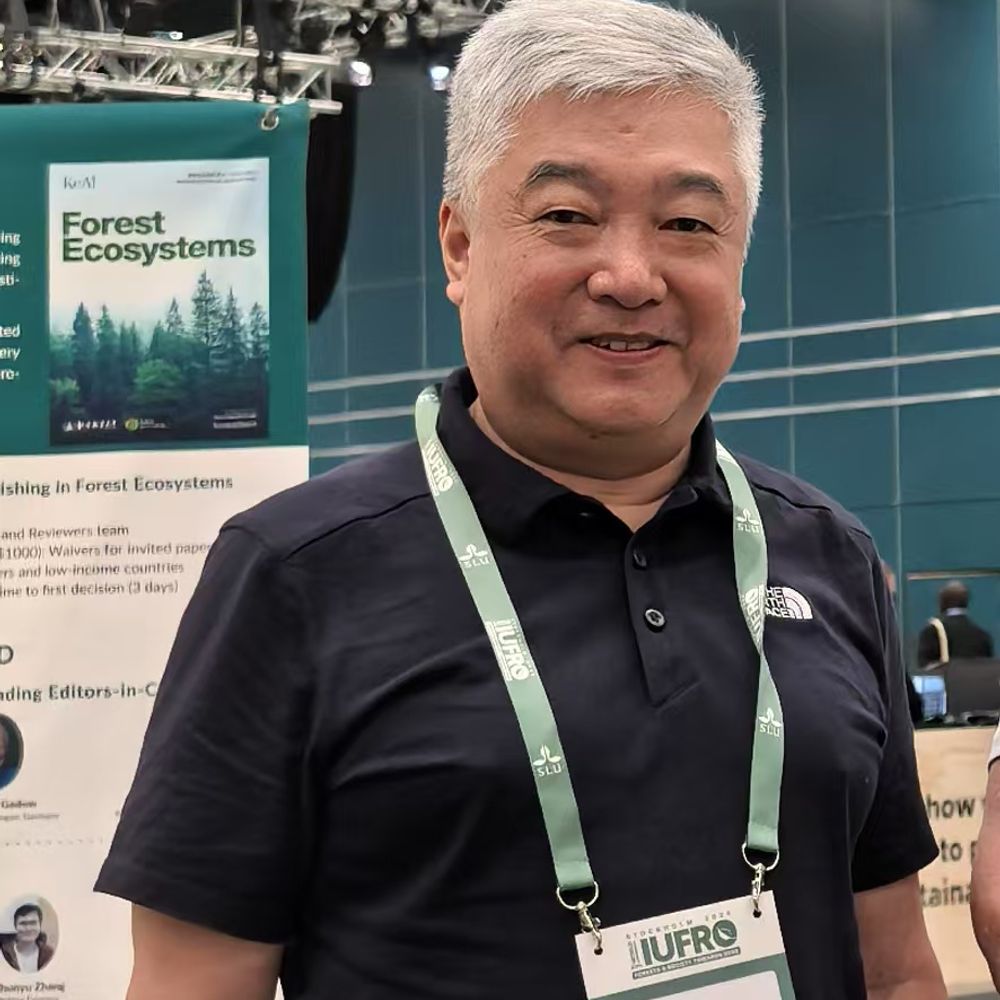
Final version published
@forestecosyst.bsky.social
📰Comparison of multiple satellite-derived products for assessing vegetation productivity and evapotranspiration in Nepal: Toward understanding carbon and water coupling in a mountainous region sciencedirect.com/science/arti...
@forestecosyst.bsky.social
📰Comparison of multiple satellite-derived products for assessing vegetation productivity and evapotranspiration in Nepal: Toward understanding carbon and water coupling in a mountainous region sciencedirect.com/science/arti...

January 18, 2026 at 7:11 AM
Final version published
@forestecosyst.bsky.social
📰Comparison of multiple satellite-derived products for assessing vegetation productivity and evapotranspiration in Nepal: Toward understanding carbon and water coupling in a mountainous region sciencedirect.com/science/arti...
@forestecosyst.bsky.social
📰Comparison of multiple satellite-derived products for assessing vegetation productivity and evapotranspiration in Nepal: Toward understanding carbon and water coupling in a mountainous region sciencedirect.com/science/arti...

## Accelerated Evapotranspiration Modeling and Control for Algae Biomass Production Using Hybrid Deep Learning and Bayesian Optimization
**Abstract:** This research introduces a novel closed-loop system for optimizing evapotranspiration in algae biomass production facilities leveraging a hybrid…
**Abstract:** This research introduces a novel closed-loop system for optimizing evapotranspiration in algae biomass production facilities leveraging a hybrid…
## Accelerated Evapotranspiration Modeling and Control for Algae Biomass Production Using Hybrid Deep Learning and Bayesian Optimization
**Abstract:** This research introduces a novel closed-loop system for optimizing evapotranspiration in algae biomass production facilities leveraging a hybrid deep learning model coupled with Bayesian optimization. The system dynamically models and controls environmental factors to maximize water usage efficiency and algae growth rate, yielding a potentially 30% increase in biomass production compared to traditional methods. This approach addresses the significant challenge of minimizing freshwater input and energy expenditure in algae cultivation, a critical factor for large-scale sustainable biofuel and bioproduct production.
freederia.com
January 17, 2026 at 7:20 PM
## Accelerated Evapotranspiration Modeling and Control for Algae Biomass Production Using Hybrid Deep Learning and Bayesian Optimization
**Abstract:** This research introduces a novel closed-loop system for optimizing evapotranspiration in algae biomass production facilities leveraging a hybrid…
**Abstract:** This research introduces a novel closed-loop system for optimizing evapotranspiration in algae biomass production facilities leveraging a hybrid…

A theoretical framework for critical canopy temperature and its application to improve remote-sensing-based estimation of evapotranspiration
A theoretical framework for critical canopy temperature and its application to improve remote-sensing-based estimation of evapotranspiration
Surface energy balance (SEB) models are widely employed for remote-sensing-based evapotranspiration estimation. A critical parameter in most SEB models is the surface temperature of wet or dry boundaries where sensible heat (H) or latent heat (LE) equals 0, which is difficult to measure or estimate. The wide application of SEB models is seriously limited due to this challenge. Therefore, this study introduces ‘critical canopy temperature ( )’, defined as the canopy temperature at which LE equals 0, corresponding to the dry boundary in SEB models. We develop a physics-constrained machine learning (ML) model (hybrid model) that conserves the SEB equation to predict using meteorological measurements from 103 eddy-covariance (EC) stations combined with remote-sensing data. The predicted is integrated into the Surface Energy Balance Algorithm for Land (SEBAL) model to replace the dry boundary, thereby to improve the estimation of LE estimation. Results demonstrate that the hybrid model effectively captures canopy temperature anomalies during stomatal closure and achieve better generalization than pure ML approaches in LE estimation, particularly under extreme conditions. Compared with conventional dry-boundary selection scheme without SEB constraints, incorporating significantly improve SEBAL performance, reducing the root mean square error for LE from 119.33 to 81.71 W m−2 against EC observations (at 31.52% reduction). At regional scales, the hybrid model enables pixel-level estimation of , addressing the long-standing challenge of dry-boundary underrepresentation. Overall, the hybrid model provides a robust and accurate framework for predicting theoretical dry-boundary temperatures while conserving the SEB, supporting improved monitoring of vegetation physiological status and enhancing the accuracy of SEB models.
dlvr.it
January 16, 2026 at 10:18 AM
A theoretical framework for critical canopy temperature and its application to improve remote-sensing-based estimation of evapotranspiration

Zhao et al. examined seasonal precipitation minus actual evapotranspiration changes based on multiple datasets across the extratropical Northern Hemisphere over the past two decades.
doi.org/10.59717/j.x...
#Geoscience #climatechange #WaterAvailability
doi.org/10.59717/j.x...
#Geoscience #climatechange #WaterAvailability

January 16, 2026 at 4:32 AM
Zhao et al. examined seasonal precipitation minus actual evapotranspiration changes based on multiple datasets across the extratropical Northern Hemisphere over the past two decades.
doi.org/10.59717/j.x...
#Geoscience #climatechange #WaterAvailability
doi.org/10.59717/j.x...
#Geoscience #climatechange #WaterAvailability

Earth system models tend to overestimate global river flow increases under warming, with new observation-based assessments indicating lower river flow and higher evapotranspiration than previously estimated.

Earth system models overestimate river flow increases, research reveals
Understanding how water moves through the Earth system is fundamental to predicting climate impacts and ensuring sustainable water management.
phys.org
January 15, 2026 at 2:51 PM
Earth system models tend to overestimate global river flow increases under warming, with new observation-based assessments indicating lower river flow and higher evapotranspiration than previously estimated.

[3/8] Les modèles CMIP6 sont évalués sur la période 1970–1999 et comparés aux bases WorldClim et ERA5. Les corrélations sont fortes pour température et évapotranspiration. Les chercheurs identifient toutefois des biais régionaux, notamment une surestimation de l’humidité au Nordeste brésilien.
January 15, 2026 at 6:48 AM
[3/8] Les modèles CMIP6 sont évalués sur la période 1970–1999 et comparés aux bases WorldClim et ERA5. Les corrélations sont fortes pour température et évapotranspiration. Les chercheurs identifient toutefois des biais régionaux, notamment une surestimation de l’humidité au Nordeste brésilien.
[2/8] L’étude repose sur l’indice d’aridité FAO, qui compare précipitations et évapotranspiration potentielle calculée par la méthode Penman-Monteith. Cette approche physique permet de mieux saisir les tensions hydriques de long terme, distinctes des sécheresses ponctuelles, à l’échelle planétaire.
January 15, 2026 at 6:48 AM
[2/8] L’étude repose sur l’indice d’aridité FAO, qui compare précipitations et évapotranspiration potentielle calculée par la méthode Penman-Monteith. Cette approche physique permet de mieux saisir les tensions hydriques de long terme, distinctes des sécheresses ponctuelles, à l’échelle planétaire.
Hydrology Paper of the Day @osbertsun.bsky.social on quantifying process representation related to gross primary productivity and evapotranspiration: nine remote sensing data products; validation with ground-based eddy covariance datasets in Nepal; and trends related to seasonality and geography.
Article in press @forestecosyst.bsky.social @forestplots.bsky.social
📰Comparison of multiple satellite-derived products for assessing vegetation productivity and evapotranspiration in Nepal: Toward understanding carbon and water coupling in a mountainous region www.sciencedirect.com/science/arti...
📰Comparison of multiple satellite-derived products for assessing vegetation productivity and evapotranspiration in Nepal: Toward understanding carbon and water coupling in a mountainous region www.sciencedirect.com/science/arti...

January 15, 2026 at 5:38 AM
Hydrology Paper of the Day @osbertsun.bsky.social on quantifying process representation related to gross primary productivity and evapotranspiration: nine remote sensing data products; validation with ground-based eddy covariance datasets in Nepal; and trends related to seasonality and geography.
Thermodynamically constrained closed-form surface energy balance using medium-resolution remote sensing for efficient evapotranspiration mapping
https://doi.org/10.31223/X51B4P
https://doi.org/10.31223/X51B4P
January 14, 2026 at 11:00 AM
Thermodynamically constrained closed-form surface energy balance using medium-resolution remote sensing for efficient evapotranspiration mapping
https://doi.org/10.31223/X51B4P
https://doi.org/10.31223/X51B4P

#EVAPOTRANSPIRATION
multi-search-tag-explorer.allgraph.ro/advanced-sea...
#WAFFENSTILLSTANDSVERHANDLUNGEN #UND #VERMITTLUNGSINITIATIVEN #ZUM #RUSSISCHEN #ANGRIFFSKRIEG #GEGEN #DIE #UKRAINE
headlines-world.com/advanced-sea...
headlines-world.com
multi-search-tag-explorer.allgraph.ro/advanced-sea...
#WAFFENSTILLSTANDSVERHANDLUNGEN #UND #VERMITTLUNGSINITIATIVEN #ZUM #RUSSISCHEN #ANGRIFFSKRIEG #GEGEN #DIE #UKRAINE
headlines-world.com/advanced-sea...
headlines-world.com
MultiSearch Tag Explorer
MultiSearch Tag Explorer - Explore tags and search results by aéPiot
multi-search-tag-explorer.allgraph.ro
January 14, 2026 at 6:11 AM

Dear Abilu Tangwa
Trees create 40% of rains in the world thanks to evapotranspiration which create rivers in the sky. Trees allow water retention by the roots against flooding.
Thank You so much for being an environmental activist...
Trees create 40% of rains in the world thanks to evapotranspiration which create rivers in the sky. Trees allow water retention by the roots against flooding.
Thank You so much for being an environmental activist...
January 13, 2026 at 9:24 AM
Dear Abilu Tangwa
Trees create 40% of rains in the world thanks to evapotranspiration which create rivers in the sky. Trees allow water retention by the roots against flooding.
Thank You so much for being an environmental activist...
Trees create 40% of rains in the world thanks to evapotranspiration which create rivers in the sky. Trees allow water retention by the roots against flooding.
Thank You so much for being an environmental activist...