



Another great outcome from the #BIODESERT dryland survey publishedin @journalofecology.bsky.social !
Congrats to Kaarina for leading this one!
@ftmaestre.bsky.social @inrae-france.bsky.social @urep.bsky.social
Congrats to Kaarina for leading this one!
@ftmaestre.bsky.social @inrae-france.bsky.social @urep.bsky.social

January 7, 2026 at 6:10 PM
Another great outcome from the #BIODESERT dryland survey publishedin @journalofecology.bsky.social !
Congrats to Kaarina for leading this one!
@ftmaestre.bsky.social @inrae-france.bsky.social @urep.bsky.social
Congrats to Kaarina for leading this one!
@ftmaestre.bsky.social @inrae-france.bsky.social @urep.bsky.social
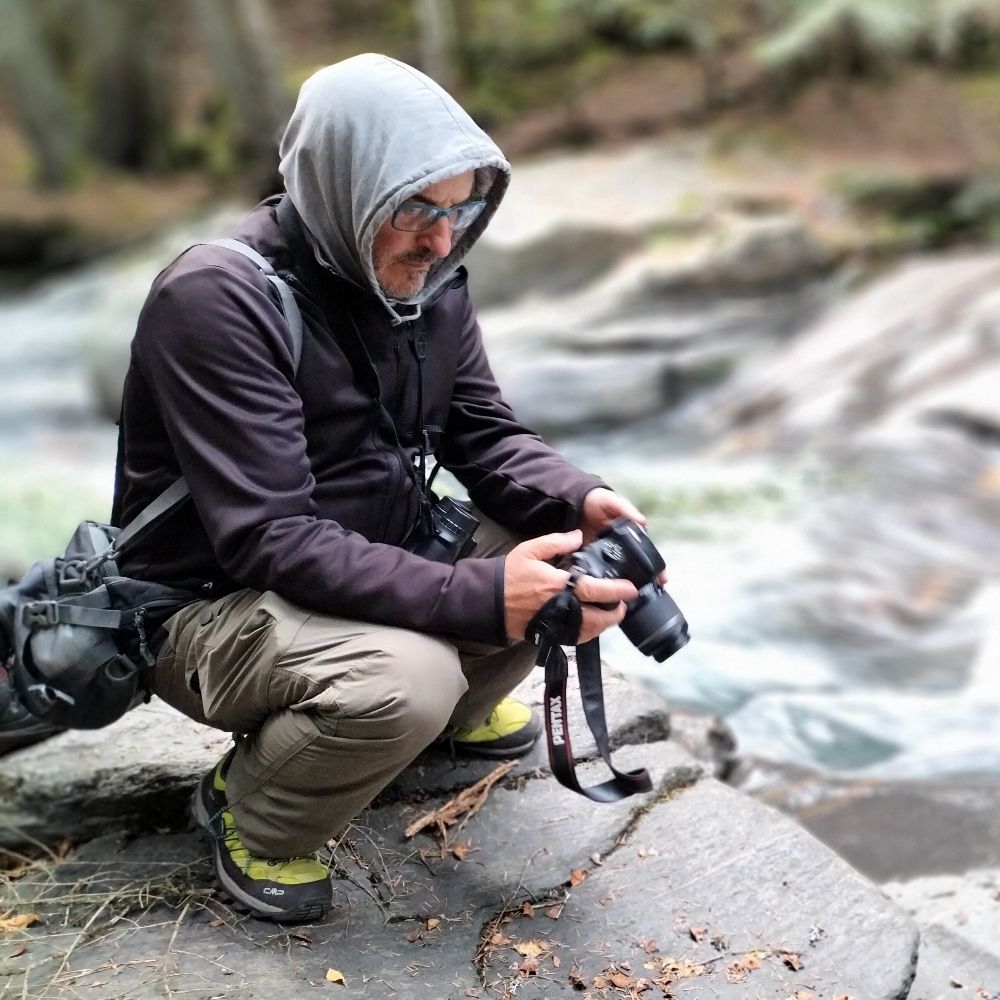
Acaba de publicar-se a @natecoevo.nature.com: utilitzant dades de l'estudi de terres seques BIODESERT, finançat per @erc.europa.eu, mostrem que la diversitat vegetal millora considerablement la resistència dels ecosistemes a la creixent pressió de pastura.
Just published in @natecoevo.nature.com: using data from the @erc.europa.eu funded BIODESERT dryland survey, we show that plant diversity strongly enhances ecosystem resistance to increasing grazing pressure. Conserving biodiversity is key to sustaining dryland rangelands worldwide rdcu.be/eXY6D


January 7, 2026 at 2:33 PM
Acaba de publicar-se a @natecoevo.nature.com: utilitzant dades de l'estudi de terres seques BIODESERT, finançat per @erc.europa.eu, mostrem que la diversitat vegetal millora considerablement la resistència dels ecosistemes a la creixent pressió de pastura.

Just published in @natecoevo.nature.com: using data from the @erc.europa.eu funded BIODESERT dryland survey, we show that plant diversity strongly enhances ecosystem resistance to increasing grazing pressure. Conserving biodiversity is key to sustaining dryland rangelands worldwide rdcu.be/eXY6D
January 7, 2026 at 12:43 PM
Just published in @natecoevo.nature.com: using data from the @erc.europa.eu funded BIODESERT dryland survey, we show that plant diversity strongly enhances ecosystem resistance to increasing grazing pressure. Conserving biodiversity is key to sustaining dryland rangelands worldwide rdcu.be/eXY6D
Another outcomes of #biodesert survey and the #DRY plant trait database!
This work has been led by @LucioBiancari at the @ftmaestre.bsky.social lab!
Congrats to all coauthors
@inrae-france.bsky.social @urep.bsky.social
This work has been led by @LucioBiancari at the @ftmaestre.bsky.social lab!
Congrats to all coauthors
@inrae-france.bsky.social @urep.bsky.social
January 7, 2026 at 7:11 AM
Another outcomes of #biodesert survey and the #DRY plant trait database!
This work has been led by @LucioBiancari at the @ftmaestre.bsky.social lab!
Congrats to all coauthors
@inrae-france.bsky.social @urep.bsky.social
This work has been led by @LucioBiancari at the @ftmaestre.bsky.social lab!
Congrats to all coauthors
@inrae-france.bsky.social @urep.bsky.social
Just published in @journalofecology.bsky.social Using data from 1,854 plant species coming from the @erc.europa.eu funded #BIODESERT survey, we show how climate & grazing jointly shape leaf phenolics—key defence compounds—across global drylands. Great work led by PhD student Kaarina Shilula

December 24, 2025 at 9:14 AM
Just published in @journalofecology.bsky.social Using data from 1,854 plant species coming from the @erc.europa.eu funded #BIODESERT survey, we show how climate & grazing jointly shape leaf phenolics—key defence compounds—across global drylands. Great work led by PhD student Kaarina Shilula
New paper out today from our global #Biodesert survey!
onlinelibrary.wiley.com/doi/10.1111/...
We found a global a conservative-acquisitive functional trait match between dominant and target plants that promoted facilitation worldwide 🌐🧪🌎🌾
@inrae-france.bsky.social @urep.bsky.social
onlinelibrary.wiley.com/doi/10.1111/...
We found a global a conservative-acquisitive functional trait match between dominant and target plants that promoted facilitation worldwide 🌐🧪🌎🌾
@inrae-france.bsky.social @urep.bsky.social

Plant Trait Matching Occurs in Facilitative Interactions Across Global Drylands
Aim
Plant functional traits can influence interaction outcomes between nurse and target plants through a “functional trait match”, which occurs when the traits of nurse plants ameliorate their envir.....
onlinelibrary.wiley.com
November 26, 2025 at 7:14 AM
New paper out today from our global #Biodesert survey!
onlinelibrary.wiley.com/doi/10.1111/...
We found a global a conservative-acquisitive functional trait match between dominant and target plants that promoted facilitation worldwide 🌐🧪🌎🌾
@inrae-france.bsky.social @urep.bsky.social
onlinelibrary.wiley.com/doi/10.1111/...
We found a global a conservative-acquisitive functional trait match between dominant and target plants that promoted facilitation worldwide 🌐🧪🌎🌾
@inrae-france.bsky.social @urep.bsky.social
Happy to share our new paper from the @erc.europa.eu funded #BIODESERT global survey! Brilliantly led by MSc student Imke Smit, we show that plant facilitation in drylands is driven by a consistent trait match between dominant and target species Out in Global Ecol Biog dx.doi.org/10.1111/geb....

November 26, 2025 at 6:26 AM
Happy to share our new paper from the @erc.europa.eu funded #BIODESERT global survey! Brilliantly led by MSc student Imke Smit, we show that plant facilitation in drylands is driven by a consistent trait match between dominant and target species Out in Global Ecol Biog dx.doi.org/10.1111/geb....
This work is part of the @erc.europa.eu funded BIODESERT global survey and was led by Luna Mgill who did a great job leading this collaboration with @manudelbaq.bsky.social @cesarplaza.bsky.social & @pablogarciapal.bsky.social
September 5, 2025 at 4:42 AM
This work is part of the @erc.europa.eu funded BIODESERT global survey and was led by Luna Mgill who did a great job leading this collaboration with @manudelbaq.bsky.social @cesarplaza.bsky.social & @pablogarciapal.bsky.social
Mitigating vegetation fragmentation in drylands requires promoting plant–soil facilitation, especially under high grazing pressure.
For more see our new paper in #GEB 🌐
onlinelibrary.wiley.com/doi/10.1111/...
Another great outcomes from the #biodesert survey led by
Yanchuang Zhao!
For more see our new paper in #GEB 🌐
onlinelibrary.wiley.com/doi/10.1111/...
Another great outcomes from the #biodesert survey led by
Yanchuang Zhao!

The Relationship Between Grazing Pressure and Environmental Factors Drives Vegetation Fragmentation Across Global Drylands
Aim To evaluate how grazing pressure, a key land-use factor, interacts with climatic, vegetation, and soil variables to shape the fragmentation of perennial vegetation across drylands globally. Lo...
onlinelibrary.wiley.com
August 11, 2025 at 10:06 AM
Mitigating vegetation fragmentation in drylands requires promoting plant–soil facilitation, especially under high grazing pressure.
For more see our new paper in #GEB 🌐
onlinelibrary.wiley.com/doi/10.1111/...
Another great outcomes from the #biodesert survey led by
Yanchuang Zhao!
For more see our new paper in #GEB 🌐
onlinelibrary.wiley.com/doi/10.1111/...
Another great outcomes from the #biodesert survey led by
Yanchuang Zhao!
In our latest article, published in Microbiology Resource Announcements & led by Veronica Malavasi & Francesco Dal Grande, we describe Tetradesmus sp. strain 198 a novel green algal strain observed in Australian samples from the BIODESERT survey journals.asm.org/doi/full/10....

De novo assembly and annotation of Tetradesmus sp. strain 198, a green algal from dryland soil | Microbiology Resource Announcements
Tetradesmus sp. strain 198, a newly described strain of the Chlorophyceae class within the Scenedesmaceae family, has been identified as belonging to the Tetradesmus bajacalifornicus clade based on reference 1. It was isolated from a bare soil sample in an arid region of Australia’s east coast (34.71686, 144.77065), during the Biodesert global dryland survey (2). The strain was cultivated in an Erlenmeyer flask containing 50 mL of modified Bold Basal Medium (3) under continuous light at 22°C and 100 photons m−2 s−1 for 2 weeks. DNA extraction was performed using the NucleoSpin Plant II kit (Macherey-Nagel, Düren, Germany) according to the manufacturer’s instructions. Two sequencing libraries were prepared: a Nanopore long-read library, sequenced on the ONT MinION system (15 Gbp of raw reads) and an Illumina short-read library, sequenced on the NovaSeqX Plus platform (6.75 Gbp of raw paired-end reads).
journals.asm.org
April 7, 2025 at 2:36 PM
In our latest article, published in Microbiology Resource Announcements & led by Veronica Malavasi & Francesco Dal Grande, we describe Tetradesmus sp. strain 198 a novel green algal strain observed in Australian samples from the BIODESERT survey journals.asm.org/doi/full/10....