


A little snail fur hydroid (Hydractinia) close up for #ToxinTuesday. This female colony has tons of eggs developing across multiple reproductive polyps (called gonozooids).
🪼🧪🪼
#Hype4Hydrozoa
@stowersinstitute.bsky.social
@sicb-diz.bsky.social
🪼🧪🪼
#Hype4Hydrozoa
@stowersinstitute.bsky.social
@sicb-diz.bsky.social
August 5, 2025 at 8:39 PM
A little snail fur hydroid (Hydractinia) close up for #ToxinTuesday. This female colony has tons of eggs developing across multiple reproductive polyps (called gonozooids).
🪼🧪🪼
#Hype4Hydrozoa
@stowersinstitute.bsky.social
@sicb-diz.bsky.social
🪼🧪🪼
#Hype4Hydrozoa
@stowersinstitute.bsky.social
@sicb-diz.bsky.social
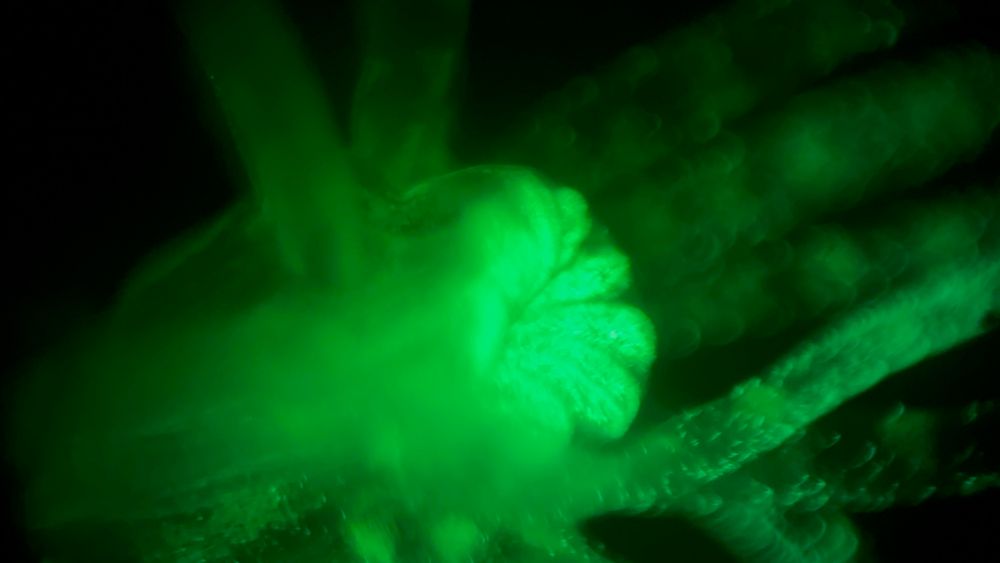
This sea anemone holds some serious stinging power around their mouth!
📷 Transgenic Nematostella where green marks developing and mature stinging cells, which are densely packed around the mouth.
🪸🧪🪸
#StunningStella #ToxinTuesday @stowersinstitute.bsky.social
📷 Transgenic Nematostella where green marks developing and mature stinging cells, which are densely packed around the mouth.
🪸🧪🪸
#StunningStella #ToxinTuesday @stowersinstitute.bsky.social
July 29, 2025 at 7:38 PM
This sea anemone holds some serious stinging power around their mouth!
📷 Transgenic Nematostella where green marks developing and mature stinging cells, which are densely packed around the mouth.
🪸🧪🪸
#StunningStella #ToxinTuesday @stowersinstitute.bsky.social
📷 Transgenic Nematostella where green marks developing and mature stinging cells, which are densely packed around the mouth.
🪸🧪🪸
#StunningStella #ToxinTuesday @stowersinstitute.bsky.social

This week's beautiful
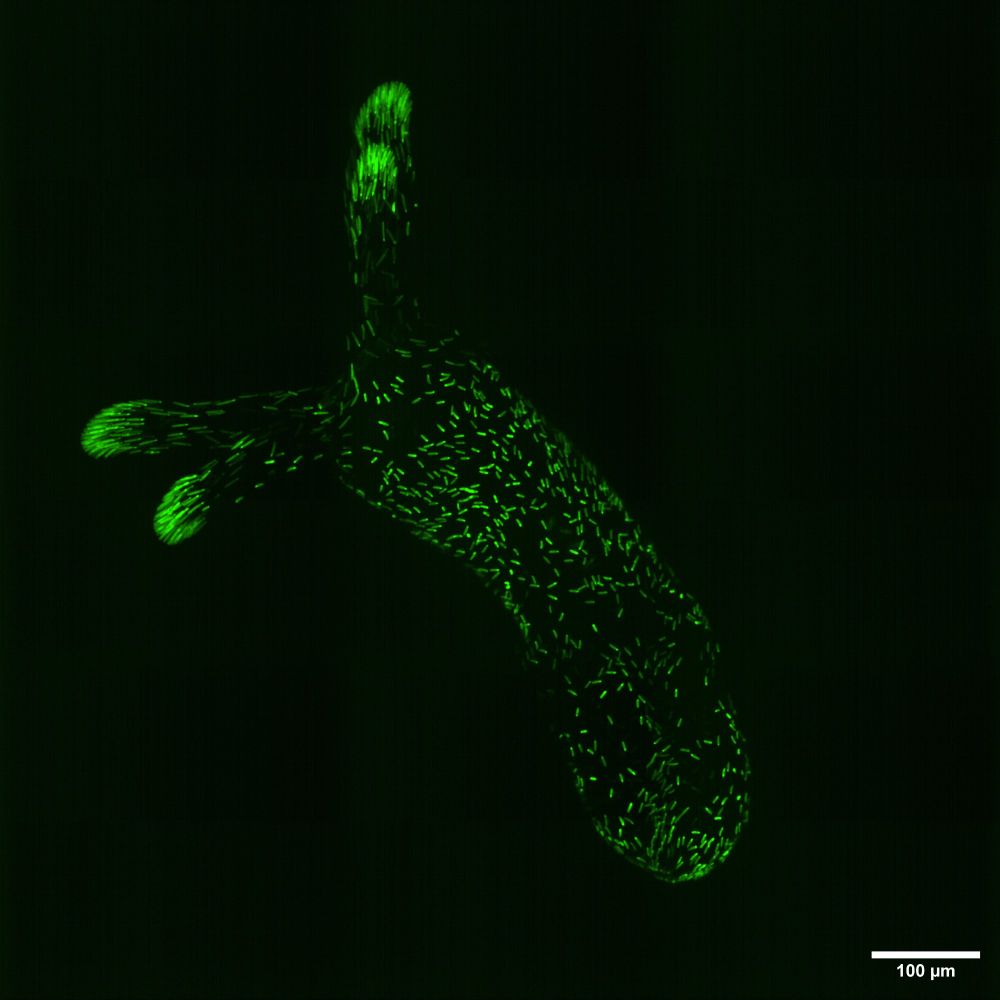
#MicroscopyMonday is a juvenile Nematostella with stinging cells labeled with eGFP (green). (Gibson Lab) #SciSky
#MicroscopyMonday is a juvenile Nematostella with stinging cells labeled with eGFP (green). (Gibson Lab) #SciSky

July 9, 2025 at 3:03 AM
Really in love with this reporter line from my #PostDoc work in Gibson lab @stowersinstitute.bsky.social!
#StunningStella (and an early #ToxinTuesday)
#StunningStella (and an early #ToxinTuesday)
This week's beautiful #MicroscopyMonday is a juvenile Nematostella with stinging cells labeled with eGFP (green). (Gibson Lab) #Biology
November 25, 2024 at 5:43 PM
Really in love with this reporter line from my #PostDoc work in Gibson lab @stowersinstitute.bsky.social!
#StunningStella (and an early #ToxinTuesday)
#StunningStella (and an early #ToxinTuesday)
Okay so jellyfish often live as polyps for a while, but polyps don’t sting right?
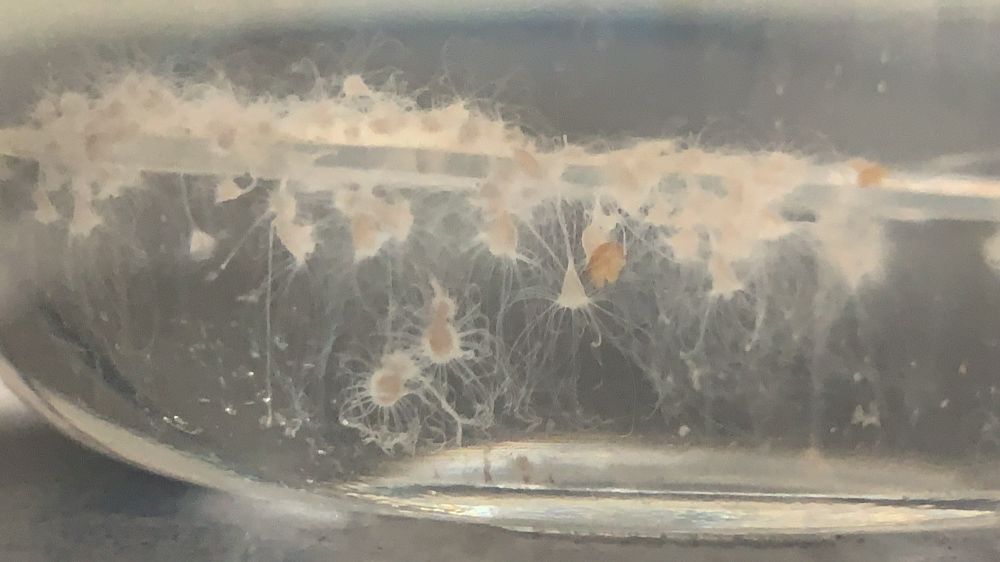
Not so! The polyp stage also contains stinging cells, which house the venom-filled structures that give jellies their sting.
🎥 Sanderia (Amakusa jellyfish) polyps on slide.
🧪🪼🧪
#MedusozoaMadness #ToxinTuesday
Not so! The polyp stage also contains stinging cells, which house the venom-filled structures that give jellies their sting.
🎥 Sanderia (Amakusa jellyfish) polyps on slide.
🧪🪼🧪
#MedusozoaMadness #ToxinTuesday
March 19, 2024 at 3:46 PM
Okay so jellyfish often live as polyps for a while, but polyps don’t sting right?
Not so! The polyp stage also contains stinging cells, which house the venom-filled structures that give jellies their sting.
🎥 Sanderia (Amakusa jellyfish) polyps on slide.
🧪🪼🧪
#MedusozoaMadness #ToxinTuesday
Not so! The polyp stage also contains stinging cells, which house the venom-filled structures that give jellies their sting.
🎥 Sanderia (Amakusa jellyfish) polyps on slide.
🧪🪼🧪
#MedusozoaMadness #ToxinTuesday
And box jellyfish? Seems odd…
In more ways than one! Cubozoans or box jellies have cube-shaped bells and 1 or more tentacles at each of the four “corners”. Some species are known for having complex eyes, fast swimming speeds, or potent venoms!
🧪🪼🧪
#MedusozoaMadness
#ToxinTuesday
In more ways than one! Cubozoans or box jellies have cube-shaped bells and 1 or more tentacles at each of the four “corners”. Some species are known for having complex eyes, fast swimming speeds, or potent venoms!
🧪🪼🧪
#MedusozoaMadness
#ToxinTuesday

March 5, 2024 at 11:14 PM
And box jellyfish? Seems odd…
In more ways than one! Cubozoans or box jellies have cube-shaped bells and 1 or more tentacles at each of the four “corners”. Some species are known for having complex eyes, fast swimming speeds, or potent venoms!
🧪🪼🧪
#MedusozoaMadness
#ToxinTuesday
In more ways than one! Cubozoans or box jellies have cube-shaped bells and 1 or more tentacles at each of the four “corners”. Some species are known for having complex eyes, fast swimming speeds, or potent venoms!
🧪🪼🧪
#MedusozoaMadness
#ToxinTuesday

We teach that poisons are harmful substances, toxins are natural poisons, and venoms are harmful substances produced by animals, containing one or more poisons. #ToxinTuesday #semanticsThursday
x.com/TheSlowEscargo…
x.com/TheSlowEscargo…
December 12, 2024 at 1:36 AM
We teach that poisons are harmful substances, toxins are natural poisons, and venoms are harmful substances produced by animals, containing one or more poisons. #ToxinTuesday #semanticsThursday
x.com/TheSlowEscargo…
x.com/TheSlowEscargo…