


Just back from the ~QRA2025 discussion meeting. Chilly, but really fun to see all the new Quaternary research. @ucdscience.bsky.social was well represented with a great talk by postgrad student Clara Crowell and the best student poster of the conference by Dakota Youngeagle.


January 10, 2025 at 9:53 AM
Just back from the ~QRA2025 discussion meeting. Chilly, but really fun to see all the new Quaternary research. @ucdscience.bsky.social was well represented with a great talk by postgrad student Clara Crowell and the best student poster of the conference by Dakota Youngeagle.

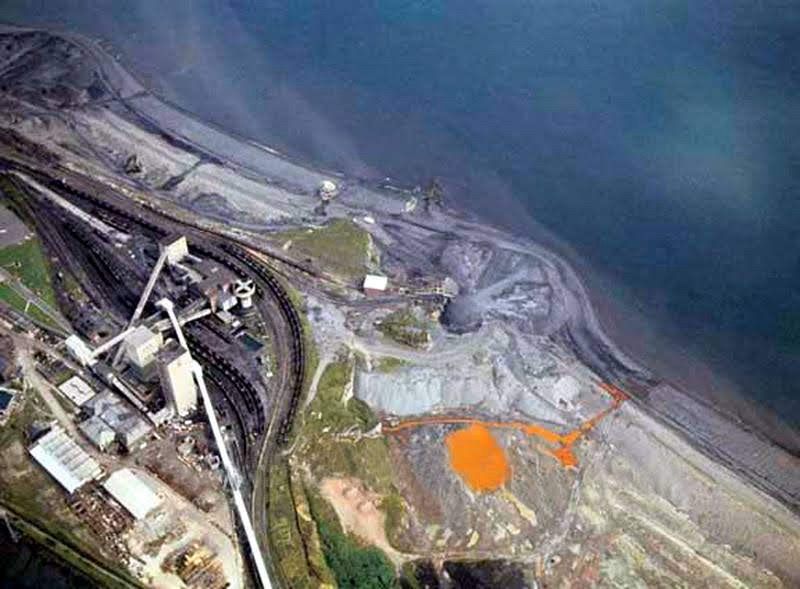
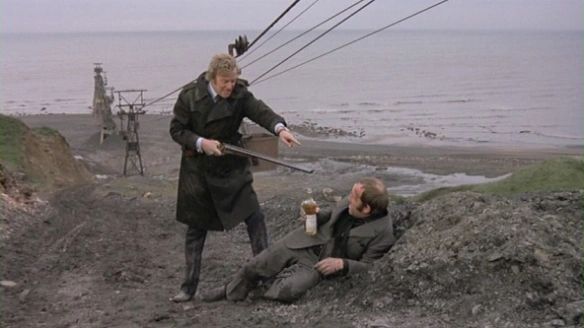
Delighted to give this new research a bit of an airing today on the #QRA2025 field trip to Blast Beach - thanks for the invite to talk @iceybethan.bsky.social
Our new paper looks at the long term changes we’ve seen on the Durham coast. The polluted beaches were made famous by the Michael Caine film, which ironically gives us some of the best contemporaneous imagery of what the sites used to be like … www.sciencedirect.com/science/arti...
January 9, 2025 at 2:59 PM
Delighted to give this new research a bit of an airing today on the #QRA2025 field trip to Blast Beach - thanks for the invite to talk @iceybethan.bsky.social

Really enjoyed presenting my research on glacial geomorphology and glaciolacustrine varves at #QRA2025 this week. Thanks to everyone who came and spoke with me! I'm now enjoying the frosty morning train home with my latest @quaternaryra.bsky.social field guide purchase 📖


January 9, 2025 at 11:25 AM
Really enjoyed presenting my research on glacial geomorphology and glaciolacustrine varves at #QRA2025 this week. Thanks to everyone who came and spoke with me! I'm now enjoying the frosty morning train home with my latest @quaternaryra.bsky.social field guide purchase 📖
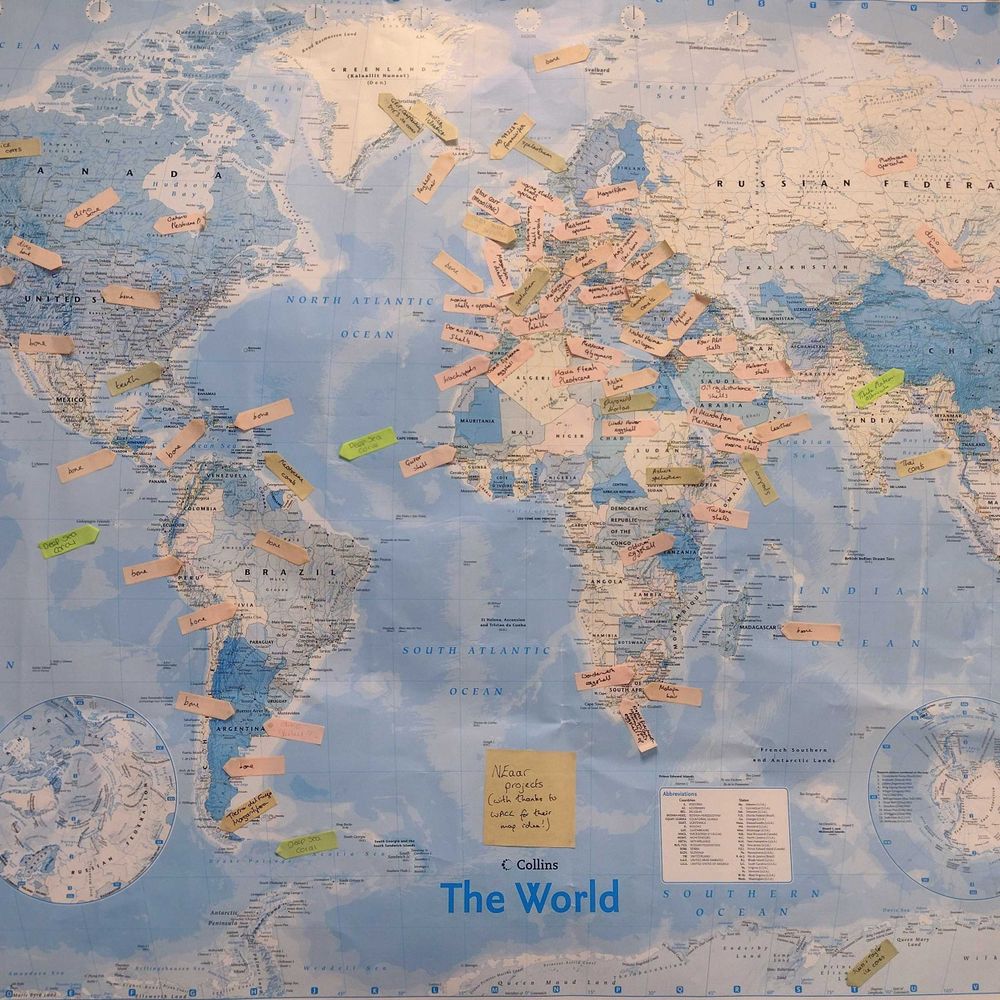
A virtual Ellie Nelson @ellienelson12.bsky.social talking at the #QRA2025 about the time/temp complexities when AA dating across such a large region over the #Pleistocene - thanks to the @quaternaryra.bsky.social audience for the helpful ideas :-)

January 8, 2025 at 4:54 PM
A virtual Ellie Nelson @ellienelson12.bsky.social talking at the #QRA2025 about the time/temp complexities when AA dating across such a large region over the #Pleistocene - thanks to the @quaternaryra.bsky.social audience for the helpful ideas :-)
Marc Dickinson presenting his lovely amino acid dating work, successful on irradiated tooth enamel samples previously used for ESR 🦣🐎🦬 at the #QRA2025 meeting @quaternaryra.bsky.social

January 8, 2025 at 3:09 PM
Marc Dickinson presenting his lovely amino acid dating work, successful on irradiated tooth enamel samples previously used for ESR 🦣🐎🦬 at the #QRA2025 meeting @quaternaryra.bsky.social
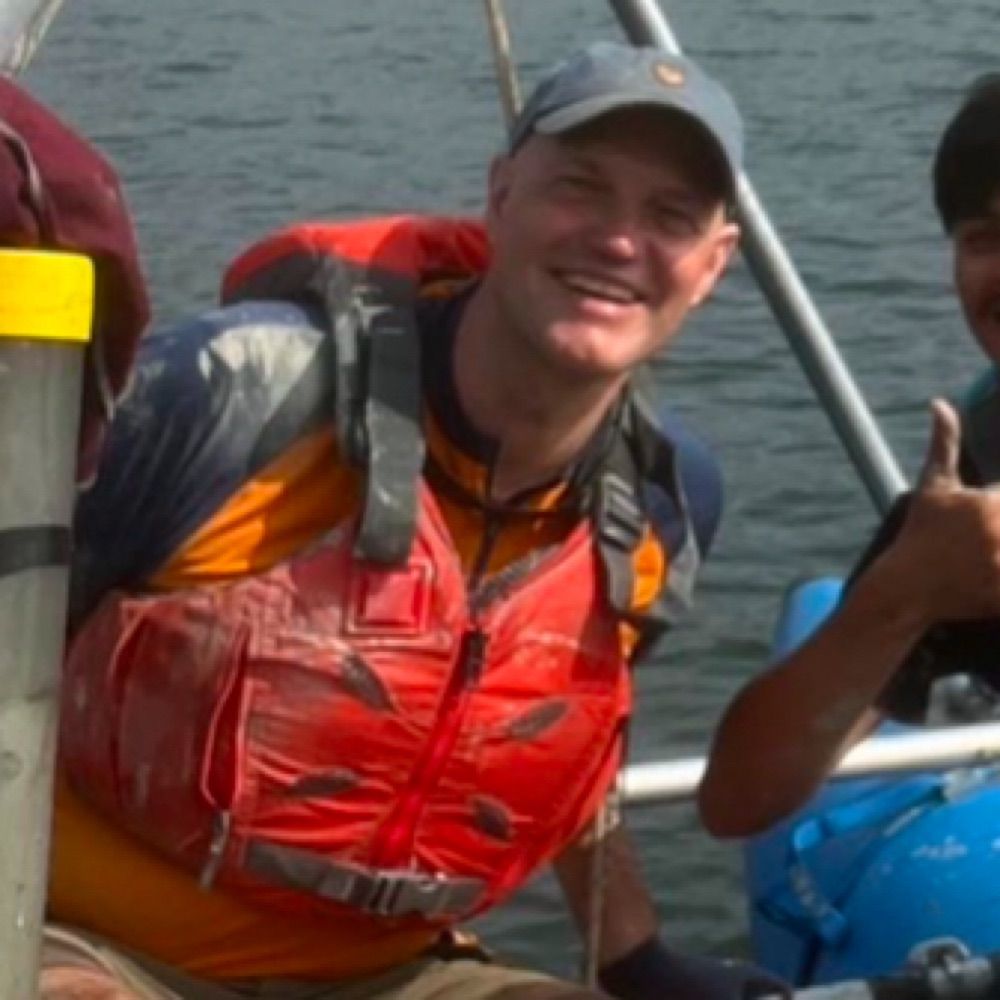

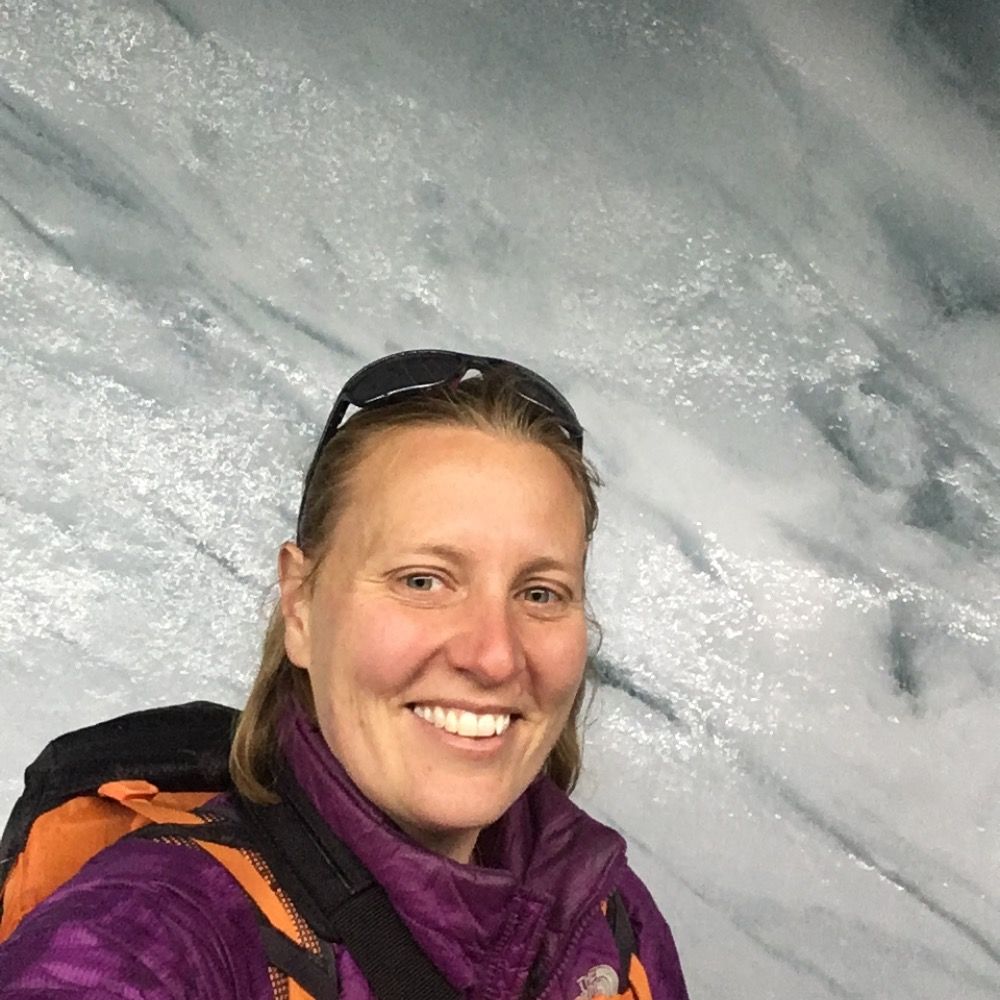
Now we have Mike Rogerson, presenting his work on speleothem growth in caves, compiling hundreds of U-series dates from across the UK. This gives a long precipitation record over several glacial cycles and helps constrain glaciation. #QRA2025
January 7, 2025 at 4:44 PM
Now we have Mike Rogerson, presenting his work on speleothem growth in caves, compiling hundreds of U-series dates from across the UK. This gives a long precipitation record over several glacial cycles and helps constrain glaciation. #QRA2025
Now we have Mark Bateman from Sheffield Uni, focusing on tsunami in SW Ireland, where oral histories talk about great waves hitting Ireland. Mark has been searching for physical evidence of these tsunamis in Ireland, using portable luminescence and stratigraphic analysis. #QRA2025
January 7, 2025 at 4:24 PM
Now we have Mark Bateman from Sheffield Uni, focusing on tsunami in SW Ireland, where oral histories talk about great waves hitting Ireland. Mark has been searching for physical evidence of these tsunamis in Ireland, using portable luminescence and stratigraphic analysis. #QRA2025
For our final presentation today at #QRA2025 we have Chloe Snowling, presenting her exciting work on the SE Asian Monsoon during a glacial inception.
January 7, 2025 at 4:15 PM
For our final presentation today at #QRA2025 we have Chloe Snowling, presenting her exciting work on the SE Asian Monsoon during a glacial inception.
@celiavarves.bsky.social is now doing a deep dive into insights into Holocene palaeoclimates from varved lake sediments in her @quaternaryra.bsky.social #QRA2025 keynote lecture. Fascinating details given in these annually resolved lake records
January 7, 2025 at 2:19 PM
@celiavarves.bsky.social is now doing a deep dive into insights into Holocene palaeoclimates from varved lake sediments in her @quaternaryra.bsky.social #QRA2025 keynote lecture. Fascinating details given in these annually resolved lake records
Important advice from @celiavarves.bsky.social on how and why to consider policy and impact right from the start of a research project. #QRA2025

January 7, 2025 at 2:04 PM
Important advice from @celiavarves.bsky.social on how and why to consider policy and impact right from the start of a research project. #QRA2025
Now we have a great interactive talk with @celiavarves.bsky.social talking about Quaternary Science and policy and near-term climate projections. Celia is talking about past climates informing our future, integration with the IPCC, and palaeoclimate for policy #QRA2025 @quaternaryra.bsky.social
January 7, 2025 at 1:57 PM
Now we have a great interactive talk with @celiavarves.bsky.social talking about Quaternary Science and policy and near-term climate projections. Celia is talking about past climates informing our future, integration with the IPCC, and palaeoclimate for policy #QRA2025 @quaternaryra.bsky.social
Springtails are mostly found where nunataks have been ice free since at least the global LGM, and potentially since the late Pliocene. @emlcpeer.bsky.social #QRA2025
January 7, 2025 at 12:56 PM
Springtails are mostly found where nunataks have been ice free since at least the global LGM, and potentially since the late Pliocene. @emlcpeer.bsky.social #QRA2025
Last talk before the lunch break we have another exciting application of cosmogenic isotopes, this time paired with biological archives from the Antarctic springtail to understand ice-free sectors in Antarctica by @emlcpeer.bsky.social from Monash University in Melbourne #QRA2025
January 7, 2025 at 12:50 PM
Last talk before the lunch break we have another exciting application of cosmogenic isotopes, this time paired with biological archives from the Antarctic springtail to understand ice-free sectors in Antarctica by @emlcpeer.bsky.social from Monash University in Melbourne #QRA2025
Now more cosmogenics but this time in Ireland, with Clara Crowell from University College Dublin presenting her work on palaeonunataks in Ireland using 14C and 10Be @arctic-glacial.bsky.social #QRA2025
January 7, 2025 at 12:35 PM
Now more cosmogenics but this time in Ireland, with Clara Crowell from University College Dublin presenting her work on palaeonunataks in Ireland using 14C and 10Be @arctic-glacial.bsky.social #QRA2025
Now Dave Roberts from @geogdurham.bsky.social is presenting his NEGIS project looking at ice sheet reconstruction in northern Greenland. This rather epic project used 1000 m elevation range altitudinal transects to constrain ice sheet thinning #cosmogenicisotopes #QRA2025 @quaternaryra.bsky.social
January 7, 2025 at 12:25 PM
Now Dave Roberts from @geogdurham.bsky.social is presenting his NEGIS project looking at ice sheet reconstruction in northern Greenland. This rather epic project used 1000 m elevation range altitudinal transects to constrain ice sheet thinning #cosmogenicisotopes #QRA2025 @quaternaryra.bsky.social
Dealing with the amount of data available from the present day empirical datasets is challenging at the ice sheet scale and requires data reduction to summarise detailed landform data. These packages can then be grouped into flowsets and a relative age chronology @fegbutcher.bsky.social #QRA2025
January 7, 2025 at 11:56 AM
Dealing with the amount of data available from the present day empirical datasets is challenging at the ice sheet scale and requires data reduction to summarise detailed landform data. These packages can then be grouped into flowsets and a relative age chronology @fegbutcher.bsky.social #QRA2025
Next up is @fegbutcher.bsky.social presenting a 23-stage reconstruction of Scandinavian Ice Sheet based on subglacial lineation record #QRA2025. This uses 1-2 m pixel DEMs available over Scandinavia to show an incredible range of landforms. These data are so important for data-model comparisons
January 7, 2025 at 11:51 AM
Next up is @fegbutcher.bsky.social presenting a 23-stage reconstruction of Scandinavian Ice Sheet based on subglacial lineation record #QRA2025. This uses 1-2 m pixel DEMs available over Scandinavia to show an incredible range of landforms. These data are so important for data-model comparisons
@alexmclark.bsky.social uses these datasets to provide a detailed reassessment of flow dynamics during the last glaciation in Ireland #QRA2025
January 7, 2025 at 11:46 AM
@alexmclark.bsky.social uses these datasets to provide a detailed reassessment of flow dynamics during the last glaciation in Ireland #QRA2025
Moving on to Terrestrial landforms and archives of change, we now have Alex Clark from RHUL presenting his PhD research on the detailed mapping of glacial geomorphology of northern Ireland, showing the evolution of ice dynamics in this area #QRA2025
January 7, 2025 at 11:36 AM
Moving on to Terrestrial landforms and archives of change, we now have Alex Clark from RHUL presenting his PhD research on the detailed mapping of glacial geomorphology of northern Ireland, showing the evolution of ice dynamics in this area #QRA2025
Final talk of this session is by Charlotte Greenall, presenting her PhD research on Antarctic phytoplankton changes over the Holocene using ancient DNA and fossil diatoms. These data show how sea ice, meltwater and upwelling have changed in the Antarctic Peninsula #QRA2025
January 7, 2025 at 10:54 AM
Final talk of this session is by Charlotte Greenall, presenting her PhD research on Antarctic phytoplankton changes over the Holocene using ancient DNA and fossil diatoms. These data show how sea ice, meltwater and upwelling have changed in the Antarctic Peninsula #QRA2025
These datasets provide insights into the movement of the subpolar gyre in the mid-Holocene, resulting in changing oceanic currents in the North Atlantic #QRA2025
January 7, 2025 at 10:43 AM
These datasets provide insights into the movement of the subpolar gyre in the mid-Holocene, resulting in changing oceanic currents in the North Atlantic #QRA2025
Sticking with the north, we now have Jane Earland from Exeter Uni exploring the LateGlacial and Holocene palaeoenvironments of the Fetlar Basin in the Shetland Islands. Jane has been using high resolution marine sediment cores to explore environmental change. #QRA2025
January 7, 2025 at 10:35 AM
Sticking with the north, we now have Jane Earland from Exeter Uni exploring the LateGlacial and Holocene palaeoenvironments of the Fetlar Basin in the Shetland Islands. Jane has been using high resolution marine sediment cores to explore environmental change. #QRA2025
Now we're heading to NW Scotland and the Minch Ice Stream with Neil McDonald at University of Stirling. Neil has been studying marine ice sheet instability in Scotland. Understanding these processes are very important for understanding how contemporary West Antarctic Ice Sheet may evolve #QRA2025
January 7, 2025 at 10:16 AM
Now we're heading to NW Scotland and the Minch Ice Stream with Neil McDonald at University of Stirling. Neil has been studying marine ice sheet instability in Scotland. Understanding these processes are very important for understanding how contemporary West Antarctic Ice Sheet may evolve #QRA2025